


Etihad Airways inks deal with Amadeus for digitalisation

Etihad Airways, the national airline of the UAE, is set to embark on a major digital transformation following the signing of a multi-year deal with Amadeus.
As part of the deal, Etihad Airways will implement the full Amadeus Altéa PSS suite, including web booking, revenue management and merchandising, data management and passenger servicing solutions. These technology products will be customised for Etihad over the coming years and will improve the experience of guests, staff, travel agents, Etihad Guest members, and corporate customers.
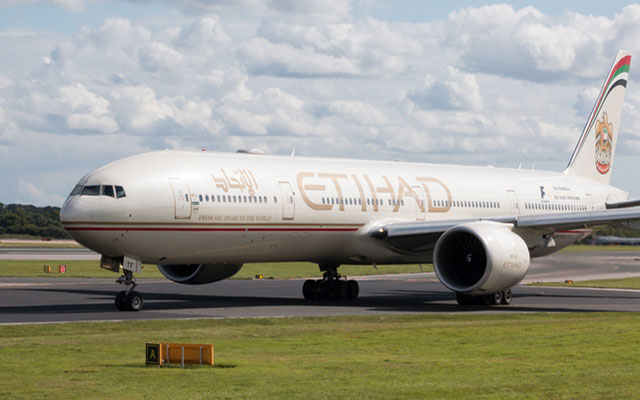
Etihad’s guests will see new web and mobile channels powered by Amadeus Digital Experience suite, offering the simplest user experience possible to purchase flight tickets and manage bookings. Advanced retailing capabilities will be developed collaboratively using machine learning to provide guests with bespoke offerings and personalise their travel experience.
To modernise retailing capabilities across sales channels, Etihad has also signed for Amadeus Altéa NDC (New Distribution Capability) and will work with Amadeus to distribute personalised travel offers to guests. Etihad will make its full range of NDC offers available to Amadeus travel sellers, allowing agents to see the features of Etihad’s product more transparently and the ancillaries that can be bought.
The airline will, in addition, implement the Altéa Departure Control Customer Management component of the suite, providing guests with real-time, personalised alerts of offers, services, and flight changes. The system will offer a higher level of service customisation and provide guests with a faster and simpler check-in process, which is more important than ever as travel rebuilds.
New hotels: Heritage Collection on Boat Quay; The Langham, Jakarta; and more


Heritage Collection on Boat Quay, Singapore
Singapore’s boutique hotel chain and serviced apartments provider Heritage Collection has opened its flagship hotel on Boat Quay’s riverfront. Spanning across four shophouse units, Heritage Collection on Boat Quay (Quayside Wing) houses over 40 rooms. The hotel boasts a chinoiserie theme through its architectural elements and interior furnishings. Heritage Collection’s signature features include laundry facilities, kitchenette, weekly housekeeping, personal guest experience managers, complimentary high-speed WiFi, and 24-hour CCTV protection. Apartment categories range from loft to studios, and even two-bedroom apartments. Heritage Collection offers flexible lease terms with a minimum stay of three months for their serviced apartments.

The Langham, Jakarta
Located within the District 8 complex at Sudirman Central Business District, The Langham, Jakarta offers 223 guestrooms including the 336m2 Presidential Suite. The property features celebrity restaurant partnerships that include Tom’s by Tom Aikens, the culinary maestro who has guided his restaurants to accolades by the Michelin Guide. Afternoon tea aficionados can enjoy a cuppa at Alice, the grand dining emporium. Meanwhile, the latest outpost of the Artesian at The Langham, London is at the rooftop of The Langham, Jakarta where sunset views can be enjoyed with signature cocktails. Opening in 2022 is T’ang Court, The Langham’s signature Chinese restaurant. The Langham Club lounge on the hotel’s 59th floor features a writer’s corner and a reading library. Leisure amenities include a 670m2 spa, fitness centre and an indoor infinity pool. The hotel also features more than 2,100m2 of flexible space, including a 688m2 ballroom and an outdoor garden, alongside an additional eleven meeting rooms which can be configured for events of different sizes.
Centara Reserve Samui, Thailand
Centara Reserve Samui marks the first resort in Centara Hotels & Resorts’ new collection of luxury hotels and resorts. Centara Reserve is Centara’s sixth brand, complementing the group’s five other labels including Centara Grand, Centara, Centara Boutique Collection, Centra by Centara and COSI. Set at the tranquil end of Chaweng Beach, Centara Reserve’s flagship resort on Samui will comprise 184 luxury rooms, pool suites and beachfront pool villas. Guests can enjoy five unique dining experiences and the world’s first Reserve Spa Cenvaree, as well as a fitness centre, yoga pavilion, children’s zone, and diverse event spaces.

W Changsha, China
W Hotels Worldwide, part of Marriott International, is set to light up the capital and largest city in Hunan province, China, with the opening of W Changsha. Owned by the Hunan Yunda Industry Group, W Changsha is the first W in central China and is located in the heart of the city’s business and shopping district. The hotel’s 345 guestrooms and suites offers modern luxuries and new-tech conveniences. From the 26th floor to the highest floor on 28th, the triple-story Extreme WOW Suite – the brand’s take on the presidential suite – incorporates more than 1,000m2 of living and leisure space, including a private garden and a swimming pool.
W Changsha offers three restaurants and a destination bar, including all-day restaurant Tropics offering local and international cuisine. Shinn Yen serves Hunanese cuisine, and showcases a live cabaret show remixed with Hunan traditional opera every evening. At night, the hotel’s destination bar Runway lights up with musical performances that pair perfectly with handcrafted cocktails and light bites. In addition to more than 1,000m2 of function space across five flexible rooms, the hotel also features a swimming pool, spa, and a 24/7 fitness centre that offers weights and cardio as well as dance classes.
UNWTO members plan coordinated restart of APAC tourism

Tourism leaders from across Asia-Pacific have met to plan the sector’s restart and recovery even as borders remain closed throughout the region.
The 33rd joint meeting of the World Tourism Organization’s Commission for East Asia and the Pacific and its Commission for South Asia, which took place on September 14, came on the back of a challenging year for the region.

The first to feel the impacts of the pandemic, the tourism sector in the Asia-Pacific region has also been the hardest hit, recording a 95 per cent fall in international arrivals in the first five months of 2021.
With UNWTO data also showing that this region continues to have the largest proportion of destinations closed to tourists, the member states taking part in the virtual meetings focused on the coordination of policy measures and strategies to accelerate the recovery of tourism activities in the region. These include the phased lifting on travel restrictions and the introduction of travel corridors.
Looking ahead, the members also agreed on the importance of upgrading the skills of the tourism labour force, as well as embracing innovation and digital transformation.
UNWTO secretary-general Zurab Pololikashvili said: “The Asia and Pacific region has a proven record as a dynamic tourism destination. With the right policy measures and strong coordination, destinations can start safely welcoming back international visitors, thereby allowing tourism to deliver on its potential as a driver of recovery and inclusive growth.”
The meetings attracted around 120 participants from 25 of UNWTO’s 29 member states in the region under the chairmanship of Malaysia and the Maldives.
Bangkok to reopen to vaccinated tourists on October 15

Thailand has confirmed plans to reopen Bangkok to fully vaccinated international travellers without quarantine requirements, from October 15.
Tourism and sports minister Phiphat Ratchakitprakarn and Bangkok Metropolitan Administration governor Asawin Kwanmuang said on Wednesday (September 15) that the initial plan to reopen Bangkok on October 1 has been pushed to October 15 due to slow vaccine rollout.
“Our mutual decision is that we want to carry out the vaccination throughout Bangkok – in every district – so that when we reopen it, it will apply to all of Bangkok,” said Pipat in a press conference.
“For the safety of Bangkok residents, the vaccination coverage of no less than 70 per cent is very important.”
Currently, only 37 per cent of residents in the capital have received two doses of the Covid-19 vaccine, far from the government’s 70 per cent vaccination target for reopening the country. However, it is expected that that target will be reached by early October, according to the minister.
Meanwhile, as part of the second phase of the country’s reopening timeline, the provinces of Chiang Mai, Chonburi, Phetchaburi, and Prachuap Khiri Khan will reopen on October 1 as planned.
Hotel Nikko Bali releases baby turtles into the sea

Hotel Nikko Bali Benoa Beach recently released 99 baby turtles into the ocean in the Benoa Beach area, as part of the hotel’s sustainability programme to help preserve the environment.
General manager, Masaya Hasebe, explained: “We found a batch of 118 turtle eggs on August 12, 2021 at the beach in front of our resort. We collected and buried (them) in the sand with the date posted. It (typically) takes around 45 days for a turtle egg to hatch. However, they hatched nearly a month earlier than we expected.”

The hatchlings release event was witnessed by the head of Bali Natural Resources and Conservation Center, Agus Budi Santoso; hotel guests; and the local communities. The resort management has plans to further expand its sustainability programme.
AAPA commits to net zero emissions by 2050
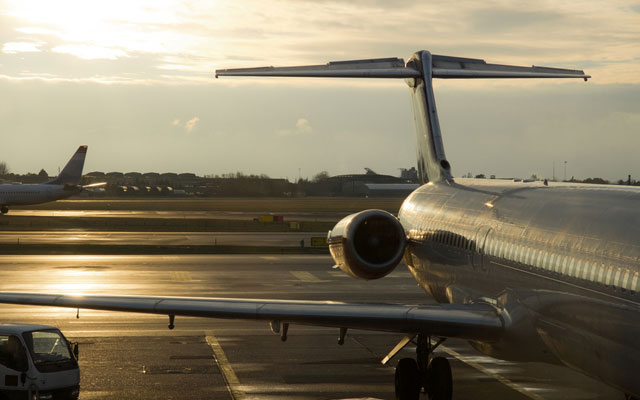
The Association of Asia Pacific Airlines (AAPA) has committed to net zero carbon emissions by 2050, surpassing the existing industry commitment to halve carbon emissions within the same time frame.
Sustainable aviation fuels (SAF) are expected to feature heavily in the industry’s overall reduction in carbon emissions by almost completely replacing fossil fuels on commercial flights by 2050.
Significant quantities of SAF will be needed by the industry as 80 per cent of emissions are from flights over 1,500km, for which aircraft powered by alternative energy sources, such as electricity and hydrogen, are not available.
Underscoring the task that lies ahead, Subhas Menon, director general of AAPA, said during a media roundtable: “The Asia-Pacific region will constitute some 40 per cent of global SAF demand (somewhere between 450 to 500 million tonnes by 2050), but production and supply facilities in the region are lacking.
“Allocation of sufficient resources to convert feedstock, like municipal or agricultural waste, waste oils from food production and other biomass, for the production of SAF will make a critical difference.”
Support from governments and other stakeholders to commercialise SAF through research and development, subsidies, incentives, as well as the allocation of resources for its development and distribution, will also be crucial to ensure adequate and cost-effective supplies to meet the needs of the airline industry.
“The bulk of efforts is going to come from the promotion of the commercialisation of SAF. This is very important as it replaces fossil fuels on the majority of (longhaul) flights for this (goal) to be successful, and that supply has been ramped up. The supply of SAF also has to be done in a cost-effective manner. Right now, the price of SAF is several times of fossil fuels,” Subhas elaborated.
On whether now is an appropriate time to take sustainability into greater account given the state of Asia-Pacific’s aviation sector amid the pandemic, Subhas pointed out: “Twenty months is a very long time for us to be in hibernation. We want to use the remaining hibernation time to put plans into motion, so that when we restart – hopefully not too distant a future – we do so with strong momentum.”
While acknowledging that this goal is “ambitious and challenging”, Subhas is confident it can be achieved with “total cooperation of all stakeholders”, including governments, airports, aircraft manufacturers, and more.
Sustainability, in fact, has been “an ongoing effort” over the last three decades. Subhas pointed out that passenger journeys have been halved since then, and every decade or so, a new generation of aircraft with better fuel efficiency than its predecessors have been manufactured.
Turning to air travel recovery, Subhas noted that Asia-Pacific was the first region to be heavily impacted by Covid-19, but has now lagged behind other regions in showing improvement in travel demand. While other regions are easing restrictions on the back of successful vaccination rollouts, borders in Asia still remain largely closed due to low vaccination levels.
He elaborated: “Most places have been operating on the Las Vegas principle – whatever happens here, stays here. But we need to move towards the Olympics principle – where everyone plays by the same rules, use the same tools, and have equal opportunity to get to the finishing line.”
To enable smooth reopening of borders and the return of travel in the region, the issue vaccine inequality has to be tackled, Subhas stressed.
Indian associations livid with defunct Jet Airways announcing resumption of operations
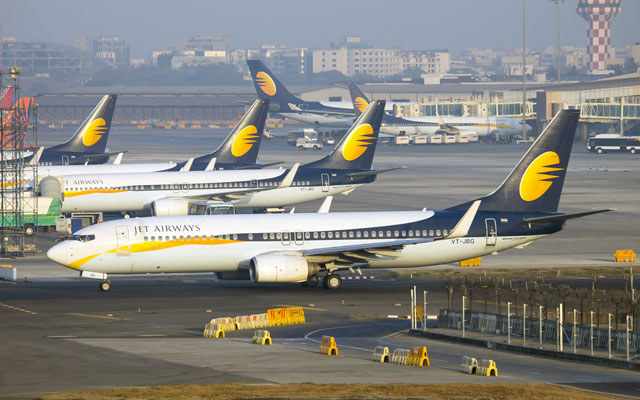
Major Indian travel trade associations have strongly expressed their disappointment at the announcement that defunct domestic airline, Jet Airways, plans to resume operations in the first quarter of next year.
The Jalan Kalrock Consortium, the successful resolution applicant of the carrier, said in a statement earlier this week that the process of reviving the grounded carrier is on track with regulatory approvals in place. Travel agent associations have raised apprehensions about the government allowing the airline to restart operations without clearing refunds that are pending with the airline since it ceased operations.
“How can the Ministry of Civil Aviation allow an airline who has defaulted revive unless and until it clears all the dues owed to the travel industry, consumers and staff who have borne the brunt (of the defaults) and suffered?” said a dejected Jyoti Mayal, president, Travel Agents Association of India (TAAI). “We welcome more and more airlines to fly in our skies but not at the cost of killing the IATA agents and the consumers.”
India’s National Company Law Tribunal (NCLT) had issued a written order that approved the resolution plan for Jet Airways in June this year. Jet Airways had suspended its operations on April 17, 2019.
“Unfortunately, it has been never been a level-playing field in the case of airlines and travel agents. Even the NCLT order which paved the way for Jet Airways to restart its operations is unfair not just to travel agents but the travellers too,” opined Ajay Prakash, president, Travel Agents Federation of India (TAFI).
“The NCLT in its order has said that all the creditors will get a maximum 15,000 rupees (US$203.62) as refund amount irrespective of the actual price of air ticket. There are people whom the airline owes millions of rupees. You can’t expect such creditors to trust the airline once it resumes operations,” Prakash said, adding that the defunct airline owes 460 million rupees to one of its members.
The travel trade association stressed on the immediate need of a financial mechanism to be implemented that can safeguard travel agents and end consumers in case an airline goes bust.
“The guidelines for anyone to start an airline needs to be deliberated upon, not only among the promoters and government, but also associations like TAAI. (In the case of Jet Airways,) the promoters misappropriated the money and filed for bankruptcy and the government closed its eyes (to the predicament of the creditors),” said Mayal.
“I request the minister of civil aviation (Jyotiraditya Scindia) to look into the workings of the airlines and ensure that a sustainable model is being implemented. There is a need to establish a task force with TAAI on board to understand the workings and challenges of our members who play an important role in promoting the business of all airlines.”
The Jalan Kalrock Consortium, the new owners of the airline, had shared in their resolution application before NCLT that there are 5,081 creditors that have an option to get cash refund or seek credit for future tickets.
“When we become an IATA agent, we give a financial guarantee and we are not allowed to issue tickets beyond the level of that guarantee. If an agent fails to make a payment to an airline, there is a financial guarantee that he or she has given to IATA. There is no such guarantee that can rescue the travel agents and end customers in case of an airline failure,” said Prakash.
“At a meeting with the Ministry of Civil Aviation, this is one point that we have put up strongly. The directorate general of civil aviation has to look at some sort of insurance system to protect consumer money.”
Prakash added that the regulatory authorities allowing Jet Airways to fly without clearing refunds is a “cruel blow” to both travel agents and end consumers.
He said: “On one hand, it is good that you will have another airline and more competition, but at what cost? Even if this is a case where nothing more can be done, there are at least lessons to be learnt. An airline can go bust at any time, especially in the present challenging environment. So, we need a system that looks out for the interests of both travel agents and end consumers.”
Collaboration and experimentation key to drive NDC adoption, finds new Amadeus report

A new report from Amadeus has revealed that the adoption of New Distribution Capability (NDC) has accelerated over the past 18 months, as today’s travellers demand a seamless and personalised experience.
The report is based on insights from airlines, travel agencies and corporations, as well as Amadeus’ own experts. It showed the travel industry’s readiness for NDC and cited 2021 as the year that NDC is being adopted at scale.

Airlines have begun to make tailored offers available, as well as to experiment with innovations like ‘continuous pricing’ and new types of bundled offers. Travel sellers of all shapes and sizes are now going live across the world, with over 2,500 travel agencies across 50 markets now able to book and service airline content via NDC using Amadeus solutions. These solutions include Amadeus Selling Platform Connect, Amadeus Travel API, and Amadeus cytric Travel & Expense.
The technology underpinning NDC has advanced significantly. Travel sellers are now able to consume NDC and EDIFACT content, alongside LCC content delivered via APIs, all in one place with the Amadeus Travel Platform. Importantly, the report cites recent improvements in servicing and preparation of travel agency mid- and back- office systems as key to scaling over the coming months and years.
The report also sheds light on some of the remaining barriers to widespread NDC adoption, and calls on the industry to prioritise collaboration and experimentation to advance NDC adoption.
The success of NDC remains dependent on the industry’s ability to keep talking. Through greater collaboration, it will be easier to recognise each other’s challenges and interests, helping to align goals and deliver the end-to-end value the entire ecosystem expects. NDC is an innovation playground and by ramping up NDC experimentation and testing, the industry can better understand how this new standard of digital retailing can improve the travel experience and accelerate recovery.
Ángel Gallego, executive vice president, travel distribution, Amadeus, said: “If we compare where we were 18 months ago to today, it’s clear that despite the strain caused by Covid-19, the industry has not sacrificed its commitment to NDC. On the airline side, we are now seeing new differentiated product bundles and price points. On the travel seller side, every Amadeus connected travel seller will be able to book NDC content, alongside content sourced in other ways, by the end of this year. On the technology side, we have continued to deliver on our promise to offer scalable, innovative solutions that incorporate vital features such as post-booking servicing.
“It is encouraging to see that the industry increasingly views NDC as a key pillar of recovery. With modern digital retailing, travel will be based around dynamic offers and this will deliver a competitive edge to airlines and travel sellers that embrace this change. Now is the time to engage with NDC to power great journeys for travellers and rebuild travel.”
Read the full report here.
IHG and APSN form jobs and training partnership

IHG Hotels & Resorts has entered into a partnership with Association for Persons with Special Needs (APSN) to provide support, jobs and training for APSN’s students and trainees across all IHG hotels in Singapore.
The agreement includes an apprenticeship programme aimed at helping the students and trainees realise their potential, and offers employment and training opportunities, including courses on hospitality, and food and beverage. Colleagues across IHG hotels and office in Singapore will raise funds, conduct workshops and commit volunteering hours as a key part of the venture.
APSN is a social service agency focused on developing individuals with special needs and enabling them to lead dignified, fulfilling and independent lives. It prepares beneficiaries for employment and success via education and vocational training initiatives from their early years through to adulthood.
The partnership is part of IHG’s 10-year sustainability plan dubbed Journey To Tomorrow, outlining clear commitments to drive change for its people, communities and planet. It is in association with IHG’s 2030 Diversity, Equity & Inclusion commitments which champion a diverse culture where everyone can thrive.
Rajit Sukumaran, managing director, South East Asia & Korea, IHG, and chairman of the SEAK DE&I Council, said: “Diversity, equity and inclusion is an integral part of IHG’s culture and we are committed to serving the communities in which we operate. More than three decades have passed since 1989 when Holiday Inn Orchard City Centre became a pioneer in Singapore in hiring people with different abilities. Today, five per cent of our full-time workforce are people with different abilities, and most of our full-serviced hotels in Singapore are accredited with the SG-enabling mark.”
He added: “As travel recovers and Singapore gradually (opens) its borders to international travel, I’m confident that our partnership with APSN will be further strengthened as we continue to work together to make an impact in our community by creating job and training opportunities and an environment that is truly understanding of others, and embraces differences.”
IHG has worked closely with APSN for many years to provide full-time employment opportunities, as well as on-the-job training and internships. The group also organises regular social activities for APSN students in its hotels in Singapore. In turn, APSN conducts training for IHG hotel teams to help its graduates adapt to their new work environment. They take on roles such as public area attendants, kitchen stewards, bellmen and servers, and the average stay of each full-time graduate has reached six years.
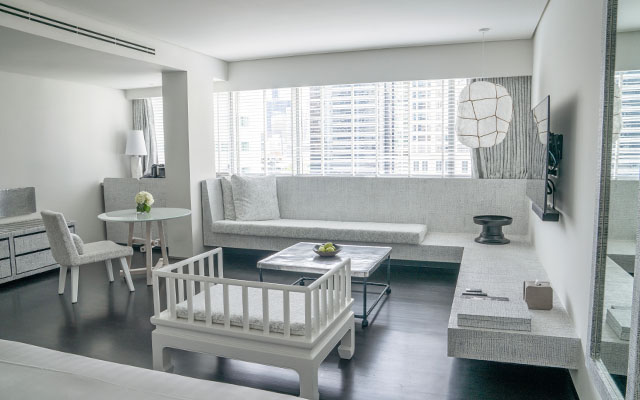







All-inclusive resort operator Club Med is gearing up for expansion in the Asia-Pacific region over the next five years, targeting greenfield opportunities in Thailand, Vietnam, Indonesia and the Philippines.
Already, the brand has announced its first South-east Asia greenfield beach resort in Borneo, Kota Kinabalu, in collaboration with owners Golden Sands Beach Resort City. Slated to open in 2023, the 16ha Club Med Borneo Kota Kinabalu resort will be one of the brand’s most upscale resorts in the region. In addition, with growing accessibility of the resort just six hours from key Asian markets, Club Med said that it is “confident to capture the vast untapped potential of this pristine location”.
In the wake of the pandemic, Club Med has successfully reopened its resorts in China and the Maldives, followed by Northern America, the Caribbean and Europe.
Domestic travel to Club Med resorts in China soared by more than 2.5 times in 2021 and is already on track to surpass pre-pandemic demand. Meanwhile, Club Med’s resort in Malaysia saw an increase in business volume of over 60 per cent in the weeks following the relaxation of interstate restrictions, before the recent movement control order.
Beyond the success of its current resorts, Club Med is also readying itself with an aggressive expansion pipeline.
“We entered the pandemic with a strong economic position and are well-placed for a swift, decisive and impactful rebound. Club Med has a demonstrated track record spanning more than 70 years as the pioneer of new destinations and untouched locations, with Club Med Seychelles and Club Med Lijiang as successful case studies of our recent greenfield projects around the globe, as well as the upcoming Club Med Borneo Kota Kinabalu,” said Jean-Charles Fortoul, CEO, APAC Resorts, Club Med.
“Following these successes, we have also identified Thailand, Vietnam and Indonesia as markets that are well-positioned to leverage this rebound and we are on the lookout for investors and partners to tap into the potential of these destinations.”