TTG Asia
Asia/Singapore Monday, 22nd December 2025
Page 843

Preferred Hotels & Resorts promotes Jonathan Newbury

0

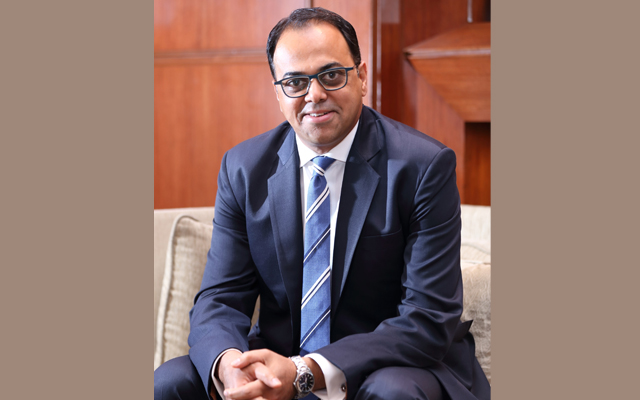
Preferred Hotels & Resorts has promoted Jonathan Newbury to executive vice president of Asia Pacific.

Newbury brings 30 years of international independent hotel experience to his new position, which carries the responsibility to drive the strategic direction and evolution of the Preferred brand in Asia Pacific, ensuring the success and retention of more than 150 member properties across the region, and overseeing the company’s associates who are based in offices across 10 cities.

As part of this transition, Newbury recently relocated from Chicago to Singapore with his family.

Newbury first joined Preferred in July 2008, intially serving as vice president of brand development and most recently as senior vice president of strategic development. During his time as senior vice president, he spearheaded a variety of global development initiatives that helped fuel a 20 per cent growth in the brand’s hotel portfolio over the past decade.

In addition to his development work, Newbury served as Preferred’s vice president of E-Commerce & Technology from July 2010 to March 2012.

Prior to joining Preferred, Newbury spent three years as vice president of global development for Small Luxury Hotels of the World. He has also served as operations director for VIP SKI, which operates luxury chalets, hotels, and resorts across the French and Austrian Alps, and held on-property sales and marketing positions with both The Langham Hotels and Resorts and Thistle Hotel brands.

Trip.com brings train seat selection onto booking app

0

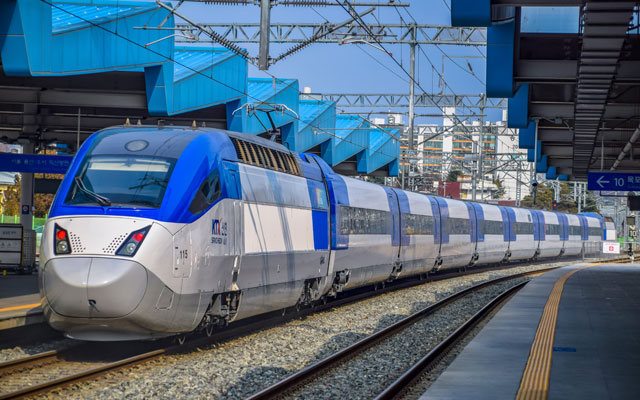
Trip.com has launched a series of seat selection services for customers looking to book rides on KTX, ITX and Mugunghwa-ho trains in South Korea.

Seats can now be chosen online, ahead of the trip. KTX passengers are also able to select different class seats for several passengers at one time.

Trip.com customers can select seats across different classes on KTX train services

Representatives of OTA and South Korea’s national rail operator KORAIL said the new service offering would address travellers’ need for safer travel experience.

“With the upgrading of social distancing measures, the most important value consideration of passengers is naturally safety when using transport facilities,” said Justin Hong, South Korea general manager of Trip.com.

“To enable passengers to use transport services more safely and conveniently, Trip.com has upgraded its ticketing service offerings, and will offer more diversified services to ensure the safety of passengers.”

A KORAIL executive added: “We will continue to put safety first and do our utmost to enhance passengers’ riding comfort.”

Trip.com was the first OTA to offer online ticketing service for South Korea’s high speed railway system, KTX, in 2018. Recent upgrades have made the service available in multiple languages, facilitating overseas bookings for the country’s train services.

Comforting grains

0

Balancing technology adoption with service and human connection

0
  • Health and safety concerns have expedited technology adoption by hotels
  • Guests expect options for contactless service and experiences
  • Contactless technology can work in favour of customer service culture, rather than against it

While the adoption of contactless service has been typically slow in the hospitality industry, the pandemic and resulting consumer desire for services that are delivered in a safe and hygienic manner have resulted in swift changes.

According to Eric Wong, vice president for hospitality, Asia Pacific with global software company Infor, this change is “shaping new realities for the hospitality industry”.

Solutions that enable seamless, contactless guest touchpoints are popular among hoteliers

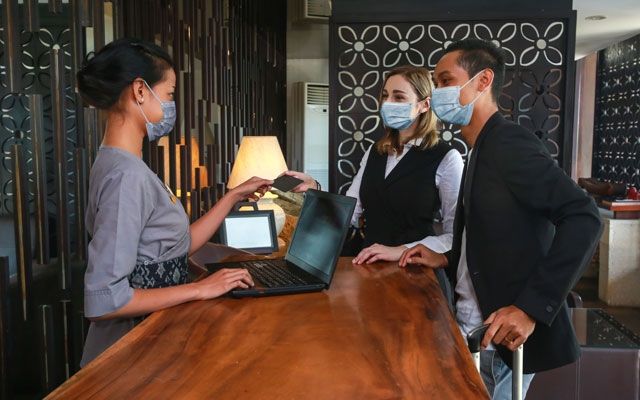
Solutions that enable seamless, contactless guest touchpoints that comply with safe distancing measures – from check-in to payment – are rising in popularity, as these can help hoteliers better address health and safety guidelines while ensuring that service standards are not compromised.

While these initiatives may still be strange for some hoteliers who are used to the people-driven service concept rooted in the hospitality industry, Wong said that it was time to embrace change so as to move forward.

“The pandemic has really pushed the industry to start thinking about whether there are new ways to do things, perhaps more efficiently, more securely and in ways that prioritise the experiences of guests,” Wong remarked.

Concurring with Wong, Michael Hanratty, general manager of both G Hotel Gurney and G Hotel Kelawai in Penang, said: “The contactless experience will definitely be the new normal and a travel trend once domestic and international travel resumes.”

Hanratty noted that the reliance on technology was stronger now than pre-Covid-19, as consumers’ behaviours have changed dramatically.

“They are more conscious about maintaining social distancing and avoiding crowds. Thus, one of the initiatives taken by our two properties is to introduce seamless online check-in prior to guests’ arrival at the hotel. Instead of manually filling in details at the reception counter, guests can now check-in online and collect their keys upon arrival.

“This not only makes the check-in process so much faster and more comfortable for guests, it also helps with crowd control at the check-in counters,” he said.

Eric Wong: time to think about new ways to do things more efficiently, more securely and in ways that prioritise the experiences of guests

G Hotel Gurney and G Hotel Kelawai were among the first hotels in Malaysia to invest in equipment to measure temperature via facial recognition and facilitate contactless QR code check-ins. The hotels also implemented automated hand sanitiser machines at entry points.

For Alex Castaldi, senior general manager of Sunway City Kuala Lumpur Hotels, digital transformation is no longer an option.

Its flagship property, Sunway Resort, is currently undergoing a major transformation to bring in cutting-edge technology that will improve the guest experience. When the resort reopens in phases from 3Q2021, contactless protocols will be enforced in accordance to the Sunway Safe Stay commitment. Guests can expect keyless room access as well as a flexible event space suitable for hybrid and virtual events.

Noting how the pandemic has altered booking considerations, Mandar Vaidya, CEO of OYO Japan, South-east Asia and Middle East, said: “Before the pandemic, people looked for properties near airports, business districts, and in some instances, beaches. Now they are looking for clean and hygienic properties that offer a contactless experience.”

To win over guests of today and the future, OYO’s health and safety standard operating procedures include minimal-touch check-in and check-out systems, robust hygiene and safety training for staff, and strict enforcement of social distancing norms.

OYO properties that are certified with a ‘Sanitized Stay’ label get twice the number of guests than those without, revealed Vaidya.

A balancing act
Hoteliers looking to step up technology usage have to ensure that service standards and personalised human connections are not compromised.

Castaldi told TTG Asia that Sunway Resort’s technology transformation was ultimately driven by the desire to cater to the millennials who have a strong preference for a more personalised interaction.

Despite heavy investments poured into the transformation, the human touch through efficient service, authenticity and personalised attention will not be compromised, he asserted.

In fact, contactless solutions can work alongside hotels’ service-oriented culture and not against it.

Wong explained: “By providing guests with a safer user experience, contactless solutions can reduce friction that may arise from face-to face interactions or manual processes.”

Such an approach will ensure the peace of mind that guests seek.

G Hotel Gurney (pictured) was among the first hotels in Malaysia to invest in facial recognition thermometers and contactless QR code check-ins

Hanratty identified another benefit of technology adoption – with technology taking over repetitive and manual tasks, hotel staff have more time to focus on delivering attentive service.

“They have now more time to move around the properties to service guests directly, resulting in more face time and enhancing the overall guest experience,” he said.

To ensure that the human connection is never neglected with the adoption of contactless experiences, Vincent Ong, senior vice president (commercial), Club Med Southeast Asia Marketing, Asia Pacific, said staff continue to embody the Club Med spirit and exude their personalities through the veil of a compulsory face mask and while respecting safe distancing measures.

However, Ong acknowledged that there are limits to the pursuit of contactless experiences for health and safety reasons. Club Med’s iconic activities, such as flying on the trapeze and sports games, cannot be replaced by contactless alternatives.

Bintan, Batam keen on forming a travel bubble with Singapore

0
More tourists expected, but cruising facilities need upgrading

Indonesia’s Ministry of Tourism and Creative Economy are laying the foundations for Bintan and Batam, the two main draws of the country’s Riau Islands cluster, to establish a travel bubble with Singapore by April 2021.

Sandiaga Uno, minister of tourism and creative economy, said both resort islands are ready for a limited border reopening and that entry points Nongsa Point Marina and Bintan Lagoi are gearing up as “green zone destinations”.

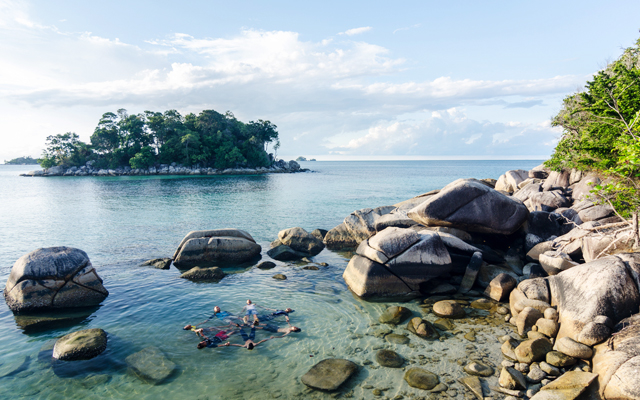
Indonesia’s Bintan and Batam resort islands are working towards establishing a travel bubble with Singapore

“Both areas have limited access to the general public making it possible to implement a travel bubble,” he explained.

The government has built an app to track the movement of tourists in Nongsa and Bintan Lagoi.

Hotels, restaurants, and attractions in the destinations have been CHSE (Cleanliness, Health, Safety, and Environment Sustainability) certified, but Batam is taking its health and safety efforts a step further by inviting Singapore authorities overseeing the SG Clean sanitation and hygiene standards assessment to review the implementation of health protocols in the region.

Edi Sutrisno, executive director of Batam Tourism and Promotion Board, told TTG Asia that securing an SG Clean endorsement was “important to convince Singaporeans to plan a holiday here”.

On Batam, every resort has dedicated quarantine rooms, and guests are given emergency contact numbers that are in operation round the clock, he added.

Indonesia’s declining number of Covid-19 infections alongside a vaccination roll-out for tourism workers has boosted confidence among Indonesian tourism stakeholders in welcoming Singapore travellers soon.

Sulaiman Shehdek, country manager of Visit Indonesia Tourism Office (VITO) Singapore, said: “We really are looking forward for this to happen (and) hope both governments can come to a common agreement for this bubble travel as Singapore residents are looking forward for holidays.”

Star Alliance to plant second office in Singapore

0

ILTM Asia Pacific retains virtual stance for 2021

0

ILTM Asia Pacific will take place online again this year, as continued challenges in global travel and conducting in-person events force organisers to postpone its face-to-face edition to 2022.

The virtual show will be held on July 20 to 22.

ILTM Asia Pacific Virtual this July will offer business meetings and learning opportunities for attendees

Alison Gilmore, director, ILTM Portfolio, said in a statement: “While vaccine rollouts are going in the right direction towards international travel’s recovery, it appears that July will still be too early for an in-person event of our size in Singapore.”

The framework for the event will be consistent with the virtual editions delivered by ILTM during 2020, and will provide a sophisticated platform from which to access the top luxury travel agents representing the highest net worth of clients across the Asia-Pacific region.

Designed to provide international and regional suppliers with new business opportunities and enhance industry and media relationships, ILTM Asia Pacific will deliver one-to-one online meetings, plus direct messaging between buyer or media and suppliers, in addition to opportunities to learn from content and industry insights throughout the three-day event.

A new report on the region’s appetite for luxury travel, researched and authored by Barton in collaboration with Wealth-X for ILTM, will be released to event participants.

“With the financial resource, design and inherent ability to pivot during incredible disruption, Asia-Pacific travellers should be seen as pioneers of the new luxury travel landscape, providing the much needed economic injection the industry needs and has been waiting for,” added Gilmore.

Powered by the family

0


Very briefly, how would you describe the year 2020 for Marriott’s Asia-Pacific team?
It was by far one of the toughest years, but I also say it was a year of incredible learning. I was amazed by three things. The first was the level of innovation coming from grassroots up. Adversity truly pushes one to innovate. Second for me was the incredibly level of resilience, which led to great camaraderie even during the deepest of the crisis. Everyone came together to help one another get through dark days, and we even thrived.
The third was that rather than being a spectator during the crisis, we took the bull by the horns and went on an overdrive with communications and actions with internal and external stakeholders. If we had simply sat back and watched it play out, we would have lost control. We moved early on to take control and made lots of decisions.

What were some of these tough decisions?
As a company of 93 years, we take great care of our people so that they can take great care of our customers. But when we have exhausted all options and business was down to under 20 per cent occupancy, we had to make some very difficult decisions around our people.

That’s when we saw innovation coming from our people. Our team that generally focuses on talent acquisition became the talent outsourcing team. As we were forced to let people go, our team figured out a way to reach out to our business partners that were doing well, such as DHL and Amazon, to have them proritise our (displaced) Marriott associates in their hiring activities.

We had the support of some 70 partners across Asia-Pacific. We knew that some of these companies, especially the tech and freight companies, were continuing to post job vacancies (throughout the pandemic). As they were posting these jobs, we would take these postings and pass them on to our associates and then taking their resumes over to the hirers. We connected folks so our associates could get a job quickly during this very difficult period.

Was this successful?
It was. It was also interesting that many of our associates told us that they would go and work with these partners but wanted to return to Marriott once there was an opportunity to do so.

We retain every single name of associates who are displaced, and we have rehired hundreds of them back already because, as you know, business has started to come back. We get many resumes but our mandate is very clear – over the next few months to a couple of years, we will only hire our people back.

Of course, that doesn’t feel great for somebody from the outside hoping to come and work for Marriott, but we have a commitment to the old family.

When did Marriott start rehiring displaced associates?
It started towards the end of 2Q2020. We were starting to see a number of markets, like Australia, Japan, South Korea and India, coming back around that time. Occupancy levels were rising, in some cases as high as 50 per cent. As more hotels started to reopen, we got our people back.

Is it right to say that most of the associates you have brought back are those in operations? I see that’s where you’d need most attention as hotels return to business.
Yeah. It is operations but other disciplines as well. The crux of this is that we have all the names and we are committed to bringing them back.

Here is another incredible example (of how Marriott is taking care of the team). We have business counsels in every country we operate in, something we have been doing for years. A business counsel is formed by hotel teams coming together to focus on a few critical issues, such as community engagement and environmental initiatives. Overall, their work is about giving back because as a company our goal is to be good local citizens.

(As the crisis started to unfold), these business counsels turned their attention inwards. A lot of our associates were in trouble, particularly line level staff in emerging economies where there was little government support. We did fund-raising, which were usually done for communities at large, for our staff to cover school fees, buy books and stationary, and purchase monthly rations. There was a time when over 50 per cent of our hotels (in Asia-Pacific) were shut, and it was a tough period (for affected staff).

We partnered with experts in the emotional well-being space to provide associates free access to meQuilibrium – a clinically proven resilience tool – to help individuals improve their lives and the lives of those around them. 2020 was a year tough on people financially but also emotionally. We did a lot of resilience training classes.

In markets where there was very little government support, we partnered with Silver Oak which provides confidential resources, support and counselling to associates.

It takes real heart to materialise these initiatives because these aren’t revenue generating moves.
Karen, if you had asked me these questions in 2019, I’d not have been able to give you answers. For a company with such a strong culture of taking care of its people, we knew we had to find ways to help our colleagues. That’s how these ideas came about.

Often you hear of innovations being pushed down from the top but 2020 was a year of initiatives rising from the bottom.

Let’s talk about some of the bold business decisions Marriott had made to counter the absence of travel. What stood out for me was how Marriott brought the Japanese destination Nara to JW Marriott Hotel Bangkok. What stood out for you?
Well, you know, many of these ideas came from ground up too.

We saw that as people could no longer travel, they feel an even stronger desire to be in their favourite destination. So, the teams talked about this and came up with the idea of bringing some of the favourite aspects of a top destination to their own city where we already have fantastic hotel infrastructure.

I’ll give you three more examples of what we did.

In India, we launched Marriott on Wheels before the crisis and it was something on the side. However, that took off in 2020 because nobody was coming to the hotels and many people were calling to ask about meals being delivered to their homes. Suddenly, Marriott on Wheels became the core business focus.

The second thing we did was to launch Good Travel with Marriott Bonvoy. We saw a growing desire for meaningful travel, to give back to the host community or engage with the locals – something that existed but was accentuated by the crisis. Good Travel with Marriott Bonvoy is about environmental protection and engagement with the community. I’m generally hopeful that this initiative will spread to all our hotels globally.

The third thing was our creation of a work-from-anywhere option at any of our hotels in the region. It was something that was bubbling and got accentuated by the crisis. People couldn’t get to the office and wanted to work from somewhere conducive. Response has differed from country to country. In countries where people struggled to work out of homes, the opportunity to work from a hotel that is safe and hygienic and with great Internet connection really stood out.

We have seen people check into our hotels for weeks on end. A guest wrote to me to say that he checked into W Goa in India for a week but ended up staying for a month because it was an incredible way to get away and do some work. The hotel provided all the connection and technology he needed.

A number of our resorts saw similar cases, and that’s why occupancies were the first to take off at the resorts. People were not only going for short breaks, they also want to stay on to work.

What new initiatives will stay put post-pandemic?
I think Good Travel with Marriott Bonvoy is going to stay for decades because giving back has become a big part of school education now (and will result in the younger generation approaching community responsibility as a norm).

Another business decision that will stay for long is the support for hybrid events. More and more you will not be able to get every delegate to a meeting so you will need to create an infrastructure that enables people to show up in-person as well as online.

Here in Singapore, we have just set up a studio at JW Marriott Hotel Singapore South Beach that can support a full news telecast to thousands of people. We also have one in The Westin Singapore, and we will see more of that infrastructure coming up.

Speaking of the future, what is in Marriott’s Asia-Pacific pipeline?
We see during this crisis that the long-term health of tourism is in a good state. Why do I say that? One, we continue to open a lot of hotels – 75 last year and 100 to come this year. When you look at the number of deals we signed last year, it was very similar to 2019. Our partners, the development community and investors generally believe that travel is core to who we are and will continue to grow.

At this point this year, we have already opened a bunch of hotels in this region. We opened our 50th hotel in Shanghai last month, and a beautiful W in Melbourne and Osaka in March. We have a couple of halo properties coming up – The Ritz-Carlton Maldives is going to open; a JW Marriott in Jeju; a stunning Luxury Collection in Hobart, Tasmania (Australia).

I could go on and on because that’s what’s happening with our growth story (laughs).

Two, the vaccination programme has really boosted optimism across the industry. Although vaccination is not the only answer, everybody is now a little more upbeat about international borders reopening. There are many studies that support this, and just recently there was a survey that showed that 49 per cent of millennials are ready to hit the road within six months of border reopenings.

From our perspective, we want to make sure that when people are ready to restart travel, they know that Marriott has some of the best standards in safety and hygiene.

I noticed that most of the new openings you mentioned are in established destinations. Are there new signings in lesser-known destinations, which are expected to be popular since travellers prefer less congested places when travel resumes?
Well, yes. We have been working on this for the last couple of years, and have just signed a deal with our partner, Sekisui House, in Japan to facilitate a considerable expansion of our Fairfield by Marriott brand in the country through what we call the Michi-no-eki project.

These are small hotels, some with 60 or up to 100 rooms, along roadside locations. As one drives through Japan, one would stop at these roadside stations that are often known for incredible fresh local produce or local restaurants.

Given the strong growth in road trips in Japan, Fairfields at these roadside stations will thrive.

We started opening them in 2H2020. As travel restrictions eased earlier on, we saw occupancies ramping up very quickly. We opened 20 hotels across Japan last year, of which six or seven are Michi-no-eki properties. This year we will have another six, and a number more in construction.

People may no longer want to travel by plane if they can drive to remote places, and some of these locations offer amazing opportunities to connect with nature.

Beyond Japan, we opened in new destinations like Belitung (Indonesia) last year. Such new destinations will continue to pop up and allow people to get farther away from the big cities.

It sound like things are looking bright for Marriott Asia-Pacific this year.
Absolutely! But we have to be cautiously optimistic because we are still in a pandemic and vaccinations are still underway. It is not as if borders are all open. It will probably be late 2Q or 3Q when borders start to reopen. Till then, we see good domestic travel demand.

Looking ahead, what would you say are critical must-dos for Marriott?
We need to continue to allow grassroots innovation and be transparent in our communications with all our stakeholders. We don’t have all the answers, but working openly with our stakeholders allows us to figure things out together.

We need to be very nimble and respond quickly to sudden issues, like Covid-19 infection surges.

And we will continue to form local partnerships, like the one we have with Grab. Initially our partnership with Grab was to get our restaurants in Asia listed on GrabFood for delivery but the second phase, which we are about to launch, is to get on Grab’s payment gateway, GrabPay. In the third phase, we will allow point transfers between GrabRewards and Marriott Bonvoy.

Grab is a superapp and gives us an opportunity to engage the market at a local level.

More Philippine hotels brace for closures as Covid spike triggers fresh restrictions

0

A surge in Covid-19 cases in metro Manila and surrounding provinces has prompted authorities to tighten travel restrictions, bringing more local hotels teetering on the brink.

As of today (March 22), nationwide daily infections hit 8,019 after three consecutive days of over 7,000 daily infections. This brings the total number of active cases to 80,970, with 12,972 deaths.

Covid surge in the Philippines has led to fresh travel restrictions

To curb the virus spread, the 16 cities of metro Manila – the epicentre of the outbreak – remain under general community quarantine (GCQ) but with stricter lockdown rules. Meanwhile, the provinces of Cavite, Laguna, Rizal and Bulacan have been placed under GCQ from the least strict modified GCQ (or MGCQ) until April 4, subject to review.

Only essential travel is allowed into and out of these areas, according to the Inter-Agency Task Force for the Management of Emerging Infectious Diseases.

While travel within GCQ areas is allowed, there are limitations such as the temporary closure of “museums and cultural centres, limited social events at accredited Department of Tourism establishments, and limited tourist attractions except open-air tourist attractions”.

Venue capacity at outdoor dine-in restaurants and cafes has been reduced to a maximum of 50 per cent; while indoor dine-in restaurants, cafes and establishments are limited to deliveries and take-outs.

Apart from weddings, baptisms and funeral services which are limited to 10 people, all other mass gatherings including large religious activities are prohibited.

This has affected the Lenten season activities, typically a major celebration in the predominantly Catholic country involving activities like visiting seven churches in a single day, going out of town to view cultural religious programmes, veneration of the cross and others culminating in Easter Sunday on April 4.

Curfew runs from 22.00 to 05.00. Minors and people over 65 as well as pregnant women and those with health risks are advised to stay home. Work-from-home arrangements and virtual meetings are recommended, while face-to-face meetings and all other gatherings in workplaces (like eating together) are strictly prohibited.

The latest restrictions come as a big blow to efforts at rebooting domestic tourism, even as local hotels continue to bleed from the high costs of maintaining their premises, without any government financial aid.

The latest casualty, Sheridan Resort and Spa near Puerto Princesa in Palawan, closed shop over the weekend. The deluxe property has struck a deal to change its management and branding into Four Points by Sheraton.

Both the 28-year old Legend Villas in Mandaluyong City and the Shangri-La Makati and Ridgewood Hotel in Baguio also bit the dust in February; while Marco Polo Davao closed late last year.

Many more hotels have also ceased operations owing to slack business from MICE, corporate and leisure travel; while more hotels and resorts are expected to shutter due to the prolonged lockdown.

Hotels and airlines have allowed clients to rebook without penalties, but Cebu Pacific said that the process for refunds may take up to seven months from date of request “due to the high volume of requests”.

Star Cruises to resume sailing in Malaysia

0