

Get your game on at Orchard Hotel Singapore

Gaming enthusiasts can now learn from and pit their skills against the stars of Team Flash, a professional e-sports organisation, at four exclusive weekend clinics when they book the Gamers Staycay at Orchard Hotel Singapore.
The staycation package comprises a two-night stay filled with jam-packed clinics and e-sports activities. Guests will get the opportunity to train with some of the world’s best “fighters” in popular games such as Mobile Legends: Bang Bang, FIFA, E-racing and Brawl Stars. They will also get to pit their skills against fellow gamers to win attractive prizes in mini-tournaments.
“With the rise of e-sports and Singapore hosting the first Global Esports Games in December this year, it’s a timely opportunity to initiate a Gamers Staycay package to cater to both children and adults, elite gamers and casual players,” said Paul Hugentobler, general manager of Orchard Hotel Singapore.
“We wanted to create a different staycation experience for Singaporeans to escape into a virtual world of fun and enjoy exclusive sessions with Team Flash’s popular gamers to learn the latest e-sports trends.”
The clinic dates are: November 26-28, December 3-5, December 10-12, and December 17-19.
Priced from S$400 (US$296) for two pax, the 3-day/2-night Gamers Staycay package includes daily breakfast and daily S$20 F&B credit. Children under 12 years old dine for free with every paying adult for Christmas Buffet Dinner.
Prior reservation is required and bookings can be made here.
Cristian Nannucci joins Pan Pacific Hotels Group
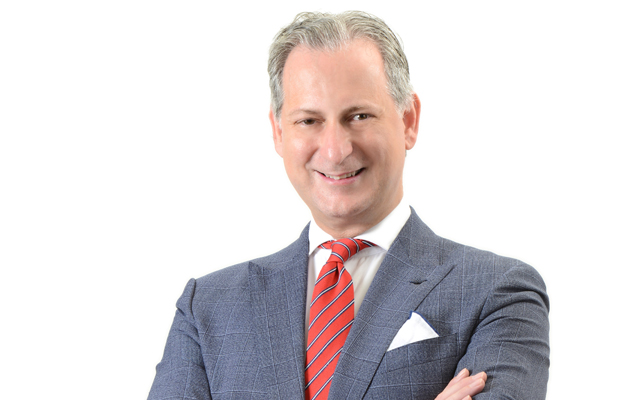
Heading PARKROYAL COLLECTION Kuala Lumpur and Pan Pacific Serviced Suites Kuala Lumpur is Cristian Nannucci, the newly-appointed complex general manager.
A 30-year hospitality veteran, Nannucci has held a number of hospitality positions across three continents in Europe, Asia and Middle East. He specialises in F&B and business restructuring, and possesses a background in rooms operations, and sales and marketing.
He most recently served as general manager of Shangri-La Mactan Resort and Spa in Cebu, the Philippines.
Shangri-La Singapore welcomes new GM
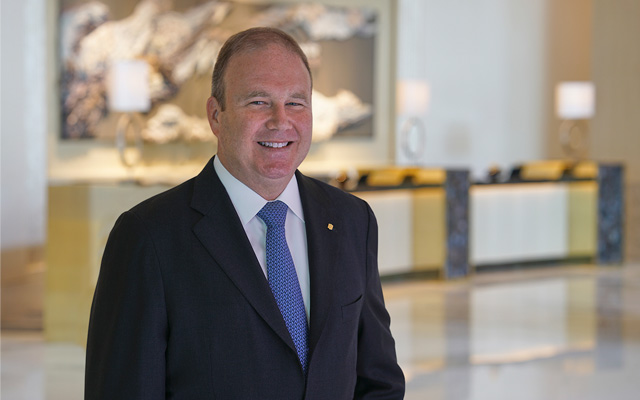
Shangri-La Hotels and Resorts has appointed John Rice as general manager of Shangri-La Singapore.
Rice will supervise the daily operations of the hotel including Shangri-La Apartments and Residences, and be responsible for driving commercial growth, inspiring service excellence, enhancing guest engagement, strengthening community partnerships and elevating the hotel’s luxury family positioning.
 In addition to this new capacity, Rice also holds the position of vice president, operations (Philippines), and will continue to oversee all Shangri-La properties in the Philippines region.
The Australian brings with him extensive knowledge and expertise in the luxury hospitality sector, with senior Shangri-La leadership appointments in Mainland China and the Philippines.
Prior to his arrival in Singapore, Rice led hotel teams across six hotels and resorts in Manila, Cebu and Boracay; and played a pivotal role in leading the teams through the Covid-19 pandemic by identifying new revenue streams, launching new business initiatives and driving commercial results.
He was also responsible for spearheading the opening of Shangri-La The Fort, Manila.
Accor’s Mövenpick to make Brisbane debut
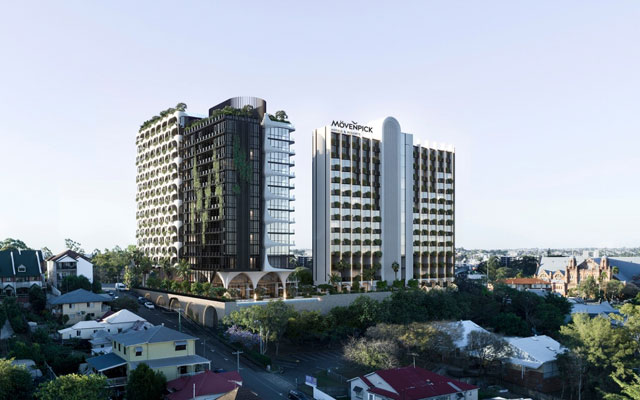
Accor will bring its Mövenpick brand to Brisbane for the first time with the opening of the 96-room Mövenpick Hotel Brisbane Spring Hill come 2024.
In partnership with private development group Keylin, the 15-storey hotel will be situated at 447 Gregory Terrace in Spring Hill, the city’s oldest suburb, bordering the Brisbane CBD and the 65ha Victoria Parklands.
Mövenpick Hotel Brisbane Spring Hill will boast art deco-inspired interiors, a restaurant, bars, 25m swimming pool, fitness centre, daily Chocolate Hour and an assortment of the brand’s other signature offerings. It will also include conference facilities with capacity for more than 100 guests.
Simon McGrath, CEO Accor Pacific, said that the property would be the third Mövenpick Hotel in Australia and the first Mövenpick Hotel in Queensland.
UNWTO brings Instagram into tourism recovery picture
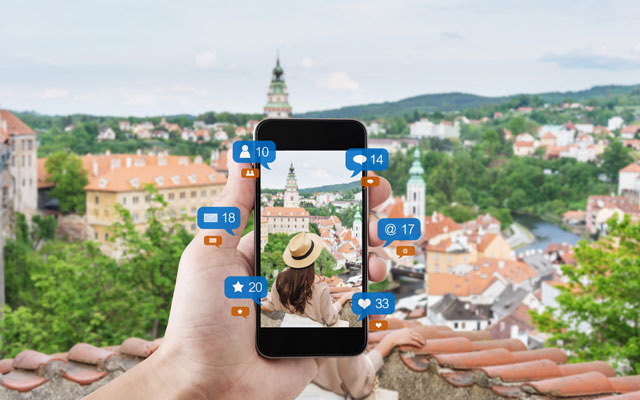
UNWTO and Instagram have joined forces to produce a tourism recovery playbook to help destinations and businesses harness the power of digital and visual storytelling to reach new audiences and return to growth.
This first-ever partnership with Instagram forms part of UNWTO’s wider shift towards harnessing the power of digital innovation to drive the restart of tourism, especially local and sustainable tourism.
The recovery playbook provides insights into making the most of the platform, from producing reels to showcase destinations to using guides and other tools to illustrate how the sector is ready to welcome tourists back safely and responsibly. It also explores the best ways to encourage renewed local travel, while raising environmental awareness.
Alongside best practice and tips on effective tourism storytelling, the publication also features case studies of small businesses and destinations that have successfully used Instagram to connect with key audiences during the pandemic.
In his foreword to the tourism recovery playbook, UNWTO secretary-general Zurab Pololikashvili said: “As parts of the world begin cautiously opening up again, now is the time to be creative in showing why tourism matters – for individuals, for our communities and for our planet. UNWTO’s partnership with Instagram will show that safe, responsible travel is possible, and to illustrate how just one tourist can make a big difference.”
This collaboration with Instagram builds on UNWTO’s ongoing turn towards greater use of digital tools and visual storytelling to make clear the relevance and importance of tourism to economies, societies, and planet. The organisation has accelerated this shift in its efforts to scale up member support and enable them to better seize the advantages of digital communications platforms.
Millennials to lead the next wave of food tourism
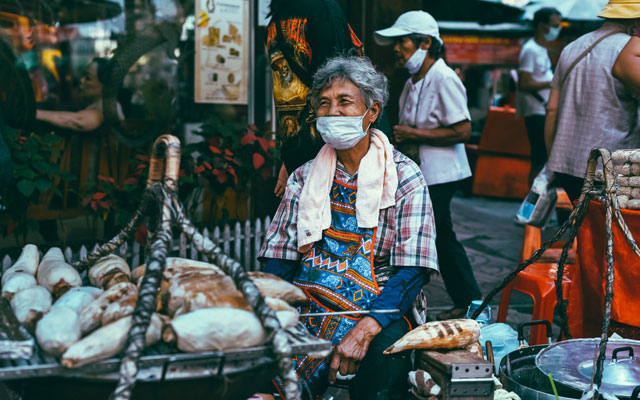
Food will play a bigger role in travel as millennials quest for extraordinary culinary experiences and rediscover new eating trends in their own countries, according to Jean-Michel Petit, co-founder and CEO of social dining platform Eatwith.
Extraordinary food experiences are about preserving the social aspects of eating and seeing food as a communal experience so that the original social network is the table, not Facebook or Instagram, he explained at the recent ITB Asia.
Petit believes in the future of smaller and local food experiences; authentic sources of food ingredients from tradition, nature and local sources; close interaction also with food producers and “not the anonymous way” of experiencing food; and personalisation as people want experiences that match their expectations and aspirations.
Saying that “food is always a great travel motivator,” Petit cited recent polls showing that 81 per cent of the people ranked food and restaurant experiences as first motivation for travel, just above family and friends at 79 per cent. Moreover, 25 per cent of global tourism spending is one way or another related to food.
As tour operators and hotels look “to create activities through and around gastronomy” to meet millennials’ food expectations during vacation, Petit categorised gastronomy tourists as those who prefer to eat like a local; those visiting restaurants and private places serving innovative food; those whose main motivation in modern food tourism is for socialisation and real interaction; and those moving away from beaten tracks to discover new gastronomic paths on their own.
Time to recreate Goa tourism model at other beach destinations: HVS

Goa’s tourism growth story is gradually getting back on track as it has become the go-to holiday destination for domestic tourists since the state reopened post the second wave, according to a report by hotel consulting firm HVS.
Due to the limits on overseas travel, several outbound Indians are also choosing to vacation in Goa, added the report. As a result, occupancy has been steadily improving month after month, with September 2021 occupancy approaching pre-pandemic levels for the month and average rates surpassing pre-pandemic levels.

With the government taking steps to welcome foreign tourists back, it is also expected that Goa, which is known as one of India’s top beach and nightlife destinations, may soon see a surge in demand from international tourists, allowing it to recover faster than most leisure destinations.
Moreover, the government intends to prioritise responsible and high-quality tourism over volume going forward, with plans in place to rebrand and remarket Goa as a diverse tourism destination.
However, even before the pandemic, Goa, which attracted approximately eight million tourists in 2019, was suffering from the negative impacts of overtourism, noted the study authors Mandeep S Lamba and Dipti Mohan.
“These challenges, particularly the rate of infrastructure development, are unlikely to be resolved very soon, giving India the opportunity to develop other untouched and unexplored beach destinations for tourists along its 7,500km coastline,” they said.
Already, the government is taking steps to transform the Andaman & Nicobar Islands, as well as Lakshadweep, into world-class tourism destinations comparable to the Maldives, Bali, and Mauritius, the authors noted.
“However, other upcoming tourist locations such as Bekal, Gokarna, Daman & Diu, Pondicherry, and Odisha, to mention a few, have not yet been able to draw their fair number of tourists,” they said.
“These destinations should reassess their positioning in order to climb up the hierarchy by emulating some of Goa’s best strategies while avoiding the state’s mistakes.”
The authors advised that authorities should evaluate global best practices and tourism models, and implement effective destination management strategies, so as to achieve a balance between tourism and sustainability.
They said: “Improving last-mile connectivity to these areas, building adequate infrastructure amenities, including quality hotel supply, and executing new marketing strategies, can help attract tourists looking for an alternative to Goa, while also helping reduce overtourism in Goa in the long run.”
Sheraton taps Chinese star Myolie Wu in new campaign celebrating community
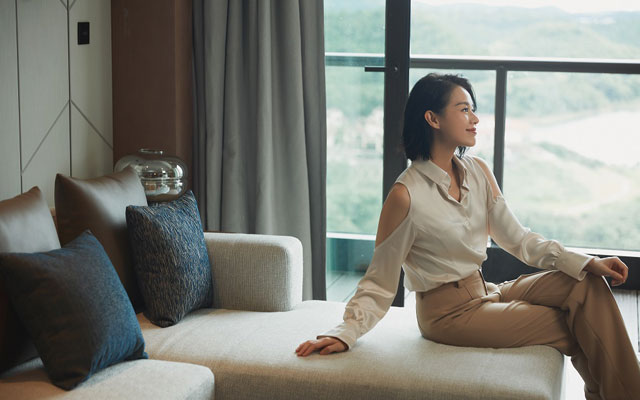
Sheraton Hotels & Resorts has roped in popular Chinese actress-singer Myolie Wu to star in a video marking the launch of its new brand campaign, Celebrate the Community, which celebrates the communal spirit and invites guests to reconnect and share experiences.
The video, filmed at the newly opened Sheraton Mianyang in China, captures the moments of connection and shared experiences with like-minded travellers and guests.
Jennie Toh, vice president, brand marketing and brand management, Asia Pacific, Marriott International, said: “The pandemic lockdowns have created an increased awareness and appreciation of the importance of social interactions in people’s lives. With the Celebrate the Community campaign, we hope to remind people of the power of collective and that we are better together.”
With 139 hotels and resorts in Asia-Pacific, Sheraton invites guests to reconnect with their community or explore new ones in local destinations through a collection of meaningful experiences at participating Sheraton hotels across the region.
At Sheraton Mianyang, for example, guests can create their own coffee blends and enjoy signature coffees such as Affogato and Espresso Martini at the on-site coffee bar and market &More by Sheraton, thanks to a tie-up between the hotel and local artisan coffee roaster Qian Xun.
Over in the Maldives, Sheraton Maldives Full Moon Resort & Spa has teamed up with coral propagation organisation Reefscapers to allow guests to participate in a coral fragment-planting activity in an effort to promote reef habitats and generate new coral. The activity, which is led by experts, provides an alternative business to the 250 inhabitants whose sole previous source of income was fishing.
At Sheraton Hong Kong Tung Chung, guests can enjoy a hands-on experience in organic farming activities and interact with local farmers to learn more about sustainable practices.
Indonesia’s Lombok to get a Gran Meliá hotel
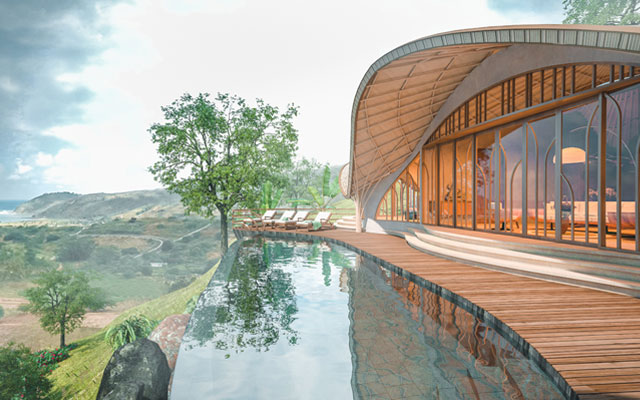
Spain-based Meliá Hotels International will be opening a new luxury resort in Indonesia on the paradise island of Lombok come 2024.
Gran Meliá Lombok will mark the first Gran Meliá property in Lombok and its second in Indonesia, after Gran Meliá Jakarta.
Situated at the Torok Bay in the south of the island, the hotel will boast 22 luxury beachside villas and another 105 villas on the mountainside, all with private infinity pools and ocean views.
On-site facilities will include a spa, fitness centre, kids’ club, and a lounge with panoramic ocean views. The hotel will also feature F&B options that combine local ingredients and techniques to offer guests authentic Indonesian dining experiences.
Owned by Invest Islands, a property development company based in Lombok, Gran Meliá Lombok will become Meliá Hotels International’s 12th hotel in Indonesia, eight of them currently in operation and another four (including Gran Meliá Lombok) pending opening.

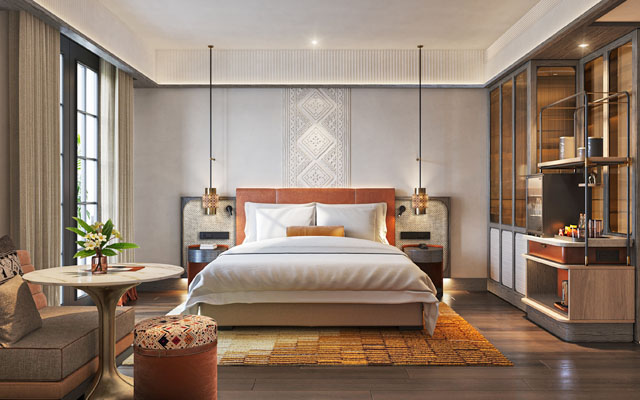






Pan Pacific Hotels Group (PPHG) is taking its Parkroyal Collection brand beyond the shores of Singapore with the launch of Parkroyal Collection Kuala Lumpur in June 2022.
This will be followed by the opening of the 210-key Pan Pacific Serviced Suites Kuala Lumpur in October 2022, yet another first with the group’s signature Pan Pacific flag in Malaysia.
Located in the heart of Bukit Bintang, both properties will open in a mixed-use complex owned by the UOL Group, PPHG’s parent company.
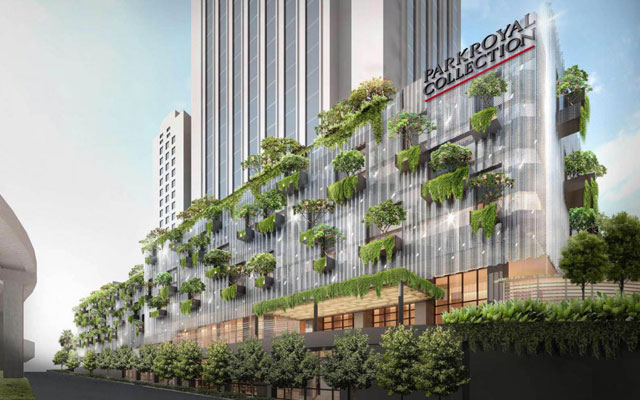
The 535-room Parkroyal Collection Kuala Lumpur will showcase a lush green façade of 78 sky planters on its frontage and roof terraces showcasing 1,207m² of plants and trees.
In tandem with the brand’s design for sustainability, the hotel will also feature motion sensors across public areas and rooms, a food waste digester, no single-use plastics, and an urban farm. It will also have a wellness floor comprising a spa, gym and fitness studio, as well as a pool.