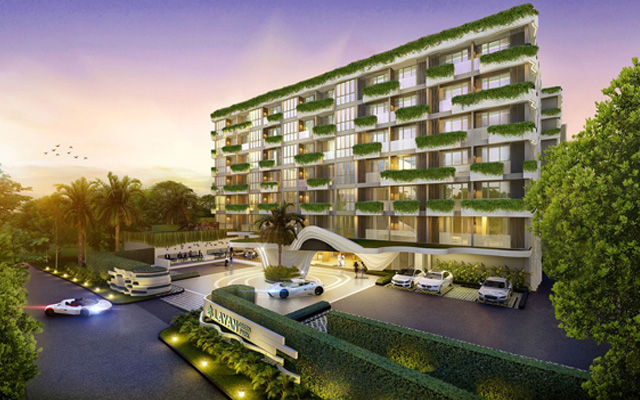
Layan Green Park Group’s first property in Phuket, Thailand will be managed by WorldHotels, under its Distinctive collection.
The four-star, 403-key property, set to open in December 2022, is the first new-build in Thailand to receive the EDGE (Excellence in Design for Greater Efficiencies) certification.
Layan Green Park, Phuket will join WorldHotels’ Distinctive collection
According to a press statement, the hotel will “provide eco-life with upscale facilities” and a range of recreational experiences for families and children. Two restaurants are planned, and they will rely on locally sourced products and seasonal ingredients. A lounge bar, pool bar, spa, gym, and landscaped grounds with jogging paths, yoga terrace and three freshwater swimming pools round off the hotel’s range of guest facilities.
It sits 700 meters from Bangtao Beach and 20 minutes away from Phuket International Airport by car.
Olivier Berrivin, managing director, Asia Pacific, WorldHotels, said: “WorldHotels is always seeking strong and professional partners to work with, and the Layan Green Park Group has shown its skill and vision by developing its first property in Phuket. I have no doubt that this remarkable new resort will delight our guests and enhance the entire destination.”
DMC Discova has appointed Susan Ogden as its global director of supply and distribution, a new role that integrates three key departments, Product, Connectivity, and Business Solutions, with the expertise of technology and business systems.
Ogden’s appointment sheds light on the company’s expansion plans, through the implementation of global solutions and processes to streamline product to market capability.
Prior to the appointment, Ogden helmed Discova’s worldwide expansion strategy, laying the foundations for the company’s ambitious plans for growth since 2020. A year prior, she was global product and strategy leader, and had joined the company from Flight Centre Travel Group, where she was a celebrated leader for over 20 years.
She said: “Discova has always been a forward thinking organisation with a bright future, so I’m really excited for the opportunity to build on our strategy for expansion. We’ve had some very interesting projects bubbling away during the travel hibernation period and I can’t wait to start bringing them to life as the world re-opens.“
She revealed that technology will be an important focus, and the aim is to “provide our partners with access to a world-class product range for their tailor-made or group customers, and enable them to transact and collaborate with us in any way they prefer – whether that’s by email, phone, online booking portal or direct API integration”.
Discova’s managing director Suyin Lee, emphasised that “the future for Discova is expansion”, and plans have been defined over the last 18 months.
“(Ogden) is an expert in this field, and having already established our path into many more destinations, she is the perfect person to lead us forward in the product-to-market space,” Lee added.
More than 300 tourism stakeholders have signed up to the Glasgow Declaration on Climate Action, which recognises the urgent need for a globally consistent plan for climate action in tourism.
Signatories, which include Accor, Asian Ecotourism Network, Intrepid Travel, and Skyscanner, commit to measure, decarbonise, regenerate and unlock finance. Additionally, each signatory commits to deliver a concrete climate action plan, or updated plan, within 12 months of signing.
Tourism stakeholders supporting the Glasgow Declaration on Climate Action will deliver a concrete climate action plan, or updated plan, within 12 months of signing
Speaking at the ongoing 2021 United Nations Climate Change Conference (COP26), UNWTO secretary-general Zurab Pololikashvili stressed that “while many private businesses have led the way in advancing climate action, a more ambitious sector-wide approach is needed to ensure tourism accelerates climate action in a meaningful way”.
He added that “the Glasgow Declaration is a tool to help bridge the gap between good intentions and meaningful climate action”.
The Glasgow Declaration was developed through the collaboration of UNWTO, the United Nations Environment Programme (UNEP), Visit Scotland, the Travel Foundation, and Tourism Declares a Climate Emergency, within the framework of the One Planet Sustainable Tourism Programme committed to accelerate sustainable consumption and production patterns.
“WTTC is delighted to be a supporter and launch partner to the Glasgow Declaration and thereby add our voice, the voice of the global private sector, to this important collective call for heightened ambition in the travel and tourism sector. The Glasgow Declaration is a real opportunity for travel and tourism to unite and show true leadership as we strive towards Net Zero”, said Julia Simpson, president and CEO, WTTC.
“Through the Glasgow Declaration, the One Planet Network‘s Sustainable Tourism Programme offers a common platform to catalyse climate action in tourism. This Initiative is fundamental to create the right momentum to accelerate climate action in tourism through sustainable consumption and production”, said Jorge Laguna-Celis, head of the One Planet Network Secretariat, economy division, UNEP.
The launch event at COP26 featured a panel discussion underscoring the importance of increased climate action and ambition in the tourism sector, with contributions from David W Panuelo, president of the Federated States of Micronesia; Iván Eskildsen, tourism minister for Panama; Jan Christian Vestre, minister of trade and industry for Norway; Patrick Child, deputy director general for the Environment at the European Commission; Darrell Wade, co-founder and chairman, Intrepid Group; Jeremy Smith, co-founder of Tourism Declares a Climate Emergency; and WTTC’s Simpson.
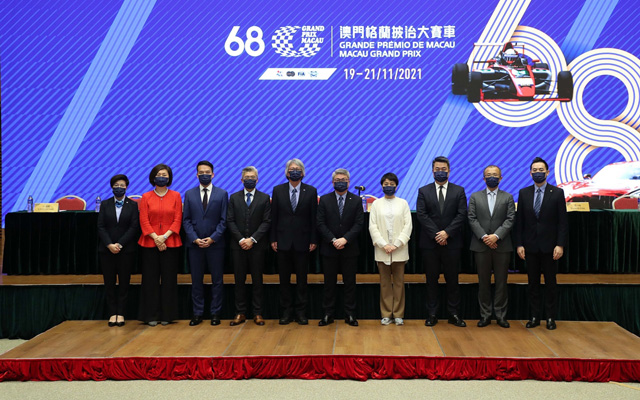
This year’s Macau Grand Prix will return from November 19 to 21 with six races sponsored by major integrated tourism and leisure enterprises in the destination.
The races with their title sponsors are: SJM Formula 4 Macau Grand Prix, Sands China Macau GT Cup, Galaxy Entertainment Macau Guia Race, Melco Macau Touring Car Cup, MGM Greater Bay Area GT Cup, and Wynn Porsche Carrera Cup Challenge.
Macau Grand Prix 2021 will feature six races, each sponsored by a major tourism company
The Macau Grand Prix season will also feature numerous public events, such as the Family Carnival at Tap Seac Square on November 6 and 7, where children can learn about behind-the-scenes work on the races; the Car Show at Tap Seac Square on November 13 and 14, where race cars are displayed; the Macau Grand Prix opening ceremony at the same venue on November 13; live broadcast of the races at various locations throughout the local community; and Grand Prix photo contests.
All activities will be conducted in strict compliance with health and safety measures set by the health authorities.
As the Macau Grand Prix is recognised as the destination’s most important sports tourism brand, the Macau Grand Prix Organizing Committee hopes that hosting the event this year as scheduled will send a clear message that Macau is safe to visit and that the event will promote the development of different industries, thereby boosting the local economy.
Global broadcast of the event will also serve to positively promote Macau’s image, noted the press statement.
Tickets for the event have gone on sale since October 26, with prices ranging from MOP50 (US$6.20) for November 19 to MOP400 to 1,000 on November 20 and 21 race days.
In consideration of the pandemic’s impact on spending power, special discounts will be offered on tickets this year to encourage residents and visitors to join in the festivities.
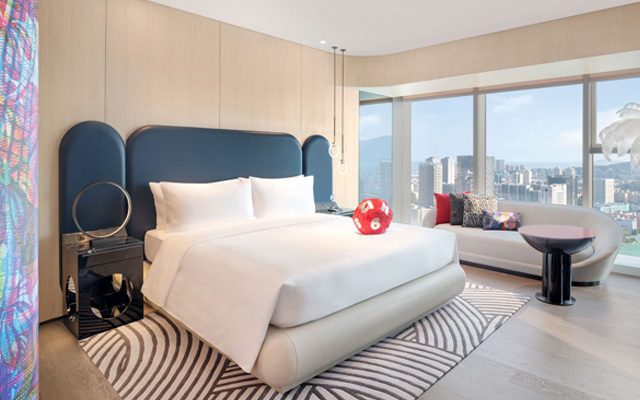
W Xiamen, China
Set in Xiamen’s trendy, downtown East Business District, the new 293-key W Xiamen pays tribute to the city’s tropical surroundings, natural harbour draws, and her transformation from an industrial port city to a modern music mecca.
A strong artistic sense is convey from the entrance, with the Living Room (the lobby) built as an electric forest made of neon glass pillars along with an interactive art piece centrepiece that plays flute notes every time guests approach. Guestrooms and suites bear feature walls that use digitally rendered artworks to bring the city’s tropical nature indoors by means of shifting pieces of a colour puzzle.
Over at W the Store, the iconic look of Gaojia opera singers is reimagined as contemporary art, with hypnotic faces rendered in oil paint on curved metal walls.
W Xiamen’s four distinctive dining concepts present innovative fare and eclectic beverage offerings. At pool bar HEAT, music curator Marc Lussier spins as guests sip on Champagne in a hot tub. On the menu are modern street food-inspired bar bites and cocktails that pay homage to the island’s ancient Amoy heritage.
At the Living Room, guests can recharge at SOUNDSCAPE over organic brews and healthy beverages to the soundtrack of W-curated music.
Thrill-seekers can dive into a fusion of Cantonese and Minnan flavours at MIN YEN, which hosts private Cognac tastings paired with mystery menus.
For all-day dining, NINE is an upscale food hall by day with nine interactive stations and a premium destination for premium steaks and seafood at night. In the afternoons, NINE serves a sophisticated high tea that highlights Fujian’s tea culture with a selection of rare infusions, along with customised craft beers.
Other facilities include meeting venues, a 24/7 fitness centre, and a spa.
Best Western Premier Sapphire Ha Long, Vietnam
The 1,008 room and suite Best Western Premier Sapphire Ha Long is now open and welcoming travellers to experience the UNESCO World Heritage destination of Ha Long Bay.
The waterfront hotel overlooks the iconic, island-studded seascape, with accommodation designed to take in panoramic views of Ha Long Bay. All come with private balconies and feature timeless Vietnamese style décor with contemporary flair and upscale amenities.
A Perfect Staycation offer is now available for booking until December 2021, for stays through March 31, 2022. Perks include daily international breakfast buffet, a set lunch or dinner, a free upgrade to the next available room category, as well as an early check-in at 12.00 and late check-out at 18.00.
Kingsford Hotel Manila, Philippines
Local hotel chain Megaworld Hotels and Resorts has soft-launched Kingsford Hotel Manila in the entertainment city of Paranaque.
Available now are 529 rooms across four categories, three dining outlets and a 300-pax function hall.
Guestrooms are perfect for business and leisure travellers looking for an ideal space to recharge, celebrate, and stay up to date with friends and family. Guests with special needs will be taken care of too.
The hotel also boasts an outdoor pool, a fitness centre designed to keep guests active even in the new reality as well as 300 Mbps Wi-Fi connection.
It is eight-minutes away from Ninoy Aquino International Airport via the express way, and is a stone’s throw from casinos, amusement parks, shopping malls, theatres, and convention venues.
Grand Mercure Malang Mirama, Indonesia
Grand Mercure Malang Mirama draws inspiration from the harmonious combination of deeply rooted local wisdom, art and culture while conveying the Malang landscape surrounded by majestic mountains.
Located just 10 minutes away from the exit toll gate of Singosari, 15 minutes from Abdul Rachman Saleh Airport, and in close proximity to many tourist destinations as well as the business district, this new hotel is a perfect choice for business and leisure travellers alike.
There are 264 rooms and suites with picturesque views, all adorned with local artwork and outfitted with high-tech solutions, including a smart TV and high-speed Wi-Fi
Dining facilities include Trimurti, a multi-cuisine all-day dining restaurant, Lan Hua Chinese restaurant, Ebisu Japanese restaurant, Coffee Café, Sky Lounge and Executive Lounge.
Families or fitness enthusiasts can enjoy the outdoor swimming pool, gym facilities, jacuzzi, spa and sauna.
Corporate groups are supported by convention facilities which can accommodate up to 2,200 guests, as well as parking spaces for up to 500 vehicles and 20 buses.
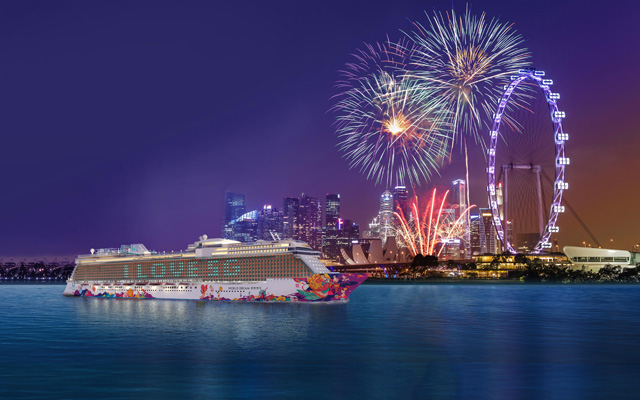
Dream Cruises will celebrate its first year milestone in resuming cruise services for the Singapore market on November 6 with World Dream, an achievement that has resulted in expanded market demographic and onboard guest spend as well as creative product breakthroughs.
Since its inception in 2020, World Dream has welcomed close to 200,000 Singapore residents aboard with over 150 Super Seacation voyages. Demand remains strong, with most sailings for the remaining months of 2021 almost sold out, while a strong momentum is registered for early-2022.
World Dream delivered a safe cruising experience for almost 200,000 Singapore residents in the past 12 months
The milestone is shared with Dream Cruises’ fifth anniversary as a brand, making November a “truly special” month, commented Michael Goh, president of Dream Cruises.
“We are deeply appreciative of the continuous support from the Singapore Tourism Board, the local authorities, and the general public, which enabled us to provide Singapore residents with an alternative and safe vacation experience over the past year in these unique circumstances,” said Goh in a press statement.
Throughout the past year, Dream Cruises maintained its engagement with the local tourism sector across various networks, including vendors for provisioning to bunkering, cruise terminal operators, medical service providers, and travel partners. It also contributed to job creation, including opportunities for Singaporeans.
It was also a year of product creativity, as Dream Cruises rolled out several first-of-a-kind initiatives to revitalise the tourism sector. Notable initiatives include Asia’s first Halal-friendly cruise ship, which was certified by both the United World Halal Development and the Global Vegetarian Certification Services in December 2020; a platform to showcase Made with Passion local lifestyle brands onboard World Dream; and a partnership with KrisFlyer – Singapore Airlines’ frequent flyer programme – on an exclusive chartered cruise for members as well as the option to earn KrisFlyer miles on Dream Cruises packages.
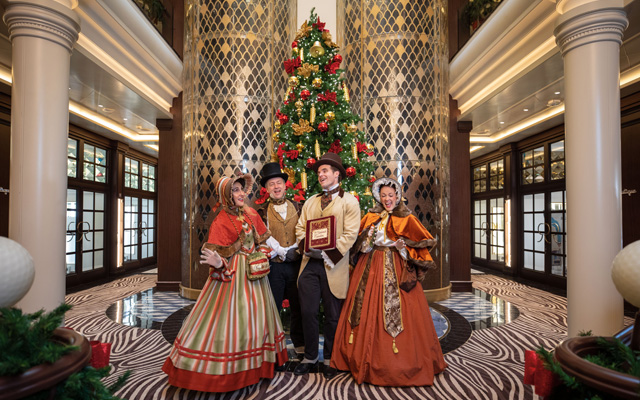
To combat pent-up wanderlust, World Dream crafted thematic cruises that presented Singapore residents with experiences of popular destinations such as South Korea, Thailand and Japan. This concept will be extended into the year-end school holidays and the festive season, with World Dream hosting A Nordic Christmas Adventure special from November 17 to January 1, 2022. Festive traditions of Sweden, Finland, Norway, Denmark and Iceland can be enjoyed onboard through special attractions, activities and gourmet feasts.
According to Dream Cruises, these initiatives has expanded its market reach, converting more Singapore residents into cruise fans as well as attracted more younger travellers, such as millennials and Gen X-ers as well as couples with no children or families with non-school-going young children. With a wider market demographic, guest spend on World Dream in Singapore has risen by 37.5 per cent in 2021 compared to pre-pandemic in 2019.
Sabre Corporation has released the first two products in the company’s Retail Intelligence suite – Sabre Air Price IQ and Sabre Ancillary IQ for the dynamic pricing of airfare and ancillaries, respectively.
Powered by Sabre Travel AI, which integrates Sabre technology with Google Cloud’s artificial intelligence (AI) technology and advanced machine-learning services, Retail Intelligence enables airlines to dynamically provide offers to travellers based on preferences, marketplace insights and purchase probability.
Sabre’s new Retail Intelligence solutions allow airlines to create a more personalised traveller experience
Sabre Travel AI is a creation of the Sabre + Google Innovation Framework, formed through Sabre’s strategic partnership with Google.
“We are facing a rapidly changing world and the travel ecosystem looks very different than it did just 18 months ago,” said Wade Jones, chief product officer, Sabre Travel Solutions.
“Traveller expectations for relevant and personalised offers are growing, and airlines are more focused than ever on becoming sophisticated retailers. Relying on traditional strategies based on historical data patterns isn’t enough – airlines need intelligent solutions driven by artificial intelligence and machine learning. This is what we are offering with Sabre’s Retail Intelligence suite of products.”
Sabre Air Price IQ increases airlines’ pricing agility and precision by allowing airlines to adapt quickly to changing marketplace conditions. Considering traveller segment and trip intent from the shopping request, the product supports an airline’s efforts to maximise revenue opportunities while providing a seamless experience to travellers.
Sabre Ancillary IQ uses machine learning to present ancillary offers based on multiple factors, including real-time shopping data and purchase probability to increase incremental revenue opportunities and traveller satisfaction. As a result, airlines can deliver increased value and more choice to their travellers.
The products are expected to boost airlines’ incremental revenue by up to three per cent when combined with upcoming products being added to the Retail Intelligence suite in 2022.
Sundar Narasimhan, president, Sabre Labs and Product Strategy, said: “As travel retailing becomes more complex to meet increasingly sophisticated consumer expectations, the rules-based technology in use across the industry today will no longer deliver satisfactory results.
“To truly modernise travel retailing, the industry requires intelligent systems that allow for continuous learning and scaling at speed. At Sabre, we are focused on equipping our customers with those AI-based solutions that will modernise the way we shop, book and experience travel, delivering incremental value for our customers and the travellers they serve.”
Sabre and Google are developing other innovative new technology that delivers modern, data-driven, omni-channel solutions that enable highly personalised traveller experiences.
As one of the first tourist destinations in the world to relax entry requirements to facilitate tourism recovery, the Maldives has led a shining example in a post-pandemic world of travel and tourism.
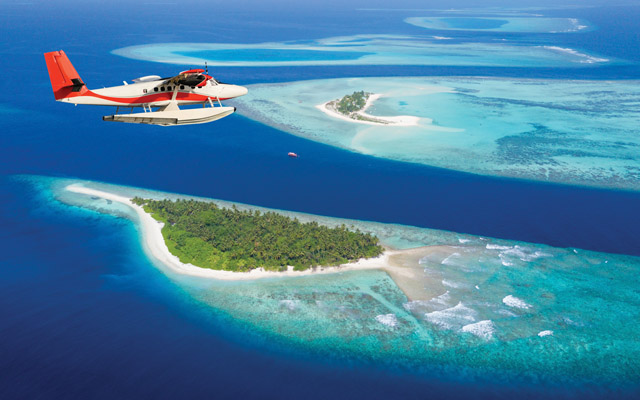
The Maldives will celebrate her tourism golden jubilee in 2022 with numerous activities
With the Maldives’ golden jubilee of tourism coming up in 2022, the destination will continue to bask in the spotlight. A series of activities are lined up to celebrate the milestone, with marketing efforts kicking off in November 2021.
Thoyyib Mohamed, managing director of the state-run Maldives Marketing and Public Relations Corporation (MMPRC), said consistent destination development and marketing have established Maldives as a fierce competitor on the global travel market.
Despite travel challenges, the MMPRC has maintained aggressive marketing and ensured presence in several international trade fairs and roadshows.
Numerous partnerships have also been struck in 2021 to drive travel bookings. From July 2021 until June 2022, Visit Maldives and Qatar Airways will jointly promote the destination as a safe-haven for travellers from Europe, the Middle East and the Americas. With travel portal TripZilla, Visit Maldives will ensure that the destination remains top-of-mind among South-east Asian travellers.
In the year ahead, MMPRC will focus on courting the millennials, which make up 40 per cent of the global travel market. According to the Maldives Visitor Survey, nearly half of the visitors to the Maldives are below the age of 35 years, with 60 per cent of them discovering the destination on the Internet.
“This is an opportune time for the Maldives to reap the benefits of these trends by identifying our strengths, and refining our approach,” he said.
While the Maldives has first-mover advantage in courting travellers in the post-pandemic era, Dilip Rajakariar, CEO of Minor Hotels Group, warned that 2022 would be a competitive year as many other destinations reopen to global tourism.
Having said that, Rajakariar expects a “solid year” for the Maldives, building on the strong demand seen in 2021.
Most of the destination’s 200-plus resorts are open for business, and expectations are high that the target of 1.2 million arrivals will be met in 2021. The Maldives has set a 1.5 million arrivals target for 2022.
The Indonesia government has announced further easing of entry restrictions for international travellers, and will add facilities to improve the quarantine experience for visitors.
Fully vaccinated travellers may now enter the country with a negative PCR test results, and serve a shortened quarantine period of three days instead of five as well as take a mandatory PCR test on the last day of their isolation.
Indonesia has cut quarantine duration for fully vaccinated international travellers and is preparing harbour gateways in Bali, Batam and Bintan
Travellers with only one shot of vaccine will be required to undergo five days of isolation and a mandatory PCR test on the fourth day of their quarantine.
In addition, the government has teamed up with the Association of Leisure Boats Network to offer the Live on Board (LOB) programme for fully vaccinated travellers to utilise during their quarantine, revealed Sandiaga Uno, minister of tourism and creative economy.
Some 38 boats have signed up for the programme.
Rizki Handayani, deputy of tourism products and MICE, said the boats are checked to ensure they abide by Indonesia’s Cleanliness, Health, Safety, and Environmental Sustainability protocols.
She added that with the LOB programme, travellers may cruise around during their quarantine. Disembarkation will only be allowed when they present negative PCR test results on the last day of their quarantine.
Sharing further insights on the government’s plans to restart tourism, Sandiaga said his office has proposed travel lanes with eight more low-risk countries – Austria, Australia, Denmark, United Kingdom, Switzerland, Russia, the Netherlands, and Germany – to benefit Bali.
Besides entry via the airport, preparations are underway to establish Bali’s Benoa harbour as an international gateway.
Elsewhere in the country, the harbours of Batam and Bintan are also being prepared to facilitate international arrivals via cruises and yachts.
Commenting on the latest announcements, Jongki Adiyasa, executive director of Ina Leisure Tour and Travel, said the combination of a shortened quarantine with the LOB programme “made sense” and is “saleable”, but added that enforcement of safety protocol onboard is questionable.
Hospitality company Accor has launched a new talent attraction programme, Work Your Way, to bolster its workforce as Australia and New Zealand gear up for a tourism rebound.
More than 1,200 jobs will be available at most of its 400 hotels across the two countries, as Accor seeks to expand its current workforce of 18,000 team members by up to 15 per cent over the coming months.
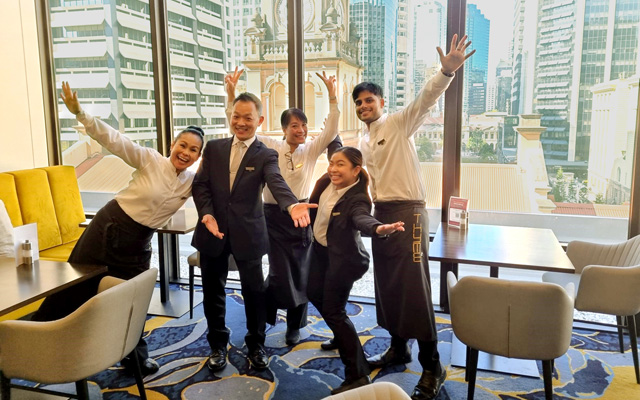
Flexible work, enhanced staff perks and career development are central to Accor’s new recruitment programme; Sofitel Brisbane Central team pictured
The Work Your Way programme is said to have some revolutionary features, such as same-day hire opportunities for frontline roles; personalised benefits, where each hotel will offer additional perks based on their location and team preference, including travel allowances, birthday leave and sabbaticals; open pathways to travel and work around the region; advanced career development through the Accor Academy; and flexible work arrangements for all staff.
Accor Pacific CEO, Simon McGrath, said: “The hospitality industry has an exciting future ahead, and our guests are telling us that they cannot wait to start travelling again. As domestic, and soon international tourists, flock back to hotels and restaurants across Australia and New Zealand, the industry needs talented individuals who wish to build a rewarding career.”
Explaining the nature of the Work Your Way programme, Accor Pacific senior vice president talent & culture, Sarah Derry, said: “Lives and dreams don’t always fit neatly around working hours and current roles – that’s why we’ve introduced Work Your Way at Accor.
“We recognise that greater flexibility in the workplace creates a fulfilling and inclusive team member experience where our team can contribute in a healthy, stimulating and productive way, while advancing their career with the largest hotel operator in Australia and New Zealand.”













Ogden’s appointment sheds light on the company’s expansion plans, through the implementation of global solutions and processes to streamline product to market capability.
Prior to the appointment, Ogden helmed Discova’s worldwide expansion strategy, laying the foundations for the company’s ambitious plans for growth since 2020. A year prior, she was global product and strategy leader, and had joined the company from Flight Centre Travel Group, where she was a celebrated leader for over 20 years.
She said: “Discova has always been a forward thinking organisation with a bright future, so I’m really excited for the opportunity to build on our strategy for expansion. We’ve had some very interesting projects bubbling away during the travel hibernation period and I can’t wait to start bringing them to life as the world re-opens.“
She revealed that technology will be an important focus, and the aim is to “provide our partners with access to a world-class product range for their tailor-made or group customers, and enable them to transact and collaborate with us in any way they prefer – whether that’s by email, phone, online booking portal or direct API integration”.
Discova’s managing director Suyin Lee, emphasised that “the future for Discova is expansion”, and plans have been defined over the last 18 months.
“(Ogden) is an expert in this field, and having already established our path into many more destinations, she is the perfect person to lead us forward in the product-to-market space,” Lee added.