Sri Lanka’s hoteliers plead for financial aid to save sector from collapse
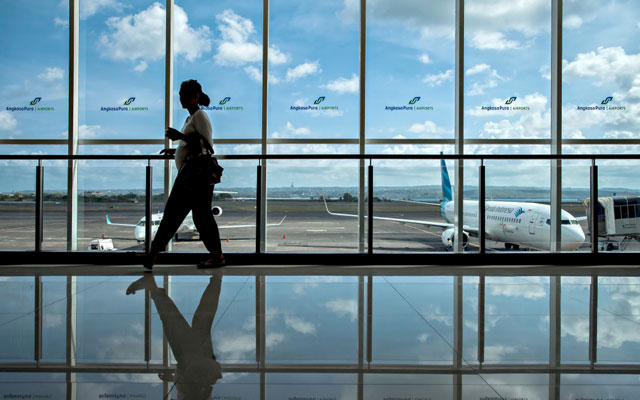
Sri Lanka’s hotel operators, whose businesses have been left crippled by the Covid-19 pandemic, will seek financial relief during a crucial meeting with representatives from the country’s main Central Bank on Tuesday (June 29).
“We are hoping for some relief from the Central Bank and the government to stay afloat as our financial obligations have gone beyond crisis levels,” said Sanath Ukwatte, president of The Hotels Association of Sri Lanka.

Among the proposed financial assistance to be discussed at Tuesday’s meeting is a three-year waiver of interest on loans; extension of the loan moratorium which ends in September; and a wage support scheme for hotel staff.
“We don’t have cash flows but we have to pay salaries and maintain the infrastructure,” Ukwatte said.
Despite inbound travel demand for Sri Lanka, the industry is not confident of the forthcoming winter season because the country is on the “red list” of destinations. Under the new traffic lights system for destinations, green countries allow for quarantine-free travel, amber countries require quarantine on return, while red-list destinations are no-go areas.
Ukwatte, who is also chairman of the Mount Lavinia Hotel, a 210-year-old colonial heritage hotel, said the government needs to protect the struggling tourism industry which has three million dependents out of Sri Lanka’s 21 million population. “The tourism footprint in the economy is greater than any other sector, and for this reason, the government needs to protect it before it collapses,” he said.
Since Sri Lanka reopened her borders to foreign holidaymakers on January 21, 2021 – with a temporary 10-day shutdown in May – tourist arrivals to the country have been low, with just 18,000 arrivals from January to mid-June 2021, according to official figures.
Currently, there are 116 ‘safe and certified’ hotels for tourists, while another 20 hotels have been transformed into intermediate care centres for local, suspected Covid-19 patients and a further 48 hotels into quarantine centres for Sri Lankans returning from abroad.
To supplement their income, most hotels in the capital Colombo are offering food deliveries using ride-hailing apps like Uber Food.
One such hotel is Jetwing Symphony Hotels. Chairman Hiran Cooray, however, said that while offering meal deliveries “keep staff occupied and kitchens clean”, the revenue derived from it is insufficient to cover wages.
He added that Sri Lanka’s tourism will only return to its former pre-pandemic glory if the country vaccinates 60 per cent of its population.
M. Shanthikumar, director at the Ramada Colombo, agreed that the food takeaway business is only to keep hotel staff occupied, but not enough to pay salaries and operational bills. He said restaurants and bars in hotel premises remain closed, as per existing health guidelines, and thus, a major component of their revenue is gone.
As of Saturday (June 27), Sri Lanka reported 251,751 Covid-19 cases and 2,905 deaths.
Malaysia extends MCO 3.0 for second time
Malaysia has extended its nationwide lockdown, dubbed movement control order (MCO) 3.0, for the second time to stem the spread of Covid-19.
MCO 3.0 was supposed to end on Monday (June 28).

Prime minister Muhyiddin Yassin said that the government will maintain phase one of the nationwide lockdown until the following three main threshold indicators have been met: The number of new daily Covid-19 cases dip below 4,000, the public health system returns to moderate levels, and 10 per cent of the population has been fully vaccinated.
On Saturday, Malaysia recorded 5,586 new cases and 60 deaths.
Meanwhile, the country’s vaccination programme is in full swing, with more than 7.2 million doses of vaccines having been administered nationwide. Of this, over 5.2 million have received their first dose, while the remaining have received both doses.
Earlier this month, the prime minister had announced the country’s national recovery plan, which is a four-phased exit strategy from the Covid-19 pandemic.
To transition to phase three, the number of new daily infections would have to drop below 2,000, the healthcare system would have to be at a comfortable level with enough beds available in ICUs, and about 40 per cent of the population should have received two doses of the vaccine.
In the final phase four, expected to take place in 4Q2021, the number of new daily infections should stand at less than 500 and 60 per cent of the population would have to be fully vaccinated. In this phase, all economic sectors will be allowed to operate including domestic travel, but under strict SOPs.
Uzaidi Udanis, president, Malaysian Inbound Tourism Association (MITA), stressed on the need to speed up the nationwide vaccination programme to achieve herd immunity quickly and for life to return to normalcy.
“Meanwhile, agents will have to find ways to ‘survive’ until domestic tourism is allowed to recommence,” he said.
On its part, MITA is encouraging members to sell non-travel products to their existing clients. To support struggling agents, the association recently organised a virtual tourism bazaar, which saw the participation of nineteen vendors and generated about RM3,000 (US$723) in sales.
MITA hopes to organise more of such events in future, according to Uzaidi. He said: “We realised that many vendors were selling products that were easily available on other e-commerce sites and in retail outlets. Therefore, their profit margin was small.
“We are looking at approaching the Malaysia International Digital Entrepreneurship Centre to see how we can connect (our agent members) with Malaysian suppliers and help them to market their products to a wider audience.”
Uzaidi added that the association members are also exploring how they can market local products to neighbouring countries such as Indonesia, Singapore, Thailand and even China.
Longer trips look set to boom post-Covid
The pandemic has triggered greater demand for lengthier holidays of more than ten nights, according to a poll by GlobalData.
The data and analytics company noted that, with accidental savers on the rise and working from home making longer trips a possibility, extended vacations look set to boom post-pandemic.

A live GlobalData poll of 602 respondents revealed that over one in four (26 per cent) of respondents now prefer to take a leisure trip of ten-plus nights – the second-most popular length of trip behind stays of between four and six nights (28 per cent).
Gus Gardner, associate travel and tourism analyst at GlobalData, commented: “Many travellers are desperate to escape their lockdown locations and need a change of scenery. A lengthier trip gives the optimal amount of time to switch off and reset, which is likely to be driving the increase in demand.
“Furthermore, GlobalData analysis showed that in 2019, the average trip length was 4.45 days for domestic and 9.22 days for international trips, revealing demand for longer stays has risen considerably since the pandemic began.”

GlobalData noted that while some consumers have experienced a strain on their finances, others have become accidental savers due to less opportunity for recreational spending and reduced expenditure on commuting. These inflated funds may have contributed to the increased desire for longer stays, it added.
Gardner continued: “Travellers who have seen a considerable increase in savings are more likely to splash out on longer stays. Adding an additional night onto a trip generally results in the average cost per night decreasing, meaning the increased cost of a longer stay is minimal. Therefore, those with higher travel budgets will easily be swayed by the prospect of a longer holiday. The pandemic has fuelled the desire to travel and make up for lost time – longer stays are a great way to do this.”
The rise of remote working, which could potentially change the way people travel, has also added to the appeal of an extended holiday.
Gardner added: “The pandemic has accelerated the work from home model, and the tourism industry could benefit. Those that are working from home, especially independent remote workers on a higher salary, no longer require a fixed location and only need somewhere quiet with internet. This new working model, which seems set to stay for some time, could further increase the desire to blend a traditional holiday with a ‘workcation’.
“For those seeking a different location, they may look to book a longer holiday, utilising some annual leave, whilst working remotely for the remaining days to maximise trip length. This new type of traveller could benefit accommodation sharing providers who can offer a home away from home.”
TAT launches Hug Thais project to revitalise battered tourism industry
The Tourism Authority of Thailand (TAT) has partnered with the Thai Chamber of Commerce (TCC) to launch the Hug Thais project aimed at stimulating Thai and foreign tourists’ spending to revive the economy.
Phiphat Ratchakitprakarn, minister of tourism and sports, said, “The Hug Thais project is the latest public-private sector initiative of TAT, the Thai government, and partners like the TCC to reinvigorate Thailand’s tourism industry and the wider national economy. Such cooperation is vital as Thailand progresses towards once again enjoying its status as a preferred tourist destination.”

The word “hug” in local northern Thai dialect means “love”, and was chosen to drive the campaign’s key elements – Eat More, Travel More and Shop More – across “in a warm and friendly manner”, according to a TAT press release.
Yuthasak Supasorn, TAT governor, said the tourism board will provide the marketing and publicity support to stimulate travel and tourism expenditure by encouraging both Thai and foreign tourists to ‘Eat More’ local food, ‘Travel More’ within Thailand, and ‘Shop More’ for products of Thailand at shops and outlets with the Hug Thais logo.
The Hug Thais project will be launched with the pilot Hug Thais Hug Phuket programme next month, to coincide with the much-awaited July 1 reopening of Phuket to tourism under the Sandbox model. This will see the island welcoming vaccinated foreign tourists without quarantine requirements, and is expected to be followed by the reopening of other destinations in the coming months.
Eventually, the Hug Thais project will also be rolled out in other destinations across Thailand.
Yuthasak said: “The Hug Thais Hug Phuket project is aimed at revitalising Phuket’s tourism and service industry and in doing so, leading the way for the similar revitalisation of other destinations around Thailand.”
Among the Hug Thais Hug Phuket initiatives on offer to Thai and foreign tourists will be discounts of up to 10 per cent when they spend 1,000 baht (US$31) or more in the retail sector, and 100 baht cash coupons for use on their next visits at participating shops and outlets.
Sanan Angubolkul, TCC chairman, said the agency will encourage hotels, airlines, transportation operators, restaurants, shopping centres and all tourism players to take part in the Hug Thais project, while providing support on marketing and trade activities, particularly for SMEs.
The Hug Thais project is expected to generate over 100 billion baht to the Thai economy within the next six months.
Dubai Airport unveils in-house Covid-19 testing lab
One of the world’s largest in-house airport labs for the processing of Covid-19 PCR tests has opened at Dubai International Airport (DXB).
The development is part of the country’s efforts to further enhance safe international travel, while accelerating the recovery of the travel sector, Dubai Airports said in a press release.

The result of a collaboration between Dubai Airports, the Dubai Health Authority and Pure Health, the laboratory was inaugurated by His Highness Sheikh Mansour Bin Mohammed Bin Rashid Al Maktoum and His Highness Sheikh Ahmed Bin Saeed Al Maktoum, chairman of Dubai Airports.
Located close to Terminal 2, the over 1,800m² laboratory is a dedicated facility for round-the-clock processing of RT-PCR test samples collected from passengers at DXB. Using latest WHO-standard Covid-19 RT-PCR testing equipment, the lab can process up to 100,000 samples per day and provide reliable results within a few hours.
The lab is equipped with negative and positive pressure rooms and is linked to government reporting platforms, ensuring secure and easy sharing of information between health and regulatory authorities and airlines.
The opening of the lab comes as DXB’s Terminal 1 and Concourse D resumed operations on June 24, following 15 months of suspension due to the Covid-19 pandemic.

Hotel Indigo to land in Riyadh
IHG Hotels & Resorts will expand its presence in the capital city of Saudi Arabia with the signing of Hotel Indigo Riyadh King Abdallah Road.
A new built property, Hotel Indigo Riyadh King Abdallah Road will feature 228 rooms and will open its doors in March 2025. The hotel will offer two dining options, a pool and a fitness centre, in addition to 353m² of meeting and events space.

This development marks the first hotel to be signed under the master development agreement between IHG and RIVA Development Company via its wholly owned subsidiary RIVA Hospitality for Hotel Services Company.
IHG currently operates 38 hotels across five brands in Saudi Arabia, with a further 20 hotels in the development pipeline due to open within the next three to five years.
Accor brings Raffles brand to Dubai
Accor is set to open its first Raffles Resort in the Middle East, on the iconic Palm Jumeirah, come 4Q2021.
Situated within a 100,000m² landscape on the West Crescent of Palm Jumeirah, Raffles the Palm Dubai will boast panoramic sea views and vistas of the Dubai skyline. The resort will offer 389 rooms, suites and villas, each of them featuring a balcony and terrace showcasing sea views.

Raffles the Palm Dubai will offer the signature Raffles Butler service, alongside eight F&B experiences. The on-site Cing Mondes Spa, a Parisian brand, will feature 23 treatments rooms and two private spa suites, as well as an indoor swimming pool.
Flanked by a 500m private white sand beach, the property will debut a new beach club concept showcasing Mediterranean cuisine, entertainment offerings, and more.
Malaysia Airports submits regeneration plan for Subang Airport
Malaysia Airports Holdings (MAHB) has recently submitted a comprehensive strategic plan for the long-term development of the Sultan Abdul Aziz Shah Airport (SAAS), or Subang Airport, to the government.
The plan is premised on three focus areas, namely, Aerospace Ecosystem, Business Aviation and Urban Community Airport. It is meant to propel SAAS into becoming the preferred aerospace and business aviation hub in Asia-Pacific in the next five years.

MAHB group CEO, Mohd Shukrie Mohd Salleh, said in a press statement: “Since mandated by the government in 2005 to develop (SAAS) into an international aerospace park, we have grown the ecosystem by four times, attracting the presence of 60 leading brand names and facilitating capital inflows of over RM500 million (US$120 million).”
He said the regeneration plan will grow the ecosystem further by three times, doubling the number of global and local operators to more than 100 that will create and support a 19,000-strong high skilled workforce.
“It will spearhead Malaysia’s transition into high technology driven IR4.0 industries and high-income nation with a projected value of over RM10.0 billion to the national economy. This is very much aligned to the strategic thrusts identified in the government’s Shared Prosperity Vision 2030 and will achieve the aspirations of the Malaysian Aerospace Industry Blueprint 2030,” he added.
Mohd Shukrie said MAHB is ready now to undertake the SAAS regeneration plan as it has sufficient internal cash reserves.
He added: “The plan requires infrastructure investment of RM300 million staggered over the next five years. This is well within our capability as we still have a strong cash and money market position of RM1.6 billion with RM914 million available for the Malaysian operations. The funding for ready-built or build-to-suit facility can be easily facilitated via a combination of internal cash as well as project financing options.”
Laura Houldsworth joins Booking.com as MD APAC
Booking.com has appointed Laura Houldsworth as managing director & vice president for the Asia Pacific region, succeeding Angel Llull Mancas, who served as managing director for Asia Pacific since August 2018.
With full responsibility for the leadership and development of Booking.com’s Asia Pacific business, Houldsworth will play a critical role in driving business growth, strategy and operations across the region for Booking.com.

As the travel industry navigates its next phase of recovery, she will spearhead efforts to shape the future of travel in the region with a strong focus on supporting Booking.com’s partners in rebuilding their businesses, while ensuring the company continues to deliver the best value to their customers.
Houldsworth joins Booking.com following 10 years at SAP Concur, where she most recently served as senior vice president & general manager for Asia Pacific, Japan and Greater China. She previously also held regional roles in BCD Travel and ABN Amro Private Banking.


![[Headshot]_Laura_Houldsworth](https://ttgasia.2017.ttgasia.com/wp-content/uploads/sites/2/2021/06/Headshot_Laura_Houldsworth.jpg)


While intent to travel to destinations in Asia-Pacific remains strong, that pent-up demand has not translated into bookings as new Covid-19 variants and a resurgence of local community cases hamper reopening plans, according to recent data by Adara.
The report, which tracked search volumes over a 30-day period from May 24 to June 22, found that there is still a strong intent to travel to Asia-Pacific destinations such as Bali, Hong Kong and Australia.
As previously forecasted, the domestic travel market is slowly but surely gaining traction ahead of international routes among countries such as Indonesia and Australia, with growing interest in searches.
Indonesia has the highest pick-up in searches for domestic travel in the region, and Canadian-based travellers, in particular, have shown the most interest in travelling to Indonesia.
Domestic travel in Indonesia has increased, and international routes in Bali have shown strong signs of growth in demand, with volume of searches and bookings having risen by 18.8 per cent and 27.4 per cent respectively.
However, the number of international and domestic trips taken by Indonesian travellers in 2021 has decreased by 86 per cent and 60 per cent respectively compared to 2019 figures.
Canadian-based travellers, in particular, have shown a strong increase with market share of international travel to Indonesia by 178 per cent.
Hong Kong is still attracting stable interest, but is still seeing a marginal decrease in terms of searches and bookings, with volume of searches marginally down by 1.9 per cent and bookings by 2.6 per cent compared to the previous period. Overall booking demand is still 89 per cent lower than 2019.
However, there is still an interest in search demand to Hong Kong from Canada (+52.7 per cent), France (+21 per cent), the UK (+15.3 per cent), the US (+14.5 per cent), Taiwan (+7.2 per cent) and India (+6.4 per cent).
Interest in international travel to Australia has picked up, but has not fully translated from searches into bookings. Increase in market share searches were largely from Canada (+43.8 per cent), South Africa (+19.12 per cent) and New Zealand (+2.8 per cent).
As for countries in Asia, Adara saw notable increase in search demand to Australia from Taiwan (+154.88 per cent), Japan (+86.1 per cent) and Malaysia (66.6 per cent).
Overall searches and bookings for travel to Australia went down 3.6 per cent and 5.2 per cent respectively compared to 2019 volumes.