

IHG signs Holiday Inn property in Dandenong
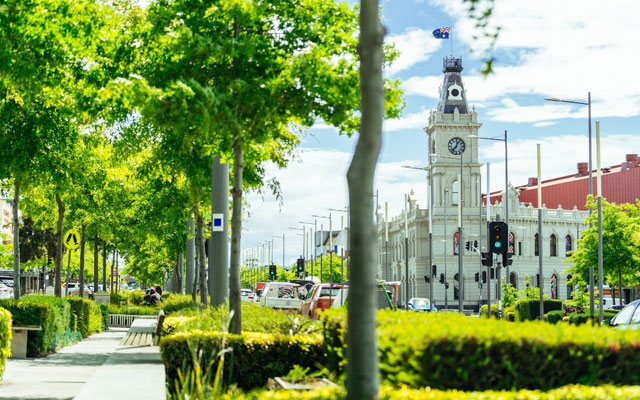
IHG Hotels & Resorts will continue its expansion in Victoria with the signing of the Holiday Inn Dandenong with hotel owners, the Pelligra Group.
This will be IHG’s fifth hotel with the Pelligra Group, joining Holiday Inn Melbourne Airport, the newly opened Holiday Inn Werribee, and upcoming Holiday Inn Melbourne Richmond and Crowne Plaza Melbourne Carlton.
Formerly the Ramada Encore by Wyndham Dandenong, the hotel will undergo a A$10 million (US$7.3 million) refurbishment, and open as a Holiday Inn in April 2022. This will include all 108 guestrooms receiving a major refurbishment plus an additional 18 new rooms added. The lobby will also be transformed to incorporate Holiday Inn’s Open Lobby concept.
Holiday Inn Dandenong will join the 42 open or pipeline Holiday Inn brand family hotels in Australasia and the Pacific.
Robert Cousins joins Niccolo Suzhou as GM
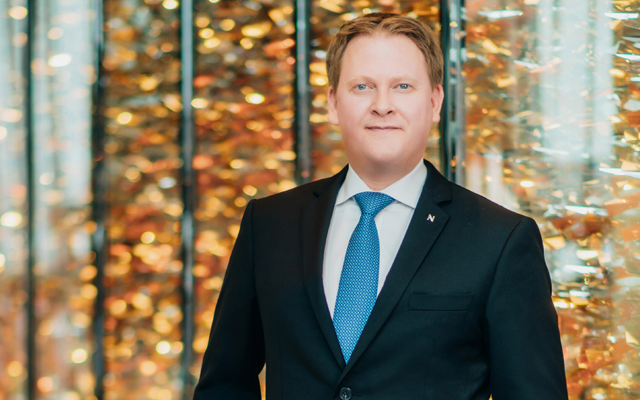
Wharf Hotels has appointed Robert Cousins as general manager of Niccolo Suzhou.
 A 22-year hospitality veteran, Cousins has extensive hotel operations experience in China. Prior to Niccolo Suzhou, he was general manager of Waldorf Astoria Xiamen – which he successfully opened – and previously held leadership positions at Raffles in Hainan, and Fairmont Peace Hotel in Shanghai.
The Canadian began his hospitality career in rooms and expanded his experience in F&B, while working in Canada and the US.
Western Australian adventures await onboard Dream Cruises
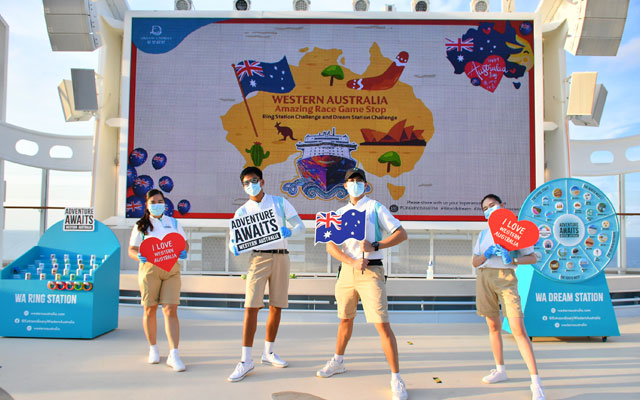
Passengers aboard the Dream Cruises can now soak in the tastes, sights and sounds of Western Australia, from the world famous Margaret River wine region to the spectacular Pinnacles desert.
In the first-of-its-kind collaboration with a cruise company that is ongoing till November 6, Tourism Western Australia has curated a gamut of fun-filled adventures ranging from Swan Valley gourmet produce sampling to Amazing Race games.
Passengers can also choose to book a Western Australian thematic cabin package which includes a plush toy, dry bag, mobile ring grid and a wine pairing menu for two at the Prime Steakhouse & Seafood Grill Restaurant by Mark Best.
Interiors of the 10 themed cabins feature decorations and imagery showcasing the iconic features of each Western Australian region. These familiar landmarks include the Blue Boat House, Busselton Jetty, Roebuck Bay, Pinnacles and Wildflowers at Canna Reserve.
Ava Ang, country head for Tourism Western Australia, Singapore & Malaysia, said: “With the anticipation of borders reopening in the next few months, this partnership is our way of stimulating visitor interest to Western Australia. By bringing a sampling of the experiences onboard, we seek to inspire travellers to fly to Perth and enjoy all that the State has to offer.”
Passengers get to savour the culinary taste of the Swan Valley produce in the Markets of the World, an array of food stalls representing international delights. Sampling of House of Honey products, Moorish nuts, Whistler chocolates and Mondo nougat is available.
Orders can be placed for these products as well as wine from Upper Reach, Riverbank Estate, Sittella, Oakover, Faber Vineyard, Sandalford, Pinelli Estate and Mandoon Estate onboard the cruise.
Passengers can also dine on the popular Western Australia rock lobster at specialty restaurants on the ship. The produce, worth A$20,000 (US$14,686), is flown in specially by Destination Perth and the City of Swan.
Quinton the Quokka from the world’s cutest marsupial family, found only in Western Australia, will also make an appearance onboard. There are plenty of selfie moments at various recognisable backdrops of Western Australia spread around the cruise ship. The winner of the best selfie will walk away with an all-expense paid trip for two to Western Australia worth A$9,999.
Quokka soft toys and other prizes including a Western Australian hamper are in store for winners of the Western Australia Amazing Race stops and the Trivial Wall.
Malaysian stakeholders form alliance to prepare for tourism reopening
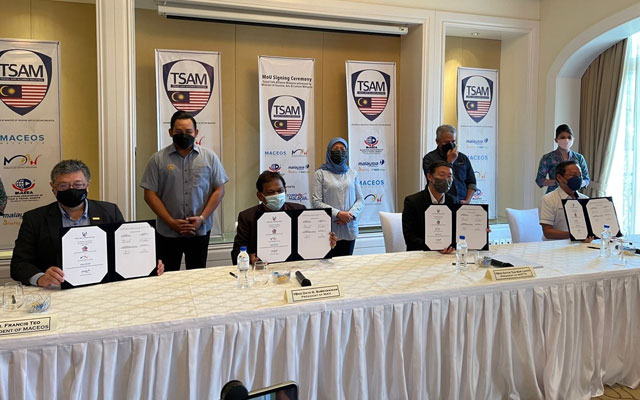
Four major tourism players in Malaysia have joined forces to ramp up destination readiness and facilitate Malaysia’s reopening to leisure and business travellers as interstate travel resumes from today (October 11).
The four players are the Malaysian Association of Convention and Exhibition Organisers and Suppliers (MACEOS), Malaysian Association of Hotels (MAH), Malaysian Association of Tour and Travel Agents (MATTA) and airlines under the Malaysia Aviation Group (MAG) comprising of Malaysia Airlines, Firefly and MASwings.
The signing of a MoU on Sunday at The Danna, Langkawi, focuses on combined efforts to be led by the three association giants in the industry and the national airline company to establish a Travel Safe Alliance (TSA) Malaysia and to position Malaysia as a safe destination for leisure and business travellers.
Certified by Bureau Veritas Certification Malaysia, it is a complete ecosystem of safe travel solutions made up of the “Travel Safe” label for travel and tour arrangements, “Clean & Safe Malaysia” label for hotels, and “SafeBE” for Business Events and convention venues.
Signatories to the MoU were MATTA president Tan Kok Liang; MAH president N. Subramaniam; MACEOS president Francis Teo; and Group CEO of Malaysia Aviation Group, Izham Ismail.
At a virtual press conference on Sunday, Nancy Shukri, minister of tourism, arts and culture, stated that her ministry recognises and supports the three certification programmes.
She said: “We need extraordinary strategies such as these to revive not only the tourism and business events industries, but also the socio-economy of the country. More vital collaborations between the public and private sectors is the key to accelerate the recovery of our industry and economy.”
She said the ministry is also getting feedback from Tourism Malaysia’s overseas directors on the expectations of foreign travellers in the new normal, so that Malaysia can meet their expectations once borders reopen.
In his opening remarks, Tan shared that the TSA Malaysia is working very closely with Singapore Safe Alliance on proposals based on safety standards on “how we can quickly work with our respective governments to reopen reciprocal travel arrangements between our two countries beginning with travel bubbles like Langkawi and business events in Singapore”. He added that details of the partnership will be announced later this month.
The Alliance has also made a number of proposals to the Ministry of Tourism, Arts and Culture on ways to speed up recovery through the Travel Safe programme.
In a live telecast on Sunday, prime minister Ismail Sabri Yaakob announced that interstate travel will resume nationwide from Monday as 90 per cent of the country’s adult population has been fully vaccinated. Interstate travel has been banned since January to curb a surge in Covid-19 cases.
He added that international travel will also be allowed from Monday for those who are fully vaccinated. However, travellers must do a swab test three days before returning to Malaysia, and another swab test upon arriving in Malaysia.
Industry welcomes govt’s proposal of setting up culture, sports and tourism bureau
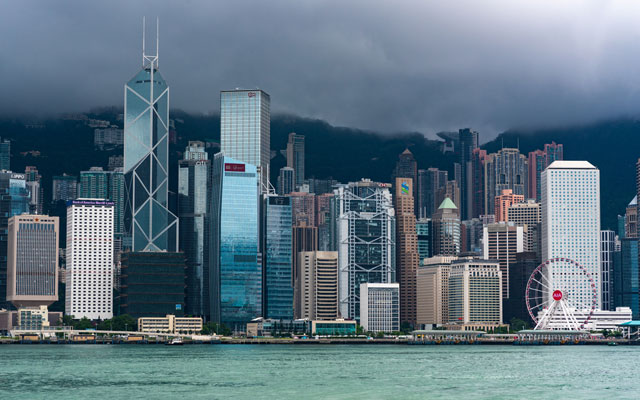
Hong Kong’s chief executive Carrie Lam laid out her vision for the city in her last policy address delivered last Wednesday (October 6), including to work out a detailed re-organisation proposal for consideration and implementation by the next-term government.
Her vision included the establishment of a Culture, Sports and Tourism Bureau to consolidate the culture portfolio and the creative industries and tourism portfolio currently under the Home Affairs Bureau (HAB) and the Commerce and Economic Development Bureau respectively.
Industry stakeholders have welcomed the proposal, saying that this may facilitate the development of Hong Kong as an East-meets-West centre for international cultural exchange, especially upon the completion of new infrastructure projects.
These include the commissioning of the Third Runway of Hong Kong International Airport targeted for 2022, M+ Museum set to open next month, the Hong Kong Palace Museum, the Lyric Theatre Complex, the East Kowloon Cultural Centre, as well as the Kai Tak Sports Park, which can also stage cultural performances in the coming years.
Hong Kong Tourism Board chairman, Pang Yiu-kai, welcomed the proposal which may co-ordinate related works and consolidate Hong Kong’s position as the MICE and tourism capital of the Greater Bay Area, as well as an international travel destination through the hosting of major international MICE events.
A recent survey conducted by Hong Kong Travel Agents’ Relief Alliance showed that 70 per cent of respondents supported the idea of a dedicated Bureau for culture.
Convenor Perry Yiu opined: “The proposal reflected the government’s willingness to take the industry’s advice and prepare for the restructure to spur synergy among sports, tourism and culture.”
She said that the central government’s introduction of the National 14th Five-Year Plan shows its support to position Hong Kong as an East‑meets‑West centre for international cultural exchange. The plan “favours long-term tourism development and reinforce our position as tourism hub,” she added.
The government continues to support the tourism sector with initiatives such as deepening co‑operation with the Greater Bay Area (GBA) cities, establishing the GBA tourism brand, as well as attracting more events and C&E activities to Hong Kong through various funding and promotion programmes.
Come 2025, Hong Kong is set to host the 15th National Games together with Macao and Guangdong – a move which fosters more diversified development in sports.
New tourist-friendly infrastructure, improved accessibility part of Tokyo’s Olympic legacy
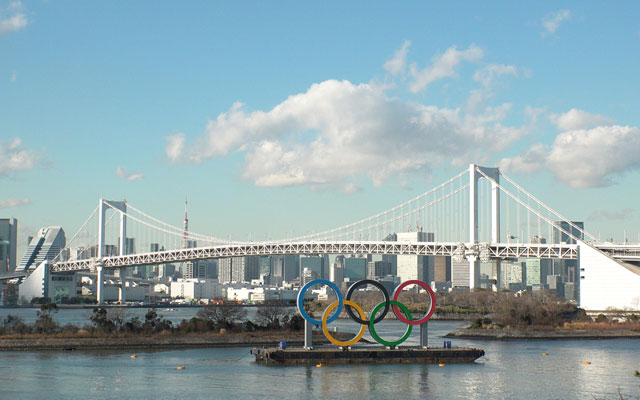
Improved sporting facilities, transport links and barrier-free access in Tokyo are among the legacies of the Tokyo 2020 Olympic and Paralympic Games, according to The Japan National Tourism Organization (JNTO), which has released its findings on the legacy of the Games for leisure and business travellers to Japan.
Plans for the Games’ legacy began to be put in place when Tokyo was selected as host city, in 2013. Organisers and the Tokyo Metropolitan Government made “a commitment to use the Games as a catalyst for the development of new technology that would help make urban environments more sustainable and more accessible,” said a JNTO note.
Since then, Tokyo has seen improved transport links, including widened roads and sidewalks, as well as improved or new barrier-free access at numerous key subway and mainline stations. English-language signage in public areas has increased and smartphone translation apps are available to assist visitors’ communication with shop staff or taxi drivers.
The newly constructed venues around Tokyo Bay will provide new leisure opportunities for visitors, including swimming, canoeing, archery, sailing and rowing. Sea Forest Waterway also has a recreational area with views of the Tokyo skyline.
The former Olympic Village is being converted to a new residential and commercial development called Harumi Flag. The sustainable city-within-a-city will be the first in Japan to be supplied with hydrogen via pipeline from an adjacent site.
Other areas of Japan have also been inspired by the Games’ focus on sustainable development. Hamamatsu in Shizuoka Prefecture is recognised as an SDG Future City by the Japanese government as it operates a strategy of “green resilience”, which involves balancing industrial development and forest conservation.
JNTO is hoping the combination of greener approaches, more tourist-friendly infrastructure and new leisure options will keep Japan firmly on the world’s must-visit list.
“Japan is looking forward to welcoming a new generation of overseas visitors. And Tokyo’s focus on sustainability and diversity, inspired by the city’s hosting of the Olympic and Paralympic Games, promises to make their stay more comfortable and enjoyable than ever,” said a JNTO note.
Trade greets Singapore’s expansion of vaccinated travel lane scheme with open arms
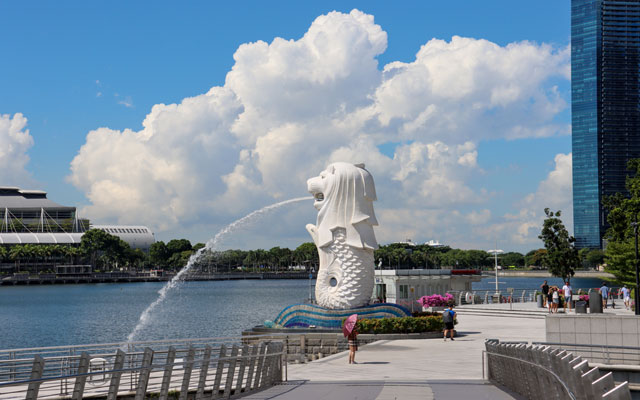
Singapore will extend its vaccinated travel lane (VTL) scheme to eight more countries, allowing quarantine-free travel for fully vaccinated travellers to the city-state.
From Oct 19, fully vaccinated travellers from Canada, Denmark, France, Italy, the Netherlands, Spain, the UK and the US will be able to enter Singapore under the VTL scheme, the Civil Aviation Authority of Singapore (CAAS) announced on Saturday (October 9).
This comes a day after Singapore announced that it will launch another vaccinated travel lane with South Korea from November 15.
CAAS said that the extension of the VTL scheme comes as close to 85 per cent of Singapore’s population have been fully vaccinated, as well as the “successful implementation” of the VTL for Brunei and Germany.
It added that the extension is being done “in a cautious and step-by-step manner” in order to “reclaim and rebuild (Singapore’s) status as an international aviation hub with global connectivity”.
According to the aviation authority, between September 8 and November 12, a total of 179 travellers from Brunei and 4,497 travellers from Germany have been issued vaccinated travel passes (VTPs) for travel to Singapore.
As as October 8, 1,926 VTP holders from Brunei and Germany have entered Singapore. Of these, there have only been two Covid-19 cases, both of whom were detected at the point of arrival through their PCR tests.
Under the VTL, fully vaccinated travellers from these countries may enter Singapore without quarantine and just need to undergo Covid-19 PCR testing. The number of PCR tests will be reduced from four to two for VTL travellers entering Singapore on or after October 19.
They must also obtain a negative test result 48 hours prior to departure for Singapore, and take another test upon arrival at Changi Airport. They will no longer need to undergo further tests on Day 3 and Day 7.
All VTL travellers will be allowed to present their vaccination certificates issued in any countries under the VTL scheme or Singapore, regardless of which country under the travel lane they depart from.
They must travel into Singapore on designated VTL flights, and may transit via another VTL country to take a designated VTL flight into Singapore. Travellers who are transferring or transiting through Singapore will also be allowed to travel on the designated VTL flights.
Short-term visitors and long-term pass holders will need to apply for a VTP to enter Singapore under the VTL, but Singapore citizens and permanent residents will not be required to.
CAAS said there will be no restrictions on the purpose of travel under the VTL arrangement and no requirement for a controlled itinerary or sponsor.
Application for the VTPs for travel to Canada, Denmark, France, Italy, the Netherlands, Spain, the UK and the US will open on October 12, 10.00 (Singapore time); and on November 8, 10.00 (Singapore time) for South Korea.
Meanwhile, short-term visitors who require a visa for travel to Singapore are advised to apply for their visa only after receiving their VTP approval and before departing for Singapore.
They must also purchase travel insurance with a minimum coverage of S$30,000 (US$22,146) for Covid-19-related medical treatment and hospitalisation costs, prior to travel to Singapore. These visitors must also use the TraceTogether app in Singapore to facilitate contact tracing.
Following the announcement, Singapore’s national carrier Singapore Airlines (SIA) and its budget arm Scoot have said they will launch more flights under the VTL scheme.
SIA will expand its VTL network to nine more cities. From October 19, the airline will operate VTL services from Amsterdam, Barcelona, Copenhagen, London, Los Angeles, Milan, New York, Paris, and Rome. Meanwhile, SIA’s VTL services from Seoul will begin on November 16.
The airline currently operates VTL services from Bandar Seri Begawan in Brunei, as well as from Frankfurt and Munich in Germany.
SIA said multi-city itineraries within VTL countries are allowed if customers meet the 14-day travel history requirement, which includes transit countries. For example, a traveller may fly from Singapore to Paris, and then Paris to Amsterdam, and still be eligible for the VTL flight from Amsterdam to Singapore.
Lee Lik Hsin, executive vice president commercial, SIA, said: “Singapore’s expansion of the VTL arrangements to 11 countries is great news for our customers, who can now reunite with their loved ones more easily or finally go on that overseas holiday.
“The SIA Group supports all measures to reopen Singapore to quarantine-free international travel. This will enable the safe and gradual recovery of Changi Airport as a major air hub, backed by rising vaccination rates and confidence in the robust health and safety measures across the end-to-end customer journey.”
Meanwhile, Scoot will resume thrice-weekly non-stop flights between Singapore and Berlin from October 19.
The airline will also increase the frequency of its non-VTL Singapore-Athens-Berlin return flights to four-times-weekly, with effect from October 17. Consequently, from October 19, Scoot will operate daily between Singapore and Berlin.
The airline said it is also preparing to operate VTL flights to Seoul, South Korea, with the commencement date to be announced “in due course” .
Singapore’s announcement of the expansion of its VTL scheme has been met with open arms by industry stakeholders.
Philip Goh, IATA’s regional vice president for Asia Pacific, called the move “a positive and promising development for the aviation and travel sector”.
He added: “The easing of the testing regime for vaccinated travellers on vaccinated travel lanes from four to two PCR tests will reduce travel costs. That’s an equally important and positive factor. These data-based decisions to open up borders progressively will certainly boost air travel recovery.”
Goh said the association looks forward to more of such progressive and positive developments that will help to restart air travel.
“From the experience we have seen in other parts of the world, including Europe and the US, relaxation of travel restrictions have led to improvements in the travel market and is good for airlines and travel businesses,” he said.
“We recognise that the Asia-Pacific region has a different risk appetite, partly owing to lower vaccination rates in many parts of the region, but we hope this further easing of measures and expansion of Singapore’s border reopening will spur other markets to similarly navigate their pathways towards restarting air travel.”
Calling Singapore’s announcement “very encouraging” and “a step in the right direction”, Goh expressed hope that this will give other Asia-Pacific states confidence to hasten the reopening of their borders.
He noted that while the aviation sector faces a long journey to recovery, with international passenger demand forecast to reach only about 44 per cent of pre-Covid levels in 2022, “positive strides forward in the restart will bring further confidence.”
The Singapore Hotel Association (SHA), which represents 160 member hotels in Singapore, has also welcomed the expansion of the VTL scheme.
Kwee Wei-Lin, president of the SHA, said: “This announcement sends a strong signal about Singapore’s readiness for tourism recovery in the months ahead. Following the smooth pilot of the VTL with Germany and Brunei in September 2021, we are confident that the gradual increase in number of VTLs will strengthen the move to reopen Singapore’s border in a controlled and responsible manner.
“Over the past 19 months, our industry has been working hard to reimagine the new hotel experience through digital transformation, job redesign and upgrading of our facilities. All our members are now in a strong position to welcome the arrival of more international guests through the 11 VTLs.”
Singapore, South Korea to launch vaccinated travel lane from November 15
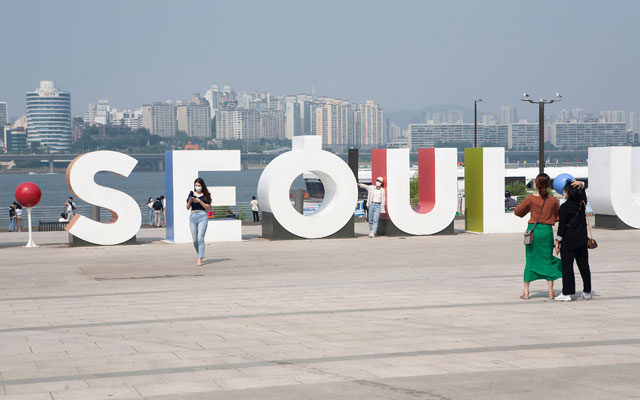
Singapore and South Korea have agreed to establish a travel corridor to allow quarantine-free travel between the two countries for people who have been fully vaccinated against Covid-19, starting November 15.
Singapore’s Ministry of Transport (MOT) said in a statement Friday (October 8) that Singapore will jointly launch Vaccinated Travel Lanes (VTLs) with South Korea that will allow fully vaccinated travellers to travel between Changi Airport and Incheon International Airport, and be subjected to Covid-19 PCR tests, in lieu of serving quarantine or stay-home notice.
There will be no restrictions on the purpose of travel or requirements for a controlled itinerary or sponsorship, it added.
The jointly launched VTLs will be the first of its kind between two major aviation hubs in Asia and build on longstanding relations to safely revive cross-border air travel and people-to-people flows, said the ministry.
The agreement was marked by a video conference on October 8 between Singapore’s transport minister S Iswaran and South Korea’s minister of land, infrastructure and transport Noh Hyeong Ouk.
To support the VTLs, the two countries have also reached an agreement on the mutual recognition of Covid-19 vaccination certificates, which will take effect from November 15. This will allow fully vaccinated travellers with proof of vaccination issued in either Singapore or South Korea to enjoy vaccination-differentiated safe management measures in both countries.
“Singapore and the Republic of Korea enjoy excellent bilateral relations, with strong people-to-people ties. I am pleased that both countries have agreed to jointly launch Vaccinated Travel Lanes that will reopen general travel between our two countries, which has been disrupted for the past 20 months,” Iswaran said.
“Both Singapore and the Republic of Korea have made excellent progress in vaccinating our populations and the VTLs reflect the trust both countries have in each other’s ability to manage the Covid-19 situation. This is another milestone as we reopen Singapore’s borders, and resume air travel in a careful and calibrated manner.”
More details of the VTLs will be announced in due course, said the ministry.
Before Covid-19, Singapore and South Korea were among each other’s top travel destinations, with a total of 64 weekly passenger services connecting the two countries and carrying 1.6 million passengers annually.
Ascott to chalk up 17 lyf properties by 2025
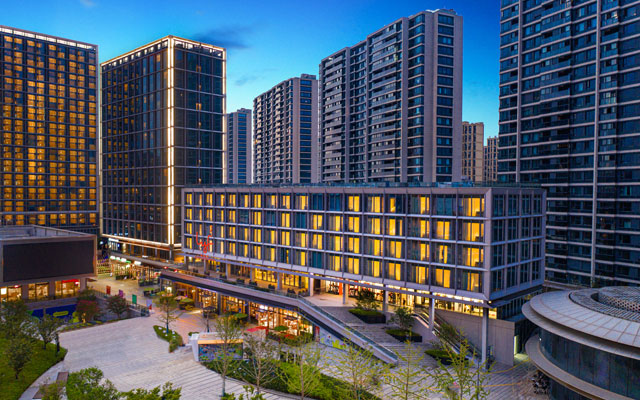
The Ascott Limited (Ascott) has expanded its lyf portfolio to a total of 17 properties with over 3,000 units across 13 cities and nine countries.
The expanded portfolio includes the newly opened lyf Mid-Town Hangzhou, Ascott’s first lyf-branded co-living property in China. It also secured a management contract for its second lyf property in Thailand, lyf Riverside Bangkok, slated to open in 2022.
This follows hot on the heels of Ascott’s recent acquisition of its first lyf property in Europe, livelyfhere Gambetta Paris, through its private fund Ascott Serviced Residence Global Fund in June 2021.
To date, Ascott has opened four lyf properties in Singapore, Bangkok, Fukuoka and Hangzhou. Three more are slated to open later this year in Singapore, Xi’an and Shanghai – lyf one-north Singapore, as well as lyf Dayanta Xi’an and lyf Hongqiao Shanghai in China.
Between 2022 and 2025, 10 more lyf properties are slated to open in Bangkok, Beijing, Cebu, Danang, Kuala Lumpur, Manila, Melbourne, Paris, Shanghai and Singapore.

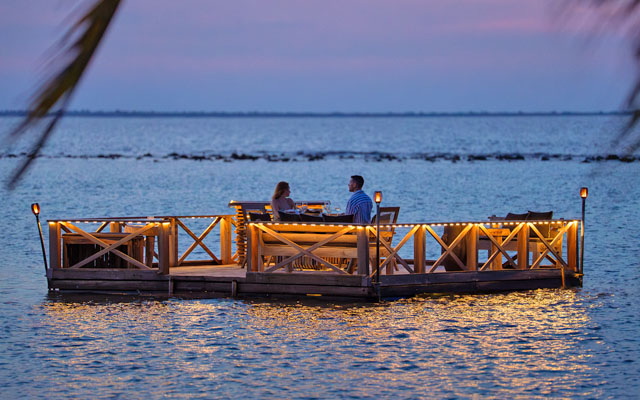






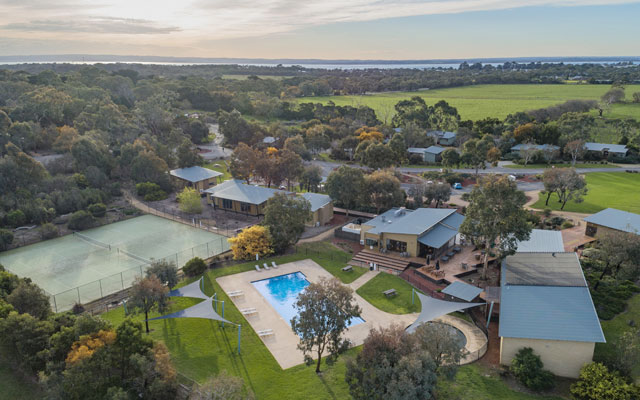
Ramada Resort by Wyndham Phillip Island has completed a A$7.5 million (US$5.5 million) major renovation, adding features like brand new accommodation offerings, and a redesigned restaurant and bar; while also introducing a host of onsite activities.
Nestled on 26.3ha of Victorian bushland, Ramada Resort by Wyndham Phillip Island features studio, two and three-bedroom villa accommodation and is accessed by resort guests and members of Club Wyndham South Pacific vacation club. The resort is home to a range of facilities along with conference and events spaces.
The refurbishment project, which commenced in 2019, included the renovation of 137 villas and the addition of new Deluxe and Grand villas. The onsite restaurant has also been redesigned with a sleek fit out and an upgrade to its culinary offerings. Renamed Flametrees, the restaurant offers an extensive menu, wine list, cocktail bar, and fireside dining.
Family-friendly activities introduced at the resort include an outdoor cinema, jumping castles (during school holidays), trivia and bingo nights, scavenger hunts and kite-flying competitions. The resort has acquired pedal karts and has converted a walking trail into a mini grand prix track as a nod to Phillip Island’s own world-famous circuit.
Onsite facilities also include a gym, sauna, indoor and outdoor spa, two outdoor swimming pools, a children’s wading pool, electric bikes, games room, three tennis courts and a children’s playground.