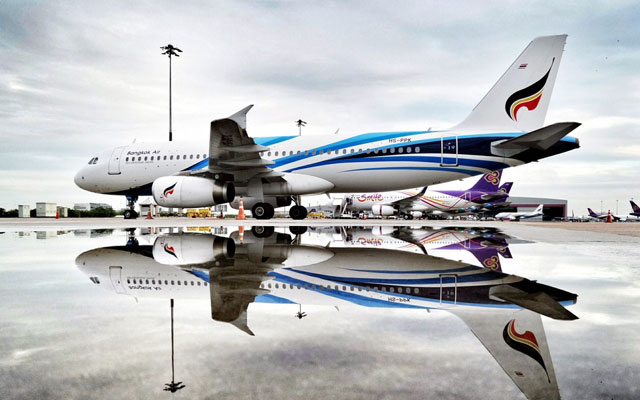
Bangkok Airways is currently operating at only a third of its full capacity on domestic routes, as border curbs continue to hamper air travel recovery.
Of its fleet of 39, the airline is currently flying only 13 aircraft – six airbuses, and seven ATR72-600s – some on scheduled flights, and others on chartered flights.
Bangkok Airways shelves plans for international flight resumption as Thailand battles fresh Covid wave
Operating at such low capacities has impacted the airline’s revenue. At the end of November 2020, Bangkok Airways announced a total revenue of 903 million baht (US$28.7 million) for its operating results in 3Q2020, a decrease of 86.5 per cent year-on-year with net losses of 1,585.1 million baht.
Komkrit Ngamwongwirot, director of key account and ancillary product, Bangkok Airways, said that the airline’s sole focus is on domestic passengers for the time being.
“Similarly to other peers in the industry, we’ve had to shift our focus to domestic. So the message and the media have changed. Thais use a lot of social media, so instead of focusing on the traditional media which also costs more, we use a lot of social media as a medium to communicate with customers at the moment,” he shared.
Komkrit: Social media key for Bangkok Airways to engage domestic travellers
Bangkok Airways used to heavily advertise its international routes – which was a major source of income for the airline pre-Covid, as it flew to 10 other countries in East Asia – and had earlier this year planned to resume international routes in 4Q2021. However, due to Thailand’s worsening third Covid-19 wave coupled with a lack of clarity from the government on a timeline for reopening to international flights, the airline has shelved plans for resuming international flights indefinitely.
“In the short-term, I see some consolidation of airlines post-Covid because of the financial issues,” Komkrit predicted. “In the medium-term, we see technology playing a big part for airlines. We’re moving to digital, API, contactless and biometric technologies. Also, new city pairs (may emerge for) airlines; instead of flying into big cities, hub and spoke, I foresee that in the future, airlines may be looking at smaller city pairs.”
As Thailand’s current third wave of Covid-19 is expected to intensify further, Bangkok Airways has announced that it will postpone the inauguration of its new flight route between Bangkok to Mae Sot until October 17, 2021.
As of April 22, the airline also reported that three routes will be temporarily suspended as follows: the Phuket to Hat Yai route from April 23 to October 30, 2021; and the Bangkok to Sukhothai and Bangkok to Trat routes during the entire month of May 2021.
Singapore will ban all long-term pass holders and short-term visitors with recent travel history to India within the last 14 days from setting foot into or transiting through the country from Friday (April 23), 23.59.
This applies to travellers who have obtained prior approval for entry into Singapore, the Ministry of Health (MOH) said in a press release on Thursday (April 22).
All long-term pass holders and short-term visitors with recent travel history to India within the last 14 days will be banned from entering Singapore from April 23, 23.59
In addition, all travellers with recent travel history to India who have yet to complete their 14-day stay-home notice (SHN) by April 22, 23.59, will need to complete their additional seven-day SHN at dedicated SHN facilities, instead of their place of residence, according to the release.
They will undergo Covid-19 PCR tests on-arrival, on day 14 of their SHN, and another test before the end of their 21-day SHN period.
Singapore’s further tightening of border measures for travellers from India comes following a surge in Covid-19 cases in the South Asian country. In addition, a new Covid-19 cluster was detected among its migrant worker community earlier this week.
While MOH said that there is no evidence that the recent cases at the Westlite Woodlands Dormitory are linked to the new virus strain from India, it said that the stricter border controls are to guard against the risks of any potential “leaks” from newly arriving workers from India, which could cause another wave of infection in the dormitories. It also cited reinfection risks among recovered workers as the reason for the tightening of measures.
With the emergence of new Covid-19 variants, MOH said that it will closely monitor for reinfection of recovered cases, and is reviewing the country’s border measures for recovered travellers. It added that imported cases suspected of reinfection will be isolated and undergo repeat Covid-19 PCR tests to ensure prompt detection.
The multi-ministry taskforce has been closely monitoring the global Covid-19 situation, “especially given the rapidly deteriorating situation in India”, said MOH.
• Buyers say clients are ready to travel as soon as restrictions are lifted
• Vaccination of travellers has helped to boost travel confidence
• Destination research has started; clean and safe destinations are preferred
Although current international arrivals into South-east Asia are still severely marred by a volatile pandemic situation and travel restrictions, regional and international travel trade buyers have begun working on travel programmes in the region for a possible roll-out later this year.
Walter L Keats, president of US-based Asia Pacific Travel, expects travel to South-east Asia to be possible as early as November 2021 and that demand will continue through March 2022 – the typical winter travel season when Americans escape the cold at home.
Regional and international travel trade buyers have begun working on South-east Asian itineraries
His confidence is built upon the ongoing vaccination programme in the US and president Joe Biden’s goal to vaccinate all willing residents by July 4, 2021.
“This will unleash a wave of pent up demand for travel by these Americans,” Keats projected, but added that for outbound travel to be possible, destinations and airlines must agree on acceptable vaccination passports.
While waiting for an encouraging travel landscape to materialise, Keats has started to study the South-east Asian marketplace so as to help with travel programming.
Keats is among more than 150 regional and international travel trade buyers that have registered for Great ASEAN Travel Fest 2021, an online travel trade event focusing on promoting South-east Asian destinations and supporting players working towards business recovery. The event is happening on May 4 and 5, 2021. Participation numbers are expected to climb as registration remains open.
Sharing the same confidence is Zaim Muhammad, representative of Dubai-based Travel Counsellor, who expects the UAE’s successful vaccination programme to spur outbound travel confidence.
Zaim believes that South-east Asia, a popular region among UAE travellers pre-pandemic, will continue to charm once international borders reopen.
Melody Palomares, president of MAVP Travel & Tours in the Philippines and president/founder of the United Travel Agencies and Operators Association, has also started to research into South-east Asian destinations with the potential to welcome her incentive groups. Clients have expressed intentions to “push through with their incentive trips once borders are open”.
New and safe destinations with a track record of low Covid-19 infection numbers are desired, shared Palomares.
Zaim: Vaccinated residents across the UAE are eager and ready to resume international travels
Traveller health and safety as priority is a prime criteria echoed by several Great ASEAN Travel Fest 2021 buyers who spoke to TTG Asia.
Keats said vaccinated American travellers would be confident of travelling even to destinations without a majority vaccinated population, as long as health and safety protocols are in place, such as safe distancing and masking requirements.
Palomares added that outdoor attractions and activities, such as national parks, would be most attractive for her clients looking for social distance assurance. Destinations that offer contact-less screening technology at airports, hotels, restaurants and attractions would also be stand-out options.
As travel planning begins, buyers underline the importance of regular and detailed communications from destination marketers and sellers, particularly in relaying information on Covid-19 travel and activity regulations, new products and services in existing and emerging tourist destinations, and the availability of flexible booking arrangements.
Slow recovery for now
International air arrival numbers into South-east Asia for the period of January 1 to April 15, 2021 have stayed low, according to ForwardKeys’ Air Ticket Data, reaching only five per cent of pre-pandemic 2019 levels.
Researchers at the intelligence firm are not surprised, given the different pandemic situations among ASEAN member countries. They noted that Singapore, whose government has been successful in controlling caseloads, implementing a nation-wide vaccination programme, moving forward with travel bubbles, and establishing safe meeting zones for business travellers like the Connect@Changi facility, is seeing international arrivals recovering to six per cent of 2019 levels.
Domestic air travel recovery outpaces international air arrivals across South-east Asia
Domestic air arrivals within the individual South-east Asian countries look brighter, with Malaysia, Indonesia and the Philippines having clawed their way to 17 per cent, 20 per cent and 24 per cent of 2019 levels, respectively.
Domestic air travel recovery within Vietnam is most outstanding, having surpassed 2019 levels at 120 per cent. The country has escaped relatively unscathed from the pandemic, compared to her neighbours in the region. Domestic flights were resumed and lockdowns lifted in mid-April 2020, allowing tourism recovery to begin from mid-May. Between January 1 and April 11, 2021, domestic air arrivals in Vietnam recorded a 20 per cent increase compared to 2019 levels.
Despite a resurgence of Covid-19 cases in summer, domestic travel picked up steam from 4Q2020 when infections were contained.
Jameson Wong, ForwardKeys’ Asia-Pacific director, told TTG Asia that “the path to recovery in Asia-Pacific will be gradual, fragile and full of unexpected twists as the vaccination drive increases consumer trust, yet a lot depends on the pace of the rollout and new cases of Covid-19”.
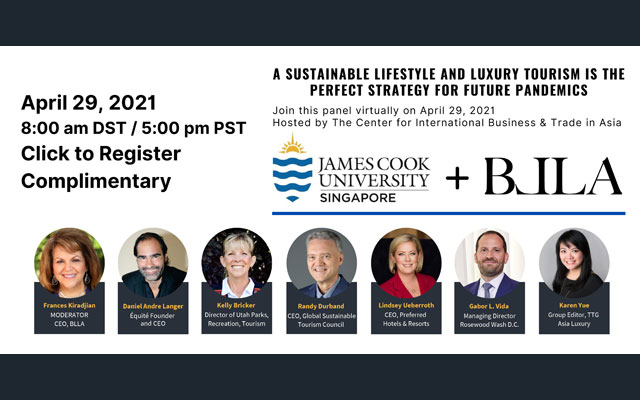
James Cook University’s (JCU) Singapore Tourism Studies Group and Singapore Business School have partnered Boutique Lifestyle Leaders Association (BLLA) to lead exchanges between industry and academic institutions for the integration of intellectual ideas and professional practice, with the first panel on April 30 focusing on the role of luxury tourism in industry recovery.
The discussion will centre on luxury travellers’ contribution to a sustainable tourism industry recovery
Daniel Andre Langer, principal of Equite, will kick off the morning session with a presentation on the Survey of Luxury Travelers & Covid 19, and a discussion will follow with industry leaders – Lindsey Ueberroth, CEO of Preferred Hotels & Resorts; Gabor L Vida, managing director of Rosewood Washington DC; Kelly Bricker, director of parks, recreation, and tourism, The University of Utah; Randy Durband, CEO of Global Sustainable Tourism Council; and Karen Yue, group editor of TTG Asia Media.
Panellists will examine current luxury tourism demand and trends, and discuss the possibility of this niche segment being the solution to a sustainable tourism industry recovery.
It will be moderated by Frances Kiradjian, founder and chair of BLLA.
The panel discussion, from 08.00 to 09.15 Singapore time, is free to attend, and registration can be made here.
A crop of hotels in Bangkok have been converted into “hospitels” – makeshift hospitals to accommodate Covid-19 patients – following the recent surge in infections after the Songkran festival.
Marisa Sukosol Nunbhakdi, president of the Thai Hotels Association (THA), said the “hospitel” idea was initiated by THA, Ministry of Public Health and Bangkok Metropolitan Administration to deal with the shortage of beds at government and private hospitals.
Pullman Bangkok Grande Sukhumvit is one of the hotels in Bangkok that have converted into a “hospitel”
The move is aimed at accommodating local Covid-19 patients, unlike the government’s alternative state quarantine (ASQ) programme which is designed for arriving foreign visitors to serve their mandatory self-isolation at government-accredited hotels.
The latest Covid-19 spike comes after locals travelled across the country to celebrate the major national Songkran holidays from April 12-15, with Bangkok recording the most number of infections among the provinces.
Local media reported that at least nine hotel operators in Bangkok have turned their guestrooms into “hospitels”, including Malaysia Hotel (100 beds), Ozone Hotel @ Samyan (40 beds), Rattanakosin Hotel (150 beds), Indra Regent Hotel (455 beds), Sinsiri Ramintra Hotel (69 beds), Chiva Hotel (75 beds), Synsiri Hotel (52 beds), and Cheer Hotel (200 beds).
It has also been reported that a few more hotels are awaiting approval to join the scheme within this week. Prior to that, their properties will be accessed to evaluate if they meet the medical requirements, and they must also receive permission from their neighbours.
Staff at hotels turned into “hospitels” will receive mentorship and guidance from medical frontliners at public and private hospitals such as Phyathai Hospital, Paolo Hospital, and BDMS Group of hospitals.
Meanwhile, UHG Group, a hotel and real-estate developer which operates many mid-scale hotels, is offering beds and amenities to be used at field hospitals in Bangkok.
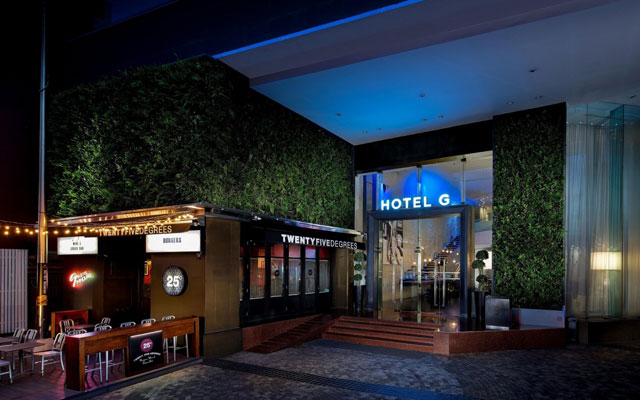
Correction: The original post had used a photo of Pullman Bangkok Hotel G, which is erroneous. Pullman Bangkok Hotel G is not part of the “hospitel” programme; Pullman Bangkok Grande Sukhumvit is. A correction has been made.
Staycationers who book a stay at Fairmont Singapore or Fullerton Hotel Singapore via KKday are in for a sweet treat, as the online travel platform has partnered The Elly Store to offer guests exclusive staycation bundles that come complete with Disney pyjamas set.Fairmont SingaporeFairmont Singapore
Guests who make bookings for stays at Fairmont Singapore or Fullerton Hotel Singapore from April 22 to June 30, 2021 will receive an Elly Store’s Disney Tsum Tsum Pyjamas Set worth S$246++ (US$185++).
Kkday offers family staycation bundles with The Elly Store Disney Tsum Tsum Pyjamas Set
Two exclusive family staycation bundle packages are available at Fairmont Singapore.
The first package for two adults and one kid (S$370++) includes a one-night stay at the Fairmont Singapore, breakfast for two adults and one child, one king-sized bed or two double beds, an Elly Store Disney Tsum Tsum family set of pyjamas (valued at S$187), and a complimentary rollaway bed for children (under 12 years old).
The second package for two adults and two kids (S$420++) includes a one-night stay at the Fairmont Singapore, breakfast for two adults and two children, one king-sized bed or two double beds, an Elly Store Disney Tsum Tsum family set of pyjamas (valued at S$246), a complimentary rollaway bed for children (under 12 years old), and a one-time entry to Kiztopia for three hours of play across the various zones (two Adult and two Kid tickets).
Two exclusive family staycation bundle packages are available at Fullerton Hotel Singapore.
The first package for two adults and one kid (from S$470++) includes a one-night stay at the Heritage Room, breakfast for two adults and one child below six years old (breakfast charge at S$26 per child per day for those aged 6-11 years old), a S$100 dining credit at The Fullerton Hotel Singapore, one king-sized bed or two double beds, an Elly Store Disney Tsum Tsum family set of pyjamas (valued at S$187), and a complimentary rollaway bed for children (under 11 years old).
The second package for two adults and two kids (from S$515++) includes a one-night stay at the Heritage Room, breakfast for two adults and two children below six years old (breakfast charge at S$26 per child per day for those aged 6-11 years old), a S$100 dining credit at The Fullerton Hotel Singapore, one king-sized bed or two double beds, an Elly Store Disney Tsum Tsum family set of pyjamas (valued at S$246), and a complimentary rollaway bed for children (under 11 years old).
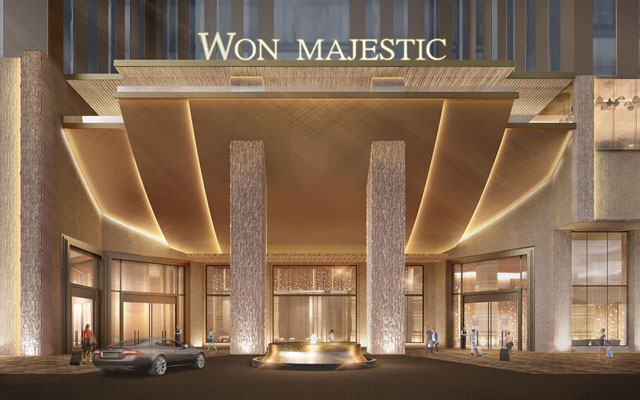
Malaysian-based WA Hospitality will be making its foray into Sihanoukville with the opening of the 300-key Won Majestic Casino Hotel & Resort Cambodia come 1Q2022.
Won Majestic will mark WA Hospitality’s first property in Cambodia when it opens in 2022
Located steps from the picturesque Sokha beach, the property will feature luxury suites and studio rooms, a swimming pool, gym, three restaurants, guest lounge and a casino.
WA Hospitality had been awarded the management contract to manage the hotel by Cambodian real-estate developer Won Majestic, which has vast experience in the casino business in the region.
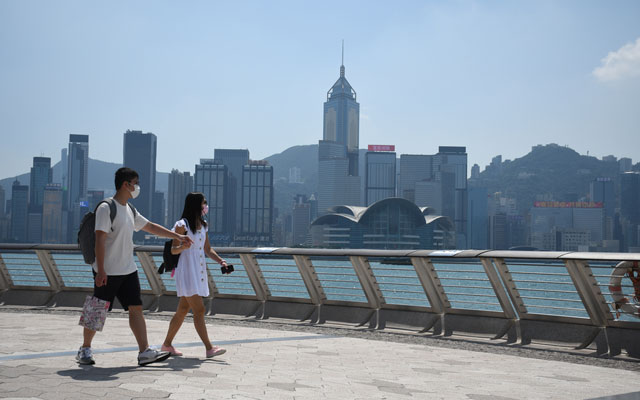
Singapore and Hong Kong have called off an announcement planned for Thursday (April 22) on an air travel bubble between the two cities.
It is not clear why the announcement has been delayed, and a new date has not been set, Bloomberg reported, quoting people familiar with the matter. The report also quoted a source as saying that the cancellation was initiated by the Singapore authorities.
Singapore-Hong Kong potential travel bubble hits another snag as Singapore battles fresh Covid-19 cluster
Media reports had earlier reported that Singapore and Hong Kong were finalising the details of the travel bubble, which will exempt travellers from quarantine. Sources had told the South China Morning Post that the Singapore-Hong Kong delayed travel bubble is on track for a mid-May launch, despite the emergence of new virus variants.
The development comes as Singapore faces a new Covid-19 cluster among its migrant worker community that is linked to an imported case.
Japan’s largest travel agency has launched a virtual reality tourism resource that aims to introduce remotely the country’s top destinations, experiences and products amid ongoing pandemic restrictions.
JTB Corporation teamed up with information media provider Fun Japan Communications and cloud service vendor Fixer to create Japan Virtual Platform, which will begin registration of users at the end of this month.
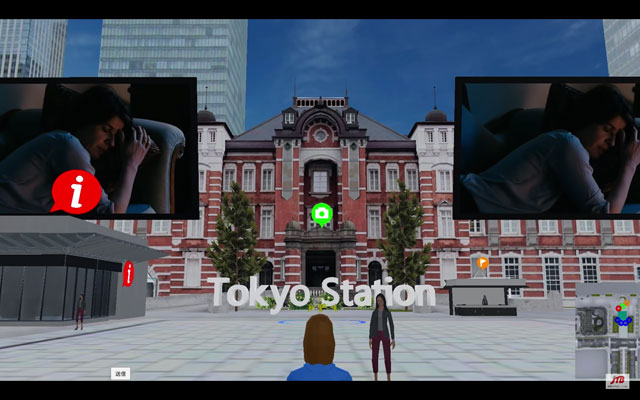
Virtual travellers will be able to tour attractions around Japan using an avatar on JTB’s new VR platform
The initiative is designed to help revitalise Japan’s battered tourism industry as well as regions and local businesses specifically. Initially, JTB will target Japanese users, but its aim is to attract 1.25 million users in Asia and 10 million users worldwide by 2024.
Users will be able to explore various parts of Japan virtually using an avatar. So far, Hokkaido – an area renowned for seafood, dairy products and unspoiled nature – and Tokyo’s sleek Marunouchi district famous for Tokyo Station and the Imperial Palace Gardens have been created, with more areas slated for addition on a weekly basis. Users will also be able to interact with others and learn about the history and culture of Japan.
Local businesses and communities will be able to join the platform to promote e-commerce shopping, which JTB expects to be a popular activity among users.
Eijiro Yamakita, president and CEO of JTB, described the platform as a “new exchange mechanism that transcends the boundaries between real and virtual,” at a time when in-person exchanges continue to be “severely restricted” due to the pandemic.
Daisuke Fujii, president and CEO of Fun Japan Communications, said that the platform could “become a bridge between Japan and overseas” that helps to revive Japan’s tourism and local economy. He added that the project has the potential to “create a new trend in Japan and the world” based on “the connections between people”.
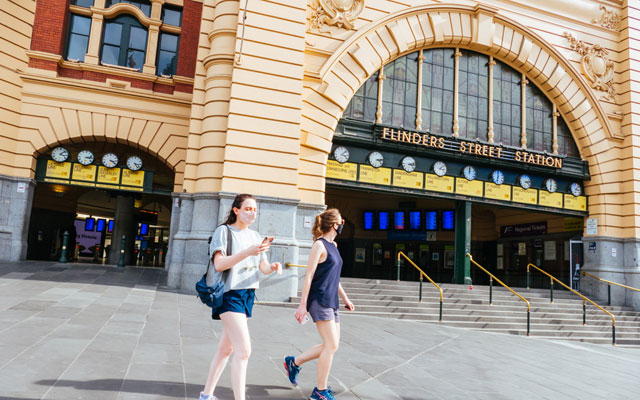
Australia is looking at Singapore as its next target for a travel bubble agreement, after its quarantine-free travel bubble with New Zealand took off this week.
The commencement of the travel bubble – the first for both countries – comes more than a year after air links between the two neighbours were suspended due to the ongoing pandemic.
Singapore tops Australia’s list for potential travel bubble partners; Flinders Street Station pictured
First flights under the two-way travel bubble were near capacity, with almost 10,000 people travelling between the two countries on Monday, the day the travel bubble opened, according to a report by The Straits Times.
With the opening of the trans-Tasman travel bubble and the global vaccine rollout, the Australian government is looking to forge similar agreements with other low Covid-risk countries, including Singapore.
Local news outlets quoted Australia’s deputy prime minister Michael McCormack as saying that the government remains “in discussions” with Singapore on a potential travel bubble between the two countries. He also said that discussions with the Singaporean government were in its initial phase, and that Singapore was top of the list for future travel bubbles.














Singapore will ban all long-term pass holders and short-term visitors with recent travel history to India within the last 14 days from setting foot into or transiting through the country from Friday (April 23), 23.59.
This applies to travellers who have obtained prior approval for entry into Singapore, the Ministry of Health (MOH) said in a press release on Thursday (April 22).
In addition, all travellers with recent travel history to India who have yet to complete their 14-day stay-home notice (SHN) by April 22, 23.59, will need to complete their additional seven-day SHN at dedicated SHN facilities, instead of their place of residence, according to the release.
They will undergo Covid-19 PCR tests on-arrival, on day 14 of their SHN, and another test before the end of their 21-day SHN period.
Singapore’s further tightening of border measures for travellers from India comes following a surge in Covid-19 cases in the South Asian country. In addition, a new Covid-19 cluster was detected among its migrant worker community earlier this week.
While MOH said that there is no evidence that the recent cases at the Westlite Woodlands Dormitory are linked to the new virus strain from India, it said that the stricter border controls are to guard against the risks of any potential “leaks” from newly arriving workers from India, which could cause another wave of infection in the dormitories. It also cited reinfection risks among recovered workers as the reason for the tightening of measures.
With the emergence of new Covid-19 variants, MOH said that it will closely monitor for reinfection of recovered cases, and is reviewing the country’s border measures for recovered travellers. It added that imported cases suspected of reinfection will be isolated and undergo repeat Covid-19 PCR tests to ensure prompt detection.
The multi-ministry taskforce has been closely monitoring the global Covid-19 situation, “especially given the rapidly deteriorating situation in India”, said MOH.