

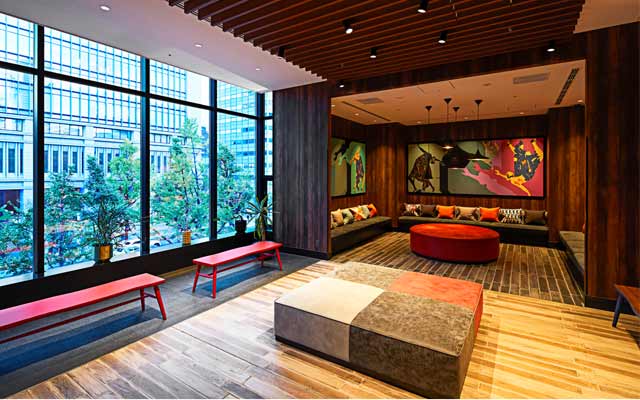
IHG signs four-hotel deal in Vietnam
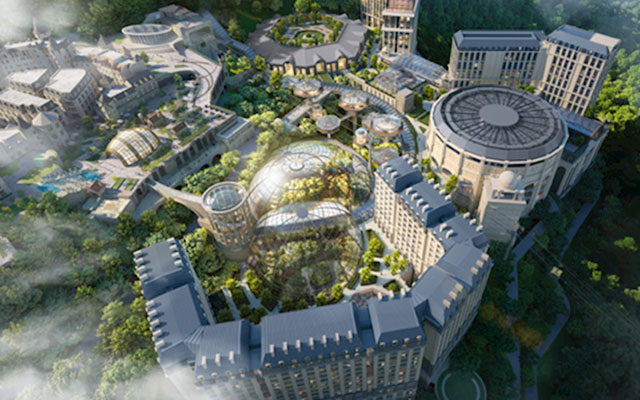
IHG Hotels & Resorts has sealed a four-hotel, 2,709-room portfolio deal in Vietnam with long-standing partner Sun Hospitality Group.
Following their collaboration on the InterContinental Danang Sun Peninsula Resort, the companies will extend their partnership across two integrated development projects that will open in 2026.
The multi-property agreement includes the 616-room Holiday Inn Resort Yoko Park Onsen in Quang Ninh Province – the first large-scale hot spring resort in Vietnam, expanding on the existing Yoko Onsen Quang Hanh Resort.
Three hotels will also be built as part of the ongoing development of Ba Na Hills in the mountains of Danang: the 602-room Crowne Plaza Danang Ba Na Hills, 843-room Holiday Inn Resort Danang Ba Na Hills, and 648-room voco Danang Ba Na Hills.
Serena Lim, vice president, development, South East Asia and Korea, IHG, said: “This marquee portfolio deal is aligned with our plan to grow our estate in Vietnam across all brands. As we work through the recovery, we know that domestic leisure business will be a strong driver of growth in the country. We’re looking to develop a range of destination resort and family-friendly destinations across Vietnam.”
Nguyen Vu Quynh Anh, CEO, Sun Hospitality Group, said: “We are strengthening our strategic partnership with IHG who share our vision of promoting the beauty of Vietnam to the world through sustainable and world-class tourism destination concepts. This is part of our masterplan to build ecosystems that spur tourism and commercial development for the country.”
She added: “Following the success of the Ba Na Hills entertainment complex, we will introduce phase two of our expansion plan where all three new hotels will be managed by IHG. IHG’s three brands complement the myriad of activities that we will be adding as part of this expansion – from an amphitheatre, unique gardens and retail podium for visitors.”
Vietnam continues to be a strong growth market for IHG, with 14 hotels across four brands, and 15 properties in its pipeline.
Philippine Airlines exits bankruptcy

Philippine Airlines (PAL) has emerged from its voluntary Chapter 11 proceedings as a more efficient airline with a strengthened balance sheet.
PAL successfully completed its financial restructuring within four months, in contrast to other airlines that remain in the Chapter 11 process more than a year after filing in 2020.
The Philippine flag carrier credits the strong support of its creditors and shareholders, the cooperation of its industry partners and the collective efforts of PAL employees around the world who sustained flights on multiple international and domestic routes throughout the restructuring period.
PAL has streamlined operations with a reorganised fleet and is now better capitalised for future growth.
The company’s Plan of Reorganization, which was approved by the US restructuring Court on December 17, 2021, provides for over US$2 billion in permanent balance sheet reductions from existing creditors, improvements in PAL’s critical operational agreements and additional liquidity including a US$505 million investment in long-term equity and debt financing from PAL’s majority shareholder.
The airline’s consensual restructuring plan was accepted by 100 per cent of the votes cast by its primary aircraft lessors and lenders, original equipment manufacturers and maintenance, repair, and overhaul service providers, and certain funded debt lenders.
“Philippine Airlines stands ready to help grow back the Philippines’ local and international air travel markets in ways that renew the tourism industry, serve the needs of global citizens including overseas Filipinos, and contribute actively to the recovery of the Philippine economy,” said PAL director Lucio C. Tan III, quoting PAL chairman and CEO Lucio C. Tan.
“Our mission as the flag carrier matters more than ever, and we are thankful for the chance to rebound from the pandemic and continue to fulfil this mission as best as we can.”
Rebranded voco Orchard Singapore offers staycation deal
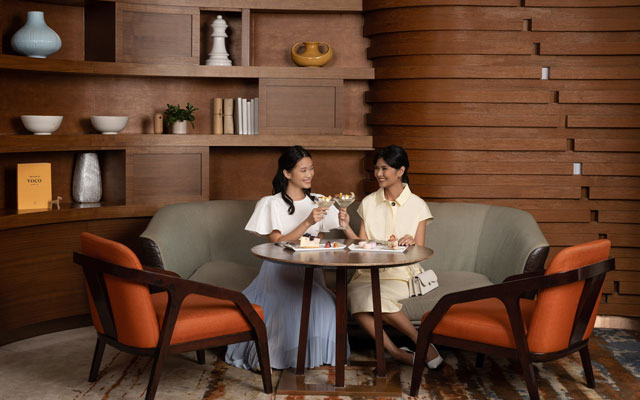
Following a rebranding initiative, voco Orchard Singapore is inviting guests to experience new and refreshed dining and stay experiences, with the launch of a staycation package dubbed voco Experience.
The package includes perks like a homemade spiced cookie as a welcome treat, a slice of D9 Cakery’s classic American cheesecake, and a voco-inspired cocktail at Opus Bar & Grill – choices include the refreshing Rosella, the fruity Spicy Martini, or the bold and smokey Nutmeg Old Fashioned.
Guestrooms will feature high-quality bedding made from 100 per cent recycled materials and eco-friendly bathroom amenities from Apotheke, a plant-based organic skincare company.
The 423-key property houses four restaurants and bars, a rooftop swimming pool, a 24-hour gym, as well as over 1,850m2 of meeting and social event spaces.
Room rates start from S$230++ (US$169) per night per room and include complimentary breakfast for two adults and 10 per cent discount at Opus Bar & Grill. Bookings can be made via vocohotels.com/singapore from now till February 26, 2022 for stays from January 7 to February 28, 2022.
Historic hiking trail in Bhutan set to reopen after 60 years

Come March 2022, the Kingdom of Bhutan will reopen the historic and sacred Trans Bhutan Trail for the first time in 60 years, following two years of extensive restoration.
The trail will be officially inaugurated by His Majesty the King of Bhutan, whose vision it was to restore the ancient route for tourism, adventure and connection.
From April 2022, international tourists will be able to walk the trail for the first time, simultaneously providing much-needed economic benefits to rural communities along the way.
Community tourism pioneer, G Adventures, has been selected by the Bhutan Canada Foundation, the non-profit that led the restoration of the trail, as the first group adventure operator when the trail launches to the public.
Two active trekking itineraries are on offer. The 11-day Camp the Trans Bhutan Trail trip features camping and homestays, while the 12-day Highlights of the Trans Bhutan Trail itinerary offers accommodation in homestays, locally-owned guest houses and hotels.
Yves Marceau, vice president of product at G Adventures, said the operator’s two tours focus on trekking specially selected parts of the 403km trail and connecting with local people to learn about Bhutanese life and culture, thus combining active travel and cultural immersion with the benefits of community tourism.
It is expected that Bhutan’s borders will reopen to tourism ahead of the Trans Bhutan Trail’s official opening ceremony in March 2022. The two new G Adventures trips on the Trans Bhutan Trail depart from May 1, 2022.
MITA labours to plug Perak’s tourism talent shortage

As tourism and hospitality companies scramble to fill job openings vacated during the pandemic, the state government of Perak has collaborated with Malaysian Inbound Tourism Association (MITA) to organise a tourism and hospitality career fair in Taiping this Saturday.
Twenty two companies comprising hotels, travel agencies, event management firms and product operators are expected to participate in the fair, said Uzaidi Udanis, president of MITA.
He said that the career fair is also an opportunity for the organisers to identify the skills that potential candidates are lacking in so as to determine the type of training programmes that are needed.
“Providing the necessary entry level and supervisory training programmes will be the next step (after recruitment),” said Uzaidi.
Uzaidi hoped to be able to replicate this initiative with other state governments in future. He said the labour shortage in the tourism industry was more acute in small towns and islands.
Anthony Wong, secretary of Malaysian Association of Hotel Owners, expressed support for the joint initiative, saying that he believed it was building a foundation for the future when inbound travel restarts.
He said not all hotels in the country are operating at full capacity, partly due to lack of manpower, but also because the domestic market is seasonal.
Citing his personal experience of managing the 115-key Cottage by the Sea by Frangipani in Langkawi, he said average occupancy last month was 80 per cent due to the holidays, but it dropped to 10 per cent this month. He had only opened 80 rooms in December due to a lack of staff – a situation experienced by many hotels in Malaysia that had to lay off workers during the pandemic.
He said part of the reason it is difficult to hire staff for the hospitality industry is the current state of uncertainty as the pandemic rages on.
Sri Lanka ambitiously aims for 2.3m tourists this year
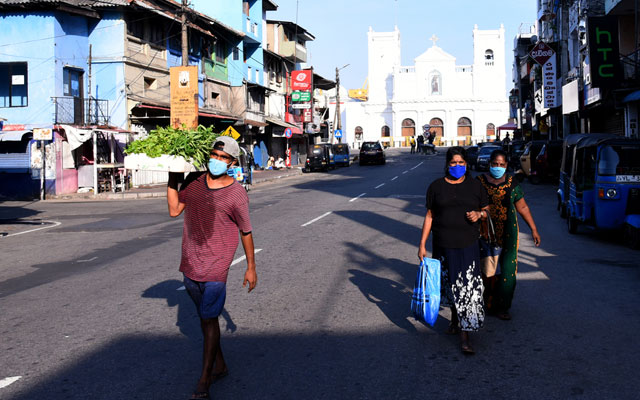
Sri Lanka has revised its initial forecast of inbound tourist arrivals for this year, setting a new highly ambitious target of attracting 2.3 million tourists, with special focus on the Indian, Middle Eastern and Russian markets.
Tourism minister Prassana Ranatunga told reporters at a media conference in Dubai on Monday that the government is hopeful for a rebound in the traditional markets in Europe in the latter part of 2022.
“The 2.3 million tourist arrivals is a target that we want to aspire to and to generate an income of around $4.5 billion rupees (US$22.2 million),” Ranatunga was quoted as saying in the local Daily FT newspaper.
This marks a drastic upward revision of their inbound forecast for 2022 from last month, where tourism officials stated that they were projecting 1.2 million arrivals for 2022 – approximately half of the 2.3 million arrivals recorded in 2018, a record year for the country’s tourism industry.
According to local sources, the revised figure to pre-pandemic level is based on a likelihood of increasing arrivals from India, the Middle East and former Soviet states.
The Daily FT newspaper reported that provisional data showed that Sri Lanka finished 2021 with 194,495 tourist arrivals, with December attracting 89,506 visitors, the highest for a month since the pandemic’s onset.
India was the top source country for foreign tourist arrivals with 56,268 visitors; followed by Russia (16,894), the UK (16,646), Germany (12,442), and Ukraine (7,037), according to the report.
Ranatunga described the 2021 figure of nearly 195,000 tourist arrivals as an achievement amid the pandemic. “We hope this trend will continue. Our expectations are that tourist arrivals will improve to 100,000-125,000 per month in the first quarter of 2022,” he was quoted as saying.
However, that optimistic outlook is not shared by industry officials.
Tourist Hotels Association president M. Shanthikumar said hotels were hit by a wave of cancellations during the winter season, with an estimated drop of 30 per cent in bookings, due to the Omicron variant spreading fast in Europe.
But he pointed out that if there are no travel restrictions in place across 2022, tourist arrivals are likely to grow this year.
Hope for new tourism bookings during Malaysia’s extended school holidays dashed
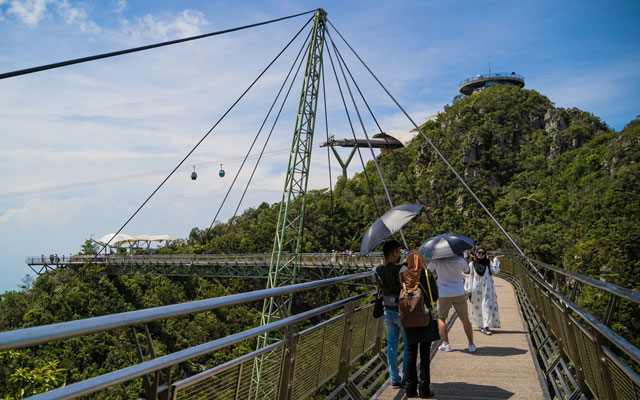
Malaysian tourism players have expressed disappointment at the absence of new bookings despite the government’s announcement of a week-long extension to the year-end school holidays due to floods in many parts of the country.
The school term was initially supposed to start on January 2 for schools in Johor, Kedah, Kelantan and Terengganu; while schools in other states were supposed to start on January 3. It has since been pushed back to January 9 and 10, respectively.
Adam Kamal, head of procurement & domestic market at Ice Holidays, said the company had anticipated that the extension would result in new tour bookings “since we were doing well from the Christmas season until the New Year”.
“Unfortunately, we have not received any new bookings but we hope bookings will start to pick up closer to the Chinese New Year break. Domestic travellers tend to make last-minute bookings, so we are hopeful,” he added.
Mega Water Sports & Holidays director of sales and marketing, Sharmini Violet, shared that despite extending promotions to entice the domestic market to holiday in Langkawi during the extended break, the company did not get any new tour or hotel bookings.
She said: “I think families are preparing for the school reopening and the recent floods and rainy weather also dissuade people from travelling.”
Traditionally, Langkawi is heavily dependent on Scandinavian travellers who make up the majority of international nights from mid-November to February. However, with the current pandemic, tourism providers on the island have had to rely on the domestic market.
Anthony Wong, who is based in Langkawi and serves as secretary of the Malaysian Association of Hotel Owners, shared that the “year-end holiday season is (considered) over, despite the extension of the school holidays”.
He said domestic tourism in Langkawi has been “doing well” since inter-state travel was allowed to recommence last September.
W headed for Nanjing
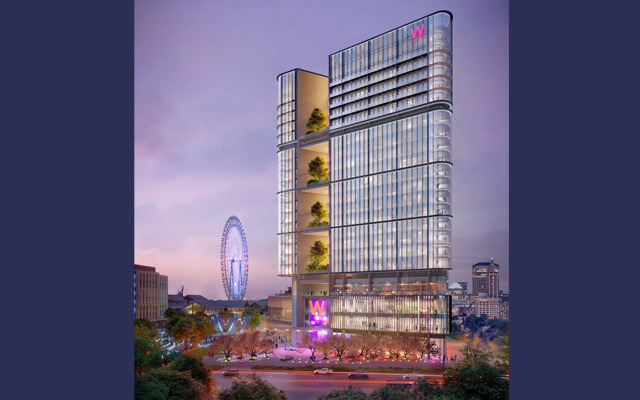
Marriott International is set to bring the W Hotels Worldwide brand to Nanjing, with the signing of W Nanjing that is slated to open along the southern bank of the Yangtze River come 2025.
W Nanjing will form part of the OCT Fundland complex, which will also feature office buildings, cultural centres as well as luxury apartments.
Designed by British architect Richard Rogers, the hotel is expected to feature 257 guestrooms and suites, four restaurants and bars, as well as a signature destination bar that will serve as a daytime playground and a nightlife social hub.
With nearly 1,700m² of multi-functional space, the hotel is slated to accommodate a wide range of events. Plans also call for a 24/7 fitness centre, a swimming pool, and spa.
Marriott International currently operates ten hotels in Nanjing, with several new projects in the pipeline spanning W Hotels, St. Regis, JW Marriott and Marriott Hotels. W Nanjing is expected to mark the second W Hotels in the Jiangsu Province.
New Hotelbeds tool helps travel agents spot market trends

Hotelbeds has rolled out a new industry tool designed to help travel consultants tap into market trends and demand, while providing them with a unique insight, all in one place.
The Compass Pro, which is available to API clients, follows the launch of the bedbank’s award-winning market intelligence platform, The Compass, for web clients last year.
“Through a new web-based client portal embedded in Hotelbeds.com, our API clients will have access to personalised and granular information based on cutting-edge algorithms that are tailored to their business model and distribution strategy and ultimately designed to give them a real competitive advantage,” said León Herce, core commercial director at Hotelbeds.
The Compass Pro has been designed to provide tailored data and information for Hotelbeds’ clients, and to help them grow their business in three main ways:
• Bespoke data and intel. The web-based portal puts Hotelbeds’ clients in full control of their opportunities by converting complex data into easily understandable results. Travel agents can quickly see which properties will deliver an uplift in room night production, as well as identify opportunities by type and market (e.g., not mapped, inactive, etc.).
• Actionable insights. With the data provided, clients can check the progress of each opportunity and room night growth in real-time. Using visual dashboards, they can produce detailed reports to instantly evaluate the impact their actions have on their opportunities.
• Supporting growth. By empowering travel buyers with a data-driven tool, Hotelbeds is sharing the best data and market information directly with its clients, so they can discover the full potential of travel agents working with Hotelbeds.








Hyatt Centric Melbourne, Australia
The opening of the Hyatt Centric Melbourne marks the entry of the Hyatt Centric brand into Australia. Located in the heart of Melbourne’s downtown, at the corner of Downie Street and Flinders Lane, Hyatt Centric Melbourne features 277 guestrooms across 25 levels. Short for Taste of Melbourne Australia, Toma Restaurant & Bar offers sustainably-sourced, Mediterranean-inspired menus featuring Victorian produce. The café, Allie Lane, serves treats from local producers including coffee and craft beer as well as homemade pastries and sandwiches. Wellness facilities include a 25m pool and 24-hour gym; while Bellarine Meetings on level six offers 210m² of flexible function space, plus a 248m² alfresco terrace.
Pinnacle Tower at Cordis Auckland, New Zealand
Cordis Auckland has become New Zealand’s largest hotel with the addition of its new Pinnacle Tower. Situated in the heart of the city, the 17-storey tower houses 244 rooms and signature Cordis Pinnacle Tower suites, bringing the property’s total room count to 640. Guests can enjoy 360-degree views of Auckland landmarks like the Harbour Bridge and One Tree Hill from the upper floors of the hotel. There are also two event spaces, including The Jade Room, a 400m² events space with a private outdoor area. The hotel’s existing Eight Restaurant has also expanded its capacity from 180 to 250, while new destination bar Our Land Is Alive exclusively showcases New Zealand sourced food and beverages with a local twist.
La Quinta by Wyndham Weifang South, China
Wyndham Hotels & Resorts has debuted its La Quinta by Wyndham brand in China with the opening of La Quinta by Wyndham Weifang South, located in Weifang, one of the largest cities in the Shandong province. The hotel features 200 guestrooms and suites, all equipped with large-screen LED TVs, high-speed Wi-Fi and bathrooms with rain showers and bathtubs. Guests have a choice of three restaurants: all-day dining destination Xian Café, specialty hotpot restaurant The Tasty, and Chinese restaurant Xiang Palace. Other amenities are a 600m² gym and yoga room. The hotel also offers 3,400m² of conference and banquet space, including a 1,500m² pillar-free grand ballroom featuring a holographic projection facility and an embedded LED screen. There are also a 750m² multi-function banquet hall and 12 other meeting rooms, ranging from 70 to 200m².
Holiday Inn Express Osaka City Centre – Midosuji, Japan
IHG Hotels & Resorts has debuted its Holiday Inn Express brand in Japan with the opening of the 306-room Holiday Inn Express Osaka City Centre Midosuji. Located in the heart of Osaka on its most famous Boulevard, Midosuji, the property features high-speed Wi-Fi; high quality bedding; choice of pillows; and a cooked buffet breakfast and coffee, or takeout.