Gold Coast tourism operators “hanging on by a thread”
One in five tourism jobs across the Gold Coast have been cut in a year, according to new research by the Tourism and Transport Forum.
That amounts to a 20 per cent loss of the 20,094 full and part-time direct tourism jobs on the Gold Coast, over a 12-month period to June 2021.

Destination Gold Coast chairman Paul Donovan said his heart goes out to the 4,600 tourism businesses suffering during this time. “We are proudly Australia’s favourite holiday destination, but our operators are hanging on by a thread,” he said.
“Our local tourism industry relies on people travelling to enjoy what the region has to offer and with more than half of Australia’s population under travel restrictions, the impact on the Gold Coast is significant.”
Destination Gold Coast CEO Patricia O’Callaghan said the city is in the fight of its life, as mum and dad operators right through to major hoteliers and theme parks struggle to hold on financially and retain a skilled workforce.
“These figures are heartbreaking,” she said. “We know the industry will bounce back once people are able to travel again, but until that happens, the industry is requesting targeted financial support from the government.
“We appreciate the government’s support to date and the announced A$600 million (US$446.5 million) Business Support Package recently. Measures around business hardship grants and financial mechanisms that allow employers to retain skilled staff and keep them connected to the business until economic conditions improve will be critical.”
Following 18 months of hardship, tourism employment on the Gold Coast is forecast to drop by a further 20 per cent, or 4,000 jobs, from now until Christmas, due to state lockdowns and ongoing international border closures.
Now is the time to look at integrated resorts

Travel restrictions. Vaccine shortages. Reimposed lockdowns.
It’s been a rocky road for tourism in South-east Asia the last 18 months. We’ve seen new waves of coronavirus hampering both domestic and international travel. Many of the larger Asian countries have fallen behind their counterparts in Europe and the US when it comes to vaccine rollouts, and the Delta variant is causing a serious rise in infections rates across much of South-east Asia.
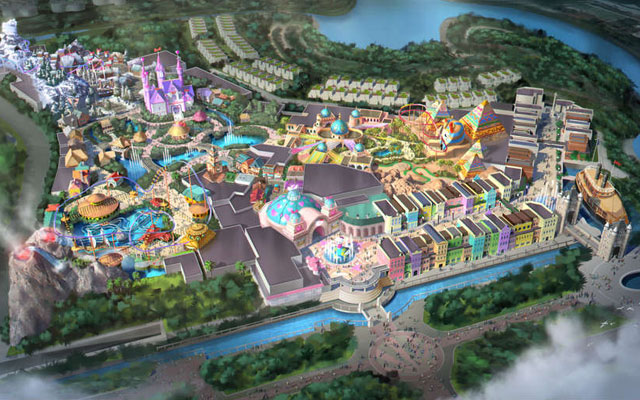
Looking beyond the pandemic and making bold statements about the future is tricky. However, there is confidence in the market that tourism will make a comeback in 2022. And when it does, one sector is particularly rife for growth: integrated resorts.
A favoured destination
We know that there is a substantial amount of money sitting with private equity funds and owner operators ready to be invested in the South-east Asian hospitality sector, and a pent-up consumer demand for travel to resume. Set against this backdrop is a growing number of Chinese tourists in the region, which is driving investment in casinos and integrated resorts in markets like Singapore, Macau, Japan, Vietnam and the Philippines.
Now is a good time for the construction industry who will deliver on these projects to not just establish where the opportunities are but how they will be completed on time, on budget and to the highest quality standards, in markets with often challenging operating environments.
It’s not uncommon to hear that ‘anyone can build a hotel’. Whether that is true or not, it is an indisputable fact that integrated resorts are a completely different beast. An integrated resort is a destination, which incorporates not just more complex aspects of the built environment, such as gaming facilities, shopping experiences and convention centres, but more importantly it’s based on a vision. And that vision must be delivered.
Transforming delivery
How you make good on that vision for clients in South-east Asia largely depends on project management teams with long-standing local knowledge and the backing of global best practice.
Investors usually have support on the acquisition side, but when it comes to the actual development or repurposing of assets, they need guidance. Projects need to be delivered with integrity, process and procedures, but a Western approach alone can be incongruous with how business is conducted.
Building trust, understanding the pace at which business is conducted, and fostering strong relationships with contractors are cornerstones of success in this part of the world. More specifically when it comes to construction, the team’s technical expertise and ability to implement the highest standards of safety and quality during the project lifecycle is vital to a successful outcome.
This is where the backing of a large organisation with international best practice in innovation, health and safety and sustainability adds an important layer. Setting the right objectives from the beginning and managing the different stages of the project by integrating all the data in one place can smooth out difficulties further down the line.
Integrated resorts in Asia are more than just gaming facilities. They are complex and large-scale developments that turn into destinations, bringing different experiences together for people from around the world. The local teams leave the completed projects with new skills which they transfer onto their next venture.
In sum, as we eagerly await the escalation of vaccine rollouts in Asia and a return to tourism, hospitality investors must hone their strategies for how they will see integrated resorts to fruition in response to post-pandemic demands.
It’s impossible to say when the door to travel will reopen, but we know with certainty how we need to transform delivery to provide tourists in South-east Asia with the destinations that they so eagerly crave.
Resplendent Ceylon crafts Tea, Sea and Safari journeys for Indian travellers
Sri Lankan hospitality company Resplendent Ceylon has launched specially curated Tea, Sea and Safari packages for Indian luxury travellers, following the reopening of the country’s borders to fully vaccinated Indian tourists.
As the sole member of Relais & Chateaux in Sri Lanka, Resplendent Ceylon consists of three boutique luxury resorts in the destination: Ceylon Tea Trails, Cape Weligama and Wild Coast Tented Lodge.

The range of Tea, Sea and Safari packages provide different combinations of curated itineraries spanning across the resorts – for short stays ranging from four to seven nights, as well as long stays of 10 nights or more.
Guests can opt to stay at restored colonial era bungalows amidst tea plantations at Ceylon Tea Trails, cliff-top villas and suites overlooking the sea at Cape Weligama, or cocoon tents at Wild Coast Tented Lodge. Additionally, they can enjoy special upgrades and curated dining privileges.
Authentically crafted and locally immersed signature experiences are at the heart of Tea, Sea and Safari journeys. At Ceylon Tea Trails, guests can choose from a range of activities such as indulgent dining with tea-infused dinner or tea planter’s picnic lunch, scenic walking trails, private tea tastings, and more. Elsewhere, at Cape Weligama, one can experience chef’s tables centred around Sri Lankan cuisine, personalised wellness, art classes for kids, and more.
Lastly, at Wild Coast Tented Lodge, guests can enjoy gourmet safari cuisine with Sri Lankan flair, sundowners by the beach and cocktails infused with local ingredients, interactive culinary classes for kids, guided bush walks, and more.
Banwa Private Island in the Philippines now offers guests private air transfer option
Banwa Private Island has partnered with Ascent Flights Global to offer on-demand private flights to guests planning a trip to the exclusive remote island situated in the Northern Palawan region of the Philippines.
The private chartered flights using seaplanes, helicopters and private jets will bestow upon guests a high degree of personal safety and privacy while travelling once international borders reopen.

Guests have the option of taking a one hour and 45-minute seaplane flight from Manila, seating up to eight pax and landing directly in front of Banwa Private Island’s house reef.
Alternatively, they can take a 10-seater helicopter from Manila Ninoy Airport or one of Palawan’s three commercial airports – San Vicente, Puerto Princesa or El Nido across the Sulu Sea – to land on Banwa Private Island’s heli-lawn.
Ascent also offers both domestic and international arrivals by private jets, be it in Manila or Clark for onward journey with any of their varying type of aircraft, or directly to either San Vicente or Puerto Princesa airports in Palawan. This includes bespoke services such as ground handling arrangements, inter-airport transfers, exclusive lounge service and immigration fast track.
Hana Tour, Amadeus strengthen partnership to accelerate online retailing
South Korea travel agency Hana Tour is enhancing its online retailing capabilities through a renewal of its partnership with Amadeus to implement solutions from Amadeus Agency Insight as well as NDC.
Through data feeds from Amadeus Search Analysis and Amadeus Booking Benchmark, Hana Tour will be able to monitor and forecast demand and trends ahead of its competition to provide personalised content to their customers.

NDC will allow Hana Tour to have access to aggregated NDC content from airlines, providing it with a full range of diverse content it can offer to customers. This will give Hana Tour the tools to build tailored services and ancillaries, ultimately driving more value for the traveller.
Chang-Ho Ryu, managing director, Hana Tour, said: “This partnership marks a major milestone as we continue to transform our digital capabilities to adapt and lead the charge for the recovery in travel in Korea. NDC as well as data and analytics enable us to personalise travel retailing and help create travel itineraries that are relevant to each traveller.”
This new, long-term multi-year distribution agreement will help Hana Tour build a flexible technology infrastructure that will serve it well with personalising travel experiences for its customers.
Philippine Airlines files for bankruptcy
Philippine Airlines (PAL) has filed for Chapter 11 bankruptcy in the US to pursue a lender-backed restructuring plan aimed at helping the country’s national carrier recover from the pandemic-induced travel slump.
The company said that its proposed restructuring, which is subject to court approval, will allow it to reduce its debt payments by US$2 billion and downsize its fleet size by 25 per cent.

PAL will also get US$505 million in equity and debt financing from its majority shareholder, as well as US$150 million of debt financing from new investors.
The Chapter 11 filing, which allows a company to continue operations while it restructures, came after months-long discussions between the airline and its key shareholders.
Billionaire Lucio Tan, company president and CEO, said: “We welcome this major breakthrough, an overall agreement that enables PAL to remain the flag carrier of the Philippines and the premier global airline of the country.”
The carrier said that the plan will not affect passengers and employees. It added that it will gradually increase domestic and international flights in accordance with market demand.
PAL will also complete a parallel filing for recognition in the Philippines under the Financial Insolvency and Rehabilitation Act of 2010.
PPHG’s European entry sees good opening interest
Pan Pacific London has opened on September 1, with bookings for guestrooms and event venues gaining “good pace” since sales kicked off in end-May.
According to a Pan Pacific Hotels Group (PPHG) spokesperson, interest has been particularly strong for weekend stays as well as for events and weddings.

“The hotel has seen (event) bookings all the way till September 2022 currently, with more enquiries coming in,” the spokesperson said.
The 237-key Pan Pacific London is PPHG’s flagship and first European property. It sits in a lively part of the city, at One Bishopgate Plaza and steps away from Liverpool Street Station, with high-end shopping in Spitalfields, the Barbican cultural hub and stylish Shoreditch right on the doorstep.
Guestrooms and suites are generously sized from 37m² to 119m², and feature a light colour palette and artistic custom headboards with calming depictions of oak, elder, elm and maple trees – all of which come together to create a soothing city retreat product.
The hotel also lays claims to the area’s largest hotel ballroom. The 464m² triple-height and pillar-free Pacific Ballroom boasts smart features. Event planners have access to eight other flexible event venues, spread across two floors. Pan Pacific London supports event clients with an Event Emporium, which carries an exclusive range of bespoke linens, crockery, and table decorations to help event designers bring their plans to life.
Restaurants and bars at the hotel pay tribute to PPHG’s Asian roots, with menus featuring familiar Singapore classics like chilli crab and prawn paste chicken at Straits Kitchen; dim sum at The Orchid Lounge’s Afternoon Tea selection; and signature cocktails inspired by Singaporean flavours and culture at Ginger Lily.
The hotel has also carved out a destination bar, Silverleaf at The Devonshire House.
In a nod to the swelling wellness movement, Pan Pacific London has a dedicated holistic wellness space, spanning 1,083m². It comprises an indoor infinity pool, a wellness lounge for early arrivals and guests waiting to catch their flight, an advanced gym, spa, relaxation pods, mindfulness studio and more.
The spokesperson told TTG Asia that the company’s interest in Europe remains strong, and will continue to “eye gateway cities for future growth”.
Besides London, PPHG has been strengthening its portfolio with a recent opening in Melbourne this April. Openings in Kuala Lumpur, Jakarta and Hanoi will follow.
Returning quarantine a major barrier to outbound travel recovery: agents
Two travel agents have painted starkly different pictures on the state of outbound travel in their market, with mandatory quarantines for returning travellers being the key differentiator.
They were speakers at Virtual PATA Travel Mart 2021’s Buyer Insights Exchange session on August 3.

Since May 5 when the South Korean government lifted the mandatory two-week quarantine for fully vaccinated residents, travel agency TideSquare saw a pick up in FIT bookings, especially to the US where South Korean visitors are also not needed to serve quarantine upon entry. Availability of air capacity and reasonably priced airfares also helped to encourage travel recovery.
The agency’s head of international hotel contracting, partnerships and sourcing, David Chai, said his company receives around 10 to 20 overseas bookings a day, of which 70 per cent are to the US, and the remaining to Europe. From October onwards, the company will push packages for World Expo 2020 in Dubai, as it is one of the official travel partners of the event.
Chai said demand for honeymoon packages is also on the rise, as newly-weds catch up on their disrupted honeymoon. Guam and Hawaii are popular for such trips.
On the other hand, fellow speaker, Surakit Jamkajang, who is managing director of Bangkok-based One World Tour and Travel, said Thailand’s mandatory 14-day quarantine for returning travellers was stifling demand for outbound travel.
He was hopeful that these restrictions would be eased from mid-October, allowing Thais to return without barriers. When this happens, Japan, South Korea, China, Singapore and Bali will be top destinations for Thais.
Both Chai and Surakit are also of the opinion that more travellers will rely on travel agencies as opposed to OTAs for travel planning and booking in the immediate aftermath of post-pandemic lockdown.
Langkawi sets date for domestic tourism reopening
Langkawi will become the first destination in Malaysia to reopen to domestic tourists from September 16, subject to conditions that are still being worked out.
Details on whether travel to Langkawi island is open to all Malaysians or only to those who are fully vaccinated, have yet to be announced. Currently, the interstate travel ban is still enforced nationwide.

Prime minister Ismail Sabri Yaakob said on August 2 that other tourist destinations in the country will be allowed to operate once local vaccination rates reach 80 per cent.
Langkawi Business Association president, Anthony Wong, said: “It is indeed very good news for tourism stakeholders in Langkawi, as the destination has had to shut down since June 1. However, we have to be very cautious and heed all the standard operating procedures, as we don’t want any Covid-19 clusters, which may result in another lockdown.”
According to Wong, many tourism stakeholders in Langkawi are taking a wait-and-see approach. “Not all hotels will open up. Those that do, will take a slow approach, and open part of their inventory to meet initial demand,” he said.
Wong, who is also the managing director of Cottage by the Sea by Frangipani Langkawi, said he will initially open 20 to 30 rooms out of the total 115, depending on demand, and work with minimum staff. Operations will scale up as demand increases. Wong expects demand to peak in December.
Adam Kamal, secretary-general at the Malaysian Inbound Tourism Association, shared that the two-week lead time will give travellers the opportunity to plan their holiday and allow tourism stakeholders to prepare for the long awaited reopening.
He said: “Hotels can start sprucing up their rooms and operators can start servicing their vehicles and updating their products.”
However, he opined that operators outside of Langkawi might not be able to benefit much from the destination’s reopening, as hotels would likely “market directly to consumers and have pre-opening offers which are lower than the agents contracted rates”, while local Langkawi operators would dangle attractive offers via social media and email marketing, again, directly aimed at travellers.


More Thais are travelling to lesser-known destinations, as domestic travel dominated travel agendas amid the pandemic.
According to Agoda’s booking data, while Bangkok, Pattaya and Chiang Mai remain the top three most booked domestic destinations in Thailand, there has also been a shift towards more off-the-beaten-track domestic destinations in the year ending June 2021, compared with the previous year.
Agoda compared booking data to identify destination trends and found Khao Lak saw the biggest jump, moving 23 spots to #22. Meanwhile, Nakhon Nayok moved up 15 places to #46, while Sukhothai landed at #30, jumping 14 spots. These destinations might not be in the domestic top ten but they signified Thai travellers’ desire to seek new domestic experiences.
Additionally, top 20 movers included Nakhon Si Thammarat moving up from #20 to #12, while Koh Chang entered the top 20, skipping up from 23rd to 18th spot.
During the past year, when domestic tourism became more popular, Thai travellers got more adventurous in their travels, and this saw new destinations joining the top 50 including Koh Kood (#44), Nakhon Nayok (#46), Lopburi (#49), and Loei (#50).
Between June 2020 and 2021, Phuket and Chonburi dropped marginally in the top ten, both slipping one spot. Meanwhile, more off-beat destinations like Kanchanaburi knocked Chiang Rai out the top 10 in 2021. Overall, the top ten destinations continue to be dominated by Thailand’s most popular and well-known holiday beach and coastal destinations including Phuket, Hua Hin, Khao Yai, and Krabi.
Conversely, the destinations that saw the sharpest dips in ranking for domestic travel are Koh Phi Phi, Koh Phangan, Koh Tao, Koh Lanta, and Pai, slipping more than ten spots in the ranking.