Modern travel retailing will need to understand how customers think and behave, engage in real time, and deliver more content and best value to establish a memorable experience, opined industry leaders speaking at a recent Travelport trade webinar.
In explaining the impact of neuroscience on the travel purchase decision, Paul Zak, a neuroscience expert and CEO of Immersion Neuroscience, said wearable software devices can monitor the heart rate to measure oxytocin, a hormone released when people experience an emotion. Immersive experiences cause people to take action. When action and emotional resonance co-occur, experiences are enjoyable and memorable.
Greater personalisation, automation to drive future of travel retail, say industry experts
“Brands use the Immersion Neuroscience platform to create value,” said Zak. “Without measuring brain activity, your betting average for sales, marketing and advertising is 20 to 30 per cent. With immersion, you get 80 to 90 per cent hits. People have tension in their brains – when they take action, they release that tension.”
He recommended creating a sales experience where the call to action occurs at the peak immersion moment with the highest tension. Data is shown second-by-second in real time, making it possible to communicate in the most effective way with customers.
“The platform gives Travelport the most effective way to share with the industry in physical, digital and omnichannel settings. Key lessons will be reported back to the industry, so it’s able to measure, integrate and improve,” Zak concluded.
On the supplier side, American Airlines (AA) believes in self-service and wants to make it intuitive and relevant for customers – on apps and at the airport – “things that help people have a touchless journey” said Alison Taylor, chief customer officer.
She explained: “This will free up team members to look after the customer. People now have a lot of questions about testing, information on getting into a country or even another state…and we want to be more personalised.”
This is where distribution and retail strategy come to the fore. AA offers corporate customers “bundles” so they get what is approved in their corporate programme and it is served up easily.
Taylor said travel agents should seriously consider New Distribution Capability (NDC). “It’s a cost-efficient way to buy inventory. Everyone expects to self-service while on the road. NDC and other retail solutions enable them to do that,” she said.
Amazon Web Services shared how it collaborates with Travelport by combining its expertise in cloud and travel technology to facilitate upgraded processing, better storage and security, more machine learning and advanced analytics, and improved personalisation.
Dana Dunne, CEO of eDreams ODIGEO, gave the travel agent perspective. He summed up four important points for the future of travel retail: the subscription programme, product diversification – to be a “one-stop shop for customers”, increased customer service automation and connectivity in the content and process.
Foreign visitors who have not been vaccinated against Covid-19 will be barred from entering Indonesia from Tuesday (July 6), as authorities battle to contain an outbreak of the highly-infectious Delta variant.
In an announcement on Sunday, the government said that foreign nationals entering Indonesia will need to show a vaccination certificate and a negative PCR test result.
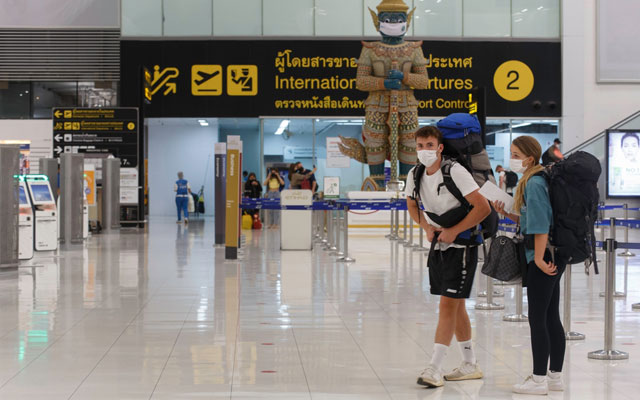
Unvaccinated foreign nationals barred from entering Indonesia from July 6; a passenger wearing a mask at the Soekarno-Hatta Airport in Tangerang, Indonesia pictured
A vaccination certificate is also required for air travel within the country, both for international and domestic travellers.
The quarantine period for foreigners will also be increased from five to eight days, with a PCR test taken on Day 1 and another on Day 7, coordinating minister of maritime and investment Luhut Binsar Panjaitan, who spearheads the Emergency Public Activity Restrictions, said in a statement.
Unvaccinated Indonesian passport holders may enter the country by presenting a negative PCR test, and they will be vaccinated upon arrival.
Sandiaga Uno, minister of tourism and creative economy, expressed his support for the tightened border measures during a press conference on Monday.
“We are also calling (on industry stakeholders) to close all destinations and postpone all tourism and creative economic activities across the country,” he said, adding that activities such as the Work from Bali programme and vaccine tours have been put on hold for now.
“We understand that this is bitter for the industry, but Covid-19 data points to an emergency situation and we cannot take any more risks and must put the public’s health first,” Sandiaga said.
However, he added, preparations for the reopening of borders will go on. “The plan to reopen Bali, for example, must meet three pre-conditions: Around 70-80 per cent of the local population must be vaccinated, the end-to-end implementation of (cleanliness, health, safety and environment) CHSE protocols must be finalised, and the infection rate must be below 100. We have to keep our spirit and work hard to achieve those preconditions,” Sandiaga said.
He added that the government would speed up the rollout of the recently-announced 60 billion rupiah (US$4.2 million) incentive package to the tourism industry.
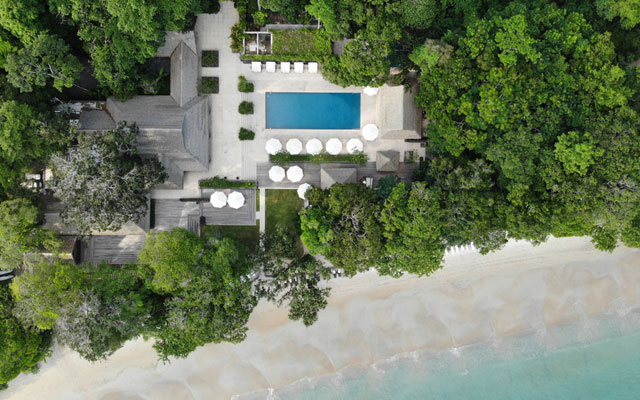
Centara Hotels & Resorts has appointed Franck Rodriguez as general manager of Centara Mirage Resort Mui Ne, set to open in 3Q2021.
A French national with more than 20 years of industry experience, Rodriguez has worked reputed hospitality brands including Leading Hotels of the World, InterContinental Hotels Group and Starwood Hotels & Resorts (now part of Marriott International). He is also no stranger to the Centara brand, having spent a formative part of his career as the F&B manager at Centara Villas Samui.
More recently, Rodriguez was group director of operations with The Unique Collection of Hotels & Resorts for almost five years, overseeing a portfolio of 27 upscale properties, before joining IHG, where he was responsible for the opening of several key hotels, including the Asia Pacific region’s first-ever voco hotel in Danang.
The Centara Mirage Resort Mui Ne is the second Centara Mirage resort worldwide, and is Centara Hotels & Resorts’ first property in Vietnam.
The family leisure destination is centred around an “Explorer’s Playground” waterpark, complete with pools, slides, a sailing ship, lazy river, splash zone and cliff-jumping rock. The property will also have 984 rooms and villas, and boast amenities such as six restaurants, six bars, playgrounds, entertainment complex, spa, observatory tower, grand ballroom, and outdoor amphitheatre.
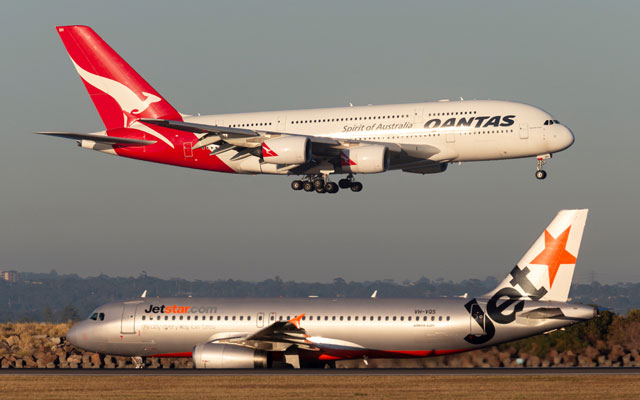
Korean Air has finalised its post-merger integration (PMI) plan with Asiana Airlines after receiving approval from the state-run Korea Development Bank (KDB).
The PMI plan had been submitted to the KDB on March 17, five months after Korean Air signed a deal to acquire Asiana’s new shares and perpetual convertible bonds.
For three months, the KDB reviewed the PMI plan and made revisions in consultation with Korean Air, the Ministry of Land, Infrastructure and Transport, and other relevant agencies.
The finalised PMI plan includes integration plans for the airlines’ full-service carriers (FSCs) and low-cost carriers (LCCs), measures to resolve restrictions of holding companies stipulated in the Fair Trade Act, employment retention and succession of collective agreements, and plans to effectively reorganise relevant subsidiaries.
Once the PMI plan has been finalised, Korean Air will proceed to integrate with Asiana after receiving business combination approvals from relevant authorities.
The newly integrated global airline will increase operational efficiency of overlapping passenger and cargo routes, while diversifying its schedules and expanding opportunities for new routes, which will increase customer benefits and create integrated synergy by reducing costs, Korean Air said in a statement.
It added that the integrated FSCs and LCCs are expected to improve efficiency by achieving economies of scale, and will act as an opportunity for the growth of relevant contractors, partners and other companies in the aviation industry.
Christine Ann Urbanozo-Ibarreta, who served as the president of Hotel Sales and Marketing Association (HSMA) for two terms, passed away last Friday (July 2) after two months of battling Covid-19. She was 54.
Well-loved, bubbly and irrepressibly witty, Christine was “the agile leader when the pandemic struck and guided the hotels to pursue available businesses, while serving as the conduit between government agencies and industry committees,” shared former HSMA president Rose H Libongco.
“Christine braved calling on the market contacts of Overseas Workers Welfare Administration, Philippine Airlines and other airlines, and medical and business frontliners. That’s how she caught the virus,” Libongco shared.
To help hotels and resorts to stay afloat, Christine rallied all members during this pandemic to optimise alternative market segments such as the business process outsourcing, overseas Filipino workers, and returning overseas Filipinos, said HSMA chair Margie F. Munsayac.
“She continuously worked with government agencies so that guidelines and protocols are cascaded to all members to ensure that hotels and resorts can guarantee a safe stay for all guests,” Munsayac added.
Describing Christine as “truly a lifeline for hotels and travel”, Libongco said HSMA’s annual Virtus Award recognising industry exemplars was Christine’s idea. In addition to leading HSMA members in organising sales webinars, as well as marketing and promotions to keep hotels top-of-mind, Christine also started a Facebook marketplace during the pandemic for displaced industry employees to earn an income.
Christine also sat on the board of the Tourism Congress of the Philippines and had worked in various capacities in sales and marketing for many hotels, including Resorts World Manila, Sofitel Philippine Plaza, and most recently, as group director of sales and marketing at Golden Phoenix Hotel.
InterContinental Maldives Maamunagau Resort has appointed Coetzer Deysel as general manager.
He will be responsible for driving the resort’s strategic and commercial growth, overseeing operational excellence and will continue to elevate the luxury positioning of IHG’s flagship property in the Maldives.
Deysel brings with him over 17 years of experience in hospitality across leading luxury brands such as Anantara Resorts, The Westin, W Hotels, naked Retreats and Le Meridien in resort destinations such as Mauritius, Maldives, Thailand, China and South Africa.
His most recent role was general manager of Ananatara Iko Mauritius Resort & Villas, where he oversaw the launch of the first Anantara resort in Mauritius.
The travel industry can boost global recovery by addressing consumer trust gaps in price transparency, Covid-19 health and safety measures, data privacy and information credibility, according to research commissioned by Travelport.
The study of 11,000 travellers across 10 countries was conducted by Edelman Data & Intelligence, the research and analytics arm of Edelman, which has studied trust for over 20 years through the Edelman Trust Barometer.
Travellers desire clearer communication on Covid-safe measures like social distancing
Price transparency
According to the study, the two most important factors in building consumer trust in travel agencies and travel suppliers, such as airlines, are having ‘no hidden costs’ (55 per cent) and ‘fully flexible or refundable products’ (45 per cent).
Unfortunately, most travellers currently deem industry performance in both of these areas to be poor (60 per cent and 57 per cent respectively). Travellers in New Zealand and Australia were shown to be the most disappointed on this point, with a significant 40 and 39 percentage point gap between importance and performance.
Greg Webb, CEO at Travelport, said: “The importance of price transparency can’t be overstated. To put it into context, having no hidden costs is a full 16 per cent more influential on trust than an airline’s long-term safety record. The request from consumers here is clear; the time has come to eliminate hidden fees and improve the overall transparency of pricing and communication.”
Covid-19 health and safety
The majority (56 per cent) of travellers that participated in the study said the travel industry has done well in implementing Covid-19 health and safety measures. Going forward, however, around half said they would like more reassurance on how robustly some measures are being enforced, in particular, improved air filtration, social distancing, and managed boarding and queuing.
As such, “travel suppliers and agencies will benefit from being clearer in their communication on certain measures, like social distancing,” said Webb.
Data privacy
Data privacy was another key issue highlighted by the research. Only four out of ten travellers (40 per cent) reported that they currently trust travel companies to use their personal information in the right way. This was especially apparent among Baby Boomers (33 per cent) and Gen Z (36 per cent) respondents.
When it comes to using information to personalise experiences, travellers said they are most comfortable with companies using data that they have actively shared with them through one-to-one conversations (46 per cent), past booking behaviour (46 per cent) and loyalty activity (44 per cent).
They are less comfortable, however, when information is sourced indirectly, for example, through social media activity (35 per cent), public records like credit scores (37 per cent) and past shopping, as well as search and booking behaviour with other companies (40 per cent).
Information credibility
According to the research, the most trusted sources of travel-related information that travellers use when researching a trip are those perceived to have aligned interests: friends and family (67 per cent) and review websites (50 per cent).
In contrast, the least trusted are those with a clear vested interest in selling, such as social media influencers (30 per cent) and celebrities (25 per cent). Once again, Gen Z was revealed to be the least trusting in almost every category.
A similar story played out when examining trust in different types of travel-related information. Customer ratings (54 per cent) and written customer reviews (51 per cent) are among the most trusted. However, third-party certification (39 per cent), photos of products such as hotel rooms provided by travel companies (42 per cent), and third-party ratings such as hotel star systems (43 per cent) were revealed to be the least trusted.
“The travel industry needs to sharpen its focus on trust. This study has shown, as an industry, we are not as trusted as we would like,” said Webb. “The good news, however, is that we now know what the issues are, and we also have a once-in-a-lifetime opportunity to hit reset, as countries re-open and travellers eagerly get back on airplanes. If we move quickly to address these issues, we can accelerate industry recovery as well as the modernisation of travel retailing.”
In addition to identifying gaps in trust, the research also uncovered evidence that trust directly influences purchasing behaviour. Due to Covid-19, almost half (46 per cent) of travellers today, for example, were shown to prioritise trust over all other factors when choosing a travel supplier.
Many travellers also stated, when trust is in place, they will consider purchasing multiple travel-related items (48 per cent), upgrading their package (43 per cent), and buying non-travel-related items such as credit cards (34 per cent).
The global vaccination rollout and increased adoption of digital solutions for safe travel should lead to a rise in international mobility over the weeks and months ahead, the latest data from the UNWTO has shown.
According to the newest edition of the Travel Restrictions Report from the UN agency, as of June 1, 29 per cent of all destinations worldwide have their borders completely closed to international tourism.
Deployment of smart solutions such as facial recognition technology at airports will aid travel’s recovery
Of these, more than half have been completely closed to tourists since May 2020 or longer, with the majority of these belonging to the SIDS (small island developing states) of Asia and the Pacific. In comparison, just three destinations (Albania, Costa Rica, Dominican Republic) are completely open to tourists, with no restrictions now in place.
One in three (34 per cent) of all destinations are partially closed, and 36 per cent require a negative Covid-19 test result upon arrival, and in some cases, in combination with a quarantine requirement.
The data confirmed the trend towards destinations adopting more nuanced, evidence-and-risk-based approaches to restrictions on travel, particularly in light of the evolving epidemiological situation and the emergence of new variants of the virus. Indeed, 42 per cent of all destinations have introduced specific restrictions for visitors from destinations with variants of concern, ranging from the suspension of flights and closing of borders to compulsory quarantine.
Additionally, since most of those destinations with the strictest measures have some of the lowest rates of vaccination, the data also indicated a link between vaccination speed and easing of restrictions. In comparison, those destinations that have higher rates of vaccination and where countries are able to work together on harmonised rules and protocols such as those being employed in the Schengen area of the European Union, are better-placed to allow tourism to slowly return.
“Governments are instrumental for the restart and recovery of tourism through collaboration, use of data and digital solutions”, said UNWTO secretary-general Zurab Pololikashvili.
Regional differences with regards to travel restrictions remain. 70 per cent of all destinations in Asia and the Pacific are completely closed, compared with just 13 per cent in Europe, as well as 20 per cent in the Americas, 19 per cent in Africa and 31 per cent in the Middle East.
Assessing current requirements for vaccinated passengers, 17 per cent of all destinations worldwide specifically mention vaccinated passengers in their regulations. In most cases, travel restrictions continue to apply to fully vaccinated passengers (who have received two doses of an approved vaccine), though in others, all restrictions are lifted. UNWTO expects that this will significantly evolve over the coming weeks.
The report indicated that the restart of global tourism will remain muted so long as governments continue to advise caution. Four of the 10 top source markets, which generated 25 per cent of all international arrivals in 2018, keep advising their citizens against non-essential travel abroad.
Qatar Airways is the first airline to begin trialling Covid-19 vaccine authentication through the IATA Travel Pass mobile app, as the airline seeks to provide a more contactless, secure and seamless travel experience for its passengers.
The trial will be rolled out in phases from July, beginning initially with cabin crew returning to Doha travelling from Kuwait, London, Los Angeles, New York, Paris and Sydney.
Qatar Airways becomes first airline to integrate vaccination certificates into IATA’s digital passport app
Cabin crew will be able to upload their Qatar-issued Covid-19 vaccination credentials along with their Covid-19 test results to the IATA Travel Pass mobile app and verify they are eligible to travel. On arrival in Doha, crew will then be able to safely and securely share their vaccination certificate and proceed through immigration at the airport.
Qatar Airways Group CEO Akbar Al Baker said: “We know as more people begin making plans to return to their favourite holiday destinations, they will inevitably face the challenge of ensuring they have the right paperwork.
“Through trialling and supporting the development of new technologies, we aim to provide travellers with a tool that will support them to seamlessly travel across borders with greater confidence.”
Willie Walsh, IATA’s director general, said: “Certificates of Covid-19 vaccination or testing status will be key to restoring people’s freedom to travel. Trials by Qatar Airways and some 70 other airlines have demonstrated that IATA Travel Pass can efficiently manage test results.
“This important new trial focusing on vaccination status will build even more confidence in IATA Travel Pass as a complete solution for travellers, governments and airlines.”
IHG Hotels & Resorts has signed an agreement with Seraphim Development to open the first voco hotel in South Korea.
Scheduled to start welcoming guests in 2023, voco Pyeongtaek City will be the first upscale international hotel brand in Gyeonggi-do province.
voco Pyeongtaek City in Gyeonggi-do province to open in 2023
The new-build 280-room urban resort will form part of the mixed-use development International Market Place, situated in close proximity to the Pyeongtaek Special Tourism Area and Naeri Cultural Park.
The hotel will feature a rooftop pool with a 360-degree view of Godeok city and Ansung River. Other facilities will include a restaurant, lounge and bar, fitness centre and 1,300m² of meeting space.
voco Pyeongtaek City will be IHG’s 10th hotel in South Korea and its fourth brand in the country, alongside InterContinental, Holiday Inn and Holiday Inn Express.
“Brands use the Immersion Neuroscience platform to create value,” said Zak. “Without measuring brain activity, your betting average for sales, marketing and advertising is 20 to 30 per cent. With immersion, you get 80 to 90 per cent hits. People have tension in their brains – when they take action, they release that tension.”
He recommended creating a sales experience where the call to action occurs at the peak immersion moment with the highest tension. Data is shown second-by-second in real time, making it possible to communicate in the most effective way with customers.
“The platform gives Travelport the most effective way to share with the industry in physical, digital and omnichannel settings. Key lessons will be reported back to the industry, so it’s able to measure, integrate and improve,” Zak concluded.
On the supplier side, American Airlines (AA) believes in self-service and wants to make it intuitive and relevant for customers – on apps and at the airport – “things that help people have a touchless journey” said Alison Taylor, chief customer officer.
She explained: “This will free up team members to look after the customer. People now have a lot of questions about testing, information on getting into a country or even another state…and we want to be more personalised.”
This is where distribution and retail strategy come to the fore. AA offers corporate customers “bundles” so they get what is approved in their corporate programme and it is served up easily.
Taylor said travel agents should seriously consider New Distribution Capability (NDC). “It’s a cost-efficient way to buy inventory. Everyone expects to self-service while on the road. NDC and other retail solutions enable them to do that,” she said.
Amazon Web Services shared how it collaborates with Travelport by combining its expertise in cloud and travel technology to facilitate upgraded processing, better storage and security, more machine learning and advanced analytics, and improved personalisation.
Dana Dunne, CEO of eDreams ODIGEO, gave the travel agent perspective. He summed up four important points for the future of travel retail: the subscription programme, product diversification – to be a “one-stop shop for customers”, increased customer service automation and connectivity in the content and process.