


Best Western continues expansion in Vietnam with dual signing
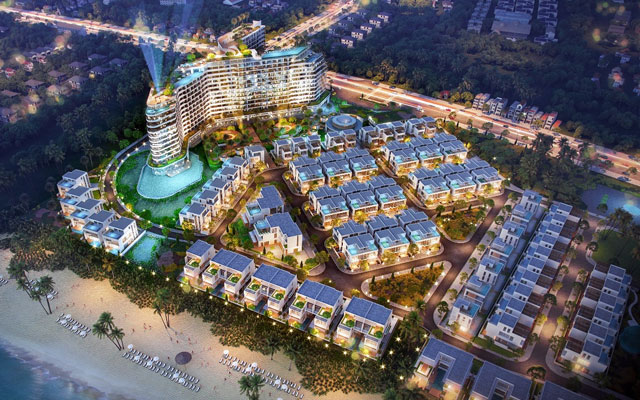
Best Western Hotels & Resorts has signed two new projects in Ho Tram, the beachfront resort area just 110km from Ho Chi Minh City in Vietnam.
Charm Resort Ho Tram, BW Premier Collection by Best Western and Charm Resort Ho Tram, BW Signature Collection by Best Western will be unveiled in 1Q2024, comprising more than 1,000 rooms, suites and villas across two properties.
Charm Resort Ho Tram, BW Premier Collection by Best Western will offer 458 upscale rooms and suites plus 90 luxurious villas. Meanwhile, Charm Resort Ho Tram, BW Signature Collection by Best Western will feature 470 rooms and suites.
This signing marks the latest phase of Best Western Hotels & Resorts’ expansion strategy in Vietnam. With four hotels and resorts now operating, 16 new properties signed and ongoing discussions for more, the group is targeting over 20 hotels and resorts to be operational by the end of 2024.
Vistara names new CEO

Indian full-service carrier Vistara has appointed Vinod Kannan as CEO, effective since January 1, 2022.
He replaced Leslie Thng who led the airline for more than four years, and is moving on to take up a senior appointment with Singapore Airlines.
With this change, Deepak Rajawat has been promoted to fill Kannan’s previous role as CCO.
Kannan started his stint with Vistara as the chief strategy officer in June 2019 and took over as CCO in January 2020 with the responsibility of developing, executing, and sustaining Vistara’s corporate strategy and ensuring the airline’s commercial success.
He played a pivotal role in launching Vistara’s international operations, expanding its domestic network and fleet size, and driving the airline’s steady growth during the pandemic.
Kannan spent over two decades working with Singapore Airlines and has held several senior positions in the airline’s head office in Singapore as well as overseas.
RWS sets up laboratory with NUS to advance sustainable tourism
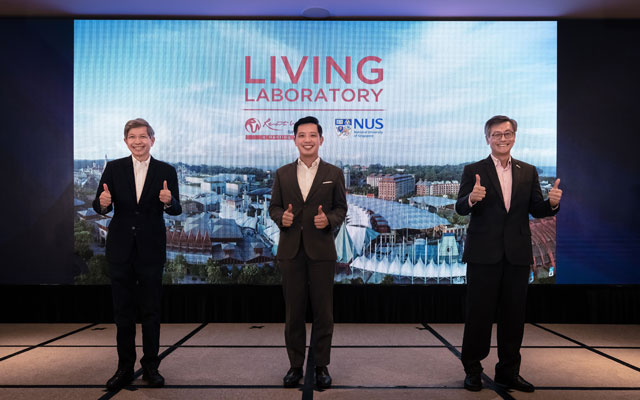
The recent launch of the RWS-NUS Living Laboratory positions Resorts World Sentosa (RWS) and National University of Singapore (NUS) at the forefront to deliver on Singapore’s goals of achieving long-term success in sustainable tourism.
Jointly set up for biodiversity conservation and decarbonisation, the collaboration was launched on Wednesday (January 5) at Equarius Hotel, in the presence of guest of honour Alvin Tan, minister of state for trade and industry, and culture, community and youth.
The initiative aims to further the Singapore Green Plan 2030 and Sentosa Development Corporation’s plan to transform the island into a carbon-neutral destination by 2030.
RWS has committed S$10 million (US$7.3 million) in funding to support the five-year partnership – the single largest academic-industry partnership focused on biodiversity and energy conservation that will contribute directly to the tourism economy, environmental education and sustainability efforts in Singapore’s ESG (Environmental, Social & Governance) development.
The collaboration will capitalise on the strengths and expertise of RWS as Asia’s leading leisure and tourism destination and host to the upcoming Singapore Oceanarium (SGO) – a rebranding of the S.E.A. aquarium after it is expanded by more than three times – and NUS as a leading academic and research institution with rich and interdisciplinary capabilities in areas such as marine science, conservation and sustainability.
Some of the projects include enhancing the quality of the experience, marine education and research offered by SGO; as well as developing innovations to cool urban spaces to achieve a low carbon and healthy living environment and have them test-bedded at RWS properties and adapted for scalability.
RWS CEO Tan Hee Teck believes “the partnership will set the foundation for RWS to meet emerging trends where consumers are prioritising sustainability and unique engaging experiences when they travel”.
NUS president Tan Eng Chye is confident that both companies “will co-create many innovative and transformative research outcomes that will enhance biodiversity conservation, environmental sustainability, and decarbonisation” which “in turn, strengthens Singapore’s standing in eco-tourism”.
Millennium raises nearly US$50,000 to help needy students
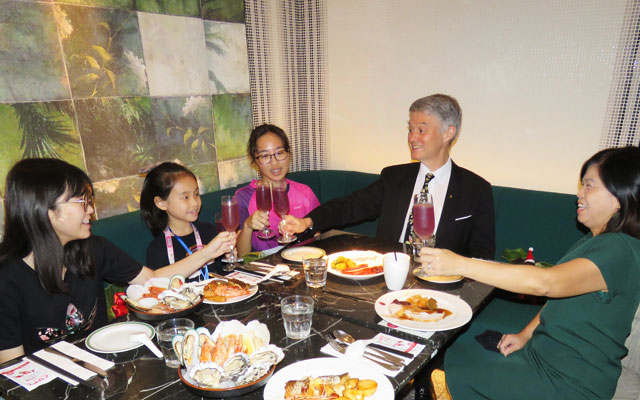
Millennium Hotels and Resorts (MHR) has raised S$65,000 (US$47,800) in a year-long charity initiative with The Straits Times School Pocket Money Fund (STSPMF), a charity devoted to helping needy kids and youth which supports more than 10,000 students a year.
For the year 2021, S$10 is donated for every Otter Adventure Staycation at the six MHR properties in Singapore – Orchard Hotel, Grand Copthorne Waterfront Hotel, M Hotel, Studio M Hotel, Copthorne King’s Hotel and M Social Singapore.
“The impact of the pandemic amidst the launch of the funding project resulted in a shortfall of the amount collected. However, the MHR management feels it’s important to help the children, especially during (this) trying time. Thus, Millennium Hotels and Resorts topped up to meet the monthly target donation for this meaningful cause,” said Paul Er, vice president, sales (Asia) of MHR.
Tan Bee Heong, general manager of the STSPMF, said: “We are thankful to Millennium Hotels and Resorts for its continued support and remembering the less fortunate even when their business is hit by the pandemic. (In 2021), STSPMF (saw) a spike in the number of applications for school pocket money. MHR’s donation will go a long way in helping us provide the necessary financial assistance to our beneficiaries.”
The children beneficiaries and their families were treated to a theatrical dining experience at The Orchard Cafe, where Orchard Hotel’s general manager Paul Hugentobler also presented the children with festive cakes and goodies.
Asia’s first Vignette Collection hotel to open in Bangkok
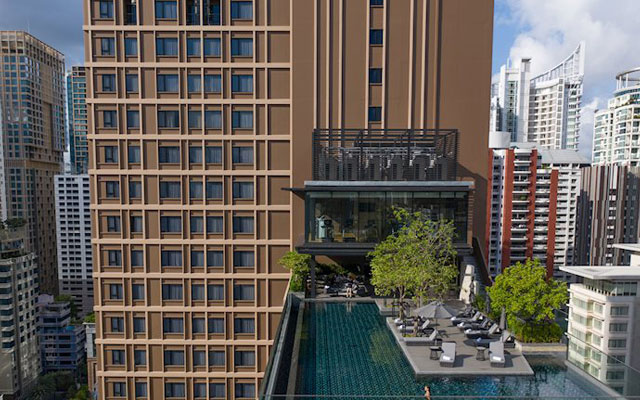
Sindhorn Midtown Hotel Bangkok will become the first hotel in Asia to open under IHG Hotels & Resorts’ conversion brand Vignette Collection come March 2022.
The property will mark the second luxury and lifestyle brand that IHG and Siam Sindhorn Co. will debut in South-east Asia and Thailand, following their inaugural partnership on last year’s opening of Kimpton Maa-Lai Bangkok.
Both hotels are situated within Sindhorn Village, a development project that spans 67,200m² in the area of Langsuan Road and Soi Tonson.
Designed by Eight Inc, the 393-key Sindhorn Midtown opened in March 2020. Forty minutes from Suvarnabhumi Airport, the property sits in the neighbourhood of Langsuan, with easy access to both Sukhumvit and Silom. All rooms and suites contain signature artworks from local artists and offer modern amenities, including Fritz Hansen’s iconic Drop chairs.
In addition to a rooftop pool, facilities also include three restaurants and bars, a swimming pool, fitness centre and over 170m² of meeting space.
IHG currently operates 29 hotels across eight brands in Thailand, with another 34 properties in the pipeline.
New hotels: Hyatt Centric Melbourne, Pinnacle Tower at Cordis Auckland, and more
Hyatt Centric Melbourne, Australia
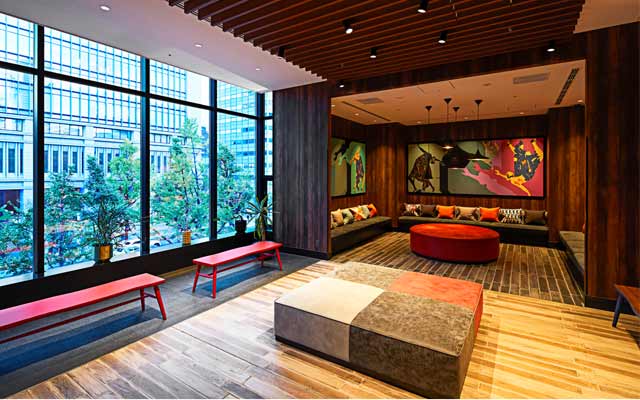
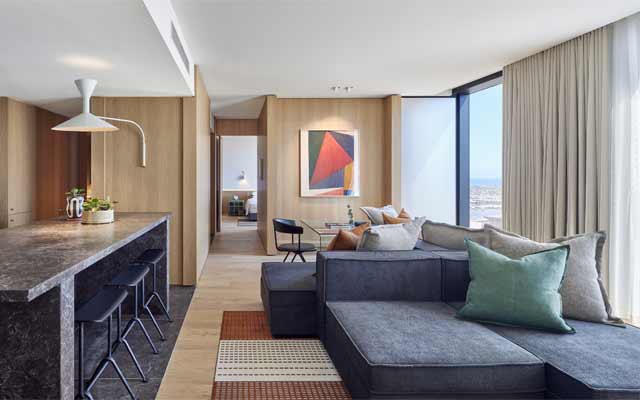
The opening of the Hyatt Centric Melbourne marks the entry of the Hyatt Centric brand into Australia. Located in the heart of Melbourne’s downtown, at the corner of Downie Street and Flinders Lane, Hyatt Centric Melbourne features 277 guestrooms across 25 levels. Short for Taste of Melbourne Australia, Toma Restaurant & Bar offers sustainably-sourced, Mediterranean-inspired menus featuring Victorian produce. The café, Allie Lane, serves treats from local producers including coffee and craft beer as well as homemade pastries and sandwiches. Wellness facilities include a 25m pool and 24-hour gym; while Bellarine Meetings on level six offers 210m² of flexible function space, plus a 248m² alfresco terrace.
Pinnacle Tower at Cordis Auckland, New Zealand
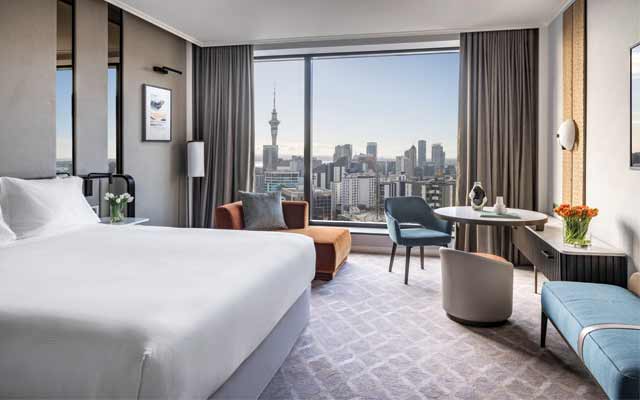
Cordis Auckland has become New Zealand’s largest hotel with the addition of its new Pinnacle Tower. Situated in the heart of the city, the 17-storey tower houses 244 rooms and signature Cordis Pinnacle Tower suites, bringing the property’s total room count to 640. Guests can enjoy 360-degree views of Auckland landmarks like the Harbour Bridge and One Tree Hill from the upper floors of the hotel. There are also two event spaces, including The Jade Room, a 400m² events space with a private outdoor area. The hotel’s existing Eight Restaurant has also expanded its capacity from 180 to 250, while new destination bar Our Land Is Alive exclusively showcases New Zealand sourced food and beverages with a local twist.
La Quinta by Wyndham Weifang South, China
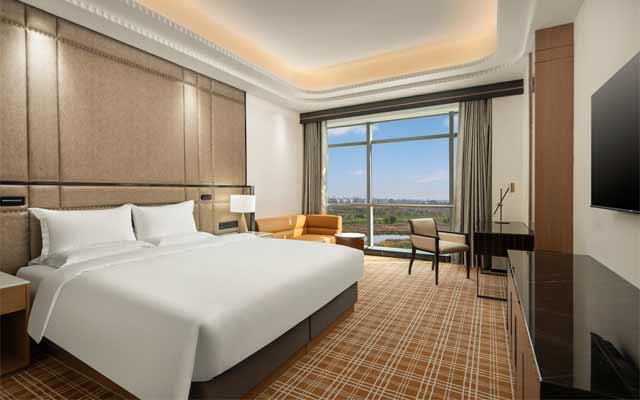
Wyndham Hotels & Resorts has debuted its La Quinta by Wyndham brand in China with the opening of La Quinta by Wyndham Weifang South, located in Weifang, one of the largest cities in the Shandong province. The hotel features 200 guestrooms and suites, all equipped with large-screen LED TVs, high-speed Wi-Fi and bathrooms with rain showers and bathtubs. Guests have a choice of three restaurants: all-day dining destination Xian Café, specialty hotpot restaurant The Tasty, and Chinese restaurant Xiang Palace. Other amenities are a 600m² gym and yoga room. The hotel also offers 3,400m² of conference and banquet space, including a 1,500m² pillar-free grand ballroom featuring a holographic projection facility and an embedded LED screen. There are also a 750m² multi-function banquet hall and 12 other meeting rooms, ranging from 70 to 200m².
Holiday Inn Express Osaka City Centre – Midosuji, Japan
IHG Hotels & Resorts has debuted its Holiday Inn Express brand in Japan with the opening of the 306-room Holiday Inn Express Osaka City Centre Midosuji. Located in the heart of Osaka on its most famous Boulevard, Midosuji, the property features high-speed Wi-Fi; high quality bedding; choice of pillows; and a cooked buffet breakfast and coffee, or takeout.
IHG signs four-hotel deal in Vietnam
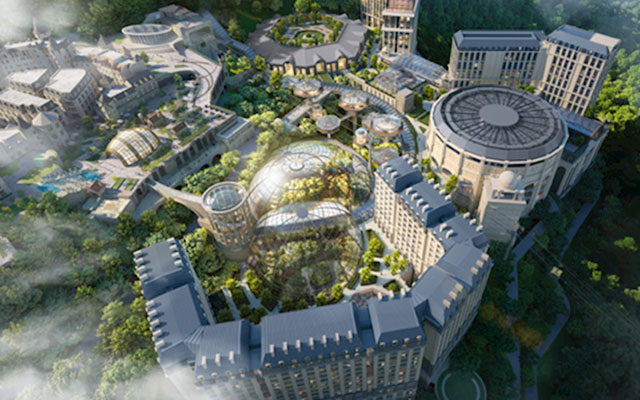
IHG Hotels & Resorts has sealed a four-hotel, 2,709-room portfolio deal in Vietnam with long-standing partner Sun Hospitality Group.
Following their collaboration on the InterContinental Danang Sun Peninsula Resort, the companies will extend their partnership across two integrated development projects that will open in 2026.
The multi-property agreement includes the 616-room Holiday Inn Resort Yoko Park Onsen in Quang Ninh Province – the first large-scale hot spring resort in Vietnam, expanding on the existing Yoko Onsen Quang Hanh Resort.
Three hotels will also be built as part of the ongoing development of Ba Na Hills in the mountains of Danang: the 602-room Crowne Plaza Danang Ba Na Hills, 843-room Holiday Inn Resort Danang Ba Na Hills, and 648-room voco Danang Ba Na Hills.
Serena Lim, vice president, development, South East Asia and Korea, IHG, said: “This marquee portfolio deal is aligned with our plan to grow our estate in Vietnam across all brands. As we work through the recovery, we know that domestic leisure business will be a strong driver of growth in the country. We’re looking to develop a range of destination resort and family-friendly destinations across Vietnam.”
Nguyen Vu Quynh Anh, CEO, Sun Hospitality Group, said: “We are strengthening our strategic partnership with IHG who share our vision of promoting the beauty of Vietnam to the world through sustainable and world-class tourism destination concepts. This is part of our masterplan to build ecosystems that spur tourism and commercial development for the country.”
She added: “Following the success of the Ba Na Hills entertainment complex, we will introduce phase two of our expansion plan where all three new hotels will be managed by IHG. IHG’s three brands complement the myriad of activities that we will be adding as part of this expansion – from an amphitheatre, unique gardens and retail podium for visitors.”
Vietnam continues to be a strong growth market for IHG, with 14 hotels across four brands, and 15 properties in its pipeline.
Philippine Airlines exits bankruptcy

Philippine Airlines (PAL) has emerged from its voluntary Chapter 11 proceedings as a more efficient airline with a strengthened balance sheet.
PAL successfully completed its financial restructuring within four months, in contrast to other airlines that remain in the Chapter 11 process more than a year after filing in 2020.
The Philippine flag carrier credits the strong support of its creditors and shareholders, the cooperation of its industry partners and the collective efforts of PAL employees around the world who sustained flights on multiple international and domestic routes throughout the restructuring period.
PAL has streamlined operations with a reorganised fleet and is now better capitalised for future growth.
The company’s Plan of Reorganization, which was approved by the US restructuring Court on December 17, 2021, provides for over US$2 billion in permanent balance sheet reductions from existing creditors, improvements in PAL’s critical operational agreements and additional liquidity including a US$505 million investment in long-term equity and debt financing from PAL’s majority shareholder.
The airline’s consensual restructuring plan was accepted by 100 per cent of the votes cast by its primary aircraft lessors and lenders, original equipment manufacturers and maintenance, repair, and overhaul service providers, and certain funded debt lenders.
“Philippine Airlines stands ready to help grow back the Philippines’ local and international air travel markets in ways that renew the tourism industry, serve the needs of global citizens including overseas Filipinos, and contribute actively to the recovery of the Philippine economy,” said PAL director Lucio C. Tan III, quoting PAL chairman and CEO Lucio C. Tan.
“Our mission as the flag carrier matters more than ever, and we are thankful for the chance to rebound from the pandemic and continue to fulfil this mission as best as we can.”
Rebranded voco Orchard Singapore offers staycation deal
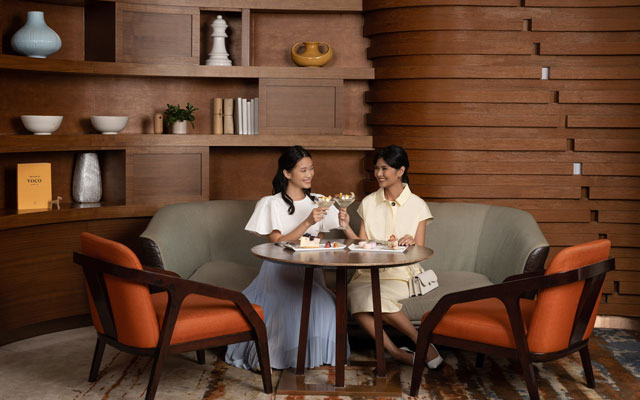
Following a rebranding initiative, voco Orchard Singapore is inviting guests to experience new and refreshed dining and stay experiences, with the launch of a staycation package dubbed voco Experience.
The package includes perks like a homemade spiced cookie as a welcome treat, a slice of D9 Cakery’s classic American cheesecake, and a voco-inspired cocktail at Opus Bar & Grill – choices include the refreshing Rosella, the fruity Spicy Martini, or the bold and smokey Nutmeg Old Fashioned.
Guestrooms will feature high-quality bedding made from 100 per cent recycled materials and eco-friendly bathroom amenities from Apotheke, a plant-based organic skincare company.
The 423-key property houses four restaurants and bars, a rooftop swimming pool, a 24-hour gym, as well as over 1,850m2 of meeting and social event spaces.
Room rates start from S$230++ (US$169) per night per room and include complimentary breakfast for two adults and 10 per cent discount at Opus Bar & Grill. Bookings can be made via vocohotels.com/singapore from now till February 26, 2022 for stays from January 7 to February 28, 2022.







Maldives Marketing and Public Relations Corporation (MMPRC) has initiated a month-long marketing campaign with OTA Kuoni France, with the aim of promoting the destination as a safe haven to French travellers.
The campaign kick-started on January 6 and will conclude on February 6. Under the campaign, advertisements, articles, photos, and newsletters of the Maldives will be posted on the digital and social media platforms of Kuoni France, and will be placed at strategic outdoor locations.
The content of the campaign will focus on promoting the ‘naturally social-distanced’ geography of the Maldivian islands, and the stringent Covid-19 safety measures in place at various accommodations in the country.
The campaign will also highlight to the travel trade and travellers from the French market the unique and diverse range of experiences available in the Maldives.
France is an important market for the Maldives, ending the year 2021 with strong arrival numbers. As of December 29, 2021, the Maldives had welcomed 1,312,706 tourists to the country. During this period, France stood as the top ninth source market to the Maldives, with arrivals totalling 29,877.