TTG Asia
Asia/Singapore Friday, 3rd April 2026
Page 808

Soon-to-open Hilton Singapore Orchard names GM

0

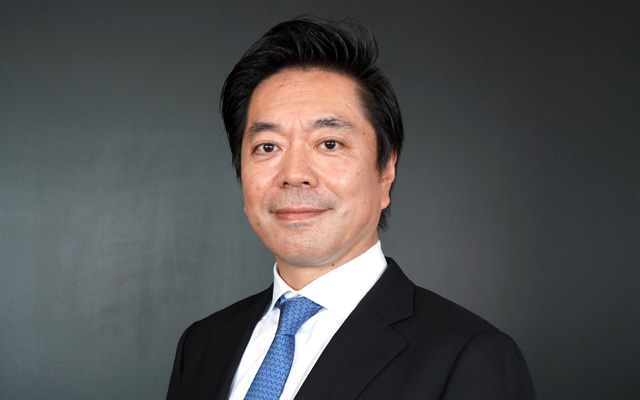
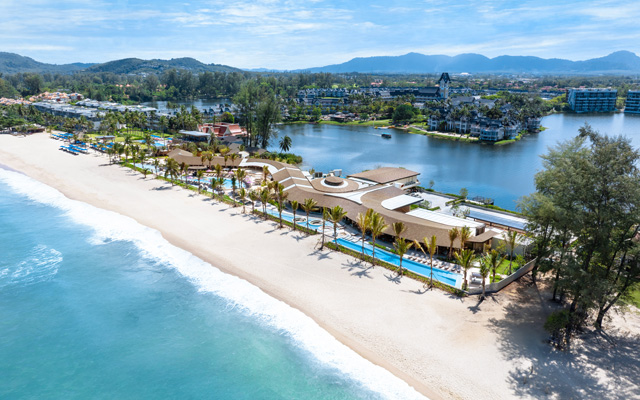
Hilton has appointed industry veteran Cedric Nubul as general manager for Hilton Singapore Orchard, which is set to open in January 2022 following an extensive refurbishment of the current Mandarin Orchard Singapore.

Nubul brings over 20 years of experience with Hilton hotels, including strong experience in conversion of hotels. He served in the role of general manager across the Caribbean and Colombia over the past eight years, and previously worked across France, Spain, Italy, the Maldives, and Malaysia.

Indonesia unveils three-phase tourism recovery plan

0

The Indonesian government has unveiled its three-stage recovery plan to build a more resilient tourism industry post-Covid.

Speaking at the Global Tourism Forum last week, Rizki Handayani, deputy of tourism product and MICE at the Ministry of Tourism and Creative Economy (MoTCE), said in the first stage of recovery (2021 to 2022), the focus will be on spurring domestic tourism and accelerating digital transformation within the sector, while ensuring that the CHSE (Cleanliness, Health, Safety and Environmental Sustainability) protocols are being implemented across destinations.

Domestic tourism will lead the initial recovery phase; a security officer standing guard at Prambanan Temple in Yogyakarta, Indonesia pictured 

The ministry will also focus on establishing travel bubble arrangements, and work with related government agencies to prepare for the gradual reopening of destinations across the country, particularly Bali.

To pave the way for Bali’s reopening, Teuku Faizasyah, director general of information and public diplomacy, Ministry of Foreign Affairs, said that his office would help MoTCE analyse potential source markets and keep international travellers updated of the Covid-safe measures in place at tourist destinations.

Budi Tirtawisata, CEO of Panorama Group, urged the government to ease entry requirements for international travellers, including exempting them from quarantine if they test negative for Covid-19.

In the second phase of the recovery programme, from 2022 to 2024, MoTCE will aggressively promote tourism villages as it projects that community-based tourism will shine in the post-Covid era, said Rizki.

During this recovery stage, the government will focus on boosting the sector’s resilience, through stimulus funding to support the digitisation of tourism villages and development of creative hubs, as well as facilitating collaboration between e-commerce players and banks for capital assistance.

Rizki expects that the growth and acceleration phase will take place from 2024 to 2029. During this stage, the government will strengthen quality tourism and the destination resilience, promote wellness and adventure products, intensify marketing campaigns, speed up digital transformation, as well as strengthen the supply and value chains of the industry.

Building a learning journey through Japan

0

Few would think of launching a travel business today, right in the midst of a prolonged pandemic and tourism crisis, but former architect and business entrepreneur Michiyo Kawabe sees promise in heading that way.

With other partners, Kawabe officially registered Michi & Co with the Singapore Tourism Board in June, setting the company on the path of offering curated tours around Japan’s lesser known regions, with the promise of connecting travellers with local communities.

Michiyo Kawabe (left) launches Japanese tour company and ropes in Singapore-based Japan specialist, Salamat Khamisah (right), to develop programmes

According to Kawabe, the ultimate goal of Michi & Co is to offer travellers a “learning journey” that gives them a deeper look into the local way of life and which will support the local people and their livelihood.

For a start, Michi & Co offers two- and four-night itineraries each to Hayama and Kamakura in Kanagawa prefecture and Hakuba and Togakushi in Nagano prefecture. The programmes are built around private, luxury villas, some of which Kawabe helped designed.

The Hayama villa, built a century ago, stands next to the Hayama Imperial Villa. Kawabe has preserved its original structure while bringing in modern luxuries and amenities, such as a balcony Jacuzzi with garden and ocean views, and a Western dining room and kitchen. The villa can take four guests in bed, and four more on futons.

Over at Hakuba, the villa is a classic ski cabin that is within easy reach of major ski resorts. The three-bedroom villa is good for up to six guests, but larger families can take a second villa of a similar size on the same site.

Kawabe will tap into the network of staycation.jp, an online portal of vacation rental villas all over Japan that she set up years ago, to offer other accommodation options.

Michi & Co hopes to draw international travellers deeper into Japan, where they would reside in private villas and enjoy experiences off the touristy tracks; Hayama villa pictured

Itineraries play up the Japanese countryside, and offer uniquely Japanese experiences, such as unwinding around a takibi – bonfire – with a master who will speak about the art of making a bonfire, interacting with a local fisherman, visiting farmer’s markets, dining at restaurants that are hidden gems, participating in meditation rituals and pottery crafting, and more.

As the company continues to build up its product line, Kawabe said programmes would carry on the promise of taking travellers off the beaten track to appreciate more of Japan.

Salamat Khamisah, a recognised Japan destination expert in Singapore, joins the company as tours and operations manager. She believes that Michi & Co’s direction to “have our guests learn about the local culture in less congested parts of Japan through curated journeys fits with the post-pandemic expectation that people will favour private tours instead of the usual group tours, and for destinations away from the big cities”.

“It may seem strange to start a travel agency now, especially one that focuses on Japan when there are still inbound travel restrictions, but I think this gives us time to prepare. Demand will rebound very quickly and we should not wait till borders are reopened to begin planning and marketing. By then, there will be a huge rush of travel agent activities,” reflected Khamisah.

Khamisah will be leveraging her expertise in Halal tourism to support Michi & Co’s development in this growing tourism segment. “We are able to provide Halal or Muslim-friendly F&B catering and accommodation, and I have a reliable network of Japanese suppliers who are familiar with serving Muslim travellers,” she shared, adding that the plan is to support Muslim travellers from anywhere in the world, not just those from Singapore.

To establish the Michi & Co branding and engage potential travellers, the team has been conducting Japanese tea ceremonies that give customers a taste of the destination to whet their travel appetite.

“It is encouraging to know that many who have attended our sessions have expressed interest to holiday in Japan once the borders reopen. They are all bidding their time, waiting for Japan to welcome again foreign visitors,” said Khamisah.

Besides Japanese tea ceremonies, Kawabe is looking to offer meditation or online interactions with other Japanese masters. In addition, guests will soon be able to purchase products that allow them to bring uniquely Japanese experiences home.

“We have started selling green tea products, which are a nice match with our tea ceremonies. I think handicraft make interesting products to sell as well, as there are many stories of the artisan and Japanese culture embedded within. Our introductory sessions and products will allow our guests to experience a part of Japan before their visit in the near future,” said Kawabe, adding that “a successful travel agent is one that can tell a good story of the destination and the value of local culture”.

Editor’s note: Content has been updated to reflect an amendment. The original copy states that private villas featured in the tours are built, designed and owned by Kawabe. This is not the case.

Six Senses to add second Maldives resort

0

Six Senses will add its second branded property in the Maldives in the form of Kanuhura situated on the private island hideaway of Lhaviyani Atoll.

The property encompasses three private islands – two deserted neighbouring islands and Kanuhura itself. The conversion of the Kanuhura resort into a Six Senses branded property is the group’s second collaboration with Singapore-based Hotel Properties Limited.

Kanuhura Maldives will be converted into a Six Senses branded property come late 2022

When it adopts the Six Senses brand in late 2022, the resort will offer 80 private overwater, beach and family villas offering sunset or sunrise views. It can be reached via a 40-minute seaplane flight from the main international airport on Malé.

Enhancements are planned over the coming months including an upgrade of the overwater villas to include private pools, new family suites, new dining concepts and a pioneering wellness offering.

Below the water, the Lhaviyani Atoll offers more than 40 dive sites for exploring marine life. In the coming months, new watersport activities and high-performance equipment will be added in partnership with Ocean Wings, a subsidiary of Ocean Group Maldives. A turtle safari may also be organised on request to a turtle point less than five minutes away from the resort.

In keeping with its sustainability ethos, Six Senses will also line up projects to support a neighbouring island community with a focus on education and student development.

Also in the works is new landscaping of the organic herb garden, where vegetables, herbs and salad leaves will be collected each day for use in the restaurants and interactive workshops with the chef. The boutique will also provide a new space dedicated to sustainable fashion.

Six Senses Kanuhura will be the brand’s second property in the Maldives, after Six Senses Laamu. Prior to its conversion, the property is available for bookings through www.kanuhura-maldives.com and www.ihg.com.

Technology provider Dohop eyes APAC for expansion

0

Iceland-based airline technology provider, Dohop, is working to strengthen its global presence, with a focus on the Asia-Pacific region over the next five years.

Dohop’s commercial director, Sarah Hanan, shared that Asia-Pacific’s vast population coupled with the fact that it was the fastest-growing region for air travel globally pre-Covid, presents a “significant opportunity” for the brand’s growth.

Hanan: Intermodal air-rail connections at airports in Asia-Pacific markets still under-developed 

“We believe we are uniquely positioned to be able to support the aviation industry in its recovery by facilitating new route connections, thus providing opportunities for incremental revenue through partnerships with our existing network of 60 airlines,” she said.

Since its founding in 2004, Dohop has supported thousands of connections between low-cost carriers, full-service carriers and hybrids. It provides booking engines and microsites that enable carriers through API integrations to easily and seamlessly offer connecting itineraries with their partner airlines.

It also offers bespoke customisation of the platform to fully integrate with a partner’s website and booking flow. Additionally, it can also support the sale of seats with seat maps, bags, meals, inflight entertainment and additional ancillaries, along with frequent flyer programme integration.

Currently, Dohop has five airline platforms in the Asia-Pacific region. However, a few have been disabled due to Covid-19 restrictions. The company is in ongoing discussions with many airlines based in Asia-Pacific to grow its network.

Besides virtual interlining, Dohop is also helping airlines navigate the disruption to flight schedules caused by ever-changing travel restrictions owing to the current pandemic. It has responded quickly to change requests and proactively presenting new opportunities as they arise.

The Asia-Pacific region is supported by Dohop’s team based in Bangkok and Beijing. Marketing initiatives are done out of its headquarters in Reykjavik, Iceland, and supported by its regional offices.

Earlier this year, Dohop enabled intermodal connections between easyJet and Deutsche Bahn who launched combined transportation connections on Worldwide by easyJet in July.

Hanan shared: “Dohop is actively working on expanding our network of rail providers globally, which will in turn be able to facilitate an increasing number of intermodal connections, which we believe play a key role in international travel.”

While the intermodal proposition is gaining momentum in Europe as markets recover, the take-up rate in Asia-Pacific is slower. Said Hanan: “Countries such as Japan and China have extensive high-speed rail networks. However, air-to-rail connections are not yet fully developed.”

She added: “We are in talks with several airlines to expand intermodal. It is a convenience to customers, when they can pre-book their onward connection from the airport.”

Malaysia budget hotels urge govt to regulate OTAs

0

The Malaysia Budget and Business Hotel Association (MyBHA) is urging the government to enact laws to regulate online travel agencies (OTAs), claiming that the price war among the OTAs have hurt their profit margins amid the Covid-19 downturn.

Regulations proposed by the MyBHA include setting a ceiling price on the sales commissions of OTAs as well as to enforce guidelines on short-term residential accommodation in order to protect its members whose businesses are on the verge of collapse.

Sri Ganesh: Price competition among OTAs has driven hotel prices down, impacting operators’ bottom line

MyBHA national deputy president, Sri Ganesh Michiel, told TTG Asia that MyBHA members are now completely reliant on OTAs due to changing booking patterns brought on by the Covid-19 pandemic.

According to Sri Ganesh, more than 90 per cent of bookings now come from OTAs, whereas in pre-Covid times, walk-in clients formed the majority of bookings.

He explained: “OTAs have an upper hand. They announce campaigns and promotions and activate them without the knowledge of the hotelier on a case-to-case basis, thus selling rooms at rates lower than our recommended selling price. This creates an unhealthy price war among the (OTAs).

“On top of that, they charge overly-high sales commission of 40 per cent which bleeds the operator and makes it impossible to cover operating costs. There is also a tendency to increase sales commission without any discussion or consent from the hotel operator.”

Citing more examples of what he dubbed “the new normal technology colonisation”, Sri Ganesh shared: “A tactic often used is to advance monies to OTAs based on past revenue forecasts. In return, hotels must provide OTAs with a stipulated number of rooms at a discounted rate or at a very high commission.

“OTAs also threaten not to promote the hotel or to suspend or terminate the hotel account if the operator refuses to cooperate in accordance with the requirements of OTAs.”

What is further distressing MyBHA members is that the Star Rating given by the Ministry of Tourism, Arts and Culture has been made redundant as OTAs tend to display ratings and reviews posted by users, whose complaints cannot be verified. Sri Ganesh also lamented that hotel operators have no control over customers who have been blacklisted by the hotel for misdeeds, but are now booking rooms through OTAs.

MyBHA also called on the government to enforce guidelines on short-term residential accommodation at non-hotel condominiums or residential units which are sold by OTAs. Sri Ganesh claimed that these types of accommodation have become increasingly popular with locals as they need not adhere to the Covid-19 SOPs set by the authorities.

Also, owners of the units do not have an operating licence from the Ministry of International Trade and Industry or a business licence, and do not pay any tax from the rental of their units.

Sri Ganesh stressed: “It is not just hotel industry players who have long suffered by this industry threat due to the absence of laws to regulate OTAs and enforce guidelines on short-term residential accommodation. The government has also directly suffered losses due to no service tax collection for short-term residential accommodation.”

Urging the government to take urgent action in order to speed up the recovery of the hotel industry, he asked: “If the government can control the ceiling prices of Covid-19 test kits and the price of certain food items, why can’t they set a ceiling on OTA commission rates?”

TAT signs MoU on carbon neutral tourism

0

Slow and fulfilling living in Macao

0

Brought to you by Macao Government Tourism Office (MGTO)

Morning calm at the iconic The Ruins of St. Paul’s

Pandemic-led isolation and uncertainty have had a positive impact – it gave people a chance to slow down and assess their life priorities, and along the way threw a spotlight on the importance of physical and mental well-being.

This growing need to savour one’s life better than ever before has fuelled the rise of slow, purposeful travel. Here in Macao, one can find many ways to decelerate, focus inwards and rediscover a balance in life.

Breathe in, breathe out
Take heed of numerous research that has borne out health benefits – physically, mentally, and emotionally – that come from nature immersion. Travellers to Macao looking for nature therapy have several hiking trails and nature paths to choose from. Many of these trails and paths wind through a quieter and more scenic part of Macao.

A short leisurely walk to free the mind can be made along the one-kilometre Mong Há Hill Fitness Trail, just stone’s throw from the city centre and within the Mong Há Hill Municipal Park. The route takes one to various scenic spots such as a natural rock cave. Upon ascending a small stairway, one will reach a viewing platform where a splendid view of inner Macao awaits.

For a more ambitious hike, the four-kilometre Taipa Grande Trail in the Taipa Grande Natural Park will satisfy. The broad trail features easy slopes and verdant surroundings. Besides taking in panoramic views of Cotai Central, hikers can also visit the Taipa Grande Camellia Garden and appreciate the many resident blooms. Take the Fitness Steps Walk, which lies on the trail, to arrive at the highest point of Taipa, at 159.2 metres above sea level.

An alternative to green trails is the Hac Sá Long Chao Kok Coastal Trail, a 1.2-kilometre route that runs along a rocky coastline, dotted by numerous rock formations and enchanting visitors with sweeping seaviews.

Unravel stress knots
Macao’s many crème de la crème hotels and resorts bring with them stellar wellness enclaves to escape into and emerge later with body renewed.

Leave physical healing in the hands of wellness professionals found across Macao’s many distinguished spas; Banyan Tree Spa Macau’s Tropical Rainmist treatment pictured

Distinguished wellness options, as determined by the Forbes Travel Guide, include The Ritz-Carlton Spa, Macau, renowned for its ice fountain and vitality pool with overhanging lounge chairs; Tria Spa at both MGM Cotai and MGM Macau; and Morpheus Spa at Morpheus Hotel, a stylish sanctuary where treatments combine nature with science.

If a tropical sanctuary is what the body yearns for, then the award-winning Banyan Tree Spa Macau is the place to be. Its spa menu contains more than 20 treatments, five of which are particularly unique. Take for instance the Tropical Rainmist, which treats the guest to a rejuvenating rain mist steam bath, cascading rain shower, invigorating body scrub and a soothing massage.

Mindful meals
Macao’s 500 years of food culture earned her the UNESCO Creative City of Gastronomy designation in 2017. More than just a treasure trove of precious recipes handed down generations, Macao’s kitchens are also turning out dishes that stay true to healthful and sustainable promises.

Regain yin and yang balance with nutritious meals at Herbal Treasures

Herbal Treasures at Studio City returns harmony to one’s body through delicious food and healthy drinks crafted in collaboration with one of the most authoritative traditional Chinese medicine associations of Macao. On the menu are herbal jellies, seasonal herbal tonic teas, double-boiled soups and a variety of desserts.

Healthy vegetarian meals can be enjoyed at Sum Yuen Buddhist Vegetarian Restaurant and Chakra SPACE, for instance. The former is set within the 19th century Pou Tai Un Buddhist temple, while the latter takes pride in surprising guests with its table d’hôte concept, although guests can state their preference for Chinese, Thai or Western flavours.

IFT Educational Restaurant scored the MICHELIN Green Star award in January 2021 for its contributions to sustainable gastronomy

Yet another dining gem in Macao is IFT Educational Restaurant, whose celebrity status is cemented by its acquisition of the MICHELIN Green Star award in January 2021. The distinction is presented to restaurants that lead the way in sustainable practices. IFTM Educational Restaurant was recognised for its contributions to sustainable gastronomy, including the use of regional produce and herbs grown at its own garden, and for its food waste and environmental management systems.

Shop and support local businesses
If shopping is what one desires, then make every dollar spent count by supporting Macao’s local businesses.

Bring home tasty Macanese souvenirs, such as Portuguese egg tarts, and support local businesses along the way

Portuguese egg tarts are popular Macanese souvenirs, but Macao’s traditional bakeries are also masters at crafting the most addictive almond biscuits, egg rolls, coconut flakes and peanut candies. Many of these bakeries, which have thrived for generations, can be found on Taipa Island.

If foodstuff is not one’s cup of tea, then take home paintings and craft to support local artists. Their work can be found in local galleries on Rua de Santo António as well as at exhibitions hosted at the IAM Gallery, the Pavilion in Lou Lim Ioc Garden, Macao Museum of Art and Tap Seac Gallery.

For more travel updates and inspirations, follow Mak Mak Macao (on Instagram), Stopover Macao (on Facebook), and Macao Moments (on Twitter), or visit the Macao Government Tourism Office website.

How technology can help airlines today

0

The year 2020 has gone down in history as the worst for air travel. While we have seen a bounce back in passenger numbers from the depth of the pandemic, a full recovery remains a long way off. Despite global efforts around vaccination and testing programmes, we don’t expect that air travel volumes will return to pre-Covid levels before the end of 2023.

So, while the recovery continues to build momentum, the pressure remains on airlines. They have had to reprioritise technology spend to keep operations running through the pandemic, doing more with less to compensate for the financial losses of fewer passengers flying.

For any airline, fleet is by far the biggest capital outlay. The primary concern of our airline customers – remembering that almost every airline is a SITA customer – is how to maximise investment in their fleet given that passenger volumes and business travel remain below what they were before the pandemic, particularly on long-haul routes.

Airlines today must also contend with rising fuel costs, which are at an all-time high. IATA’s Jet Fuel Monitor shows that the average price of jet fuel is around 70 per cent higher year-on-year in August, a US$46.4 billion additional cost to the industry.

In parallel to the financial pressures, the pandemic has greatly increased the focus on aviation to be more environmentally sustainable.

Operational efficiencies are key for airlines’ sustainability
It is more important than ever for airlines to operate in a more financially and environmentally sustainable manner. Fuel is one of the most significant expenses for an airline. From an environmental perspective, most aviation emissions are from aircraft, specifically fuel consumption.

While new zero-emission aircraft and sustainable aviation fuels are two industry measures identified to reduce carbon emissions and the reliance on fossil fuels, no airline can adopt these measures fully today. However, measures supporting operational (including efficient procedures and weight reduction measures) and infrastructure improvements (aircraft and associated infrastructure, including airports and flight paths) represent the greatest opportunities for airlines today.

SITA is acutely aware of these financial and environmental challenges as an industry-owned organisation that takes sustainability extremely seriously. We set ourselves the ambitious target of becoming a carbon neutral company by 2022, an ambition I am pleased to say we officially achieved this month when we were certified as a CarbonNeutral company – a full year ahead of our target date. This philosophy is carried through to how we support our customers and the industry to be more sustainable.

Embracing digital transformation to deliver cost and carbon savings
We are experiencing a growing demand from our airline customers for our digital solutions to leverage their data to create insights into operating more efficiently. SITA empowers airlines with the right tools to accelerate digital transformation. These tools enable stakeholders to connect and collaborate, and provide full situational awareness to inform faster, better decision-making, support resiliency in changing conditions and disruptions, and reduce costs in the most sustainable manner.

As a technology provider, we have adapted our portfolio and introduced new or supplemented solutions that help our customers cut fuel burn and reduce their carbon footprint today both on the ground — with solutions that optimize flight trajectories, deliver faster turnaround times, and limit runway taxi times — and in the air — through flexible flight planning and accurate fuel evaluation. The results are immediate and concrete.

Real-time air-ground collaboration – saving time, costs and fuel
One area where efficiency in aircraft operations can be greatly improved is real-time air-ground collaboration.

Today, the information flow between an aircraft approaching an airport, the operation control centre, the ramp, gate, and maintenance control is not optimal. Processes are complex and time-dependent. The multiple stakeholders on the ground often work in organisational silos at different airport locations and, in the case of dispatchers, sometimes even from home.

We saw an opportunity, working with Microsoft, to develop our Mission Control application. Using the Teams platform, which many employees are already familiar with, it facilitates real-time collaboration among cockpit, ground control, gate, and ramp personnel. It helps airlines better manage operational variability, optimising turnarounds while minimising fuel consumption, and ultimately, carbon emissions.

Using this tool, a pilot facing a route change, for example, can notify an aircraft fueler that less fuel is required than originally planned for the upcoming refuelling process. This saves on carrying unnecessary fuel for the next flight, optimising the refuelling process, not just saving costs for the airline but leading to more sustainable fuel usage.

In the skies
Another key area where we believe that technology can have a major impact is inflight. Before Covid-19 struck, the real challenge with congestion was not on the ground but in the wider airspace. Organisations such as Eurocontrol have long looked at ways to alleviate the pressure on the airspace.

This is where the next generation of air traffic control (ATC) services such as Trajectory Based Operations (TBO) provide a more optimal way of managing air traffic and preventing congestion. The industry has long discussed aircraft operating techniques like Continuous Descent Operations (CDO), which enables the operation of more optimal flight paths by reducing engine power, thus reducing noise and fuel consumption and, therefore, carbon emissions and costs.

The overall technology landscape that will allow these new Air Traffic Management applications is under development. In the not too distant future, solutions such as LDACS – L-band Digital Aeronautical Communications System – will enable aircraft to send ATC trajectory-based real-time data to aid better decision-making around aircraft flows and movement. The positive impact on fuel and carbon emissions will be instant.

In conclusion, Covid-19 has led to a huge demand on our industry – and indeed many other industries – to reduce costs, do more with less, and streamline operationally. It also marks a real opportunity for the industry to simultaneously achieve greater cost efficiencies while making progress in reducing carbon emissions in the near term.

Industry veteran appointed new Tourism Malaysia chief

0

Tourism Malaysia has appointed Zainuddin Abdul Wahab as the new director-general, effective September 13. He replaces Zulkifly Md Said who has retired.

Zainuddin was previously the senior director of management of Tourism Malaysia and also assumed the duties of deputy director-general (planning).

Zainuddin Abdul Wahab has been in civil service for 37 years and will now lead Tourism Malaysia

No stranger to the civil service, he was the director general of the Islamic Tourism Center before being appointed director of the Production Division and senior director of the Strategic Planning Division at Tourism Malaysia.

In his new role, Zainuddin will continue to assist in the recovery efforts of the tourism industry alongside driving progress towards the digitalisation of the National Tourism Policy, said Tourism Malaysia in a press statement.

Uzaidi Udanis, president of the Malaysian Inbound Tourism Association, described Zainuddin as a dedicated and experienced person who knew the market well.

“I am confident he is the right person to help the tourism industry recover. I hope he will also have regular interactions with the industry to find best solutions for the recovery of the tourism sector,” Uzaidi said.

The Malaysian Association of Tour and Travel Agents secretary-general, Nigel Wong, commented: “We hope that Tourism Malaysia under the leadership of Zainuddin will look at fresh and innovative ways to promote Malaysia and form more intimate engagement with industry stakeholders – smart public-private relationships like these are the key to quicker tourism recovery.”