


The skies are reopening again. Slowly but surely, many of us around the world are adjusting to living in a pandemic-prone world. This means hotels need to adopt a new level of operational agility to keep up with shifting guest expectations and evolving technology. For many hospitality brands, this means being intentional with your technology decisions, integrating technology without sacrificing the high-touch experience that is often equated with high levels of service excellence.
 Forget the coveted five-star rating – possessing the hidden star is now the new gold standard in delivering service excellence. Here are five factors that will give hotels the edge to deliver the ultimate memorable guest experience and secure that extra star of excellence:
Seamless and personalised guest journeys
According to a global travel trends report by American Express Travels, 82 per cent of respondents state that the pandemic has changed traveller perception of luxury travel and personalised experience.
As safety and hygiene have now become top of mind for travellers in a Covid-recovering world, seamless and personalised guest journeys are required to adapt to guests’ mobile habits in an increasingly contactless world.
Hotels will benefit from a single payments platform that can help to unify experiences around the customer journeys, across online, mobile or in-person interactions.
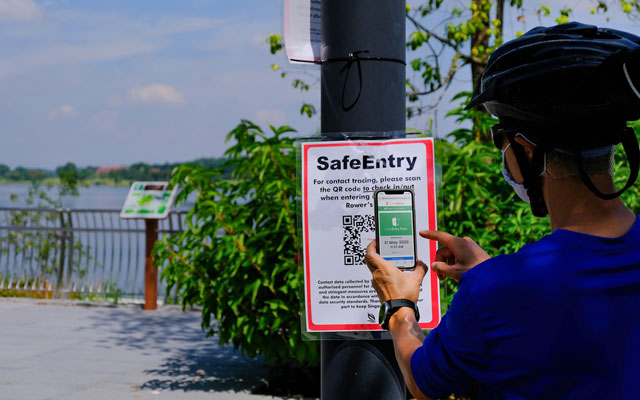
For example, AccorInvest has redesigned the check-in experience to be contactless and seamless using tokenisation. Guests will be able to check in via their mobile devices prior to their arrival and securely authorise card payments using virtual check-in. Twenty-four hours prior to their stay, guests will receive a link to check in and have the option to scan a QR code to confirm or directly to the room when they are at the hotel.
Facilitating secure transactions using tokenisation
New security and fraud risks are constantly emerging as millions around the world now transact online, especially since the pandemic hit.
Card tokenisation inherently reduces the exposure of sensitive card information. At the point of booking, a guest’s payment data is captured, encrypted and replaced with a secure token for all subsequent purchases.
From that point, guests can be liberated from their cards completely. They can activate any device that has an NFC tag (be it a wearable, an access card, or a room key) to make payments and book services without having to present a card, enter a code, or sign a bill.
For hotel operators, this also means that you can keep your PCI scope to a minimum since the unencrypted card data never touches your systems. You can also send secure payment links to guests replacing the need to collect card data on the phone or in an email.
Delighting beyond expectations
Being able to fulfil guests’ needs without having to ask for their payment details with tokenisation will also take the experience up a notch.
From the point of booking, tokenised guest payment data securely stored in the hotel’s property management system can be easily retrieved for future transactions. Past transaction data can also allow hotel operators to anticipate and provide recommendations tailored to your guests’ specific needs and preferences. Tokenisation also allows guests to have a brisk checkout process and allow returning guests to have a smoother experience.
Reducing other potential points of friction such as recognising where guests are from, and letting them pay with their preferred method and currency, is also a standard service hotels should aim to provide.
Focus on guests, not processes
Enabling high-tech experiences and digitising the guest journey does not have to detract from delivering high-touch engagement. Instead, frictionless payments will reduce the amount of time spent on manual tasks, freeing up resources and staff to focus on the guests.
For example, tedious processes like night audit, closing terminals, or tallying bank settlements with your sales revenue can now be eliminated by moving from standalone payment terminals to a fully integrated payment solution. Some of our hotel partners have indicated saving eight to 10 hours of manual reconciliation – across all channels and geographies.
Managing pre-authorisation or using card-on-file to charge tokenised payment cards for common requests such as late check-outs, day use of the room and extended services will become more flexible on an integrated payment platform.
Furthermore, an integrated solution not only connects the front desk, kiosks, rooms, and other departments within the hotel, but is also compatible with property management systems such as Agilysis, Infor, Oracle Hospitality and Shiji. Another plus point is building in the same great experience and streamlining processes across international properties without the hassle of multiple contracts.
Delivering personalised experiences using real-time data
Understanding guests’ needs and delivering more personalised experiences is top of any hotel’s agenda.
An integrated solution can provide a unified real-time overview of the performance of all transactions, allowing hotels to optimise conversion as they improve customer experience. Real-time data can tell how well your new dinner menu is performing, or the take-up rate of new services, as well as help you see the opportunity to convert dine-in guests to room guests. These invaluable insights can also help determine future business decisions, such as building highly targeted, customised loyalty programmes and promotions.
The payment system, when set up right, helps to remove complexity by connecting the dots across your various touchpoints. It becomes a crucial element to influence a guest’s experience and a key point of differentiation between your hotel and the competition, as well as your conduit to new revenue streams.
Without doubt, hotels need to be where the consumers are in order to profit from the trend towards digital and alternative payment options. A combined high-tech and high-touch experience will be the new norm in the trade – and that is where you will earn your hidden star to be a cut above the rest.



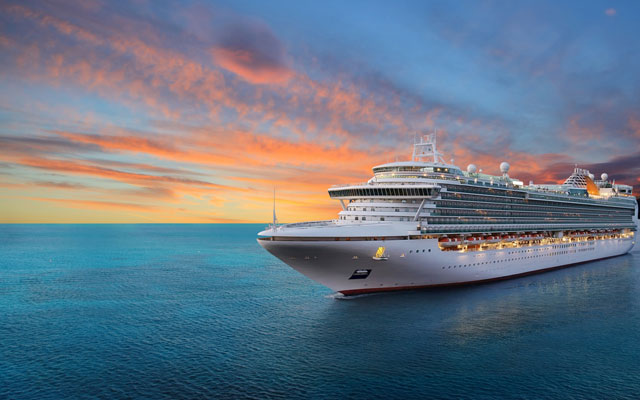














Cruise Lines International Association (CLIA) has released the 2022 State of the Cruise Industry Outlook report, which highlights how the industry has continued to resume responsibly with proven protocols, underscores the value of cruise tourism to local communities and national economies, and charts the industry’s progress towards achieving carbon neutrality.
The report “provides an opportunity to reflect on how far our industry has come as CLIA ocean-going cruise lines have welcomed more than six million guests onboard since resuming operations in July 2020,” said Kelly Craighead, president and CEO of CLIA.
“While our focus on health and safety remains absolute, our industry is also leading the way in environmental sustainability and destination stewardship,” she added.
“Coastal and maritime tourism is an important economic driver, and we continue to work in partnership with cruise destinations so that communities thrive from responsible tourism. Our members are also investing in new technologies and new ships and pursuing the goal of net carbon neutral cruising by 2050.”
The 2022 outlook report also features reflections from cruise industry partners and community members around the world.
The report highlights that by 2027, the CLIA ocean-going cruise line member fleet will reflect significant advancements in the cruise industry’s pursuit of a cleaner, more efficient future. It also presents 2020 economic data that illustrates the pandemic’s impact on the wider cruise community and underscores the importance of cruise tourism to global economies.
In addition, it shows how industry-leading protocols are facilitating the resumption of cruise tourism around the world, with more than 75 per cent of ocean-going member capacity having returned to service and nearly 100 per cent projected to be in operation by August 2022.
The report also details how continued collaboration with local communities in the destinations cruise ships visit remains a critical focus for the cruise industry, including in Dubrovnik, Croatia, the Greek destinations of Corfu and Heraklion, and the City of Palma in the Balearic Islands.
Read the full 2022 State of the Cruise Industry Outlook report here.