

Accor brings Raffles brand to Dubai
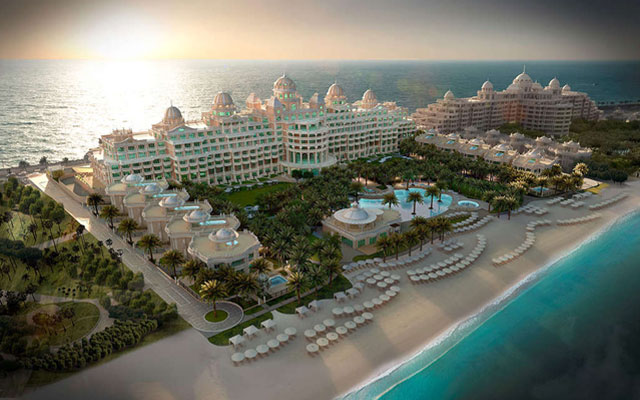
Accor is set to open its first Raffles Resort in the Middle East, on the iconic Palm Jumeirah, come 4Q2021.
Situated within a 100,000m² landscape on the West Crescent of Palm Jumeirah, Raffles the Palm Dubai will boast panoramic sea views and vistas of the Dubai skyline. The resort will offer 389 rooms, suites and villas, each of them featuring a balcony and terrace showcasing sea views.
Raffles the Palm Dubai will offer the signature Raffles Butler service, alongside eight F&B experiences. The on-site Cing Mondes Spa, a Parisian brand, will feature 23 treatments rooms and two private spa suites, as well as an indoor swimming pool.
Flanked by a 500m private white sand beach, the property will debut a new beach club concept showcasing Mediterranean cuisine, entertainment offerings, and more.
Malaysia Airports submits regeneration plan for Subang Airport
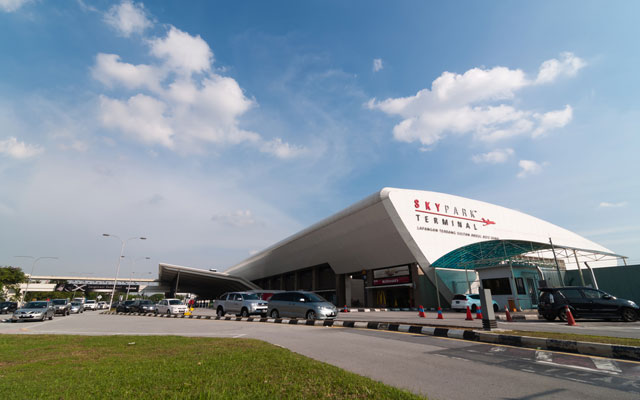
Malaysia Airports Holdings (MAHB) has recently submitted a comprehensive strategic plan for the long-term development of the Sultan Abdul Aziz Shah Airport (SAAS), or Subang Airport, to the government.
The plan is premised on three focus areas, namely, Aerospace Ecosystem, Business Aviation and Urban Community Airport. It is meant to propel SAAS into becoming the preferred aerospace and business aviation hub in Asia-Pacific in the next five years.
MAHB group CEO, Mohd Shukrie Mohd Salleh, said in a press statement: “Since mandated by the government in 2005 to develop (SAAS) into an international aerospace park, we have grown the ecosystem by four times, attracting the presence of 60 leading brand names and facilitating capital inflows of over RM500 million (US$120 million).”
He said the regeneration plan will grow the ecosystem further by three times, doubling the number of global and local operators to more than 100 that will create and support a 19,000-strong high skilled workforce.
“It will spearhead Malaysia’s transition into high technology driven IR4.0 industries and high-income nation with a projected value of over RM10.0 billion to the national economy. This is very much aligned to the strategic thrusts identified in the government’s Shared Prosperity Vision 2030 and will achieve the aspirations of the Malaysian Aerospace Industry Blueprint 2030,” he added.
Mohd Shukrie said MAHB is ready now to undertake the SAAS regeneration plan as it has sufficient internal cash reserves.
He added: “The plan requires infrastructure investment of RM300 million staggered over the next five years. This is well within our capability as we still have a strong cash and money market position of RM1.6 billion with RM914 million available for the Malaysian operations. The funding for ready-built or build-to-suit facility can be easily facilitated via a combination of internal cash as well as project financing options.”
Laura Houldsworth joins Booking.com as MD APAC
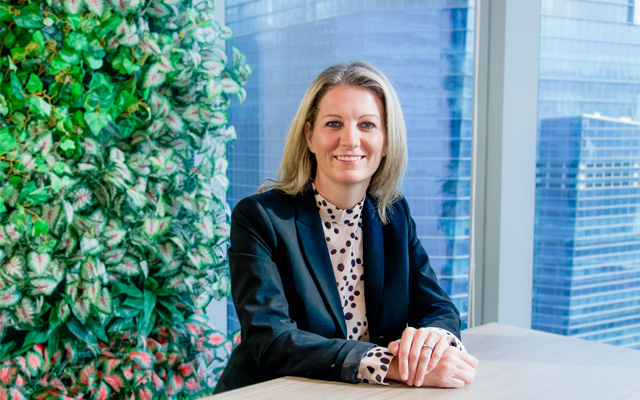
Booking.com has appointed Laura Houldsworth as managing director & vice president for the Asia Pacific region, succeeding Angel Llull Mancas, who served as managing director for Asia Pacific since August 2018.
With full responsibility for the leadership and development of Booking.com’s Asia Pacific business, Houldsworth will play a critical role in driving business growth, strategy and operations across the region for Booking.com.
As the travel industry navigates its next phase of recovery, she will spearhead efforts to shape the future of travel in the region with a strong focus on supporting Booking.com’s partners in rebuilding their businesses, while ensuring the company continues to deliver the best value to their customers.
Houldsworth joins Booking.com following 10 years at SAP Concur, where she most recently served as senior vice president & general manager for Asia Pacific, Japan and Greater China. She previously also held regional roles in BCD Travel and ABN Amro Private Banking.
Trio of leadership transitions at Swire Hotels
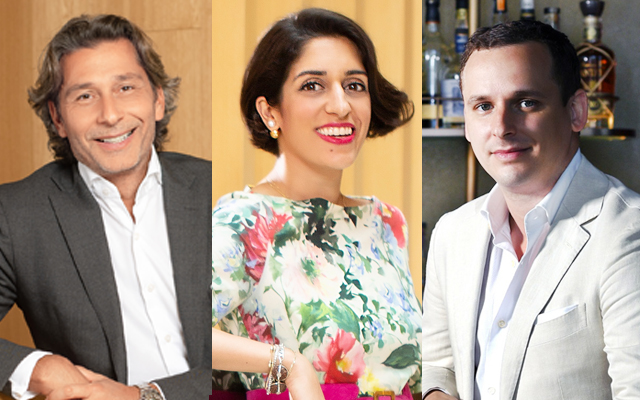
Swire Hotels has announced a trio of promotions in its senior management team across The House Collective and East brands.
First up is Giovanni Beretta, who will be relocating with his family to Hong Kong as the new group director of operations. In his new role, Beretta will oversee all of the brand’s hotels and restaurants in Hong Kong, mainland China and Miami.
With over 25 years of hospitality experience, Beretta first joined the brand as the general manager of East Miami and vice president of Swire Hotels in the US in 2015.
Meanwhile, rising to the position of general manager, Kristina Snaith-Lense will oversee all aspects of The Upper House and Pacific Place Apartments.
Snaith-Lense has worked with the brand for nearly 10 years, starting her career with the company as the assistant director of guest experience at The Upper House in 2012. In 2017, she spearheaded the pre-opening operations of The Middle House in Shanghai as the hotel manager, before returning to Hong Kong in 2019 to take on the role of hotel manager at The Upper House.
Last but not least, Olivier Dumonceaux will step into his new role as general manager at The Opposite House.
Starting his hospitality journey in Lyon, France, Dumonceaux has worked across nine countries. Following the success of The Opposite House’s renovation, where he has been the hotel manager since 2018, Dumonceaux was promoted to become the property’s general manager earlier this year.
He joined the Swire Hotels team in 2014 as the director of R&B at The Temple House, and was then promoted to executive assistant manager after working to secure the success of the property’s opening.
Charting the road to recovery
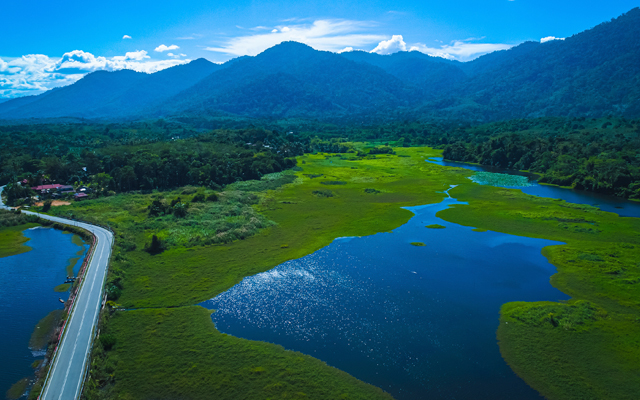
Amid sustained headwinds from the Covid-19 pandemic, Malaysia’s ongoing vaccine rollout have lifted hopes among tourism players that travel recovery lies just around the corner. The government is aiming to inoculate at least 70 per cent of the population by December in order to achieve herd immunity by year-end.
Nigel Wong, honorary secretary-general, Malaysian Association of Tour & Travel Agents (MATTA), commented: “Achieving herd immunity will boost confidence among Malaysians to travel domestically. Herd immunity will also help with the reopening of our borders to international inbound travellers.”
While borders have been closed to international tourists since March 2020, the government is in ongoing talks to establish travel bubbles with neighbouring countries, including Singapore, Indonesia, Brunei, China, Japan, South Korea and Taiwan.
Wong said that travel bubbles will provide a critical lifeline to the tourism industry. “For the time being, the travel trade has to rely on domestic tourism, but this does not have long-term sustainability as Malaysia does not have the population mass required to rely solely on domestic tourism, unlike larger countries such as China,” he said.
On its part, the government has resumed a tourism fund dubbed Gamelan for tourism operators to tap on for promotions and marketing campaigns to spur recovery.
The fund, first introduced in July 2019 with an allocation of RM5 million (US$1.2 million), was postponed last year when the movement control order kicked in and the country shut its borders to foreign arrivals. The finance ministry has since approved the resumption of the remaining sum of over RM3,000,000 for the Gamelan programme, for use through this year on both domestic and international promotions.

To drive post-pandemic recovery, Tourism Malaysia is putting digitalisation at the heart of its marketing strategy. In April, the tourism board rolled out five interactive brochures and travel guides, in a rebranding of its digital travel brochures.
The new digital versions incorporate multimedia elements such as text, audio, graphics, animation and video, and is accessible via Tourism Malaysia’s recently revamped microsite, ebrochures.malaysia.travel.
Replacing static PDF brochures, the new site integrated with Google Maps helps users plan and navigate their journey. The site also has a share function which allows users to share posts on Facebook, Twitter, and Whatsapp, and via email.
As well, MATTA has been encouraging its members to embrace digitalisation by introducing digital adoption programmes for marketing and promotions, and lobbying local banks for better access to e-payment facilities and lower charges.
Wong said: “In the new norm, international travellers will plan their holidays by accessing services online. We are gearing up members to meet this new trend by providing them the know-how to promote and market their services online and increase their digital footprint.”
MATTA has also partnered with Bureau Veritas, a world leader in testing, inspection and certification, to deploy the “Travel Safe Malaysia” Hygiene Excellence and Safety Label, which is designed to support the operational restarting of activities in the travel and tour industry.

MATTA president, KL Tan, said: “Positioning Malaysia as a safe country will encourage travellers to choose Malaysia once travel resumes.”
Uzaidi Udanis, president of the Malaysia Tourism Council, said the agency will launch a B2B platform in July specialising in niche products, and targeted at both international and domestic travel trade players.
The platform, dubbed Universal Pass (UPass), will focus solely on Malaysian niche products that are not easily available to overseas wholesalers and not sold by OTAs.
It will give owners of niche products such as homestays, white water rafting, glamping and soft adventure an avenue to promote their services, and sell directly to local and foreign travel agents. The platform will have a reservation system that allows dynamic pricing and bookings to be made with instant confirmation.
Uzaidi, who is also the president of the Malaysian Inbound Tourism Association (MITA), said: “We are also working with state tourism boards in the country to hold workshops for their members in order to help them develop new tourism products in off-the-beaten destinations in Malaysia. These include places such as Sekinchan, Kuala Kubu Bharu and Lenggong Valley.”
Uzaidi believes that post-Covid, foreign travellers will look for unique and Instagrammable nature and cultural experiences in remote areas.
Hotels in Malaysia are also adopting digital solutions to enable a safe and contactless guest experience.
G Hotel, a leading business hotel in Penang, is looking at investing in Augmented Reality solutions that will provide 360-degree virtual tours and walkthroughs of guestrooms, facilities and meeting rooms to allow international guests to “experience” the hotel prior to booking, said its general manager, Michael Hanratty.
He added: “Besides our current contactless initiatives such as QR code menus and cashless payment options, we are also looking to capitalise digital ordering and payment via mobile application to further reduce contact and make food ordering a seamless process for guests.”
Power of positivity


You are starting your new role when borders in the region are still shut because of Covid-19? How do you feel?
I am excited by the challenge of a new job, the hope that the worst is behind us. With optimism, we will see improvement.
Our hotels in the US have already seen a strong rebound with the slowdown in the pandemic, and my team and I are ready to support our hotel partners here when this time comes, which I hope will be before the end of the year.
I believe people are just waiting to travel. I am not sure if we can call it “revenge travel” but yes, I believe people will travel as soon as they can do so.
What is needed for the industry to recover and what will the road ahead look like?
People need some reassurance that traveling will be safe and easy again. The Covid-19 passport is a must to simplify the process and give people trust when the borders reopen. I am encouraged by the travel bubble between Australia and New Zealand as well as Thailand’s reopening of Phuket without quarantine in July.
For sure, recovery will take some time and each country will move at a different pace. But tourism is key to Asia and most country leaders understand it. Even slowly, each step will bring positivity, and this is what we all need now.
China is the main feeder market for South-east Asia and Japan, and its recovery and border reopening will set the tone.
So, what are your priorities?
Definitely to reinforce brand awareness and visibility in Asia, continue the development of new hotels in the region, ensure the efficiency and performance of hotel operations, and of course strengthening the relationship with our hotel owners.
We have been working closely with owners and the hotels to support them during these challenging times, where some have been more impacted than others, and in developing the domestic markets for each country.
My focus is on planning to be ready for the recovery!
Where and what are the opportunities for Best Western International?
The number of Best Western brands in Asia has grown from eight to 14, offering options that range from budget to economy, from mid-scale to boutique, from upscale to extended stay.
I believe Best Western is only at the inception of our story in Asia as the potential in the region is enormous. Despite the Covid-19 situation, we are still active in many markets such as Thailand, Japan, Malaysia and Indonesia. I have to say Vietnam is where we see the biggest opportunity with very exciting projects, and we just have hired a director of development based in Ho Chi Minh City.
There is also the opportunity to introduce to Asia new boutique lifestyle brands Sadie, in the upscale category, and Aiden, in the midscale category.
Sadie offers adventure, the best of local flair and an authentically playful spirit, while Aiden blends cool, casual charm with an eclectic neighbourly feel.
What are the challenges and what are the solutions?
The fact that we cannot travel makes it challenging, especially for the operations and development teams. While technology is helping us to stay in touch with our hotels and owners, I still feel that nothing replaces a face-to-face meeting. But this is, for now, the only option.
The second obvious challenge is the lack of business for our hotels, so we have redirected our sales force to focus on the local market. Of course, the potential varies greatly from country to country.
Meanwhile, we have implemented standards to make sure our guests feel safe, and we are always looking to make most of the hotel experience contactless.
The Best Western Loyalty programme provides members great benefits and points which never expire. We know that in this time of uncertainty, flexibility and presence are key factors to support our hotels and owners.
What more can Best Western International do for owners, partners and stakeholders?
You best understand the strength of your partners in times of crisis, and I believe that the situation has brought us closer in finding solutions that will support them until the situation improves.
Thankfully with the support of our US headquarters, we relieved some fees for our owners and we also communicated a lot more to ensure we would monitor their situation and jump in when needed.
The shift from International business to domestic business was not easy especially for countries relying almost only on International business. But I believe this will create a stronger foundation for the future.
If you have one message, what is it?
That there is a lot of good news, so be positive and optimistic.
New hotels: Hiyori Chapter Kyoto; Best Western Premier Bayphere Pattaya; and more
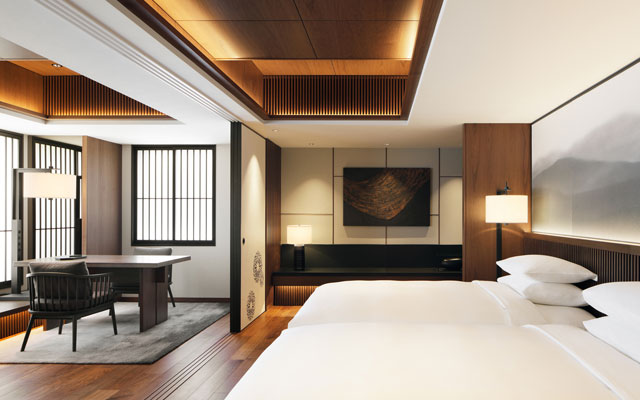
Hiyori Chapter Kyoto Tribute Portfolio Hotel, Japan
The 203-room new-build hotel has opened in the historical and cultural hub of Kyoto, located close to Kawaramachi-dori shopping streets and the scenic Kamo River.
Drawing inspiration from Japanese tea ceremonies, guestrooms feature key elements of Japanese tea rooms and are reimagined with a modern interpretation to offer functional beauty and comfort with a sense of tradition.
In the lobby sits The Chapter Factory, presenting a unique way for guests to connect with the local community. Acting as the hotel concierge, the Chapter Factory showcases a selection of curated travel stories from local insiders and hotel staff for guests to discover the hidden gems of Kyoto through a local lens. Guests are also encouraged to share their travel stories in Kyoto by adding new chapters to the Chapter Factory.
Other notable facilities within the hotel include signature all-day dining restaurant Matsunari; and Hiyori No Yu, a traditional public bath that takes in a granite bath and an open-air bath surrounded by lush greenery.
Best Western Premier Bayphere Pattaya, Thailand
Opened on June 7, the 174-key beachfront hotel feature stylish, modern guestrooms and a host of facilities that cater to both leisure and business travellers.
The Deluxe and Executive Rooms promise panoramic views of the sandy shore, shimmering sea and spectacular sunsets from private balconies.
Guests can enjoy a variety of F&B outlets, a well-equipped fitness centre, an outdoor sundeck with cozy cabanas, as well as easy access to many tourist attractions Pattaya has to offer.
TIME Asma Hotel, Dubai
Soft-opened on June 15, the four-star 232-room hotel stands out with its majority female management. With hotel manager Alexandra Kelner at the helm, the hotel boasts an 80 per cent female team.
Built with women in mind, TIME Asma Hotel also boasts floors reserved exclusively for female travellers with dedicated services, including female room service, a female-only check-in counter, and guest relations; dedicated parking spaces for women; and bespoke beauty products, in-room beauty treatments, as well as enhanced amenities in each room.
Other facilities include a gym with exclusive opening hours for women, swimming pool, Jacuzzi, four meeting rooms, a business centre and two restaurants, for both male and female guests.
The hotel is located five minutes from Mall of the Emirates.
Chinese wanderlust benefits Macau, Hainan: ForwardKeys data
A ForwardKeys analysis has found that pent-up travel demand in China is translating to more and longer stays in destinations close to home, in particular Macau and Hainan.
From March to May this year, both Haikou and Sanya in Hainan province recorded growth in air arrivals when compared to the same period in 2019. May saw the largest increase, thanks to the Labour Day holiday, with Haikou gaining 39 per cent more domestic arrivals and Sanya 49 per cent more.
All tickets issued as of June 7 for travel to Sanya during June and August are currently 33.2 per cent ahead, while tickets to Haikou are only 6.4 per cent behind 2019’s.

Big Chinese cities have emerged the most enthusiastic feeders of tourism traffic to Hainan. Shanghai is the top source market for Hainan in general, with bookings increasing 154 per cent to Sanya and 60 per cent to Haikou.
While Beijing arrivals to Sanya has leapt by 82 per cent, arrivals to Haikou are on par with 2019.
Arrival figures from Zhejiang to Sanya and Haikou have maintained double-digit growth.
In a further demonstration that central cities prefer Haikou over Sanya, 50 per cent of domestic arrivals in Haikou are from Chengdu and 46 per cent are from Wuhan.
On the other hand, Guangdong province’s recent surge in Covid-19 cases has led to delayed, reduced bookings for Haikou, much more than for Sanya,
Over in Macau, Chinese travellers are now giving more time to the destination, instead of combining it with a few days in Hong Kong.
“People used to visit both destinations, say, for a five-day holiday. But in the pandemic era, due to safety concerns and travel restrictions, people are choosing just one destination and enjoying the experience at a slower pace,” said Nan Dai, China market expert at ForwardKeys.

During the first five months of 2021, the share of Chinese travellers staying at a destination for three to five nights has increased significantly, by 32 per cent when compared to 2019. Meanwhile, there was a 30 per cent drop in shares of one- to two-night stays.
Since Macau reopened to mainland China on February 23, the number of issued tickets has been building up. In the first week of June, issued tickets for travel from mainland China to Macau reached 48 per cent of 2019’s level, while in general outbound Chinese travel recovered only four per cent.
When examining Macau’s top source markets from the mainland, data reveals that Chengdu and Nanjing have recovered relatively quickly, reaching 60 to 70 per cent of their pre-epidemic levels.
Dai added that 59 per cent of domestic Chinese travellers are now booking their trip to Macau in under four days.
Park Regis Singapore strengthens trade distribution with TA Network
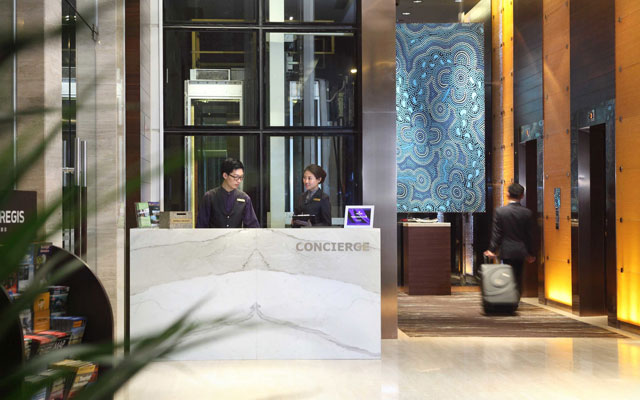
Park Regis Singapore has joined Trip Affiliates Network’s (TA Network) technology platform to enhance its online distribution channels and grow direct bookings from preferred agents, wholesalers and corporates.
The platform will enable the upscale hotel to grant its business partners around the world instant access to best available rates for their leisure and business travel customers, and benefit from a host of technology solutions that promise to automate inventory management processes with traditional offline contractors, eliminate overbooking/underbooking issues, and facilitate digital payment, among others.
The hotel’s director of sales, Portia Low, said: “Our collaboration with TA Network highlights our continued commitment to improve our partnership with our travel agencies, wholesalers and corporates who form a strategic segment of our business.”
The new B2B distribution capabilities will also “further revitalise our service delivery to our valued offline partners and also improve our yield management at group level”.
TA Network currently supports more than 300 hotels across 15 countries.







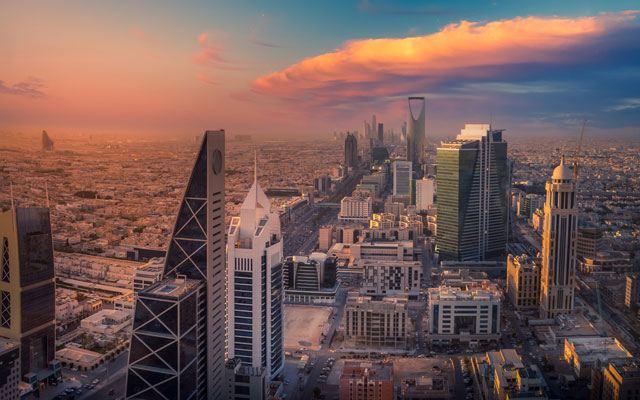
IHG Hotels & Resorts will expand its presence in the capital city of Saudi Arabia with the signing of Hotel Indigo Riyadh King Abdallah Road.
A new built property, Hotel Indigo Riyadh King Abdallah Road will feature 228 rooms and will open its doors in March 2025. The hotel will offer two dining options, a pool and a fitness centre, in addition to 353m² of meeting and events space.
This development marks the first hotel to be signed under the master development agreement between IHG and RIVA Development Company via its wholly owned subsidiary RIVA Hospitality for Hotel Services Company.
IHG currently operates 38 hotels across five brands in Saudi Arabia, with a further 20 hotels in the development pipeline due to open within the next three to five years.