TTG Asia
Asia/Singapore Wednesday, 9th September 2026
Page 8

Bromo Tengger Semeru National Park reopens following wildfire closure

0

Bromo Tengger Semeru National Park has welcomed back visitors after a fire burned around 1,120 hectares of forest and land, ending a temporary closure of the popular destination in East Java.

The fire started on August 3 and spread across parts of the park for around 13 days. The area was closed while firefighters, park officers and local authorities extinguished the blaze, with cooling operations, safety checks and monitoring conducted prior to reopening.

Seruni Point served as an alternative sunrise viewing spot during the 13-day wildfire closure of Bromo Tengger Semeru National Park, which has now fully reopened to visitors

Following the reopening, tourism activities have resumed with a daily quota of 2,752 visitors. Online bookings can be made via the official park website.

During the closure, tour operators reported no booking cancellations, though itineraries were adjusted for travellers already on site.

Adjie Wahjono, operations manager of Aneka Kartika Tours and Travel Services, said alternative arrangements were made during the shutdown.

“Sunrise tours could still be run from Seruni Point by 4WD jeep depending on access restrictions and the latest conditions,” Adjie said.

Other alternative activities included visits to Lumbang Village to experience local community life, as well as trips to Madakaripura Waterfall. Adjie added that Bromo can now be fully integrated back into upcoming itineraries.

Park authorities have reminded visitors to follow safety guidelines and help protect the environment as tourism resumes.

“The reopening of the area for tourism still requires visitors to follow all regulations and directions from officers in the field, as well as maintain cleanliness and conservation,” said Rudijanta Tjahja Nugraha, head of the Bromo Tengger Semeru National Park Agency, adding that visitors must not smoke, light fires, or engage in any activity that could trigger a blaze, and urged anyone who sees smoke or signs of fire to report it to officers immediately.

Orchestrated growth

0

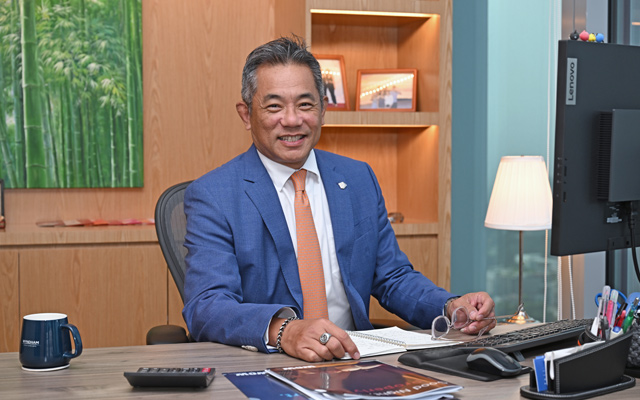
What do you see are Wyndham’s biggest growth opportunities over the next five years, and what strategic priorities will be key to capturing them?
I’ll start by saying that we are blessed because we are working in a very dynamic, fast-growth region. In Asia-Pacific, where the GDP has been growing about five per cent on an aggregated basis, the travel and tourism industry is forecasted to continue growing at about four per cent.

However, there are more than 20 different markets and territories in this region. Each market and territory is at different stages of growth. Yet, the beauty is the diversity of the market, and that has created a lot of opportunities for us.

We have signed more than 500 direct franchise and managed hotels over the past few years, and are on a strong trajectory of growth.

With regards to the sort of strategies in terms of moving forward, I’ll answer this question from two dimensions.

To grow the supply side, we need an arsenal of different strategies to deal with the different markets across Asia-Pacific. In Australia and New Zealand, there are predominantly conversion opportunities while in Vietnam we see many new builds. Singapore, given the land scarcity, presents more conversions and asset repositioning than new builds.

There is a common denominator among our different strategies. One, we are a leader in franchising; we have been doing it for many years in this part of the world, and we truly understand what it takes to do franchising.

Two, we have a collection of 25 iconic brands around the world. In this part of the world, about 19 have been deployed, and they range from upper-upscale luxury to extended stay.

Three, we bring the Wyndham Advantage, which is a collection of sales programmes, loyalty activities, digital marketing, digital distribution, and many other commercial tools that allow a franchisee to tap into our system to gain revenue.

Four, our business philosophy puts owners first.

Now, to grow the demand side, we recognise the complexity of consumers and that consumers have evolved rapidly. People used to travel and stay in hotels. Now, they are looking for experiences, which is more than simply seeing an attraction. People are also travelling in different ways – with immediate and extended family, with friends, alone, or as a leisure extension of their business trip. Furthermore, every source market in this region is different too.

So, we make sure that we are relevant to every traveller type. We want Wyndham to be the lifestyle companion of every guest on each of their journeys. Under the leadership of Eyvonne Lin (vice president of marketing and commercial performance, Asia Pacific), Wyndham has forged a lot of partnerships for our Wyndham Rewards loyalty programme that result in activities to enrich the travel experiences of our guests.

Wyndham offers both the franchise model and the management model. How do you determine which model is ideal for a specific owner?
First of all, we advocate franchising, because to us, it is the more cost economical model for the owner. Basically, the owner runs the operations as the game fits while still enjoying access to the Wyndham Advantage.

However, some owners may lack the experience to run the hotel themselves, and would therefore like us to manage it for them.

If you look across the markets, there are a lot of competitors who are very focused on management, and they push for that whether or not the owner wants it. But for us, we listen to what the owners want.

Does the franchise model work in Singapore, where it is a struggle to find the right people to run hotels? Would it be easier for the owner to leave hotel management to the experts and they just deal with the real estate?
Good question. I look at the labour issue this way: it is not a problem unique to Singapore. With all franchising, we look at the owner’s experience in hotel management. In the case of Singapore, owners here have extensive experience and so the franchising model works for them.

Now, on talent acquisition, we face the same tight market. If we are managing, we are responsible to hire. In a franchise arrangement, the owner is responsible. But that doesn’t mean we walk away and say, “your problem, not mine”. If the owner fails to hire, service will be impacted, our brand will be impacted. So, we still do provide support in talent acquisition.

What does Wyndham’s current and upcoming Singapore portfolio look like, and how does Singapore function as a hub for the group’s broader Asia-Pacific strategy?
Singapore is a vital market for Wyndham in Asia-Pacific, serving both as a premier global business hub and one of the region’s most connected travel gateways.

Our portfolio in Singapore spans a healthy cross-section of the market, catering to diverse traveller needs. At the upscale end, Wyndham Singapore Hotel caters to business, leisure, and MICE guests seeking prime city accommodation. Hotel Traveltine Downtown Singapore, Trademark Collection by Wyndham, offers a distinct lifestyle experience, while Days Inn by Wyndham Singapore Novena delivers trusted, value-driven comfort for practical travellers.

We hope to announce new developments in the near future, but our priority is always quality and sustainable growth over rapid, unchecked expansion. Every new property we introduce must enhance our overall brand awareness and bring tangible value back to our existing owners, rather than diluting the market.

Beyond hotels, Singapore functions as a critical hub for regional innovation and partnerships. Our landmark collaboration with Singapore Airlines KrisFlyer is a testament to this, strengthening the Wyndham Rewards ecosystem by connecting hospitality and airlines to create greater value for members and travellers.

You spoke earlier about the evolution of travellers. I see their expectations moving from prioritising convenience and price to seeking personalised, experience-led stays. How has this evolution influenced product design in your pipeline projects?
We have the technical services team that works closely with owners to design hotels. I have seen the shift in the range of technical services this team provides to owners over the past 20 years. It used to be just advice on building the room this way and that. Now, the team has to advise on the colour and design of the room so as to fit the theme of the hotel or the local culture or history, sustainability features, structure and location of gyms, and so on.

With conversion projects, hotel design is more restricted. There’s only so much you can do, but we try our best to incorporate (modern features that customers today and in the future would want).

Lastly, as a hotelier, what do you pay close attention to when you travel on personal time, and have your observations led to new ideas being implemented to Wyndham’s hardware and software?
When I travel, I make a conscious effort to experience a hotel as a guest first, not as an operator. This is not always easy, as I naturally notice the operational details behind the experience. I try to set those instincts aside and allow the stay to unfold as it would for any other guest. This gives me a clearer sense of what feels effortless, where friction arises, and what ultimately stays with me after I leave.

It’s often the small details that leave the lasting impression – how intuitive the arrival journey feels, whether technology genuinely makes the stay more seamless, how public spaces encourage guests to connect, and, most importantly, whether the service feels authentic rather than scripted.

One experience that comes to mind was a hotel where the front desk consisted of individual square tables rather than a traditional counter. The monitor was recessed beneath a glass surface, and the team member checking me in was standing adjacent to me, rather than on the opposite side behind a counter. It was a relatively simple design decision, but it removed a physical barrier and made the interaction feel more open, engaging and personal.

Observations like this influence how I think about both the physical and digital aspects of the hotel experience. The best hardware and software should remove friction and make it easier for guests and team members to connect. This may involve rethinking the arrival experience and the use of public spaces, or introducing technology that simplifies check-in, communication and other parts of the stay.

Not every observation translates directly into a new brand standard, but each one encourages us to challenge established ways of working. As we evolve Wyndham’s brands, we consider how these ideas can enhance the guest experience while remaining simple to operate and capable of delivering long-term value for our owners.

For me, travel remains one of the best ways to see our industry through the eyes of the guest. That perspective is essential to making better decisions.


India eyes stronger inbound tourism season 

0

The Indian inbound tourism market has seen subdued growth over the past couple of years. Domestic tourism, meanwhile, has continued to perform far better. However, industry stakeholders expect inbound demand to improve during the upcoming season, which begins in October.

According to the World Travel & Tourism Council (WTTC), India recorded 18.6 million international visitors last year, a 7.4 per cent decline over the previous year. WTTC’s figures include Indians residing overseas who visited the country during the year.

Dutta: demand is back now but there is a need to restore confidence of Bangladeshi tourists visiting India

“We expect a stronger inbound season this year driven by growing interest in experiential travel and India’s appeal as a cultural, wellness and business destination. While challenges remain, we are optimistic that targeted promotions, better air connectivity and continued government support will help accelerate inbound tourism growth,” said Subhash Goyal, chairman of STIC Travel & Air Charter Group.

KB Kachru, president of the Hotel Association of India and chairman – South Asia, Radisson Hotel Group, said: “The latest trend shows that inbound tourism is not going down. We are optimistic about the forthcoming inbound season’s outlook. The central and state governments along with tourism and hospitality associations in the country are collaborating and looking at how India can be positioned as a preferred tourist destination globally.”

The positive outlook for inbound tourism this year also stems from India resuming tourist visas for Bangladeshi citizens earlier this year, following their suspension in 2024 due to political tensions. Bangladesh has traditionally been India’s primary inbound source market.

“Before the suspension of tourist visas, Bangladesh contributed over two million visitors annually. The demand is back now but there is a need to restore confidence of Bangladeshi tourists who are looking to visit India,” added Debjit Dutta, chairman, West Bengal Chapter of the Indian Association of Tour Operators.

Japan inbound numbers dip as spend per visitor reaches new high

0

Japan is seeing its first drop in inbound tourism in five years, but spending by international visitors is on the rise.

According to the Japan National Tourism Organization (JNTO), foreign travellers totalled 21.08 million between January and June 2026, a fall of two per cent year-on-year, even as their consumption grew 0.2 per cent over the period.

High-spending international visitors shopping in Tokyo have helped push Japan’s total inbound tourism consumption to record levels; photo by Jujumin Chu

The decline is due to a sharp contraction in visitors from China, down 56.4 per cent year-on-year, following remarks on Taiwan in November 2025 by Japanese prime minister Sanae Takaichi, which prompted Beijing to advise its citizens against travelling to Japan.

Still, the loss is being offset by growth from other source markets, including Taiwan (up 20.9 per cent), South Korea (up 18.6 per cent) and the US (up 7.1 per cent), keeping total inbound spending at record levels.

Emerging source markets are also gaining momentum, with visitor numbers from Mexico, Russia and India rising by 29 per cent, 25 per cent and 23 per cent, respectively, over the period.

These nascent markets are also home to some of the highest spenders. From January to June 2026, Mexico ranked as the top spender per capita, with average consumption of 514,925 yen (US$3,236), followed by the Middle East (483,000 yen), the UK (456,493 yen), Russia (455,000 yen), Australia (426,949 yen) and the US (387,547 yen).

Japan has welcomed the diversification of its tourism source markets as part of its goal to achieve sustainable tourism.

“Prior to the Covid-19 pandemic, visitors from Asia accounted for 83 per cent of all inbound travellers to Japan; however, this share declined to 77 per cent in 2025, while the proportion of visitors from Europe, the Americas and Oceania has correspondingly grown,” said a JNTO spokesperson.

NATAS Holidays 2026 concludes with expanded footprint and stronger NTO presence

0
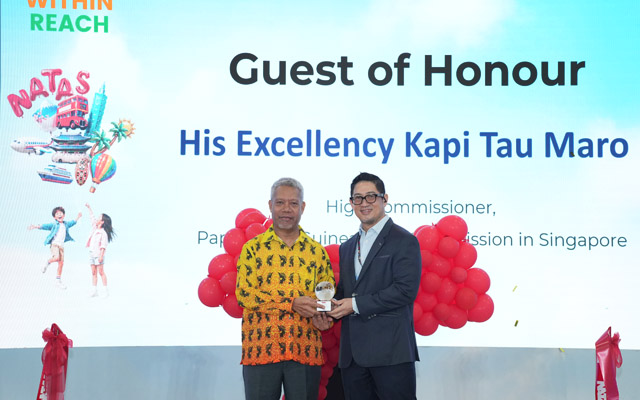
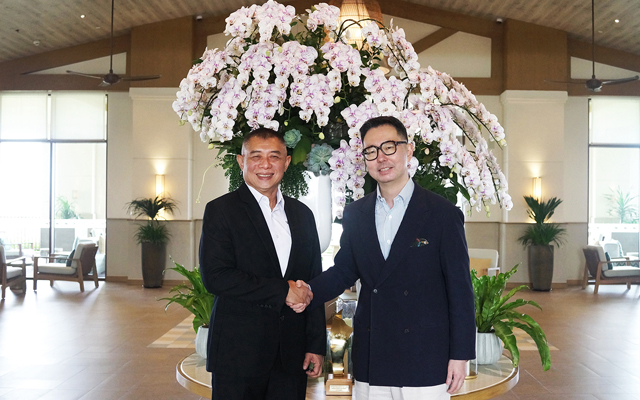
Papua New Guinea high commissioner Kapi Tau Maro and NATAS' Steven Ler
From left - Papua New Guinea high commissioner Kapi Tau Maro and NATAS' Steven Ler, photo by NATAS

NATAS Holidays 2026 wrapped up its three-day showcase at Singapore Expo under the theme A World within Reach.

The event brought together close to 100 exhibitors and featured a 25 per cent increase in exhibition space for travel agents, National Tourism Organisations (NTOs), airlines, cruise operators, hotels and resorts, banks, insurance providers, and other travel partners. A total of 14 NTOs participated this year, representing a 40 per cent increase over the previous edition.

Papua New Guinea high commissioner Kapi Tau Maro and NATAS' Steven Ler
From left: Papua New Guinea’s Kapi Tau Maro and NATAS’ Steven Ler; photo by NATAS

For NATAS president Steven Ler, the value of the fair extends beyond statistics.

Speaking at the opening ceremony, he described travel as more than moving between destinations, emphasising its role in fostering cultural understanding and connecting diverse industry partners, including airlines, cruise lines, tourism boards, and financial institutions.

Papua New Guinea returned to the fair for a second year as destination partner.

Speaking at the opening ceremony, Kapi Tau Maro, high commissioner of Papua New Guinea to Singapore and guest-of-honour, highlighted the importance of proactive market expansion. He noted that Papua New Guinea showcased its cultural heritage and natural landscapes to make these experiences more accessible to Asian travellers.

Simultaneously, national carrier Air Niugini is focused on enhancing operational reliability and network expansion, supported by ongoing promotional efforts from the Papua New Guinea Tourism Promotion Authority.

The high commissioner expressed confidence that these initiatives, paired with strong bilateral relations with Singapore, will position Papua New Guinea as a primary destination for authentic cultural and natural travel.

Fusion Hotel Group expands Indonesian footprint with Topotels integration

0

Fusion Hotel Group has integrated two established midscale Indonesian hotel brands, Ayola and Odua, into its regional portfolio. Operating under Topotels Hotels & Resorts, the collection comprises seven properties across key cities including Jakarta, Bandung, and Surabaya, serving business and leisure travellers.

The strategic addition strengthens the organisation’s presence in Indonesia, providing the two midscale brands with access to broader commercial platforms and operational support. Under the agreement, Ayola and Odua will retain their existing brand identities while integrating into a regional network that spans Vietnam, Thailand, and Indonesia.

From left: Topotels Hotels & Resorts’ Willy Suderes and Fusion Hotel Group’s Christopher Hur mark the integration of the Ayola and Odua brands into the regional portfolio

The expansion forms part of a strategy to scale operations and broaden guest access to value-driven accommodation across South-east Asia.

“Joining Fusion will open new doors for our business, allowing us to deliver a better experience for our guests and provide stronger support for our owners. We’re confident that the integration with Fusion will bring fresh momentum to our hotels and teams,” said Willy Suderes, COO of Topotels Hotels & Resorts.

“We’re delighted to welcome Topotels into the Fusion family. Their strong roots in Indonesia combined with Fusion’s expertise will unlock new opportunities in key destinations across the country. This partnership strengthens our regional presence and supports our long-term vision for growth across South-east Asia,” added Christopher Hur, CEO of Fusion Hotel Group.

Club Med expands regional padel cup across eight Asia-Pacific markets

0

Club Med has launched the Club Med Padel Cup 2026, which runs from July to November 2026. Doubling in scope from the previous year, the event spans eight markets: Australia, Singapore, Malaysia, Thailand, Taiwan, Hong Kong, Japan and India.

The hospitality operator offers padel across more than 75 facilities globally. Within Asia-Pacific, courts are available at properties in Bintan, Kani and Phuket, with additions planned for Club Med Borneo at the end of 2026. Outside the region, facilities are also located at Club Med South Africa.

Club Med ramps up its sports programming across Asia-Pacific by hosting the Padel Cup 2026 and partnering with the Tatler Padel Series

National qualifiers began in July 2026, with events already held in Bangkok on August 2 and Hong Kong on August 22. Upcoming legs include Sydney on August 30 and Tokyo on September 6, followed by Kuala Lumpur from September 11 to 13, Singapore from October 1 to 4, and Taiwan on October 9.

Winners from the national events will advance to the Grand Slam Finale at Club Med Phuket from November 30 to December 3, 2026. The four-night event includes competitive matches, masterclasses and workshops, with prizes provided in partnership with sports equipment manufacturer Babolat.

Additionally, the company has taken on the role of Official Lifestyle Partner for the Tatler Padel Series. The circuit expects to engage over 2,000 participants across Bali, Kuala Lumpur, Bangkok, Singapore, Hong Kong, Shanghai and Dubai, leading to a regional final in November 2026.

“Padel is more than a sport; it is a joyful way for people to connect, play and create shared memories,” said Rachael Harding, CEO, Club Med East, South Asia and Pacific. “Last year’s inaugural Padel Cup showed us the incredible enthusiasm for the sport across the region. Expanding to eight markets this year is a natural next step for our brand which has always celebrated active lifestyles, togetherness and unforgettable holiday experiences.”

Flores tourism moves toward recovery despite ongoing overland disruptions

0

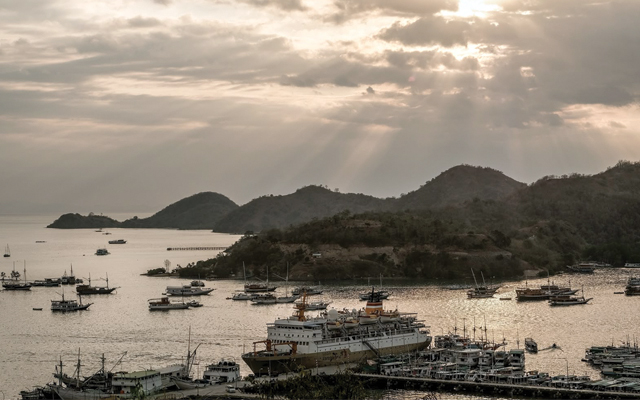
Tourism in Flores is gradually recovering following the August 15 earthquake, with Labuan Bajo and the main Komodo National Park circuit back in operation, although several inland destinations and transport links remain disrupted.

According to Indonesia’s Ministry of Tourism, activities at Padar Island, Loh Liang on Komodo Island, Loh Buaya on Rinca Island, and Gili Lawa have returned to normal, with daily visitor numbers exceeding 2,000 on August 17. Labuan Bajo Marina and Komodo National Park have reopened, while most major hotels in Labuan Bajo remain operational with restored utilities and no reported early checkouts.

Labuan Bajo and major Komodo National Park sites have resumed normal operations, though inland transport and remote destinations remain affected; photo by Indonesia’s Ministry of Tourism

However, recovery across the wider island remains uneven.

Ende Airport has cancelled all flights through August 20, while Wings Air services at Ruteng’s Frans Sales Lega Airport are suspended through August 22. Komodo Airport, Frans Seda Airport in Maumere, and Gewayantana Airport in Larantuka remain open with some schedule adjustments.

Several destinations remain temporarily closed for safety assessments, including Wae Rebo, Ruteng Pu’u, Kelimutu National Park, and Teluk Maumere Marine Nature Tourism Park. Nuca Molas has been permanently closed due to structural damage, while tourism areas in Ngada and Nagekeo continue to face power and communication outages.

Although main sections of the Trans-Flores route have reopened after landslide clearances, ongoing access disruptions continue to affect overland travel. Consequently, some travellers bound for Riung Marine Park cancelled or rerouted their trips, driving up accommodation demand in nearby Ruteng.

Leonardus Nyoman, director of Flores Exotic Tours, reported cancellations from group and online bookings, adding that marine excursions also faced temporary disruptions following a tsunami warning. Although the Indonesian Agency for Meteorology, Climatology, and Geophysics confirmed no tsunami threat, some boat operators remain hesitant to sail as aftershocks continue.

“Some captains don’t want to sail because they are still afraid,” Nyoman said, noting that operators are monitoring ongoing aftershocks. The Meteorology, Climatology, and Geophysical Agency recorded 2,768 aftershocks as of August 19, including 24 above magnitude five.

Oyan Kristian, chairman of the Association of the Indonesian Tours and Travel Agencies East Nusa Tenggara, noted that the impact on Labuan Bajo’s main circuit remains minimal.

“Until today there is no closure in the Komodo National Park area,” Kristian said.

While one of his existing guests cancelled their stay, Kristian noted that the wider impact was likely to be felt more on overland trips to other parts of Flores, where connectivity remains disrupted.

The reopening of remaining destinations will depend on ongoing safety assessments, with full road restoration key to island-wide recovery.

Azerbaijan targets Asian markets amid connectivity challenges

0

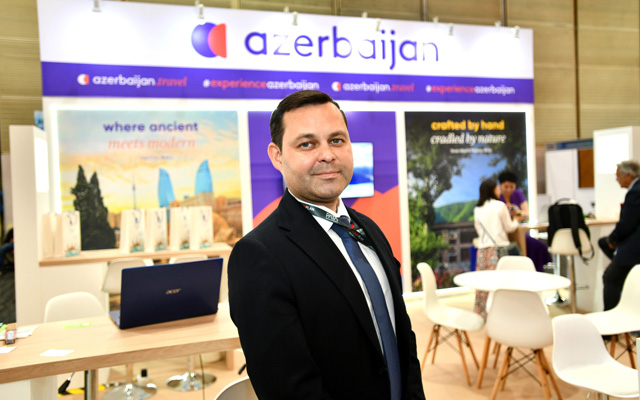
Azerbaijan is eyeing new target markets in Asia, setting its sights firmly on Malaysia, Singapore, Indonesia and China.

“We see great potential in Asia, and especially great potential in growing the Chinese market,” said Teymur Suleymanzada, deputy CEO of Azerbaijan Tourism Board.

Suleymanzada says Azerbaijan aims to establish itself as a key Umrah Plus stopover hub to attract Muslim travellers from across the region

He added that the destination recently opened a representative office in China.

In 2025, the country saw a 40 per cent year-on-year increase in arrivals from China, as well as a 36 per cent year-on-year rise in arrivals from Malaysia.

While there are direct flights connecting Azerbaijan with China, Azerbaijan’s ability to tap fully into Malaysia, Singapore and Indonesia is hampered by the lack of seamless air connectivity.

“We believe that air connectivity is one of the driving tools that will enable more visitors from these countries,” he said, adding that talks are taking place to establish a direct route from Malaysia to Azerbaijan.

Suleymanzada told TTG Asia that Azerbaijan Tourism Board has launched marketing campaigns to position the country as an official Umrah Plus stopover hub for religious tourists, which will appeal to Muslim pilgrims.

“We want to become an active part of Umrah Plus and are looking to expand this project in the future,” he said.

While Azerbaijan is a majority Muslim country, it is secular. It ranks 27th out of 150 destinations globally in the Mastercard-CrescentRating Global Muslim Travel Index 2026, achieving an overall score of 58 out of 100 as a Muslim-friendly travel destination.

Suleymanzada also sees potential in building interest through Azerbaijan’s role in the historical Great Silk Road. For over 2,000 years, Azerbaijan sat at the crossroads of the most important trade route that linked China and India to Europe.

He noted that attractions – such as the UNESCO-listed mountain town of Shaki, Karvansaray and Khansaray – on the Great Silk Road are presently very popular with Chinese tourists.

“We have so many things in common,” he remarked.

Sarawak repositions as entry point to Borneo

0

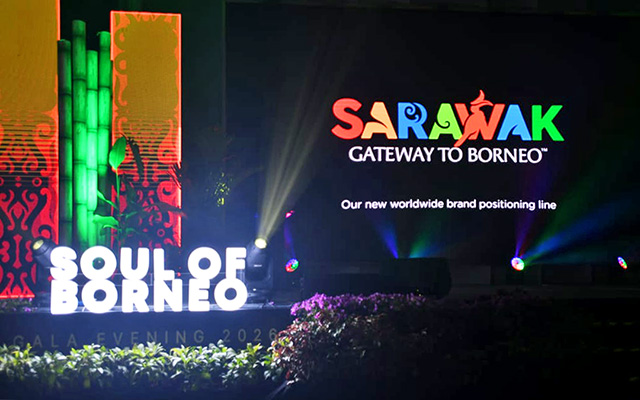
Sarawak marked a defining moment in its tourism journey with the unveiling of its refreshed destination identity and new tourism tagline, Sarawak: Gateway to Borneo, which replaces the former tagline, Sarawak: More to Discover, introduced in 2019 in conjunction with the Visit Sarawak campaign.

The new tourism tagline was revealed during the Soul of Borneo Gala Dinner on August 19, in the presence of Sarawak’s Premier, Abdul Rahman Zohari Openg.

The updated branding reflects Sarawak’s focus on heritage, biodiversity, and community-led tourism development

The refreshed destination identity reflects Sarawak’s continued evolution as a destination that honours its rich heritage and biodiversity while embracing innovation, connectivity, and new opportunities under the state’s broader transformation agenda, the Sarawak Tourism Board said in a press statement.

Sarawak: Gateway to Borneo embodies the state’s aspiration to become the natural entry point to discovering the island of Borneo.

It invites travellers to begin their Bornean journey in Sarawak, where authentic indigenous cultures, UNESCO-recognised heritage, world-renowned biodiversity, vibrant festivals, and meaningful connections with local communities come together in one destination.

Anchored by the new destination brand, Sarawak remains committed to purposeful tourism growth by creating experiences that benefit local communities, celebrate cultural authenticity, and safeguard the state’s natural environment for future generations.

At the recently concluded PATA Travel Mart, Sarawak was also recognised as a Grand Title Winner at the PATA Gold Awards 2026 under the Marketing category for its Guinness World Records Title – Longest Cumulative Distance by a Remote-Controlled Multirotor/Drone Relay initiative.