Ascott to chalk up 17 lyf properties by 2025
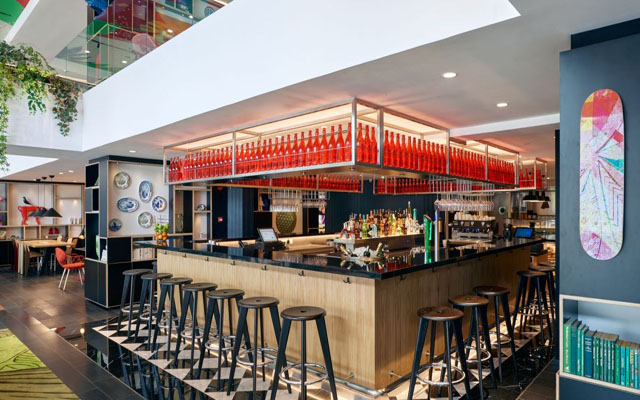
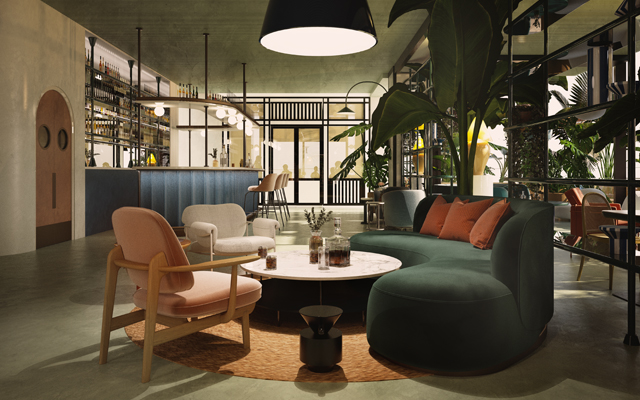
The Ascott Limited (Ascott) has expanded its lyf portfolio to a total of 17 properties with over 3,000 units across 13 cities and nine countries.
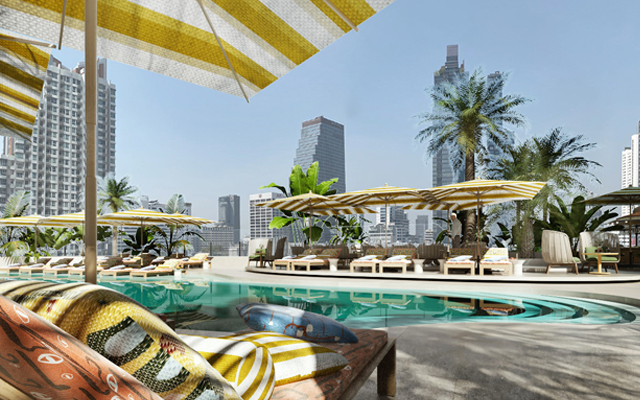
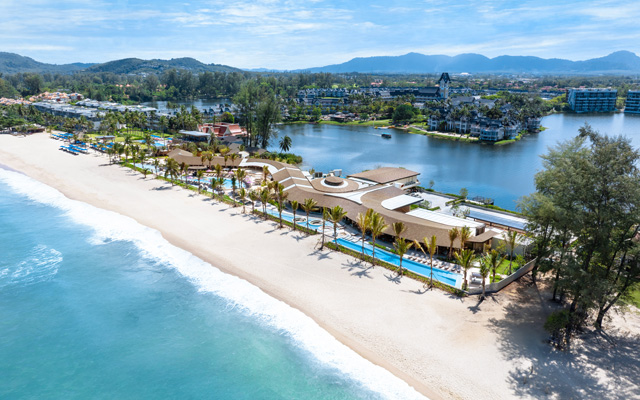
The expanded portfolio includes the newly opened lyf Mid-Town Hangzhou, Ascott’s first lyf-branded co-living property in China. It also secured a management contract for its second lyf property in Thailand, lyf Riverside Bangkok, slated to open in 2022.

This follows hot on the heels of Ascott’s recent acquisition of its first lyf property in Europe, livelyfhere Gambetta Paris, through its private fund Ascott Serviced Residence Global Fund in June 2021.
To date, Ascott has opened four lyf properties in Singapore, Bangkok, Fukuoka and Hangzhou. Three more are slated to open later this year in Singapore, Xi’an and Shanghai – lyf one-north Singapore, as well as lyf Dayanta Xi’an and lyf Hongqiao Shanghai in China.
Between 2022 and 2025, 10 more lyf properties are slated to open in Bangkok, Beijing, Cebu, Danang, Kuala Lumpur, Manila, Melbourne, Paris, Shanghai and Singapore.
Personalisation, AI can help hoteliers drive ancillary revenue
With the rise of more sophisticated online bookers, hotels can cut their reliance on OTAs and grow revenue by changing their marketing strategy through the adoption of a feature-based, AI hospitality system.
That was the premise of the Sell Uniqueness, Not Just Hotel Rooms webinar organised by Hong Kong-based Hospitality Host (HH), in partnership with GauVendi, a digital inventory sales engine headquartered in Frankfurt.

HH managing director, Winnie Chui, cited surveys showing that bookers were willing to pay more for personalised products and services, and claimed this could result in a 20 per cent increase in revenue.
Unlike other players in the travel industry, like airlines which introduced ancillary fees, the hospitality sector is “lagging” in the online booking space, observed HH vice president Norman Lui.
GauVendi managing director and founder, Marcus Mueller, commented the industry had to take back control of how inventory is being managed and how to monetise categories beyond room type, such as room location, bathroom set-up, outdoor spaces, room design and function, and more.
Mueller said personalisation is just one aspect of creating an automated sales engine, which should also include AI to analyse data, look at customer history in context and to sell rooms with different features using labels like “lowest price”, “most popular”, “for families with children”, etc.
He explained: “With labelling, a hotel can sell a basic deal and upsell later, or show the same room from different angles, like how the retail industry does it – highlight different features and price points to elicit an emotion.”
The booking data is powerful, Mueller said, as it could, say, let a hotel know if it should “put more twin rooms on high floors” or what the “price difference break point” is.
Mueller pointed out version 3.0 of GauVendi is now being tested to further streamline how inventory in a resort, for example, can be allocated to suit the preferences of different international guests.
Why we must bake health credential checks into our travel ecosystem, everywhere

The welcome if gradual return of global air travel is placing significant strains on our industry’s infrastructure, caused by an array of disparate new passenger health requirements, such as Covid-19 testing and vaccine certificates.
The need for passengers to provide these credentials in many and varied ways is in effect reducing the actual capacity of airports. IATA says that average passenger processing and waiting times have doubled from what they were pre-crisis during peak time.
This is placing immense pressure on travellers and the industry at large, creating a cocktail of congestion and confusion, not to mention frustration all round.
We need to integrate health requirements now: digitally, globally
As we open up, it’s imperative we integrate the multiple different ways of sharing health credentials digitally and seamlessly into a single approach for the world’s travel ecosystem. We must do it for every industry player, so that health checks become fast and frictionless.
This is a crucial digital shift. In making it, we can tackle the wait times at check-in, restoring self-service to save time, confusion and congestion. We can move the job of health checks from airlines to governments, where risk-assessment and border management decisions lie for all other travel processes. And, crucially, we can give travellers the assurance that wherever they venture in the world, they’ll be allowed into the country and to return home.
Collaborative, open approaches are critical to the recovery: SITA Health Protect
Of course, baking health credential checks into the world’s travel infrastructure demands that we work with all players. We must collaborate to make sure that the necessary digital solutions can be put into place quickly and cost-effectively, anywhere in the world, according to open architectures and industry standards.
Such a collaborative and open industry approach is the thinking behind SITA Health Protect, which allows health status checks as part of the travel process. Its easy adoption creates little disruption to existing industry processes, regardless of carrier or mode of travel.
During airline check-in, be it by mobile or kiosk, traditional advance passenger process checks can now add accompanying verification of health declaration status. Airlines can issue a boarding pass via self-service prior to travel, without having to visually assess a printed Covid-19 test result at the ticket counter.
Based on a holistic process, airlines and border agencies can make board/no-board decisions that reduce the risk of inadmissible travellers being denied entry on arrival or being subject to quarantine or additional testing.
The essential digital shift at the border: pre-empting future lockdowns
Let’s remember, our industry has often used health-related questions on customs and immigration declaration forms, to obtain a traveller’s self-reported disclosure for possible exposure for various infectious diseases – such as SARS, MERS and H1N1.
We believe that given the Covid pandemic, and the need to ensure the recovery of air travel, few would question today’s imperative of integrating health-related processes into the world’s travel industry, digitally.
That’s why the continued digital shift to transform border management processes is essential. Only by digitalising border operations can we accelerate our ability to coordinate and manage a global response to threats of new epidemics before reaching pandemic-level crisis and, ideally, pre-empt the need to lock down borders.
Paving the way for passengers
SITA’s work with airlines, airports and governments around the world is paving the way for passengers to return to air travel in a safe and healthy way.
The Australian government, for example, uses SITA border technology to enable travellers to supply digital contact and journey information, and complete an electronic health declaration in advance of travel, via their mobiles if they wish.
In future we hope to take this a step further. Aruba’s Happy Traveler Card, introduced in 2021, uses a self-sovereign identity solution that supports Sovrin Foundation principles. Travellers receive a verifiable digital trusted traveller health credential issued by the Aruba Health Ministry, providing access to services, restaurants and other amenities throughout the island.
A second phase of the trial now in planning will address the safe and secure exchange of credentials across the journey. It includes issuance of a digital test and vaccine credential from the Health Information Exchanges in the US and Canada, with rapid credential verification from Aruba prior to travel, in the form of a trusted travel credential (Happy Traveler Card) sent to the passenger’s mobile wallet.
Integration with SITA Health Protect will enable self-service check-in – be it by web, mobile or kiosk – while advance passenger processing will verify that passengers have a trusted traveller credential and are allowed to board.
Accelerating digital progress – with health at the forefront
This year, we have seen an increasing focus on collaborative initiatives to introduce digital health credentials, or health passports, to reduce fraud and incorporate digital identity solution principles. To this end, SITA continues to work with many airline, airport and government customers on live projects and proofs-of-concept around the world.
The pandemic has had a devastating impact on our industry. Yet it has also focused minds on accelerating digital progress, with health in border management and international travel at the forefront of our efforts.
This is vital today, as we recover, and as we strive to enhance traveller convenience and operational excellence. But it will also increase the resilience of our processes should we face another epidemic or global pandemic in the future.
SLH curates new collection of sustainable hotels
Small Luxury Hotels of the World (SLH) has launched the Considerate Collection, a community of actively sustainable luxury hotels “going the extra eco-mile”.
The collection debuts with 26 hotels in 16 countries, with seven in the Asia-Pacific region, including the biodiversity-promoting Keemala in Thailand and the culture-preserving Gangtey Lodge in Bhutan.

According to SLH, all 26 properties meet the highest criteria in sustainability, based on a framework created by the “most respectable” sustainable travel and luxury hospitality players, including the Global Sustainable Tourism Council (GSTC) and Greenview.
Criteria for the Considerate Collection align with the GSTC criteria across three key pillars, ensuring all the hotels are community minded, cultural custodians and environmentally conscious. These pillars are all underpinned by a strong sustainability management system.
Each hotel within the Considerate Collection either has been certified by a GSTC accredited certification body or certified to a GSTC recognised standard, or has passed an assessment by the SLH Sustainability Advisory Panel with review by the GSTC.
Daniel Luddington, vice president of development, SLH, said: “We’ve carefully curated the Considerate Collection to spotlight luxury boutique hotels exemplary in their sustainability efforts, making it easier for customers and the travel trade to make better-considered choices.
“Staying in small, independent hotels goes hand-in-hand with travelling sustainably and all SLH hotels are already steeped in the many facets of sustainable hospitality, so we haven’t had to look far outside of our portfolio for the launch collection.”
He added: “This is not about creating a new brand, but rather building on the strong brand values that have existed within SLH since inception – independent spirits, community-centric, questioners, storytellers and the ultimate belief that small is beautiful and a better way to travel.”
SLH hotels under the Considerate Collection are featured within a specific section on the website – www.slh.com/considerate. The hotel pages are also stamped with a sage leaf and include dedicated content outlining their notable sustainability initiatives.
Slow tourism recovery hitting jobs and growth worldwide: WTTC
The travel and tourism sector’s continued sluggish recovery will see its year-on-year contribution to global GDP rise by less than one-third in 2021, according to new research from the WTTC.
The sector’s recovery has been hampered by the lack of international coordination, severe travel restrictions and vaccine inequity, WTTC said in a media release.

In 2019, the travel and tourism sector generated nearly US$9.2 trillion to the global economy, noted WTTC. However in 2020, the pandemic brought travel and tourism to an almost complete standstill which resulted in a 49.1 per cent drop, representing a loss of nearly US$4.5 trillion, it added.
While the global economy is set to receive a modest 30.7 per cent year-on-year increase from travel and tourism in 2021, this will only represent US$1.4 trillion and is mainly driven by domestic spending.
The economic modelling was conducted by Oxford Economics on behalf of WTTC and calculated a baseline scenario based on the current global vaccination rollout, consumer confidence and relaxed travel restrictions in some regions around the world.
The research reveals that at the current rate of recovery, travel and tourism’s contribution to the global economy could see a similar moderate year-on-year rise of 31.7 per cent in 2022.
Last year, WTTC revealed the loss of a staggering 62 million travel and tourism jobs around the world and with the current pace of recovery, jobs are set to rise by only 0.7 per cent this year.
Similarly, research shows a more hopeful potential year-on-year jobs rise across the sector next year, by a positive 18 per cent.
Julia Simpson, WTTC president & CEO, said: “If governments can start looking internationally and support travel and tourism with simplified rules to enable the safe return of travel, there is the opportunity to save jobs and boost economic wealth.”
According to the research, the sector’s contribution to global GDP and the rise in jobs could be more positive this year and next, if the following measures are met:
- Allow fully vaccinated travellers to move freely, irrespective of their origin or eventual destination, removing complex tiered systems.
- The implementation of digital solutions which enable all travellers to easily prove their Covid status, so in turn, speeding up the process at borders around the world.
- Recognition of all vaccines authorised by the World Health Organisation (WHO) and/or any of the stringent regulatory authorities (SRA).
- Agreement from all relevant authorities that international travel is safe with enhanced health and safety protocols.
The research shows that if these four vital rules are followed before the end of 2021, the sector’s contribution to the global economy could jump by 37.5 per cent, reaching US$6.4 trillion this year (compared to US$4.7 trillion in 2020).
There is also hope that if restrictions continue being lifted and with more international cooperation, governments could bring back nearly 19 million jobs before the year ends (up 6.8 per cent).
The trend continues into next year when the sector’s contribution to the global economy could see a year-on-year rise of 34 per cent, reaching US$8.6 trillion, close to 2019, a record year for travel and tourism. Similarly, jobs could surpass 2019 levels – up 20.1 per cent year-on-year, to more than 349 million.
Bold ambitions
As part of its Vision 2030 plan which aims to diversify the economy to ready for a post-oil future, the Saudi government is plowing billions of dollars into tourism projects. Spearheaded by Crown Prince Mohammed bin Salman, the plan targets 100 million annual tourist arrivals by 2030, and a 10 per cent contribution to the Kingdom’s GDP, up from around three per cent.

In late June, the Crown Prince who is also chairman of the Higher Committee for Transport and Logistics announced plans to establish a second national airline as part of the National Transport and Logistics Strategy to transform the Kingdom into a global logistics centre as well as position Saudi Arabia in fifth place in terms of global air passenger traffic, and boost its air network to 250 destinations. While Saudia, the current national airline, mainly caters to the domestic passenger flow, the new airline is expected to attract international travellers entering or transiting through the country. Plans are also underway for a new airport to be built in the capital, Riyadh.
Saudi Arabia, home to Mecca and Medina, Islam’s two holiest cities, has always been strong in religious tourism. In 2019, the Kingdom hosted 9.5 million pilgrims.
However, tourism for leisure purposes is new to the Kingdom which opened its doors to international holidaymakers for the first time in September 2019. That year, it introduced fast and easy means for travellers from 49 countries to obtain an e-visa. It also relaxed strict rules for women tourists, including exempting them from wearing an abaya in public, and allowing those above the age of 25 to travel unaccompanied.
Also in line with its plan to develop the tourism sector and open it to foreign investment, Saudi is building several mega projects backed by its Public Investment Fund (PIF).
This includes the US$500 billion futuristic mega-city Neom, which is being billed as a vision for a future smart city. Neom, a region in north-west Saudi Arabia on the Red Sea, is being built from the ground up that will include hyperconnected, cognitive towns and cities, ports and enterprise zones, research centres, sports and entertainment venues, and world-class tourist destinations.
For the more active traveller, Neom will entice with sports such as skydiving, hiking and water skiing, alongside wellness programmes for the health-conscious.
There are plans to make Neom part of its own economic zone with its own set of policies including offering visas-on-arrival and improved business regulations.
Another mega project backed by PIF is The Red Sea Project. Extending over 28,000km² on Saudi Arabia’s Red Sea coast, the destination will offer a diverse range of tourist experiences, from island getaways and resort holidays to mountain retreats and desert adventures.
According to the masterplan created by The Red Sea Development Company, upon completion in 2030, the Red Sea Project will offer around 8,000 hotel rooms, alongside more than 1,000 residential properties across 22 island resorts, mountain retreats and desert hideaways. The Red Sea Project is being positioned as a high-end tourism destination with luxury marinas and accommodation, golf courses, posh restaurants and entertainment facilities.
Yet another mega project that has PIF’s backing is the Qiddiya entertainment city, which will be located on the doorstep of Riyadh and is set to become Saudi Arabia’s capital of entertainment, sports and the arts.
Spanning 366km², the city will host a Formula 1 racing track, a Six Flags theme park, a water park, and sports facilities such as football stadiums, among others.
Ally Bhoonee, executive director of World Avenues Travel & Tours, a Malaysia-based outbound tour operator, shared: “Saudi Arabia has a lot of marketing to do in terms of changing overseas travellers’ general mindset that the Kingdom is a very conservative country. It has to carry out overseas roadshows and invite international media to experience the Kingdom’s current tourism offerings and to be aware of the new tourism developments in the pipeline.”
Alicia Seah, director of public relations & communications at Dynasty Travel in Singapore, concurred. She said: “It is important to orientate travel agents and showcase to us what the destination has to offer and its safety and hygiene protocols in place. (This can be done through) familiarisation trips or even webinars hosted by the tourism board.”
Pauline Suharno, director of Elok Tour in Indonesia and president of the Indonesian Travel Agents Association, shared: “With Saudi Arabia government’s initiatives to attract leisure travellers, it gives our tour operators more opportunities to sell Umrah packages to Indonesian pilgrims. So far, local agents are selling Umrah packages to Turkey and Europe.”
Marriott, Rakuten form strategic alliance to benefit Japanese travellers
Marriott International and Rakuten Group, Inc. has established an industry-first strategic collaboration to elevate the experience of Japanese travellers.
The agreement will leverage the strength of Rakuten’s digital expertise and capitalise on the current growth of Japan’s digital economy, alongside the global scale and the rapid growth of the Marriott Bonvoy footprint.

The collaboration will allow Marriott Bonvoy to connect directly with millions of Rakuten members to offer them access to Marriott Bonvoy’s 30 international hotel brands, and market directly to Rakuten’s customer base with content and promotions that are customised for the Japanese consumer.
Kazunori Takeda, group executive vice president and president of commerce company, Rakuten Group, said: “Rakuten customers have come to expect the highest standards of service and convenience, and Marriott is an ideal partner. This groundbreaking alliance will add incredible value for our members, enabling them to tap into the advantages of a global travel programme.”
Rajeev Menon, president, Asia Pacific excluding Greater China, Marriott International, said the move “underscores our optimism for travel recovery”.
“With a significant number of Japan’s population a Rakuten member, we anticipate this collaboration will allow us to strategically capture a greater share of a strong Japanese travel market and connect these travellers to our expansive portfolio of global brands. We’re delighted to be working with Rakuten to advance the recovery of travel,” he added.
Eligible Rakuten members can enroll in Marriott Bonvoy from late-November 2021 and begin to enjoy a host of benefits including a seamless and integrated digital travel experience using just their Rakuten member information; exclusive access to member rates, points and perks on the Marriott Bonvoy programme; and VIP experiences such as private concerts and family focused events.
Philippine tourism organisations combat pandemic anxiety with mental well-being safeguards
Safeguarding mental health has become a priority for Philippine travel and tourism stakeholders who are more susceptible to depression, stress, and anxiety brought about by the consequences of the prolonged lockdown that is now entering its 19th month.
The extent of their suffering is gleaned from the recent Nikkei Asia’s Covid-19 Recovery Index (as of September 30), which ranks the Philippines as the worst among 121 countries in responding to the pandemic. Bloomberg’s Covid-19 Resilience Ranking classifies the Philippines as the worst place to be among 53 countries in containing the pandemic.

Addressing mental health concerns, the Tourism Promotions Board (TPB) and stakeholders’ online meeting every Wednesday has evolved “into a period for retooling and relearning,” pep talks and motivational talks, said chief operating officer Anthonette Velasco-Allones.
The simple act of guesting clinical psychologist Joanna Herrera, who discussed mental health and mindfulness last Wednesday, inspires and “keeps hope alive in the hearts of our stakeholders, including tour operators and travel agents”.
In the predominantly Catholic country where people find solace in spirituality, TPB’s wellness and work-life integration programme for its staff has online fellowship “to keep the team connected” that includes a virtual holy Mass every first Friday of the month and bible studies, Velasco-Allones said.
Many staff find therapeutic the Think Talk (a variant of Tik Tok) that refreshes skills on writing, productivity, powerpoint presentation, Zoom set up, and work from home set up. The most recent was a mindfulness session led by a yogi.
It is understood that the Department of Tourism will be adopting most of the mental health safeguards being practised by TPB.
Cleofe Albiso, group general manager of Megaworld Hotels, shared that they have a Circle of Happiness programme with several projects and activities including webinars for all associates “that allows us to love ourselves, our families, our community and God is at the centre of it”.
Albiso cited the importance of mental health and well-being as most of their properties are fully operational. Ten hotel general managers will attend the MICECON conference in Boracay late this month, for work and leisure for their general well-being.
PATA Philippines Chapter, one of the first that addressed mental health issues for its members and stakeholders, once invited a priest to talk about keeping the faith, as well as celebrities who survived arduous life challenges.


Singapore and South Korea have agreed to establish a travel corridor to allow quarantine-free travel between the two countries for people who have been fully vaccinated against Covid-19, starting November 15.
Singapore’s Ministry of Transport (MOT) said in a statement Friday (October 8) that Singapore will jointly launch Vaccinated Travel Lanes (VTLs) with South Korea that will allow fully vaccinated travellers to travel between Changi Airport and Incheon International Airport, and be subjected to Covid-19 PCR tests, in lieu of serving quarantine or stay-home notice.
There will be no restrictions on the purpose of travel or requirements for a controlled itinerary or sponsorship, it added.
The jointly launched VTLs will be the first of its kind between two major aviation hubs in Asia and build on longstanding relations to safely revive cross-border air travel and people-to-people flows, said the ministry.
The agreement was marked by a video conference on October 8 between Singapore’s transport minister S Iswaran and South Korea’s minister of land, infrastructure and transport Noh Hyeong Ouk.
To support the VTLs, the two countries have also reached an agreement on the mutual recognition of Covid-19 vaccination certificates, which will take effect from November 15. This will allow fully vaccinated travellers with proof of vaccination issued in either Singapore or South Korea to enjoy vaccination-differentiated safe management measures in both countries.
“Singapore and the Republic of Korea enjoy excellent bilateral relations, with strong people-to-people ties. I am pleased that both countries have agreed to jointly launch Vaccinated Travel Lanes that will reopen general travel between our two countries, which has been disrupted for the past 20 months,” Iswaran said.
“Both Singapore and the Republic of Korea have made excellent progress in vaccinating our populations and the VTLs reflect the trust both countries have in each other’s ability to manage the Covid-19 situation. This is another milestone as we reopen Singapore’s borders, and resume air travel in a careful and calibrated manner.”
More details of the VTLs will be announced in due course, said the ministry.
Before Covid-19, Singapore and South Korea were among each other’s top travel destinations, with a total of 64 weekly passenger services connecting the two countries and carrying 1.6 million passengers annually.