TTG Asia
Asia/Singapore Saturday, 20th December 2025
Page 797

Seizing a window of opportunity

0

Tripfez started as a business focusing on Muslim travel in Asia back in 2016. This year, you found a new opportunity in purchasing travel companies in distress in Malaysia.
The travel industry in Malaysia experienced a significant downturn in 2020 due to the continuous lockdown and closure of both domestic and international borders to curb the spread of Covid-19. The movement control order introduced throughout most of 2020 and in 2021 has impacted the revenue of many travel companies.

While there is no way to tell exactly what the economic damage from the global Covid-19 pandemic will be, there is widespread agreement among economists that it will have severe negative impacts on the global economy at large, especially for the travel industry.

As Winston Churchill was working to form the United Nations after WWII, he once famously said: “Never let a good crisis go to waste.” With every crisis, there lies opportunity. We believe in this, too, and during this crisis, we saw an opportunity in consolidating travel companies to enable a strong position when travel rebounds. This will enable us to hit the ground running with scalability capacities, accelerating profitabilities, and maximising growth and scale as borders start to open.

We are using this opportunity on two levels: one, to consolidate travel companies via merger and acquisition (M&A); and two, to streamline operational costs and departments such as accounting, marketing, technology stack, and technology team. Streamlining the back-office ensures an increase in volume, while fixed costs remain the same.

How many companies are you currently negotiating M&A deals with?
We are finalising the terms with two travel companies with amazing track records and industry standing. Unfortunately, we are unable to reveal the names of these companies at this point in time. We are also eyeing another four companies. We are also not discounting the possibilities to extend beyond the tour business, into other verticals within the travel industry including hotels.

What is your criteria for buying a company?
What we normally eye are travel agencies that are leaders in their niche with a massive, loyal customer base. These agencies normally offer exclusive or distinctive products that are difficult to replicate and have a wide geographical, albeit niche, reach.

What are your considerations when negotiating an M&A deal?
With each M&A deal, we put a strong emphasis on two main areas: strategic fit and organisational fit. A strategic fit is important to ensure that companies are aligned both in terms of strategies as well as the roles each plays. It is equally important to stress the need to achieve an organisational fit by matching administrative systems, corporate cultures, or demographic characteristics. This ensures that several operational costs and departments can be streamlined, ensuring an increase in inefficiencies and optimising overall costs.

What challenges do you foresee after completion of an M&A deal?
The biggest challenge lies in unifying the company cultures and employee policies like benefits, compensation and holidays, among others. These must be settled prior to the M&A.

What are your plans after completing the M&A process?
Post-M&A, we are looking at placing a stronger focus on different segments of the market such as corporate travel over leisure. Several of the companies we are targeting for M&A are household brands with a strong offline presence, but with room to improve on the online space.

The online travel sector has grown dramatically over the last five years and being strong in this space, we see an opportunity to scale the business by merging the offline and online segments, and leveraging the strong market presence of these new companies.

How are you financing these M&A transactions?
We are looking at a mix of two types of financing instruments, mainly equity financing and debt financing, combined with utilising existing available cash.

A bulk of the financing comes from our cash reserves and debt financing. With any debt financing, the most important aspect to take into consideration is cash flow management and ensuring there is adequate cash to cover operational expenses before travel reopens as well as the ability to repay the debt on top of interest obligations. We do not have equity financing at the moment, but we are open to this, provided we find a strategic partner with the potential to bring added value to the company.

Any plans of expanding beyond Malaysia via M&A?
We are not limiting ourselves to geographical borders. The travel business revolves around the movement of people between two places, and as such, the businesses involved can be located in two different areas, extending beyond their original geographical boundaries.

We have seen similar exercises done with large travel companies such as TUI AG that operates in more than 30 countries as well as giant online company, Expedia.

We will be interested in overseas expansion should we find companies that are leaders in their niche with a massive, loyal customer base.

Do you think the travel industry in this region will see more consolidations in the near future if the pandemic drags on?
Consolidation among travel companies has always been a hot topic even before Covid-19. We have seen ideas such as the merger of Malaysia Airlines and AirAsia being brought up time and time again. Even within the space, we have seen a significant increase of hotels trading hands in 2019 and 2020.

With the pandemic crossing its 15-month mark, margins are stretching thin, and tight cash flows are pushing the industry to undergo M&A to strengthen its competitive position, optimise costs, and grow post-pandemic. Globally, we saw American Express Global Business Travel acquiring Egencia, the corporate travel arm of the Expedia Group.

According to Real Capital Analytics, the total value of hotel transactions across Malaysia in 2020 alone stands at RM497 (US$119.7) million. Over the next six months to a year, I expect to see more and more consolidation among travel companies as more see the value of operating under a united umbrella. Joining arms while crossing the stream makes more sense than trying to swim upstream yourself.

Expedia finds Singaporeans optimistic about year-end holidays

0

A speedy and successful national vaccine rollout programme has fuelled greater confidence in overseas travel among Singaporeans.

According to Expedia data, searches for international travel among Singaporeans during the period of November 2021 to January 2022 grew by 60 per cent in the second quarter (April to June 2021) compared to the previous quarter (January to March 2021).

More Singaporeans eyeing beach destinations for year-end travel

Despite prevailing travel restrictions amid the pandemic, optimism towards international travel in recent months has been fuelled by higher vaccination rates among the resident population – with 75 per cent of Singapore citizens expected to be inoculated by October 2021.

Searches for staycations in Singapore grew close to 440 per cent in 2Q2021, which included the June school holidays, compared to the previous quarter. In total, search volume for domestic and international travel combined grew by 140 per cent from Q1 to Q2.

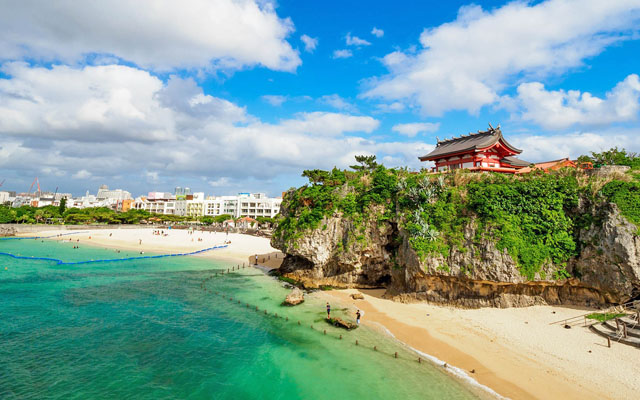
Expedia’s recent search data also revealed a shift in Singaporeans’ preferred international destinations, with beach destinations becoming more popular for year-end travel as compared to the same period in 2019 and 2018, when cooler North Asia destinations like Okinawa, Seoul and Taipei were top choices.

Beach destinations featured prominently in the list of top 10 most-searched international destinations, with the Maldives taking top spot – a big jump from 2018 and 2019, when it took 14th spot on the list. Other beach destinations that made the top 10 list include Bali, Krabi and Phuket, which took the 4th, 5th and 10th spot respectively.

The Pavilions debuts new hotel brand Explorar in Thailand

0

Travelport, Emirates seal surcharge-free content deal

0

Radisson hotel to arrive at Beijing Daxing International Airport

0

Radisson Hotel Group continues to expand its presence in China with the signing of a Radisson-branded hotel at Beijing Daxing International Airport.

Scheduled to open in 1Q2022, Radisson Hotel Beijing Daxing Airport will be an upscale hotel located within the Airport Economic Zone, just 1.2km from the international terminal. The hotel will form part of an eco-friendly, mixed-use development comprising of hotels, Grade A-offices and retail outlets. It will also look to play a role in hosting athletes and attendees during the Beijing Winter Olympics 2022.

Radisson Hotel Beijing Daxing Airport is scheduled to start welcoming guests in 1Q2022

The 239-key newly constructed hotel will feature rooms averaging at 32m² and suites up to 109m², all equipped with contemporary interiors, modern amenities, and the Radisson brand’s signature sleep experience. For corporate events and meetings, the hotel will offer six function spaces including an intimate boardroom, four meeting rooms and a 300-pax ballroom, supported by a business centre and VIP reception area.

Leisure facilities include a gym, indoor pool, yoga room, retail boutiques, an all-day dining destination, Chinese restaurant, and lobby lounge.

Australia’s lockdowns curtail hotel bookings

0

Hotels left in the dark over Hong Kong govt’s quarantine rule change

0

Hong Kong’s government has come under fire over its decision to shorten the quarantine period for fully vaccinated travellers arriving in the city without prior consultation with quarantine hotel operators.

The two-phased scheme kicked off with Hong Kong residents on Wednesday (June 30), and will be followed by foreign travellers this month.

Hong Kong’s easing of quarantine rules for vaccinated travellers have frustrated hotel operators

Under the new regulation, Hong Kong residents returning from countries in Group B and C, which are classified as high-risk and medium-risk respectively, need only serve a seven-day quarantine, down from 14. To qualify, they need to be fully vaccinated, as well as test positive for antibodies and negative for Covid-19 upon arrival at the airport.

Group B comprises of 29 countries including Cambodia, France, Italy, Japan, Malaysia, Singapore, Thailand, the UAE, the US and Vietnam. Meanwhile, Group C countries include all places outside mainland China and Macau that are not named in any of the other groups.

Winnie Chan, manager of the Hong Kong Federation of Hotel Owner Association, said that its members only learned about the new quarantine policy from news reports.

She explained that “the move drastically disrupts our booking system” as customers who have booked seven days for a stay at a quarantine hotel, but end up failing to pass the government requirements upon arrival would be required to extend their stay for another seven days.

This problem was echoed by acting COO of Hong Kong’s Ovolo Hotels, Marc Hediger. He told TTG Asia that the question remains whether travellers are required to secure and show proof of a hotel reservation confirmation for 14 nights before they can fly to Hong Kong, in the event that they do not meet the government requirements.

“If so, the majority of vaccinated travellers are highly likely to test positive for antibodies, and they will then end up amending their hotel stays (from 14 to seven days) with little to no notice after they arrive, creating a chaotic situation for hoteliers,” he said.

Hediger urged the government to consult hotel industry stakeholders before making such decisions in future, so as to better understand the implications of policy changes.

Additionally, operators are feeling the pinch from the wave of cancellations in bookings following the government’s sudden decision to ban flights from the UK since July 1 due to a surge in Covid-19 cases there.

Likewise, hoteliers were not consulted in advance. The Federation estimated a loss of 3,000 to 4,000 room nights resulting from the UK travel ban, and is seeking extra subsidies from the government.

Metropark Hotel Kowloon general manager, Raymond Liu, said the property recorded over 90 per cent of bookings for July, but following the announcement, 60 per cent of those bookings have been cancelled. This amounted to about 200 bookings and accounted for approximately HK$4 million (US$514,930). As such, he hopes the government could offer extra subsidies to operators that have been greatly impacted by the UK flight ban.

How the pandemic has changed the face of tourism in Siem Reap

0
  • Prolonged pandemic restrictions have left Siem Reap tourism in tatters
  • Drying up of domestic tourism amid Covid surge this year has led to mass hotel closures, talent haemorrhage
  • But pandemic downtime has provided opportunity for a sustainable recovery of Siem Reap tourism

It’s been almost 18 months since Cambodia closed its doors on international tourists, leaving its dominant tourism economy in tatters. Nowhere in the nation has felt it harder than Siem Reap, a city whose economy is heavily reliant on tourism.

While international arrivals to the town had already started to slow pre-pandemic, in 2019, Siem Reap welcomed 2.2 million international visitors to explore Angkor Wat alone. In April 2020, Cambodia closed to tourists in a bid to control the spread of Covid. Last year, it recorded zero deaths and less than 400 cases, mostly imported and caught at the border.

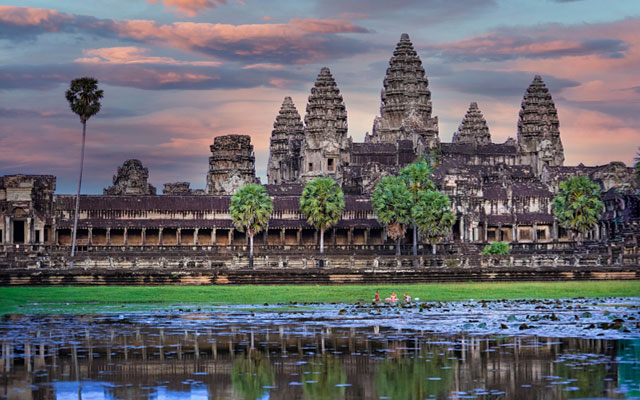
Angkor Wat temple in Siem Reap devoid of its usual throng of tourists amid the pandemic 

This threw one small lifeline in the form of domestic tourism. While volumes were far from enough to keep the tourist-centric town afloat, locals and expats flocked to Siem Reap on weekends and public holidays to experience the temples without tourists.

Pandemic’s long-term toll
However, this year has dealt additional blows. In February, coronavirus started spreading countrywide, triggering ongoing restrictions, including lockdowns, curfews and alcohol bans. It has also virtually brought domestic travel to a standstill.

According to David-Jaya Piot, president of the Cambodia Hotel Association in Siem Reap, only 10 per cent of 2019’s hotel rooms are available today, with rates hitting an all-time low. He said: “In the hotel business, this is quite difficult to come back from, especially after a crisis like this… Bankruptcies have harmed product diversity and there has been a drain in human capital as jobs have become scarce.”

In addition, the US$149 million 38 Roads project, which has seen all of the centre’s major roads torn up, has hammered another nail in the town’s coffin as surviving businesses struggle to stay afloat amid further uncertainty over when tourists will return.

Adam Rodwell, co-founder of Little Red Fox Espresso café, said: “The pandemic has changed the face of tourism in Siem Reap forever. With such a sudden and prolonged cut of income, we’ve lost so many incredible businesses. With that, we’ve also lost many incredibly skilled people. The long-term effects of that absence of skill can’t be understated.”

Hospitality staff returning to families to farm is common. Elsewhere, tour guides are delivering food and a hotel operations manager is working at a concrete factory. Nick Ray, product director at Hanuman Travel, noted: “Rescaling and rebuilding staff will be a major challenge. They’ve been in hibernation from tourism for 18 months now.”

Many hospitality businesses that have not closed have relocated to the capital in a bid to survive. Award-winning Wat Damnak shuttered its Siem Reap operations in April and relocated to Phnom Penh after reducing operations from five- to two-days a week proved economically unviable.

Co-owner and director, Nguon Vengchhay, said: “With the domestic market, two days a week wasn’t healthy for us in the long run. The plans to improve infrastructure also made it hard to keep open. At one point, we couldn’t access the restaurant for days.”

An opportunity to build back better
In spite of the unprecedented challenges the town faces along with other heavily tourism-reliant destinations worldwide, hopes remain high that Siem Reap has the strength to bounce back – how that will look, no one knows.

The 38 Roads project is slated to finish by December, and industry players hope borders will reopen by then. David Stirling, Little Red Fox Espresso co-owner, said the works are essential and being carried out when the city is void of visitors.

He added: “Siem Reap’s population growth before Covid-19 was absolutely insane. As a bustling tourist destination where the population could double or triple during peak holiday periods, it struggled with infrastructure pressure. This slowdown has given the time and opportunity to update infrastructure, which is long overdue.”

Ray also believes there is an opportunity to be had. Pre-pandemic, Siem Reap was suffering from an oversaturation in accommodation, a 15 per cent visitor downturn and strong seasonality. During peak months, hotels were regularly fully-booked while the rest of the year was a struggle.

He remarked: “We need to look at how to spread the load and transform Siem Reap into a year-round destination. It’s either that or become a destination that closes for six months of the year, like many across the globe.”

Rodwell added it will be tourists who dictate how Siem Reap emerges. He said: “It all depends on what kind of tourists come first and in what numbers. Will it be planeloads of tourists shuffled around on buses or a gentle flow reminiscent of Siem Reap at the turn of the century? The demands of the first few waves will essentially dictate which of us businesses survive.”

Piot added Siem Reap’s successful reopening will be dependent on consumer confidence and a fast vaccination rollout. On July 1, Cambodia remained the second most vaccinated South-east Asian country with 25.5 per cent of the population having received at least one dose. He added: “It’s certain demand exists. It’s all about how people can feel comfortable coming to Cambodia and returning home.”

Chhay, meanwhile, has not given up hope on reopening Wat Damnak’s Siem Reap operations. “We 100 per cent plan to reopen, when the time is right,” she said.

Bali pitches vaccine vacations to boost visitation

0

Indonesia places Bali and Java under two-week lockdown

0

The Indonesian government will tighten restrictions across parts of Java and Bali islands for two weeks starting July 3, to curb a surge in cases driven by the Delta variant.

In an address to the nation, president Joko Widodo said: “The Covid-19 pandemic has been growing rapidly in the last few days because of the new variant, which has also been causing problems in many countries. The situation requires us to take more assertive measures in order to stem the spread of Covid-19.”

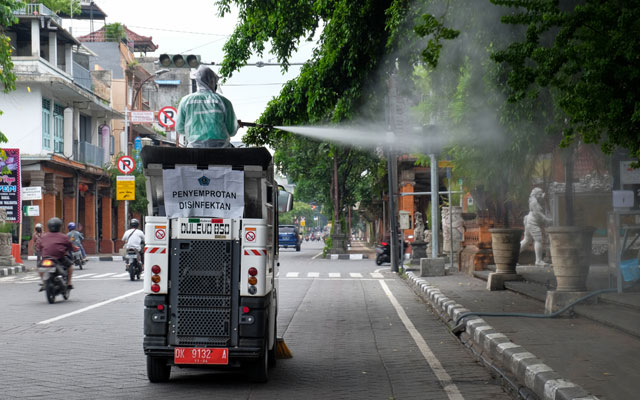
Bali’s reopening will be delayed as the island goes under lockdown; local authorities in Denpasar, Bali spraying disinfectant across the city to combat Covid-19 pictured

Under the new restrictions which will last until July 20, all shopping malls, trading centres, places of worships, public spaces, and sports facilities will have to remain closed.

Restaurants and eateries are only allowed to serve takeaways, while markets and supermarkets must close by 20.00, and operate at 50 per cent capacity.

Public transport will operate at up to 70 per cent capacity, while passengers on intercity buses, trains and airlines must show a negative PCR test result or non-reactive antigen test result, carried out at most 48 hours and 24 hours respectively before boarding.

Offices are required to have 100 per cent of their staff working from home with the exceptions of essential sectors including banking, finance, stock exchange and the export industry which will be allowed to have 50 per cent of their staff in the workplace. Critical sectors like energy, health, transportation and industries related to people’s basic needs are allowed to operate fully, with strict implementation of health protocols.

In the last few days, the number of new daily Covid-19 infections has surpassed more than 20,000. The latest data showed that the number reached 21,807 in a single day, the highest since the start of the pandemic.

On June 30, a total of 239,368 active cases were recorded across the country, with 467 deaths.