

Koh Samui’s tourism hopes pinned on international travellers
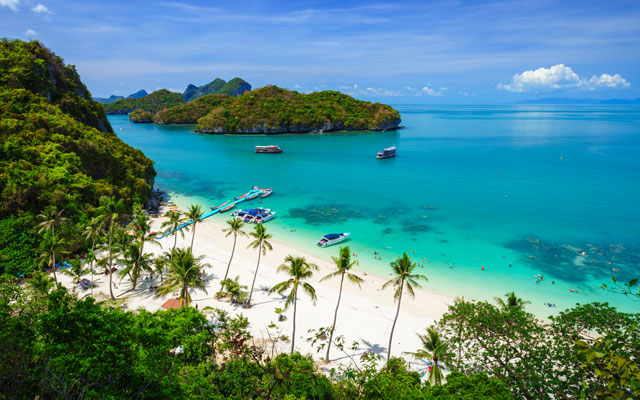
Thailand’s island-focused international travel reopening plan is set to roll out in Koh Samui on July 15.
Unlike the Phuket Sandbox programme for vaccinated travellers, the Samui Plus sealed-route will test the water with a hybrid approach of three days in a hotel quarantine scenario and then allowing visitors island-wide free access from the fourth day onwards.
In anticipation of overseas travellers flying to the holiday island, over 60 hotels have been certified in the SHA Plus safety and health programme, according to hospitality consulting group C9 Hotelworks’ research.
Gateway carrier Bangkok Airways has confirmed three domestic daily ‘sealed route’ flights from Bangkok’s Suvarnabhumi Airport starting in the middle of the month. International Samui Plus visitors will be required to fly via Bangkok and transit on these designated flights.
Koh Samui’s island economy is heavily dependent on tourism with over 600 registered tourism establishments and nearly 24,000 rooms. The impact of the pandemic can best be highlighted when looking at the airlift, comparing pre-pandemic 2019 and the onset and ongoing impact of Covid-19 which saw airline passenger traffic drop 64 per cent year-on-year.
Speaking about the process of a gradual stepped programme for accepting overseas arrivals, C9 Hotelworks managing director Bill Barnett said that “the learnings from the first week of the Phuket Sandbox will likely follow a similar pattern. Over 2,300 international arrivals have come to the island with more than 140,000 confirmed hotel nights booked in SHA Plus hotels through August. Demand has remained strong and is now demonstrated, which bodes well for Koh Samui’s chances.”
He added that “an ancillary impact of the Sandbox is the restoration of regularly scheduled direct flights between the two islands from July 16, starting with four flights a week this month and becoming daily in August. In analysing tourism, we look to the sky for answers as the logical starting point, and this increased airlift is a key driver for the tourism economy”.
Moving to the outlook for the island’s lodging industry, C9 Hotelworks’ new Koh Samui Hotel Market Update points out that the likely recovery journey will be top-down, with many travellers taking advantage of competitive rates in luxury and upscale tier hotels. C9 is forecasting the short- to medium-term impact to be in rising demand at the expense of room rates as travellers tend to historically trade up in post-crisis travel.
STR’s area director for Asia Pacific Jesper Palmqvist noted that since the start of the crisis in 2Q2020, there has been three hotel peak periods in Koh Samui – mid-October 2020 during the long weekend, New Year’s Eve, and the Songkran holiday where occupancies reached close to 50 per cent. “These spikes in demand came from the domestic market and once the international factor comes into play, more stability will evolve,” he said.
While Thailand’s tourism fortunes remain highly focused on islands, Barnett highlighted that “it’s important to remember that Koh Samui and Phuket remain only small pieces of a bigger puzzle” and that “until the entire country gets better, the sandbox remains a relatively small stage”.
Singapore-based travel platform seeks content creators to support local businesses
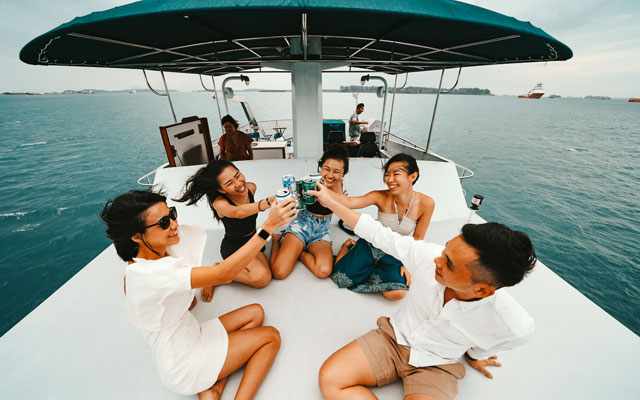
Seek Sophie, a Singapore-based experiences booking platform, has launched a campaign to support small local travel businesses impacted by the Covid-19 pandemic, by inviting creatives based in Singapore to help these businesses grow and gain awareness through content creation.
Seek Sophie said that it has been offering free photography and content marketing to their partners throughout the pandemic, and through that, some have seen a 20 to 30 percent increase in booking enquiries, which helped them to stay afloat during the pandemic.
Hence, the team is now seeking to involve the wider community of creators, and is calling out to anyone based in Singapore who enjoys trying out new experiences and creating content.
Selected applicants can expect to go on these trips for free: yacht trips, kayaking adventures, pottery classes, yoga wellness classes, various creative workshops and more, valued up to S$1,500 (US$1,109).
All creators need to do is simply capture and share their experiences on Instagram via photos and/or videos. Depending on the experience, creators may also be able to bring along a friend for the ride.
Applicants will need to possess a passion for storytelling, photography and/or videography skills, and a keen eye for detail. They must also be comfortable on and off camera.
This Seek Sophie Creators campaign will be launched on July 15, 2021. Applications are open from July 15 to 29, with the actual campaign commencing in August 2021. Those who are interested will need to apply via the Seek Sophie Creators webpage. All applicants will be contacted via email within one week of the application end date.
BWH’s Aiden makes Australian debut in Sydney
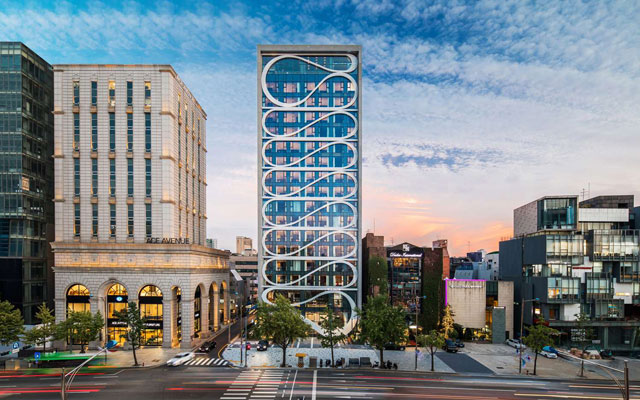
BWH Hotel Group will debut its lifestyle brand, Aiden by Best Western, in the Australian market in the form of a boutique property located in the Pyrmont precinct of Darling Harbour, Sydney.
Slated to open in September 2021, Aiden Darling Harbour will be housed in a remodelled 1930s Art Deco building and will feature a collection of 88 luxe and compact rooms, in addition to a combined lobby, cafe and bar.
The property overlooks Pyrmont Bridge and Darling Harbour. Rooms will offer a pillow menu, a meditation channel, double-glazed windows and blackout blinds, and adjustable lighting.
The Aiden brand entered the market in 2018, representing a new lifestyle offering for the mid and upscale segments. Since then, Aiden has expanded to 14 properties located in the US, Germany, Austria, South Korea, France and Italy.
Wyndham hires development director for Indonesia and Philippines

Wyndham Hotels & Resorts has appointed Pamudji Slamet as director of development, Indonesia and the Philippines.
Pamudji joins Wyndham Hotels & Resorts’ Asia Pacific division, which has a portfolio of over 1,500 hotels across 20 markets and territories. He reports directly to Matt Holmes, head of development, South-east Asia & Pacific Rim.
In his new role, Pamudji will be responsible for growing the company’s portfolio through new development and conversion opportunities across franchise and management agreements in Indonesia and the Philippines. Pamudji will focus on establishing new relationships and partnering with key owners and property developers to drive the continued growth of Wyndham Hotels & Resorts presence in both markets.
The Indonesian possesses than 30 years’ experience in the hospitality sector, which includes both operational and development roles where he managed conversions, mergers, acquisitions, rebranding of hotels through franchise, management, hotel lease, as well as manchise agreements. He is also adept at property development across a wide range of segments from luxury to economy hotels to condotels and branded residences.
Prior to joining Wyndham Hotels & Resorts, he was director of development, Indonesia, with Accor. His decades-long experience also included stints at GHM Hotels, Fairmont Raffles Hotels International, Discovery Hotels & Resorts, Horwath Asia Pacific, and JLL.
Thai airlines cut domestic flights through July
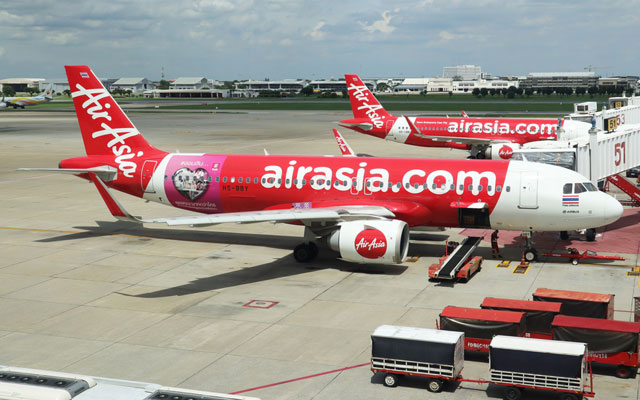
Airlines in Thailand have suspended or reduced domestic services through end of the month, in a bid to reduce travel to stem the spread of Covid-19.
The move is in keeping with the night curfew that the government has imposed on Bangkok and nine provinces, which come into effect today (July 12).
Budget airline Thai AirAsia announced in a statement on Saturday that it was suspending all its domestic flights between July 12 and July 31 due to the worsening Covid-19 situation in the country.
Bangkok Airways has also cancelled some domestic flights from July 13 to July 31. Cancelled routes are those from Bangkok to Chiang Mai, Phuket, Sukhothai, Lampang and Trat.
Other operating Bangkok Airways services – including Bangkok-Samui, Samui-Phuket, and Samui-Singapore – will remain unchanged.
Difficult start for Thailand’s tourism reopening

Thailand has finally put the Phuket Sandbox into play, but hopes and reality seem to continue to be at odds.
Two weeks on, Phuket’s high profile tourism reopening has yet to yield much profit, as there have only been a small number of tourists taking a bite at the opportunity to holiday on the Thai island without quarantine – provided the traveller is vaccinated and satisfies a long list of requirements.
This, along with the current surge in Covid-19 Delta cases across Thailand, has dampened the hopes of nine other Thai tourist destinations that are set to adopt the Sandbox tourism reopening initiative this month.
A night curfew and other movement restrictions have just been imposed – starting July 12 – on Bangkok and nine provinces, resulting in Thai AirAsia freezing all domestic services from now until the end of this month and Bangkok Airways calling off some routes including Bangkok-Phuket from July 13 to 31. Major mall operator Central is also shutting many stores for weeks in anticipation of poor traffic.
It seems that the Thai government and tourism operators will have to be bold and decide whether to carry on with the Phuket Sandbox plan to save businesses and thousands of workers who have been suffering from a devastated travel and tourism industry, or pull the brakes on some activities to prevent further damage to the destination.
Analysts have warned that Thailand is still not ready to reopen to tourists from many high-risk countries, especially major source markets such as India, Malaysia and the UK. Furthermore, the continued volatility of global infections means that Thailand’s list of approved countries for the Sandbox programme would change at any time, bringing even more complexity and uncertainty to the arrangement.
The Phuket Sandbox’s entry requirements have attracted extensive criticism. While data from airlines had shown nearly 8,000 travellers applying for immigration certificates before the start of the Phuket Sandbox, many have ultimately cancelled flights and hotel reservations due to delays in securing immigration certificates and other processes.
At the same time, many countries are maintaining their travel advisories against trips to Thailand – such as Malaysia, Singapore, Japan, China, the UK and the US.
With so many existing obstacles, the Phuket Sandbox may not bring the immediate help Thailand’s beleaguered travel and tourism industry is desperately seeking.
Despite the rocky start, hoteliers are reporting a different story. Paul Mulcahy, managing director of RCI, APAC India and EMEA, said clients have been scheduling advanced vacations, all ready to travel once border restrictions are lifted and flights resume.
Anantara Vacation Club Mai Khao Phuket has also seen its average length of stay for July rise to 6.5 days, up from the usual 3.5 days. The majority of its guests are from the Middle East and Europe, with domestic travellers making up just 25 per cent of bookings.
Wyndham Kalim Bay has been seeing bookings from Israel, the UAE, parts of Europe, and the US.
Between July 1 and 9, 3,287 international tourists have travelled into Phuket and more than 155,700 room-nights have been booked for 3Q2021.
Having seen Phuket’s strong tourism appeal pre-pandemic, the Tourism Authority of Thailand remains optimistic that more than 100,000 tourists will return to Phuket within the first three months of the Sandbox initiative.
Bearing in mind current challenges, CBRE Thailand is projecting 9.9 million tourist arrivals to Thailand in 2022, still a far cry from 2019’s 39.9 million.
For Thailand’s tourism reopening dreams to come true at a much quicker pace, the country will need to successfully contain Delta’s spread and rebuild travellers’ confidence.
Suchat Sritama is correspondent, Thailand for TTG Asia Media. He reports for the company’s stable of travel trade titles, including TTG Asia and TTGmice.
Langkawi eyed as launchpad for Malaysia’s tourism comeback
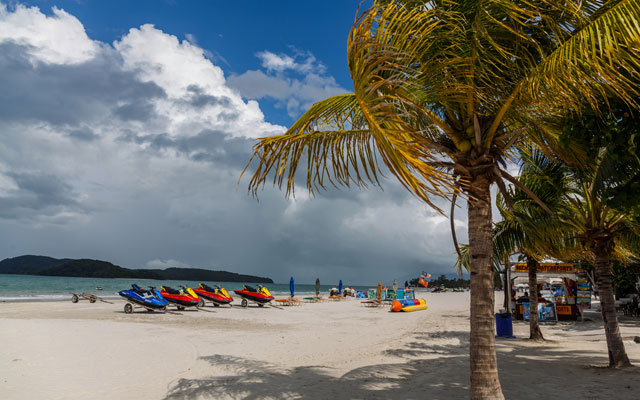
Langkawi is planning to reopen its doors to foreign travellers soon and be promoted as a Covid-free destination, under a pilot project by the Ministry of Tourism, Arts and Culture Malaysia (MOTAC) to kickstart the country’s tourism recovery.
Once successful, the pilot project will be extended to other localities and islands across the country, Noor Zari Hamat, MOTAC secretary-general, said at the Islamic Tourism Centre Corporate forum held last week.
While Noor Zari did not specify a start date for the pilot project, he stated that 80 per cent of the population had to be vaccinated to achieve herd immunity before the pilot project could take off.
In a report by Bernama last month, Kedah chief minister, Muhammad Sanusi Md Nor, said he was hoping the project could take off in September or October, with Langkawi welcoming fully vaccinated foreign tourists.
Anthony Wong, president of Langkawi Business Association, opined that to date, between 35 to 45 per cent of the population in Langkawi had received at least one dose of a Covid-19 vaccine and that at least 20 per cent of the population had received both doses.
Wong added that he has been talking with senior officers at Tourism Malaysia who told him they were trying to get international and regional airlines to resume their services to Langkawi.
He said some stakeholders in Langkawi, such as boat operators, hotels and tour operators, are preparing for the reopening of the island by “getting their house in order”, while others are taking a wait-and see approach.
Uzaidi Udanis, president, Malaysian Inbound Tourism Association (MITA), pointed out that tourism activities in Langkawi has been at a standstill since March, when inter-district and interstate travel was banned by the government to contain the spread of Covid-19. However, even before March, Langkawi had seen a drop in the number of domestic tourists.
He shared that the main task of MITA currently is to prepare members for the reopening and to ensure stakeholders are ready to receive international tourists.
Uzaidi said that following discussions with stakeholders, three key issues have been identified: first, the lack of human resources as many locals who had been working in Langkawi have since returned to their hometowns; two, the maintenance of tourism products which have been neglected due to the temporary ban on domestic tourism; and three, product readiness.
“We need to ensure we have very good products and local storytellers to ensure international guests have a very good experience when they visit. We are competing with the likes of the Maldives, Bali and Phuket,” he said.
Adam Kamal, head of contracting & domestic market at Ice Holidays, shared that authorities in Langkawi should also ensure that the health facilities are adequate to handle international travellers, who might be infected with Covid-19.
“We should take heed of what had happened in Phuket”, he said, referring to the incident where Phuket reported its first Covid-19 case from overseas on July 7 after reopening to international tourists.
Maldives reopens for Indian tourists from July 15
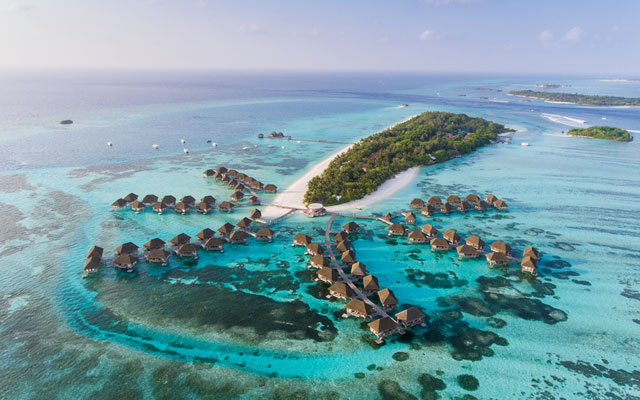
The Maldives will reopen its borders to travellers from South Asian countries including India from July 15.
International passengers will be required to present a negative PCR test result taken within 96 hours before departure, said the Ministry of Tourism in Male in a tweet last month.
The announcement has come as a massive relief to tourism stakeholders across the island nation whose economy is heavily dependent on tourism.
The Maldives had suspended the issuance of tourist visas for visitors from South Asian countries, since May 13. Besides India, the countries included under the ban were Afghanistan, Bangladesh, Bhutan, Nepal, Pakistan, and Sri Lanka.
India has emerged the second largest source market for the Maldives this year, accounting for 21 per cent of all arrivals, according to media reports.
The island nation has welcomed more than 400,000 tourists since the start of January until end-June. Russia has been the biggest source market, followed by India, Ukraine, Germany and Kazakhstan.
Singapore tightens border measures for travellers from Indonesia
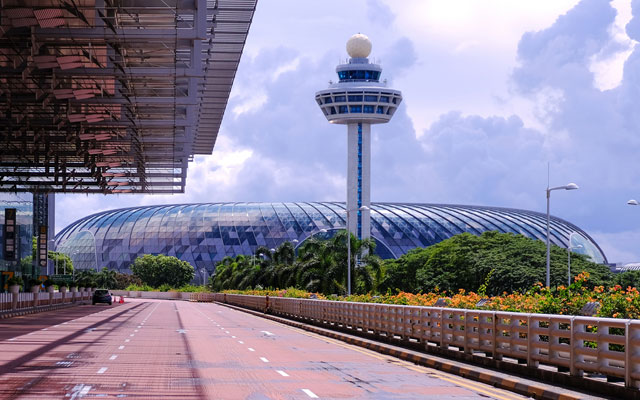
Singapore has reduced entry approvals for travellers from Indonesia who are non-Singapore citizens or permanent residents.
The announcement was made on Saturday (July 10) by the Ministry of Health (MOH), who said that the tightened border measure for travellers from Indonesia will take place “with immediate effect” and comes amid the “worsening” Covid-19 situation there.
Entry approvals may be considered where additional safe management measures are taken, it added.
All travellers with travel history to Indonesia within the last 21 days will also not be allowed to transit through Singapore, starting July 12, 11.59.
With effect from July 12, 23.59, all travellers entering Singapore with recent travel history to Indonesia within the last 21 days will be required to present a valid negative Covid-19 polymerase chain reaction (PCR) test result taken within 48 hours before departure for Singapore.
Currently, such travellers will need to present a valid negative Covid-19 PCR test result taken within 72 hours before departure for Singapore.
Travellers who arrive in Singapore without a valid negative PCR test result may be denied entry into Singapore, said MOH. Permanent residents and long-term pass holders who fail to comply with the new requirements may have their permit or pass cancelled, it added.
All travellers will continue to be subjected to a 14-day stay-home notice at dedicated facilities; an on-arrival PCR test and another test on day 14 of arrival; and an on-arrival antigen rapid test (ART) and self-administered ART test on day 3, 7 and 11 of arrival.







As tourism gradually reopens, India faces a long road to regaining its share of international arrivals in the post-Covid era, said a report by HVS.
The report’s authors, Mandeep S Lamba and Dipti Mohan, called the Indian government’s recent announcement of its plan to provide free visas to the first 500,000 tourists once international travel resumes in the country as “a first step in the right direction to encourage inbound tourism”, but added that it will be a slow road to recovery for the country’s tourism.
Given the significant negative publicity India received in the global press during the pandemic, the country “will have to work much harder to regain its pre-Covid share and then grow beyond it”, the authors wrote.
With safety and health being of paramount importance to the post-pandemic traveller, India would have suffered a setback to its reputation as a tourist destination from its handling of the Covid-19 pandemic even after the devasting second wave in the country.
It is, therefore, critical that the entire tourism fraternity – government, public sector, private sector, and even the citizens – come together as one to rebuild traveller confidence and put India back on the global tourism map.
The report detailed four measures to help the country regain its competitive advantage:
1. Health, safety, and adherence to Covid-appropriate behaviour should be non-negotiable. Ensuring that all stakeholders, including tourists, follow the Covid-safety guidelines to the tee is of primary importance to rebuilding international tourist confidence and trust. Hotel and restaurant managers need to strictly ensure social distancing and other Covid safety measures at their premises and even refuse entry to patrons who are not following the guidelines.
2. The vaccination drive in the country has gained momentum and the government plans to vaccinate the majority of the population by the end of this year. However, the government and the private sector should collaborate to ensure that all tourism-sector employees – from hotel staff to tourist guides and cab drivers – are fully inoculated as a priority.
3. Along with creating a reboot plan, the government should introduce effective marketing campaigns, showcasing India as a ‘safe’ destination. The campaigns should communicate the Covid safety measures being implemented at tourist destinations, including the fact that all travel employees are fully inoculated.
These campaigns should also highlight that healthcare facilities, infrastructure, as well as amenities at airports and railway stations, have been augmented due to the pandemic, which will enhance the perception of India as a safe and attractive destination. It is also perhaps time for India to extend the 24×7 multilingual tourist helpline to be a ‘911’-like service.
4. Effective destination management can help reduce overcrowding. Tourists as well as the hospitality industry are eager to go back to normal, but we need to ensure that it is done in a phased manner so that we can avoid the third wave.
This is perhaps the right time for the authorities to evaluate global best practices, establish models based on international guidelines, and implement strategies for effective destination management to strike the much-needed balance between tourism and sustainability.