

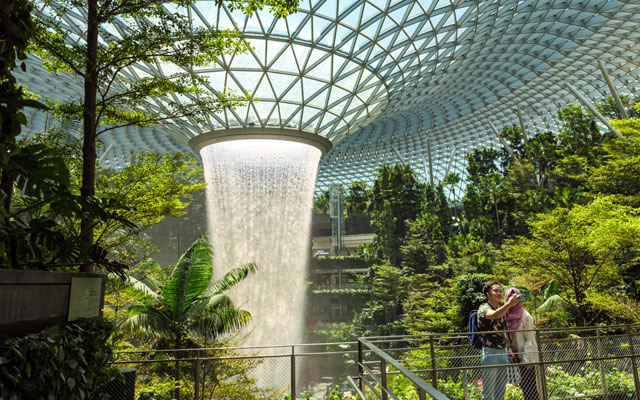
Malaysia and Singapore have come out tops once more in the list of most Muslim-friendly holiday destinations, according to the Mastercard-CrescentRating Global Muslim Travel Index (GMTI) 2021. Both countries have maintained their pole position since the inception of the GMTI index in 2015.
This year’s GMTI report, which ranked 140 destinations on how ready they are to attract the international Muslim travel market in the Covid-19 environment, saw Malaysia retain its top spot.
For both Malaysia and Singapore, the key challenge in maintaining pole position when international travel resumes would be to identify the new behaviour patterns and expectations of the post-pandemic Muslim traveller in order to better cater to their needs.
Speaking at a forum session entitled ‘Readying OIC destinations for Halal Travel’ at the Halal in Travel Global Summit 2021, Mohmed Razip Hasan, director-general of Islamic Tourism Center (ITC) in Malaysia, said enticing international Muslim travellers to Malaysia will be more challenging post-Covid due to changed travel behaviour patterns and demands. “We have to understand new behaviour patterns and ensure that our product lines appeal to (these travellers),” he said.
Another challenge he foresees is destination competition for the Muslim market. He noted that non-Muslim majority countries such as Thailand, Singapore, Taiwan and Hong Kong were also working hard to increase their share of the lucrative global Muslim market with a population of 1.9 billion, of which 300 million reside in South-east Asia.
Tourism, arts and culture minister Nancy Shukri pointed out in her keynote address at the summit that ITC has developed a Muslim-Friendly Accommodation Recognition (MFAR) programme to assist Muslim tourists in identifying accommodations that would cater to their needs in terms of prayer facilities, halal food and family-friendly services.
For hoteliers, the recognition programme is a value-added marketing tool to reach out to the wider Muslim tourist market. A total of 44 hotels in Malaysia have been recognised, including local chains such as Sunway Hotels, The Light and Perdana Hotels as well as international brands such as Mövenpick, Hilton, Pullman and Sofitel. Grand Hyatt and Marriott group have also applied to be under the programme, she said.
John Gregory Conceicao, executive director, South-east Asia, Singapore Tourism Board (STB), shared in a forum entitled ‘Marketing to Muslim travellers from a destination perspective’ that pre-Covid, Muslim international travellers to Singapore comprise about 20 per cent of total visitor arrivals.
One of the misconceptions that STB is working to correct among Malaysian and Indonesian Muslim visitors to Singapore is that halal food is predominantly Malay Muslim food.
Conceicao said that halal food and halal certified food in Singapore is wide-ranging, and includes Western, Spanish and Italian dishes. Moving forward, STB will be promoting modern Singapore cuisine as part of its marketing initiatives to entice the overseas Muslim traveller, alongside Singapore’s new offerings, the heartlands and nature-based attractions.
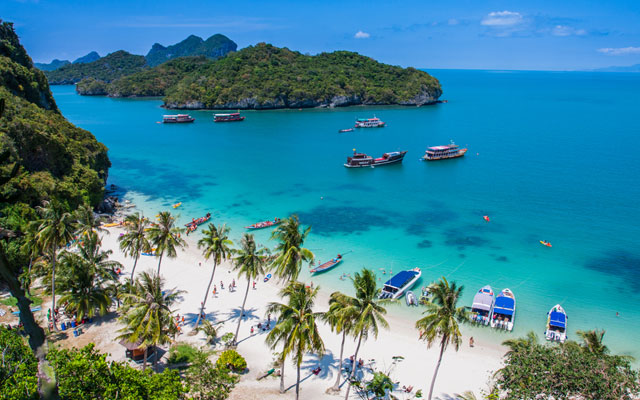
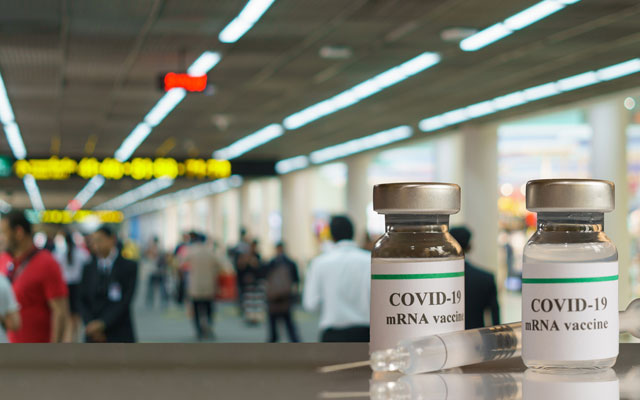
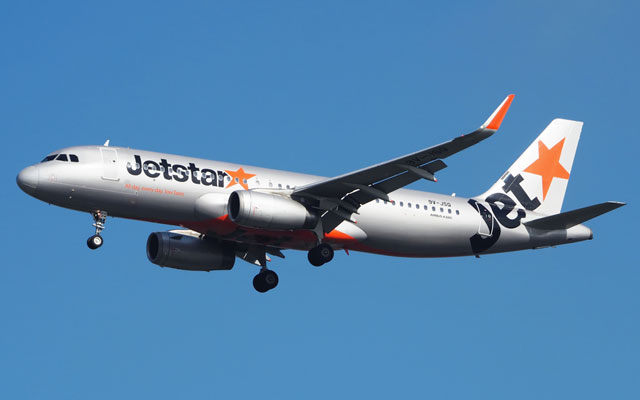

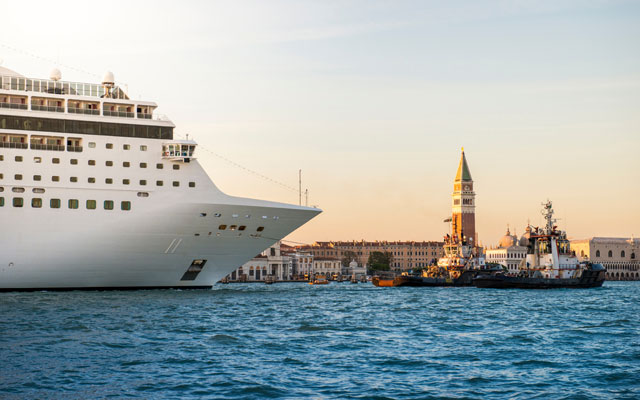
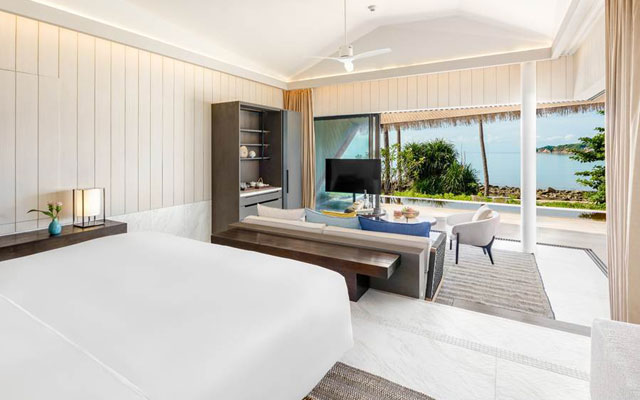
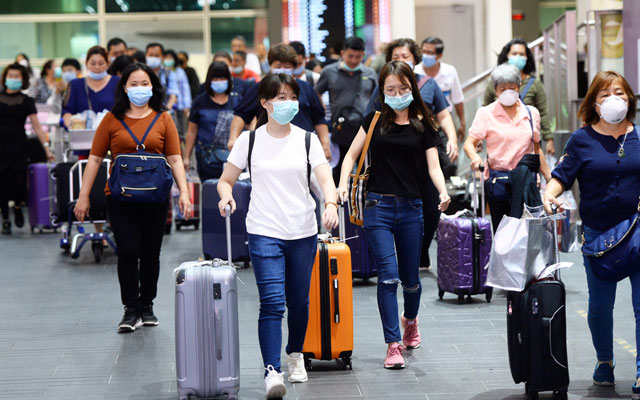







The Thai resort islands of Koh Samui, Koh Phangan, and Koh Tao has reopened to fully vaccinated foreign travellers with no quarantine requirements, under the Samui Plus programme which launched on Thursday (July 15).
The Samui Plus programme is for travel to these three islands located in Surat Thani province between July and December 2021, according to a release by the Tourism Authority of Thailand (TAT).
Phiphat Ratchakitprakarn, minister of tourism and sports, said the reopening of the three islands following Phuket’s pilot project is “another significant step toward achieving the Thai prime minister’s recently announced policy of reopening the whole country within 120 days, or by the end of October”.
Tourists visiting under the Samui Plus programme can choose to stay in Samui Extra Plus and SHA Plus hotels for the first seven nights and the remaining seven nights, respectively. Both labels are officially approved in terms of hygiene and safety.
On the launch day of the Samui Plus programme, there were nine international arrivals from Hong Kong, France, Germany, Singapore, and the UK. All are members of the media by the invitation of the TAT, as part of the plan to create awareness of the Samui Plus programme.
TAT expects some 1,000 foreign tourists to arrive under the Samui Plus programme during the first month of its launch.
Following Phuket and Surat Thani’s Koh Samui, Koh Phangan, and Koh Tao, the next destinations to reopen on September 1 will be Krabi (Ko Phi Phi, Ko Ngai, and Railay Beach), Phang Nga (Khao Lak and Ko Yao), Chiang Mai (Mueang District and Mae Rim, Mae Taeng, and Doi Tao Districts), Chon Buri (Pattaya, Bang Lamung, and Sattahip), and Buri Ram (Mueang District and Chang Arena).
The scheduled date for the reopening of Bangkok, Phetchaburi (Cha-am) and Prachuap Khiri Khan (Hua Hin) is October 1, with the rest of Thailand due to reopen throughout the month of October.