Cebu Pacific (CEB) has renewed its partnership with the Singapore Tourism Board (STB) to inspire Filipinos to visit the Lion City for fresh experiences now that travel restrictions are eased.
Juliana Kua, STB’s assistant chief executive, international group, said the partnership will create “attractive promotions and campaigns to warmly welcome (Filipino travellers) back to Singapore”.
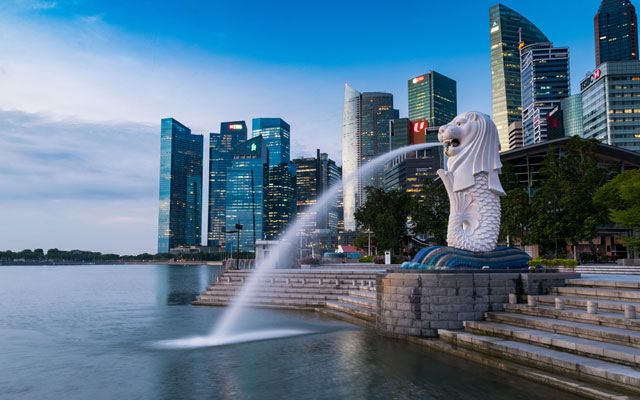
Singapore Tourism Board and Cebu Pacific have teamed up to entice Filipinos to travel to the Lion City with attractive promotions and campaigns
CEB currently flies daily between Manila and Singapore. Travellers from the Visayas and Mindanao may conveniently connect via Manila, with flights between Cebu and Manila running up to 18 times daily, and Davao and Manila up to eight times daily.
Candice Iyog, CEB’s vice president for marketing and customer experience, said: “We are very happy to firm up our collaboration with STB following the easing of travel restrictions in and out the Philippines. We believe this partnership is very timely as it’ll surely contribute to the recovery of both the industry, as well as our respective countries.”
Malaysia Aviation Group (MAG) has reinstated Firefly’s operations from its Penang Hub, with services to Johor Bahru, Kota Kinabalu and Kuching to spur domestic tourism.
Flights are operated on Boeing 737-800 aircraft.
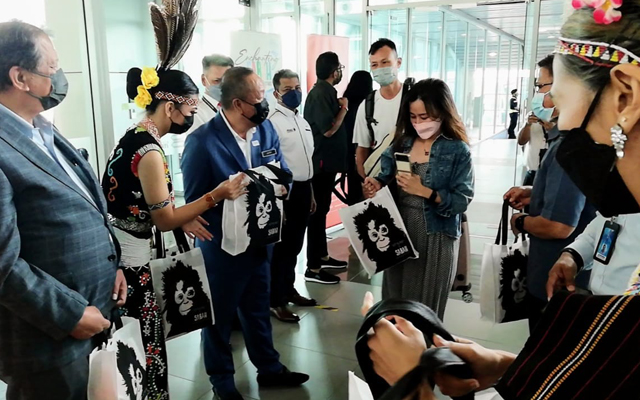
From left: Sabah state assistant Joniston Bangkuai and Jafry Ariffin presenting goodie bags to Firefly passengers from Penang who arrived in Kota Kinabalu on the inaugural flight on April 11
This coincides with Firefly’s 15th anniversary as well as the recent reopening of Malaysia’s borders.
Firefly CEO Philip See said in a press statement: “We have seen the extent of what the pandemic has done to various industries globally, but now we are in a position where restrictions have eased as nations begin to live and travel with Covid-19.
“We are delighted that Firefly resumes its jet operations at this crucial time, and simultaneously begins servicing new routes that will significantly benefit connectivity for tourists and communities.”
Sabah’s tourism, culture, and environment minister Jafry Ariffin has responded to Firefly’s comeback with a positive note. He said the Penang-Kota Kinabalu route is expected to draw more international arrivals to the state of Sabah, due to Penang’s close proximity with Langkawi, which receives international flights.
He added: “This Firefly route has unquestionably made Sabah more accessible to Malaysians and visitors alike.”
Firefly will offer twice daily return flights to Johor Bahru and daily return flights from to Kuching and Kota Kinabalu. Frequencies will be stepped up from April 25 – three times daily to Johor Bahru and twice daily to Kuching and Kota Kinabalu.
Firefly has also introduced its new value bundle services where customers can customise components to their travel needs and get 50 per cent off bundle offers from Plus, Extra or Flex fares. The bundles includes a 20kg baggage allowance, in-flight hot meals, two times flight change, priority baggage, boarding and check-in, all seat selection, travel insurance and other perks.
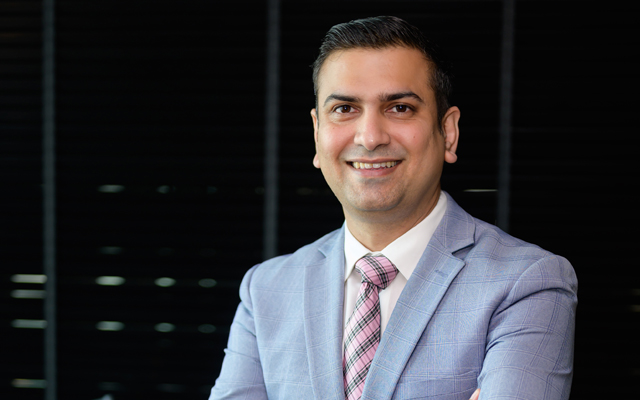
Saraogi: technology plays a pivotal role in driving efficiencies across the travel industry
International travel has just about started to pick up pace after coming to a near standstill. Having been at home for the longest time, many are looking forward to a travel vacation as countries across the Asia Pacific resume some semblance of international travel.
In Singapore, the Government has taken steps to open borders progressively, streamlining and simplifying border measures and testing regimes for travellers. The recent renewal of a seven-year deal to host the Formula One race is a strong indication of the Government’s commitment to renew the tourism sector and inspire travel to Singapore.
Saraogi: technology plays a pivotal role in driving efficiencies across the travel industry
Vacation travel will drive much of the recovery in the near term, as seen by the encouraging growth of Singapore’s international visitor arrivals and tourism receipts which reached 330,000 and an estimated S$1.9 billion respectively in 2021.
To continue capturing the travel demand, key players in the travel and tourism industry are addressing the importance of instilling confidence in travellers to allow them to plan for trips in the post-pandemic world with ease.
Rising travel expectations to manage Covid-19 risks
The changing needs and preferences of travellers that have emerged in recent months have raised the bar even further for the travel industry to appeal to those who wish to travel.
Modern-day travellers prioritise safety above all. They are looking at ways to minimise social interactions through contactless services, allowing flexibility in travel arrangements, and personalising the experience before, during, and after travel.
In a recent survey by TripAdvisor, more than 70 per cent of respondents in APAC countries such as Australia, Japan and Singapore expect service providers and destinations to take adequate health and safety precautions and state this as their primary deciding factor.
Travellers are bearing even more expectations before ticking off the travel checklist. They look to engaging with travel advisors who best know the environment to problem-solve any emergency issue and help navigate the rules of travelling that can be complicated and stressful. Today travellers need to be assured that everything will fall into place such that they will face minimal disruptions while travelling.
Digitalising existing travelling processes for maximum efficiency
This is where technology plays a pivotal role to create seamless touchpoints that will make travel safer and more efficient.
The travel experience has already been largely digitalised with the use of navigation tools such as Google Maps, virtual boarding passes, mobile travel wallets amongst others. But post-pandemic travel might play up these digital experiences in every aspect possible – from digital vaccine passports, QR-coded menus, crowd-control robots to contact-tracing software – and embrace ‘tele-everything’ in the process.
Airlines, travel agencies and destinations should rethink how they can best deliver experiences with digital solutions that can engage travellers anytime and anywhere, even from their home couches. More importantly, they should come together to help travellers feel confident to travel again.
AI to optimise the travel customer experience
Many have missed the experiences that travelling has brought about, and especially so the human connection that has deprived many after isolation. Travellers now demand personalised and empathetic experiences that could bring back a semblance of human-like connection.
With the help of automation technology, there seems to be a unique and relevant solution for travellers and agents to automate every conversation, from shopping, booking, and changing travel plans online. Conversational AI can serve across multiple modalities, channels, and touchpoints whether through talk, text or tap. More importantly, it is available 24/7 – the perfect go-to option whenever travellers encounter any form of travel emergencies.
An intelligent virtual assistant (IVA) is one of such conversational AI tools that can offer much-needed engagement with travellers while accurately recognising a travellers’ intent and preferences. Using natural language understanding (NLU) technologies, the IVA can handle restaurant reservation requests, bookings and even add small touches to interactions with personalised customer greetings.
Reimaging personalised travelling experience with conversational AI
The next step is scaling up of the backend of customer experience (CX) to improve agents productivity and efficiency. Using post-interaction analytics, conversational automation can monitor and identify patterns in past interactions and potential points of friction in the customer journey, ensuring that it scales up CX to improve on the next engagement.
With CX enhancement, conversational AI can handle high traffic volumes and assist agents who can handle multi-layered customer changes with more support and time. Together, they can better design a personalised customer experience, boosting customer engagement and satisfaction and increasing travellers’ trust in the agent and the experience.
The travel industry should seize the opportunities in the highly digitalised landscape to better meet consumer behaviour and expectation. Through a customer-first approach, and with the right insights and tools using AI and automation, brands can slowly earn the trust of travellers and make headway into recovery.
Tourism Western Australia (Tourism WA) is reinforcing the state’s status as a premium destination as it rebuilds travel demand from Singapore, recognised as its second most important source market.
Addressing a group of select media representatives during an event in Singapore yesterday afternoon, Roger Cook, deputy premier of Western Australia said Singapore contributed 107,000 visitors in 2019, which was up eight per cent from the previous year.
Tourism Western Australia is spotlighting new bucket-list worthy attractions, such as the Kalbarri Skywalk at the Kalbarri National Park (pictured)
“So, you will understand why we are looking to Singapore again (for tourism recovery),” remarked Cook, who also underlined strong business ties between Western Australia and Singapore that have resulted in A$9.5 billion (US$7.06 billion) worth of trade, compared to A$12 billion a year between Singapore and Australia as a whole.
Tourism WA’s renewed focus on the Singapore market is built upon the government’s A$185 million Reconnect WA package, which was unveiled in December 2021 to reengage with the world once international border restrictions were eased.
According to Carolyn Turnbull, managing director, Tourism WA, A$1.5 million from the Reconnect WA package will be dedicated to the Singapore courtship, with activities centred on “intelligent marketing and trade engagement”.
“Our strategy has been redefined over the last six months, and we are repositioning Western Australia as a high-yielding market. Singapore’s high-value travellers are well placed for this,” said Turnbull.
“High-value travellers are known to spend more, disperse farther and stay longer – that’s the type of customers we are targeting.”
She told TTG Asia that Tourism WA would highlight bucket-list offerings, such as the state’s world-class accommodation and tourism experiences, to charm well-heeled and well-travelled Singapore residents. These include new draws such as the Kalbarri Skywalk that hangs over Murchison River Gorge at the Kalbarri National Park, Matagarup Bridge Zip+Climb in Perth City, and HeliSpirit scenic helicopter flights in Esperence.
While the Singapore traveller typically gravitates towards Perth city and the Margaret River Region, drawn by premium food and wine, Turnbull is hopeful of introducing the segment to far more destinations across the state, where “pockets of experiences (are all) uniquely different”.
Access to parts of Western Australia is easy, with many flight options to destinations like Albany, Geraldton, Broome and Exmouth, shared Turnbull.
However, she also acknowledged that Perth city and the Margaret River Region will continue to be “sticky” with Singapore travellers, as many new hotels, restaurants and cultural offerings have made their debut over the past two years of travel freeze, offering fresh experiences for loyal returnees.
Tourism WA will continue to campaign with its Adventure Awaits platform, which has been around pre-Covid. “It still has the right gravitas and cut-through that sends the right message” about the state’s top appeals, explained Turnbull, adding that creative assets showcasing “wide-open spaces, incredible landscape and unique tourism experiences” resonate strongly with the Singapore market as well as other international travellers.
“Western Australia is just a very naturally beautiful state, unlike some of the other states in Australia that are overdeveloped. Western Australia is still quite pure,” opined Turnbull. As such, the fine-tuned pursuit of a high-yield traveller segment will ensure that Tourism WA acts “sustainably and in good faith for the protection and preservation of our natural landscape”.
The Reconnect WA strategy will also include an aviation fund to reinstate direct flights that will support the state’s tourism recovery. Ongoing efforts with Perth Airport to reengage airlines have seen the return of three daily flights with Singapore Airlines, one with Scoot and more, said Cook.
When asked if Tourism Australia would also approach the other South-east Asian markets with a premium destination angle, Turnbull affirmed the value of the region as a visitor market and said destination marketing activities would be especially focused in the other countries to ensure that “we are talking to the right people”.
The metrics by which tourism is measured “will be completely different” from pre-pandemic yardsticks, PATA CEO Liz Ortiguera said at the Southeast Asia Development Symposium 2022 organised by the Asian Development Bank earlier in March.
While in the past tourism metric was much more singular around physical arrivals, she said the focus will no longer be on heavy traffic. “We don’t want that. We have dispersion, we want longer stays, we want a new form of travel that will emerge,” she said.
Tourism performance will no longer be determined by large volumes, but by quality dispersion, longer stays, and tourist receipts that flow into the local community
She added that tourist dollars must “come to the community as well and stay with the local economy”.
Ortiguera pointed out that the metrics will evolve in many ways as a number of evolutions are happening in travel including longer and multi-purpose journeys, shifts in source markets and geopolitics, and the emergence of modern, responsible travellers.
“The metrics will reflect and encourage these changes,” she emphasised, and will help tourism leaders to steer towards the right direction in terms of what products and services to encourage when tourists come back to Asia.
Emerging is the modern, responsible traveller who looks more deeply into the destination, not just doing an Instagram tour and getting a very superficial introduction of the location, Ortiguera said.
The traveller now goes for “intelligent luxury”, which means a wholistic wellness not just for the self but also for the community and for the environment, and is much more inclusive and sustainable.
Accor recently reaffirmed its commitment to achieve net-zero by 2050, and is supporting myriad sustainability initiatives that can help it deliver on its promise.
One such initiative is the sponsorship of Energy Observer’s (EO) round-the-world voyage, which last month, saw it dock at Singapore’s ONE °15 Marina in Sentosa Cove from March 10 to 20. The ship was accompanied by a pedagogical exhibition village, which aimed to raise awareness of the issues of energy and ecological transition among the public.
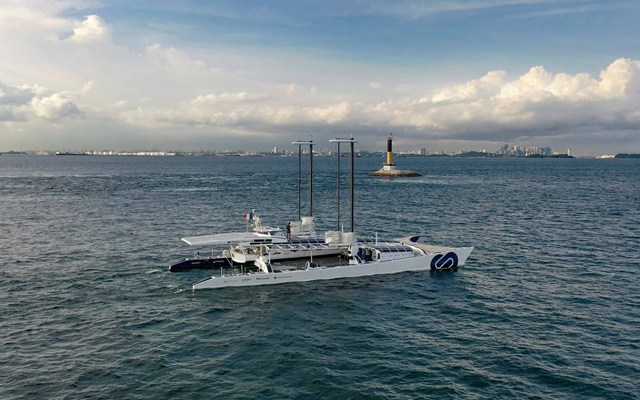
Accor is sponsoring Energy Observer’s round-the-world voyage and green innovation research
EO is the world’s first hydrogen-powered, zero-emission and self-sufficient vessel, and serves as a laboratory for ecological transition. From its stop in Singapore, it is sailing onwards to berths in Thailand, Vietnam and Malaysia.
On why Accor chose to work with EO out of the many sustainable projects around the globe, Garth Simmons, CEO, Accor South-east Asia, Japan & South Korea, told TTG Asia: “We share a common vision with EO whereby we want to allow people to explore the world in a more responsible way.
“By partnering with EO, our vision is to engage our teams worldwide in our goal to offer guests a truly sustainable experience, and inspire people to think about the positive outcomes of a greener future.”
This sponsorship has led to Accor dedicating a floor of its global headquarters in Paris to the EO team, where space is used to house an innovation lab as well as specialists and energy experts.
As to how EO’s learnings will translate into green innovations for the French hospitality giant, Simmons said both parties are working on various projects to develop low impact solutions and new technologies for its hotels.
“One of the most innovative solutions derived from EO is the EMS (Energy Management System). EMS has multiple applications, especially for smart-grids applications and therefore hospitality entities. For instance, the co-generation of heat and electricity from a fuel cell system provides the best efficiency for any kind of building, including temporary structures or outdoor events,” Simmons explained.
“Together, we hope to develop new technologies that will help us rethink the way we travel.”
Partnering with EO is only the tip of Accor’s sustainability ethos.
Aside from promising to removing all guest-related single-use plastics by the end of 2022, Accor also joined the Sustainable Hospitality Alliance in September 2021.
In November 2021, Accor and 13 other members of the Sustainable Hospitality Alliance announced a new Pathway to Net Positive Hospitality. Supported by the WTTC, this initiative offers a practical framework for hotels – both chains and independents – to improve their environmental impact.
However, as Accor is more of a hotel management company as opposed to building owners, the company also needs to educate owners that its sustainability strategy will help to create value for them.
When asked how this was done, Simmons relayed that each hotel’s green objectives are monitored through an in-house tool, which tracks food waste reduction, adherence to sustainable F&B, the elimination of single use plastics, eco-friendly amenities, and usage of cleaning products.
“We have also integrated sustainability responsibilities into our Hotel Management Agreements which our owners need to respect,” he added.
Waldorf Astoria Hotels & Resorts will plant its first Australian flag in Sydney early in 2025, following a signing last week for the Waldorf Astoria Sydney within the One Circular Quay mixed-use development.
Construction has commenced on the 28-floor, 220-key luxury hotel, which will enjoy a prime location in the city and offer guests unrivalled views of the iconic Harbour Bridge and Opera House.
Sydney will welcome Australia’s first Waldorf Astoria
Room inventory will comprise 179 guestrooms and 41 suites, while other facilities onsite include the Waldorf Astoria Spa on level one, two original restaurant concepts, a rooftop bar, and Peacock Alley, a signature central gathering place.
“As the first Waldorf Astoria property to debut in Australia, Waldorf Astoria Sydney signals Hilton’s commitment to expanding our luxury portfolio to the world’s most sought-after destinations,” said Nils-Arne Schroeder, vice president, luxury & lifestyle, Asia Pacific, Hilton.
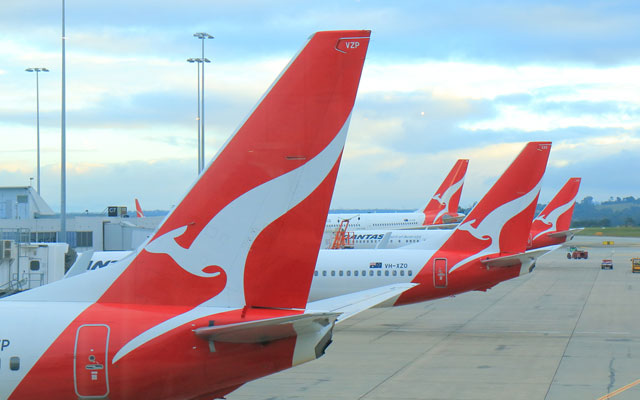
Qantas and Jetstar will grow their international network out of Sydney, with new direct routes to India and South Korea taking off this year, accelerating New South Wales’ post-Covid tourism recovery.
The flag carrier’s new direct Sydney-Bengaluru service will be offered four times weekly from September 14, using the Airbus A330 aircraft.
Qantas Group’s expanded service network in India and South Korea will speed up New South Wales’ tourism recovery
These will be the first non-stop flights between Australia and southern India by any airline, and will cut almost three hours off the current fastest travel time from Sydney to Bengaluru.
Qantas will continue to operate up to five flights a week between Melbourne and Delhi, making it the only airline offering direct flights between Australia and both northern and southern India.
At the same time, Qantas intends to enter into a codeshare agreement with Indian domestic carrier, IndiGo, which will make flights to and from Sydney more accessible to Indian travellers from more than 50 Indian cities.
The partnership will extend to Jetstar customers who will be able to book connecting flights on IndiGo services from late April.
Meanwhile, Qantas and Jetstar will both commence direct flights to South Korea’s Incheon International Airport later this year.
Jetstar will become the only low-cost carrier to fly direct on the Sydney-Incheon route. It will begin thrice-weekly operations from November 2, 2022.
Qantas will begin direct Sydney-Incheon service from December 10, marking the first Qantas scheduled service to Seoul since January 2008.
Qantas Group CEO Alan Joyce said the new routes would help New South Wales’ tourism sector recover from Covid.
“Sydney is one of the world’s truly global cities and these new direct flights to India and (South) Korea will make it easier for millions of people to come here,” Joyce said, adding that demand for international flights has rebounded since borders reopened.
“It’s clear that Australia is back on the map for international travellers,” he remarked.
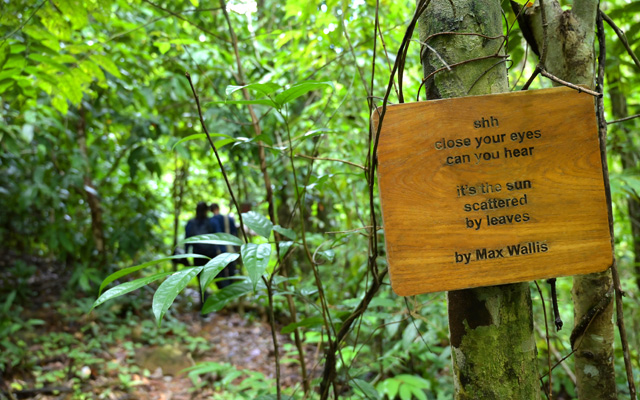
Poet's Trail, a self-guided jungle trek for guests of The Datai Langkawi
The Datai Langkawi in Malaysia has developed a number of fresh nature experiences, relaunched its signature The Chef series, and launched two new room categories, as Malaysia’s borders reopen.
New for 2022, The Nature Centre at the Datai Langkawi invites guests to participate in reef protection activities at the centre’s new Coral Nursery, learn about the resort’s reforestation efforts at the Native Tree Nursery or discover how to harvest the unique Trigona itama honey from the resort’s stingless beehives with a new “Bee a Beekeeper” activity.
Poet’s Trail, a self-guided jungle trek for guests of The Datai Langkawi
Meanwhile, the resort’s sustainable craft-making centre, The Lab – built from over 9,000 used wine, champagne, and liquor bottles – has also been extended with an open-air annexe to conduct upcycling workshops.
Outdoors, the resort’s inspirational Poet’s Trail has been relaunched with a series of poems by Max Wallis, Khalil Gibran and The Datai’s Resident Naturalist, Irshad Mobarak.
The Datai Langkawi also welcomes back The Chef Series, a signature chef residency dining experience that welcomes culinary stars to its kitchens throughout the year. Previously, guest chefs included luminaries as Michel Roux, Nils Henkel and Michel and Sebastien Bras.
The focus for this year is ‘Eclectic Malaysian’ Dining, spotlighting the country’s culinary talents. From April 22-23, 2022, chef Azli Ahmad from OpenHouse KLCC, will champion Malaysian flavours based on recipes handed down by mothers and grandmothers.
For their menus, the chefs focus on local ingredients, especially what they can hand-pick from the resort’s own permaculture garden where the resort team grows turmeric, chilli, lemongrass, pandan and many more ingredients essential to authentic Malaysian fare. Fresh fish and seafood are predominantly sourced from Langkawi’s fishermen and organic chicken is available from a local village farm.
Some of the chef residencies are accompanied by cooking demonstrations and cooking classes, where guests are able to enjoy a hands-on gastronomic experience creating and enjoying their own culinary creations, under the guidance of the chefs themselves.
The Datai Langkawi has also introduced two new room categories: the Canopy Garden and the Rainforest Premium Villa. The five new Canopy Garden rooms are ideal for larger groups, offering direct access to an outdoor private patio and seating area, while the Rainforest Premium Villa offers enhanced privacy views of Anak Datai River and Sungai Datai.
Tickets for the Formula 1 Singapore Grand Prix 2022 will be up for sale from April 13 at 10.00.
The night race, slated to take place at the Marina Bay Street Circuit from September 30 to October 2, was put off for the past two years due to the Covid-19 pandemic.
Formula 1 Singapore Grand Prix 2022 returns after a two-year hiatus
According to a press statement from race promoter Singapore GP, the Singapore Grand Prix 2022 will offer a variety of three-day grandstand offerings, priced between S$298 (US$218) and S$1,288 as well as combination packages from S$698 to S$1,088 that will enable spectators to experience both race and off-track entertainment from different parts of the Circuit Park over the weekend.
Hospitality suites will be available at the exclusive Formula 1 Paddock Club, Sky Suite, Twenty3, The Green Room, and Lounge@Turn 3.
The race will return with Red Bull Racing’s Max Verstappen and Ferrari’s Charles Leclerc battling for pole position this season, as well as Alfa Romeo’s Zhou Guanyu, Alpha Tauri’s Yuki Tsunoda, Haas’ Mick Schumacher, and Williams’ Nicholas Latifi racing through Singapore for the very first time.
A full entertainment line-up is promised off-track, and details will come in the coming weeks.





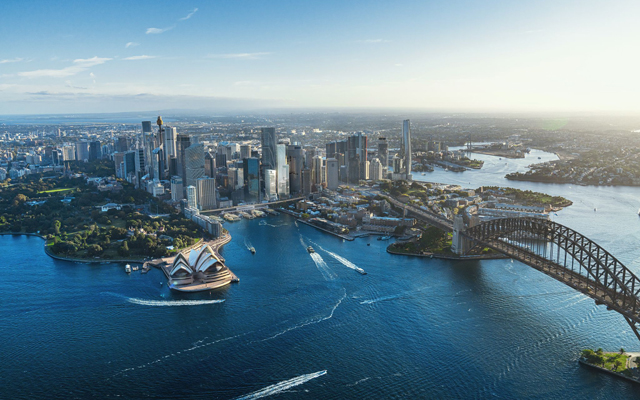










Waldorf Astoria Hotels & Resorts will plant its first Australian flag in Sydney early in 2025, following a signing last week for the Waldorf Astoria Sydney within the One Circular Quay mixed-use development.
Construction has commenced on the 28-floor, 220-key luxury hotel, which will enjoy a prime location in the city and offer guests unrivalled views of the iconic Harbour Bridge and Opera House.
Room inventory will comprise 179 guestrooms and 41 suites, while other facilities onsite include the Waldorf Astoria Spa on level one, two original restaurant concepts, a rooftop bar, and Peacock Alley, a signature central gathering place.
“As the first Waldorf Astoria property to debut in Australia, Waldorf Astoria Sydney signals Hilton’s commitment to expanding our luxury portfolio to the world’s most sought-after destinations,” said Nils-Arne Schroeder, vice president, luxury & lifestyle, Asia Pacific, Hilton.