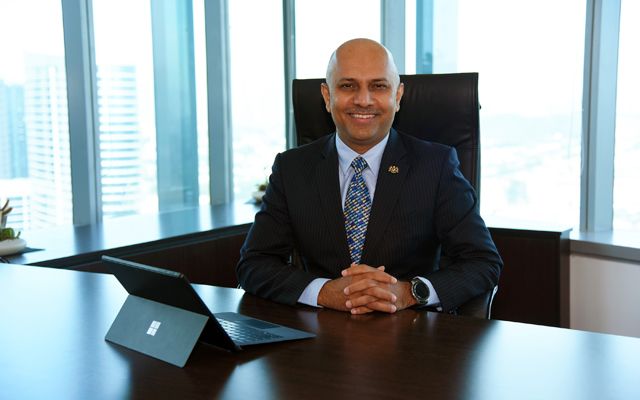
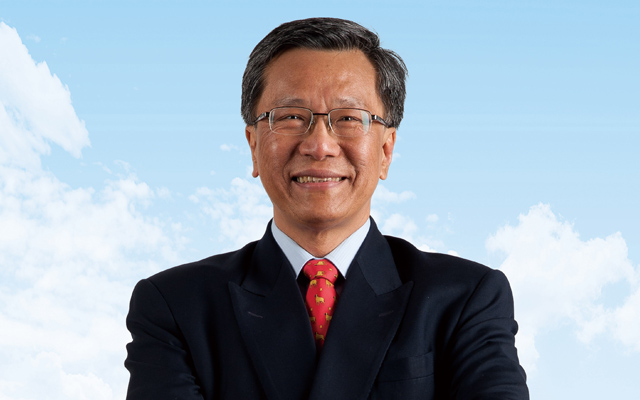
Dusit International has appointed Prateek Kumar as senior vice president – operations, in addition to this current role as general manager of Dusit Thani Dubai.
In his new role, Kumar will oversee the operations of properties in EMEA, India, the Philippines, Singapore, the Maldives, Japan, and selected properties in Thailand. He will be responsible for enforcing brand quality standards, enhancing customer satisfaction, and delivering optimum financial returns at each property under his supervision.
Kumar first joined Dusit 14 years ago, in 2008, as general manager of Dusit Thani Manila. In January 2013, he became the general manager of Dusit Thani Dubai. Two years later, he was promoted to area general manager – UAE, followed in 2017 by his most recent role: regional vice president – EMEA.
During his career, he has worked in senior management positions for the former Starwood Hotels and Resorts and Renaissance/Marriott Hotels in Australia. Prior to joining Dusit, he worked for Raffles Hotels and Resorts and was responsible for the preopening of Ascott Raffles Place, Singapore.
Malaysia Healthcare Travel Council (MHTC) is going full throttle on medical tourism now that the country has reopened to international travel, with hopes of reviving the once booming sector.
The Malaysia medical travel sector boasted a compound annual growth rate of 16 per cent from 2015 to 2019 against the Asia-Pacific region performance of 15 per cent during the same period. In fact, 2019 was a record-breaking year for the sector, with some 1.3 million medical traveller arrivals on record, making Malaysia the top destination for medical tourism in the world.
Mohd Daud: We are ready to accommodate potential healthcare patients and provide affordable and easily accessible healthcare without compromising on quality
This year, the country has pinned a goal of at least RM800 million (US$189 million) in revenue from health tourism, with travellers from Indonesia, Greater China, Vietnam, Cambodia, Singapore, Brunei, Australia, New Zealand, Oman, Qatar, Saudi Arabia and the UK on its radar.
Mohd Daud Mohd Arif, CEO, MHTC, told TTG Asia: “The marketing focus aligns with MHTC’s Blueprint 2021-2025, focusing on building on existing offerings and enhancing the Malaysia Healthcare experience through niche branding initiatives that are tailored to our target markets.
“To support the full reopening of our borders, we recently organised the Malaysia Healthcare Expo 2022 Jakarta (MHX 2022 Jakarta) last month. We successfully organised a physical event in Jakarta together with some of the nation’s leading private hospitals and state tourism representatives to showcase a wide range of world-class healthcare services and offerings to healthcare travellers from Indonesia.
“To continue the momentum, we will also be organising MHX 2022 in Surabaya and Medan in the coming months.”
MHTC will also continue to organise its annual insigHT2022 in the second half of this year. This conference serves as a catalyst for cross collaboration, attracting industry players across various sectors of the value chain to enhance Malaysia’s healthcare travel industry and continue to raise the country’s profile as a safe and trusted destination for healthcare.
In retrospect, Mohd Daud said the Covid-19 pandemic had presented an opportunity for Malaysia “to re-evaluate current business models and deliberate on the improvements needed within the healthcare travel ecosystem to ensure its future sustainability”.
He shared: “We understood the need to continue forging industry resilience via stronger public-private partnerships with stakeholders and key industry players to rebuild and recover the industry in a sustainable manner.
“We doubled our efforts and worked closely with key players from the public sector, such as the Ministry of Tourism, Arts and Culture, Tourism Malaysia, the Immigration Department, Ministry of Finance, and the Ministry of Health as well as agencies from the private sector such as healthcare, wellness, hospitality, tourism and transportation. This was to ensure that we are ready to accommodate potential healthcare patients and provide affordable and easily accessible healthcare without compromising on quality.”
MHTC also works closely with a group of healthcare travel facilitators in target markets, serving as its extended arm to run marketing and promotional activities and to raise the destination’s profile.
MHTC will kickstart its Affiliate Membership Programme to continue upskilling these facilitators in order to provide the best healthcare travel experience.
Yangon International Airport has started accepting commercial international flights from April 17 as Myanmar re-opens its borders to international travellers.
Travellers must apply for an e-visa and purchase Myanmar Covid-19 health insurance for entry into the country. Fully vaccinated travellers need to show proof of a negative PCR test before arrival and take another PCR test upon arrival, thereupon staying one night at a quarantine hotel while awaiting the results.
While Myanmar reopens, hopes of tourism revival run low
However, hopes for the revival of the travel sector remain low. Sammy Samuels, managing director of Myanmar Shalom Travels, commented that it will take years to return to pre-pandemic levels. Having already received a few enquiries from partner travel agents since March, as well as from individuals and families planning to travel around October and November, Samuels predicts the business market will be the first to rebound, albeit slowly.
He said: “Myanmar’s tourism industry was battered by the pandemic and politics. Even with this double crisis, the resilience shown by Myanmar’s people is remarkable. Reopening the e-visa facility will revive the tourism sector a bit, but this year will be challenging.”
Even attractions remain pessimistic – elephant sanctuary Green Hill Valley has only received reservations from a handful of locals and expats, but none from international visitors.
“Tourism will not be able to rebound this year without stability, peace and tranquillity – the current situation is even worse than we expected,” said Tin Maw, general manager, Green Hill Valley.
International visitors are also advised to use a local Destination Management Company (DMC) when visiting Myanmar as cash withdrawals from ATMs are not possible and few businesses are accepting international credit cards presently.
Edwin Briels, managing director of Exploration Travel Myanmar, said: “It’s essential now to book with a Myanmar DMC that knows the situation on the ground and takes care of the clients’ safety. I urge people to travel with a local guide who can explain in-depth about the country and check in advance if the area is safe to travel.”
Quality Resort and Spa Patong Beach, Thailand
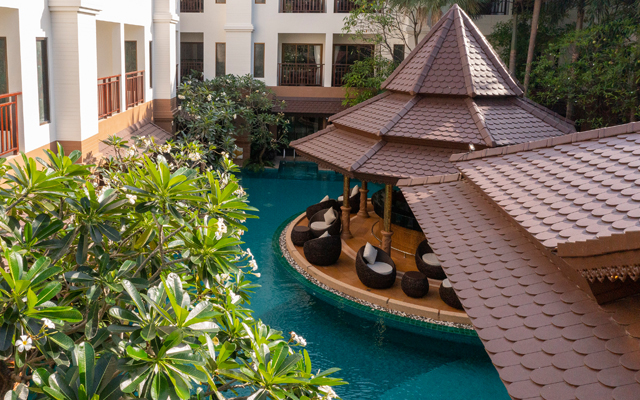
The 88-room Quality Resort and Spa Patong Beach has completed refurbishment of all of its guestrooms, facilities and public areas.
Twelve of the rooms are poolside and all are surrounded by lush tropical gardens.
Guests can explore Patong Beach and a myriad of activities just steps from their room.
The resort offers several dining options, including Saffron, a Thai-Indian themed all-day dining restaurant, a pool bar, and the lively Irish pub, James & Joyce.
Hyatt Place Kyoto
Hyatt Place Kyoto, Japan
Hyatt Place Kyoto, located at the southwest corner of the Kyoto Imperial Palace and close to Nijo-jo Castle, offers 239 guestrooms and various dining destinations.
Complimentary Wi-Fi is available throughout the hotel and guestrooms.
Directly connected to the Marutamachi station on the Karasuma subway line, the hotel is just 10 minutes from Kyoto station by subway or car, providing business travellers with convenient subway access to the Kyoto International Conference Center.
Courtyard by Marriott Melbourne Flagstaff Gardens
Courtyard by Marriott Melbourne Flagstaff Gardens, Australia
Centrally located on Batman Street and adjacent to the picturesque Flagstaff Gardens, Courtyard by Marriott Melbourne Flagstaff Gardens is just a short distance from Southern Cross Station and Melbourne’s attractions such as Queen Victoria Market, Marvel Stadium, and Spencer Outlet Centre.
The 150 contemporary rooms and suites are fully equipped with an array of amenities including flat-screen televisions, work desks and high-speed Internet access. The hotel’s two dining venues include a restaurant serving gourmet buffet breakfast and Level Grounds Café & Bar that transforms into a bar at night.
Guests can access a fitness centre which features a workout area that opens to an outdoor courtyard for fresh air and views, as well as four function spaces and a one-of-a-kind rooftop entertaining area with panoramic cityscape views.
Meliá Chiang Mai
Meliá Chiang Mai, Thailand
Meliá Chiang Mai is a 260-key urban hotel in the heart of Thailand’s mountainous Chiang Mai, and stands at 22-storeys.
It features an array of facilities, including four restaurants and bars, two lounges, spa, fitness centre, swimming pool, as well as a kids and teens club.
On the highest level is Mai The Sky Bar, a 360-degree rooftop bar comprising two bars connected by a glass bridge. It promises spectacular views of River Ping to the city’s east and the famed Doi Suthep Temple on the mountaintop to the west.
Meliá Chiang Mai also embraces the farm-to-table social movement and has established its own sustainable farm in San Sai District to harvest organic fruit, vegetables and herbs for its restaurants.
The hotel is just 6km from Chiang Mai International Airport and near an array of tourist attractions including the Old Town.
Thailand’s battered hotel sector is showing increased signs of fatigue as the global pandemic enters its third year, with more than 73 per cent of new hotel developments in Phuket either dormant or frozen.
According to C9 Hotelworks’ latest Phuket Hotel Market Update 2022, hotel owners are suffering from “fear factor”, as they continue to reel in the wake of a volatile marketplace and unclear future outlook. Negative sentiment and stressed liquidity have impacted development, which has seen an incoming supply of 33 hotels with 8,616 rooms facing an unknown future.
More than 73 per cent of new hotel developments in Phuket are dormant or frozen
Drilling down on the pipeline data, 55 per cent of hotel projects are mixed-use, or hotel residences with rental-based investment schemes that target individual investment buyers. In light of the economic climate, C9 research indicates that some of these real estate-led hospitality projects are unlikely to return to the pipeline.
A C9 press statement reiterated that Phuket’s visitorship plunged from over nine million passenger arrivals at Phuket International Airport in 2019 to just over 900,000 in 2021.
The sizable 90 per cent decline in arrivals, coupled with 1,786 registered tourism establishments and 92,604 hotel rooms in current supply, mean empty beds that need tourists.
C9 Hotelworks managing director Bill Barnett said: “Over 40 per cent of the island’s international visitors two years ago were either from China or Eastern Europe including Russia. While I’m asked daily about when will Phuket recover, the truth of the matter is we are pushing out our estimates of a cyclical return to 2025.
“The elephant in the room for the moment is China. The conundrum is that while I fully expect Phuket stabilised numbers to return given its favourable geographic location, tourism-oriented infrastructure and demonstrated airlift capacity, macro political and economic issues are clouding the short-term horizon.”
While Phuket has survived the first two years of the pandemic largely intact, Barnett observes a “rapid escalation of hotels coming up for sale” throughout the rest of the year and beyond.
“Most of these are not at highly distressed levels but what it indicates is that legacy investment sentiment in hospitality assets is experiencing a changing of the guard,” he explained.
“The number of Thai hotel owners and also foreign investors that are retreating from the sector is expected to grow. C9’s opinion of the slowdown in the pipeline and high activity in the transaction market is this is not an entirely bad thing, and will likely reframe supply and demand over the medium term in a return to a more solid, rational and less speculative marketplace.”
Barnett identifies two changes impacting hotel developments – one, a wave of conversions of independent properties to brands, as island hotel owners see stronger performance in branded hotels during the Phuket Sandbox reopening and return of domestic travellers; two, conversion of a number of internationally managed properties from management to franchises.
He regards the reality of owners operating under global brands and a new influx of white label management as an approaching trend that was accelerated by the pandemic.
C9 also noted a manpower burden on Phuket’s tourism recovery. The many stops and starts, opening and closings of hotels and businesses in the destination have eroded staff confidence. While business levels have continued to grow at moderate levels, staff shortages continue to plague the industry.
Online travel platform HalalBooking has fully recovered to pre-pandemic levels in 2021 as it sets a record year in sales.
It reported sales at S$36 million (US$26.3 million), significantly higher than 2019’s S$31 million and 2020’s S$8 million. The overall profit margin on sales, equating to the company’s commission level, was 17 per cent.
HalalBooking has fully recovered to pre-pandemic levels in 2021
HalalBooking also made over S$1 million net profit for the first time in its history.
HalalBooking’s growth accelerated even further in 1Q2022 – a high S$9.3 million of sales – representing almost 200 per cent year-on-year growth in comparison to the same period in 2021.
The company now expects a huge growth in 2Q2022 and 3Q2022, the peak sales quarters for the business.
For 2022, the annual total of the company’s conservative forecast had been estimated at 67 per cent organic year-on-year growth, but the firm is now investing more in its lead acquisition activities in the hopes that sales growth will exceed 100 per cent and the company may even reach S$100 million sales for the first time in its history.
HalalBooking hopes to complete a S$20 million Series B investment round in 2Q2022, of which S$5 million has already been secured. The Series B round aims to accelerate the company’s exponential growth rate and achieve S$1 billion unicorn status by 2025.
SAii Phi Phi Island Village beachfront junior suite
Location
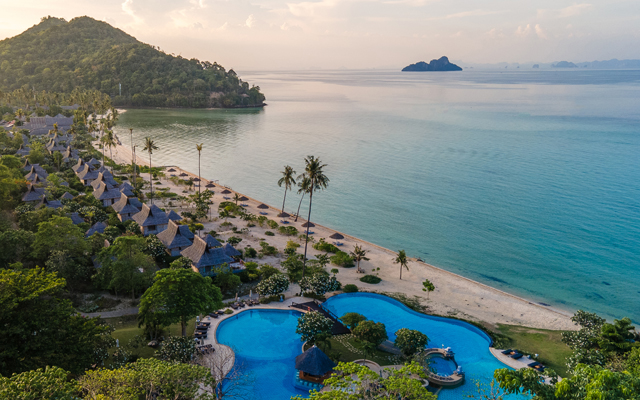
Tropical island paradises don’t come more alluring than the Phi Phi islands. The archipelago – which encompasses Ko Phi Phi Don, Ko Phi Phi Le, and four other towering limestone outcrops – is world-famous for its lofty karsts, aquamarine waters, and beautiful beaches. SAii Phi Phi Island Village occupies a prime chunk of oceanfront real estate on the east coast of Phi Phi Don, the largest and most populous of the islands.
Rooms
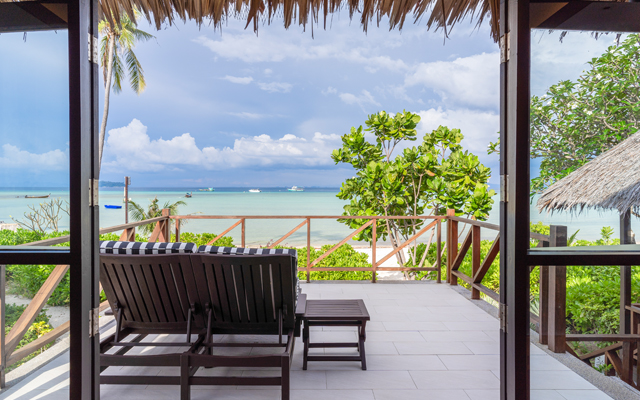
The resort had an extensive refurbishment before relaunching in February 2021 in its current guise. During the four-month-long, multi-million-baht renovation, all of the Thai-style bungalows, suites and villas were given a modern makeover with bright, rustic-chic interiors. The project was overseen by Last Word Studio, an acclaimed Bangkok-based design firm – and the results are strikingly fresh. Now, chic bungalows occupy the foreshore and revamped hillside pool villas are perched amid the jungle canopy upslope. I stayed in one of the beachfront options where an outdoor rainforest shower, comfortable king bed, and a daybed looking out towards the azure ocean supplied suitably indulgent touches.
1 of 2
SAii Phi Phi Island Village
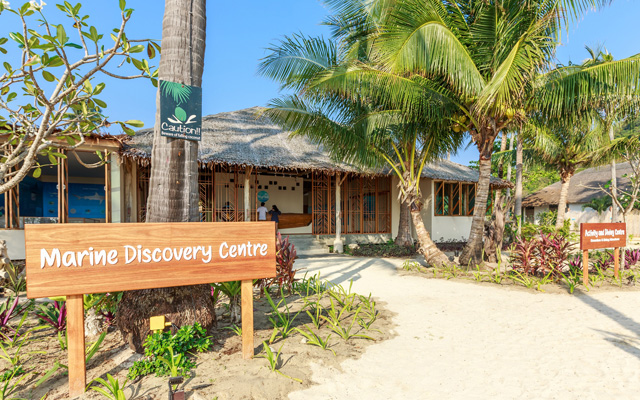
Marine Discovery Centre
F&B
There are solid F&B options on-site. Mr. Tomyam, a casual poolside venue, offers Thai and fusion dishes for hungry bathers. The resort’s signature restaurant, The Beach House, serves up grilled meats and fresh seafood; unfortunately, it was closed when I was there. But Api – a breezy all-day dining spot – is no slouch in the culinary stakes, with a range of live cooking stations complementing delicious buffet options that span Mediterranean and Asian cuisines.
Facilities
Two pools, a spa with panoramic views, three bars, a gift shop, a recreation centre, a fitness room, and tennis courts are among the leisure highlights at the resort. Another standout facility is the resort’s Marine Discovery Centre, which serves as a conservation hub for the Hat Noppharat Thara-Mu Ko Phi Phi National Park. The centre supports critical projects such as bamboo shark conservation, coral propagation, clownfish breeding, mangrove planting, and beach cleaning.
Verdict
SAii Phi Phi Island Village is a barefoot-luxury option that is the perfect base to explore the beautiful Phi Phi archipelago. Check-in was swift, and all staff members I encountered were unfailingly polite.
Malaysian tycoon Lim Kok Thay, who is chairman and board executive of Genting Group, has registered a new company – Resorts World Cruises – in Singapore, but it is unclear if the business will be centred on cruise operations.
Genting Group’s Lim registered Resorts World Cruises in Singapore in March 2022
According to documents seen by Singapore’s broadsheet The Straits Times, which was the first to report on the development, Resorts World Cruises was incorporated on March 9 this year and held by shareholder Two Trees Family Holdings.
Two Trees Family, an investment holding company incorporated in Singapore on March 19, 2021, listed Lim and his son Lim Keong Hui, along with Gerard Lim Ewe Keng as directors.
Gerard, who is not related to Genting’s Lim family, is director of Kien Huat Realty, a private investment vehicle through which the Malaysian tycoon and his family control Genting.
Kok Thay, who owns 75 per cent of the beleaguered Genting Hong Kong resigned as the company’s chairman and CEO in late January, after the company filed for provisional liquidation.
Philippine travel and tourism industry’s contribution to the nation’s economy climbed 129.5 per cent year-on-year in 2021,to reach US$41 billion, finds WTTC’s latest Economic Impact Report (EIR).
The improvement is particularly impressive, as it follows an 80 per cent decline.
From left: WTTC’s Julia Simpson, Philippine Tourism secretary Bernadette Romulo-Puyat, and WTTC’s Arnold Donald
The findings were revealed today by Julia Simpson, president & CEO of WTTC at the organisation’s Global Summit in Manila.
The event is attended by more than 1,000 delegates from across the global travel and tourism sector, including CEOs, business leaders, government officials, travel professionals and international media representatives.
The EIR for the Philippines shows that in 2021, the sector supported 7.8 million jobs, representing an substantial 20.5 per cent rise over 2020, compared with a global increase of 6.7 per cent.
Before the pandemic, the Philippine travel and tourism industry’s contribution to GDP was 22.5 per cent of the total economy. Damaging travel restrictions caused that to plunge by 80.7 per cent to a mere US$17.8 billion, dropping to just a 4.8 per cent share towards the country’s GDP.
The industry’s rebound in 2021 signals a recovery that is well underway, stated a WTTC release.
WTTC projects that the country’s travel and tourism industry’s contribution to GDP will grow by 6.7 per cent over the next decade, exceeding the expected country’s overall economy average growth rate of just 5.6 per cent. The industry’s contribution to GDP could be worth in excess of US$155 billion in 2032, accounting for 21.4 per cent of the whole economy.
Simpson describes the recovery as “astonishing”, and noted that the performance has resulted in “a massive employment boost for the sector, leading to the recovery of 1.3 million more jobs compared to the previous year”.
With travel and tourism employment forecast to grow annually by an average of three per cent over the next 10 years, nearly three million new jobs could be created, accounting for 21.5 per cent of all jobs in the Philippines.
AirAsia Philippines flew a record high of 33,917 guests from April 11 to 17, 2022, a 93 per cent increase over the same Easter period in 2021.
The increase is still 35 per cent below the average pre-pandemic passenger traffic observed during the same period in 2019.
AirAsia Philippines flew a record high of 33,917 guests during the Easter period
AirAsia recorded an average load factor of 88 per cent for all destinations, including top summer locations such as Cebu, Panglao, Puerto Princesa and Caticlan-Boracay.
AirAsia Philippines spokesperson and head of communications and public affairs Steve Dailisan said: “The numbers are very encouraging and a great indicator that indeed, we are now right on the path to recovery. Our guests’ hunger for travel really dictated the pace, especially this past Holy Week. We hope to sustain the growth leading to next month where more are expected to return to the provinces to exercise their right to suffrage.”
The airline is expecting to fly 103,986 guests in and out of Metro Manila via NAIA Terminal 4 next month with Caticlan, Tacloban, Tagbilaran, Cebu and Kalibo as the top five preferred destinations.
In anticipation of the summer surge and the National Elections happening in just three weeks, the airline has raised its flight frequencies by 28 per cent, allowing passengers to choose more flexible schedules to places like Caticlan, Kalibo, Tagbilaran, Puerto Princesa and Bacolod.
Existing flight frequencies to other destinations such as Cagayan De Oro, Davao, Iloilo, Tacloban, Zamboanga and Dumaguete remain unchanged.