IHG Hotels & Resorts has signed its first hotel on the New South Wales (NSW) South Coast, with the Crowne Plaza Shell Cove Marina slated to open in 2025.
This is IHG’s second hotel with Oscars Group.
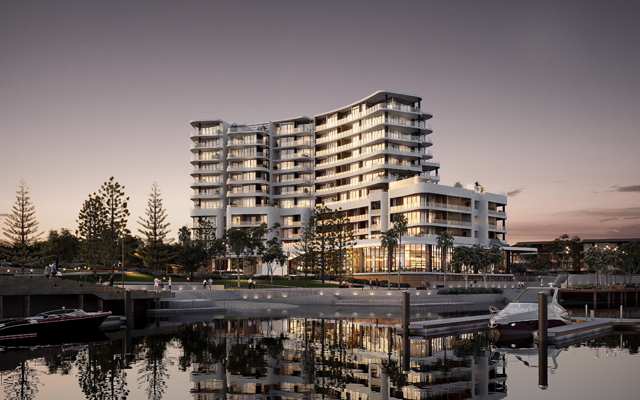
Crowne Plaza Shell Cove Marina will open in 2025
Located in Shellharbour and close to Wollongong, just 1.5 hours’ drive from Sydney, Crowne Plaza Shell Cove Marina will include a man-made in-shore harbour and a 270-berth marina, as well as a vibrant town centre featuring a supermarket, retail outlets, restaurants, library, community centre, and parklands.
The 181-key Crowne Plaza will showcase the brand’s new hallmark design innovations and trademark features, three F&B outlets including a café, chic restaurant and bar, extensive meeting and events space, and an outdoor pool.
Matt Tripolone, managing director, IHG Hotels & Resorts Australasia & Pacific, said: “We’re thrilled to be extending our reach across regional NSW with the addition of this stylish, design-forward hotel on the NSW South Coast, highlighting the increasing demand for contemporary new hotels in regional NSW.”
Damien Cameron from Oscars Group added: “We are passionate about the South Coast of NSW and are excited to be growing our presence in the region, particularly as development plans for Shell Cove and the Marina take hold. We look forward to working with the local community and welcoming guests to this stunning new hotel in 2025.”
Travellers with furkids can take a stylish five-star vacation at The Slate in Phuket, Thailand, where four-legged friends are welcomed in luxurious private pool villas.
Travelling pooches will get their own beds and bowls, a gourmet menu, pet-sitting services and more.
The Slate Phuket gets friendly for pooches
The resort’s new dog-friendly policy allows up to two dogs to stay in a private pool villa, as long as they are accompanied by the owner. Each pup will be also be given a signature badge for its leash.
Daily doggie treats will be provided and pups will even have their private pool to cool off in.
All dogs should be relatively quiet and under control, free from fleas or ticks, with vaccinations up-to-date, and be kept on a leash when not in the villa. Poop bags will be provided to owners who must take care of their pets’ mess.
Other services available at additional costs will include upgrading to a gourmet menu, veterinary services, as well as dog walking and sitting services.
Human guests will enjoy daily afternoon tea and in-villa breakfast, curated arrival treats, complimentary minibar items, roundtrip airport transfers, kids’ and family activities, and more.
The Australian Government is heavily investing in tourism, where on March 22, 2022, it announced a A$60 million (US$44.7 million) funding boost in tourism. Tourism Australia will also receive a coffer boost of A$45 million over the next two financial years to help bring international guests back to regions hit hardest by international border closures.
A third round of funding – part of a previously-implemented Consumer Travel Support Program – was also released in March 2022. This provides A$75.5 million in targeted support and is open to eligible travel agents and tour providers who are supporting consumers to rebook their travel using existing Covid-related travel credits.
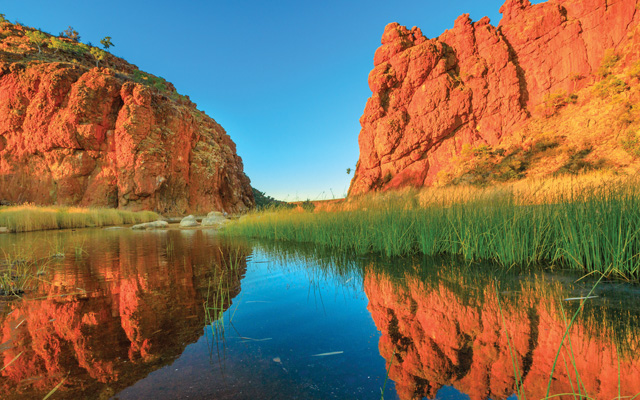
Glen Helen Gorge in the Northern Territory is one of many natural wonders in Australia
When asked how business looked like at the start of 2022, regional general manager, South & South-east Asia, Tourism Australia, Brent Anderson told TTG Asia: “All the indications we received have been positive. Our recent insights show that monthly flight searches and bookings to Australia rose with news of the return of international travel.”
For example, the top performing market during the week ending March 20, 2022, was Singapore, which showed a 93 per cent increase when compared to the same week in 2019.
Although searches from other top markets such as the UK, Germany and India were not as dramatic, Anderson indicates that “recovery won’t happen overnight”.
He remains optimistic that the industry is “heading in the right direction”.
Carolyn Smith, general manager of the new Courtyard by Marriott Melbourne Flagstaff Gardens, shares the same optimism.
“It’s going to take some time for the industry to rebuild and return to pre-Covid levels of trade, but we’re very optimistic and buoyed by the positive signs that traveller confidence is growing.”
Help is also available at the local level, Smith shared, stating that the Victorian government and City of Melbourne are also offering attractive incentives, including travel and dining rebates, to encourage visitors back to the city for work and play.
Currently, forward bookings for the hotel look healthy, thanks to several other major events and sporting spectacles on the calendar. In fact, all rooms were sold out during the F1 Grand Prix period from April 8 to 10.
To stay top-of-mind in key markets, Tourism Australia has been rolling out fresh marketing campaigns, as soon as borders reopened on February 21, 2022.
Anderson said the existing Come and Say G’Day – Australia is Yours to Explore campaign, which launched in Singapore ahead of Australia’s reopening, will be rolled out in other Asian markets such as India, Malaysia, Indonesia, South Korea, Japan, and Greater China “as travel reopens”.
Meanwhile, the Come and Say G’Day – Don’t Go Small. Go Australia campaign will run in Western markets including Germany, France, Italy, Canada, the US and the UK.
“These campaigns are just the first step in a long-term strategy to restart tourism to Australia, with further investment in tourism marketing campaigns internationally to come in 2H2022,” said Anderson.
When asked for Australia’s projected recovery for 2022, he told TTG Asia: “Based on the travel patterns to destinations that have opened before us, we expect that inbound travel will recover quickly up to about 40 to 50 per cent.”
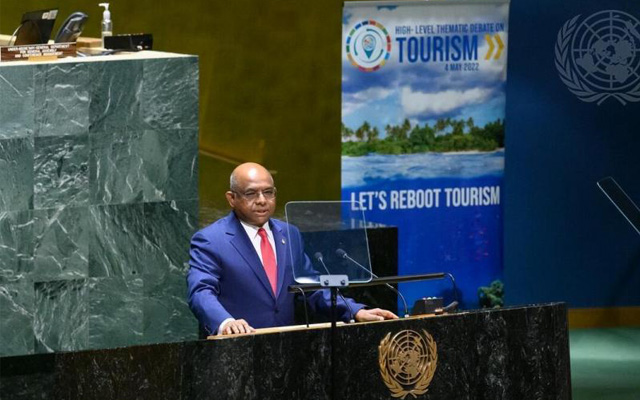
The United Nations General Assembly met on May 5, 2022, where it held a first-ever session dedicated to tourism and its role in inclusive recovery and growth.
The high-level debate was convened by the president of the General Assembly, Abdulla Shahid, in collaboration with the UNWTO.
Shahid: tourism is especially critical for small islands and developing states
UNWTO secretary-general Zurab Pololikashvili stressed that “now is the time to build resilient and peaceful societies, and tourism can help make this happen. Tourism is a leading provider of opportunities because it is based on people, builds bridges and helps create a better tomorrow for people everywhere”.
UN deputy secretary-general and chair of the Sustainable Development Group, Amina J Mohammed, noted: “Every part of the United Nations system, including the World Tourism Organization as its specialised agency for the sector, can leverage tourism to help us achieve the Sustainable Development Goals – from inclusive growth to gender empowerment and biodiversity protection.”
Shahid also emphasised the importance of tourism, particularly for small islands and developing states.
“We face a critical opportunity to not only reboot tourism, upon which so many are dependent for their jobs and livelihoods, but to transform it to make it more resilient, more sustainable and more responsible,” he said.
A Fireside Chat, chaired by CNN International anchor Richard Quest, reflected the challenges faced through tourism’s recovery, addressing how best to reconcile potential trade-offs between the need for economic growth and creating jobs with advancing efforts for overall sustainability.
The debate featured a special roundtable discussion focused on tourism with an emphasis on inclusivity. This was followed by another roundtable discussion on accelerating the climate-friendly transformation of tourism, with the concluding third roundtable discussion focused on re-invigorating investments in tourism.
The debate also laid the foundations for the potential inclusion of tourism as a topic of annual debates or thematic sessions within the UN General Assembly.
Sabre Corporation released a new global travel industry study, Mapping Travel’s New Normal, which identifies prominent shifts in travel.
Across 20 countries in EMEA, APAC and the US, the wide-ranging study involved both quantitative and qualitative research with over 500 decision-makers from airlines and travel agencies – the study highlighted the different areas of focus as both sectors seek to capture opportunities for recovery and for future growth, including technological investment priorities by global regions.
Sabre’s new global travel industry study identifies prominent shifts in travel (Photo: Sabre)
Participants were questioned about the impact of the pandemic on their customers and their businesses, as well as the implications for the future of the travel industry.
The findings saw more than a third of airline and agency leaders indicating their positive outlook of travel returning to pre-pandemic levels by the end of 2024, with a further third believing it will happen in 2025 or beyond. 82% of airlines executives surveyed responded that they expect the combination of business and leisure to be even more prominent post-recovery.
Responses on “revenge travel” had 68% of travel leaders forecasting a higher spend from consumers on their future travel plans, and that travellers are considering more decision factors before committing to a trip.
More than half of agencies surveyed stated they are spending more time researching new tools, services and technologies; this is a particular area of focus in APAC, for 71% of responding agencies.
92% of travel agencies surveyed indicated that they want the support of travel technology partners to create a more seamless experience in terms of shopping, booking and fulfilment, while 89% responded that they want useful tools to personalise travel.
96% of airlines surveyed expect enhanced possibilities to offer growth opportunities and improved customer service and satisfaction scores.
Sabre’s senior vice president of airline global sales and accounts, Darren Rickey, said: “One thing that struck us as we were carrying out the research was the unprecedented pace of change in the past few months.
“This of course presents an enormous opportunity, but it also puts strains on travel businesses who must adapt their plans, processes and operations to address these potential changes,” he added.
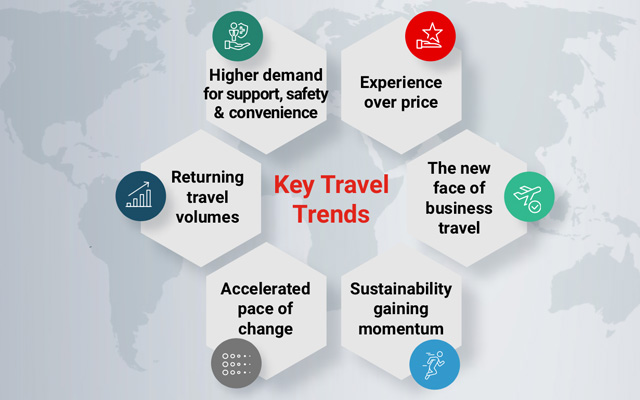
Key trends identified by surveyed agencies include the importance of organised and connected trips to cut through travel complexities for customers; the ongoing prominence of domestic and regional travel and the challenges (and opportunities) for business travel recovery.
Major trends identified for airlines participating in the survey include increasing consumer bookings protection, the growth of “bleisure” as a catalyst for potential corporate travel recovery, and offering more sustainable flight options to meet customer demands.
Airlines are also focused on increasing domestic and regional routes, and how new product formats (organised and connected trips) can help optimise recovery opportunities while creating increasingly personalised experiences for travellers.
“Our latest Sabre research has highlighted a degree of optimism across the travel ecosystem,” said Andy Finkelstein, senior vice president, global agency sales and corporate solutions, Sabre.
“However, it also suggested that not all travel leaders may be ready for these potential changes if they happen quickly. The survey indicates that there is a clear need for agility, transformation and collaboration so that travel agencies, airlines and other industry players can ensure they are in a position to identify these changes, strategise for future growth opportunities and improve the experience for the traveller.”
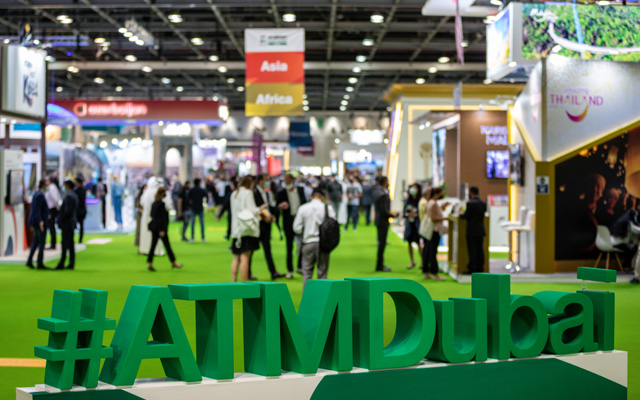
Tourism professionals will descend next week onto Dubai for Arabian Travel Market 2022, with more than 20,000 visitors and over 1,500 exhibiting companies expected during the four-day showcase.
Kicking off on May 9, the event will see 112 countries featured on the show floor, from Japan to Italy.
Arabian Travel Market 2022 will kick off on May 9 in Dubai
Industry professionals will have the opportunity to meet and discuss the latest trends from a cross-section of travel, including technology, transport, sustainability, events and business.
Danielle Curtis, exhibition director ME – Arabian Travel Market, said: “Arabian Travel Market 2022 will reiterate the importance of the travel industry as we continue to address the challenges of Covid-19 while also outlining how we drive the industry forward.
“The tourism industry has rebounded incredibly well. As a result, we have seen a clear uptick in participation, with floor space increasing by over 85 per cent compared to the previous year, and Middle East exhibitor space eclipsing 2019 levels.”
In line with this year’s theme of The future of international travel and tourism, ATM 2022 will unveil new technology that will eliminate the need for business cards and allow exhibitors and visitors to share details, brochures and marketing material via innovative scanners and badges.
Further underscoring the technology focus is the revamped and rebranded ATM Travel Tech event, previously called Travel Forward. Informative sessions include a presentation by NEOM on the company’s strategy for creating memorable experiences, and Emaar Entertainment’s forecast on the future of visitor attractions, traveller trends, distribution, attraction tech and guest experience.
The inaugural ATM Draper-Aladdin Start-up Competition, which was launched earlier this year, will see 15 travel, tourism and hospitality start-ups pitch for US$500,000 of funding and potentially a further US$500,000 of investment as part of the hit TV show, Meet the Drapers.
Making their debut at the live show, ARIVALDubai@ATM forum and the Global Business Travel Association will focus on current and future trends for tour operators and attractions.
ATM will also include in-depth buyer forums dedicated to India and Saudi Arabia, live interviews with aviation and hospitality experts, and will feature the return of ILTM Arabia with its focus on the lucrative luxury travel market.
Capitalising on the growth of regional tourism investment, the ITIC-ATM Middle East Summit – hosted jointly by ATM and the International Tourism Investment Conference – will spotlight access to project finance in the post-Covid era and include a high-profile ministerial session.
This year’s in-person event will be followed by the third instalment of ATM Virtual, which will take place on May 17 and 18.
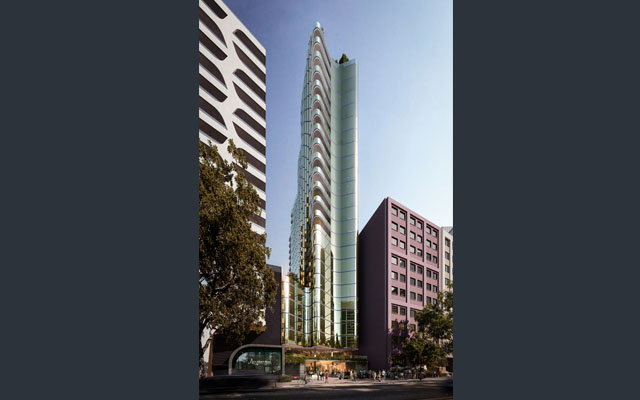
La Vie Hotels & Resorts has secured the exclusive rights to bring Yoo Hotels to the Pacific and will open Australia’s first By Yoo hotel in Melbourne in early 2025 – a joint venture between Owners DCF Property Group and M Property.
Nu By Yoo will be located in the heart of South Melbourne, situated next to ANZAC Station and close to the Royal Botanic Gardens. The hotel will boast 88 guestrooms, ground floor restaurant, intimate bar, spacious gymnasium and pool. The restaurant will partner with a local well-known chef to weave food and beverage experiences into the guest journey.
Nu By Yoo will be located in South Melbourne
The hotel will be part of a mixed-use development, with 43 one- to four-bedroom residential apartments – occupiers of the apartments will also benefit from Nu By Yoo’s concierge services and hotel facilities.
Craig Bond, managing director of La Vie Hotels & Resorts, said: “We are so excited to be introducing a brand that is truly born from design and authentically fits the mould of a lifestyle-led design hotel to the Australian market. If the pandemic has shown us anything, it is that people are wanting to feel connected and when travelling, be transported to a place that inspires and excites while factoring in the local idiosyncrasies of the community. Nu By Yoo is going to do just that.”
He added: “We feel the Australian market is ready for a new hotel brand and one that takes design and lifestyle to a new level. Bringing Yoo Hotels to Australia is a game changer, and while we plan on opening our first By Yoo Hotel in Melbourne, we have plans to take the brand to other major capital cities and premier resort locations around the Pacific. We are seeing strong demand from owners for the Yoo brand and we are excited to make further announcements in the coming months.”
Founded in 1999 by international property entrepreneur John Hitchcox and the renowned designer, Philippe Starck, Yoo has evolved into a recognised residential lifestyle brand.
Yoo group chairman, John Hitchcox, shared: “We are delighted to bring Yoo Hotels to Australia and to have La Vie Hotels & Resorts as our exclusive management partner. We know how much Australians appreciate good design and we could not think of a more compelling city to launch Yoo Hotels into the Australian market than Melbourne.”
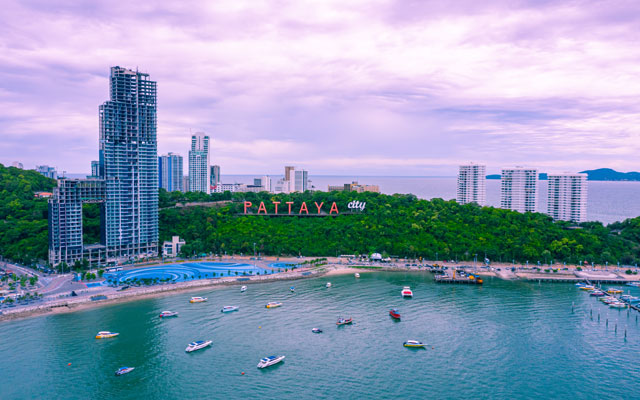
Pattaya is poised to reclaim its status as one of Thailand’s top tourism destinations as the country progresses toward full reopening, opine industry insiders who draw their confidence from the city’s rebranding as a leisure all-rounder.
“The only way is up for Pattaya now,” said Matthew Fryar, general manager of Avani Pattaya, one of the city’s premier luxury properties.
The new-generation Pattaya will be a business and leisure hub with smart capabilities
“Things have been rough during the pandemic – as they have been everywhere in Thailand – due to the lack of international arrivals and restrictions on entertainment. But Pattaya has been refining its brand for a long time to give it broader appeal and that stands it in great stead as we move forward,” he added.
The rambunctious seaside destination – a long-term favourite for tourists due to its proximity to Bangkok and its wide selection of hotels, restaurants, golf courses, and other leisure options – has undoubtedly had a challenging time during the pandemic.
Pattaya was the birthplace of mass tourism in Thailand and was especially popular with Chinese groups before the global health crisis, with some estimates putting monthly arrivals from China at around 800,000 per month at their peak.
International arrivals have been limited for much of the last two years. Thailand’s ongoing nightlife ban and its restrictions on restaurants and other venues, meanwhile, have had a devastating impact on the city’s vital entertainment sector.
However, with restrictions easing within the country and Thailand dropping entry requirements such as PCR tests for international arrivals, Pattaya is set for tourism recovery. The destination is also poised to reassert its appeal as a popular spot for Indian weddings and corporate events.
“Pattaya’s vibrancy and uniqueness put it in a strong position to bounce back from the pandemic,” said Vitanart Vathanakul, CEO of the Royal Cliff Hotels Group and Pattaya Exhibition and Convention Hall (PEACH).
Indeed, Pattaya insiders point to several factors working in the destination’s favour moving forward – not least attempts by city authorities led by mayor Sontaya Kunplome to improve infrastructure and spruce up popular areas such as the main beach.
The mayor has invested in a “Neo” or New Pattaya, a business and leisure hub with smart capabilities modelled on destinations such as Miami, Singapore, and Abu Dhabi.
Attention has been drawn to beach renovation projects, ring roads, the Bali Hai pier transformation, and the upcoming high-speed rail link to Bangkok as examples of a Neo Pattaya generously funded by Thai and foreign investors in the three-province Eastern Economic Corridor (EEC).
Several prominent international businesses are already investing in the EEC, and more are planning to join. The ultimate goal is for the EEC to be an innovation hub that will fuel Thailand’s economy.
“These developments will elevate Pattaya as a MICE-destination and bring in more interesting events and conferences,” Vitanart told TTG Asia.
Fryar: new all-rounded hospitality products are enabling Pattaya to evolve as a stronger destination
While the future looks set to bring remarkable changes, the evolution of Pattaya as a destination is already noticeable. On North Pattaya Road, the retail landmark Terminal 21 opened in 2018. Forthcoming highlights, meanwhile, include the world’s first Columbia Pictures Aquaverse, a major waterpark.
“The pace of change is remarkable,” added Fryar, whose own hotel, Avani Pattaya, is located in the nerve centre of Pattaya along the cleaned-up Beach Road. “Traditional businesses have been supplemented by lifestyle cafes, smart beach clubs, and new malls such as Terminal 21. New family attractions are opening all the time. All of this is forcing the destination to evolve.”
The Apurva Kempinski Bali has teamed up with like-minded partners to present the Sustainable Wedding Package, each bringing its own expertise to help plan the perfect wedding with the earth in mind.
Designmill makes the decorations from recycled paper, while using wooden chairs, potted plants, hanging natural fabric and printed customised motifs. Ethical fashion SukkhaCitta creates the wedding dress, with Puri Ata and Taga Woodcraft providing its locally handmade crafts as a sustainable wedding gift.
Plan an eco-themed wedding with The Apurva Kempinski Bali’s Sustainable Wedding Package
For food and beverage, Tanamera Coffee, Plaga Farm and Balian Water will work alongside to plan the menu, while remaining committed to respecting the ecosystem and communities that they work with.
Vincent Guironnet, general manager, The Apurva Kempinski Bali, shared: “By introducing new initiatives, we strongly believe that we can inspire people to incorporate sustainability into all aspects of their daily lives. This becomes even greater when partners come together, generating new ways of thinking, and making a difference.”
Other efforts by the resort include replacing single-use plastic with biodegradable products, and using the rooftop space to grow greens for a more sustainable kitchen. Other projects include the ‘Linens for Life’ programme, which provides free face masks made from clean and hygienic discarded hotel linen to people in the local community who are in need; and the ‘Soap for Hope’ programme that provides at-risk people with access to soap, by cutting and disinfecting the resort’s soap to form new soap bars.
Tripadvisor has named Matt Goldberg its chief executive officer.
Goldberg will succeed co-founder and long-time CEO, Stephen Kaufer.
With over 20 years of leadership and experience in strategy and operations across a number of leading media, advertising, and consumer-facing companies under his belt, Goldberg will return to the travel sector to innovate within the industry and leverage the platform’s reach and community trust. He foresees many opportunities to create value for travellers and partners alike.
Previously, Goldberg was executive vice president for North America and global operations for The Trade Desk. He will take on his new position at Tripadvisor from July 1, 2022 and will be based at the company’s Needham, Massachusetts headquarters.





 With over 20 years of leadership and experience in strategy and operations across a number of leading media, advertising, and consumer-facing companies under his belt, Goldberg will return to the travel sector to innovate within the industry and leverage the platform’s reach and community trust. He foresees many opportunities to create value for travellers and partners alike.






Pattaya is poised to reclaim its status as one of Thailand’s top tourism destinations as the country progresses toward full reopening, opine industry insiders who draw their confidence from the city’s rebranding as a leisure all-rounder.
“The only way is up for Pattaya now,” said Matthew Fryar, general manager of Avani Pattaya, one of the city’s premier luxury properties.
“Things have been rough during the pandemic – as they have been everywhere in Thailand – due to the lack of international arrivals and restrictions on entertainment. But Pattaya has been refining its brand for a long time to give it broader appeal and that stands it in great stead as we move forward,” he added.
The rambunctious seaside destination – a long-term favourite for tourists due to its proximity to Bangkok and its wide selection of hotels, restaurants, golf courses, and other leisure options – has undoubtedly had a challenging time during the pandemic.
Pattaya was the birthplace of mass tourism in Thailand and was especially popular with Chinese groups before the global health crisis, with some estimates putting monthly arrivals from China at around 800,000 per month at their peak.
International arrivals have been limited for much of the last two years. Thailand’s ongoing nightlife ban and its restrictions on restaurants and other venues, meanwhile, have had a devastating impact on the city’s vital entertainment sector.
However, with restrictions easing within the country and Thailand dropping entry requirements such as PCR tests for international arrivals, Pattaya is set for tourism recovery. The destination is also poised to reassert its appeal as a popular spot for Indian weddings and corporate events.
“Pattaya’s vibrancy and uniqueness put it in a strong position to bounce back from the pandemic,” said Vitanart Vathanakul, CEO of the Royal Cliff Hotels Group and Pattaya Exhibition and Convention Hall (PEACH).
Indeed, Pattaya insiders point to several factors working in the destination’s favour moving forward – not least attempts by city authorities led by mayor Sontaya Kunplome to improve infrastructure and spruce up popular areas such as the main beach.
The mayor has invested in a “Neo” or New Pattaya, a business and leisure hub with smart capabilities modelled on destinations such as Miami, Singapore, and Abu Dhabi.
Attention has been drawn to beach renovation projects, ring roads, the Bali Hai pier transformation, and the upcoming high-speed rail link to Bangkok as examples of a Neo Pattaya generously funded by Thai and foreign investors in the three-province Eastern Economic Corridor (EEC).
Several prominent international businesses are already investing in the EEC, and more are planning to join. The ultimate goal is for the EEC to be an innovation hub that will fuel Thailand’s economy.
“These developments will elevate Pattaya as a MICE-destination and bring in more interesting events and conferences,” Vitanart told TTG Asia.
While the future looks set to bring remarkable changes, the evolution of Pattaya as a destination is already noticeable. On North Pattaya Road, the retail landmark Terminal 21 opened in 2018. Forthcoming highlights, meanwhile, include the world’s first Columbia Pictures Aquaverse, a major waterpark.
“The pace of change is remarkable,” added Fryar, whose own hotel, Avani Pattaya, is located in the nerve centre of Pattaya along the cleaned-up Beach Road. “Traditional businesses have been supplemented by lifestyle cafes, smart beach clubs, and new malls such as Terminal 21. New family attractions are opening all the time. All of this is forcing the destination to evolve.”