Vietnam’s Thien Minh Group has teamed up with Vietnam Airlines to launch a campaign to win back Japanese tourists as the global pandemic finally begins to wane.
Representatives of the Hanoi-based company – the largest private travel firm in Vietnam – recently staged two trade events, in Tokyo and Osaka, as part of its strategy of communicating to travellers that Vietnam is once again open for vacationers.
Tran: we believe there will be a lot of Japanese who want to visit Vietnam, so we are optimistic about the future
“The Japanese government has relaxed rules on travellers and health requirements for anyone coming into Japan, which makes it easier for tourists to (enter Japan) as well as for Japanese visitors to return home after a vacation,” said Thuy Tran, manager of the Thien Minh Group company Vivu Journeys.
“There has already been a sharp increase in arrivals to Vietnam since the government relaxed all its entry restrictions in May and we hope that the Japanese authorities see that as a positive sign,” she told TTG Asia.
The Thien Minh Group has used the last two years to develop new products and services, including ramping up its popular seaplane flights at Halong Bay. It has also forged a closer partnership with Japanese travel giant HIS Co.
Traditionally, Japanese have been interested in exploring Vietnam’s culture and were frequent visitors to Hoi An and Hue.
Presentations to Japanese travel agents emphasised that very few new infections are being reported in Vietnam, the public is largely fully vaccinated, and the local travel industry has been working hard to devise new services and attractions for foreign visitors.
As an added plus, Tran said, even the most popular destinations in Vietnam – such as Halong Bay – have very few visitors at present.
“We believe there will be a lot of Japanese who want to visit Vietnam, so we are optimistic about the future,” she added. “Also, there are many Vietnamese who want to come to Japan, so we believe there will be growth in that sector as well.”
Partner Vietnam Airlines was operating 80 flights a week to five Japanese airports immediately before the pandemic, said Truong Tran Ngoc Hung, deputy director of the airline’s marketing and sales department.
“As soon as the Japanese government fully reopens the borders, I think we will see tourists going in both directions,” he said. “It may take a little time for us to get back to 2019 levels and this year might be too soon, but I do believe we should be back to where we were by mid-2023.”
With that in mind, the airline has started conducting studies on a number of potential new routes, with Sapporo and Hiroshima the most likely additions to its portfolio, he said.
More than one million tourists have entered Malaysia since international borders were reopened on April 1 this year, bringing the country past the half-way mark of the government’s two million international arrivals target for 2022.
Speaking at a Firefly Airlines event on June 4, tourism, arts and culture minister Nancy Shukri said the majority of arrivals was from Singapore – the segment contributed around 600,000 tourists over the past two months.
Arrivals to Malaysia in the last two months have fulfilled half of 2022 target of two million international travellers
While she said travellers from Japan, South Korea and Iran had also contributed to the numbers, the exact breakdown from source markets was not yet available.
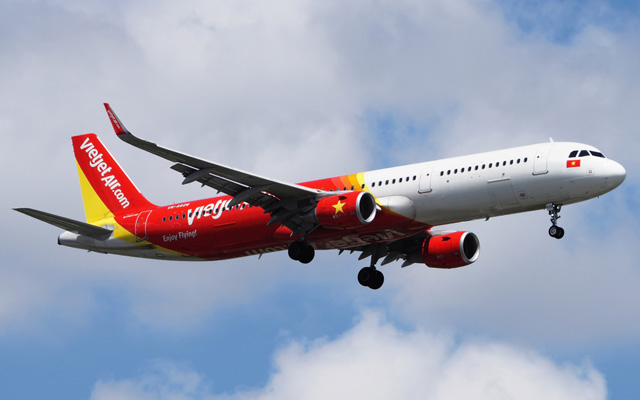
Vietjet launched on June 4 direct flights between India’s Mumbai and Vietnam’s Hanoi and Ho Chi Minh City, with three and four weekly services respectively.
The flights land at Chhatrapati Shivaji Maharaj International Airport in Mumbai.
Vietjet now connects India’s Mumbai and Vietnam’s Hanoi and Ho Chi Minh City with three and four weekly services
The new flights follow on from Vietjet’s recent commencement of New Delhi-Ho Chi Minh City/Hanoi services.
Vietjet’s vice president Do Xuan Quang said: “We believe that the two services from Ho Chi Minh City and Hanoi to Mumbai as well as the coming Phu Quoc-Mumbai route will strengthen the ongoing relationship of Vietnam’s two biggest cities with Mumbai.”
The airline will increase the frequency of services on the new route should demand call for it.
The Phu Quoc-Mumbai service is slated to launch on September 8, 2022, with four round trips per week.
Cambodian luxury jungle camp Shinta Mani Wild – A Bensley Collection has created Wellness at WILD, an all-inclusive wellness programme featuring a three-night stay with three activities to choose from.
ReWILD is for fitness enthusiasts and includes activities such as trail running, mountain biking and fit-yoga classes; Reconnect is for health-minded guests who enjoy a balanced wellness lifestyle; and Restore is perfect for those needing time-out to rest and recover from stress.
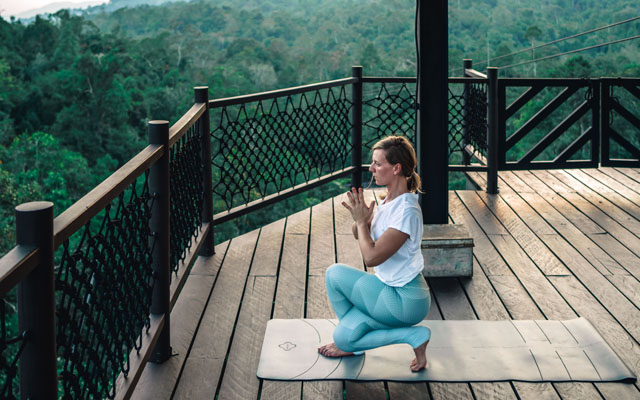
Participate in the yoga at sunrise atop the seven-storey zip-line tower overlooking the forest canopy
One of the highlights is yoga at sunrise atop the seven-storey zip-line tower which looks out over the forest canopy. Witness the jungle’s transition from night to day with a guided walk to the zip line tower followed by yoga at sunrise and an adrenaline-filled 400m zip line ride to the headquarters for a hearty and healthy breakfast.
The all-inclusive Wellness at WILD programme comes with accommodation in a Bensley-designed tent, round-trip private airport transfers, healthy plant forward cuisine tailored to guests’ dietary needs, all beverages, unlimited Khmer Tonics Spa treatments, yoga or fitness classes, a WILD Spa experience, meditations, forest bathing, breath-walking and much more.
Available for groups of two to six adults, rates start from US$1,900++ per tent per night valid till October 31, 2022.
A minimum three-night stay is required and a minimum age of 10 years.
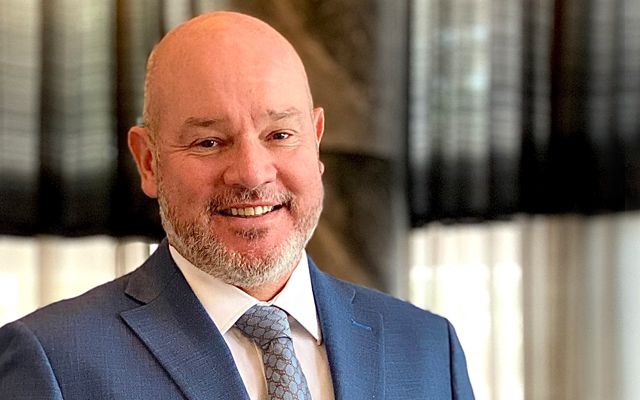
Carlton City Hotel Singapore has announced Niall Cowan as the hotel’s new general manager.
With nearly three decades of experience, and extensive knowledge and experience of luxury brands across Europe, Africa and Asia, Cowan joins Carlton City Hotel Singapore from his former role at Fairmont Sanur Beach Bali, where he was also general manager.
Prior to his Bali stint, Cowan held senior leadership roles at The Savoy, The Berkeley and, Fairmont Mount Kenya Safari Club.
Regional circuits are being booked for later in the year
Limited regional flights make regional circuits tough to plan
Opportunity for a rise in tourism demand for smaller locations in the region
Pre-pandemic, the Indochina circuit was a popular option for travellers, especially those from faraway places, wanting to explore a mix of Cambodia, Thailand, Vietnam, Laos, and Myanmar in a single trip. Travel restrictions and tightly shut borders over the past two years have led industry experts to predict the rise of solo destination travel once the region reopened.
Now that travel restrictions are easing off across South-east Asia, starting with Cambodia being one of the first countries in the region to welcome double-jabbed tourists with limited restrictions and easy entry requirements since November 2021, industry stakeholders are revisiting the question: will the regional travel circuit make a return?
Lack of surety around regional flight schedules have prompted longhaul travellers to push their Indochina circuits to late-2022; pictured Angkor Thom in Cambodia
Willem Niemeijer, founder of Khiri Travel, said currently the majority of multi-country travel bookings are for later in the year.
“Up until very recently, Laos was still closed and the Thailand Pass also stands in the way of (travellers’ ability to) confidently make multi-country trips in the near future,” Niemeijer said.
While he believes multi-country trips will make some form of comeback, he predicts that the traditional Indochina programmes that combine three or four destinations at one go may be “past their prime”.
He explained that each of these destinations is far more developed, facilitating longer visits and putting “less pressure” on the longhaul traveller “to hop on another flight to the next highlight”.
Flight disruptions
Meanwhile, tourism stakeholders agree that flight accessibility is an obstacle to more complex itineraries cutting across several destinations.
Despite borders being open and restrictions removed or drastically minimised regionally, the continued disruption of flights remains a challenge.
“The regular domestic and regional flights all need to return to a more dependable and regular schedule,” opined Niemeijer. “The severely disrupted airlines schedules make planning itineraries very difficult.”
Niemeijer: regular domestic and regional flights all need to return to a more dependable and regular schedule
Jeff Redl, managing director of Diethelm Travel Vietnam, noted that Diethelm is receiving some demand for Indochina combination trips. However, due to limited regional flights, clients continue to have to postpone their travels, or change routes.
For example, until July 1, there are still no direct flights from Siem Reap in Cambodia to any airport in Vietnam.
Redl told TTG Asia: “There are also no flights from LPQ (Luang Prabang), which makes the combination impossible with Laos. It’s crucial that regional flights are back at the earliest, as guests want to plan only when they know services are running.
“Stable flight services also help to strengthen traveller confidence,” Redl noted.
Bill Barnett, founder and managing director of C9 Hotelworks, said limited regional flights are driving a new trend of in-country travel. He predicts this, in turn, will promote tourism in smaller locations, such as Labuan Bajo in Indonesia and the Thai island of Koh Pha Ngan.
“The circuit is changing,” he observed.
“Airlift is key and there is a lot less airlift now, so I think we will see more entry into a single country, and then excursions, versus across all of South-east Asia.
“This is likely to be a boom for smaller and less-trafficked locations, which will get these mini-trips. That will grow tourism in newer locations. ‘Smaller is better’ is the new mantra,” said Barnett.
Redl: Stable flight services also help to strengthen traveller confidence
Cooperative region is key
Like Niemeijer, Sinan Thourn, founder of B2B Travel and PATA Cambodia chairman, is confident that the regional circuit will make a return in some form as traveller confidence grows.
“The opening of borders across the region will help stimulate tourist traffic regionally, as well as boost international tourists travelling across these borders,” he said.
“It’s very important that ASEAN member countries work closely by action and not only on paper,” he added.
In July, the Cambodia-Vietnam-Thailand Economy Corridor initiative will kickstart to promote cross-country travel to the three nations’ connected coastal zones.
Before that comes into force, Redl said demand for travel around the region is already growing. Currently, France and the UK are the most active markets, especially for summer. Germany, Switzerland and the US are looking more ahead to 4Q2022 and 1Q2023.
Highlighting other changes in longhaul booking habits, Redl said travellers are planning and booking in shorter time frames than pre-pandemic, when booking lead times used to stretch about three months in advance. Travellers are also preferring solo destination routes and slow travel experiences.
“They are taking more time for their visit of each particular area, as well as overall duration. For example, we are seeing many clients focusing their visits and stays in the north of Vietnam only, instead of rushing the itinerary to cover everything from north to south in one go,” he added.
Travellers are spending more time on pre-trip research, moving away from best deals, and preferring contactless payments as travel returns, observe industry experts speaking on a panel at last week’s Halal in Travel Global Summit 2022.
Speaking during the session, Remaking customer experience in tourism, Mayank Dutt, vice president, head of marketing and communications for Southeast Asia for Mastercard, shared that travellers are now chasing after experiences and are investing more time into researching tours and activities in the destination, going beyond the usual attention paid to shopping and dining.
Travellers are prioritising experiences over best deals, shopping and dining now
Dutt said this was a shift from pre-pandemic times when travellers used to be price sensitive, and were attracted to the best deals.
Another trend, noted Dutt, was the growing preference for contactless payments in destinations, as they wish to avoid handling cash out of hygiene concerns.
Mayank believes that digital payment is set to grow even more, and small enterprises must adopt these new payment methods to survive.
Fellow speaker, Chee Chong Chan, co-founder & CEO, GlobalTix based in Singapore, shared that international travellers were also attracted to destinations that have done away with Covid-19 tests and quarantine requirements.
Echoing Dutt’s point on travellers researching deeper into desired destinations, Chee added that booking lead time has extended, even for shorthaul trips, as travellers dedicate more effort into planning their itinerary.
Citing an example, Chee said travellers used to book tickets to a Universal Studios theme park a day before or on the same day of visit. Now, bookings are made two weeks to a month in advance.
In discussing the latest Mastercard-CrescentRating Global Muslim Travel 2022 report, Dutt said the ultra-affluent Muslims in the Middle East are an untapped traveller segment. Mastercard is currently curating Islamic experiences for this high-yield segment.
Chee noted that while the number of Muslim FITs out of Indonesia and Malaysia to Singapore has increased since the reopening of borders this year, the size of multi-generational groups has shrunk. Such groups tend to comprise only nuclear families now.
Nurhafihz Noor, lecturer and researcher at Curtin Singapore, opined that destination marketers needed to emphasise that their destinations are open for business and are Muslim-friendly, with accessible Muslim-friendly or halal food to meet the faith-based needs of such travellers.
After three long years of disruption, ILTM Asia Pacific is ready to return to an in-person format, and eagerness for face-to-face interaction among luxury travel industry colleagues is intense, observes Alison Gilmore, portfolio director for ILTM Worldwide with RX Global.
In this episode of TTG Conversations: Five Questions, Gilmore provides a peek into the specialised tradeshow that returns to Singapore this September, and discusses sentiments around rebuilding business relationships as travel picks up, role of travel agents in the space of luxury travel, and luxury tourism trends.
South Korea will remove quarantine requirements for foreign arrivals who are without Covid vaccination from June 8, 2022, and lift aviation regulations on international flights.
This is a change from the existing seven-day quarantine obligation for unvaccinated foreign arrivals.
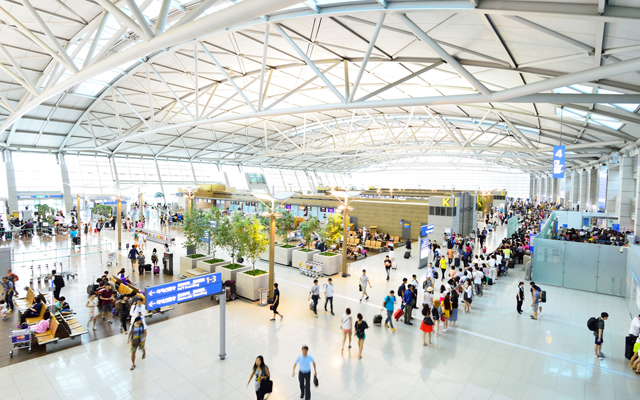
Flight restrictions will be eased from June 8, permitting more flights to land at Incheon International Airport and through the night
The decision from prime minister Han Duck-soo on June 3 came as South Korea sees a stabilisation of the Covid-19 situation.
However, the government will maintain the requirement of a negative PCR test result prior to entry and a PCR test within 72 hours after arrival.
Meanwhile, the removal of aviation regulations imposed at Incheon International Airport from June 8 will ensure that flights can respond better to travel recovery. Some of the changes include allowing 40 flights to land at Incheon per hour instead of the current cap at 20 flights per hour; and the removal of a night flight curfew from 20.00 to 05.00, allowing round-the-clock operations at the country’s air hub.
Price of travel and accommodation are major determining factors for travel among Indonesians, more than health risk and travel restrictions, according to the latest YouGov Global Travel Profiles survey for April 2022.
The survey showed that 46 per cent of respondents, up from 40 per cent in January, considered the price of travel a factor that prevented them from travelling, with 40 per cent stating the price of accommodation as the second obstacle, as compared to 35 per cent in January.
Price of travel and accommodation are major determining factors for travel among Indonesians, according to the latest YouGov Global Travel Profiles survey (Photo: YouGov)
On the other hand, the fear of health risk has dropped to 32 per cent from 47 per cent in February, with family or own health factor down to 35 per cent from 38 per cent in February.
The increasing confidence among Indonesian travellers could be attributed to the government’s improved pandemic control.
The number of fully vaccinated Indonesians had reached nearly 80 per cent by April, allowing the Indonesian government to gradually relax travel restrictions and border policies.
Minister of tourism and creative economy Sandiaga Uno acknowledged the findings, and said the government is tackling the issue of high airfares by urging airlines to grow their seat capacity.
However, I Wayan Suwastana, director of sales and marketing, Pacto DMC, opined that increasing prices have little impact on decision-making when purchasing tour products.
He said: “This is not a major consideration because travelling has become part of the lifestyle of the Indonesian people.”
He added that tourism packages are getting more creative in providing conveniences at attractions to appeal to travellers.
Despite ticket prices increasing by an average of 17 per cent compared to the same period in 2021, Busyra Oryza, spokesperson of Pegipegi.com, said the company has seen a continual spike in demand for hotel and transportation bookings since the Lebaran holiday season. This indicates positive travel sentiments among the public.



 Prior to his Bali stint, Cowan held senior leadership roles at The Savoy, The Berkeley and, Fairmont Mount Kenya Safari Club.