Emmanuel Menanteau is the new President for Airports Council International (ACI) Asia-Pacific’s Regional Board, commencing June 1, 2022 to end of 2024.
Having served ACI Asia-Pacific as the first vice president, Menanteau has also been appointed to the ACI World Governing Board.
New board members of Airports Council International
Four new Regional Board Directors were also named for a three-year term, commencing June 2022: Iskandar Mizal Bin Mahmood, managing director of Malaysia Airports Holdings; Kyung Wook Kim, president and CEO of Incheon International Airport Corporation; Cheok Kuan Kan, executive director of Macau International Airport Company; and Hyeong Jung Yoon, president and CEO of Korea Airports Corporation.
Japan Airlines and Malaysia Airlines have each signed multi-year individual deals with ATPCO for its pricing tool, Architect. The tool’s next-generation capabilities and functionality reimagines traditional pricing management and fare filing processes, enabling airlines to transition from managing fares to managing their pricing strategy.
Masanori Miyajima, VP marketing strategy, Japan Airlines, said: “Architect displays the most accurate, real-time view of all fares in the market. The enhanced functionality in Architect is exactly what Japan Airlines needs to be competitive in the market.”
Japan Airlines and Malaysia sign with ATPCO
Izham Ismail, group CEO, Malaysia Airlines, added: “The customer service from ATPCO and usability of Architect, along with the automation of the tool is what sealed the deal. The flexibility offered and the ability to customise means we can see what we need to see, while also enabling us to streamline the implementation of our pricing strategy. We were able to get up and running in only a few short weeks and are already benefitting from the clearer data Architect provides.”
Architect includes the Total Price feature displaying the full picture of the fares that flight shoppers see in the market, including the breakdown of taxes, surcharges, and carrier fees. Architect assembles this content automatically and calculates the “total price.” With Architect assembling the data in a single calculation, analysts can focus on optimising revenue with faster access to the data they need and have a more accurate view of the pricing their customers see in shopping results across sales channels.
ATPCO’s head of sales & partner success – APAC, Sam Lau, noted: “As the industry continues its recovery from the effects of the pandemic, more airlines have the time and money to invest in solutions that help accelerate their recovery.
“Asian carriers were uniquely impacted by to COVID-19, with many countries implementing some of the strictest measures to combat the pandemic. We are happy to see the other side of this and to work with carriers like Japan Airlines and Malaysia Airlines to help them stay competitive in the market.”
ATPCO will continue to partner with all airlines to continually add new features and functionality to support its partners’ efforts in achieving pricing excellence.
Destination Gold Coast has launched the Play The Day Away campaign on May 25 to showcase the breadth of destination offerings.
To convert pent-up demand for travel into Australia’s favourite holiday playground, Play The Day Away blends elements of musical, singing and dancing to promote the Gold Coast’s well-loved venues, places, and experiences in a new way, while casting a spotlight on the discovery of other lesser-known locations.
Destination Gold Coast launches the Play The Day Away campaign to showcase the destination’s offerings
Destination Gold Coast CEO Patricia O’Callaghan said: “Destinations are investing millions of dollars globally into marketing campaigns to attract visitors, so we knew we had to do something different to cut through an exceptionally crowded market.
“That’s why we have chosen to use the energy of dance and song in this campaign to showcase the Gold Coast in a way that has never been done before.”
She added that after two years of lockdowns, disrupted travel plans and cancelled holidays, the need to have fun and the desire to travel again is stronger than ever. Play The Day Away provides travellers with a window into the Gold Coast’s playful personality.
“Through this campaign we will not only broaden perceptions of the region among interstate families, couples, and friends but also get our core interstate visitors of Sydney and Melbourne to reappraise the Gold Coast as their top holiday destination,” she shared.
There are eight experiences, products, and locations from across the Gold Coast featured in the campaign, including The Pink Hotel Coolangatta; Greenmount Beach, Coolangatta; Warner Bros. Movie World; The Tropic, Burleigh Pavilion; O’Reilly’s Rainforest Retreat, Lamington National Park; QT Gold Coast, Surfers Paradise; Q1, Surfers Paradise; and Surfers Paradise Beach.
Following on from a trial reopening in May to permit small group tours from four countries, Japan is now set to allow entry of some package tour groups from 98 countries and territories, including the US and China, starting June 10.
No Covid tests or quarantine will be required upon entry for these tourists, regardless of vaccination status.
Japan to ease border restrictions further from June 10
The announcement came from prime minister Fumio Kishida on May 26. Details that followed stated that permitted tour groups must be sponsored by Japanese travel agencies and similar organisations responsible for the visitors, and tour guides will accompany the travellers throughout their stay. Activities will be carefully monitored.
According to news reports, Kishida acknowledged that “active exchanges between people are the foundation of the economy and society” in his speech at the Future of Asia conference in Tokyo.
Leading up to June 10, preparations will be made to allow international flights to land at New Chitose airport in Hokkaido and Naha airport in Okinawa.
Tourist numbers are likely to remain limited at first.
Japan had earlier announced intentions to double its cap on arrivals from overseas to 20,000 a day starting June.
At the same time, countries and regions will be divided into three categories – red, yellow and blue – depending on their assessed virus risk.
Travellers arriving from countries or regions on the blue list can bypass quarantine with proof of a negative pre-departure PCR test, according to the Foreign Ministry.
Travellers on the yellow list will have to show proof of vaccination with selected vaccines to skip quarantine.
Japanese travel and tourism stakeholders have called for the country to reopen to tourists fully or be left behind in global tourism.
Accor is expecting its hotel occupancies in the country to surpass 2019 levels by 2H2023, with its presence in every major destination in Malaysia, including Kuala Lumpur and its surroundings, Penang, Melaka, Taiping, Kota Bahru, Johor, Langkawi, Kota Kinabalu, Kuching and Miri.
Garth Simmons, CEO for Accor South-east Asia, Japan and South Korea, shared with TTG Asia that with the recent easing of travel regulations, Accor is expecting a strong recovery on both domestic and main inbound markets with a clear ramp up in 3Q2022 and 4Q2022, in all the destinations where it is present.
Simmons: people are eager to travel and discover new experiences
While the forecast is 19 per cent below 2019 levels by end 2022, Accor hotels in Malaysia have forecasted the average daily rate (ADR) to be in line or even higher than 2019 by end 2022, with premium and luxury branded properties’ ADR less impacted and already on par with 2019.
Simmons revealed that the country’s borders reopened, Accor has seen a strong pick up of international reservations through online channels, especially from the South-east Asia region. At press time, the fastest growing source markets for Accor hotels in Malaysia are from Singapore, Australia and Indonesia.
To help drive recovery, Accor hotels have curated attractive offers to entice local and international travellers alike.
Simmons said: “Our focus continues to be on being locally relevant for the leisure domestic market, offering even more memorable and new experiences powered by our lifestyle loyalty programme ALL – Accor Live Limitless. Leisure guests wanting to explore and experience something different can expect more from their stay.
“Our other key priority is to capture the rebound of international travel through engaging loyalty benefits and targeted campaigns so we can gain greater market share. As restrictions continue to be eased worldwide, people are eager to travel and discover new experiences.”
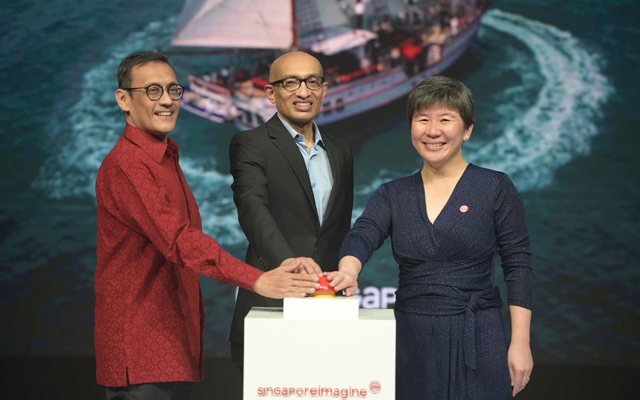
Singapore Tourism Board (STB) has signed two Memoranda of Cooperation (MoC) with lifestyle super app Traveloka and Trans Digital Media to muscle up destination campaigning in Indonesia.
The MoC initiative is part of the SingapoReimagine recovery campaign, and aims to position Singapore as the holiday destination of choice with great offers following the city’s reopening to fully-vaccinated visitors with no quarantine and testing requirements under the Vaccinated Travel Framework.
From left: STB’s John Conceicao, Singapore ambassador to Indonesia Anil Kumar Nayar, and STB’s Juliana Kua
John Conceicao, STB’s executive director South-east Asia, said: “With the strong rebound in the Indonesia market in recent months as a result of quarantine-free and test-free travel for the fully vaccinated, we are doubling down on our SingapoReimagine recovery campaign to maintain top-of-mind awareness and recapture mindshare among our target audiences.
“Through our partnerships with Traveloka and Trans Digital Media we hope to entice Indonesian travellers with a wide range of curated tactical offers such as flight and hotel packages and other lifestyle offerings to drive and sustain visitorship through to next year.”
The partnership with Traveloka will drive interest to a wider target audience and provide an easier booking experience for Singapore offerings not just in Indonesia, but also four other markets in the region – Malaysia, Thailand, the Philippines, and Vietnam.
Conceicao told TTG Asia that the move to drive regional arrivals through super apps is not new to STB. STB Indonesia had previously partnered with Traveloka in 2019, while an MoU with airasia was inked in February this year to promote travel to Singapore on the airasia Super App.
“So, in 2022, you will see a lot more examples of campaigns with super apps,” he added.
Shirley Lesmana, chief marketing officer, Traveloka, said that prior to the pandemic, Singapore was “consistently among the top three tourist destinations for Indonesians, and we are hoping that this partnership will continue the momentum, revitalising the wanderlust in Indonesians to travel to Singapore”.
The partnership with Trans Digital Media will see AntaVaya, one of Indonesia’s largest travel agencies, creating new destination products supported by exclusive Bank Mega deals that will be promoted throughout the company’s media and retail outlets.
Abdul Aziz, president director, Trans Digital Media, said: “We believe that people are eager to start travelling again as the global situation continues to improve and allows for safer travel.
“With this partnership, we hope to be able to support Singapore’s tourism recovery to emerge even stronger than before.”
Commenting on the partnership with Trans Digital Media, Juliana Kua, assistant CEO with STB, said the arrangement is “the first for us, probably globally”, in the way that it is a partnership that spans “a wide array of businesses (such as banking, tours and travel, retail, fashion and media) that affect every consumer”.
STB is also relying on star power to reach Indonesian consumers. It partnered three Indonesian celebrities – Sarah Sechan, Marissa Nasution and Denada Tambunan – to showcase a different side of what the city-state has to offer through a three-part SingapoReimagine video series.
According to Kua, Singapore welcomed 58,270 Indonesian visitors to Singapore in April 2022, up from 13,620 in March.
Editor’s note: This story has been updated to take in additional information
Greenview, a specialist in sustainability software, data and programmes in hospitality, has developed the Hotel Footprinting Tool, a free solution that allows users to calculate the carbon footprint of their hotel stays.
The Hotel Footprinting Tool is powered by data from over 20,000 hotels around the world collected via the Cornell Hotel Sustainability Benchmarking Index and using the Hotel Carbon Measurement Initiative methodology.
Greenview crafts new tool allowing users to calculate the carbon footprint of hotel stays
Users can input the location, star rating and number of nights to the tool, and obtain an instant carbon footprint for their stay based on the average emissions of hotels in that market.
Bulk data download is also available for corporate users.
Greenview CEO, Eric Ricaurte, noted that more companies are looking to quantify the hotel footprint as part of business travel, and to rely on sound data when providing offset solutions.
“We are excited to present the Hotel Footprinting Tool which allows companies and travel intermediaries to access a global dataset of hotel carbon footprints which can be integrated into calculations and systems quickly and efficiently. We look forward to releasing an even more comprehensive dataset supported by all the major brands,” he added.
Commenting on the new tool, Patrick O’Meara, Interim CEO, Sustainable Hospitality Alliance said: “It provides a simple solution to those wishing to calculate their hotel emissions for Scope 3 business travel, and users will be assured that the estimations are globally consistent and comparable. As the requirement for such calculations increases, common approaches based on robust data are vital.”
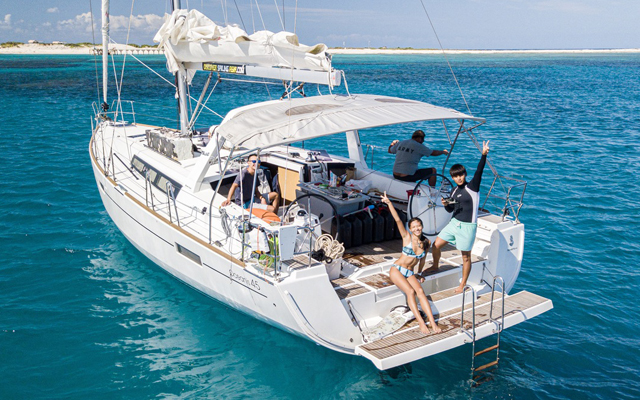
Discover Sailing Asia (DSA) has launched a new five-day/four-night cruise to Pulau Tioman – the first of its kind in the region.
Known for its wonderful waters for freediving, sailors can go snorkelling and admire the underwater life up-close, and visit islands such as Pulau Tulai, Tiger Reef, Pulau Labas, Pulau Chebeh and more.
Head to Pulau Tioman for a ‘sailcation’
Departing Marina at Keppel Bay every Wednesday morning, prices start from S$1,926 (US$1,400) per pax. An early bird promotion is ongoing, ending May 29, 2022, with 15 per cent off for all cruises by DSA.
The cruise requires a minimum of six guests, and no more than eight.
The Travel Corporation’s (TTC) first official Impact Report released May 18 detailed progress against its 11 sustainability goals launched in September 2020.
Since the launch of How We Tread Right (HWTR) – the company’s ongoing five-year sustainability strategy, efforts have continued towards achieving goals that are anchored to the United Nations Sustainable Development Goals (UNSDGs).
The Travel Corporation’s Impact Report details progress against its 11 sustainability goals (Photo: The Travel Corporation)
Key takeaways from the Impact Report highlight cumulative progress from September 2020 through December 2021. TTC developed net zero targets aligned with the Science Based Targets initiative; carbon neutral trips by Contiki since January 2021; sourced 28 per cent of its global electricity needs from renewable sources; switched nine additional properties to 100 per cent renewable electricity; introduced food waste management systems at 30 per cent of its hotels and Uniworld ships; and reduced printed brochures by 88 per cent from 2019.
The company offered 65 TTC itineraries visiting 110 developing regions; and introduced 554 Make Travel Matter Experiences across TTC itineraries as well as educational experiences designed to advance the UNSDGs, where in 2021, 51 per cent was achieved, surpassing the goal set to reach 50 per cent by 2025.
TTC also assessed 400 over wildlife experiences to ensure there was 100 per cent compliance with the company’s Animal Welfare Policy.
Investors are putting their money on sustainable travel opportunities in keeping with shifting consumer and industry trends, it transpired at the recent WTTC 21st Global Summit in Manila.
Intrepid Travel Group chair, Darrell Wade, said that in the last 10 to 15 years, clients are preferring more purpose-driven and sustainable travel, now the key driver of choice for booking trips.
Purpose-driven and sustainable travel is now the key driver of choice for travellers
Intrepid Travel announced in January that it acquired Wildland Trekking, a US-based environmentally-conscious tour operator focused on active and outdoor adventures.
Wade shared: “Our clients want to be outside so we just acquired a walking company in the US, for instance. We are putting a significant investment into cycling. These used to be fringe activities and are now mainstream as people want to get out and to travel in a way that there is low carbon footprint.
“And so, it is really starting to change our thinking about putting in our investment dollars now going forward.”
Gaming enterprise MGM China Holdings is also on the same investment direction, in the gaming and entertainment capital of Macau.
MGM China Holdings’s co-chair and executive director, Pansy Ho, said that they wanted to position Macau as a destination for leisure and recreational aspects, by reactivating the country’s plentiful outdoor offerings, such as walking trails and seaside activities.
This is the area of MGM’s investments, added Ho, because “it is not us who will drive tourist arrivals; it is the tourists”.
Ho also pointed out that the public and investors will look at the sustainability indexes of listed companies, tracking their performance based on their commitment to the United Nations’ SDG efforts.
The way Covid-19 has changed how Asian travellers think about sustainable tourism “is really a call-out to the destinations to tailor it to the emerging consumer needs”, said PATA CEO, Liz Ortiguera.
Ortiguera said investment priorities should be in training in terms of destination management, and in reinforcing sustainability and addressing the specific needs of each destination in the national, provincial and local levels.
Decarbonised transport initiatives is also critical as travel and tourism contributes to 58 per cent of global, human-driven carbon dioxide emission, with transport being about 75 per cent of that, accommodation 25 per cent, and the rest others, Ortiguera said.