Accor has partnered with Year13, Australia’s largest digital platform for high school leavers, to inspire young residents to explore career opportunities within the hospitality industry.
Activated through a variety of social media, video and editorial content pieces on Year13 channels, the strategic partnership seeks to inspire and support Gen Z to consider meaningful and rewarding careers that fit within their passions.
Accor’s partnership with Year13 is expected to boost the hospitality company’s talent pipeline
Accor Pacific senior vice president talent & culture, Sarah Derry, said: “Through our partnership with Year13, we are hoping to lure great young talent to our workforce that will enrich the tourism industry’s future forever. It allows us to harness Year13’s purposeful, influential and trusted connection with young Australians to highlight the many opportunities for collaboration, creativity, and fast-tracked career pathways at Accor. We pride ourselves on our multi-generational workforce and we see Gen Z as a highly impactful generation with an extremely important voice.”
Year13 co-founder, Will Stubley, said: “We are so excited to partner with Accor to inspire Gen Z to enter an industry that is thriving back to life as Australia re-opens.”
To attract young Australians and nurture them into the leaders of tomorrow, Accor has redesigned its talent attraction strategy, launching Work Your Way at Accor earlier this month.
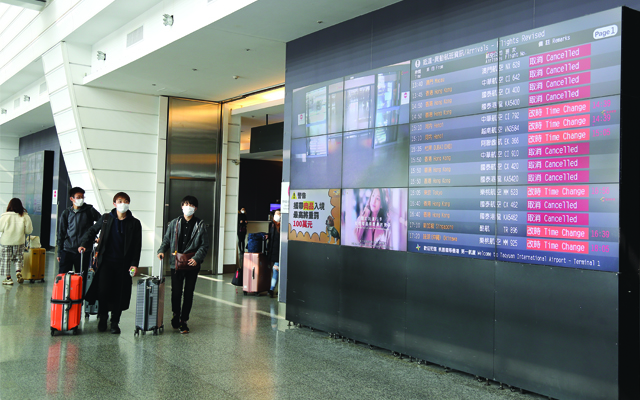
All travellers entering Singapore on Vaccinated Travel Lanes (VTL) must now take daily Covid-19 tests for seven days from the point of arrival, a new measure that will be enforced for four weeks until 11.59 on January 2, 2022.
The decision on December 3 follows an end-November announcement to tighten border controls in an attempt to buffer against the spread of the new Omicron variant.
Singapore imposes daily tests on VTL travellers
The new testing requirement will mean that VTL travellers will have to fulfil a pre-departure test, an on-arrival polymerase chain reaction (PCR) test, self-administered antigen rapid tests (ART) on days 2, 4, 5 and 6, and supervised ARTs at designated centres on day 3 and day 7 of their visit.
The health ministry requires all VTL travellers to test negative on their self-administered ART before going out for activities.
At the same time, travel restrictions on countries have been extended. Since 11.59 on December 4, all long-term pass holders and short-term visitors with recent travel history to Ghana, Malawi and Nigeria within the last 14 days have been denied entry.
The health ministry will apply the new restrictions for four weeks, and review their necessity after.
Seven countries – Bulgaria, Hungary, Iceland, Ireland, Luxembourg, Norway and Poland – have been placed in Category 3 on December 6. Travellers from this category must take a Covid-19 test two days before departure for Singapore, an on-arrival test and another before the end of their 10-day stay-home notice at a declared place of accommodation.
Groups of 12 or more travellers can explore destinations in a safe bubble made possible by Trafalgar’s customised mini group tours, which come complete with a dedicated On-Road Team – including a travel director and driver – trained in physical distancing, hygiene and medical protocols, as well as destination expertise and local knowledge.
Travellers can choose from over 300 award-winning group tours offered by Trafalgar; Budapest’s Chain Bridge pictured
Aimed at Singapore residents looking to take advantage of the Vaccinated Travel Lanes (VTLs) with families and friends, the private trip can be crafted on a wide array of destinations with little or no surcharge on the original itinerary price.
Travellers can choose from over 300 award-winning group tours offered by Trafalgar, covering destinations such as Spain, Ireland and Hungary.
Trafalgar has updated its vaccination policy, requiring all guests to be fully vaccinated for guests’ peace of mind. In addition, the company’s wellbeing director will ensure that the establishments and locations to be visited comply with local health and safety protocols.
In the event of travel advisory changes, Trafalgar also offers free cancellation and booking changes.
Spectrum of the Seas is recognised as Asia’s largest and most innovative ship, with endless recreational opportunities onboard
Royal Caribbean International continues to up the ante on exceptional cruising experiences in Asia with the return of Spectrum of the Seas from October 2022 until April 2023.
With Asia’s gradual resumption of international travel and tourism, Spectrum of the Seas soothes wanderlust with itineraries that call at some of the region’s most vibrant destinations.
Options range from two-night quick breaks to Kuala Lumpur in Malaysia to the nine-night indulgent retreat to Thailand and Vietnam.
Penang’s Georgetown is a UNESCO World Heritage Site and a rich enclave of historical and artistic architecture
The five-night Klang, Penang & Phuket Cruise, which sets sail on October 26, 2022, offers guests a chance to shop and dine at Malaysia’s capital city Kuala Lumpur, explore heritage streets and a 130-million year old rainforest in Malaysia’s Penang, and embark on soft adventures in Thailand’s Phuket. Port calls last a full day, giving guests plenty of time to make precious travel memories with their loved ones.
Spectrum of the Seas also offer a unique nine-night itinerary that calls at Vietnam’s Nga Trang and Ho Chi Minh City as well as Thailand’s Bangkok. A full-day port call at both Nha Trang and Ho Chi Minh City allows guests to explore the former’s sandy beaches and turquoise waters, marvel at picturesque boulders overlooking the waters at Hon Chong, and make time for some snorkelling, scuba diving and hiking; as well as take in the old and new faces of vibrant Ho Chi Minh City, with highlights including the War Remnants Museum in District 3 and the 130-year-old Saigon Zoo and Botanical Gardens.
Temple of the Emerald Buddha, set within the sprawling Grand Palace in Bangkok, is a marvel for cultural buffs
Once in Bangkok, Spectrum of the Seas docks overnight, presenting expanded opportunities for guests to rediscover numerous appeals of the popular Asian city. One can have a feast at bustling street-food stalls, explore the city on a nimble tuk tuk, be in awe of world-famous Buddha statues within the Temple of the Emerald Buddha and Wat Pho Temple, or simply indulge in retail therapy.
Built to impress
Spectrum of the Seas’ port calls may be a hot draw, but the infrastructure onboard is just as impressive.
Recognised as Asia’s largest and most innovative ship, and one that is built to deliver great vacation experiences, Spectrum of the Seas is a recreation wonderland. Among its many facilities are 2,137 staterooms across 14 guest decks, three whirlpools, a rock-climbing wall, an indoor movie theatre, outdoor movie screen, spa, fitness centre, 19 distinct dining venues, numerous facilities built to entertain children of all ages, and more.
However, six unique features stand out.
Sky Pad – Recognised as Asia’s first virtual reality, bungee trampoline adventure on a cruise ship, Sky Pad transports guests into a zero-gravity zone where they could smash sweets in a sugar-coated world or travel light years into the future.
Sky Pad is Asia’s first virtual reality, bungee trampoline adventure on a cruise ship
Star Moment – Live out your Frank Sinatra, Queen or Jacky Cheung dreams at Star Moment. Hit the main stage and perform for a crowd or book a private room for a special singing session with up to 10 closest friends and family. Private room rental comes with F&B package options.
Asian Flavours – Spectrum of the Seas’ collection of dining venues serve up flavours from around the world, but Asian bellies will find themselves right at home with many familiar cuisine.
Savour Chinese delicacies at Sichuan Red
Sichuan Red weaves culinary magic using authentic Sichuan spices. Highlights here includes Kao Yu simmer pot, which spotlights deep-fried fish served on a bed of tofu, vegetables and potatoes in a spicy aromatic broth; and Royal Sea Cucumber, which comes impeccably plated alongside broccoli and tangy spring onions.
Teppanyaki is a treat for the eyes and palette, as delicious dishes come with impeccable presentation and dazzling displays over a hot plate by expert chefs who elevate cooking to a performance art form. Take a gourmet journey through Japan with jumbo crispy softshell crab, sea scallops and top-quality Wagyu A4 beef.
The Hotpot brings loved ones to the table, where they can cook and enjoy their meal together. Elevating the authentic hot pot experience are stunning views of the ocean.
Showgirl – An original production, the brand new Showgirl is a thrilling multi-sensory experience that uses bar-raising choreography and cutting-edge lighting and video effects to pay homage to the iconic siren of the stage – the showgirl – across the decades.
Ultimate Family Suite – Perfect for multi-generational families looking to bond on a cruise holiday, the Ultimate Family Suite is the largest suite onboard, with capacity for up to 10 guests across two floors. An in-suite slide makes getting from second floor to the first a breeze and is bound to delight all young-at-hearts, while a private cinema doubles up as the family’s very own karaoke stage.
Suite Enclave – The finest cruise holiday can be had onboard Spectrum of the Seas, within Royal Caribbean’s first and exclusive Suite Enclave. Supremely positioned at the forward end of the ship, the Suite Enclave features the exquisite Royal Suite Class Star, Sky and Sea accommodation as well as private restaurants and lounges, a Solarium, The Balcony and The Boutique – all exclusively accessible via a private elevator.
Royal Suite Class Star and Sky guests are extended special perks, such as complimentary Wi-Fi access, priority dining reservations, reserved seating in select entertainment venues, priority boarding and departure at ports of call, and many more.
Pokémon fever is about to descend on Sentosa with a range of exciting activities featuring Eevee from December 2021 to February 2022, including two editions of the Eevee Dance Parade, and a digital Eevee Adventure Mission around the holiday island.
The first edition of the Eevee Dance Parade in Sentosa will take place from December 10-12, and December 17-19. Featuring 15 larger-than-life Eevee marching and dancing at Palawan Green, each 30-minute show will take place twice a day on stage at 19.00 and 20.30.
Boogie with Eevee across two editions of the Eevee Dance Parade (Photo: Sentosa Development Corporation)
A preview session will be held for Sentosa Islander members on December 9. Additionally, with a minimum spend of S$15 (US$11) from any retail outlet, attraction, hotel, or F&B establishment on Sentosa island, they will stand a chance to register for two free tickets to this session.
The second edition of the show, dubbed Eevee Dance Parade with Evolution Poncho, will take place in January and February 2022. During the parade, each Eevee will don a poncho that represents one of eight Eevee evolutions.
The parade will take place at 20.00 on the following dates: January 29 and 30, as well as February 5, 6, 12, 13, 19 and 20.
To facilitate safe distancing onsite, guests will have to register for an electronic ticket (in the form of a QR code) to the parades through Sentosa’s Telegram chatbot at www.sentosa.com.sg/eeveeadventure.
Registration for the first edition of the Eevee Dance Parade is now open, while registration for the later Eevee Dance Parade with Evolution Poncho will begin on January 14.
Each receipt showing a minimum spend of S$15 from any retail outlet, attraction, hotel, or F&B establishment on Sentosa island will allow guests to register for one free ticket to the Eevee Dance Parade. Guests will need two receipts showing a minimum spend of S$15 each or one receipt showing a spend of S$30 or higher to register for two free tickets. Each Telegram account will be eligible to register for up to two tickets.
All guests must be fully vaccinated or present a valid pre-event testing exemption notice to watch the parades. Children aged 12 and below must be accompanied by a fully vaccinated parent or guardian.
From January 29 to February 20, guests can also participate in a digital Eevee Adventure Hunt to learn more about Pokémon and Eevee while exploring Sentosa island.
To complete the hunt, they must correctly answer questions and fulfil special missions within the game platform. Once all missions have been completed, guests can redeem prizes, including Eevee plushies and more. Limited prizes will be up for grabs daily, on a first-come-first-served basis.
Guests can also snap a photo of a 6m-tall inflatable of Eevee or purchase a range of Pokémon merchandise at a special Pokémon Center pop-up.
Banyan Tree Group is set to double its footprint of 54 properties across 23 countries by 2025 with the introduction of five new brands launching in the next 18 months.
As a pioneer of purposeful stewardship and responsible tourism, this expanded global portfolio of 10 unique brands will allow the group to increase its impact in the countries where it operates while taking advantage of post-Covid growth opportunities in purposeful travel.
Banyan Tree adds five new brands to portfolio; Homm Bliss Southbeach Patong pictured
Through the Banyan Tree Global Foundation, all brands will abide by the proprietary Stay for Good programme, a structured framework that aligns with the United Nations Sustainable Development Goals. Stay for Good embeds core stewardship values in operations and guest experience, promoting community engagement and partnership to drive long-term impact in three core pillars: environment, society, and governance.
Throughout 2022, the group will introduce new brands Garrya, Homm and Folio, as well as two new brand extensions of Banyan Tree named Veya, and Escape. These brand additions are responses to trends in travel accelerated by Covid’s impact such as conversion opportunities in resort destinations, emerging second-tier tourism destinations, as well as a greater desire for wellbeing and sustainability-minded travel offerings.
This year to-date, Banyan Tree Group has signed 20 hotel management agreements worldwide including in Benin, Mexico, Greece, Saudi Arabia, South Korea, Thailand, China and Vietnam. Four Garrya and two Homm have been signed in Asia, with more in the pipeline.
Seven openings are expected in 2021 with the November launch of the first Garrya Huzhou Lucun in China, followed by the debut of Homm Bliss Southbeach Patong and soft-opening of Banyan Tree Veya Phuket in December.
Looking ahead, the group will see a total of 19 openings throughout 2022 – comprising three Banyan Tree, one Banyan Tree Escape, three Banyan Tree Veya, six Angsana, three Dhawa, two Garrya and one Homm – across seven countries of the Maldives, Thailand, China, Indonesia, Cambodia, Mozambique and Saudi Arabia – where new flags will be planted in the latter three countries.
The Indian government announced on Wednesday (December 1) its decision to postpone the resumption of scheduled international flights due to the emergence of the new Omicron variant, causing a setback for the expectant tourism industry hoping for a recovery.
A circular issued by the Directorate General of Civil Aviation said that the central government is currently monitoring the global coronavirus situation in the wake of the emergence of the Omicron variant.
Scheduled international flights have remained suspended in India since March last year
“International scheduled flights are key for the recovery of inbound tourism. The industry has long been demanding scheduled flights to resume to create a positive impact in international markets,” said Naveen Manchanda, president, Indian Association of Travel and Tourism Experts.
“Also, it will help to make prices of tickets competitive as they are presently on the higher side because of limited flights,” he added.
Scheduled international flights have remained suspended in India since March last year due to the Covid-19 pandemic.
The government had recently announced that scheduled international flights will resume on December 15 after many months of delay, a move which would bring much-needed respite to inbound tourism stakeholders.
“We were in high hopes of receiving clients that usually visit us in December. But since the cost of flights has increased and the number of fights have reduced, they will have a negative impact on our expected revenue for the winter months,” said Abhilash K Ramesh, executive director of Kairali Ayurvedic Group, which caters to the wellness segment.
India has allowed special international flights to operate in the country under the government’s Vande Bharat Mission since May 2020.
Meanwhile, some tourism stakeholders are hoping that domestic demand will tide them through the virus crisis. Manish Goyal, founder, Stotrak Hospitality, said: “The deferment of scheduled international flights will certainly delay the recovery of inbound tourism. However, we expect to sustain the trade based on domestic travel for the time being.”
Tembo Beach Club & Resort, Thailand
Tembo Beach Club & Resort, a plantation-style resort, sits on Koh Samui’s Bangrak Beach on the island’s north coast. Life at Tembo (which means ‘elephant’ in Swahili) revolves around the pool, where guests can relax on the terrace or on the beach, or enjoy a cocktail at the swim-up bar. Beachside tapas and small bites are available throughout the day, complemented by a choice of cocktails and mocktails, wines and beers.
Tembo Restaurant features a Mediterranean and Asian-inspired menu, and also houses Journey, a 12-seat dining space slated to open in early 2022 that will feature a regularly changing menu of international dishes. The resort also has a deli, bakery, lifestyle boutique and a spa (opening soon). Guests can select from nine double bungalows (seven king-size beds and two twin-bed rooms) and a beachside villa, which has its own private garden. All rooms have balconies or terraces, internet-ready flat screen TVs, tea and coffee making facilities, Indian cotton bathrobes, safety boxes, jasmine-scented amenities, ceiling fans and air-conditioning.
Melbourne Marriott Hotel Docklands, Australia
Located on the Docklands waterfront in Melbourne, the Melbourne Marriott Hotel Docklands features 189 guestrooms, each fitted with a 55-inch LCD TV, work surface, walk-in shower, and bar fridge. The hotel is nestled within the retail, leisure and entertainment precinct, The District Docklands on Waterfront Way. Guests can pick from four F&B venues, including Archer’s, a restaurant serving Australian cuisine with fresh produce from local farms. Ada’s in the hotel lobby is a space where guests can work, socialise or relax with light snacks, soft drinks, and cocktails. Laneway café Corsia serves premium and locally roasted coffee from St Ali, and a European-inspired menu of light meals by day, switching to espresso martinis and local wines by night. Adjacent to the rooftop infinity pool, Sunset House is a bar looking out to sweeping views across Melbourne. The hotel also offers a fitness centre as well as five function and meeting spaces, with more than 371m² of event space available.
Radisson Blu Hotel & Spa, Nashik; India
Nestled at the foothills of the Pandav Caves, just off Nashik Mumbai highway, Radisson Blu Hotel & Spa, Nashik is spread over 42,000m² and features 224 rooms, including 18 suites with private balconies. Guests can choose from five room categories including superior room with pool view, superior room with hill view, deluxe room, premium suite and deluxe suite. With over 5,000m² of event space, the hotel offers four indoor venues – Godavari Ballroom, Varuni, Tharuni and The Living Room – that can host up to 2,400 pax and three outdoor venues – Godavari Lawns, Varuni Terrace and Amphitheatre – which can host up to 2,500 pax. The hotel features four dining selections – The Smoked Vine, serving international cuisine; The Tuscan Room, inspired from Italy’s traditional culinary culture; Le Bistro, an Indo-Parisian eatery; and The Orient House, specialising in Chinese cuisine. Hotel amenities include a spa, 24-hour fitness centre, hair and beauty salon, an outdoor pool with a temperature-controlled jacuzzi, along with an ASB squash court and Pilates room.
The Ritz-Carlton, Harbin; China
The opening of The Ritz-Carlton, Harbin marks the brand’s debut in the northeast China’s winter wonderland. Centrally located along the city’s Songhua River, the luxury hotel is integrated within an upscale mixed residential and retail development in one of Harbin’s tallest buildings. The hotel offers 368 guestrooms, including 31 suites.
Four F&B venues include all day-dining restaurant Manor 54 and Cantonese fine-dining restaurant King Wong Heen. The Lobby Lounge serves afternoon tea alongside a cookie bar trolley as well as handcrafted drip coffee exclusively available at the hotel. There are also two bars, including signature bar Flair, serving creative cocktails and boutique spirits paired with South-east Asian-inspired tapas. In addition to six treatment rooms, the Ritz-Carlton Spa also offers wellness areas such as steam rooms, saunas, a heated indoor swimming pool and a fitness centre.
The hotel features a total of 3,500m² of event space, including a Grand Ballroom equipped with three build-in LED screens. On the 56th floor, the hotel’s Sky Gallery has four multi-functional meeting rooms for private events. For wedding ceremonies, the sunlit Chamber has river views and direct access to an outdoor lawn, together with two bridal rooms.
Singapore travellers entering South Korea via the vaccinated travel lane (VTL) scheme will be exempted from the country’s newly imposed 10-day quarantine policy on all inbound visitors, which kicked in on Friday (December 3).
The Embassy of the Republic of Korea in Singapore said on Thursday that the VTL arrangement between the two countries will “proceed without change at the moment”.
South Korea’s new 10-day quarantine rule will not apply to VTL travellers from Singapore
“Given that the Covid-19 situation remains volatile, we advise all travellers to check our website regularly for the latest border control measures prior to travel,” it said in an advisory on its website.
A VTL arrangement between Singapore and South Korea was launched on November 15 to allow quarantine-free travel between the two countries for fully vaccinated travellers.
South Korea’s announcement on Wednesday about the new quarantine requirement, imposed to contain the spread of the new Omicron variant, had cast into doubt the validity of the scheme.
The Korea Disease Control and Prevention Agency said that from Friday, all inbound travellers to South Korea will have to serve a 10-day quarantine, regardless of their vaccination status. The new measure will be in place for two weeks.
Renaissance Bangkok Ratchaprasong Hotel owner ends contract with Marriott, as the latter faces another legal dispute with Minor International
Marriott remains confident of its strong relationship with owners in Thailand
C9 Hotelworks expects pandemic pressures to lead to more owner-operator fall-outs
Marriott has been managing Renaissance Bangkok Ratchaprasong Hotel since its opening in 2010
The owner of Renaissance Bangkok Ratchaprasong Hotel has issued a termination notice to Marriott International and is understood to be developing a transition plan towards its future management.
Marriott has been managing the hotel since its opening in 2010, after an agreement between the operator and the hotel’s owning company, Maneeya Realty Company, was signed in 2007, for 25 years.
Marlborough Hospitality Services, which serves as consultant to the owner and his legal counsel Benjamin Hirasawa, founder and managing partner of Singapore-based BH2I, cited various reasons for the termination notice. These include alleged “breach of contract, breach of fiduciary duty, lack of transparency, failure to communicate with the owner and to follow the owner’s instructions, and misuse of FF&E (Furniture, Fittings, and Equipment) Reserve”, according to the Singapore-based firm’s founder, chairman and managing director, Michael Evanoff.
Other allegations include “dismal commercial performance and excessive and unexplained charge-backs, i.e., charges to the hotel from various Marriott companies or departments supposedly for work done on behalf of the hotel,” said Evanoff.
Marriott Asia-Pacific declined to comment on the allegations on the basis of confidentiality obligation under the hotel management agreement, but said it is “committed to collaborate with owners to resolve issues related to our hotels” and that “current discussions will not affect the operations of the hotel”.
The 333-key hotel in Bangkok’s shopping and business district performed “reasonably well” in 2019 but in 2020 and 2021 performed “much worse” than its competitive set, claimed Evanoff.
“Average occupancy and room rates were well below those of the hotel’s competitive set and also below other comparable hotels in Bangkok operated by Marriott,” he alleged.
Business is starting to improve with December being a popular wedding month and with Thailand’s international travel reopening. Occupancy now averages 37 per cent but rates are low, he said. “The reality is that the relationship between the owner and Marriott has soured,” said Evanoff.
Marriott is also facing another dispute with Minor International (MINT) over the JW Marriott Phuket. On October 12, MINT issued a statement saying that in addition to its legal claims in the Thai courts, it is “imminently” initiating “further legal action” against Marriott.
“We are still preparing for the upcoming legal action and this is very much an active case with further announcements shortly,” Steve Chojnacki, MINT’s chief commercial officer and general counsel, said.
Asked what the “further legal action” might involve, Chojnacki alleged a “lack of transparency on Marriott’s costs and recharges; Marriott’s competition with other Marriott-branded properties; application of regional and global licensing fees collected by Marriott; and administration of the Marriott Bonvoy loyalty programme”.
However, Marriott said it is “not aware of any further legal proceeding from MINT against Marriott International or its affiliate as of the date of this statement (December 2)”.
“We continue to consider that the claims are likely to be similar to those raised in previous legal proceedings, which are meritless, and we will vigorously defend against such claims as we have done successfully to date,” the company’s spokesperson added.
“Despite the challenges of the pandemic, we remain confident in Thailand and continue to strengthen our relationship with current owners while seeking potential partners to expand our portfolio. We currently operate 46 properties in Thailand.”
Are breakups widespread?
Owners and operators have been facing trying times, particularly those in Asia where recovery is in the hands of governments and reopening policies have been restrictive. While Asia has started to reopen, the region’s largest source of travellers, China, has not. The latest Omicron variant shows that stability is far from assured.
“Everywhere has been bad, albeit to varying degrees of bad. Bangkok has been on the lower rungs of the bad scale (which includes) Kuala Lumpur, Bali, Phuket, Hanoi and Ho Chi Minh City,” said Robert Hecker, managing director, Pacific Asia Horwath HTL.
Yet, Hecker is not seeing more breakups as a result of the stress the pandemic places on owner-operator relationships. “It’s not widespread. It’s limited to particular situations of owner-operator dynamics,” he said.
In general, his understanding is that all of the operators have been flexible and understanding of owner situations. In fact, the pandemic has actually “instigated” the owner/operator relationship into becoming more of a partnership in sharing risks and pain points, said Hecker.
He uses the analogy of neighbours who have always had issues with other another. Yet after a tornado rips through their town and destroys everything around them, they hug tightly.
“Specifically on the operators’ side, they have ditched contracts for the time being, focusing on what can be done to save or preserve the owner’s house, relative to uses for the FF&E Reserve, allowing for postponement of payments that might be due, etc,” said Hecker.
“The measures that have been taken are practical in nature given the circumstances if both sides are going to get through the pandemic with hotel assets, and contracts, intact.”
Whether the spirit of hugging will remain in the post-pandemic will be interesting to see.
But Thailand expert Bill Barnett, managing director of C9 Hotelworks, believes the industry is only at the start of owner-operator musical chairs.
“Buckle up, it will be a bumpy ride in the next few years. Expect litigation, arbitration and rebranding to become more commonplace. We have gone though the worst crisis of our lives; this has to be the worst time in three decades to be a hotel owner. So, it would be unwise not to expect collateral damage,” said Barnett.
One reason is – there’s no one left to hug.
Said Barnett: “The regional offices of hotel groups have axed so many hotel development and senior operations people who had long relationships with their owner. A real issue, as owners have no one to speak to that they know of or have a relationship with.”
He said those chains with strong domestic partnerships with scale of existing and pipeline hotels could prosper. He cited Marriott’s partnership with Asset World Corporation, which has the largest hospitality portfolio in the kingdom.
Banyan Tree Group is set to double its footprint of 54 properties across 23 countries by 2025 with the introduction of five new brands launching in the next 18 months.
As a pioneer of purposeful stewardship and responsible tourism, this expanded global portfolio of 10 unique brands will allow the group to increase its impact in the countries where it operates while taking advantage of post-Covid growth opportunities in purposeful travel.
Through the Banyan Tree Global Foundation, all brands will abide by the proprietary Stay for Good programme, a structured framework that aligns with the United Nations Sustainable Development Goals. Stay for Good embeds core stewardship values in operations and guest experience, promoting community engagement and partnership to drive long-term impact in three core pillars: environment, society, and governance.
Throughout 2022, the group will introduce new brands Garrya, Homm and Folio, as well as two new brand extensions of Banyan Tree named Veya, and Escape. These brand additions are responses to trends in travel accelerated by Covid’s impact such as conversion opportunities in resort destinations, emerging second-tier tourism destinations, as well as a greater desire for wellbeing and sustainability-minded travel offerings.
This year to-date, Banyan Tree Group has signed 20 hotel management agreements worldwide including in Benin, Mexico, Greece, Saudi Arabia, South Korea, Thailand, China and Vietnam. Four Garrya and two Homm have been signed in Asia, with more in the pipeline.
Seven openings are expected in 2021 with the November launch of the first Garrya Huzhou Lucun in China, followed by the debut of Homm Bliss Southbeach Patong and soft-opening of Banyan Tree Veya Phuket in December.
Looking ahead, the group will see a total of 19 openings throughout 2022 – comprising three Banyan Tree, one Banyan Tree Escape, three Banyan Tree Veya, six Angsana, three Dhawa, two Garrya and one Homm – across seven countries of the Maldives, Thailand, China, Indonesia, Cambodia, Mozambique and Saudi Arabia – where new flags will be planted in the latter three countries.