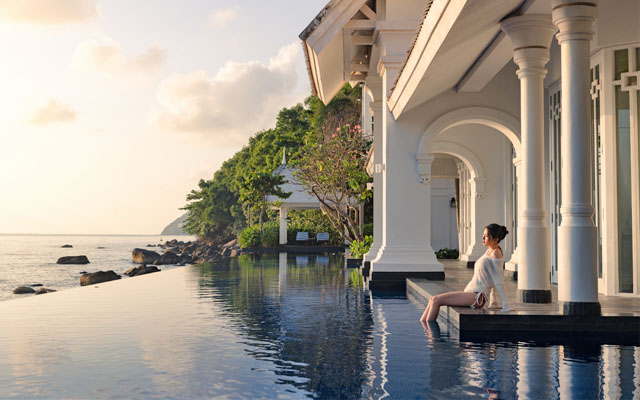
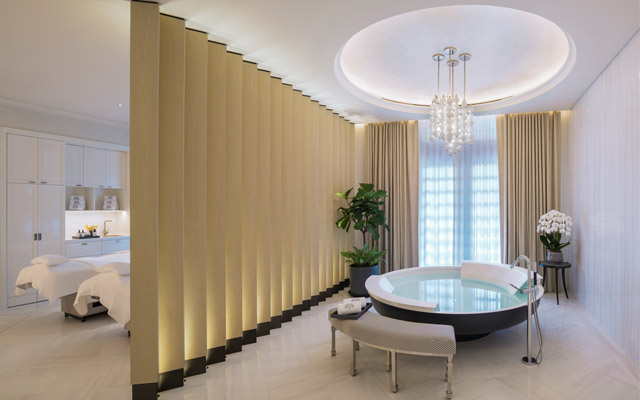
Raffles Hotel Singapore has crafted a two-day/one-night Journey to Wholeness package as part of the wider Wellness Festival Singapore.
The restorative experience is available for stays from June 6 to 7, and June 9 to 10, 2022. It includes wellness activities, nutritious meals, and reinvigorating treatments at the luxurious Raffles Spa.
Journey to wholeness awaits at Raffles Hotel Singapore
The first day begins with morning Yoga then meditation sessions, a healthy brunch and invigorating massages. Along with innovative exercises and sound therapy, guests will benefit from a renewed body and mind as they unwind in the comfort of their suites.
Awake the next morning to another morning Yoga session followed by a hearty breakfast.
The package is priced from S$1,888++ (US$1,377) for two guests, and includes one-night accommodation in a suite, breakfast for two at the Tiffin Room, brunch for two at Raffles Courtyard, complimentary use of Raffles Spa hydrotherapy facilities, 60-minute massage for two, hotel history tour with resident historian, and more.
A one-day option is available at S$588++ per person.
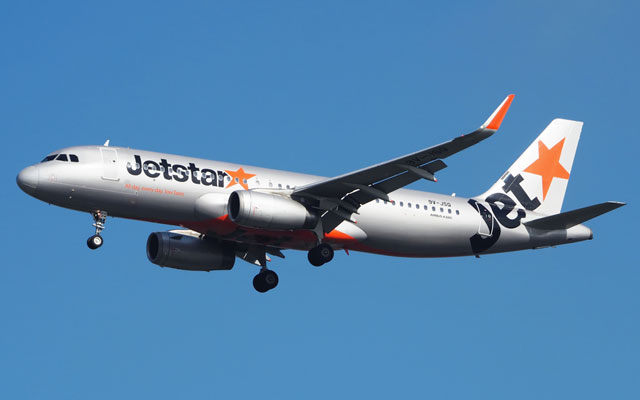
Jetstar Asia will operate 11 additional services a week from Singapore to six cities in Asia – Bali, Danang, Manila, Penang, Phuket and Phnom Penh.
The additional services provide more opportunities for fully vaccinated travellers to travel freely within the region.
Jetstar Asia increases services to six destinations
Services to Penang will now include two new weekday flights and one new Saturday service; for Manila, there will be three double daily services on Tuesdays, Thursdays, and Saturdays; and a new Friday evening service to Danang.
Starting from June 6, Jetstar will add a Monday service to its line-up of services to Phuket; and from June 7, there will be an additional weekday service to Phnom Penh.
The airline will operate daily services from Singapore to Bali from June 13.
Customers who book flights before June 30, 2022 will get a ‘fee free’ date change when travelling before August 31, 2023. Jetstar has also extended credit vouchers for use until December 31, 2022, for flights up to the end of 2023.
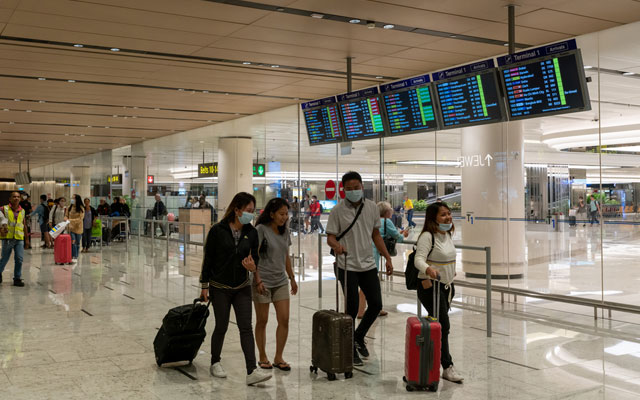
Leisure travel is roaring back, and despite more expensive airfares and lodging costs, travel intent among outbound Singaporeans remains strong in coming months.
In Tripadvisor’s most recent Tripadvisor Seasonal Travel Index, it reported that Singaporeans are unwilling to sacrifice the June holidays. Even though 77 per cent of those surveyed were concerned about rising costs of goods and services, travel was a top priority for a staggering 84 per cent who were still keen to travel this year.
Travel intent among outbound Singaporeans remains strong in coming months
This intent to travel is evident from Chan Brothers Travel’s bookings since Vaccinated Travel Lanes were first formed in 2021. According to Jeremiah Wong, the company’s spokesperson, Singaporeans are willing to pay more for group tours which cost on average 20 per cent more than pre-pandemic rates.
This is because, Wong explained, “tours are now smaller in size and longer in duration”. Prices also include travel insurance with Covid-19 benefits. Factors such as airfare fluctuation also plays a part, he added.
Aside from package tours, the company has also seen an increasing number of customers willing to pay more for their holidays to ensure “exclusivity”. They are also willing to splurge on customised itineraries.
Wong shares observations of a spike in solo travellers joining tour packages for a “peace of mind” when on the road during a pandemic.
When asked about destinations selling well this upcoming June holidays, Wong said “Europe, Turkey and Australian tour packages are most popular at the moment”, with families more inclined to pick Australia.
“It’s definitely been a tough few years of travel restrictions and being confined to staycations. Now that borders are opening and restrictions are easing, Singaporeans are ready to get back to ‘revenge travel’, and make up for lost time,” noted Sarah Mathews, director of media partnerships APAC at Tripadvisor.
Singaporeans are not alone in intending to travel, as consumers around the globe are also refusing to give up their desire to have a holiday. When Tripadvisor surveyed global travellers about their plans for summer, despite growing concerns around inflation, results show that travel demand remains strong for the months of June, July and August 2022 with four in 10 (85 per cent) globally reporting that they plan to travel.
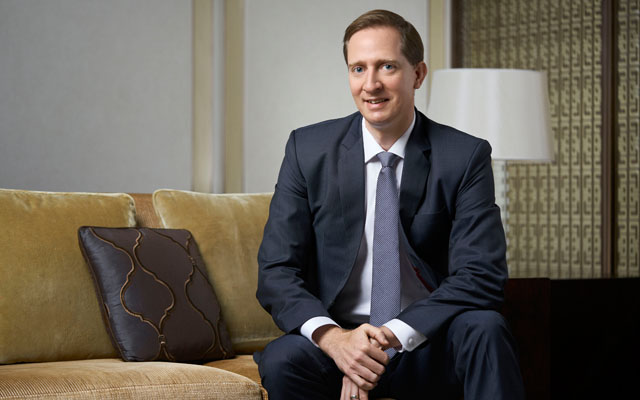
Langham Hospitality Group has appointed Markus Aklin as vice president – development, Asia Pacific, reporting to CEO Brett Butcher.
A Swiss national, Aklin led development in Asia Pacific for over 10 years for Onyx Hospitality Group. As vice president, development, he successfully executed the market entry strategies into eight regions.
He commenced his career in the region managing operations and pre-opening projects in 2003.
As we started 2022, travel and hospitality brands were all excited and set to make a roaring comeback given that most countries were gradually opening their borders. With the pent-up demand from two years of lockdowns, travellers were expected to spend massively on “revenge travel”.
Alas, that was wishful thinking and #revengetravel did not trend for as long as one would have expected, or not at least at the volumes one would have liked given the economic uncertainties brought about by rising inflation, supply-chain breakdowns, political and economic turmoil in China as well as the ongoing corrections in the public markets.
Among all these issues, rising commodity costs and the lack of the “Chinese travel dollars” is what would be hurting travel and hospitality brands the most, apart from managing people on the payroll in these uncertain times.
This volatile period should definitely be used by these companies and brands to go back to the drawing board to re-strategise about how and what leisure and business travel should look like in the coming decade and how they can enrich the customer’s experience to make travel exciting, pain-free and memorable once again.
Here are six suggestions and considerations to help brands reimagine a stronger future for travel and hospitality:
There needs to be a radical re-think to add elements of entertainment and leisure within the aircraft and hotel properties to make the journey and the stay more memorable; can inflight, lounge and in-room experiences be enriched through curated entertainment events, orchestrated networking and personalised content, and can these be marketed as premium services?
Airlines can partner with travel insurance and vaccination accreditation start-ups to embed some of those options into their existing online booking systems so that it becomes seamless and customers do not have to spend additional time sourcing for pre-travel vaccination and insurance options.
The most distressing and uncomfortable components of the travel experience is typically the boarding, check-in and check-out processes; this is a fabulous opportunity for the travel industry to re-think this workflow to either shorten/eradicate the waiting process through tech-automation or to make the wait memorable through personalised content, entertainment or utility services.
Some of the above product- and experience-related transformations should thereafter be reflected in personalised, omni-channel marketing campaigns to ensure that customers are aware of these new enriched experiences that can help drive higher travel demand and perhaps lead to higher average revenue per use (ARPU) once they are ready to travel again.
Travel and hospitality brands need to embrace and integrate sustainability at the core of their product and either innovate indigenous tools or partner with companies to give customers options to make sensible and sustainable choices during their travels and offset their carbon footprints. This is not only the right thing to do but will allow them to enhance their brand value and attract more customers.
Lastly, travel brands need to enhance and democratise their loyalty programs – they need to integrate with a broader merchant and partner ecosystem for customers to have numerous options to encash value and perhaps even allow members to trade/transfer their points over a transparent blockchain system.
The coming one to two years can be a tough and a transformative period for travel brands depending on how they view the current predicament; just the way Airbnb recently rejigged their focus on experiences, this is the time for airlines and hotels to reimagine the future of travel in a more sustainable, engaging and memorable manner.
An expanding population of young and technology-savvy Muslim travellers will impact Halal tourism development in the coming years, noted the eighth edition of the Mastercard-CrescentRating Global Muslim Travel (GMTI) 2022 report, released on June 1.
The global Muslim population will grow from two billion in 2022, or 25 per cent of the world population, to 2.3 billion in 2030, or 27 per cent of the world population.
An expanding population of young and technology-savvy Muslim travellers will impact Halal tourism development in the coming years
Fleshing out the findings, Fazal Bahardeen, founder & CEO of CrescentRating and HalalTrip, said: “The under-40 population will grow from 1.46 billion in 2022 to 1.6 billion by 2030, while the key group of 20 to 25-year-olds will grow from 165 million now to 181 million by 2030. What this means is, we will get a very young and dynamic demographic segment that will impact the travel and tourism industry.”
The industry will need to pay particular attention to Gen Z travellers, millennials, and women who are identified as the strongest influencers in Halal tourism development.
The report noted that millennials in general are well-educated, technology-savvy, and often put in more time and effort to conduct comprehensive trip research. Muslim millennials, in particular, adopt travel patterns characterised by accessibility, affordability and authenticity.
Gen Z individuals are realistic and inquisitive, and Muslim Gen Z travellers prioritise adaptability, authenticity, affordability, and accessibility in their travel decisions.
Unlike other generations, the lack of Muslim-friendly facilities does not deter Gen Z travellers from touring a particular destination. Instead, they adapt their needs to suit their surroundings, such as by turning to vegetarian meals or instant meals when Halal food options are lacking.
Women travellers are now one of the fastest-growing segments for both general tourism and Muslim travel, making up 45 per cent of global Muslim arrivals. Noting that Muslim women travellers were already a segment to watch pre-pandemic, Fazal said many are independent and favour solo trips.
Meanwhile, in forecasting Halal tourism development, the GMTI 2022 report expects Muslim traveller numbers to reach 140 million in 2023 and return to 2019 pre-Covid levels of 160 million in 2024.
“Prior to the pandemic, we projected that Muslim visitor arrivals will reach 230 million by 2026. Given the situation we had the last two years, our estimation now is that this figure will only be reached in 2028, along with an estimated expenditure of US$225 billion,” said Fazal.
In the GMTI 2022 ranking, which rates destinations on their Halal tourism development efforts based on almost 50 data points such as visa requirements, stakeholder awareness and satisfaction of core Muslim needs, Malaysia, Indonesia and Saudi Arabia lead the top 20 chart.
Malaysia retains pole position from 2021, while Indonesia rises from fourth place last year. Indonesia shares second place with Saudi Arabia and Turkey, which ranked third and fourth respectively in 2021.
Singapore continues to be the only non-OIC (Organisation of Islamic Cooperation) country to make it to the top 20 ranking.
In a video address, Malaysia’s tourism, arts and culture minister, Nancy Shukri, said the prospects of Halal travel is promising for Malaysia, and that the government and stakeholders will continue to encourage Muslim tourists to choose Malaysia.
She said that through the Islamic Tourism Centre (ITC), an agency under the Ministry of Tourism, Arts and Culture, Malaysia strives to do better to help Muslim travellers fulfil their religious obligations during their trips. ITC provides training and capacity building, research, as well as standards and certification development to ensure that industry players understand the needs of Muslim travellers, and are prepared to provide value to this segment.
When asked what was most lacking in non-OIC destinations looking to attract Muslim travellers, Fazal pointed to destination marketing.
“Generally, non-OIC destinations can do much more to communicate their welcome and readiness for Muslim travellers, he told TTG Asia.
He identified Taiwan as a non-OIC destination that has done “very well” in communicating Halal-friendly features, with a press announcement issued almost every other week about new efforts to welcome Muslim travellers.
Singapore leads the pack among non-OIC destinations for “putting in immense efforts to provide services that welcome Muslim travellers”. The city-state’s proximity to and understanding of neighbouring OIC countries Malaysia and Indonesia also help to put Singapore in strong stead to welcome Muslim travellers.
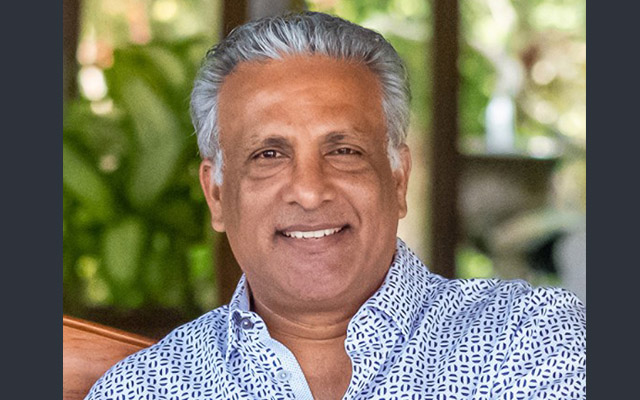
Uday Rao has been appointed as the general manager of Four Seasons Hotel Sydney.
Prior to his Australia move, Rao managed both Four Seasons resorts in Bali.
Rao has been with the Four Seasons family since 1991, where he started in Chicago as an overnight receptionist. He rose through the ranks, transferring to other properties in Tokyo, Singapore, Dallas and the Maldives. Rao then returned to India in 2006 to to open Four Seasons Hotel Mumbai, serving as hotel manager.
How did the pandemic impact air traffic into Cambodia and how has the recovery been this year?
We’ve seen several phases over the last few years. There was really strong growth in 2019 and into 2020, then a dramatic drop and particularly difficult 2021 when restrictions in Cambodia and across the world heavily impacted air traffic.
Due to the government’s vaccination campaign, Cambodia become one of the first to reopen in South-east Asia in November, and we started to see an uptake. But tests before departure and on arrival were still onerous and expensive. People were travelling but not in huge amounts. From March is when we really started to see growth, when all restrictions were removed.
Singapore and South Korea are currently the best performing markets at more than 80 per cent of 2019. Both have a mixture of point-to-point traffic and feeding to rest of the world. Bangkok has really taken off, so has Ho Chi Minh City since reopening.
April was a big month because more of South-east Asia reopened.
How did the pandemic impact operations?
Throughout Covid, we kept all airports open and operating. That was really important because airports were a lifeline for people and cargo. Cargo recovered quite quickly. That’s important for economic impact but also for what was coming in, such as vaccines and PPE.
It was obviously a difficult time for our staff, but now we’re starting to see recovery. June is looking to be about 30 per cent of 2019 levels. That’s great but it’s still only 30 per cent, so we need to continue to grow.
What is Cambodia Airports doing to aid the country’s tourism recovery?
We recently hosted a seminar for major French tour operators and showcased what Cambodia has to offer and what it’s like here now. One of our jobs is to share this around the world. Another message is Cambodia isn’t just Angkor Wat; it’s not about coming for two days to see amazing temples. It’s about spending multiple days in Siem Reap and going to the beach, exploring the countryside – it’s about ecotourism.
We’ve also been leveraging the scale of Cambodia Airports. We’re part of VINCI Airports, which gives us access to airlines and airports worldwide. We can use our network and credibility globally. We’re using our leverage to talk to tour operators and also airlines. In June, I’m going to Vietnam for a conference with about 20 different airlines.
China was Cambodia’s strongest source market pre-pandemic. As borders there remain closed, which markets are you focusing on?
This is what we all have to look at in this new era. China represented a huge part of our business, so we’re working closely with other big markets.
Singapore is very close to 2019 levels, and we aim to grow that even further. India is the biggest market out there. Tens of thousands of Indians came to Cambodia in 2019 and couldn’t fly directly. Once you have a direct flight, numbers will grow at least two or three times, so we’re working hard on that.
Cambodia lacks direct flights to and from longhaul countries. What is Cambodia Airports doing to change this?
We all want to have direct flights so we’re engaged with longhaul carriers. The challenge airlines are facing is that other markets have recovered faster than Asia, so capacity has been deployed there first. It’s strong on our radar and we’re working to drive that. That’s why, for the moment, connectivity between, say, Singapore and Bangkok and feeding into those longhaul carriers is really important.
What opportunities did the pandemic downtime present and how did you overcome the challenges?
We continued with a lot of developments during Covid. We opened a new arrival terminal in Sihanoukville and extended the runway. In the next two or three years, I expect to see longhaul aircraft at that airport. We also opened a VIP terminal there in May. The whole industry has seen demand for private and business jets increase.
We’re also about to start building a new passenger terminal in Sihanoukville.
We had to take difficult decisions, as did the whole industry. Now, our focus is on growing markets much more and getting as many passengers back as possible and being able to service them. If we get lots of tourists arriving, we need to ensure the airport gives them a welcome that reflects Cambodia.
Singapore Airlines (SIA) has opened its all-new flagship SilverKris and KrisFlyer Gold lounges at Singapore Changi Airport Terminal 3, following a S$50 million (US$36m) redesign, upgrade, and expansion project.
SilverKris Lounge comprises the business class section and the first-class The Private Room. Together with the KrisFlyer Gold Lounge, both can accommodate around 1,150 customers within 6,100m² of space, doubling the capacity that was available during the pandemic while the upgrading works were going on.
Singapore Airlines unveils new lounges at Changi Airport
Designed to enhance the comfort and convenience of diverse groups of travellers, the new facilities offer world-class products and services, as well as enticing F&B options available round the clock.
Goh Choon Phong, CEO of Singapore Airlines, said: “Extensive customer engagement and research have gone into the design of the new SilverKris and KrisFlyer Gold lounges. Customers will enjoy thoughtfully curated product offerings and experience the signature Singapore Airlines hospitality, all within a comfortable and restful environment, ensuring that they are refreshed and ready for their journey.
“Opening these lounges at this time signals our commitment to SIA’s premium brand and growth strategy. It reinforces our position as Changi Airport’s anchor airline, and reflects our confidence in Singapore’s future as a pre-eminent global air hub.”
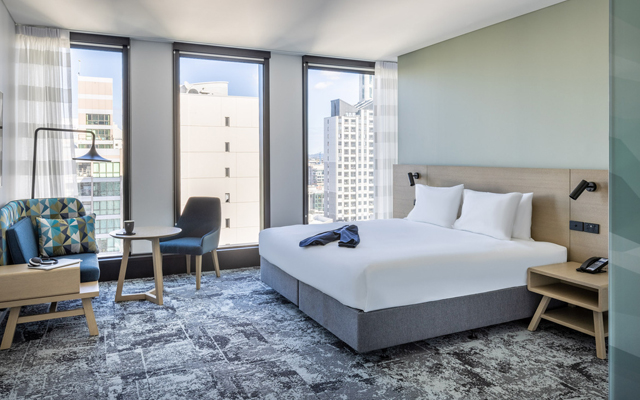
Holiday Inn Express Auckland City Centre, New Zealand
The second Holiday Inn Express Hotel in New Zealand, the Holiday Inn Express Auckland City Centre offers affordable accommodation in Auckland’s CBD.
The hotel is part of a dual-hotel development that also houses voco Auckland City Centre.
The hotel features 294 rooms with walk-in showers, black-out blinds, and work stations. There is also access to a 24-hour reception, fitness room and a self-service laundry.
Guests enjoy a complimentary Express Start Breakfast that includes hot and cold options, or the Express Start Breakfast Grab & Go option for fuss-free mornings.
Business travellers will appreciate the fast check-in and unlimited Wi-Fi as well as the three flexible meeting rooms that can accommodate up to 40 people.
Parkroyal Collection Kuala Lumpur
Parkroyal Collection Kuala Lumpur, Malaysia
The 527-room Parkroyal Collection Kuala Lumpur opens in a mixed-use complex that also houses Pan Pacific Serviced Suites Kuala Lumpur, Malaysia, which will open in the second half of 2022.
The hotel is located in the heart of Bukit Bintang and features environmentally conscious operations including sustainable bathroom amenities, biodegradable packaging, filtered drinking water solution in every guestroom, and a food-waste management system.
The all-day-dining restaurant Thyme serves up authentic Asian and international cuisines using sustainably sourced local seasonal ingredients. Guests can relax in The Botanist Lounge & Bar, or unwind under the stars at Skye Chill pool bar.
Other facilities include a spa, gym, fitness studio, and an outdoor swimming pool.
OMO5 Kanazawa Katamachi by Hoshino Resorts
OMO5 Kanazawa Katamachi by Hoshino Resorts, Japan
OMO5 Kanazawa Katamachi by Hoshino Resorts in Kanazawa, Ishikawa Prefecture is located in the former castle town famed for its artistic pursuits from tea culture to porcelain, lacquerware, and textile traditions.
Approximately 10 minutes by bus from Kanazawa Station, the 101-key hotel sits in Katamachi, recognised as the best gourmet town in the Hokuriku region. Here, guests can enjoy a wide variety of Italian, Chinese, and French cuisine. A guided tour that showcases the roots of Katamachi’s food culture and the link between food and traditional crafts is offered to hotel guests.
Those with a sweet tooth can register for the Japanese confectionery workshop and make their own rakugan, a type of Japanese confectionery; or experience tea-tasting at the Nodaya Tea store, a nearby long-established tea house.
Guests can relax at the OMO Base, a public space that comprises the front desk, OMO Café, and library. Here, guests can reference the Go-KINJO Map, which recommends numerous fun possibilities and options within the area.
Citadines Sudirman Jakarta
Citadines Sudirman Jakarta, Indonesia
Located within The Newton 1 Tower, Citadines Sudirman Jakarta offers service apartments in options of studios, one- and two-bedroom units, and family suites.
Each apartment has a private balcony and is furnished with amenities such as LED TVs, a microwave oven, an induction stove, a refrigerator and air conditioning.
Guests can enjoy a curated programme featuring key places to explore within the neighbourhood.
The property includes an outdoor swimming pool, kids pool, an outdoor jogging track and fitness corner, launderette and meeting rooms.


 He commenced his career in the region managing operations and pre-opening projects in 2003.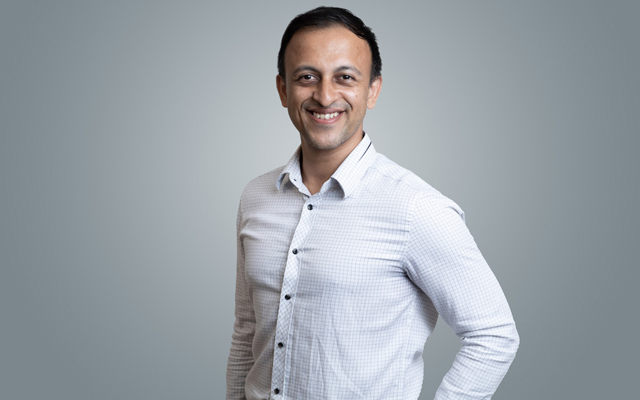
 As we started 2022, travel and hospitality brands were all excited and set to make a roaring comeback given that most countries were gradually opening their borders. With the pent-up demand from two years of lockdowns, travellers were expected to spend massively on “revenge travel”.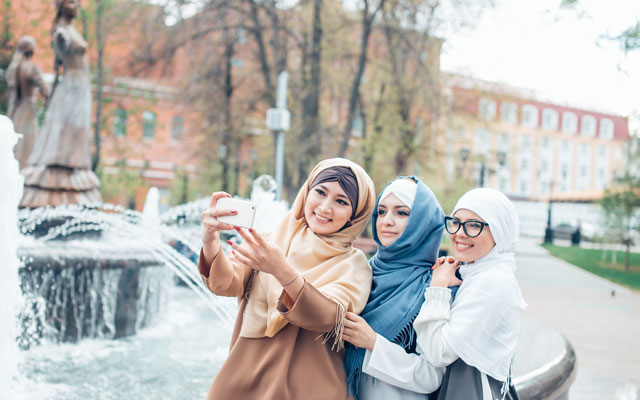

 Rao has been with the Four Seasons family since 1991, where he started in Chicago as an overnight receptionist. He rose through the ranks, transferring to other properties in Tokyo, Singapore, Dallas and the Maldives. Rao then returned to India in 2006 to to open Four Seasons Hotel Mumbai, serving as hotel manager.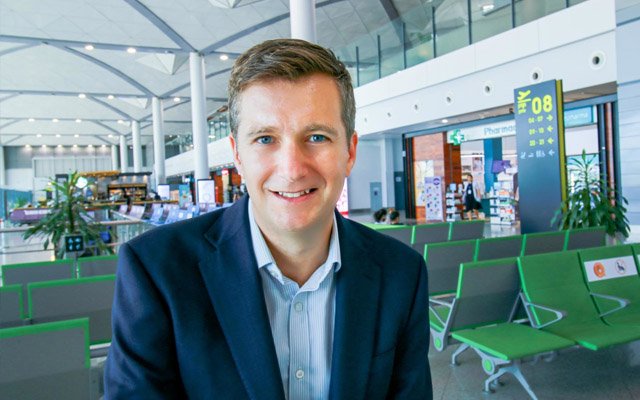
 How did the pandemic impact air traffic into Cambodia and how has the recovery been this year?