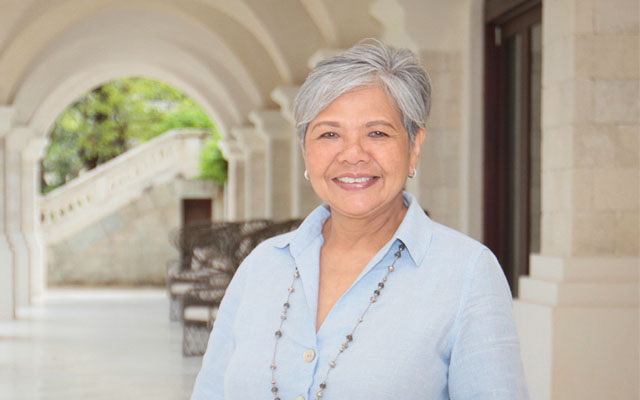
Ram Hiralal is the new general manager at Jumeirah Bali in Uluwatu. She brings with her a keen understanding of the luxury hospitality sector having worked as a hospitality leader across Bali, Thailand, Malaysia, Maldives and the Caribbean, with eight luxury hotel openings under her belt.
Ram joins Jumeirah Bali from COMO Shambhala Estate Bali resort, where she was the general manager from 2018.
In her new role, Ram is passionate about working alongside her team to create exceptional experiences for the guests and furthering Jumeirah’s legacy in Asia.
Japan’s key travel players have called for the country to reopen to tourists fully or be left behind in global tourism.
Representatives of some of the largest tourism groups, including the Japan Association of Travel Agents (JATA), the Japan Hotel Association, railway companies and major airlines submitted a formal request to the Ministry of Land, Infrastructure, Transport and Tourism over fears that Japan’s restrictive border policy would see travellers lose interest in visiting the country in the long-term.
Japan tourism stakeholders warn the government that an overly-cautious reopening will cause travellers to lose interest in the destination
Hiroyuki Takahashi, JATA chairperson, said: “We believe the weaker yen will help the tourism industry and we see this as a business tailwind. It should be a great opportunity for the government to bring tourists back to Japan.”
The report recommends scrapping the government’s daily entry cap (currently at 10,000 pax) and lowering its Covid-19 warning level. It said inbound tourism would be vital to achieving a V-shaped economic recovery from Covid-19 and warned that Japan is one of few countries that remains closed to tourists.
The group’s document, submitted May 12, goes much further than the reopening plans shared by the government on May 6, which is to allow small group tours from overseas this month as a trial. The government also announced on May 11 its intentions to double the daily entry cap on overseas arrivals to 20,000 pax in June.
Triple-vaccinated travellers from Thailand, Singapore, Australia and the US will be allowed to join the small group tours because these countries have a lower risk of variants and level of infection has stabilised, according to the Japanese government. Travellers on these tours must follow a strict itinerary, and be accompanied at all times by tour conductors. Only 50 travellers will be allowed in May for this trial, to facilitate “information-gathering” before this is offered to overseas visitors in June.
Tourism Minister Tetsuo Saito said May 17 that the government would “move forward with the plan while trying to achieve a balance between socio-economic activities and anti-coronavirus measures.”
Indonesia has removed pre-flight PCR or ART tests for inbound international and domestic travellers, including returning Indonesians. This comes into effect today.
Masks are no longer required for vaccinated people in non-crowded outdoor spaces. However, the mask-on policy still applies on public transport.
Indonesia has removed pre-flight PCR or ART tests as of May 18
President Joko Widodo said the decision was made based on the pandemic coming under control in the country.
Arriving travellers will only need to undergo a health check at the airport for any Covid-19-related symptoms.
The Circular Letter issued by Indonesia Covid-19 Task Force on May 18 stipulated that travellers must comply with the new health protocol: download the PeduliLindungi tracing app, show proof of their second Covid-19 vaccination obtained at least 14 days prior to departure, and have insurance covering Covid-19 medication and evacuation to referral hospitals.
This policy is eligible for entry through the international airports of Jakarta, Surabaya, Bali, Batam, Bintan, Manado, Lombok, Medan, Makassar, Yogyakarta, Banda Aceh, Padang, Palembang, Solo, Banjarmasin and Balikpapan, and all international seaports.
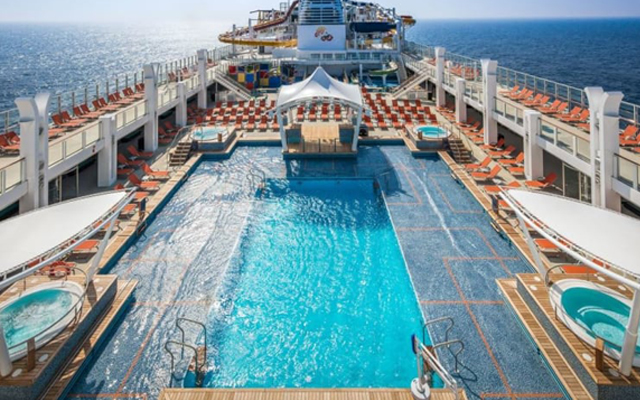
Resorts World Cruises will begin sailing out of Singapore from June 15 with the Genting Dream vessel, once operated by Genting Hong Kong-owned Dream Cruises.
The new cruise company, an extension of the Genting-owned Resorts World, was set up by Malaysian tycoon Lim Kok Thay, who is chairman and board executive of Genting Group.
Resorts World Cruises will begin sailing out of Singapore from June 15, and offer South-east Asian sailings come September
Genting Dream will offer a two- and three-night round-trip cruises from June, and expand its itineraries to cruises with South-east Asian port calls from September 30. The ship packs in a host of facilities and experiences, including a giant waterpark, international production shows at the Zodiac theatre, and 35 F&B destinations.
According to a press statement, Resorts World Cruises will offer complimentary cruise credits of equivalent value for all customers whose paid sailings with the former World Dream between March 2 and August 31 were cancelled.
Michael Goh, president and head of international sales of Resorts World Cruises – and former president, Dream Cruises and head of international sales withGenting Cruise Lines – said in a CNA report that some 13,000 customers were affected, although many were also able to obtain refunds through their credit card companies.
Resorts World Cruises’ CEO and executive director Colin Au, who was previously deputy CEO of Genting Hong Kong, asserted that Resorts World Cruises is separate from Genting Hong Kong.
“The provisional liquidator could not revive the (Dream Cruises) brand and so, we worked with the Chinese lessors who are the owners of the ship and decided to restart the cruise under the Resorts World brand,” said Au.
Resorts World Cruises is looking to bring Explorer Dream and World Dream into its fleet – both of which were part of Dream Cruises.
The cruise company told CNA that it has re-employed about 1,700 of its former employees based in Singapore.
As the hospitality industry embraces the digital age, industry experts claim it is essential to retain the human element.
According to a recent Oracle Hospitality survey, 54 per cent of hoteliers are prioritising technology that either eliminates or improves the human experience. This has sparked a debate on how hotels can preserve the human touch in an increasingly digital era.
Mankikis: embrace and use technology, but do not get rid of that human factor
Speaking at the Arabian Travel Market, Dimitris Mankikis, president EMEA at Wyndham Hotels and Resorts, noted that while the pandemic has accelerated the integration of technologies, such as contactless check-in and QR menus, it is key the human touch is not forgotten.
Mankikis explained: “We need to be very careful not to eliminate that human element. Yes, embrace and use technology, but do not get rid of that human factor. Always remember the basic reason why we travel is for human interaction.”
Christopher Hartley, CEO of the Global Hotel Alliance (GHA), noted the importance of human contact increases with the scale of accommodation – with leisure travellers valuing it higher than business travellers.
“Entering a hotel and starting to interact with staff is very much what hospitality is all about. It’s not about having no interaction,” added Hartley.
However, he said technology has huge value in the pre-arrival experience, such as searching for and booking a hotel.
“Pre-arrival organisation is where people don’t want to talk to people. The pre-arrival experience can absolutely use technology but I don’t see, especially in the luxury segment, that technology will replace humans once you enter a property,” remarked Mankikis.
Hartley predicts there will be growing demand for instant communication. “Brands need their own apps with some form of instant communication embedded – this is absolutely critical.”
GHA recently signed a deal with ASmallWorld, a social network platform that connects an online community of travellers. This will be embedded into its loyalty programme, enabling GHA to communicate directly with customers while providing an invaluable service for travellers.
Hartley noted: “This socialisation of travel is something we’re going to see more of.”
The online China Tourism Training (CTT) Edition 2022, an update of the programme launched in 2019, has incorporated many changes to reflect Chinese traveller demand and behaviour that developed over the last two years.
According to Wolfgang Georg Arlt, CEO, China Outbound Tourism Research Institute (COTRI), which developed CTT, interest has shifted to nature, smaller destinations, family travel, health, camping and caravan trips.
The online CTT Edition 2022 has incorporated changes to reflect new interests of Chinese travellers
He added: “There is less interest in packaged tours, shopping and sightseeing, and more interest in half-organised customised or individual trips, more experiences and closer contact with local culture.”
COTRI is expecting some 500 CTT sign-ups in 2H2022 and “a boom for 2023 with several thousand participants when the Chinese borders open and a big wave of Chinese travellers with new needs and demands” are expected.
“Surprisingly, most participants are from Asia, followed by Europe and growing demand from South America,” Arlt noted.
“Successful participants are entitled to lifelong free membership in the CTT Alumni Network, which will start in the second half of 2022, and offer regular online webinars and online and offline meetings to develop into the main meeting point for those working in Chinese outbound tourism.”
COTRI, he commented, had seen growing CTT interest in recent weeks even though the current Covid-19 situation in China is still uncertain and there is no clear signal for when China will open.
CTT Edition 2022 comprises basic and advanced industry-specific training and is available in English, German and Spanish. Round-the-clock online access on any device is valid for three months.
Best practice examples, the cornerstone of the CTT programme, is drawn from a wide range of high-level leading global tourism service providers and Chinese industry experts.
Arlt said COTRI was “planning to offer a more academic and less practice-orientated version for 2023” for institutes of higher learning.
Tāmaki Makaurau Auckland will host the main event in the countdown to next year’s FIFA Women’s World Cup 2023 on October 22 – an activity that will boost inbound tourism and major events recovery for the destination.
The Official Draw, set to take place at Aotea Centre, is expected to attract an international television audience of more than a billion viewers, said Phil Goff, mayor of Auckland.
The Official Draw is set to take place at Aotea Centre, Auckland
He added: “Those attending in person will boost visitor nights in Auckland by about 130,000, and the event will contribute about NZ$60 million (US$38.2 million) to regional GDP in Auckland.
“The draw will be eagerly followed by countries around the world keen to find out who their teams will compete against, and when and where they will play. Auckland will be in the international spotlight during the Official Draw, just as it will be for the opening match in July 2023 and the semi-final, both to be held at Eden Park.”
The Official Draw will see 32 participating teams being allocated into eight groups to determine who they will face in next year’s event, as well as which country they will be based in for group stage matches.
FIFA estimates that around 800 attendees, including senior FIFA officials and international media will attend the event, which will also be broadcast live to a captive global audience – providing a platform to showcase what makes Tāmaki Makaurau and Aotearoa unique with viewers around the world.
Approximately 120 team representatives will then visit shortlisted training sites and accommodation across New Zealand and Australia.
Hosting the Official Draw brings Auckland one step closer to hosting the FIFA Women’s World Cup 2023 – the largest women’s sporting tournament ever staged in Auckland or New Zealand. The event will help to underpin the region’s ongoing Covid-19 recovery, said Auckland Unlimited chief executive Nick Hill.
“A truly international event, the FIFA Women’s World Cup 2023 will be a cornerstone in Auckland’s major event calendar and our gradual re-opening to the world,” Hill added.
Building on the success of the Rixos luxury all-inclusive brand, Accor is accelerating its expansion in the all-inclusive market with the launch of its multi-branded All-Inclusive Collection.
The All-Inclusive Collection will include Accor’s luxury and premium brands Fairmont, Sofitel, Pullman, Swissôtel and Mövenpick. The objective is to leverage the strength and visibility of these brands in key markets identified for the All-Inclusive Collection.
Accor’s All-Inclusive Collection will span Europe, the Middle East, Africa, Asia, Central America and the Caribbean
Curated entertainment programmes, for both day and evening activities, will play a central role in the All-Inclusive Collection, and will build on Rixos’ expertise in children’s clubs, fitness, water sports, outdoor activities and business events.
Guests can expect spectacular shows, multiple sporting activities per resort, as well as world-class spa and wellness facilities.
There will also be extensive F&B, beach club and nightlife concepts.
The All-Inclusive Collection will span Europe, the Middle East, Africa, Asia, Central America and the Caribbean – selected for their promising growth potential in the all-inclusive segment and the strength of these brands in the target markets.
The All-Inclusive Collection will initially focus on the further expansion of Rixos’ footprint of 50 properties in the network and pipeline, and will quickly scale and diversify as part of a longer term multi-branded strategy of having over 100 all-inclusive resorts in the next five years.
New openings set for this year include Rixos Gulf Hotel Doha, Rixos Qetaifan Doha, and Swissôtel Sharm el Sheikh. The latter is the first non-Rixos branded property in the All-Inclusive Collection.
In South-east Asia, Rixos Nha Trang Beach Resort will be Accor’s first all-inclusive luxury resort. It will open in 2025.
Fettah Tamince, chairman of the Board of Rixos Hotels, said: “I am incredibly proud of the success Rixos has achieved in the five years as part of the Accor portfolio. Together, Accor and Rixos complement each other’s market-leading expertise, and the All-Inclusive Collection is the next step in accelerating their positions in the sector. This new initiative comes at a time when the demand for all-inclusive stays could not be stronger and now is the right time to leverage this positive trajectory.”
Gaurav Bhushan, CEO Accor Lifestyle & Entertainment and co-CEO Ennismore, added: “The post-Covid travel market is witnessing a renewed desire for leisure stays. Accor’s strategic decision to double down on the all-inclusive segment, the fastest growing sector in this market and build upon its success with Rixos, capitalises on this opportunity. The new luxury and premium All-Inclusive Collection, reinforces our business model while increasing our exposure and value proposition for hotel owners.”
Oceania Cruises’ opening day for its 2024 Collection of voyages on May 5, 2022 ranks among the best single-day booking periods in the company’s history.
More than 350 voyages, ranging from seven to 82 days in length and spanning from October 2023 to December 2024, went on sale.
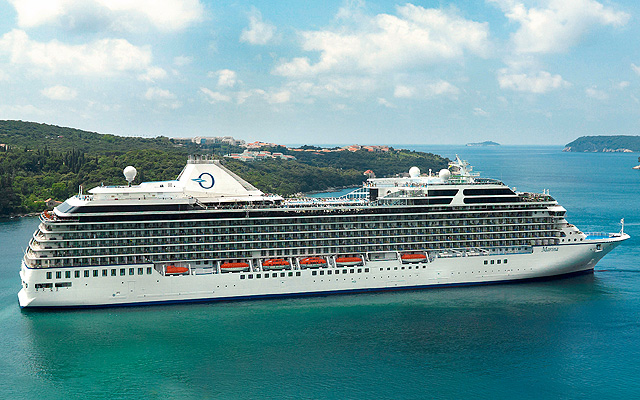
Sales for itineraries on Marina performed exceptionally well
Howard Sherman, president & CEO of Oceania Cruises, said: “The 2024 Collection launch illustrates tremendous and continued strong demand for cruising in addition to highlighting the increased trend in planning travel further out, both for past guests and new-to-brand guests.”
Oceania Cruises continues to see strong demand from new-to-brand guests, with one-third of the bookings coming from first-time guests.
All of the bookings for 2023 and 2024 are new cash bookings with no dilution from Future Cruise Credits issued during the pandemic, and one-third of the total transactions included reservations for at least two voyages.
The cruise line’s 35-day circumnavigation of Australia departing December 21, 2023 proved to be the most in-demand voyage, with more than 60 per cent of capacity filled in one day.
All destinations saw strong bookings with Asia as the most popular, followed by the South America sailings and Northern Europe itineraries on the 1,238-guest Marina performing exceptionally well. Africa, South Pacific, Australia and New Zealand also showed strong demand.
To help the travel industry get back on its feet at a time when many airports are burdened with lost income and limited resources, SITA is offering two approaches to passenger processing technology development that will ease the financial burden on airport operators.
First, for airports whose documentation procedures and systems do not inter-operate with that of other countries, SITA is offering an off-the-shelf solution that is free of cost for one year.
Patel: the only answer (to the congestion problem) is technology
Second, for airports with a system in place, SITA offers a phased technology refresh. For instance, an airport with available check-in desks could begin with two improved touch points to reduce passenger processing time, and move on to improvements at the immigration section, duty free retail and lounge facilities in the next phase.
SITA president Asia Pacific, Sumesh Patel, told TTG Asia that governments will have to eventually adopt new technology to address airport congestion and answer to a growing need for passengers to be in control of their trip while being exposed to minimal contact. New processes needed now include inter-operating passenger documentation and health detailing with that of other countries, touchless apps, and biometrics.
Patel noted that airports infrastructures were already strained by high passenger growth rate pre-pandemic, and the pressure is mounting as travel returns post-lockdown.
Pre-pandemic, the global average duration for passenger processing, from the time the traveller reaches the airport until boarding, was 1.5 hours. Now, with additional documentation scrutiny, the process has stretched to 5.5 hours.
“The only answer (to the congestion problem) is technology,” he stated.


 In her new role, Ram is passionate about working alongside her team to create exceptional experiences for the guests and furthering Jumeirah’s legacy in Asia.












Indonesia has removed pre-flight PCR or ART tests for inbound international and domestic travellers, including returning Indonesians. This comes into effect today.
Masks are no longer required for vaccinated people in non-crowded outdoor spaces. However, the mask-on policy still applies on public transport.
President Joko Widodo said the decision was made based on the pandemic coming under control in the country.
Arriving travellers will only need to undergo a health check at the airport for any Covid-19-related symptoms.
The Circular Letter issued by Indonesia Covid-19 Task Force on May 18 stipulated that travellers must comply with the new health protocol: download the PeduliLindungi tracing app, show proof of their second Covid-19 vaccination obtained at least 14 days prior to departure, and have insurance covering Covid-19 medication and evacuation to referral hospitals.
This policy is eligible for entry through the international airports of Jakarta, Surabaya, Bali, Batam, Bintan, Manado, Lombok, Medan, Makassar, Yogyakarta, Banda Aceh, Padang, Palembang, Solo, Banjarmasin and Balikpapan, and all international seaports.