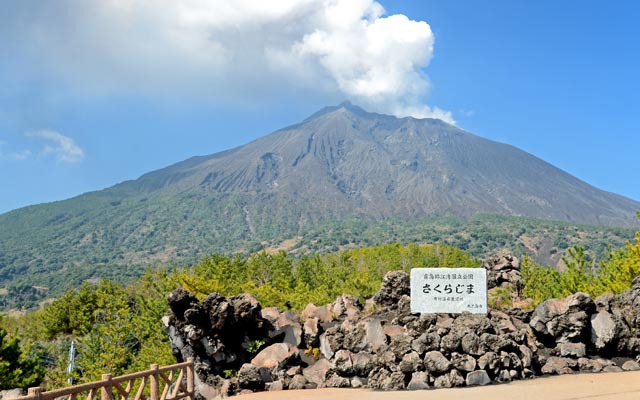
Sakurajima, one of Japan’s most active volcanoes, erupted today for the second straight day, spewing ash and stones and triggering an evacuation order.
The highest alert has been issued for Sakurajima
The volcano in Kagoshima Prefecture first erupted on Sunday evening.
While the national meteorological agency does not expect another major eruption, a high level five alert has been raised. It is the first time that level five has been issued at the volcano since the system was introduced in 2007, reported NHK.
What are Destination Mekong’s (DM) priorities for 2022?
Now that we are reaching a post-pandemic situation, new narratives, business models, visions and mindsets are needed. In this context, DM is planning to launch programmes for the resilience and recovery of the Greater Mekong Sub-region (GMS) tourism sector. We have to have our feet on the ground to re-connect with GMS tourism players, our community.
At the Destination Mekong Summit in October, we announced the incorporation of DM as a full-fledged company in Singapore. Moreover, we are in the process of incorporating DM as a non-profit enterprise in Phnom Penh since Cambodia’s Ministry of Tourism has offered to host our executive offices.
Since taking over as CEO, what have you and the new executive team been doing differently?
During the first half of 2022, the executive team set the necessary organisational structure and governance to stand as an independent, efficient and transparent regional Destination Management Organisation. Simultaneously, we have been developing DM the same way as a start-up, or rather an impact enterprise. Consequently, we have focused on strengthening our brand awareness and exposure, building a strong community and highlighting our value proposal in order to attract funds and resources.
The team has also worked on the elaboration of a roadmap for consolidation of our existing initiatives and programmes, and the identification of new business development opportunities while sending a strong message of confidence and resilience to all industry stakeholders in the region – with a special emphasis on micro, small and medium enterprises. Our overarching aim is now to champion the whole Mekong sub-region as an attractive sustainable destination.
What new initiatives and frameworks is DM working on?
New projects include the Mekong Micro-Certification Programme, a skills development toolkit for tourism sustainability and marketing, and Mekong Discovery Centres, an online and offline network of smart, eco-friendly, multipurpose and multi-branded tourism hubs aimed at supporting the sustainable development and marketing of secondary, developing and emerging travel destinations in rural and semi-urban areas in the GMS.
We have also appointed special advisors to support the development of innovative cooperation frameworks between the Mekong and Republic of Korea and Japan, two major source markets, with investors and development funders for the region.
Over the coming months, DM will pursue efforts to build a strong and resilient network of members and partners. However, its business model will not and cannot depend on membership fees only. It will mainly rely on the sale of innovative products and solutions, consulting and training services, advertising, and collaborations with organisations committed to corporate social responsibility and environmental, social and corporate governance.
What are some of the biggest challenges faced by GMS tourism players currently?
The near post-Covid time, also marked by the invasion of Ukraine and raising concerns over climate change among other global crises, have created new challenges and opportunities for GMS as well as DM. The easing of travel restrictions in GMS has yet to produce significant results and we can still feel reluctance from long- and mid-haul travellers. It is difficult to make projections in these uncertain times but hopefully we can expect a significant rebound within the next years, provided we make it not only desirable but irresistible.
Presumably, we will never revive the same situation as pre-Covid but we don’t want that. We want to promote an innovative model of tourism that is not obsessed by volumes but rather by value creation, with better contribution to local communities and their environments. We have to come up with smart and sustainable ways of doing tourism. I believe we should also develop an Asian way, even a South-east Asian way, of envisioning and practicing sustainable tourism.
How is DM helping to stimulate travel rebound in GMS?
GMS remains one of the world’s most promising tourist destinations and its fundamental assets have not been washed away by the pandemic. However, it seems hard to keep smiling when one has lost almost everything, including hope, and in some ways the sense of hospitality.
For these reasons, we will keep highlighting the contribution of tourism to the well-being and empowerment of local communities. This involves better distribution and dispersion of physical and financial flows, improved infrastructures, more climate-resilient facilities and services, more connectivity and accessibility, and the development and marketing of appealing community-driven destinations and experiences that can be included in multi-country itineraries.
Finally, as we intend to strengthen our capacity to deliver outstanding services and solutions to our community, we must secure the necessary resources, human and financial, so we can operate in a sustainable way.
Serena Yang claimed the top Malaysian female finisher prize with a time of 5:28:57, achieving her target of finishing below six hours
The Desaru Coast Multisport Festival, held from July 22 to 24, brought back the thrill of live action sports to Malaysia, with the IRONMAN 70.3 series drawing 2,062 participants over the weekend.
The Festival featured the IRONMAN 70.3, 5150 Triathlon series, IRONKIDS and the SPRINT distance races.
Among participants, 47.5 per cent were Malaysians and the rest were from overseas. International participation hailed from almost 50 countries.
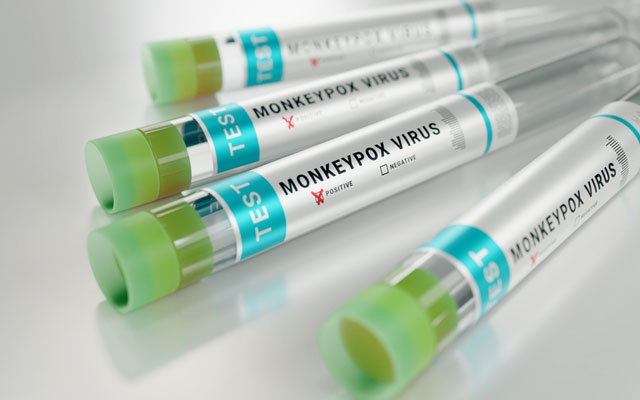
The World Health Organisation (WHO) has labelled the monkeypox outbreak a global health emergency, effectively sounding off an alarm for a coordinated international response and the possibility of funding and sharing vaccines and treatments.
More than 16,000 cases have been detected in at least 75 countries, up from about 3,000 at the end of June.
WHO declares monkeypox a global health emergency amid rising cases
The decision by WHO director-general Tedros Adhanom Ghebreyesus on July 23 has not triggered any major travel restrictions or mass vaccination orders in Asia.
While Singapore has eight monkeypox infections at press time, the Ministry of Health said on July 25 that mass vaccination of the population against the viral disease was not recommended. Health minister Ong Ye Kung said the benefits of vaccination do not outweigh the risk, but continued surveillance is in order.
Thai health authorities, which had on July 24 upgraded the country’s monkeypox alert to the national level, advised against public panic, saying that the “virus does not spread rapidly like Covid”. The Medical Services Department said the country has sufficient medicine and facilities to treat patients in the event of a monkeypox outbreak, according to The Nation Thailand.
Indonesia’s Health Ministry told Jakarta Globe on June 24 that there are no identified cases in the country, but the government has established two labs to detect monkeypox and is preparing detailed guidelines for lab testing.
Singapore’s premier night-time arts and culture festival, the Singapore Night Festival (SNF), makes a comeback this August after a two-year hiatus.
The 13th edition, themed Rebirth, will be held from August 19 to 27, bringing the Bras Basah.Bugis (BBB) precinct to life again with over 55 vibrant and eclectic experiences, including six projection mapping installations, 14 Night Lights installations, over 30 performances, experiential programmes, masterclass workshops, as well as food and retail experiences.
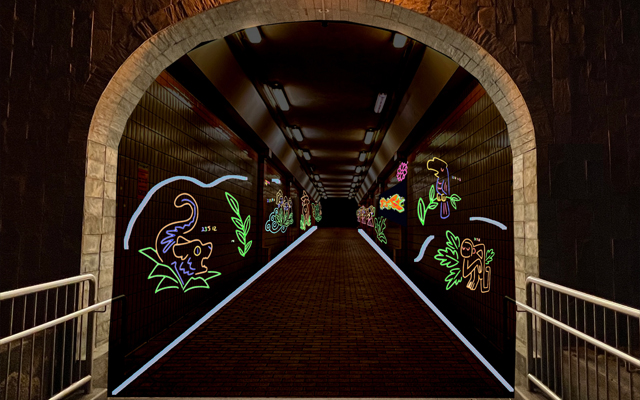
interactive graffiti by local audio-visual maker Lynette Quek is among the highlights
Some highlights are an immersive theatre performance; a refreshing line-up of sensorial experiences; a projection showcase by Hungarian projection mapping studio Maxin10sity at the iconic National Museum of Singapore; an artistic light up projection mapping installation by artist Amanda Tan at the Stamford Court clock tower; and the interactive graffiti by local audio-visual maker Lynette Quek that will line the walls of tunnels, and be activated by sounds made by visitors in the spaces at Fort Canning Park.
Adrenaline-seekers can join the self-guided race, Heat Of The Night, to seek out clues and uncover stories behind the BBB precinct through a variety of activities.
The full programme line-up for Singapore Night Festival 2022 will be announced in the beginning of August 2022.
Guests can save big with Centara’s Pre-Purchased Nights deal from now till October 15. Valid for one year, guests can pre-purchase 12 nights to be redeemed at 39 participating Centara Grand, Centara, Centra by Centara, and COSI hotels and resorts throughout Thailand.
Special bulk discounted rates start from 825 baht (US$22) per room per night, which includes free daily breakfast for two, and up to two children can stay for free. Guests can also enjoy a zero per cent interest credit card payment plan for three months.
Save big with Centara’s Pre-Purchased Nights deal from now till October 15
The pre-purchased nights can be used on consecutive nights or on separate trips, and can even be shared between friends and loved ones – guests can redeem pre-purchased nights at any hotel within the same pricing tier.
Whether it is handling a giant crayfish on a perfect beach or getting lost in a forest of super tall trees, Australia has long evoked a sense of natural wonder and inspired many an adventurous traveller.
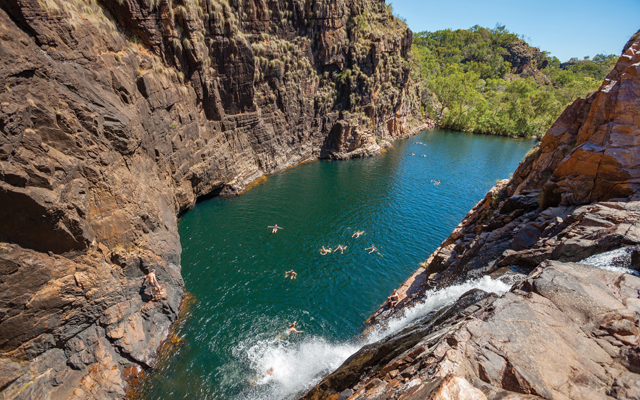
Kakadu National Park’s Barramundi Gorge offers a crocodile-free lake where visitors can swim
And now, it is that adventurous traveller that Australia needs, to help lead the tourism recovery charge.
“We’ve missed you”, declares the first line in Tourism Australia’s marketing collateral as efforts ramp up to encourage visitors to come back, after borders reopened in February this year.
What Australia has also missed is an adventure tourism market valued at US$22,370 million in 2019 before the pandemic hit. It was further estimated to grow at a compound annual growth rate of 21 per cent from 2021 to 2027, to reach US$33,519 million by the end of that period, according to Allied Market Research.
The numbers are unsurprising when you consider that the adventure sector is expanding rapidly around the world. Market Data Forecast predicts the industry will reach US$1.6 billion by 2026. But what’s impressive about Australia’s growth is that the rate significantly exceeds the research firm’s predicted global growth rate of 13.3 per cent.
So, what is driving the demand that many believe will play a key role in Australia’s tourism recovery?
New tourism experiences in the line-up include a zipline from the top of Matagarup Bridge in Perth
Homecoming
“The youth and adventure sector is getting a lot of attention right now,” confirmed Alex Hill, president of Adventure Tourism Victoria.
“Many government and tourism organisations are putting a lot of effort into attracting these travellers back to Australia. They’re just pumping money and investment into adventure tourism,” he said.
One of the campaigns Hill is talking about comes from South Australia, which recently made headlines in the UK for offering return flights from London to Adelaine at just 10 pounds (US$11.97). The scheme targeted the younger people who would take up working holiday visas to fill job gaps in a bid to support the hospitality industry’s recovery.
But there’s a lot more going on than just filling a few job gaps.
“Pre-Covid, we would have as many as 275,000 working holiday visa holders in Australia at any given time. In March 2020, they were asked to leave Australia when the pandemic hit. We’ve lost 20 to 30 per cent of our workforce in some industries, and for the last six months we’re seeing the implications of those decisions as the economy opened up,” said Hill.
Hill explained that these working holiday visa workers are also typically Australia’s biggest adventure tourists.
“As soon as the borders were open, these were the guys that got on the planes to head south (for) Australia to have their holiday or working holiday that they have missed out on for the last two years. They’re happy to bungee jump, do the hikes and jump out of an airplane,” he added.
Going back to Tourism Australia’s marketing collateral, however, its call for visitors to return not only reclaims missed opportunities, but also points out that everything from food to fashion has had a fresh makeover, with new tourism experiences and accommodation opening in hidden corners of the country as reasons to visit.
These include a new underwater stay in the Great Barrier Reef, a walk-the-plank challenge 140m above sea level in tropical north Queensland or a zipline from the top of Matagarup Bridge in Perth.
New adventures do not always have to involve physical risk. Tourism Australia’s marketing also targets what it calls adventure experiences for the soul, such as astro tourism or an iconic rail journey, or even a tiny-home stay.
“If you think about Tourism Australia’s marketing overseas, there was always a picture of Kakadu National Park or similar,” said Hill. “But I think we’ve gone a bit deeper than that.”
He explained: “With the many government grants that have been available, places like Victoria have been developing tourism products that link back to our first nations people and understanding that these are our true strengths, and it’s what we want to grow.”
An underwater stay in the Great Barrier Reef
Age is no limit
Tourism observers have noticed a newer market developing at the other end of the age demographic for the sector, and technology has played a role in meeting that market.
“Travellers in the older age bracket of over 50 and 60 are now starting to engage in adventure activities, and I think it’s partly to do with the popularity of e-bikes,” said Stephen Wearing, adjunct professor of eco-tourism studies at the University of Technology Sydney.
“There’s something like 35 rail trails being developed, which are a gentler ride on old railway lines that older people can access without worrying as much about their bodies breaking down.
“They’re looking for activities on this side of Covid and communities are developing their tourism to attract this market.
“So we’re seeing the convalescing of technology, development and communities wanting tourists, and the availability of rail trails and infrastructure funding to develop those,” he shared.
Wearing also noted larger businesses have been buying out smaller adventure tourism companies that have struggled through the pandemic. The net result is seeing their more isolated offerings now marketed to a much broader audience, including to those in the older age groups.
One example is the multi-award winning Maria Island Walk in Tasmania, which features a four-day glamping walk popular with older tourists. It was sold to leading Australasian adventure company Experience Co in 2021 and is perpetually fully booked, benefitting from Experience Co’s wider market reach.
As for what lies in store for adventure tourism in Australia, it is a case of ‘watch this space’.
Wearing believes the e-bike will revolutionise the way Australia does tourism internationally. The rise of man-made wave pools and increasing number of high ropes courses built during the pandemic also echo a healthy future for adventure tourism.
“Right now, it’s (already) great but in a couple of years’ time, it’s going to be fantastic,” said Hill.
“There’s been a lot of ideas over the last two years and a number of really exciting projects will hit the ground very soon. A world-class mountain bike facility in Warburton, 90 minutes east of Melbourne, is going to mesh seamlessly within a natural, cool temperate forest, alongside other offerings that complement that facility.”
“Projects like that are happening around the country because there’s a real need and desire for all levels of government, developers and tourism operators to come together to create these nature-based tourism experiences,” he concluded.
Are you thinking about an energetic summer holiday? Do you need to reenergize in unspoiled nature? Or are you looking for adrenaline-rush activities? Look no further. Switzerland is a huge playground for outdoor lovers whether you simply want to relax by exploring the great outdoors or if you are seeking summer thrills for an adventure. Here are some recommended summer activities in Switzerland – on the ground, in the water and up in the air:
Swiss Travel System Swiss Travel Pass
You can count on the Swiss Travel System for its reliability and extensive public transportation network to get around Switzerland, including places in high altitudes. With the Swiss Travel Pass, you simply hop on and off any means of public transport hassle-free for unlimited times within the pass duration. More time spent doing what you love with less planning time! Even better, the pass also includes some free mountain excursions and discounts on many others which is one of the great money-saving benefits of being a pass holder.
Lake Lucerne Region Summer Toboggan Run upon Fräkmüntegg
Get into the groove on Switzerland’s longest summer toboggan run – 1,350 metres of tempo and top-notch fun. The racy ride down the long shiny steel channel begins on Fräkmüntegg (1,415 metres altitude). Plenty of cool curves, dragon caves and in-built jumps make every toboggan run an unforgettable fun experience.
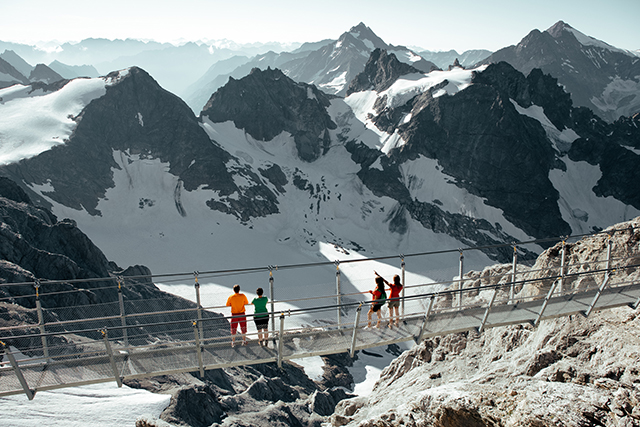
The excursion up to Titlis – the only accessible glacier in Central Switzerland – is a real treat. At 3,020 m, as there is a variety of things to experience in addition to the breathtaking view. On the summit, a 360° panoramic view of majestic Alpine peaks and the surrounding glaciers are sure to amaze you. Discover the Trübsee Adventure at the intermediate station Trübsee for more attractions such as zip lining, rowing and kayaking.
For paragliding fans, Interlaken has long been known for its excellent flying opportunities and nearly year-round good conditions. There is a wide range of unique opportunities for paragliding and seeing extraordinary views of the lakes and mountains. As a passenger, no previous experience is required. You are given a few instructions and then a few steps later, you take off with your pilot. Getting a bird’s eye view of the unique Jungfrau panorama will make you forget everything else for a while!
Loud thundering and roaring in the interior of the mountain, gurgling, foaming and churning water: these are the Trümmelbach Falls. They are Europe’s largest subterranean waterfalls and are located in the Lauterbrunnen Valley, often called the valley of 72 waterfalls. The hike on mainly flat land leads from Lauterbrunnen to Stechelberg, past water gushing from vertical rock faces that are several hundred meters high.
Vaud – Lake Geneva Region Paddleboarding among Lavaux
The terraced vineyards of Lavaux, along the shores of Lake Geneva, are some of the most stunning natural sights in Switzerland. Extending over 800 hectares, the vineyards are a UNESCO World Heritage site that can be enjoyed not only through hikes, bike tours, but also by water. Aside from Lavaux, paddlers can also enjoy the unique views of the Swiss and French Alps. You may definitely savour local wines after the paddle while enjoying the majestic views of the lake.
Matterhorn Region Cycling through the vineyards of Martigny to Leuk
This route is a trip through the wine-growing region of the canton of Valais. The 82-km trail winds up and down through cultivated vineyards and historic locations. You find yourself climbing through the beautiful terraced vineyards on quiet back roads with stunning views over the Rhone valley. Small wine producing villages along the route offer wine tasting mostly without appointment. With around 40 types of grapes grown in the Valais, you are spoiled for choice.
The five-lake trail is a magnificent hiking tour through the mountains of Zermatt: three of these mountain lakes reflect the Matterhorn. Each of the five lakes – Stellisee, Grindjisee, Grünsee, Moosjisee and Leisee – has its own unique characteristics. You can enjoy a swim at Leisee, or enjoy the beauty of the alpine flora at the banks of Grindjisee. Offering unique views of the many peaks, the hiking route is extremely diverse.
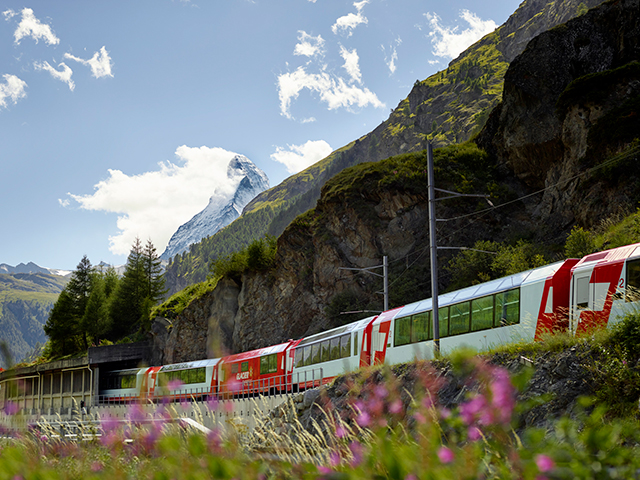
Glacier Express Travel across the Alps with the world’s slowest express train
The Glacier Express offers a journey for the sense – from Engadine right to the Matterhorn. On its relaxing drive from dazzling St. Moritz to equally sophisticated Zermatt, the Glacier Express delights travelers with scenic attractions and technical state-of-the-art achievements. With its panoramic windows, the Glacier Express opens up unobstructed views of unique landscapes. Excursion tips include exploring the “Grand Canyon” of Switzerland between Ilanz and Reichenau or Corvatsch, a paradise for hikers and skiers.
Fresh waves of Covid-19 infections are rolling across the world, impacting several countries that are both important tourism source markets and destinations, such as Australia, Indonesia, Singapore, Thailand, South Korea and the US. Despite urgent headlines spotlighting the infection trends, travel companies say travellers are pressing ahead with their plans.
Pascal Gekko, vice president, international accommodation, Traveloka, told TTG Asia that travellers are not deterred by the global resurgence of Covid-19 cases.
Despite headlines around the world spotlighting the resurgence of Covid-19 infections, travellers remain undeterred and still make travel plans
“There is still a strong appetite for travel, and we have been seeing a steady uptick of bookings on our platform. We have not seen higher cancellation rates, while weekly traffic and transactions on our platform remain uniform,” detailed Gekko.
Traveloka continues to see a “significant number of travellers who have made plans for the September and December holidays”. Indonesia, Malaysia, Singapore and Thailand top the list of destinations booked by customers for the rest of the year.
Chan Brothers Travel, one of the leading outbound travel specialists in Singapore, also reports an absence of impact on forward bookings.
Even with South Korea tightening its on-arrival PCR testing requirements from July 25 to curb the spread of Covid infections, with a test now needed within 24 hours instead of 72 hours, the agency’s spokesperson Jeremiah Wong said customers booked for the popular North Asian destination would not be troubled.
“This change will not affect our customers as we have always arranged for them to do their PCR test upon arrival at the airport. Our tour leaders will be fully assisting and guiding customers on our group tours through the process as well,” said Wong.
Gekko believes that the pandemic has reshaped consumer behaviour. Not only are travellers bearing higher expectations of travel as a holistic experience, they are also more resilient and largely undeterred by the various challenges present today.
“We have observed that travellers are taking into consideration the unexpected and equipping themselves with the necessary information and preparation. Rising airfares, for example, have encouraged travellers to book their flights earlier and opt for flexi flights, instead of last-minute fixed bookings in the pre-pandemic days,” he said.
As travellers persist with upcoming plans, they continue to be cautious about health guidelines, and are opting for suppliers that can deliver on safety and flexibility promises.
Chan Brothers Travel maintains its Travel Safe Travel Smart initiatives that highlight safety and hygiene protocols such as ensuring there are no more than 25 or 30 travellers per tour group.
Traveloka keeps its safe travel page regularly updated with current travel safety requirements and offers flexibility within its products and services to take the stress of travel planning off its customers. Refundable options are available for flights and hotels, and customers can also choose to pay later or upon check-in. A round-the-clock customer support team is on standby for unexpected situations.
“While we move towards travel in a post-Covid-19 world, it is important to note that the situation remains fluid and regulations may change easily, disrupting travel plans,” Gekko said.
When asked which of the numerous obstacles that continue to batter travel and tourism’s recovery, from airport disruptions to extreme weather in some regions, are the biggest disruptors of travel confidence among customers, Wong pointed out a few stemming from demand outstripping supply.
“Rising airfares caused partly by limited seat inventory is being scrutinised now. Due to global travel resurgence, there is also the issue of limited room inventory – case in point, the unique igloo accommodation, which is one of the highlights of Northern Lights tours,” he said.
“Other than these, if governments around the world revert to stricter travel rules, testing measures and border restrictions, travel sentiment among Singaporeans will be affected,” he added.
Singapore GP, organiser of the Formula 1 Singapore Airlines Singapore Grand Prix 2022, has lined up a power-packed race weekend to keep spectators engaged within the Circuit Park.
Big names in this year’s programme include Black Eyed Peas, The Kid LAROI, TLC, Suede, Marshmello, Westlife, and Green Day, along with a mix of local and international artists from all over the world who will deliver a total of 100 hours of entertainment. Some 92 performances across nine stages, 79 roving acts and an array of art installations and activities are also part of the line-up.
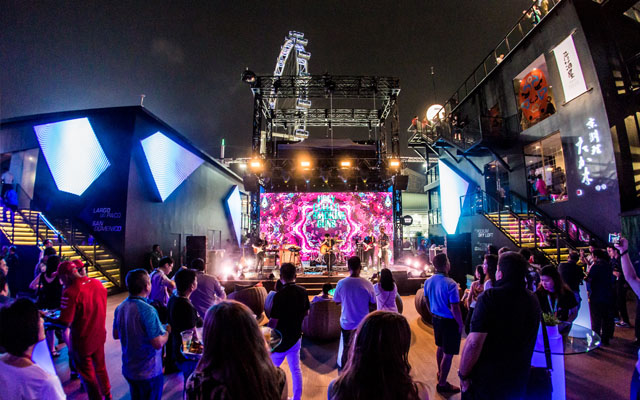
Singapore’s Formula 1 ticket holders will enjoy on-track action, activities and performances, as well as food and beverage
International acts like Swedish-Gambian singer/songwriter Seinabo Sey, Malaysian reggae band Salammusik, Israeli electronic music project Garden City Movement, Singaporean singer/songwriter INCH, and more, will be featured across the three-day weekend race.
Singapore GP will also be shining the spotlight on local artists including 8EyedSpud, Adeline Loo of It Takes Balls, HAFI, Koh Dawn, Lee Wei Lieh of Very Small Exhibition, and Paper Carpenter. They will display their works at curated experiential zones within the Circuit Park. These zones offer a host of interactive activities, entertainment as well as food and beverage.
All tickets to the Formula 1 Singapore Airlines Singapore Grand Prix 2022 will allow fans to enjoy on-track action as well as activities and performances in Zone 4 of the Circuit Park – valid tickets will be required to access the relevant zone for each day.


 What are Destination Mekong’s (DM) priorities for 2022?