TTG Asia
Asia/Singapore Friday, 19th December 2025
Page 708

Australia to fully reopen to vaccinated travellers from February

0

Australia will fully reopen her borders to all vaccinated visa holders from February 21, after almost two years of restricted entry since March 2020.

Although the country has put in a place a staggered border reopening since late last year to allow skilled immigrants and international students to enter the country, as well as quarantine-free travel arrangements with select countries like New Zealand and Singapore, all remaining restrictions will finally be lifted come February 21.

Australia will welcome all vaccinated visa holders from February 21

Unvaccinated or partially vaccinated travellers will still require an exemption and be subject to the relevant state and territory quarantine requirements.

With this announcement, internationally-focused Australian tourism businesses can breathe a sigh of relief and rebuild their markets.

Australian Tourism Export Council’s managing director Peter Shelley said that this positive news is a “clear target to work towards” to start to rebuild the once-burgeoning industry.

“With close to two years with our borders closed, our industry has lost tens of billions of dollars in export revenue and we welcome the border reopening as an opportunity to regain some of Australia’s tourism market share,” he said.

He believes that there is a “significant pent-up demand” as Australia has been off the global destination list for nearly two years now.

“But the challenge for our industry is to meet this demand successfully and that will involve tourism businesses rebuilding their lost capacity, product, service skills and supply chains.

“Given the tourism industry has taken a devastating hit to its skills base, experience, expertise and global sales networks, we urge the government to outline a significant funding commitment to our industry in next month’s budget as a sign of its support for what has been a hugely valuable economic contributor for more than a decade.”

Philippines details arriving protocols for foreign travellers

0

The Philippine tourism secretary Berna Romulo-Puyat has issued a reminder to all arriving travellers of the country’s entry requirements, as borders prepare to reopen to international leisure travellers on February 10.

Puyat made the statement, following the issuance of Inter-agency Task Force for the Management of Emerging Infectious Diseases’ (IATF-EID) Resolution No. 160-B, which details the new entry, testing and quarantine protocols for foreign nationals coming from 157 visa-free countries.

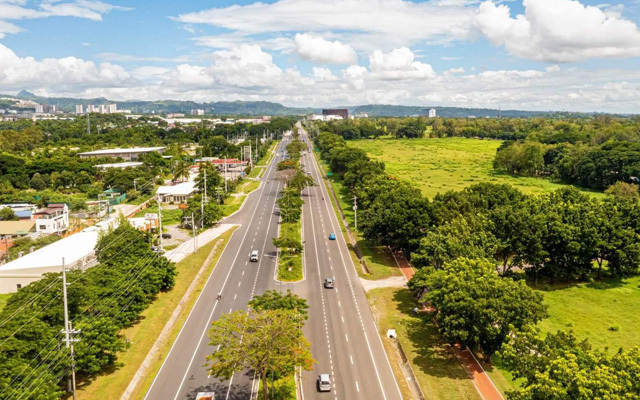
The Philippines’ reopening on February 10 will restore the livelihood of millions of Filipinos working in tourism-related establishments and businesses who have been displaced by the pandemic; Manila Bay pictured

She emphasised that the new entry guidelines take careful consideration of the health and safety of both visitors and the general public.

All arriving visitors must present an acceptable proof of vaccination; a negative PCR test obtained 48 hours before departure from the country of origin/first port of embarkation in a continuous travel to the Philippines, excluding lay-overs for their return journey; valid tickets for their return journey to the port of origin or next port of destination not later than 30 days from arrival in the Philippines; passports valid for a period of at least six months at the time of their arrival in the Philippines; and travel insurance with at least US$35,000 in coverage for Covid-19 treatment from reputed insurers.

The Philippines’ reopening applies only to fully vaccinated foreign travellers as well as unvaccinated children under the age of 12, provide they are traveling with fully vaccinated foreign parents.

Unvaccinated foreign children below 12 years old that are travelling with their Filipino parent/s will need to fulfil entry, testing, and quarantine protocols that apply to their Filipino parent/s.

Meanwhile, those between 12 to 17 years old must follow the protocols based on their vaccination status, and shall be accompanied by their parents during their facility-based quarantine.

While foreign visitors are exempted from facility-based quarantine, Puyat said travellers should continue to self-monitor and report to the local government unit of their destination should they exhibit any Covid symptoms.

“The opening of our borders to eligible foreign visitors and the rebound of the tourism industry can only mean the restoration of the livelihood of millions of Filipinos working in tourism-related establishments and businesses who have been displaced by the pandemic. It will contribute greatly to the eventual revival of the Philippine economy”, Puyat added.

TTG Conversations: Five Questions with Hannah Pearson, Pear Anderson

0

Restrictions at South-east Asian borders are easing and optimism across the travel and tourism industry is rising, observes Hannah Pearson, director of Pear Anderson, a research and sales representation tourism consultancy.

In this episode of TTG Conversations: Five Questions, Pearson provides a quick overview of how the region’s border restrictions have evolved since Covid-19 first made landfall here in February 2020, and shares her views on tourism recovery potential, government reactions to Omicron, and challenges in facilitating critical intra-region travel.

Dream Cruises extends suspension of new sales

0

New bookings for Dream Cruises will continue to be suspended until further notice amid ongoing liquidation procedures, although the suspension was due to end on February 4 – two weeks after parent company Genting Hong Kong announced its decision to file for provisional liquidation.

The cruise operator also filed to wind up the company with the Bermuda courts on January 27, and submitted an application to appoint joint provisional liquidators for the company.

Sale of new Dream Cruises sailings continue to be suspended

No upcoming sailings in Singapore or Hong Kong are currently available for sale on the Dream Cruises website.

Earlier in January, Dream Cruises had announced resumption of Taiwan sailings after a seven-month hiatus as well as its attainment of the SG SafeEvent Certification by Singapore Association of Convention and Exhibition Organisers and Suppliers (SACEOS) that enables World Dream to bring business events onboard.

Genting SkyWorlds opens after multiple delays

0

Genting Malaysia’s new theme park, Genting SkyWorlds, will finally soft-open on February 8, following several delays since 2019.

Lee Thiam Kit, head of business operations and strategies with Genting Malaysia, said in a press statement that the attraction’s opening would support the tourism sector and the economy with the creation of over 1,000 jobs, as well as “put Malaysia and Pahang on the world tourism map”.

Genting SkyWorlds soft-opens on February 8

Built across 10.5ha of land at an elevation of 1,829m above sea level, Genting SkyWorlds offers nine movie- and adventure-inspired ‘worlds’, incorporating original intellectual properties, as well as movie-themed rides and attractions.

A 20 per cent discount on ticket prices is offered during the soft-opening phase. However, some attractions will not be available to guests.

Greg Pearn, vice president, head – theme park operations, Resorts World Genting, acknowledged that opening a theme park during the pandemic has been a challenge. “While every effort has been made to ensure our full offerings are available, a small selection of attractions require a little more time to be completed, something the team is working hard to achieve,” he said.

Universal Holiday’s founder and CEO, Zahira Tahir, said the theme park would make it easier to promote Malaysia to the Asian and Middle Eastern markets, as this is a key attraction for families visiting Malaysia.

She added: “It would also increase the length of stay of tourists. When the theme park was closed prior to the pandemic, our clients from India and the Middle East made only day trips to Genting. Earlier on, when the outdoor theme park was opened, they used to stay for one or two nights in Resorts World Genting.”

Adam Kamal, head of procurement & domestic market at Ice Holidays, said the published rates were comparable with other major theme parks in the country. However, no agent rates are offered. To sell the theme park to the domestic market, a mark-up will be needed, but that will make the rates higher than what are published online, according to Adam.

Genting Malaysia is anticipating direct online bookings from the domestic market. It has also developed an app which provides a comprehensive guide to Genting SkyWorlds, with real-time information. The app enables guests to navigate and experience the park virtually prior to arrival, giving a head-start on what to do, where to go and how to get there. Among other features, guests will be able to check wait times for rides, attractions and shows; receive promotional offers and discount vouchers; discover dining, shopping, games, and the theme park’s advanced Photo+ service.

The Standard’s Asian flagship readies for May opening

0

The Standard, Bangkok Mahanakhon is set to open to first guests on May 11, with room reservations kicking off last Friday.

The 155-key property will be The Standard brand’s flagship hotel in Asia and the latest addition to the company’s growing global portfolio.

Sky Beach will be the highest rooftop bar in Bangkok, offering 360-degree views of the Thai capital

It sits in Bangkok’s central business district, between the Sathorn and Silom corridors, and is housed in King Power Mahanakhon, a 78-floor mixed-use building that is one of the tallest in Thailand.

The hotel will reflect the energy of the Thai capital and infuse The Standard brand’s “anything but standard” ethos throughout.

“There is nothing in Bangkok, or the entire region, like what we have created here,” said Amar Lalvani, executive chairman for Standard International.

“We love the energy, style and culture Bangkok offers and couldn’t be more proud to partner with King Power to open our flagship for the region in this awe-inspiring building, in this incredible city. When we open our doors in May, visitors and locals will be treated to the world of immersive hospitality that only The Standard can create,” he added.

Facilities will include an outdoor terrace pool, an advanced gym with membership for the local community, event spaces, and an array of F&B establishments, including Thailand’s first outpost of the acclaimed Mott 32.

Diethelm Travel sees change of ownership

0

Diethelm-Keller Holding has sold its remaining shares in Thailand-headquartered DMC Diethelm Travel to Stefan Römer, CEO of Diethelm Travel and founder of Tourasia, finalising a change in ownership of what is recognised as one of Asia’s most established travel companies.

According to a Diethelm Travel statement issued last Friday, Tourasia Roemer, Arcothai International and investor Gonpo Tsering will take over Diethelm Travel together and “bring Diethelm Travel to the new era of travel empowered with advance IT system while staying true to our DNA as your trusted DMC in Asia”.

Tourasia Roemer, Arcothai International and investor Gonpo Tsering take over ownership of Diethelm Travel; Stefan Römer pictured

Römer said: “I am excited to assume full ownership of Diethelm Travel together with my new partners and would like to thank Diethelm Keller Travel Holding for the great partnership over the years as well as their trust in us to successfully lead the business into the future. I am confident that Diethelm Travel is well positioned to take advantage of the travel industry taking off again in 2022.”

Diethelm Travel today has an extensive network of 13 fully licensed and insured offices throughout Asia, in destinations such as Bhutan, Malaysia, the Maldives, Singapore and Vietnam.

Mounting a curated comeback

0

With expectations that post-pandemic travellers will crave personalised tours that are customised, localised and smaller in size, Indonesia’s Ministry of Tourism and Creative Economy (MoTCE) has developed a suite of special interest products and different marketing strategies to capture the new market.

Rizki Handayani, deputy minister for tourism products and events, said the pandemic has triggered rising demand for special interest tours – once eclipsed by the ministry’s prioritisation of mass tourism, but is now being given renewed focus, with an aim of revitalising and strengthening those product offerings.

Travellers can experience a purification ceremony as part of the Ministry of Tourism and Creative Economy’s new programme line-up. Credit Werkudara Group

Adventure Outlook 2022 survey, for example, showed that 99 per cent of over 2,000 Indonesian respondents wanted to take adventure trips post-pandemic.

Cahyo Alkantara, chairman of the Indonesia Adventure Travel Trade Association, said: “(At the beginning of the pandemic,) adventure tourism was projected to be the last to recover, but it turns out now that it will be the first to come back strongly as travellers are looking for outdoor activities.”

One indicator is the mushrooming of upmarket camp and camper van sites in places like Ciwidey, Bandung; Puncak, Bogor in West Java; as well as Purworejo and Semarang Regencies in Central Java.

Some travel companies like Exotic Java Tours have turned some of their vans into camper vans, while transportation companies such as San Group have rushed to produce them.

However, nature and adventure are not the only segments the MoTEC is zooming in on. The ministry is also developing products themed around concepts like heritage, ecotourism, medical and wellness, gastronomy, marine and diving, Muslim-friendly, and village tourism.

On the heritage front, the ministry recently launched the Borobudur Trail of Civilisation, a collection of nine thematic travel products, namely, Waluku: Cultivating Civilisation, Skilled Hands, Body and Soul, Tropical Flora’s Wonderland, Walking with Stars, Sudhana Manohara: The Eternal Love Story, Journey of the stones, Jalaka Fable Stories, and Music and Rhyme.

The concepts of all nine activities are built around the reliefs found at the Borobudur temple.

Rizki said: “The Borobudur Temple reliefs tell more than the Buddhist teachings. You find love stories, wellness, music, astronomy, and many more depicted on them. The temple is actually a universal ‘library’ which can tell many stories that can appeal to travellers of different interests.”

Arya Galih, coordinator product and promotion of cultural and man-made tourism at MoTCE’s Special Interest Tourism Directorate, said: “The relief of Princess Maya having a massage treatment by her ladies-in-waiting showed that wellness treatment through massage and herbal medication to keep the royalty fit have existed during and even before the Ancient Mataram Kingdom time.”

Based on this, the Body and Soul product is developed by empowering the local community and maximising local Balkondes, which are lodgings built in cooperation between the village community and state-owned companies.

Rizki said: “There are 15 Balkondes – and instead of just offering accommodation and a tour around the vicinity, we would like to add different experiences based on the reliefs. One lodging which offers traditional massages, for example, will receive story content, (assistance to) create the (spa) menu, and trainings for the masseuse guides from us. So will other Balkondes offering different experiences.”

Meanwhile, Waluku: Cultivating Civilisation immerses guests in the traditional process of growing rice. In Skilled Hands, visitors learn earthenware pottery and batik painting.

For the more adventurous, the Tropical Flora’s Wonderland takes them hiking and identify flora found at the reliefs, while Walking with Stars is a camping experience to learn about astronomy and its relation to the temple.

Such travel products will be developed particularly in the five super priority destinations, including Borobudur, in line with the goal of creating new attractions in these destinations. In Toba, experiences at the Toba Geopark will be based on the heritage theme; while Yogyakarta-Solo-Semarang (Joglosemar), the supporting clusters of Borobudur in Central Java, will boast offerings with wellness at its core.

Rizki said: “When we talk about herbal medication, there is no better place (to promote it) than Central Java. Big jamu (herbal drinks) plants are located in this province.”

At the same time, MoTCE will expand the range of such products in other destinations, such as Bali, a health and wellness hub; Jakarta, an emerging medical tourism destination, as well as Medan and Surabaya, home to 15 prominent hospitals collectively.

Market-wise, Rizki said that due to their niches, the most effective way of promoting these products is through special interest trade shows and sales missions, once travel resumes.

In the meantime, travel products are being developed with experts on the different categories and the special interest travel industry.

According to Rizki, as 70 per cent of the ministry’s focus next year will still be on the domestic market, it will trial the programmes domestically, while raising awareness for them in overseas markets.

Ready to get back on track

0

Is the Singapore-Riau Safe Travel Bubble sparking joy?
We are happy that the borders for Bintan are open, and that’s a welcome response to all the hard work that we have put in, in terms of communications with the local authorities to reopen Bintan for tourism.

But that’s just one portion. The Indonesia side is very clear about what will happen when travellers enter Bintan through the Safe Travel Bubble. The protocols are in place. However, we have yet to receive a written directive from Singapore authorities on how travellers from Bintan will return to Singapore.

It is not clear how Singapore intends to implement this, although Singapore prime minister Lee Hsien Loong acknowledged the Singapore-Riau Safe Travel Bubble announcement during RISING (Singapore-Indonesia Leaders’ Retreat on January 25, 2022), and said that he is working with president Joko Widodo on expediting the arrangement.

We can only be truly happy when Singapore announces reciprocal quarantine-free arrivals from Bintan.

The Singapore-Riau Safe Travel Bubble still requires a lot more work to be done, especially on the Singapore side. The current regulation for travel into Singapore from Bintan requires a seven-day quarantine.

Compulsory quarantine on return will continue to be a major obstacle to Bintan’s tourism recovery, so we are hoping hard that the Singapore authorities can agree on a Vaccinated Travel Lane with Bintan, just like the ongoing arrangement with Jakarta which is very convenient and successful.

Working from home has become a norm for many, and the returning quarantine in Singapore can be served at home. Will this help to encourage Singapore residents to still go ahead with a Bintan vacation?
I don’t think so. Not everybody can work from home, and most people value the freedom of movement – they don’t want to be confined after coming home from their holiday.

The returning quarantine is another layer of inconvenience, considering how travellers wanting to go on the Singapore-Riau Safe Travel Bubble will have to pay for PCR tests in Singapore and Indonesia (once prior to departure and again upon arrival at Batam’s Nongsapura ferry terminal or Bintan’s Bandar Bentan Telani terminal). If it is required by Singapore authorities, travellers will also have to take another PCR test in Bintan and Batam before they can board the ferry home, and then another PCR test on arrival in Singapore.

Imagine this: a single traveller taking a two-night break in Bintan would have to complete four PCR tests. In Singapore, a PCR test costs about S$120 (US$89), while in Bintan S$30. That’s S$300 on tests alone.

While cost is a concern for some, compulsory quarantine is a concern for most.

Would these travel regulations change the way people holiday in Bintan?
We will see fewer day-trippers. People will stay at least two or three nights to make the procedures and costs worth it.

That’s a good point. Singapore residents typically view the island as a quick getaway for spa and golf. Can Bintan convert day-trippers or short-stay regulars into longer staying guests?
Definitely. Firstly, we have more than enough accommodation. We have 2,000 hotel rooms in operation now within the Lagoi travel bubble. These are from seven hotels that have remained open, out of a total 17 hotels in Lagoi. Hotels are required by law to take only 50 per cent of capacity, but daily arrivals through the travel bubble are capped at 500 pax.

Secondly, we have four signature golf courses in operation along with so many other recreational and tourism facilities, all of which are spread over an area that is 15 to 20 times larger than Singapore’s Sentosa island. There are plenty of activities for travellers looking to stay in Bintan for three or four nights.

We are expecting leisure travellers to return, as well as weddings and business events. Bintan hotels, resorts and venues are authorised to host events of up to 300 pax in a single area with safety measures in place.

For almost two years, Singapore residents have had to stay home. Now that Bintan is reopened for tourism, we believe that Singapore residents will return to their favourite backyard over weekends and during the school holidays.

Is Bintan Resorts planning festivals or events to encourage longer stays?
We (used to) organise a lot of sports events annually – five or six pre-pandemic. We have started to speak to our event organiser partners about reviving some of these events. I think we can do the minimum safely – that is to bring back a few sports events such as triathlons and marathons, which can be conducted within the Lagoi area. It is possible to do a 40km race within Lagoi.

As for Tour de Bintan (a premier bicycle race) which usually extends across the island, perhaps we will have to do a smaller variation called Tour de Lagoi or Sprint – a shorter distance in loops but more intense.

Some of these sporting events can be modified and kept within a particular resort, such as Nirwana Gardens.

At the same time, we are also appealing to local authorities to allow us to conduct races that go beyond the Lagoi boundaries. Race participants do not stop and mingle with the locals; they are focused on completing their race. So we think that races that extend out will not pose any risk of infection to the local community. I think we can find a way to do this.

Bintan used to have concerts too. I think these will only come back later in 2022.

I remember those sports events were a crowd magnet for Bintan. How do you think interest in them has held up over the past two years?
When we cancelled our Tour de Bintan (due to the pandemic and lockdown), we had more than 1,200 registered participants. These people have told us that they will come back to Bintan once we resume the race.

However, I must say that sports tourism is not our biggest revenue generator. The traditional holiday segment is still the biggest consumer of accommodation and F&B in Bintan. Sports tourism travellers make up about 30 per cent of Bintan’s total arrival and revenue.

Still, every potential event or activity that can attract travellers matter, especially as Bintan tourism recovers.

In general, Bintan hotels need about 38 per cent of room occupancy to break even. Now, they are only allowed to fill 50 per cent of their room inventory. If these hotels can achieve a 50 per cent occupancy rate, they will be able to make some profit.

The travel bubble gives us hope, even though there are still many restrictions. It is also a clearer signal to the hotels for them to begin ramping up operations.

Has Bintan been able to curb tourism losses with the domestic travel market?
Domestic arrivals in 2021 were 15 per cent, up from 10 per cent pre-pandemic. That is not enough for hotels to break even.

You mentioned earlier that there are only seven out of 17 hotels open for tourists in Lagoi. Now with the travel bubble underway, will the remaining hotels reopen for business?
Once Singapore can confirm there is no compulsory returning quarantine for travellers coming from Bintan, hotels that are now closed will gear up for reopening. Some of the hotels that have closed during the travel freeze are Club Med Bintan, Nirwana Gardens and Angsana Bintan. They will need three weeks to a month to reopen.

Hotels have been maintaining their hardware regularly despite the pause in operations, but they will need time to bring back manpower. During the travel freeze, most hotels placed their staff on unpaid leave. Some staff left their jobs completely. A large part of Bintan’s tourism workforce comes from outside of Bintan, so recruitment will take time.

Can they ramp up in time? I’m sure they can, since the hotels will not be reopening with 100 per cent of room inventory (due to government safe measures). They only need manpower to run 50 per cent of capacity at their facilities.

You held a forum for Singapore travel agents on February 3. Will there be even more travel trade engagements now that travel to Bintan is possible again?
Our doors were never closed. Communications with our travel trade partners have been constant throughout the travel freeze, via Zoom meetings and other online channels. We have been doing this every month, and more frequently for some operators. Going forward, we will have even more engagements for sure.

Once we are certain that a reciprocal travel arrangement is in place, the first thing we would want to do is to organise a fam trip with all our stakeholders and bring our travel trade partners, event organisers, trade journalists and travel bloggers over to Bintan. This will be a chance for them to experience Bintan after two years of tourism break. For the travel agents, a firsthand experience will help them sell Bintan. We will also support them in sales and marketing to the general public.

Travellers continue to be most concerned about procedures when they travel, especially if they are infected during their trip. How can Bintan support travellers should they need Covid-19-related medical attention?
Falling sick during travel is nothing new, and Bintan has always been prepared for ill travellers. The system has been in place for the past 25 years, since the day Bintan Resorts established its first property.

Should a traveller from Singapore fall sick in Bintan, we usually refer them back to their home country. If medical attention in Bintan is preferred, we have a general hospital here in Tanjong Pinang (the largest town in Bintan and the capital city of the Riau Islands) that is fully-equipped with Covid-19 treatment facilities. Travellers can be quarantined in this hospital if they so desire.

If the traveller prefers to return to Singapore, we have a boat dedicated to medical repatriation. We have a long-term partnership with Singapore-based Hope Medical Services for such incidents. The Singapore government is obliged to receive Covid-19-infected Singapore residents home for medical treatment.

Travellers to Bintan will require insurance coverage of up to S$30,000, and that amount is more than enough to cover medical treatment or repatriation.

What sort of Covid-19 safe measures will travellers experience in Bintan?
Besides the on-arrival PCR tests, travellers will have to collect a BluePass token once they are cleared for entry (with a negative test result). The BluePass token is similar to Singapore’s TraceTogether token, and is used for tracking and tracing in the case of Covid-19 exposure. Access to public facilities, such as restaurants, will require the token.

Like all public facilities across Indonesia, hotels and facilities in Lagoi are certified under the country’s Clean, Health, Safety, and Environment (CHSE) programme. We have also engaged a Singapore-based health and safety consultant, Optimus Consulting, to advise us on meeting SG Clean (a quality mark established by Singapore’s National Environment Agency to safeguard public health during the pandemic) health and safety standards.

All staff are trained on SG Clean protocol, and leaders are aware of what needs to be fulfilled.

We have modelled our pandemic response protocols after Singapore, from the use of the BluePass token to our public hygiene measures, because 90 per cent of our international arrivals come via Singapore. Of that, 30 per cent are Singapore residents.

Does modelling pandemic response protocols after Singapore include drinking restrictions in public spaces from 22.30 to 07.00?
No, no! Travellers to Bintan are welcome to enjoy their drinks – but responsibly and with conscious safe distancing (laughs).

Bintan is a resort island, so it is natural for travellers to expect to be able to relax and enjoy themselves.

In fact, we encourage them to drink, because that contributes to our F&B revenue!

Visit Thailand Year 2022 to spur Kingdom’s tourism recovery

0
A couple taking a selfie at Wat Arun, Bangkok

Thailand has kicked off Visit Thailand Year 2022 to stimulate international travel demand, with promotions focusing on the destination’s Amazing New Chapters that highlight the abundance of tourism products in the Kingdom, as well as the health and safety measures in place.

Along with the intensive campaign, Thailand has reconsidered its overseas target markets in light of the absence of Chinese tourists – once the country’s largest inbound source market.

A couple taking a selfie at Wat Arun, Bangkok, during the pandemic

Siripakorn Cheawsamoot, Tourism Authority of Thailand’s deputy governor for marketing and communications, told TTG Asia: “We have been assessing which markets are likely to resume travel to Thailand, and expect Singapore, Malaysia, South Korea and India to rebound first.”

He shared that the Tourism Authority of Thailand has also shifted its mass focus to niche markets to draw bleisure travellers, wellness tourists, as well as work with partners to arrange charter flights and special packages to cater to the golf market.

“Last year in November, we welcomed the first charter flight of Jeju Air (since the pandemic) that brought 83 South Korean golfers to tee off and explore Chiang Mai,” he elaborated.

For the domestic travel market, the government has rolled out a Travel Together campaign that will be carried out in phases this year to provide subsidies for accommodation, air tickets and meals. It is hoped that these subsidies would encourage Thai residents to go out and explore their backyard.

To help hotels fill their rooms during low seasons and on weekdays, locals will be encouraged to embrace workcations.

Siripakorn said: “At the end of 2022, we expect to see 120 million domestic trips made, which will generate a revenue of 630 billion baht (US$19 billion).”

Overall, the country projects it will generate around 1.3 to 1.8 trillion baht for the tourism sector in 2022, with approximately 80 billion baht from as many as 15 million tourists.