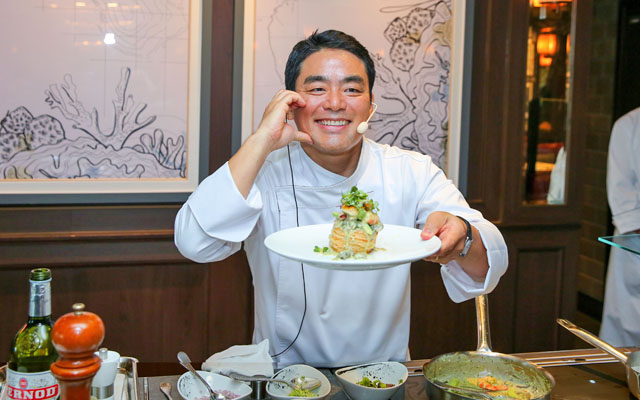
Accor and Singapore’s Fragrance Group will open Novotel Devonport in Tasmania’s northwest in 4Q2022. This will be the fifth hotel in Australia under their collaboration.
The 187-room hotel overlooking the Mersey River will feature a restaurant and bar, 24-hour room service and fitness centre, and a meeting room for up to 20 delegates. It is located nearby the Spirit of Tasmania terminal and with direct access to the paranaple convention centre.
Novotel Devonport in Tasmania will open in the later quarter of 2022
Accor Pacific’s chief executive officer Sarah Derry said: “The presence of this popular international brand will expose Devonport and the greater northern Tasmania region to a broader market and contribute to the region’s ability to attract major conferences, events and groups.”
Novotel Devonport will be tailored to suit both business and leisure travellers, and will fill the gap as a quality accommodation option – something previously lacking in this city despite being a major gateway for tourism and trade.
Fragrance Group’s chief executive officer James Koh said: “We are excited to further develop our partnership with Accor and deliver Novotel Devonport, which will be an elevated addition to north Tasmania’s tourism offering. The city of Devonport is on the precipice of a significant tourism boom, with additional major infrastructure works underway to further enhance the destination. Novotel Devonport is a celebration of innovative interior design, thoughtful detail and, importantly for this location, will provide a great culinary experience for guests and the local community.”
Korean boy band Treasure along with music celebrities BamBam and Jackson Wang have been confirmed in the lineup for K-pop Masterz in Bangkok, a Korean music extravaganza that is scheduled at Impact Exhibition Hall 5-6 Muang Thong Thani on July 31.
Promoter Pamee249 and Bangkok Connect have confirmed a showcase of light, colour and sound, further cementing Bangkok’s readiness for the return of international high-profile events.
K-pop Masterz in Bangkok will be held on July 31 in Bangkok
Tickets are priced from 3,000 baht (US$81.90), and can be purchased at ThaiTicketMajor.
K-pop Masterz in Bangkok tours on from Manila, where Treasure, BamBam and Jackson Wang have been confirmed as well.
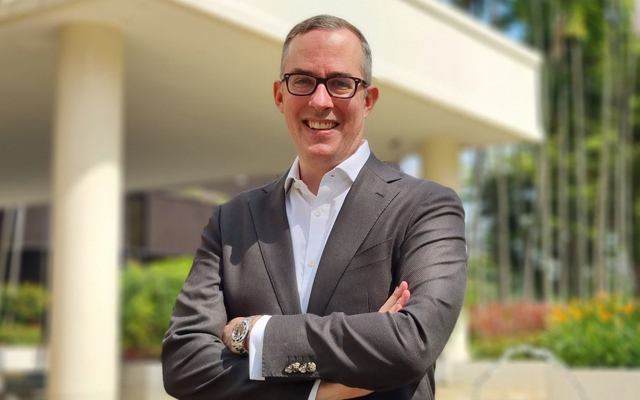
Holiday Inn Singapore Atrium has appointed Michiel de Kleer as general manager.
The Dutch national brings with him more than 20 years of hospitality experience, having worked with properties such as Sofitel Metropole Hanoi, Sheraton Saigon Hotel & Towers, and Crowne Plaza Changi Airport. Prior to his latest appointment, Michiel’s most recent role was general manager at Hotel Indigo Bangkok Wireless Road.
De Kleer joined IHG in September 2013 as executive assistant manager with Crowne Plaza Bangkok Lumpini Park before moving to Crowne Plaza Changi Airport in the same capacity in February 2016.
The National Association of Travel Agents Singapore (NATAS) is bringing back its signature NATAS Holidays 2022 over August 12 to 14 at Singapore Expo Hall 5.
The show, branded as the only premier travel fair in Singapore, will feature more than 40 exhibitors from the travel and tourism ecosystem, including NTOs, travel agencies, hotel companies and cruise specialists.
NATAS Holidays was last held in August 2019 (Photo by NATAS)
While NATAS was not available for comment at press time, exhibitors Chan Brothers Travel and Korea Tourism Organisation told TTG Asia that the return of the travel fair was timely, as Singapore residents are eager to catch up on lost holidays.
“We are thrilled that leisure travel is roaring back with bookings and enquiries rising exponentially,” said Jeremiah Wong, spokesperson for Chan Brothers Travel, which will take up a 252m2 booth at NATAS Holidays 2022.
He added: “2022 is the chapter of our industry’s resurgence and we are positive that 2023 will be the year that tourism records a strong bounce back to pre-pandemic levels as the market stabilises.”
Jamie Chua, marketing manager with Korea Tourism Organization (Singapore Office), said the event would be instrumental in restoring consumers’ confidence in travel, “by demonstrating that the travel industry is ready to rise above the pandemic”.
“We wish to bring back the joy of travel to everyone in Singapore,” Chua added.
To inspire travel and encourage bookings, Korea Tourism Organization (Singapore Office) has planned a series of workshops at its booth and various communications centred on special interest holidays. It will also give away tickets to a special showcase at Victoria Theatre in September for purchases made at the travel fair.
“We would like to encourage our visitors to go deeper into South Korea where they can experience and explore different parts of (of the country) through K-cycling, K-trekking and K-food,” revealed Chua.
The tourism office will, in particular, highlight the region of Jeollanamdo, home to UNWTO 2021 Best Tourism Village and recognised as Land of K-Gourmet. It has partnered with Singapore lifestyle and entertainment magazine, U-Weekly, on a campaign titled UTRAVEL to Korea to showcase the region and offer an October tour that will be led by a mystery personality.
Access to South Korea has vastly improved on the back on several new air links from Singapore, she noted. Air Premia, Jeju Air, Scoot and T-way are among the airlines that have recently launched new services from Singapore, and Chua said more would follow in the coming months.
Chan Brothers Travel is also determined to convert travel intentions into action on the show grounds, and will present its widest selection of dates and confirmed departures, as well as numerous offers and new itinerary launches, including its popular celebrity-led tour series.
Wong hopes “astute travellers” will book and secure their seats at the August show, so as to beat the potential price hikes in the marketplace. He noted that the price of travel continues to be volatile and sensitive to surging airfares due to limited seat inventory.
Chan Brothers Travel expects strong bookings for the second half of the year until March or April 2023, with year-end and spring travel drawing particularly high demand from Singapore residents.
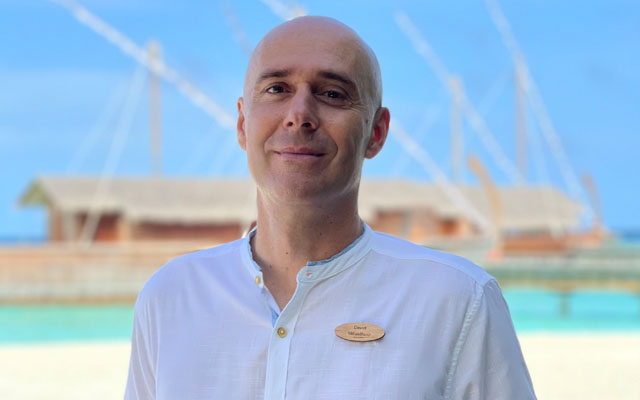
David Castaño has been appointed general manager of Milaidhoo Maldives.
The Spanaird brings with him a wealth of experience, having worked in resorts located in Bhutan, Cook Islands, Tanzania, Chile, and New Zealand.
Castaño’s most recent hospitality experience includes a focus on achieving accolades through meeting high standards of the Small Luxury Hotels of the World brand globally.
Marking her second week as the secretary to the Philippine Department of Tourism (DoT), Christina Garcia Frasco has laid down targets and objectives that are aligned with the recent pronouncement of president Ferdinand R Marcos Jr on the need to improve tourism infrastructure and introduce proactive policies to boost the country’s tourism industry.
DoT objectives include improvement of tourism infrastructure and accessibility; a cohesive and comprehensive digitalisation and connectivity; enhancement of the overall tourist experience; equalisation of tourism product development and promotion; diversification of portfolio through multi-dimensional tourism; maximisation of domestic tourism; and strengthening tourism governance through close coordination with local government units (LGUs) and stakeholders.
Frasco emphasised the need to anchor DOT objectives on connectivity, convenience and E(Quality)
Frasco stressed on the need to anchor these objectives on three focus points – connectivity, convenience, and E(Quality).
In terms of connectivity, efforts will go into tourism clustering or establishment of regional tourism circuits that allow bigger provinces and more well-known destinations to be experienced together with smaller islands.
Attention will also be given to improving end-to-end transportation by land, sea, and air from arrival to departure, and reviewing the availability and affordability of these routes.
Frasco explained: “While it’s true that we do have available international airports at certain gateways across the Philippines, the reality is that many of these airports are simply not yet of the global standard that would put us at par with our direct competitors in the ASEAN member nations. Second, there’s also a need to revisit the capacity of these airports as that will greatly determine whether or not there would be an addition of direct flights to our tourist destinations.
“And finally, the availability of seaports. So, there is also a necessity to identify and study which particular tier one and tier two tourism destinations are still in need of ports of entry or need of improvement as far as ports of entry is concerned.”
In terms of convenience of travellers, uniformity of protocols will be sought through inter-agency collaboration. The DoT will also work on the enhancement of tourist experiences through the establishment of tourist service centres and rest areas across the regions.
The DoT chief also hailed president Marcos’ desire to improve healthcare facilities particularly in key tourist destinations, noting that “this can be done in coordination with LGUs as well as private hospitals providers to ensure availability of high-quality emergency and tertiary care when needed”.
With the president’s desire to spread economic opportunities to LGUs across the country, Frasco emphasised the importance of enhancing E(Quality) with focus on the equalisation of overall tourism product development and promotion across the regions, and encompassing tourism standards, accreditation, and inclusive development.
The DoT aims to accomplish this through multi-dimensional tourism that harnesses the country’s potential in nature-based tourism, business events, heritage and culture, food tourism, health wellness and retirement, and the arts.
She added that the government will provide technical guidance on how “the richness of our heritage and the vastness of our culture” can be packaged to compete with the finest offered in other countries.
Meanwhile, the DoT will maintain its focus on domestic tourism and facilitate cross province collaboration and the establishment of tourism circuits across the regions. It will conduct an extensive site and product mapping, particularly on areas not yet given equal opportunity for attention and development.
Tourism Malaysia is rebuilding international tourism demand by taking Thai Travel Agents Association (TTAA) and Thai media on a familiarisation trip to promote Malaysia as a safe holiday destination.
The 97 participants comprising TTAA members, tour operators and media were invited for a four-day, three-night stay in Kuala Lumpur, Genting Highlands and Melaka from July 18 to 21.
Thailand media and travel partners attended a dinner hosted by the minister of tourism, arts and culture, Nancy Shukri
They have so far toured the country’s administrative centre in Putrajaya and attended a dinner hosted by the minister of tourism, arts and culture, Nancy Shukri.
Visits to Resorts World Genting and Sunway Resort; a trip to Melaka, a UNESCO World Heritage City to experience attractions such as Dutch Square, St. Paul’s Church, Jonker Street, A’Famosa and Malaysia’s oldest traditional Cheng Hoon Teng Temple are part of the line-up.
Nancy said: “Thailand is one of Malaysia’s essential short-haul markets. In 2019, we welcomed 1,884,306 arrivals from Thailand, and almost 70 per cent of Thai tourists were repeat travellers. They came to Malaysia for holiday, shopping and to visit friends and relatives.”
She hopes these curated experiences will encourage Malaysia’s travel trade partners to experience the tourism products first-hand, enabling them to promote and sell the destination and its products effectively.
Since the country’s border reopening on April 1, Tourism Malaysia has organised several familiarisation trips for the Singapore and Indonesian markets to promote Malaysia as a preferred travel destination in this region.
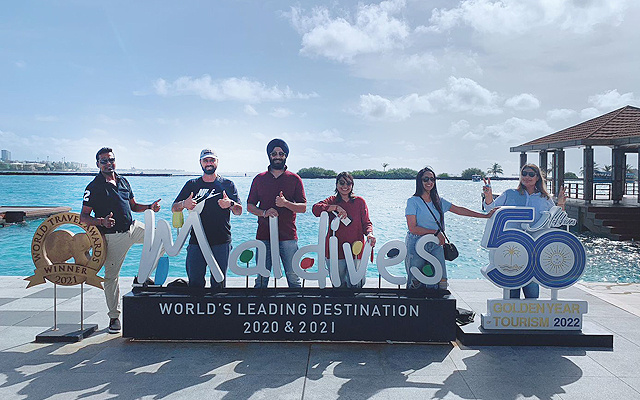
Agents from leading travel companies in India are taking in the best of the Maldives this week, at the invitation of the Maldives Marketing and Public Relation Corporations (MMPRC), which hopes to boost arrivals from India – the leading source market for the Maldives since 2020.
Programmes on the familiarisation trip are designed to position the Maldives as a top-of-the-mind destination, demonstrate how the Maldives has recovered as a destination after the pandemic, and the unique products and experiences on offer for visitors.
Agents from India’s top travel companies experience Maldivian hospitality, activities and different cuisines
These travel trade influencers will stay at Grand Park Kodhipparu, Crossroads Maldives and Hideaway Beach Resort & Spa, and experience Maldivian hospitality, activities and different cuisines.
The trip is expected to raise arrival figures and bookings from India to the Maldives. Some 119,967 tourists from India have set foot on the Maldives so far this year.
Travellers to Bhutan will pay a much higher Sustainable Development Fee when the destination reopens to international visitors on September 23, but freedom to engage tourism services directly without restrictions of a Minimum Daily Package Rate will be granted.
The Sustainable Development Fee will be adjusted from US$65 per tourist per night to US$200, and be used to fund activities that promote carbon-neutral and sustainable tourism, such as carbon offsetting and workers’ training.
Travellers visiting Bhutan will need to pay a much higher Sustainable Development Fee; Taktshang Goemba Monastery in Bhutan pictured
The Tourism Council of Bhutan said in a press statement that the country’s tourism sector will undergo a revamp that focuses on infrastructure and services, tourist experiences, and tourism’s environmental impact.
A new set of standards will be established for tourism service providers, who will soon have to be certified. Training and upskilling programmes will also be ordered to raise service quality.
Tandi Dorji, foreign minister of Bhutan and chairperson of the Tourism Council of Bhutan, said: “Covid-19 has allowed us to reset – to rethink how the sector can be best structured and operated, so that it not only benefits Bhutan economically, but socially as well, while keeping carbon footprints low.”
At the same time, Bhutan will remove the Minimum Daily Package Rate and restrictions to only packaged tours provided by tour operators, allowing tourists to now engage and pay for tourism services directly.
“Our strategy for the revamp of the tourism sector brings us back to our roots, of ‘high value, low volume’ tourism, where we meet the needs of tourists while protecting our people, culture, values and environment,” commented Dorji Dhradhul, director general, Tourism Council of Bhutan.
South Korean airline, Air Premia, launched on July 16 its first flight to Singapore from Incheon in partnership with Changi Travel International as its GSA for the city-state.
For a start, the airline will provide thrice weekly services between the two points and will ramp up operations to four times a week from July 25.
Air Premia is a hybrid service carrier focussing on medium and longhaul routes
Positioned as a hybrid service carrier, Air Premia will focus on medium and longhaul routes. It aims to fill the gap in the market by fulfilling routes which low-cost carriers are not able to fly, and full-service carriers cannot provide attractive prices for.
It operates with the Boeing 787-9 Dreamliner aircraft, in a two-class seat configuration comprising 56 Premium Economy seats and 253 seats in Economy class.
“With (South) Korea being an immensely popular destination for Singaporeans and vice versa, we are excited to offer travellers greater value and a superior experience for their travels,” said Ricky Chua, head of CTI.
Myongseob Yoo, chief executive officer, Air Premia, said: “As (South) Korea’s first hybrid airline, we want to make travellers’ journeys more comfortable and happier with high-quality services at reasonable prices. Starting with Singapore, we will continue to operate medium and longhaul distance routes so that more customers can experience Air Premia’s exclusive services.”





 De Kleer joined IHG in September 2013 as executive assistant manager with Crowne Plaza Bangkok Lumpini Park before moving to Crowne Plaza Changi Airport in the same capacity in February 2016.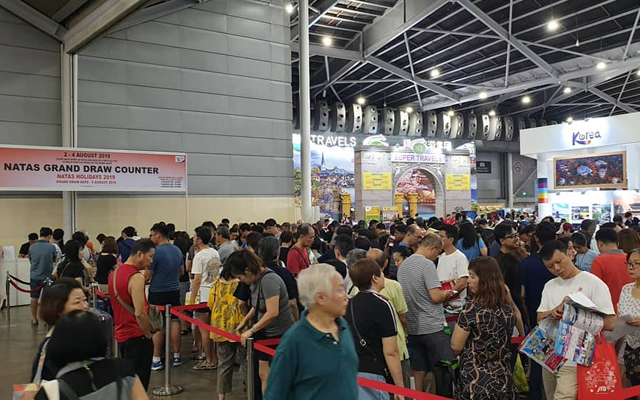
 Castaño’s most recent hospitality experience includes a focus on achieving accolades through meeting high standards of the Small Luxury Hotels of the World brand globally.