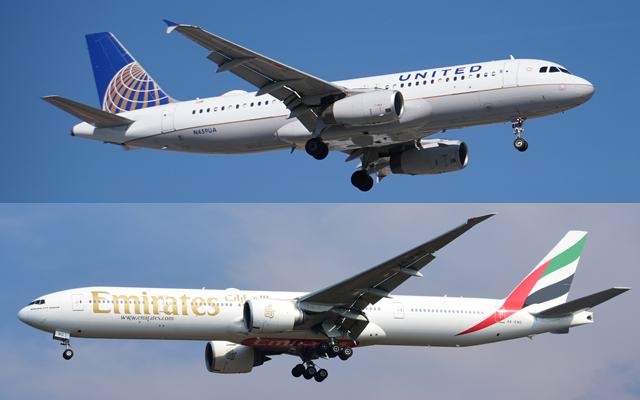
Emirates and United have signed an agreement that will enhance each airline’s network and give customers easier access to new destinations within the US and around the world.
From November, Emirates customers flying into Chicago, San Francisco, and Houston will be able to easily connect onto United flights to and from nearly 200 cities across the Americas. Customers of both airlines will be able to book these connecting flights on a single ticket – making check-in and luggage transfer faster and easier.
A new agreement between Emirates and United will benefit travellers and loyalty programme members
Both airlines will have an interline arrangement in place at the other eight US airports served by Emirates – Boston, Dallas, Los Angeles, Miami, JFK, Orlando, Seattle and Washington DC.
United will launch a new direct flight between Newark and Dubai starting in March 2023 where customers will be able to travel on Emirates or its sister airline flydubai to more than 100 cities.
Emirates Skywards members can soon earn miles when travelling on United-operated flights, while United Mileage Plus members flying on United’s New York/Newark to Dubai flight will be able to earn and redeem miles when connecting beyond on Emirates and flydubai.
Eligible customers travelling on codeshare flights will also soon enjoy access to Emirates and United lounges.
More details on frequent flyer awards and lounge sharing benefits will be released at a later date.
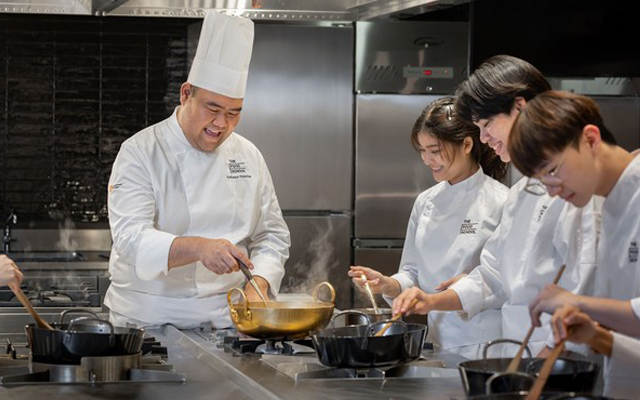
The Food School Bangkok, created by ALMA Culinary Institute, TSUJI Culinary Institute, and Dusit Thani College alongside food business incubation facilities and services, will begin offering specialised short courses and master classes in October 2022, with full professional certificate courses following in January 2023.
Master Classes, taught by celebrated chefs or food industry masters, provide intensive specialised training over two days, making them ideal for experienced learners seeking to further their studies in a particular area. One-day Short Courses taught by the partner institutes are also available, with options for all skill levels.
The Food School Bangkok will start offering its specialised short courses and master classes in October
Three levels of certificate courses – Essential, Intermediate, and Advanced will be available when they launch next year.
The Food School Bangkok’s partners are renowned in their respective fields. ALMA, one of the world’s leading international educational and training centres for Italian cuisine, is stepping out of Europe to South-east Asia for the first time as part of the project.
TSUJI, one of the most prominent culinary schools in Asia, will channel more than 60 years of experience developing epicurean talent at its Osaka, Tokyo, and Lyon campuses to deliver expert tuition in Japanese cuisine.
Dusit Thani College, a leading provider of hospitality education since 1993, will offer specialised Thai cuisine training – including special courses tailored specifically for those who would like to gain compact and in-depth knowledge about Thai food heritage in less than a year.
The Food School Bangkok will also integrate sustainability concepts into its programme, such as zero-waste cooking practices and farm-to-table partnerships and operations.
Siradej Donavanik, vice president – development global, Dusit Thani Public Company, said: “The global hospitality industry creates tonnes of food waste daily, which is a major contributor to climate change through the greenhouse gases it produces, so it’s important that we actively address this at The Food School Bangkok.
“The most straightforward sustainability approach for businesses is simply reducing energy consumption. However, The Food School Bangkok goes beyond business as usual. I am very proud to say that every aspect is embedded with sustainability practices, including construction materials used, waste management practices followed, and curriculums offered.”
Laurent Casteret leads as school director at The Food School Bangkok.
The Food School Bangkok has a vision to create a community of food enthusiasts, and its facilities have been designed to accomplish this. The
the ground floor serves as a commercial space for culinary experimentation and enjoyment, with a coffee shop serving fresh pastries and specialty roasts. Here, pop-up kitchens from local partner restaurants offer a wide range of dishes to eat on site or take away.
The Test Kitchen, positioned as a unique business incubator space, offers fully equipped kitchens that entrepreneurs and The Food School Bangkok’s graduates can rent to trial, develop, and hone their own unique food concepts.
Swire Hotels’ three properties under The House Collective banner in China have seen a change in its guest profile as the domestic travel market continues to dominate business.
Guests are becoming younger, staying longer, and placing greater emphasis on unique experiences offered by the hotels, shared Swire Hotels representatives.
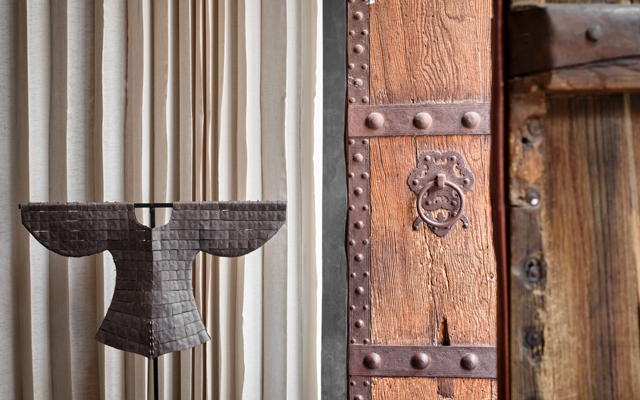
The Opposite House Beijing boasts masterful design and offers a curated collection of both permanent and rotating artworks
According to Dean Winter, managing director of Swire Hotels, the three House Collective hotels in China are welcoming more and more guests in the age bracket of 25 to 35 years old.
Contrasting the pre-Covid guest profile and the current one, Winter said the Houses used to get mostly well-travelled, affluent travellers “who had grown away from mainstream hotel offerings, felt they were sophisticated enough to try something different, and who wanted to be regarded as an influencer in travel choices”.
Winter said many of the guests new to The House Collective “might not have considered us before” but were able to try out the properties as they found the three Houses to be a uniquely different option.
As guests lengthen their stay to an average of a week, they are turning to the hotels to provide memorable experiences, shared Jaime Chua, assistant director of marketing, CRM and PR.
In 2021, The House Collective ran a successful dining programme, titled Chef’s Story, where three Chinese chefs from The Middle House Shanghai, The Opposite House Beijing and The Temple House Chengdu came together to produce a limited edition menu that reflected their childhood and professional journey. The menu was presented in each of the three Houses.
Currently, The Opposite House Beijing hosts an installation art series that changes almost every month.
Chua said: “Our activity calendar draws not just travellers from different Chinese cities but also locals who now enjoy hanging out at our hotels and dining venues. We’ve also been able to attract many Chinese KOLs (lifestyle influencers) who come and produce content about their unique experiences at our hotels.”
Such social media exposure has been instrumental in The Middle House Shanghai, The Opposite House Beijing and The Temple House Chengdu’s ability to attract younger guests, noted Winter.
“We have also learnt how important visuals of our hotels and spaces are (for attracting the younger segment of guests). ‘Instagrammable’ is now a word and a consideration in our conversations around hotel design,” said Winter.
Looking ahead, The House Collective will expand to include a yet-to-be-named House in the heart of Shenzhen Bay, set for an opening in 2025.
According to press materials, the ultra-luxurious Shenzhen property will offer approximately 115 guestrooms as well as 44 serviced residences as part of a premium mixed-use development that includes Grade-A office towers and an events and exhibition space.
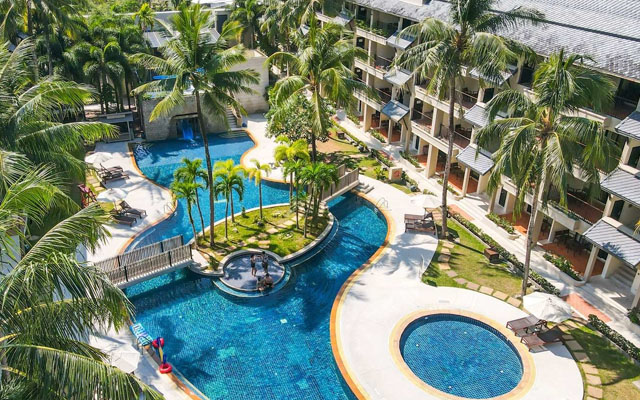
Radisson Resort & Suites Phuket, Thailand
Just 27km from Phuket International Airport, Radisson Resort & Suites Phuket is nestled between jungle-clad hills, Kamala Beach and the Andaman Sea.
The 179-key resort offers a choice of one- to three-bedroom suites, ranging from 43m² to 95m². Facilities on-site include a spa, fitness centre, kids’ club, lagoon pool, six restaurants and bars, and activities for all ages – from snorkelling to Thai boxing.
The Porter House Hotel – MGallery
The Porter House Hotel – MGallery, Australia
Located in the restored 1870s heritage-listed building on Castlereagh Street in Sydney, The Porter House Hotel – MGallery offers 122 rooms and suites, which occupy the first 10 floors of a 36-storey mixed-use tower that also houses a multi-level food and bar destination.
Guests have access to all the hotel’s restaurants and facilities, like the fitness centre and heated pool via The Porter House Hotel’s exclusive Digit Valet walking, talking iPad concierge, the only one of its kind in Australia.
Noku Phuket
Noku Phuket, Thailand
Noku Phuket is a 45-minute journey from Phuket International Airport, is surrounded by natural flora, and affords Chalong Bay views.
Boasting 91 spacious Villas and Lofts, the Hill and Tree Villas feature a private pool and a sunken bath, while the Lofts come with a balcony that opens out to the forested heals. In addition to the Embrace Restaurant serving up Thai dishes, and The Terrace bar offering a range of cocktails, other facilities include a swimming pool, spa, saunas, gym, and yoga room.
The hotel also provides complimentary shuttle services to nearby beaches, the Phuket Old Town and shopping malls.
GLOW Mira Karon Beach
GLOW Mira Karon Beach, Thailand
The 154-room GLOW Mira Karon Beach in Phuket is positioned with easy access to the ocean and the area’s lively dining and nightlife scene.
All dwellings feature private balconies with sea views, and room types range from the 20m² Standard to 42m² Family Suites which include bunk beds for the children and a king-sized bed for adults. F&B options include all-day restaurant Chen’s, the Lobby Bar and Pool Bar, while other facilities include a 24-hour fitness centre.
The World Health Organization (WHO) has announced that the end of the Covid-19 pandemic is in sight, with the number of global weekly deaths falling to 11,118 on September 5.
“We have never been in a better position to end the pandemic – we are not there yet, but the end is in sight,” said Tedros Adhanom Ghebreyesus, director general of WHO, during a virtual press conference.
WHO is optimistic that the end of the Covid-19 pandemic is in sight
However, Ghebreyesu urged nations to maintain their vigilance and likened the pandemic to a marathon race. He said: “Now is the time to run harder and make sure we cross the line and reap the rewards of all our hard work.”
The WHO added that countries need to maintain adequate supplies of medical equipment and healthcare workers, and has called for governments to ensure six key actions are taken. These include testing, vaccination, best practices when managing the disease, maintaining infection control measures in health facilities, preventing the spread of misinformation, and community engagement.
Countries need to take a hard look at their policies and strengthen them for Covid-19 and future viruses, Ghebreyesus said. He also urged nations to vaccinate 100 per cent of their high-risk groups and keep testing for the virus.
WHO’s next meeting of experts in October will ascertain whether the pandemic still represents a public health emergency of international concern, a WHO spokesperson added.
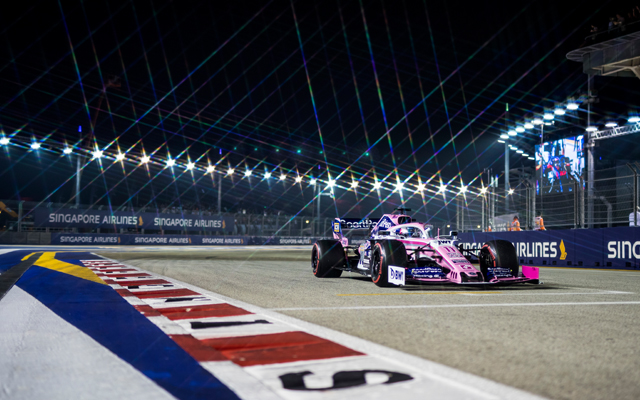
This year’s Formula One (F1) Singapore Grand Prix is set to see its biggest turnout since its first night race back in 2008, with flight bookings up 305% since the start of 2022.
With the majority of Covid restrictions now lifted, visitor arrivals in Singapore rose for the sixth consecutive month in July to 726,601, up from 543,733 in June, according to the Singapore Tourism Board.
This year’s Formula One (F1) Singapore Grand Prix is set to see its biggest turnout since 2008
Bookings have bounced back from 13% to 50% of 2019 levels, demonstrating strong interest in travel to the Lion City. In the leadup to the F1, Oceania, primarily Australia, has shown the greatest interest in Singapore travel, up 17% in 2022 versus 2019.
Other notable regions with market share increases compared to 2019 volumes include South Asia (+5%), Western Europe (+3%), Middle East (+1%), with Sojern anticipating that neighbouring regions such as South-east Asia and East Asia will also increase closer to the F1 date.
Australia retains its position as Singapore’s top origin country in 2022, while increasing its market share at the same time (+18% from 18% in 2019 vs 36% in 2022). Other notable countries moving up in 2022 are India (+6% from 4% in 2019 vs 10% in 2022), the Philippines (+5% in 2022), and Indonesia (-3% from 7% in 2019 vs to 4% in 2022), with new countries for 2022 including the UK and South Korea in sixth and 10th places respectively.
The US (8%) and Thailand (6%) remain in the top five while China and Japan drop out of the top 10 in 2022, due to ongoing inbound and outbound travel restrictions in both countries.
Flight booking popularity is moving towards the middle of the week, peaking on Thursday, while hotel booking popularity is moving towards the weekend on Thursday, Friday and Saturday. The shift may be attributable to travellers seeking to maximise their time in Singapore ahead of the race to immerse themselves in the city’s melting pot of cultures.
Lead time for booking flights and hotels demonstrates very forward planning with 76% of flight bookings and 88% of hotel bookings being made 60+ days ahead of the race compared to only 36% of flights and 12% of hotel bookings in 2019. With post-pandemic airline tickets at an all-time high, longer lead times may be due to travellers seeking to secure favourable flight rates.
At the same time, both flight and hotel bookings showcase interest for longer stays during the 2022 F1 period, with travellers maximising their stay in light of surging international flight costs.
Both weekend (51%) and week-long (27%) travel have increased for hotels in comparison to only 31% and 15% in 2019, a sign of F1 being a strong draw for tourists to Singapore.
Business travel for the 2022 F1 period has dropped for both flight and hotel bookings making up only 4% of flight bookings compared to 10% in 2019.
Based on flight booking data, couples and family travel has become more popular at the expense of solo travel, making up 33% and 18% respectively compared to 28% and 8% in 2019. Solo travellers still make up most of the market share for hotels at 96% compared to 48% in 2019.
As the end of travel restrictions continues to spark a surge in flight demand that exceeds supply, the news that Singapore Airlines plans to increase services to destinations across the world is welcome news to the industry and travellers alike. Operating at a total passenger capacity of 61% in May, compared with pre-Covid levels, the group expects to operate at 81% capacity of pre-pandemic levels by the end of the year.
Sojern anticipates the airline’s increase in services will bring down higher than average airfares and encourage further travel.
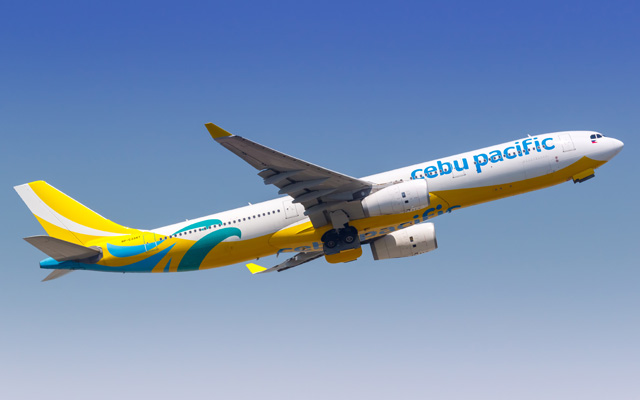
Beginning September 20, 2022, Cebu Pacific (CEB) flights to and from Singapore will be operated from Changi Airport Terminal 4.
In line with this, CEB flight 5J 803 Manila – Singapore, and 5J 547 Cebu – Singapore on September 19, 2022, will arrive at Terminal 4 of the Changi Airport. Passengers of CEB flights 5J 804 and 5J 814 Singapore – Manila, and 5J 548 Singapore – Cebu on September 20, 2022, will need to check-in at Terminal 4.
All CEB flights arriving and departing Singapore will be shifted to Terminal 4 from September 20
Moving forward, all CEB flights arriving and departing Singapore will be accommodated at Terminal 4.
The airasia Super App has introduced a new one-stop holidays platform: airasia holidays. It allows users to customise their entire holiday itinerary and even add on flights and hotel bookings across South-east Asia.
The all-in-one platform will first be made available for users in Malaysia and the Philippines, before rolling out to other markets.
The new airasia holidays platform allows users to customise their entire holiday itinerary and more
By leveraging the airline’s network, users will have access to an inventory of 700,000 hotels globally, a wide variety of holiday activity provider partners, and a diverse range of activities and holiday plans across the region. Users will also enjoy affordable rates when booking flights and hotels.
Amanda Woo, CEO of airasia Super App said: “airasia holidays offers our app users a more robust, holistic and convenient booking experience with our capabilities as an airline and in hotel inventory management. With over 50 million active users in our database, we have a unique capability to offer personalised suggestions of holiday activities, flights, and hotels suited for each traveller, all through one convenient platform.”
Woo said that there are plans to add features such as car rental and pre-order airport transfers in the future.
“Aside from offering bundles with AirAsia flights, we are also working on enabling airasia holiday customers to select flights from other airlines too, effectively pushing the limits of the holiday destinations they wish to explore,” added Woo.
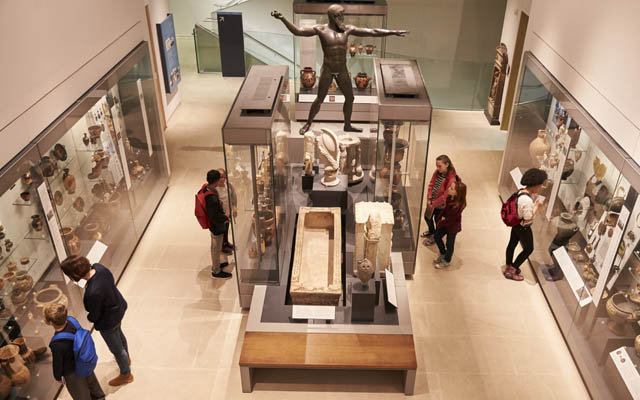
Klook and Tiqets have teamed up to connect their supply channels, offering consumers a greater selection of museum and attraction-related experiences.
The partnership will give suppliers of both brands greater visibility and exposure in each company’s key markets, while customers can now use both platforms to seamlessly book an expanded range of experiences available. It also means that museums, attractions and tour operators working with Tiqets and Klook can significantly increase their reach.
The partnership will offer consumers a greater selection of museum and attraction-related experiences
Tiqets is recognised for its strong reach in Europe and North America, while Klook is big in Asia-Pacific.
Tiqets president & founder Luuc Elzinga said: “Through this partnership, our network of more than 4,000 of the best museums, attractions and tour operators that provide guided tours at these museums will benefit from greater visibility in the (Asia-Pacific) market, and Tiqets will benefit from new supply that Klook already has connected.”
Both companies have made a remarkable comeback after the two-year global pandemic, with Tiqets seeing a 220 per cent surge in bookings in Europe and the UK alone over summer. Similarly, Klook has seen outbound bookings grow eleven times in the same period compared to earlier in the year.
With the end-of-year holiday season on the horizon and the partnership underway, an increase in bookings is expected.
Wilfred Fan, chief commercial officer, Klook shared: “Klook has gone from strength to strength during the pandemic, and we’ve quadrupled the number of activities on our platform over the last two years in anticipation of travel recovery. We will continue to work closely with our merchants to accelerate their recovery and reach even more customers around the world.”
Capital Alliance and Australia’s TFE Hotels have partnered to develop a first-of-its-kind mixed-use development in Melbourne Docklands, set to open in 2026.
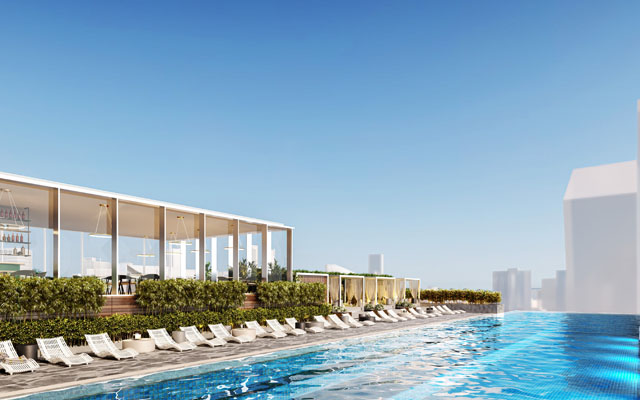
The A$340 million (US$229.7 million) project will feature the largest rooftop infinity pool in Australia and two hotels: the first purpose-built Collection by TFE Hotels with 200 rooms and has yet to be named; and the 105-key premium A by Adina hotel.
The Melbourne Docklands project will feature the largest rooftop infinity pool in Australia
The two accommodation towers, connected by a sky bridge, will boast a 1,000-pax capacity event conference centre, surrounded by 360-degree views of the city. There will also be a day spa, retail shopping, and restaurant offerings.
Project designer SJB’s founding director, Michael Bialek, shared that the designs were inspired by natural elements like the sculpted landscape forms and proximity to the Yarra River and that the project would become an architectural landmark on the Melbourne skyline.
“Our partnership with TFE was born and galvanised during the uncertainty of the pandemic. It may sound cliché to say, but there are two things we’re certain of, developing a hotel is incredibly challenging and we have unparalleled confidence in our ability to deliver a world class establishment alongside TFE,” said Capital Alliance, CEO, Mohan Du.
TFE Hotels Group COO, Chris Sedgwick, said: “Each of our one-of-a-kind Collection hotels has a distinct story and, together with A by Adina’s brand premise around hotel living, offer guest experiences that are unique to their neighbourhood.
“We love that Mohan had a vision for Melbourne’s burgeoning Docklands area and that he and the Capital Alliance team have spent the last decade investing in and realising that vision.”