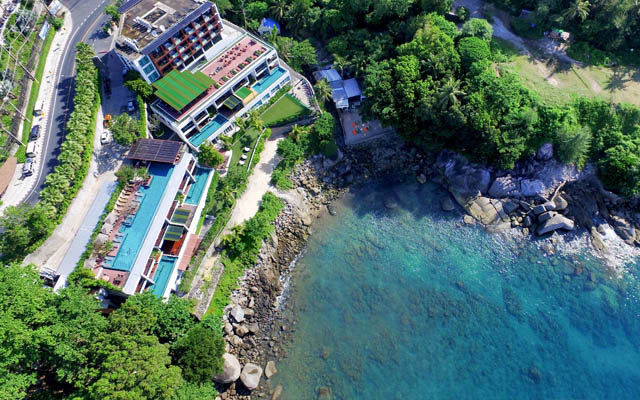
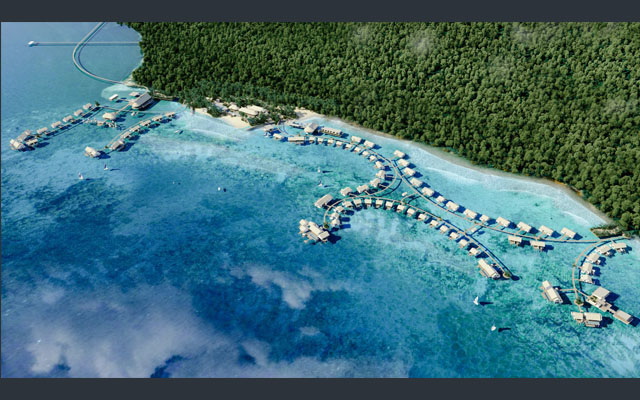
Wyndham Vacation Resorts (Thailand) has been appointed to provide management services to Zenmaya Oceanfront Phuket, Trademark Collection by Wyndham hotel in Thailand.
The 50-room boutique resort is located at Kalim Beach and overlooks Patong Bay. It features a range of accommodation, meeting spaces, onsite restaurant and bar.
Zenmaya Oceanfront Phuket will be managed by Wyndham Vacation Resorts (Thailand)
Joon Aun Ooi, president, Asia Pacific, Wyndham Hotels and Resorts said: “The opening of Zenmaya Oceanfront Phuket, Trademark Collection by Wyndham in Thailand joins our extensive network of 17 hotels across the country from Bangkok to Phuket and Krabi.
“Looking ahead, we will continue our focus and expand in many exciting cities across the country to serve the increasing demand for high-quality hospitality experiences.”
Preferred Hotels & Resorts has launched a new Where Next? Japan campaign where guests enjoy a third night free with every two nights booked at a participating hotel in Tokyo, Kyoto or Yokohama.
Guests will also receive 2,500 I Prefer Bonus Points and hotel credits of either 3,000 yen or 5,000 yen to spend on cuisine and wellness treatments.
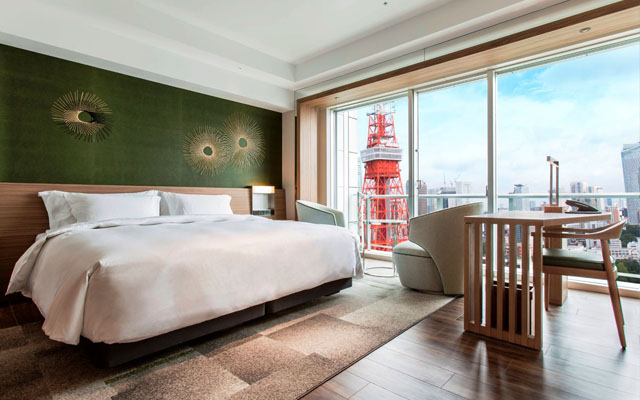
Get three nights for the price of two with Where Next? Japan; The Prince Park Tower Tokyo pictured
Offering guests the opportunity to explore Japan’s rich cultural and architectural heritage, soak up iconic landscapes, and enjoy authentic local experiences, the 11 participating hotels include The Hotel Higashiyama by Kyoto Tokyu Hotel; The Capitol Hotel Tokyu; Hotel Chinzanso Tokyo; The Prince Park Tower Tokyo; Hotel New Otani Tokyo Executive House Zen; Hotel New Otani The Main; Grand Nikko Tokyo Daiba; Keio Plaza Hotel Tokyo; Hotel New Grand; The Thousand Kyoto; and Kyoto Tokyu Hotel.
Book by December 31, 2022 for stays through March 31, 2023.
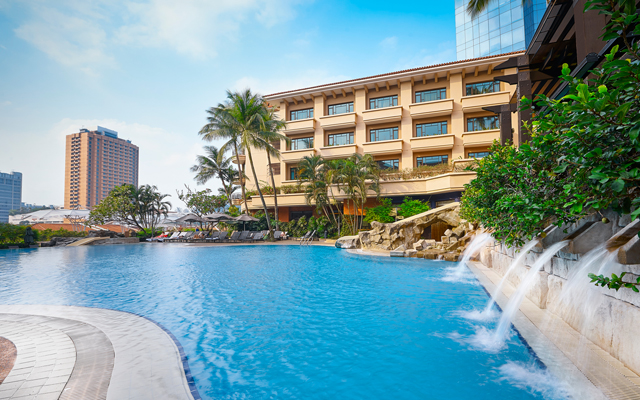
Guests can embrace the wonderful opposites of Paradox Singapore that allow them to enjoy both the accessibility and convenience of a bustling entertainment and culinary central and the serenity of a resort-style oasis, complete with scenic riverfront views.
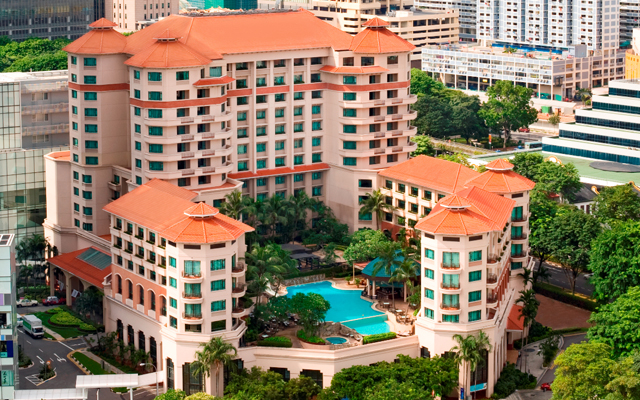
Less than 30 minutes’ drive from the airport and conveniently located next to the Clarke Quay MRT station, Paradox Singapore Merchant Court at Clarke Quay is an urban resort offering travellers ease of commute to tourist hotspots such as Chinatown and Little India, as well as the buzzy, hip entertainment and dining of the vibrant river district of Clarke Quay at its doorstep.
A sophisticated yet playful blend of traditional refinement and modern elegance, coupled with distinctive décor reminiscent of its heritage credentials, the hotel also provides travellers a quiet sanctuary to relax and unwind.
Thoughtful amenities and facilities
1 of 10
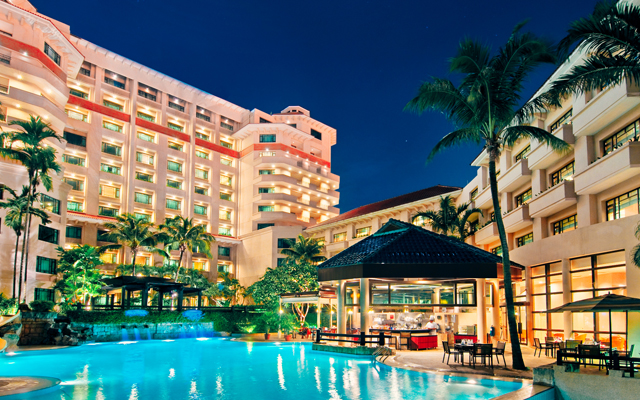
Paradox Singapore is a sophisticated yet playful blend of traditional refinement and modern elegance
Guest rooms feature views of the city’s skyline and riverfront vista
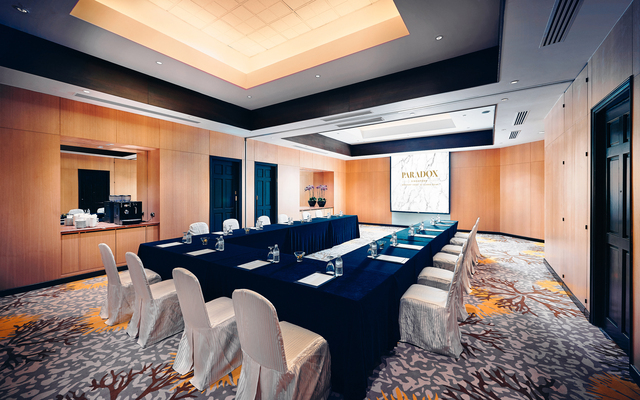
The column-free ballroom is 680m²
The hotel can accommodate events of all sizes
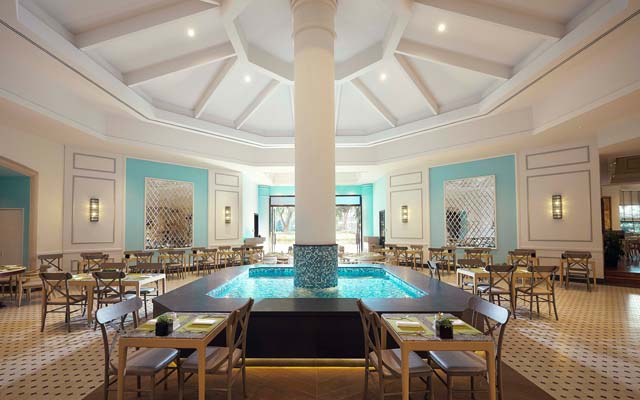
The name of Ellenborough Market Café pays homage to the former popular market and street in the area
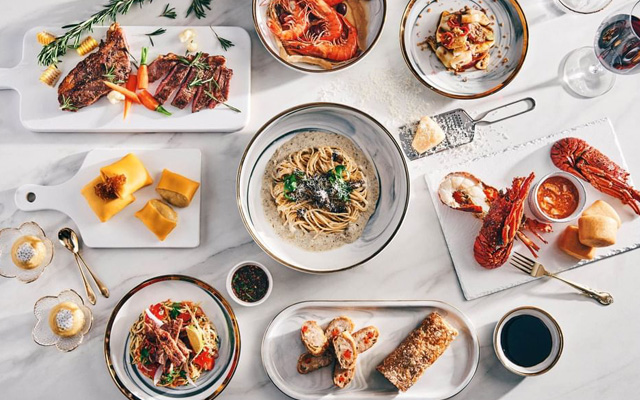
Ellenborough Market Café spotlights popular Peranakan, local and international specialities
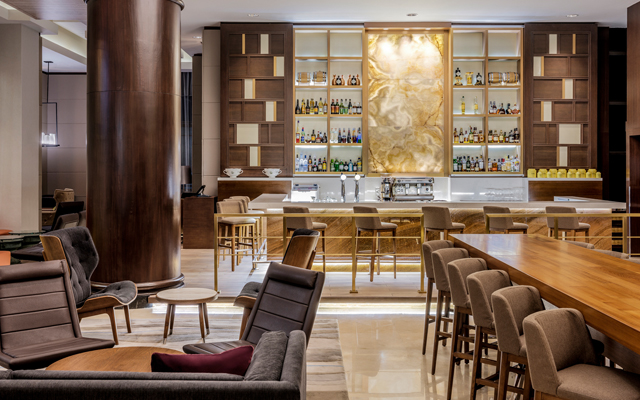
Enjoy handcrafted cocktails at Crossroads Bar in the lobby
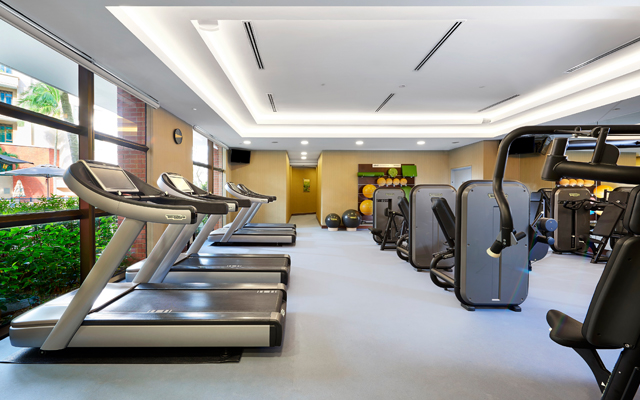
The hotel boasts a 24-hour two-level fitness centre
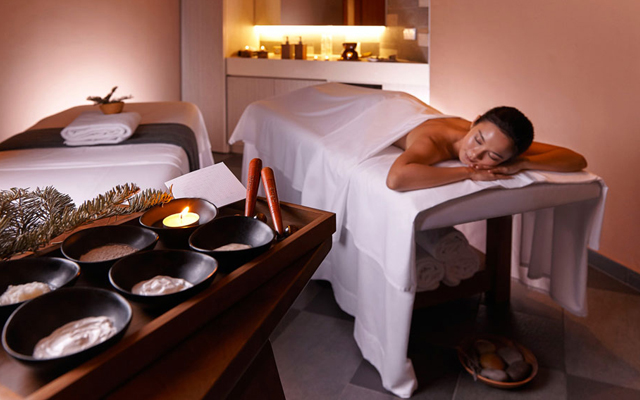
Relax with the spa’s holistic wellness and beauty offerings
Paradox Singapore is conveniently located next to the Clarke Quay MRT station
At the Spa & Sport, guests can rejuvenate their body and mind, taking in the benefits of its holistic wellness and beauty offerings.
They can relax and sink into pure bliss with its spa treatments which use various essential oils, made to work in tandem with the well-equipped and modern sports training facilities.
Completing its mix with various thoughtful amenities and personalised service, the hotel’s 24-hour two-level fitness centre, free-form pool with water slides and an outdoor jacuzzi will no doubt leave guests feeling refreshed and re-energised.
The 476-key hotel also boasts spacious rooms and stylish suites featuring spectacular views of the city’s distinctive skyline, on top of calming riverfront vista.
Paradox Singapore can also accommodate events of all sizes. A 680-square-metre column-free ballroom and seven meeting rooms can be perfect venues for hosting meetings, weddings and other social events.
To tantalise guests’ tastebuds, the renowned chefs at Ellenborough Market Café will delight with their delicious concoctions featuring popular Peranakan (or Straits Chinese), local and international specialities. The name of the café also pays homage to the former popular market and street in the area.
Set amid a lush landscape and next to the swimming pool, the Blue Potato also serves up tasty western fare. A locally-inspired, handcrafted cocktail is always in order at the lobby’s classy Crossroads Bar for guests keen on a tipple.
Paradox Singapore was conceived following the April 2022 partnership between Canadian-born boutique hospitality brand, Paradox Hotel Group and leading property developer in Malaysia, TA Global to rebrand the former Swissotel Merchant Court.
Keen to experience the duality of Paradox Singapore Merchant Court at Clarke Quay?
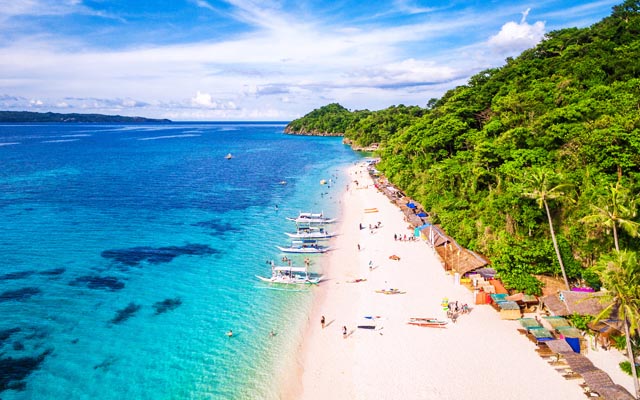
Even though a number of hotels and resorts in Boracay have raised their rates by 15 to 20 per cent this year to reflect the increase in operational costs, domestic travellers and foreign markets like South Korea and Taiwan remain undeterred and still planned trips to the island.
This transpired at the Philippine Travel Mart organised last week by the Philippine Tour Operators Association (Philtoa).
Domestic and international travellers still plan trips to Boracay despite the increase in prices
Cecille May Kimpo, director of sales and marketing, Crimson Resort and Spa Boracay, said that after drastically dropping their rates during the pandemic, they have already increased their accommodation prices “about three to four times” as fuel prices have surged during the past two to three months.
According to Bamboo Travel and Tours reservations/operations manager, Mark Gil Saba, other factors for the higher hotel rates are the “super high” electricity rates; the need for accommodation suppliers to recoup their losses as they continued to pay rent and maintain their properties during the pandemic; increase in employees’ daily minimum wage from 395 pesos (US$6) to 450 pesos; higher cost of food sourced mostly out of the island; and higher cost of transporting hotel staff, most of whom are from mainland Aklan.
Boracay’s terminal has also increased prices from 100 pesos to 150 pesos on September 23, and the environmental fee for foreigners is now 300 pesos instead of 150 pesos – this remains unchanged for domestic tourists, Saba added.
Kimpo said the rate hike does not deter the domestic market from going to the island – revenge travel and multi-generational holidays to beach destinations continue with Filipinos doubling their stay from two to three days to four to six days.
She estimated 80 per cent of the travellers to Boracay is domestic and mostly from metro Manila.
Looking ahead, Kimpo expects China to pick up in 2Q2023 or 3Q2023, while more booking traction has started for South Korea since last week when on-arrival PCR tests were dropped for Korean travellers returning home. Taiwan bookings are also picking up – starting October 13, PCR tests and quarantine for returning Taiwan residents will no longer be needed.
Saba said domestic travellers prefer Boracay as a beach destination and feel safer as none of the hotels or resorts there have been used to quarantine guests.
Mayette Sagales-Delfin, director of sales, Savoy Hotel Boracay, said the hotel is trying “to level off with the needs and requirements of the market”, with rates depending on the market forces such as seasonality and demand. She added that the hotel has shifted to business events, which is on the rise.
With Hong Kong lifting quarantine measures last month and firing up outbound travel desire, Tourism Australia (TA) has swooped into the market with a series of trade events to reconnect with partners.
Carmen Tam, manager Hong Kong, TA said the team’s recovery plans could finally be put into action, but execution would be in phases and subjected to border quarantine restrictions.
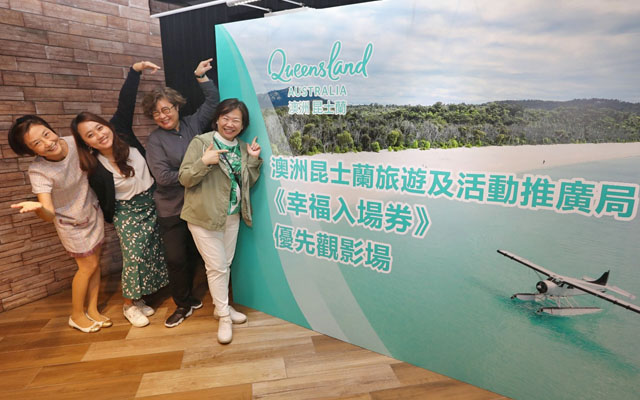
Tourism and Events Queensland presented a film titled A Ticket to Paradise that featured product updates
Tam noted that Australia is perceived as a mid-haul destination among Hong Kong residents, and is a “preferred Western country” in Asia. In the coming years, TA will target Hong Kong families, particularly those with young children and tended to pick destinations like Japan, Taiwan, Thailand and Macau for vacations.
“Australia’s nature and wildlife appeal is a strong driver (for Hong Kong travellers),” Tam said, adding that TA is keen to attract high-yield family groups that desire a “safe and clean holiday”.
Aside from partnering with Austrade for the third year to deliver the Festival of Australia campaign last week, TA’s other trade engagements include the Aussie Specialist training, which carried on throughout the lockdown and has trained more than 2,100 travel agents via 40 webinars and activities.
Last week, some 32 different companies including travel agencies, OTAs and airlines took part in an Aussie Specialist Program (ASP) training webinar by Tourism and Events Queensland (TEQ).
Phoebe Mai, trade marketing manager Southern China and Hong Kong, TEQ, told TTG Asia that training programmes are given creative spins.
Its ASP event last week featured a private screening of A Ticket to Paradise film at a local movie theatre. The film was produced in Queensland and conveyed product updates.
Mai said: “We are taking Hong Kong’s 0+3 measure as our window of opportunity to support our travel trade partners in making a speedy (outbound business) recovery. We are planning to launch the Queensland is Good to Go campaign in the next six months, to attract more visitors and help them better plan their holiday in Queensland.”
Throughout the pandemic, TEQ had continuously engaged its trade partners through hybrid events and training webinars. The most recent one was in June, hosted in partnership with a travel group and elite marathon runners from Hong Kong. It offered staff training on the Gold Coast Marathon and other Queensland travel products.
Currently, the biggest challenge for TA when promoting the destination is flight capacity.
Hong Kong schedules now indicate only 22 per cent of pre-Covid seat capacity in October 2022 – Cathay Pacific’s capacity reached 32 per cent this month, with 10 flights per week into Sydney, seven flights per week into Melbourne, and three flights per week into Brisbane and Perth.
For Qantas, services to Hong Kong will only restart on January 30 next year.
The latest analysis by ForwardKeys shows that flight bookings to Qatar are currently 10 times the volume of pre-pandemic levels. These comprise flights from the 31 countries competing in the football World Cup finals, and from the UAE where many fans are basing themselves during the tournament.
The data is based on issued flight tickets, including day trips, as of September 29, for travel to Qatar between November 14 and December 24. The benchmark is travel in 2019, except for the UAE, where the benchmark is 2016, owing to the Qatar diplomatic crisis, which stopped direct flights between Qatar and the UAE between 2017 and 2021.
The FIFA World Cup will throw a media spotlight on Qatar and help it become a more established destination
In terms of growth, the source market set to perform most strongly during the World Cup period is the UAE; currently, bookings are ahead by 103 times the volume of 2016, followed by Mexico, ahead by 79 times the 2019 volume; Argentina, ahead by 77 times; Spain, ahead by 53 times; and Japan, ahead by 46 times.
The UAE’s strong showing is explained by a shortage of accommodation in Qatar where many are expected to stay in the UAE and fly over for the day, on match days. Currently, day trips account for 4% of all arrivals in Qatar during the World Cup, 85% of which originate in the UAE.
Despite the requirement to present a negative Covid-19 test to enter Qatar, the popularity of the tournament is such that there have been millions of searches online for flights to Qatar in the first nine months of the year. 12% of them are for journeys originating in the UAE, 12% from the US, 7% from Spain, 7% from India, 6% from the UK and 6% from Germany.
The tournament is set to benefit the whole Gulf region, as flight bookings to GCC countries during the competition are currently 16% ahead, and, for the initial stages, 61% ahead. Further analysis reveals that many World Cup visitors are also travelling to other destinations in the region. For example, the number staying at least two nights in Qatar and going on to stay at least two more nights in another GCC country is sixteen times greater than it was before the pandemic in 2019.
Dubai is the biggest beneficiary of this trend by far, capturing 65% of onward visits. The next most popular onward destination is Abu Dhabi, with 14%, followed by Jeddah, 8%, Muscat, 6% and Madinah, 3%. The most important origin market for these “regional tourists” is the US, which is responsible for 26% of them, followed by Canada with 10%, the UK with 9% and, France, Mexico and Spain, each with 5%. For Dubai, the most important component is American, comprising 32%; however, for Abu Dhabi, it is Australian, comprising 11%.
Olivier Ponti, VP Insights, ForwardKeys, said: “As global events go, the FIFA World Cup is one of the most attractive drivers of travel there is, so much so, that other destinations in the Gulf will benefit, not just the host nation, Qatar. In tourism promotion terms, the World Cup will throw a media spotlight on Qatar and help it become a more established destination, and not just a major hub for intercontinental air traffic.
“Normally, just 3% of travel to Doha is destined to stay in the country; and 97% comprises onward connections. However, during the World Cup, almost 27% has Qatar as the ultimate destination. The UAE will also benefit substantially from the tournament because it has much more hotel accommodation than Qatar, and two global hub airports in Dubai and Abu Dhabi.”
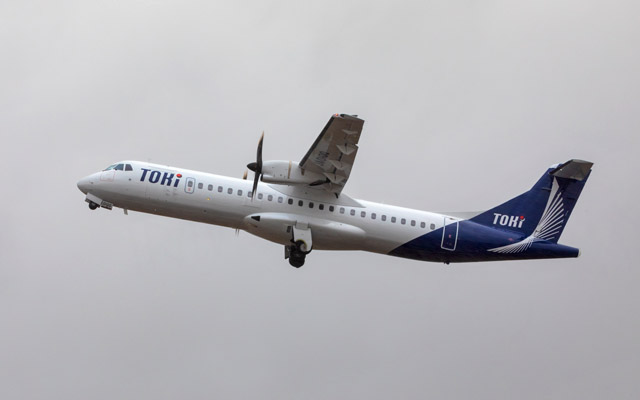
Toki Air, a new Japanese airline, and regional aircraft manufacturer ATR, have announced the delivery of an ATR 72-600 via lessor NAC. Covered by a ten-year ATR Global Maintenance Agreement, the aircraft will support Toki Air’s mission of revitalising Niigata city and the surrounding regions of Japan, with operations starting in 2023.
As the fourth airline to operate ATR aircraft in Japan, Toki Air’s name comes from an ancestral bird – also called Japanese crested ibis – and is a symbol of the preservation of nature in Japan. It represents the airline’s commitment to connecting areas that co-exist with nature, operating the lowest CO2 emissions and most fuel-efficient aircraft.
Toki Air is the fourth airline to operate ATR aircraft in Japan
Toki Air’s representative director, Masaki Hasegawa, commented: “Thanks to their unrivalled versatility and responsible and affordable performance, ATR aircraft are the ideal choice for us as an airline and for our country. This first aircraft will allow us to serve our higher purpose by providing a responsible and reliable air connection to the communities of the Niigata Prefecture and surrounding regions.”
ATR CEO, Nathalie Tarnaud Laude, added: “Our long-term relationship with NAC and the confidence of the lessors’ community in our aircraft allow new airlines such as Toki Air to offer their passengers the most modern and sustainable aircraft on the regional market.”
Through the ATR Global Maintenance Agreement, ATR will provide support to the airline with reliable and efficient services.
There are currently 15 ATR aircraft flying across the country and ATR foresees a potential for 100 ATR aircraft in the medium term.
La Vie Hotels & Resorts has signed a multi-partnership deal with Amber Property Group to manage its Melbourne hotels – The Sebel Melbourne Ringwood, previously franchised with Accor, and the upcoming The Motley Richmond.
On this multi-partnership signing, Craig Bond, managing director, La Vie Hotels & Resorts, said: “We are humbled and incredibly excited to be working with the team at Amber Property Group to manage their beautifully designed Melbourne hotels in Richmond and Ringwood, two of the city’s busiest suburban hubs.”
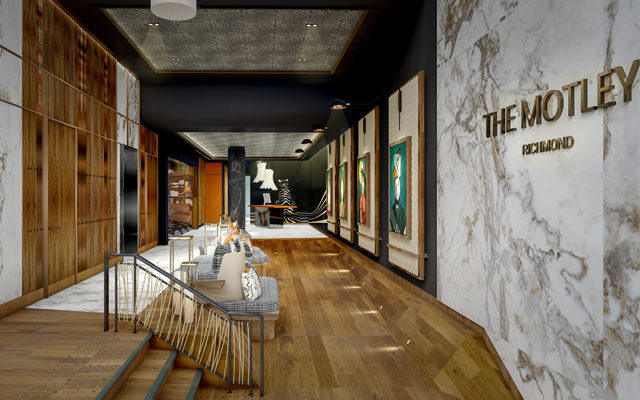
The Motley Richmond is slated to open in early January 2023
He added that “The Motley will not disappoint” and that the property will be “a lifestyle hotel that the locals can claim as their own”, while commenting that The Sebel Ringwood is “a stunning property” with extensive facilities that business and leisure travellers will appreciate.
Rachael Brady, CEO, Amber Property Group, said: “The Sebel Ringwood Melbourne is a very special property and is much loved by regular travellers to the east for work, while The Motley will provide a true lifestyle hotel experience in the heart of Richmond. We are excited to see these hotels flourish under La Vie’s guidance.”
The Motley Richmond is slated to open in early January 2023 and will feature 80 rooms. It is located on Bridge Road, close to shopping boutiques, the MCG and Rod Laver Arena, with Melbourne CBD only a short distance away.
The Lux Collective has signed a hotel management agreement with P Q Hai Quoc Joint Stock Company to build a luxury overwater resort under the Lux* Resorts & Hotels brand on the island of Phu Quoc, Vietnam.
Named Luxnam* Phu Quoc, the 126-villa only resort is set to open in late 2024 and is located on the remote Northern coast of Phu Quoc, adjacent to a UNESCO-listed Biosphere Reserve.
Luxnam* Phu Quoc, featuring 126 villas, will open in 2024
The Lux Collective’s CEO, Paul Jones, shared that Luxnam* Phu Quoc is inspired by “the iconic Maldivian-style overwater resorts” – a first for Vietnam and the region.
Bao Vu, chairman, P Q Hai Quoc Joint Stock Company, said: “We are certain that this long-term strategic alliance will help to promote Phu Quoc – mapping it as the Maldives of Vietnam – among global travellers.”
The dragon-shaped resort consists of two areas connected by a four-kilometre-long jetty over the lagoon. It sits above the shallow waters and coral reefs of Kien Giang Biosphere Reserve and the brand’s sustainability DNA is incorporated throughout the resort. It will feature restaurants, a spa, fitness centre, four pools, a children’s playground and other facilities.
The South Korean capital city will be one of six global hosts of the FIFA Fan Festival, a public event that will be held during the upcoming World Cup season from November 20 to December 18.
It is the only Asian city featured in the selection, with the other global hosts being London, Mexico City, Rio de Janeiro, Sao Paulo and Dubai. These satellite FIFA Fan Festivals around the world will join the main event in Doha, the capital city of the World Cup host country Qatar.
Seoul will be one of six global hosts of the FIFA Fan Festival (Photo: The Korea Times)
According to the event website, FIFA Fan Festival events will feature live match broadcasts, live performances by renowned DJs, musician and other artists, as well as appearances by FIFA legends.
The event in Seoul will be held at SFactory in the trendy Seongsu-dong district. While programme details are not yet available at press time, the event is said to be live on November 24 and 28 as well as December 3.
Updates on the official ticketing platform will also be made available soon.