Personal Protective Equipment (PPE) requirements have been stepped up for all Changi Airport workers in passenger-facing and janitorial duties as China resumes international travel.
Transport minister S Iswaran said in Parliament today that “protecting the health of our aviation workers, travellers and the broader community” remains “top priority”.
Greater health and safety care is taken for frontline Changi Airport workers (photo by Karen Yue)
According to local news reports, the minister said that Changi Airport stakeholders are also encouraging employees to stay up to date on their vaccination. Staff can obtain their booster shots at the Raffles Medical clinic at Terminal 3.
“As of now, almost 100 per cent of the workers have attained minimum protection as defined by the Ministry of Health, and about half have up-to-date protection,” he said.
Thailand today (January 9) revoked a policy announced over the weekend which required inbound travellers to show proof of Covid-19 vaccination, citing sufficient immunisation levels globally.
An update from the Tourism Authority of Thailand stated that the country remains fully-reopened to all international tourists.
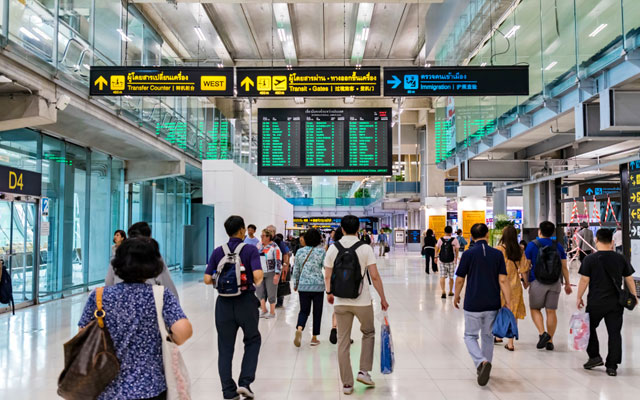
Foreign tourists entering Thailand at Suvarnabhumi Airport
Thailand’s health minister, Anutin Charnvirakul, clarified that “international travellers arriving in Thailand are not required to show proof of vaccination”.
Foreign arrivals are also not required to show a negative Covid-19 test result.
As part of Thailand’s full reopening to tourism, the authorities are offering a longer period of stay for visitors. Effective through March 31, 2023, visitors from visa-exempted nations will be permitted to stay up to 45 days – up from 30 days previously. Those eligible for visa-on-arrival can stay up to 30 days, up from 15 days prior.
The first wave of international travellers arrived in China yesterday, marking the start of the country’s reopening to the world without lengthy quarantine.
CZ312 from Toronto to Guangzhou and ZH9024 from Singapore to Shenzhen were the first to land on January 8. Both carried at least 380 passengers, according to a report by People’s Daily.
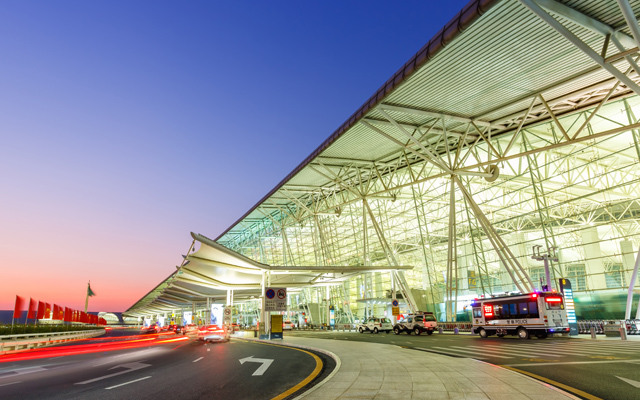
Guangzhou Baiyun International Airport welcomed China’s first international flight under relaxed entry arrangements on January 8
Beijing Capital International Airport has reopened Terminal 3-E and Terminal 2 for international arrivals. Local reports said the airport handled 10 passenger flights January 8. In preparation for the reopening, security forces and other areas of operations have been scaled up while Terminal 3-E’s border checkpoints, layout and facilities have been upgraded
China expects the reopening to boost domestic and international tourism during the upcoming Chinese New Year holidays.
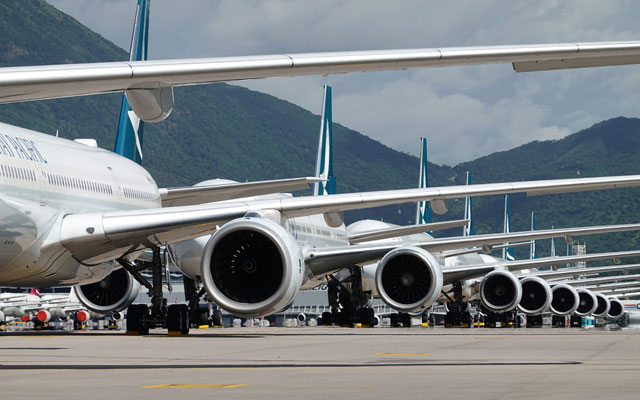
Due to the coronavirus, the aircraft of Cathay Pacific parked at the taxiway of Hong Kong International Airport
Cathay Pacific will operate 61 return flights per week between Hong Kong and 13 Chinese cities from January 14, as it scales up operations in response to Hong Kong’s latest measures to facilitate quarantine-free travel between Hong Kong and the mainland.
Cathay Pacific aims to operate 70 per cent of pre-pandemic passenger flight capacity by end-2023
This compares to the 27 flights per week from Hong Kong to China, and 50 flights per week from China to Hong Kong that the airline is currently operating.
The eventual goal is to operate over 100 return flights per week by the end of March 2023.
In a press statement, the company expressed its commitment to “rebuilding the connectivity of the Hong Kong international aviation hub”.
“As a group, we anticipate that we will be operating around 70 per cent of pre-pandemic passenger flight capacity by the end of 2023, with an aim to return to pre-pandemic levels by the end of 2024,” it said.
Location
The resort is located in a quiet cove on Choengmon Beach, 10 minutes’ drive from Samui International. The white sand beach stretches over one kilometre, long enough for a good stroll. Kimpton’s neighbours include the Sala next door and, at the other end of the beach, Melia and Royal Muang hotels. In between is a motley collection of accommodations, restaurants, bars and shops, some of which could do with a spruce up.
Rooms
There are 138 rooms, suites and villas with open-plan layouts and large terraces, many with direct pool access and sea views. Room sizes are generous, ranging from 58m2 to 224m2, and 628m2 for the only two-bedroom villa in the house.
I was brought to my room, a 115m2 one-bedroom suite, and my feet took me straight to the supersized outdoor terrace which boasted a stunning view and cool breeze – it was well furnished with a sofa bed, coffee table for two and dining space for up to six people.
Inside, the suite was just as luxurious, spotless and thoughtful – there’s even a shelf with paraphernalia for making cocktails, including a book with tips and recipes from award-winning mixologist Masahiro Urushido of Katana Kitchen in New York. A beautifully-illustrated The Great Gatsby book on my bedside, and other little touches like a Bluetooth mini speaker, gave the room a homely and lifestyle feel.
F&B
A “village community” spirit permeates throughout the resort, thanks to the hotel’s efforts to bring people together, such as a social hour every evening at Boho Thai Lifestyle Cafe, where all guests were treated to free wines and canapés.
The open layout of this main restaurant is fantastic – with sea view and breezes, and tables smartly spaced out. Here, daily breakfast is served, and where key executives of the hotel, including general manager Michael Janssen and F&B manager Potjanee Tretipakid, were always present to greet everyone and support the team in taking orders and delivering them.
Another restaurant I dined at during my stay was Fish House – no guessing what it serves.
Kimpton Kitalay Samui is also pet friendly, featuring one of GM Janssen’s creations – Paws Park. He also works with a recognised dog shelter in Samui to bring in healthy dogs to the resort and inviting guests and kids to walk them in the small but cute park that has its own paws towel house. The initiative has raised thousands of Thai baht in donations for the shelter, while a couple of dogs have actually been adopted by guests.
Facilities
Kids can rejoice at what’s probably the largest hotel kids club (500m2) on the island, which comes with its own slide. Thrice-daily activities, such as making towel animals and umbrella painting, are offered. Not only that, kids have their own social hour at 16.00.
Adults can be kids again with fat tire biking on the beach, aqua aerobics and making floating flower art, among an equally exhaustive list of daily activities as that for kids. As for me, I headed straight for the gym, then enjoyed a 90-minute signature massage at Pimãanda by Harnn, where just entering its peaceful garden compounds de-stressed me.
Service
Every Kimpton staff I met always greeted me by name and all of them were youthful, friendly, cheerful and helpful, creating a uniform, happy service wherever I went – one of the resort’s biggest achievements.
Verdict
As the second Kimpton hotel in South-east Asia, the resort reinforces the brand’s promise of relaxed, fun luxury while staying in line with local culture, architecture and flavours.
Cotai Water Jet has resumed City Routes ferry services, allowing travellers to go between Hong Kong Macau Ferry Terminal (Sheung Wan) and Macau Taipa Ferry Terminal.
Six sailings are offered daily at the start of services resumption.
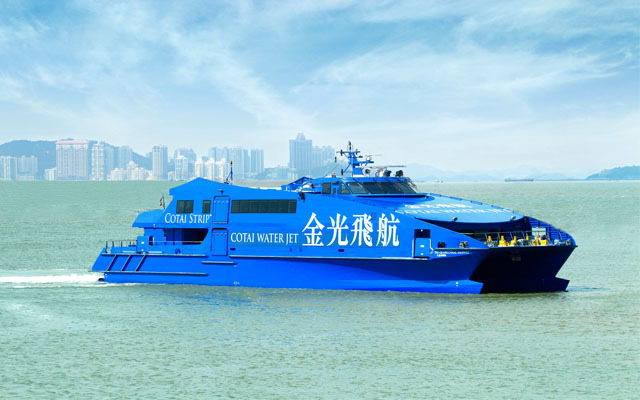
Cotai Water Jet has resumed six daily sailings between Hong Kong and Macau
The services will allow visitors arriving in Macau to swiftly access destination attractions via free shuttle buses to places such as The Venetian Macao, The Parisian Macao and The Londoner Macao.
Thailand has ordered proof of full vaccination or Covid-19 recovery within the last six months from all international travellers bound for the Kingdom.
The Civil Aviation Authority of Thailand (CAAT) also expects unvaccinated travellers to show a medical certificate explaining why they have not received the vaccine.
All international travellers entering Bangkok must now show proof of full vaccination or a certificate of Covid-19 recovery within the last six months
Airlines will be responsible for checking documents before boarding passengers board.
The new measure will not be permanent, with CAAT saying that it would remind at least until the end of this month.
The announcement coincides with China’s resumption of international travel from January 8.
Thailand welcomed it first post-lockdown flight from China on Monday – Xiamen Airlines flight MF833 landed at Bangkok’s Suvarnabhumi Airport with 286 passengers.
Thai passport holders or passengers transiting through Thailand are exempted from the new measures.
Tokyo has been named one of the most accessible cities in the world in a survey carried out by Valuable 500, a global business collective consisting of 500 companies innovating together for disability inclusion.
Some 3,500 disabled global travellers were surveyed in the 2022 poll about the accessibility of destinations they had visited. They listed Tokyo alongside Singapore, Shanghai, Sydney, Amsterdam, Paris, Las Vegas, New York, Orlando and London.
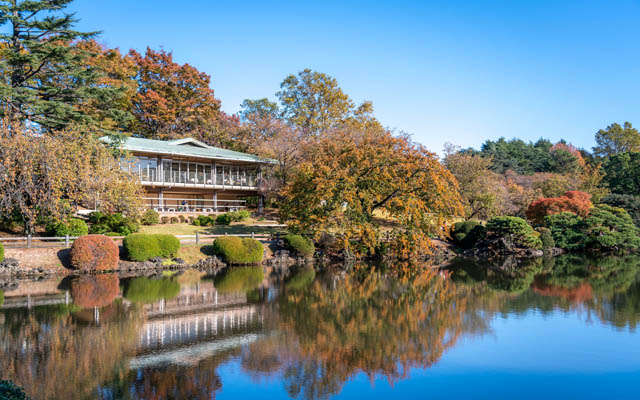
Tokyo’s Shinjuku Gyoen park has been recognised as an accessible attraction
The Japanese capital was praised for its kerb cuts on main streets, large and well-equipped accessible bathrooms and ubiquitous tactile ground surface indicators, which were invented in Japan for visually impaired people.
Respondents noted that nearly all train and subway stations in the city are wheelchair accessible and praised the excellent customer service, pointing out that “if not familiar with the station, disabled travellers will be personally escorted to the correct platform”.
The majority of buses in Tokyo are wheelchair-accessible while wheelchair-accessible taxis are available although “not easy to book”, the report continued.
Around half of respondents said Tokyo has “a wide variety of accessible accommodation close to cultural attractions, shops and restaurants”.
Furthermore, most museums, galleries and observation platforms, including Tokyo Skytree, are “generally very wheelchair-accessible”. Arts and entertainment venues, such as the National Noh Theatre, are also well-set up for the visually impaired, hard of hearing and those with mobility issues. Still, many ancient shrines and temples remain only “partially accessible”.
Shinjuku Gyoen, one of the city’s largest parks and a popular cherry blossom viewing spot, received special recognition for its access map and universal smartphone app that uses voice, video, text and vibration to guide disabled visitors.
In addition to infrastructure and information for disabled travellers in each destination, respondents noted “the importance of being treated with respect, and how a greater understanding of disability and the needs of people with disabilities can be as important as accessible infrastructure”.
A pan-India survey commissioned by IHG Hotels & Resorts (IHG) as part of the launch of their Guest How You Guest global loyalty campaign has revealed that guests highly value personalised hotel experiences that allow them to totally be themselves.
With a total sample size of 5,000 respondents including male (52.7%) and female (47.3%) from age groups of 18-65, the survey aimed to explore preferences and desires of guests during hotel stays, critical to offering a world-class hospitality experience.
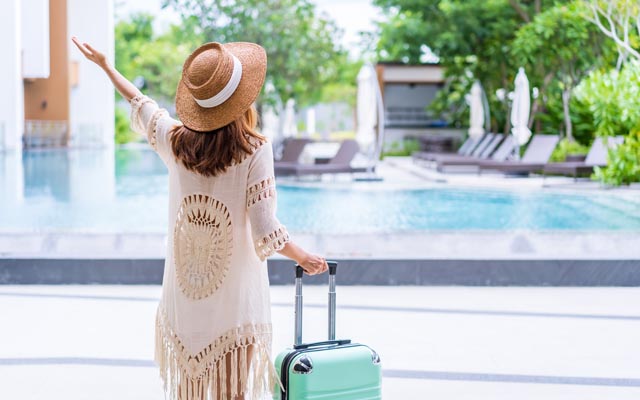
Around 93% of guests felt they can completely be themselves while staying at hotels
The survey results revealed what guests are looking for in a hotel experience, with the three most popular features of a hotel stay being room services (58%), food selection at in-house restaurants (53%) and facilities such as pool, sauna (50%). Meanwhile, 40% of respondents enjoy in-room entertainment available in hotels.
The research showed that 32% are content walking around a hotel in their beachwear, while 22% like to dress their best for dinner and 19% are comfortable to just slouch in their sleepwear and hotel slippers. 17% of respondents admitted that not having to cook for themselves or clean up after (15%) are truly key luxuries that enrich the hotel stay experience.
A stand-out statistic was that 93% of guests felt they can completely be themselves while staying at hotels. While 56% feel they are always relaxed during their stay and 34% feel completely at home during their hotel stays, 12% worry that their kids may misbehave and cause disturbance to other guests.
The popularity of a personalised hotel experience (79%) was something IHG is seeking to celebrate with the launch of their Guest How You Guest campaign.
IHG also created a series of ‘hotel guest archetypes’ as part of the research. Among these, 31% are ‘memory-makers’ who focus on creating memorable experiences and touring around the local area; while 23% classed themselves as a ‘groupie’, most likely to relax and enjoy the company of family and friends. ‘Party people’ (17%) spent their days at the pool and going for drinks at night, while 16% were ‘romance-lovers’, enjoying luxurious, romantic trips with their partners. Finally, 10% are ‘explorers’, going off the beaten track to discover new experiences.
Sudeep Jain, managing director, South West Asia, IHG, said: “Guests remain the focal point of all our services, and thus it is imperative for us to understand their needs, desires and preferences to deliver what they’re looking for the most. It has been very insightful to understand that guests value personalised services at hotels the most.”


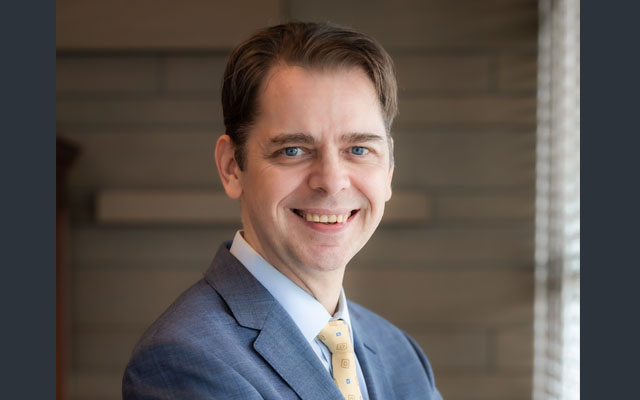
 He was most recently the general manager of InterContinental Budapest before taking the helm at InterContinental Chiang Mai Mae Ping.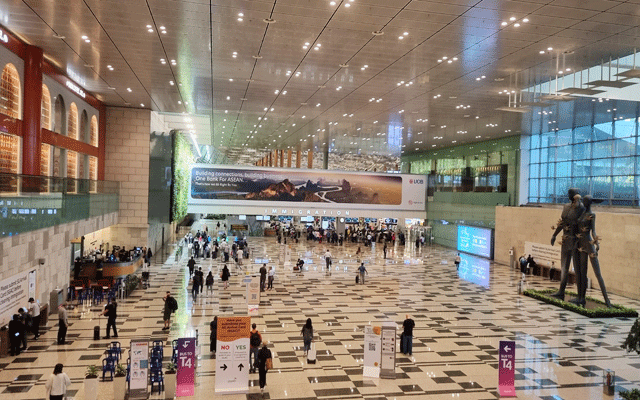
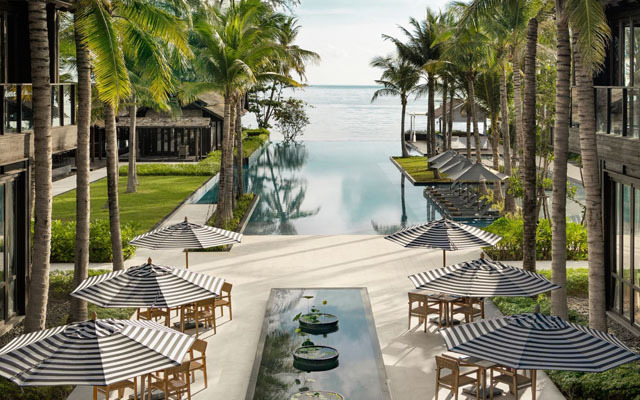







The resort is located in a quiet cove on Choengmon Beach, 10 minutes’ drive from Samui International. The white sand beach stretches over one kilometre, long enough for a good stroll. Kimpton’s neighbours include the Sala next door and, at the other end of the beach, Melia and Royal Muang hotels. In between is a motley collection of accommodations, restaurants, bars and shops, some of which could do with a spruce up.
Rooms
There are 138 rooms, suites and villas with open-plan layouts and large terraces, many with direct pool access and sea views. Room sizes are generous, ranging from 58m2 to 224m2, and 628m2 for the only two-bedroom villa in the house.
I was brought to my room, a 115m2 one-bedroom suite, and my feet took me straight to the supersized outdoor terrace which boasted a stunning view and cool breeze – it was well furnished with a sofa bed, coffee table for two and dining space for up to six people.
Inside, the suite was just as luxurious, spotless and thoughtful – there’s even a shelf with paraphernalia for making cocktails, including a book with tips and recipes from award-winning mixologist Masahiro Urushido of Katana Kitchen in New York. A beautifully-illustrated The Great Gatsby book on my bedside, and other little touches like a Bluetooth mini speaker, gave the room a homely and lifestyle feel.
F&B
A “village community” spirit permeates throughout the resort, thanks to the hotel’s efforts to bring people together, such as a social hour every evening at Boho Thai Lifestyle Cafe, where all guests were treated to free wines and canapés.
The open layout of this main restaurant is fantastic – with sea view and breezes, and tables smartly spaced out. Here, daily breakfast is served, and where key executives of the hotel, including general manager Michael Janssen and F&B manager Potjanee Tretipakid, were always present to greet everyone and support the team in taking orders and delivering them.
Another restaurant I dined at during my stay was Fish House – no guessing what it serves.
Kimpton Kitalay Samui is also pet friendly, featuring one of GM Janssen’s creations – Paws Park. He also works with a recognised dog shelter in Samui to bring in healthy dogs to the resort and inviting guests and kids to walk them in the small but cute park that has its own paws towel house. The initiative has raised thousands of Thai baht in donations for the shelter, while a couple of dogs have actually been adopted by guests.
Facilities
Kids can rejoice at what’s probably the largest hotel kids club (500m2) on the island, which comes with its own slide. Thrice-daily activities, such as making towel animals and umbrella painting, are offered. Not only that, kids have their own social hour at 16.00.
Adults can be kids again with fat tire biking on the beach, aqua aerobics and making floating flower art, among an equally exhaustive list of daily activities as that for kids. As for me, I headed straight for the gym, then enjoyed a 90-minute signature massage at Pimãanda by Harnn, where just entering its peaceful garden compounds de-stressed me.
Service
Every Kimpton staff I met always greeted me by name and all of them were youthful, friendly, cheerful and helpful, creating a uniform, happy service wherever I went – one of the resort’s biggest achievements.
Verdict
As the second Kimpton hotel in South-east Asia, the resort reinforces the brand’s promise of relaxed, fun luxury while staying in line with local culture, architecture and flavours.
Contact details
Tel: +66 77 951 999
Email: kimptonkitalay.reservations@ihg.com
Website: www.kimptonkitalaysamui.com