TTG Asia will be taking a break from January 23-24, 2023, for the Lunar New Year holidays. The online news bulletin will resume on Wednesday, January 25, 2023.
From all of us at TTG Asia Media, we wish all of our readers a happy and prosperous Lunar New Year!
Accor and shipbuilding company Chantiers de l’Atlantique have partnered to launch Orient Express Silenseas – the world’s largest sailing ship with roots in Orient Express’ history – which will set sail in 2026.
Both have signed a letter of intent for two ships.
Orient Express Silenseas is a collaboration between Accor and shipbuilding company Chantiers de l’Atlantique
Orient Express Silenseas will feature 54 suites, including a 1,415m2 Presidential Suite, two swimming pools, two restaurants and a bar. Guests can experience captivating shows in the Amphitheatre-Cabaret, as well as enjoy spa treatments, meditation sessions and stopover explorations.
“With Orient Express Silenseas, we are beginning a new chapter in our history, taking the experience and excellence of luxury travel and transposing it onto the world’s most beautiful seas,” said Sébastien Bazin, chairman and CEO, Accor.
“Innovation is at the heart of this ultra-modern ship that will revolutionise the maritime world with new technology to meet today’s sustainability challenges.”
Laurent Castaing, managing director, Chantiers de l’Atlantique, shared: “This concept, born in our design offices in 2018, is the quintessence of our savoir-faire in the fields of naval architecture, the construction of sophisticated hulls, as well as the design of luxurious spaces.”
Orient Express Silenseas will be installed with three SolidSail rigs, a revolutionary 1,500m2 unit wind propulsion system, that will contribute significantly to the propulsion of the ship. The hybrid propulsion formula will combine wind power with an engine running on liquefied natural gas (LNG) – plans to use green hydrogen once the technology is approved for ocean passenger ships, will mean a new, more environmentally-friendly vision of sea travel.
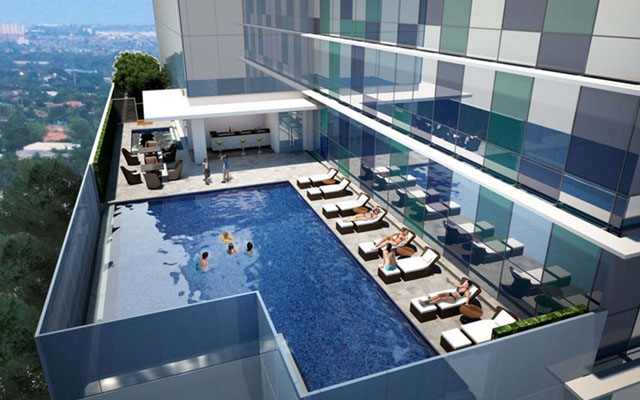
Belmont Hotel Mactan, the Philippines
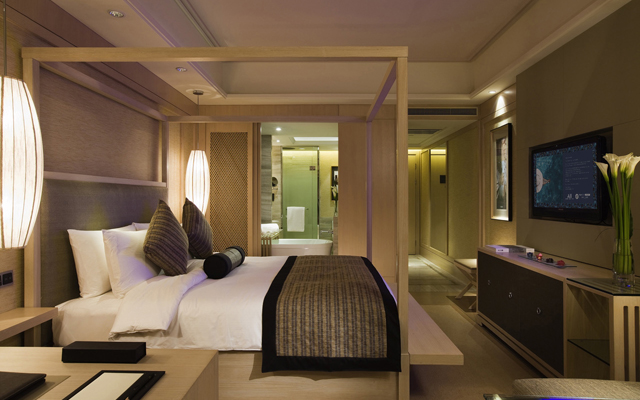
The 550-key Belmont Hotel Mactan features three room categories: Junior Suite, Deluxe Premier (seven rooms are dedicated for guests with special needs), and Superior Deluxe Queen or Twin.
Just 15 minutes away by car from Cebu International Airport, the hotel is located within a lifestyle and business hub, The Mactan Newtown Township by Megaworld, which offers F&B establishments and convenience stores alongside mixed-used condominium towers and office spaces. It is also close to tourist sites like the Mactan Shrine Park.
Onsite facilities comprise a pool, children’s pool, fitness centre, event spaces and three dining outlets.
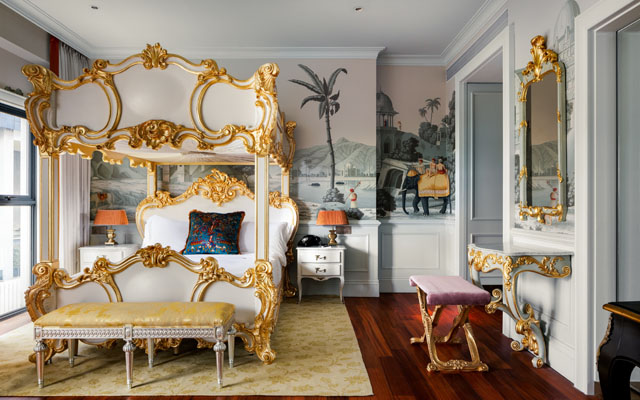
The Serangoon House
The Serangoon House, Singapore
The Serangoon House is a lifestyle hotel located in Singapore’s most vibrant ethnic district, Little India, where the best of the local Indian community is shown through spice shops, jewellery stores, trendy cafés and hip watering holes.
Each of the 90 rooms can accommodate up to six guests when required, and features a two-tier canopy bed.
In-house restaurant, GupShup, serves authentic Indian food.
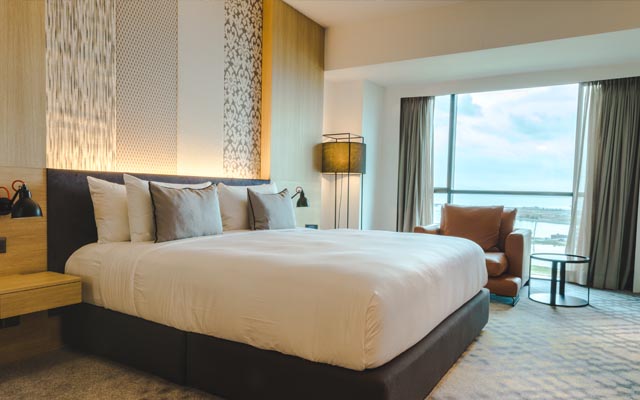
G Hotel Gurney
G Hotel Gurney, Malaysia
G Hotel Gurney has reopened after a makeover, with new facilities, lifestyle experiences and dining concepts. Its 312 rooms range from deluxe and executive rooms to G suites.
Guests will enjoy a fuss-free check-in experience as they are guided directly to the lobby at level three through the redesigned concierge area on the ground floor while indulging in complimentary ice-cream.
There are also meeting venues and an executive lounge for business travellers on level 15, where guests can enjoy an endless flow of champagne and evening cocktails while admiring the scenic views of Penang.
Conrad Singapore Orchard
Conrad Singapore Orchard, Singapore
Conrad Singapore Orchard in the heart of the city has launched with an initial offering of 10 restaurants and bars, as well as 14 event spaces.
Its 440 rooms are presently undergoing extensive refurbishment and will welcome guests in early 2024.
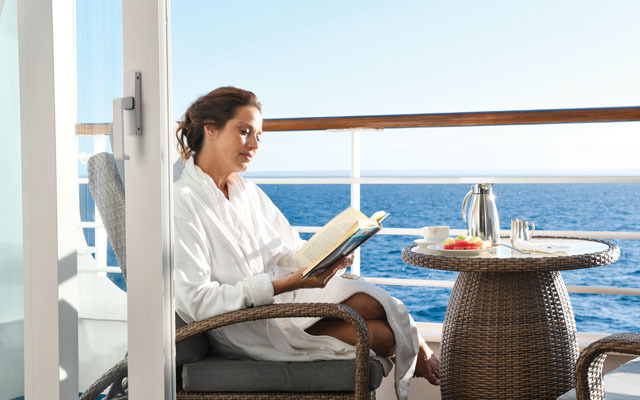
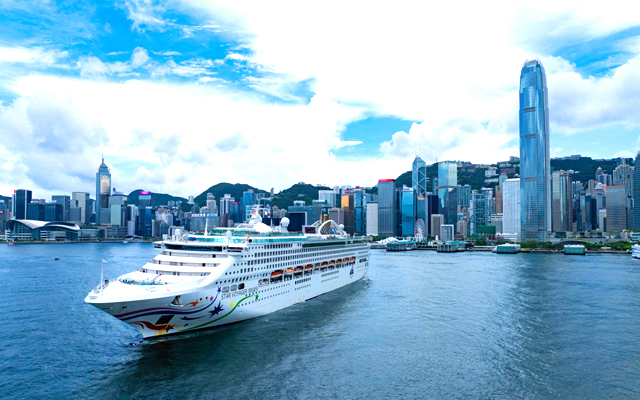
Oceania Cruises is celebrating its 20th anniversary with a limited-time sale, which includes a gift of up to US$800 Shipboard Credit per stateroom or suite for voyages across seven ships.
The cruise line is also offering guests reduced 50 per cent deposits until February 28.
Some highlight voyages in Asia-Pacific include:
The Islands To Indochina will set sail on January 28, 2024 from Singapore to Bangkok. The 15-day voyage on Riviera will encompass overnight stays in Saigon and Bangkok, as well as visits to Borneo, Puerto Princesa, Brunei, the Philippines and Vietnam.
Astounding Australasia onboard the Regatta sails from Singapore to Auckland and will depart November 14, 2024. Featuring overnight stays in Bali, Sydney and Auckland, this 24-day sojourn will also visit Jakarta, Benoa and the tropical rainforest of Cairns, before crossing the Tasman to New Zealand’s North Island.
Bookings for the 20th Anniversary Sale are open from now till March 1.
South Korea will lift its mask-wearing mandate for most indoor public places from January 30. Masks will still be required to be worn in medical facilities and when travelling in public transport.
Masks are no longer needed indoors
While most of the country’s pandemic-related precautions have been scrapped, it maintains a seven-day isolation rule for those tested positive for Covid.
Meanwhile, travellers arriving from China are required to take a Covid test when travelling to South Korea.
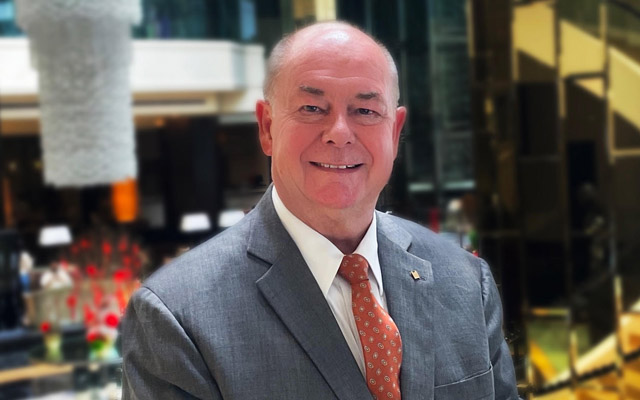
Grand Millennium Kuala Lumpur is proud to welcome Peter D. Gibbons back as its general manager. He previously helmed as general manager from 2012 to 2019.
Supported by his knowledge of the brand’s DNA and 38 years of experience in senior management positions in hospitality across five continents, Gibbons returns with strategies to put the hotel back on the local lifestyle map and will oversee the operations of the hotel.
He will also spearhead the hotel’s focus on people, community and projects that give back.
India’s inbound tourism stakeholders expect the G20 Presidency last month, followed by multiple meetings lined up throughout the year, will offer an opportunity to revive the fortunes of the sector.
India is hosting over 200 meetings in more than 50 cities under its G20 Presidency, with both the central and state governments also organising tourism-centric events on the side lines of these meetings.
G20 delegates visited the Kanheri Caves in Mumbai in last month
“The inbound tourism sector has been slow to recover even though India and international markets have opened borders for tourism. Apart from the spotlight G20 Presidency and the subsequent meetings will bring onto India, the tourism-centric events planned by both state and central governments will help to create demand in key global source markets,” said Asif Fazlani, managing director, Fazlani Natures Nest.
The Central government is also organising a Global Tourism Summit in New Delhi in April as part of the G20 Presidency, in which all member countries will participate.
Host states, including Uttar Pradesh, Rajasthan and Maharashtra, will utilise these events to showcase their tourism experiences to a global audience.
Manoj Bagri, managing director, 7 Apple Hotels and Resorts, shared that the first Sherpa meeting of India’s G20 Presidency in December 2022 featured excursions to iconic landmarks like Kumbhalgarh Fort and Ranakpur Jain Temple in Rajasthan.
“India’s G20 Presidency offers a great opportunity to infuse fresh energy in an otherwise gloomy inbound tourism scenario. Besides creating a buzz for travel to India, the various (related) summits and meetings should also be utilised to attract global investments in the country’s tourism and hospitality segments,” opined Lally Mathews, managing director, Divine Voyages.
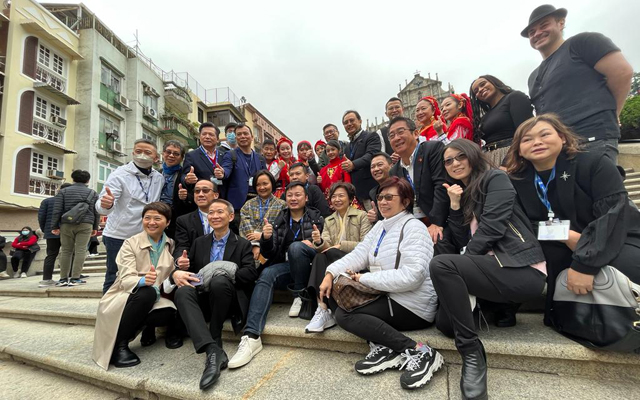
Macau welcomed a travel trade familiarisation group from Hong Kong this week – the first since the pandemic upset inbound tourism.
The two-day visit reacquainted 40 attendees with Macau’s top attractions and reconnected them with local travel and tourism suppliers through a networking seminar on January 16.
Hong Kong travel agents revisited new and familiar sights across Macau
According to Maria Helena de Senna Fernandes, director, Macao Government Tourism Office (MGTO), Hong Kong remains the second most important source of tourist traffic for Macau, and MGTO is pushing a spate of promotional schemes and special offers to spur travel.
Starting January 13, Macau will roll out a three-month buy-one-get-one-free promotion for ferry and coach rides to Macau.
Access to Macau is improving, with two ferry operators commencing Hong Kong-Macau services. TurboJET is ready to ramp up its day and night sailings from January 19 when Macau Outer Harbour Ferry Terminal reopens.
The Civil Aviation Authority has approved flight resumption and increased frequencies for Air Macau, as well as mainland and foreign operators. Air Asia’s thrice weekly services between Kuala Lumpur and Macau will commence in February, while Sky Shuttle has started operating eight daily flights to Hong Kong since January 16.
Avis Macau has also fully resumed its cross-border premium transfer service, and has been pushing private boutique tours using its seven-seater cars.
More promotions for the Hong Kong market will be announced after Chinese New Year.
Hong Kong’s Travel Industry Council’s (TIC) chairman, Gianna Hsu, praised MGTO’s swift action to rebuild Hong Kong traffic.
She believes that promotional offers will boost Hong Kong residents’ interest in Macau.
“It will take less than 10 days for Macau to hit 50 per cent of pre-Covid daily visitorship (from Hong Kong). This is the light at the end of the tunnel,” she said, adding that more collaboration between both cities would complement each other’s tourism promotions.
During a product presentation, MGTO’s deputy director, Cheng Wai Tong, urged attendees to work together to create travel bundles comprising premium car rental and authentic, tailor-made tour experiences.
Cheng added that an even larger travel trade familiarisation trip scheduled for February, involving 60 to 70 agents from Hong Kong.
Rutger Verschuren, general manager and area vice president, Macau operations, Artyzen Grand Lapa Macau, said: “It is magnificent seeing our friends in every sector of the tourism industry, MGTO and TIC shifting gear so fast.
“We are now on a U-turn towards a perfect recovery – anxiety by the gaming tenders has been wrapped up, Chinese New Year is around the corner, and zero-Covid put aside along with most restrictions. (It’s) green light all the way, it appears.”
However, international arrivals will take time to return, as flights are not fully recovered, opined MGTO’s Fernandes. “More flights from South-east Asia (will) be announced next month,” she said.
Macau registered more than 55,000 visitor arrivals across all markets on January 14 – the highest single-day record. For the whole of December 2022, Macau had a daily average of 12,909 visitors.
Fernandes said arrival numbers will continue to climb, with an average of 47,000 visitors expected during the upcoming seven-day Chinese New Year holidays.
Agoda has launched a shopping cart feature on its digital travel platform, enabling travellers to bundle their accommodation bookings, creating a seamless, one-stop travel booking experience for customers.
As one of the first online travel agencies to offer this functionality for its travel products, Agoda hopes to optimise trip planning and offer greater value to its customers.
Agoda’s new shopping cart feature allows travellers to bundle their accommodation bookings
Customers now have the flexibility to compare prices and availability and enjoy further bundle deal savings – the shopping cart allows travellers to add a selection of properties with the option to either check out more than one reservation at once or leave them in the cart until next time.
Currently available on the web and mobile app for accommodation only, Agoda customers will soon also be able to add flights, tours, attractions and more.
Omri Morgenshtern, CEO of Agoda said: “We believe travellers want the ease and convenience of booking full itineraries, rather than individual elements. They want their trip to be cheaper, and they want one trusted source to take responsibility for the entire journey. We aim to be that reliable partner for all.”
Adding another brand to its portfolio of more than 40 brands, Accor has introduced the Handwritten Collection, which will plug its midscale gap.
Handwritten Collection joins the luxury Emblems Collection, which Accor launched in November 2021 to complement its upscale MGallery Collection.
Hotel Shanghai Sheshan Oriental will be part of the new Handwritten Collection
The chain said it has secured 12 signings globally, among them three hotels in Asia-Pacific that will open in the next two months as part of the collection, namely, Hotel Shanghai Sheshan Oriental, Wonil Hotel Perth and Hotel Morris Sydney.
Accor expects Handwritten to reach more than 250 hotels by 2030. It said it has over 110 leads globally totalling more than 11,500 rooms.
Handwritten targets franchising and conversions, a high-growth area as it enables owners to attach a brand and chain distribution to assets quickly and with little capital expenditure. Covid-19 has only increased the popularity of collections due to this.
Accor’s global chief development officer, premium, midscale, economy, Camil Yazbeck, said at a media launch on January 19 that there were three times more signings for collections than for classic brands over the last two years.
“Collections will grow a lot more in the future,” he said, adding that 70 per cent of independent hotels worldwide are unbranded. They want to retain their identity and personality but also need the strength of distribution afforded by chains.
As its name suggests, the brand’s emphasis is on providing personal touches, quirkiness and authenticity – just like a handwritten note.
Accor promises that Handwritten hotels will be so distinct that “it’s as if each local hotelier were inviting guests into their charming and stylish homes”.
Alex Schellenberger, Accor’s chief marketing officer, premium, midscale, economy brands, said: “The hotels we will feature in Handwritten Collection are those sought out by travellers who appreciate heartwarming travel experiences and a twist on traditional hospitality, as well as by hoteliers who cherish the unique personality of their properties while desiring the benefits that come with a leading global partner.”
Handwritten has been in the works for more than a year.
Accor’s move into soft brands started with MGallery in 2008. It was not until November 2021, a gap of 13 years, that it launched Emblems, and now Handwritten, joining all hotel chains in the race to sign up more independent hotels for management and/or franchise fees.



 From all of us at TTG Asia Media, we wish all of our readers a happy and prosperous Lunar New Year!

 Some highlight voyages in Asia-Pacific include:
 He will also spearhead the hotel’s focus on people, community and projects that give back.








Accor and shipbuilding company Chantiers de l’Atlantique have partnered to launch Orient Express Silenseas – the world’s largest sailing ship with roots in Orient Express’ history – which will set sail in 2026.
Both have signed a letter of intent for two ships.
Orient Express Silenseas will feature 54 suites, including a 1,415m2 Presidential Suite, two swimming pools, two restaurants and a bar. Guests can experience captivating shows in the Amphitheatre-Cabaret, as well as enjoy spa treatments, meditation sessions and stopover explorations.
“With Orient Express Silenseas, we are beginning a new chapter in our history, taking the experience and excellence of luxury travel and transposing it onto the world’s most beautiful seas,” said Sébastien Bazin, chairman and CEO, Accor.
“Innovation is at the heart of this ultra-modern ship that will revolutionise the maritime world with new technology to meet today’s sustainability challenges.”
Laurent Castaing, managing director, Chantiers de l’Atlantique, shared: “This concept, born in our design offices in 2018, is the quintessence of our savoir-faire in the fields of naval architecture, the construction of sophisticated hulls, as well as the design of luxurious spaces.”
Orient Express Silenseas will be installed with three SolidSail rigs, a revolutionary 1,500m2 unit wind propulsion system, that will contribute significantly to the propulsion of the ship. The hybrid propulsion formula will combine wind power with an engine running on liquefied natural gas (LNG) – plans to use green hydrogen once the technology is approved for ocean passenger ships, will mean a new, more environmentally-friendly vision of sea travel.