Anantara Desaru Coast Resort & Villas has unveiled its on-site water bottling plant as part of its commitment to sustainability.
The resort had started steering away from the use of plastic bottles since November last year.
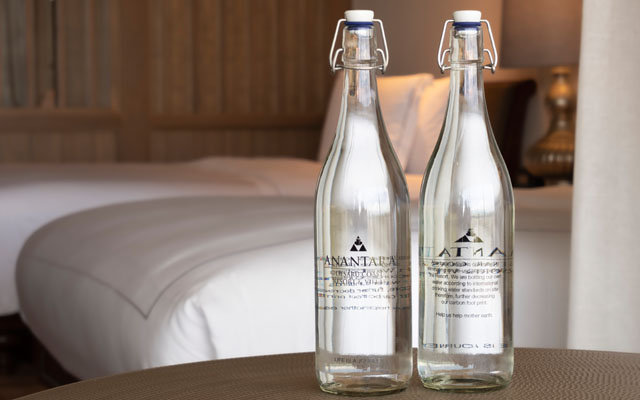
Anantara Desaru Coast Resort & Villas now offers water in glass bottles in each guestroom
Its new water bottling plant was built in accordance with the specifications placed by the Ministry of Health and Eco Pure Waters Company in Thailand, the approved vendor for Anantara hotels, Resorts & Spas.
Other initiatives by the resort to reduce its carbon footprint and environmental impact include placing glass bottles in each room, offering 500ml water bottles in banquets and events, using rainwater to water plants, harvesting vegetables at the resort’s Herbs Garden, and organising monthly beach clean-ups to collect trash swept ashore from going back into the ocean.
Pan Pacific Hotels Group and KKday has extended the staycation experience An Otterly Adventure with Otah & Friends until March 31, 2023.
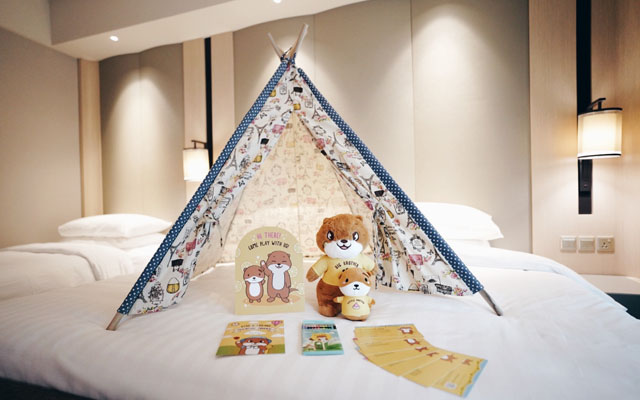
After its popular first run, the second edition of An Otterly Adventurous Staycation with Otah & Friends will feature a new adventure story where parents can bond with their little ones.
Families can look forward to more exclusive collectibles and treats at participating Pan Pacific Hotels
Families can look forward to more exclusive collectibles and treats at the participating hotels – Parkroyal Collection Marina Bay, Parkroyal Collection Pickering, Parkroyal on Beach Road and Parkroyal on Kitchener Road.
Priced from SG$490 (US$365), the package includes a one-night stay with breakfast for two adults and one child, a pair of collectible Otah and Chaotah plushies, and a welcome pack filled with themed goodies and activities for the little ones.
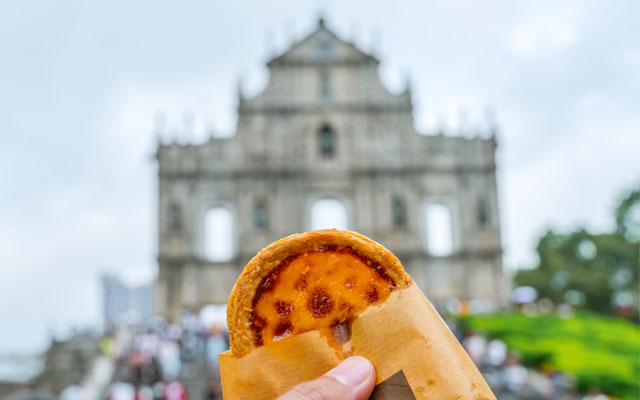
Macao Government Tourism Office (MGTO) has launched the new Gastronomic Journey website to promote Macau’s title as a Creative City of Gastronomy.
The reorganised website features a wide variety of videos about gastronomy, culinary arts and food culture. It also enables easy planning of food trips, which will bring about more spending in communities and propel development of Macau’s tourism industry and economy.
The new Gastronomic Journey website features videos about gastronomy, culinary arts and food culture
With optimised features for information search, residents and visitors can search for different kinds of local delicacies by category, look for palate-tempting delights and discover what Macau has to offer.
Visitors can also learn more through the range of videos and content, such as the video series themed as Macao Flavors a Culinary Legacy, Sino-Portuguese Style, Taste of Macao, Discover the Taste at Macao Distinctive Shops and Macanese Cuisine.
Viewers can even revisit the historic journey of Macau’s journey in its application for UNESCO’s designation as a Creative City of Gastronomy.
In addition, the new website is equipped with a search engine on the Quality Tourism Services Accreditation Scheme, where users can conveniently search for high-quality restaurants which offer accredited services.
With the feature of Macao Gastronomy Map, users can follow food connoisseurs to try recommended food and check in at popular restaurants, and discover hidden gems in local neighbourhoods.
MGTO will also be successively releasing seven new video episodes to spotlight on catering small and medium enterprises (SMEs) – the first episode is already available on the website.
Traveloka will commit to aid the recovery of Vietnam’s tourism industry and accelerate its digital transformation by supporting more initiatives, technological developments and other solutions.
This was affirmed by Traveloka’s co-founder Albert during his meeting with Vietnam’s president Nguyen Xuan Phuc, who was in Indonesia for a state visit to mark the 10th anniversary of the strategic partnership between both countries.
Traveloka commits to aid the recovery of Vietnam’s tourism industry and accelerate its digital transformation
Traveloka Vietnam has worked with the Vietnam National Administration of Tourism (VNAT), the Ho Chi Minh City Department of Tourism, the Hai Phong City Department of Tourism, and the Da Nang City Tourism Board to support the digital transformation initiatives of these agencies, to promote local destinations and improve the experience of visitors to the country, furthering the development of local tourism.
Albert said: “We believe in Vietnam’s tourism potential and are committed to supporting the country, in promoting digital transformation and tourism to deliver social and economic impact.”
He added that Traveloka seeks to deepen collaboration with the Vietnamese government through projects that support the recovery of the tourism sector, accelerate digital adoption, as well as to further develop sustainable tourism.
Visitors from China must undergo Covid-19 testing upon arrival in South Korea, a measure that took effect January 2.
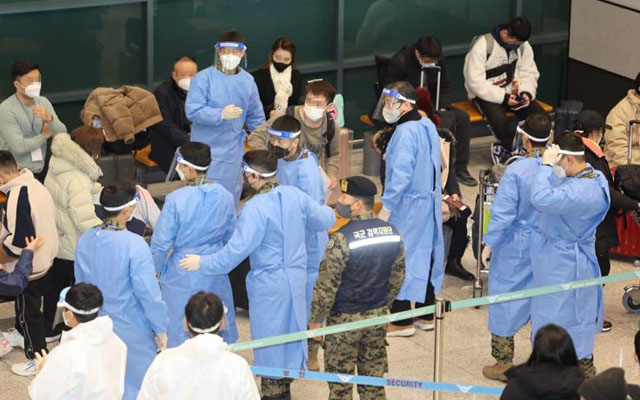
The PCR test is taken on the first day of their entry and they must remain in separate facilities while waiting for their test results at a nearby transportation centre, where benches and simple refreshments will be provided.
Quarantine officials at Incheon International Airport guiding travellers from China for the PCR test (Photo: Yonhap)
South Korean nationals and foreigners with residency status returning from China will undergo quarantine at their residence after taking the PCR test.
In addition, short-term visitors from China will be handed red name tags to identify them from travellers from other countries.
Universal Studios Singapore invites everyone to Hop Into Fun from January 13 to February 5, 2023 and welcome the year of the rabbit with festive meet and greets, a cherry blossom-lined Hollywood Boulevard street, Lo Hei weekends, night festivities, exciting performances and the chance to win attractive gifts.
Exchange well wishes with popular characters from DreamWorks Animation, Sesame Street, and Transformers dressed in their Chinese New Year best; and watch how the Illumination’s Minions celebrate the season in their live performance, while grabbing some selfies.
Universal Studios Singapore celebrates the Chinese New Year with a line-up of festive activities
During this period, enjoy an exciting night programme with extended weekend opening hours until 20.00 on select nights. Indulge in Lo Hei with The Stars over three weekends – January 21-24, 27-29, and February 3-5 – and marvel at the Dance of the Dragon which will light up the night with a neon dragon, as well as dancers and drummers wearing brilliant LED lights.
In addition, visitors will be given a daily red packet from January 22 to 30 for a chance to win Universal Express passes, retail or food vouchers, plushies and more.
The Chinese New Year activities are included with regular admission to Universal Studios Singapore. One-day adult admission tickets cost S$88 (US$65) and one-day child admission tickets are S$68. Each ticket comes with a Universal Studios Singapore food and beverage voucher and retail voucher.
Centara Hotels & Resorts is offering an exclusive introductory rate for its first-ever hotel in Japan, Centara Grand Hotel Osaka, which opens in July this year.
Now offering 25 per cent off standard room rates, as well as complimentary room upgrade, late check-out, dining privileges, giveaways and more.
Enjoy 25 per cent off standard room rates at Centara Grand Hotel Osaka
The 515-key hotel soars 33-storeys above downtown Osaka nearby Namba, the city’s vibrant shopping and entertainment district.
With an eclectic selection of bars and restaurants, including rooftop venues with skyline views, it also features the award-winning SPA Cenvaree, fitness centre, co-working spaces and meeting venues, making the property ideal for hosting social, corporate and MICE events.
Book from now to June 30, 2023 for stays from July 1 to December 21, 2023.
The Philippines has been preparing for the influx of Chinese tourists long before China announced its reopening on January 8.
Preparations cover three main areas: negotiations to resume commercial and charter flights; e-visa platform to expedite visa application processes; and the launch of cruise tourism in February 2023.
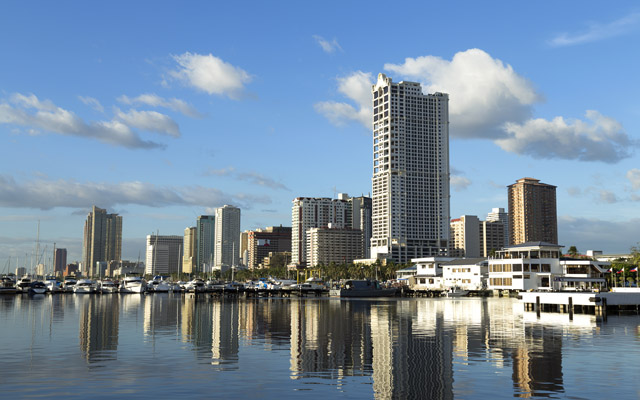
Philippine will improve access for Chinese travellers
The Department of Tourism (DOT) is “in close coordination with tourism attaches in Beijing and Shanghai to ensure that we continue the efforts of resuming flights both commercial and chartered,” said tourism secretary Christina Garcia Frasco in a December 19 press briefing.
So far, Philippine Airlines (PAL) has announced resuming services between Manila and Xiamen starting January 13 with a weekly flight, but “will build up frequencies over time, in line with the easing of restrictions and applicable government authorisations”.
PAL had previously served five Chinese cities from Manila – Beijing, Shanghai, Guangzhou, Xiamen and Quanzhou (Jinjiang) – prior to the pandemic. It continued to operate several regular charter flights during the pandemic.
The DOT has also proposed to the Department of Foreign Affairs the provision of e-visa platform in certain key source markets including China and India to expedite visa and other travel requirements into the Philippines.
Verna Buensuceso, DOT assistant secretary for product and market development and officer-in-charge – undersecretary, tourism development, explained: “E-visa is something we have pushed and would like to prioritise in (source) markets that have big groups, hopefully China and India. These are areas we have very limited foreign posts and it will really facilitate the processing if we have an e-visa system.”
Buensuceso said they are also looking at other possibilities, such as establishing a system for expediting group visas.
By February, cruise tourism will be launched with at least 156 ports of call across 40 island destinations, a new product for inbound, including Chinese tourists, Frasco said.
She emphasised that China, once the country’s second biggest inbound market, “is still very much on the horizon” considering that at some point it provided over 1.2 million tourists into the Philippines. As such, efforts towards resuming Chinese arrivals have not stopped.
Travellers arriving in Australia from China, Hong Kong and Macau must show a negative Covid-19 test result from January 5.
Travellers from China, Hong Kong and Macau will need a negative Covid-19 test result to enter Australia from January 5
According to news reports, Australian health minister Mark Butler said the decision was made “out of an abundance of caution”, citing a lack of epidemiological information and genomic sequencing data from China.
The government is also considering additional measures including testing wastewater from airplanes and voluntary sampling at airports for arrivals, Butler told a news conference.
He stressed that the measure is only temporary and a reflection of the current Covid-19 situation in China.
Kandima Maldives will kick off a wellness retreat this March, with world-renowned celebrity trainer Ramona Braganza at the helm of the seven-day programme.
Kandima Maldives launches a new wellness retreat in March
The Strong Body, Strong Mind, Gentle Spirit retreat, running from March 14 to 21, will be built on Ramona’s famous 321 Training Method which was initially designed to train her Hollywood clients. Guests can expect effective nutrition programmes, daily meditation, workouts, a spa treatment, a snorkelling excursion, plus a bonus 60-minute personal one-on-one training session, and much more.
To be part of the retreat, travellers will need to book and pay for the fitness programme on Ramona’s website and then confirm and pay for their stay at Kandima Maldives. Stay packages are available.
















The Philippines has been preparing for the influx of Chinese tourists long before China announced its reopening on January 8.
Preparations cover three main areas: negotiations to resume commercial and charter flights; e-visa platform to expedite visa application processes; and the launch of cruise tourism in February 2023.
The Department of Tourism (DOT) is “in close coordination with tourism attaches in Beijing and Shanghai to ensure that we continue the efforts of resuming flights both commercial and chartered,” said tourism secretary Christina Garcia Frasco in a December 19 press briefing.
So far, Philippine Airlines (PAL) has announced resuming services between Manila and Xiamen starting January 13 with a weekly flight, but “will build up frequencies over time, in line with the easing of restrictions and applicable government authorisations”.
PAL had previously served five Chinese cities from Manila – Beijing, Shanghai, Guangzhou, Xiamen and Quanzhou (Jinjiang) – prior to the pandemic. It continued to operate several regular charter flights during the pandemic.
The DOT has also proposed to the Department of Foreign Affairs the provision of e-visa platform in certain key source markets including China and India to expedite visa and other travel requirements into the Philippines.
Verna Buensuceso, DOT assistant secretary for product and market development and officer-in-charge – undersecretary, tourism development, explained: “E-visa is something we have pushed and would like to prioritise in (source) markets that have big groups, hopefully China and India. These are areas we have very limited foreign posts and it will really facilitate the processing if we have an e-visa system.”
Buensuceso said they are also looking at other possibilities, such as establishing a system for expediting group visas.
By February, cruise tourism will be launched with at least 156 ports of call across 40 island destinations, a new product for inbound, including Chinese tourists, Frasco said.
She emphasised that China, once the country’s second biggest inbound market, “is still very much on the horizon” considering that at some point it provided over 1.2 million tourists into the Philippines. As such, efforts towards resuming Chinese arrivals have not stopped.