Indonesia Directorate General of Immigration, Ministry of Law and Human Rights has launched the Second Home Visa to attract and facilitate foreigners to conduct their business in the country.
This visa is available with a five- and 10-year validity, and includes a tariff of three million rupiah (US$192).
The long-stay visa aims to attract global travellers to come to Bali and other parts of Indonesia; Bali pictured
Widodo Ekatjahjana, care taker of the director general of immigration, said in a media statement: “This immigration policy is one of the non-fiscal incentives which can stimulate certain foreigners to live and contribute positively to the Indonesian economy amid the dynamic world economic situation.”
The Second Home Visa regulation was issued on October 25 and will start implementation 60 days after the announcement. Travellers are required to have a passport with a minimum of 36 months’ validity, proof of funds (a minimum of two billion rupiah), a recent passport photo, and a curriculum vitae.
Applications can be done from within and outside Indonesia via the immigration website.
The Langham Hospitality Group (LHG) has diversified its portfolio with an upper-midscale brand, Ying’nFlo, last week.
The new global lifestyle stay concept was created to tap into current and future desires of millennial and Gen Z travellers.
Ying’nFlo’s concept was created to tap into the millennial and Gen Z traveller markets
Brett Butcher, CEO, LHG said: “Ying’nFlo is a bold, colourful canvas for the younger urban travellers at an affordable price. It’s a smart guest experience for a generation that has grown up digital. The concept combines (a) simple stylish design with brilliant basics which are efficiently executed with a strong social vibe.”
Ying’nFlo is expected to present the company with new business opportunities and complement LHG’s two existing luxury brands, Langham and Cordis.
Shelley Tso, vice president, marketing & communications, LHG, said the rationale for Ying’nFlo was that there were “strong opportunities for midscale and upper-midscale (hotels) in China and Asia-Pacific, where 50 per cent of the population are millennials or Gen Z’s” who have grown up in a dynamic digital age.
The first property debuts in Hong Kong’s Wanchai, rebranded and converted from the 70-room Eaton House. Floor-by-floor conversion will be done in phases – rooms will be refurbished with new features and facilities, including a laundry station and a kitchenette.
An all-in-one Ying’nFlo app will connect guests with every aspect of their stay – facilitating check-in/out and functioning as a digital room key as well as lighting, air conditioning and TV control.
In place of onsite F&B services, the hotel provides vending machines and complimentary coffee at the reception area.
The second Ying’nFlo is confirmed at Seaworld Cruise Terminal in Xiamen, China, set for 2026.
LHG is in discussion to secure multiple sites with a target to open 100 properties in the next five years, prioritising destinations in China’s first-, second- and third-tier cities.
Accor and Ennismore have signed three hotels with TNG Holdings Vietnam Group. Accor will introduce Swissôtel Hai Phong Riverfront and Grand Mercure Phu Yen Boulevard Centre, while Ennismore’s Hyde Danang Centre will be its first property in Vietnam.
Accor currently operates 40 hotels in Vietnam, with 50 projects in the pipeline. The opening of Swissôtel Hai Phong Riverfront will see the debut of the brand in Vietnam, and the hotel will offer a range of revitalising concepts centred around craftsmanship, sustainability and vitality.
Swissôtel Hai Phong Riverfront will see the debut of the Swissôtel brand in Vietnam
Grand Mercure Phu Yen Boulevard Centre will be situated in the South Central Province of Vietnam, joining the over 50 Grand Mercure Hotels and Resorts since the brand’s debut in the Asia-Pacific region almost 20 years ago.
Ennismore and Accor entered into a joint venture in 2021, bringing together a collective of global lifestyle brands, including Hyde. Hyde Danang Centre will boast an iconic presence in the Danang skyline for visitors entering the city from the Dragon Bridge.
Garth Simmons, CEO, Accor South-east Asia, Japan and South Korea, said: “We are delighted to announce the signing with TNG to introduce three new hotels in Vietnam. This milestone aligns perfectly with our strategy to develop lifestyle hotels in emerging destinations.”
Phil Zrihen, COO of Hyde, Ennismore, added: “(Hyde Danang Centre) will become a destination for both global travellers and discerning locals. It is an incredible next step for the evolution of this legendary entertainment and nightlife brand that was born on the Sunset Strip in Los Angeles in 2005.”
Philippine Airlines (PAL) is set to attain net zero carbon emissions by 2050 in support of international agreements for climate action, including the Paris Agreement and the Glasgow Climate Pact.
The Philippine flag carrier is investing in an all-out carbon reduction programme as part of a multi-year commitment to combat the worldwide scourge of climate change.
From left: Philippine Airlines’ Stanley Ng and Glenn Banaguas
“Our Net Zero initiative comes at a crucial time for the international aviation industry, which is seeking to further lessen its environmental impact in response to the global scientific community’s clarion call against irreversible climate change,” said PAL president & COO, Stanley Ng.
PAL’s Net Zero goal will be holistic and comprehensive, covering both flight and ground operations – it has shifted to renewable energy for the electricity supply of its major offices and is working on the potential use of sustainable aviation fuel to power its fleet of high-technology aircraft.
Continually improving its operational efficiency by implementing fuel efficiency initiatives such as Single Engine Taxi In and Reduced Acceleration Altitude that help reduce CO2 emissions while adhering to strict safety standards, PAL seeks to develop a robust Net Zero Emissions (NZE) strategy and take substantive actions to foster a more earth-friendly aviation environment based on scientific best practices in the long term.
To underscore PAL’s commitment to improve its carbon footprint, the airline has tapped the services of United Nations-acclaimed climate scientist and science diplomat Glenn Banaguas to help guide the company’s efforts. With Banaguas’ guidance, PAL aims to conduct comprehensive assessments of its overall greenhouse gas emissions and move towards full decarbonisation.
PAL aims to develop a roadmap for its own NZE strategy; develop and integrate emissions scenarios projected until 2050 using internationally accepted models and relevant standards; and develop and recommend science- and evidence-based targets as well as gender-based programmes for the entire PAL community.
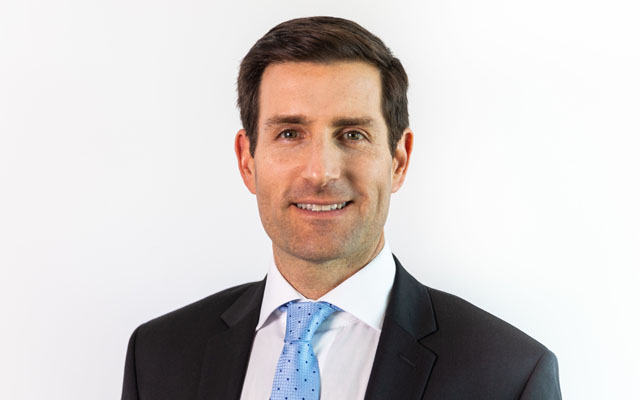
William Costley has been appointed as Minor Hotels’ new senior vice president of operations for Asia.
In this role, Costley will oversee all Minor Hotels brands, including Anantara, Avani, Oaks, Tivoli, NH Hotels and NH Collection throughout Asia.
Based in Bangkok, he joins Minor Hotels after 32 years with Hilton Hotels, where he previously served in the same capacity overseeing the group’s Arabian Peninsula and Turkey region.
Tall waterfall in Milford Sound, Fiordland, South Island, New Zealand.
Supertree Grove in Garden by the Bay at Singapore. Landscape of Singapore business building around Marina bay. Modern high building in business district area at twilight.
There’s no better way to discover authentic beauty of Australasia on a Silversea ultra-luxury cruise. With a surplus of unique sights and flavours their idyllic itineraries, Silversea’s ultra-luxury cruises will have guests in its thrall from day one. There’s less than one month to go until Silver Muse begins her journey from Singapore to Australia, the start of Silversea’s long awaited 2022-2023 season with her first voyage embarking in Singapore and sailing via Indonesia before discovering the cities and ports of Australia. It has been two years since Silversea has sailed to this region and the upcoming season promises a deeper view of the region with a number of sailings offering a myriad of opportunities. Guests can immerse themselves in the wildlife sanctuaries of Kangaroo Island, explore Australia’s cosmopolitan cities or take in New Zealand’s awe inspiring Fjords. What’s more, with overnights and late departures on every voyage, Silversea promises an opportunity to travel deeper, wherever you are.
Sail this region on Silver Muse and enjoy one of the highest space-per-guest ratios at sea as well as the pleasures of finely appointed suites featuring expansive ocean views and lavish amenities. Silversea’s personalised butler service allows guest to indulge – attending to everything from unpacking luggage to serving a private breakfast, handling laundry requests, and shining shoes before dinner.
Discover Silversea’s Incredible Voyages
Singapore to Sydney: Sailing from Singapore to Sydney, this voyage takes in the very best of Australasia. Beginning with two days at sea, you’ll enjoy Bali’s fabled beauty and Lombok’s genteel way of life. Three further sea days will see you arriving on Australia’s west coast, with stops in Perth, Busselton and Albany. Kangaroo Island’s rich diversity of flora and fauna – and eponymous wildlife – will keep nature lovers happy, while the bustling cities of Adelaide, Melbourne and Sydney are perfect for urbanites.
Auckland to Melbourne: Experience the very best Australia and New Zealand on this amazing 12-day voyage that will take in stunning beauty, rugged shores, fascinating history and some very fine wine. A fusion of big cities – Wellington, tartan flare – Dunedin, rolling vineyards – Hobart, and days at sea this voyage is one the best bites the region has to offer.
It’s not too late to book and secure for your clients a last-remaining suite on one of Silversea’s long awaited ultra-luxury cruises of Australasia. Discover more at www.silversea.com
Hotels should be designed for the guests, but also for the people who operate them. The new lifestyle brand TUI BLUE, which is currently making its way from Europe to Asia, has set itself exactly that target.
Holidaymakers enjoy hotels tailored to their individual needs and preferences. TUI Blue offers accommodation for adults aged 16+ as well as for families or travellers interested in local culture and authentic experiences. One of the first hotels the brand opened in Asia is the TUI BLUE Nam Hoi An in Vietnam.
TUI BLUE Nam Hoi An - Duo Deluxe King
The resort is located in Quang Nam, the famous central province of Vietnam, which is much appreciated by visitors because of its endless coastline and rich cultural heritage: two UNESCO protected sites as Hoi An Ancient Town and My Son Sanctuary. TUI BLUE Nam Hoi An is the very first 5-star resort located in the south of Quang Nam. The resort invites the guests to enjoy it’s scenic private beach with a long untouched stretch of white sand.
TUI BLU Nam Hoi An - Lobby
The hotel team has been working hard to reduce the environmental impact, while at the same time guests can discover the charm and hidden germs of the province and bring benefits to the local community. At TUI BLUE Nam Hoi An, sustainable initiatives are taken seriously and in-depth to ensure a responsible operation of the resort, a close interaction with the local community and creating amazing eco-friendly and authentic experience for the guests.
For example, the holidaymakers start the day by exploring the nearby Tam Tien Fish Market in the early morning. It’s only 2 km away from the resort and can be easily reached by walking on the beach or even cycling on a low tide day. The market has immerged spontaneously over 15 years ago, and still preserves its original simplicity. An authentic spot to buy some fresh fish, seafood and local delights.
Upon the return to the resort guests are invited for an organic garden tour. More than 50 species of local herbs, vegetables, fruits and flowers are being grown at TUI BLUE Nam Hoi An for a unique farm-to-table experience. Chief Gardener Thoi will firstly welcome them with a glass of homemade lemonade infused with a hibiscus freshly harvested in his garden. Then he will proudly introduce one by one a variety of aromatic plants. All the fertilizers used in the garden are produced from the organic waste, collected in the same resort area then grinded and composted.
Amidst the lush organic garden, holidaymakers will find a bamboo hut where chef Qua will follow up with a cooking class, with the fresh seafood brought from the market and instant harvested herbs and vegetables from the organic garden. Guests will cook all these ingredients under the chef’s guidance and according to the local traditions and recipes. This is what Blue Taste is about.
Beside the culinary delights, the Blue Guides, acting as competent local contacts, support guests to find their perfect holiday experiences. And for those who prefer to look up details online, the Blue App is a digital service assistant before, during and after the trip to design an individual stay. The activities on site also include the comprehensive Bluef!t fitness and relaxation programme.
Not only the guests, but also the hotel team should find a specially designed environment. The TUI BLUE model offers partners the opportunity to increase the performance and revenue of their hotels, optimise costs and make hotel operations even more efficient. TUI BLUE belongs to TUI Group, one of the world’s leading tourism groups, and benefits from the operational expertise and marketing and sales power with 27 million customers per year. In addition, it also provides access to a digital hotel platform. The smart technology enables efficient hotel management and a seamless digital customer experience. For example, through the digital front office which streamlines collaboration across departments and different hotel areas in order to process the guest’s wishes faster and more efficiently. All elements of the comprehensive ecosystem are based on the long-standing know-how in designing holiday experiences.
The new lifestyle brand is planning to expand in China and Southeast Asia. Guest can look forward to new TUI BLUE locations and hotel partners are invited to join the family. Guided by heart, built on expertise.
Candi Plaosan is one of the Buddhist temples located in Bugisan village
Indonesia tourism villages are enjoying increased attention, as travellers are drawn to peaceful attractions, found a new Google trends report.
According to Google data, online searches for such villages in Indonesia rose by 68 per cent between September 2021 and August 2022 when contrasted against the same period in 2020/2021.
Candi Plaosan is one of the temples located near Bugisan Tourism Village
Vania Anindiar, industry analyst at Google Indonesia, explained: “There is an interest in tourist attractions that are quieter, more relaxed, more peaceful, and without too many famous tourist attractions. (Google) users are looking for is a place to hide.”
Google also found a spike in search words combining ‘yoga’ and ‘meditation’ with ‘tourism villages’, noted Anindiar.
This trend shows that efforts to develop and promote tourism villages by the Ministry of Tourism and Creative Economy (MoTCE) have paid off.
Sandiaga Uno, Indonesia’s minister of tourism and creative economy, said tourism villages have become a world trend, as they offer an authentic holiday experience in a relaxed and healthy environment.
The MoTCE recently held the 2022 Indonesian Tourism Village Award, which selected 50 best villages out of 3,416 participating villages throughout the country. The shortlist contains villages that offer varied tourist attractions, ranging from religious and culture to ecotourism and agro-tourism draws.
Some tourism villages told TTG Asia that there have indeed been busier and more rewarding days.
Rudi Riono, head of Bugisan’s Travel Awareness Group which manages the Bugisan Tourism Village of Klaten in Central Java, said both the number of visitors and revenue obtained by the surrounding community have grown by 20 per cent. Domestic arrivals to his village in 2021 totalled 18,818, but January to September 2022 brought far more – 52,522 domestic tourists and 1,009 from outside of Indonesia.
He said tourists had either booked through travel companies or directly with his village. Of those from travel companies, most were students and tourists from overseas, with some being locals.
Penglipuran Bali Tourism Village also reported a significant increase in arrivals. In 2021, the village welcomed 565 international visitors and 146,144 domestic visitors. As of September 2022, there were 29,294 international visitors and 374,472 from across Indonesia, shared I Wayan Sumiarsa, general manager of Penglipuran Bali Tourism Village.
He noted that travel agents were the key drivers of business, as 75 per cent of visitors came through that channel.
The continued absence of an e-visa facility for travellers from critical source markets Canada and the UK is putting Indian inbound operators on edge, as they see potential business being lost to other more accessible destinations.
Indian inbound operators told TTG Asia that they have been demanding that the facility be resumed at the earliest.
Deva: travellers are discouraged by inconvenient visa procedures
The lack of in-person visa application appointments in the UK is also resulting in a significant number of trip cancellations to India, sources said.
Dipak Deva, managing director of Sita, TCI & Distant Frontiers, told TTG Asia that India’s tourism industry has much to lose from this situation.
“The largest source market for us is the UK – both in terms of volume and traveller spend. There has been a large number of cancellations in the last four weeks owing to the absence of the e-visa facility coupled with a (lengthy) waiting time to apply in-person for a visa, detailed Deva.
Although more visa slots are opening up now, travellers are still turned off by the inconvenience, he added.
Subhash Goyal, chairman of STIC Travel & Air Charter Group, said India’s introduction of the e-visa facility in 2014 had been a game-changer for the country’s tourism industry. Prior to that, visa applications for India was largely considered a tedious process.
“It was because of the e-visa facility that we recorded 11 million inbound tourists in 2019 and the country earned about US$30 billion in foreign exchange. However, as the government has stopped e-visa for two of the most important source markets (for India), inbound tourism has been adversely impacted,” said Goyal.
Indian tour operators are seeing potential customers moving to other destinations.
“After 2.5 years of the pandemic, the last thing you want is your largest source market being damaged because of a visa issue. This is a very important decision factor for a traveller, and they will opt for other destinations like Vietnam and Japan if a convenient visa option is not available,” stated Deva.
He noted that most of the UK customers who had cancelled trips to India were already booked to go to Japan instead.
Travel stakeholders in Goa also warned of severe business impact, as the UK contributes to charter business during the current peak inbound season.
“No charter clients will book India if they have to wait for a visa. Goa has a lot to lose from the absence of e-visa facility,” said Deva.
Deva also rued the weak destination marketing undertaken by the tourism ministry. He believes that promotions should have started six to eight months ago in various source markets to build demand for India.
Sydney-headquartered independent hotel management company La Vie Hotels & Resorts has restructured its business and established an umbrella brand, La Vie Hospitality Group, to house all of the group’s business units.
The new La Vie Hospitality Group comprises six business units including La Vie Hotels & Resorts, Leadwell Asset Management, La Vie Hospitality Services, Marion Building Management, Paro Procurement Group, and a joint venture with hospitality training school Alliance College.
La Vie Hospitality Group’s Craig Bond, Jerry Xu, and Shellia Chang
Jerry Xu, founder and CEO, La Vie Hospitality Group, said: “This is an exciting evolution of our business and we’re proud to be one of the first Australian hospitality groups to launch a fully integrated offering that provides a one-stop shop for owners.”
Xu said La Vie Hospitality Group provides everything from managing hotels and procurement, to hiring and educating staff for its clients.
La Vie’s latest partnership with Small Luxury Hotels of the World (SLH) is a “strategic brand and distribution partnership”, Shellia Chang, group director of sales & distribution, La Vie Hotels & Resorts told TTG Asia, as La Vie has numerous upper upscale boutique properties that do not fit with big brands.
Chang added: “We are opening another 38-room sustainable hotel in Surry Hills in Sydney, and the Islington Hobart, both in partnership with SLH.”
“We are also launching our own brand, with the first resort due to open in the Maldives by the end of this year.”
Other fresh launches include a hotel in Patong, Phuket, in partnership with Choice Hotels, and The Motley Hotel in Richmond as part of a multi-partnership deal with Amber Property Group. Currently, La Vie Hospitality Group operates hotels across Australia, Bhutan, China, Maldives, Myanmar, Thailand, the UAE and Ukraine.
“We are growing rapidly. In addition to Australia, South-east Asia is going to be our key focus in the next 12 months,” Chang affirmed.
When asked how its offering differs from franchise management, she explained: “We are owner-centric and offer a 360 degree and tailor-made approach. We have a great relationship with big brands. While our hotels can be a franchise of a brand, we are the ones managing the hotel, and we ensure commercial delivery for the owners.”
For instance, La Vie Hotels & Resorts works with Radisson Hotels Group for three properties in Sri Lanka, as the latter is considered as the “best fit” for the region to “maximise financial returns” for owners.
Indonesia tourism villages are enjoying increased attention, as travellers are drawn to peaceful attractions, found a new Google trends report.
According to Google data, online searches for such villages in Indonesia rose by 68 per cent between September 2021 and August 2022 when contrasted against the same period in 2020/2021.
Vania Anindiar, industry analyst at Google Indonesia, explained: “There is an interest in tourist attractions that are quieter, more relaxed, more peaceful, and without too many famous tourist attractions. (Google) users are looking for is a place to hide.”
Google also found a spike in search words combining ‘yoga’ and ‘meditation’ with ‘tourism villages’, noted Anindiar.
This trend shows that efforts to develop and promote tourism villages by the Ministry of Tourism and Creative Economy (MoTCE) have paid off.
Sandiaga Uno, Indonesia’s minister of tourism and creative economy, said tourism villages have become a world trend, as they offer an authentic holiday experience in a relaxed and healthy environment.
The MoTCE recently held the 2022 Indonesian Tourism Village Award, which selected 50 best villages out of 3,416 participating villages throughout the country. The shortlist contains villages that offer varied tourist attractions, ranging from religious and culture to ecotourism and agro-tourism draws.
Some tourism villages told TTG Asia that there have indeed been busier and more rewarding days.
Rudi Riono, head of Bugisan’s Travel Awareness Group which manages the Bugisan Tourism Village of Klaten in Central Java, said both the number of visitors and revenue obtained by the surrounding community have grown by 20 per cent. Domestic arrivals to his village in 2021 totalled 18,818, but January to September 2022 brought far more – 52,522 domestic tourists and 1,009 from outside of Indonesia.
He said tourists had either booked through travel companies or directly with his village. Of those from travel companies, most were students and tourists from overseas, with some being locals.
Penglipuran Bali Tourism Village also reported a significant increase in arrivals. In 2021, the village welcomed 565 international visitors and 146,144 domestic visitors. As of September 2022, there were 29,294 international visitors and 374,472 from across Indonesia, shared I Wayan Sumiarsa, general manager of Penglipuran Bali Tourism Village.
He noted that travel agents were the key drivers of business, as 75 per cent of visitors came through that channel.