TTG Asia
Asia/Singapore Saturday, 15th August 2026
Page 6

China eases travel for growing inbound market

0

China’s National Immigration Administration recorded 45.9 million border crossings by foreigners in 1H2026, up 20.6 per cent year-on-year, according to Chinese state media Zhejiang China.

The mid-July report added that visa-free entries accounted for 77.7 per cent of foreign arrivals, with the top 10 countries of origin being South Korea, Russia, Malaysia, Vietnam, Thailand, Singapore, the US, Japan, Mongolia and Australia.

Visa-free access is helping drive international arrivals to China, as the country makes travel easier for foreign visitors; Forbidden City in Beijing, pictured

Digital marketing solutions and technology company Dragon Trail International, which launched its China Travel Course certification programme in 2021, told TTG Asia that close to 19,000 users, including around 3,000 registered travel trade professionals, have signed up.

Sienna Parulis-Cook, marketing and communications director, noted: “Among overseas users, the countries with the highest participation are Malaysia, Germany, the US, and France.”

The course is also widely used by travel agents in China, including those from Trip.com Group.

Apart from the basics, the course focuses on Chinese culture, history and landscapes, such as the Yellow River and UNESCO World Heritage Sites.

“A recent module on video game-themed tourism is quite interesting, with a guide to destinations featured in popular games like Black Myth: Wukong and Honor of Kings (two of the most successful video games developed in China),” Parulis-Cook shared.

Meanwhile, foreign visitors in China can now access Chinese mobile payment platforms Alipay or WeChat Pay with foreign bank cards to pay for their purchases.

Parulis-Cook commented that Alipay is easier and more reliable for foreign visitors.

“Alipay also has something called Alipay+ where they’re integrated with a number of overseas digital payment wallets, allowing users of wallets like South Korea’s Kakao Pay to pay directly by scanning Alipay QR codes in China.”

Malaysian travellers rewrite the rules of outbound travel

0

AI, visa-free travel and higher airfares are changing how Malaysians travel overseas and reshaping the role of outbound travel agencies, as travellers become more independent and agencies focus on expertise, value and niche markets.

Malaysian outbound tour operators interviewed at the recently concluded MATTA Connect said travellers are increasingly using AI tools and online booking platforms to research destinations, compare prices and plan their own holidays.

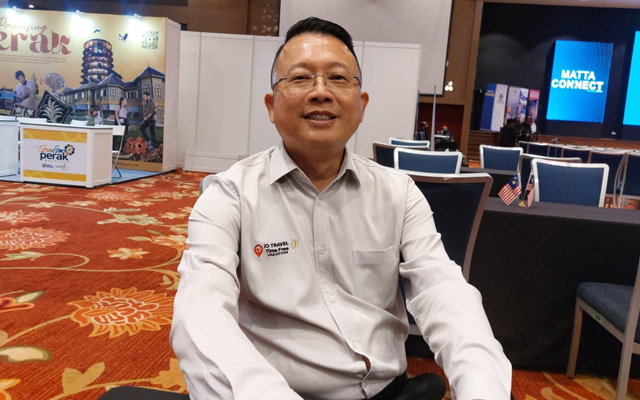
Chong says better-informed travellers are increasingly comparing agency itineraries and prices with online and AI-generated options

David Chong, general manager of Ipoh Overland Tours & Travel, said customers frequently ask the company to prepare itineraries before checking prices online or using AI-generated recommendations.

“Customers ask us to prepare an itinerary, then compare our prices online before asking whether we can match them. They are much better informed than they were before the pandemic,” he said.

The shift has also changed what travellers expect from organised holidays.

Instead of tightly scheduled coach tours, Chong said more customers are requesting customised itineraries, private travel and slower-paced programmes with greater flexibility.

“They no longer want packed schedules from morning until night. They want more free time and holidays that move at their own pace.”

Kathryn Lee, executive director of DeKim Tour & Travel, said millennials are increasingly comfortable booking hotels and attractions independently, prompting the agency to focus on market segments that continue to value personalised travel planning.

The company is placing greater emphasis on seniors and luxury travellers seeking bespoke itineraries, while group tours remain relevant for destinations where language barriers or more complex logistics make independent travel less practical.

Travel choices are also being reshaped by rising costs.

Adam Kamal, CEO of Suka Travel & Tours, highlighted airline fuel surcharges introduced earlier this year and geopolitical uncertainties in the Middle East have encouraged more Malaysian Muslim travellers to swap medium- and longhaul holidays for destinations closer to home.

“Indonesia has become our strongest-selling destination, helped by the favourable ringgit-rupiah exchange rate, while Vietnam is also attracting stronger demand.”

The trend has prompted Suka Travel to expand its South-east Asia portfolio to cater to travellers seeking better value.

The growing confidence among independent travellers is also evident from the destination side.

Mia Ding, marketing director of Nanchang-based Everbright Travel, noted the company has seen more Malaysian free independent travellers since China introduced visa-free entry for Malaysian ordinary passport holders.

“Many Malaysian Chinese travellers now contact Chinese operators directly through Chinese social media platforms when planning multi-city trips, although non-Mandarin-speaking Malaysians generally continue to rely on Malaysian outbound travel agents for arrangements,” she said.

Palladium Hotel Group enters Vietnam with two luxury hotel projects

0

Palladium Hotel Group is expanding into Vietnam with two hotel projects and the establishment of its Asia-Pacific headquarters in Ho Chi Minh City.

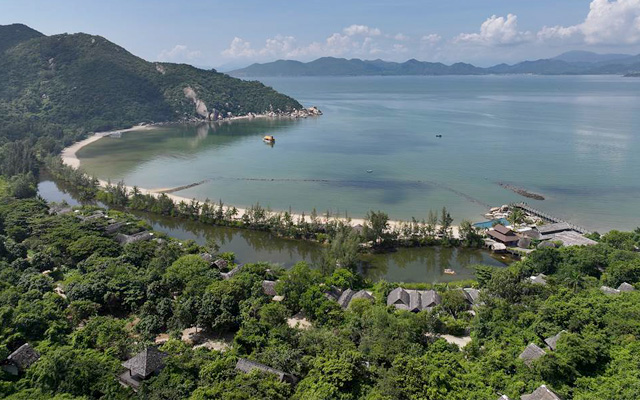
The Spanish hospitality group has partnered with Conasi Property Management and Development Corporation to redevelop L’Alya Ninh Van Bay into Bless L’Ayla Ninh Van Bay. Scheduled to open in mid-2027, the all-villa resort north of Nha Trang will add 54 villas as part of its refurbishment. Palladium acquired the property in July 2026 and will operate it on a white-label basis until renovations are completed.

Palladium Hotel Group will introduce its Bless Collection Hotels brand to Vietnam with properties in Ninh Van Bay and Hanoi

The group has also acquired the Hòa Bình Hotel in Hanoi, which will reopen as Bless Hotel Hanoi in 2028 following a major renovation. The project will restore the century-old building while upgrading it from a three-star to a five-star hotel.

The two properties will introduce the Bless Collection Hotels brand to Vietnam, offering luxury accommodation focused on design, gastronomy and destination-led experiences.

Palladium said Vietnam was selected for its strong tourism growth, expanding luxury hospitality sector and strategic location in South-east Asia. The new regional headquarters in Ho Chi Minh City will oversee business development, operations and future expansion across the region.

Jesús Sobrino, CEO, Palladium Hotel Group, said: “Choosing where to begin in Asia was a deliberate decision, and Vietnam was clear. Its growth is remarkable, but what convinced us is the shift in what the market values: distinctiveness and experience over scale alone. That is where our strengths lie.

“We enter Vietnam with a long-term commitment, a distinctive portfolio, and every intention to grow alongside partners who share our ambition.”

Plaza Premium Group, HeyMax team up to boost loyalty rewards

0

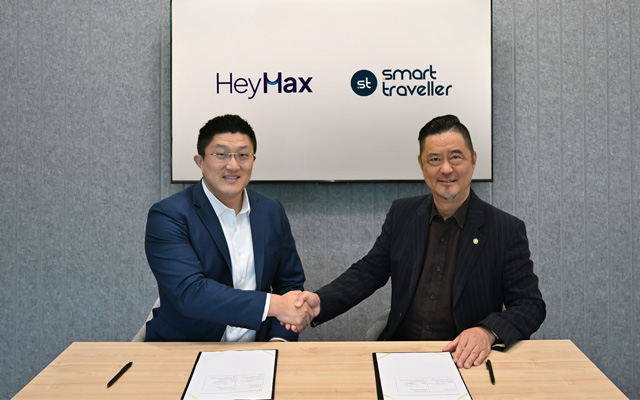
Plaza Premium Group (PPG) has partnered with Singapore-based loyalty and travel rewards platform HeyMax to expand the reach of its Smart Traveller digital rewards programme.

The partnership introduces a new conversion option that allows HeyMax members in Singapore and Hong Kong to convert Max Miles into Smart Traveller (ST) Points at a 1:1 ratio. Conversions start from 1,000 Max Miles, enabling members to redeem rewards across Plaza Premium Group’s network of airport lounges, dining outlets and travel services.

The partnership enables HeyMax users to convert Max Miles into Smart Traveller points for airport lounges and travel services

The collaboration is aimed at giving travellers greater flexibility in earning and redeeming rewards while expanding the loyalty ecosystems of both companies.

Simon Huang, managing director, Smart Traveller, said: “This collaboration with HeyMax is aligned with our approach to building a stronger rewards network across Hong Kong, Singapore and beyond.”

David B Wang, head of loyalty partnerships, HeyMax, added: “At HeyMax, we recognise that great travel experiences begin long before stepping on a flight. By bringing Smart Traveller’s lounge and airport benefits into our ecosystem, we are delivering a unique proposition that deepens our commitment to our users. This partnership elevates the end-to-end journey – so every traveller across Hong Kong, Singapore, and beyond can travel sooner, better, and smarter.”

Wellness takes centre stage on Oceania Cruises’ shore tours

0

Oceania Cruises is offering more than 50 Wellness Discovery Tours across Asia, Europe and South America, combining local wellness practices with cultural experiences.

The small-group shore excursions cover activities ranging from yoga and tai chi to thermal baths, dance and culinary experiences, with guests learning from local specialists in each destination.

Oceania Cruises’ Wellness Discovery Tours combine wellness activities with cultural experiences across destinations in Asia, Europe and South America; photo by Oceania Cruises

In Asia, experiences include Kandyan dance therapy in Colombo, organic food and tea tasting in Ho Chi Minh City and tai chi at Viharn Sien Park in Pattaya. Guests can also explore traditional Chinese medicine in Hong Kong, with treatments such as acupuncture and cupping, or practise tai chi at a Buddhist monastery on Yen Tu Mountain near Hanoi.

European options include a yoga session and wine tasting overlooking Santorini’s caldera, mineral-rich thermal baths near Rome and volcanic hot and cold pools near Naples. In Spain, guests can walk along the cliffs around Getxo near Bilbao, while a Patagonian excursion combines a catamaran journey through Aysén Fjord with a visit to Ensenada Perez Hot Springs in Chile.

The shore excursions complement wellness and enrichment activities aboard Oceania Cruises’ ships, including yoga and stretching, culinary lectures, cooking classes, food and beverage pairing sessions, creative workshops, guest speakers and performances.

Oceania Cruises operates itineraries ranging from seven to 180 days.

For more information, visit Oceania Cruises.

Michelin-starred chef Louis Han returns to ATAS

0

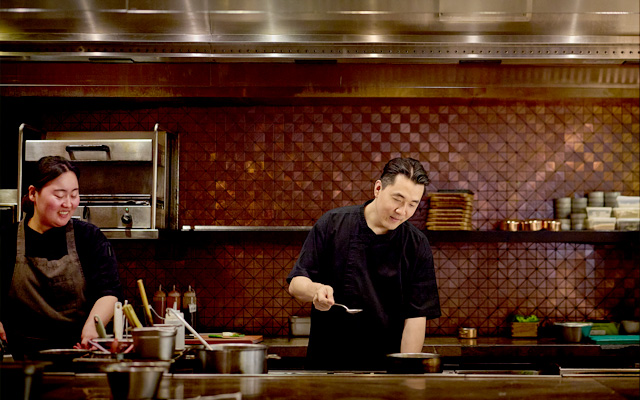
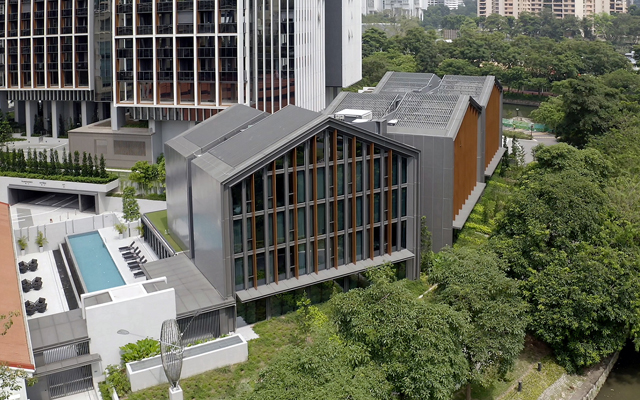
Chef Louis Han’s modern Korean steakhouse, GU:UM, will return to ATAS at The RuMa Hotel and Residences in Kuala Lumpur for a four-month residency from August 1 to November 30, 2026.

The residency is part of the hotel’s ATAS Key Tables dining series, which brings international chefs to collaborate with the restaurant through extended culinary partnerships. It follows Han’s debut at ATAS in 2025 and marks GU:UM’s first long-term collaboration in Kuala Lumpur.

Chef Louis Han’s GU:UM returns to ATAS at The RuMa Hotel and Residences for a four-month residency showcasing contemporary Korean cuisine

Han, who earned a Michelin Star for his Singapore restaurant NAE:UM, opened GU:UM in 2024 as a contemporary Korean steakhouse centred on charcoal grilling and Korean flavours.

The residency menu features dishes including Yukhwae Jeon, Mulhwae and Korean Fried Cauliflower, alongside grilled specialities such as Hanwoo Lower Loin, Woodae Galbi Short Rib and a Surf & Turf Platter. The menu also includes Korean comfort dishes including Uncle Lulu’s Fried Rice, Cold Japchae, Sujebi Mac & Cheese and Doenjang Jjigae, followed by desserts such as Hotteok, Mandarin Bingsu and Koguma Mousse.

The residency will be available daily from 18.00 at ATAS.

For more information, visit The RuMa Hotel and Residences.

Shinta Mani Wild welcomes new GM

0

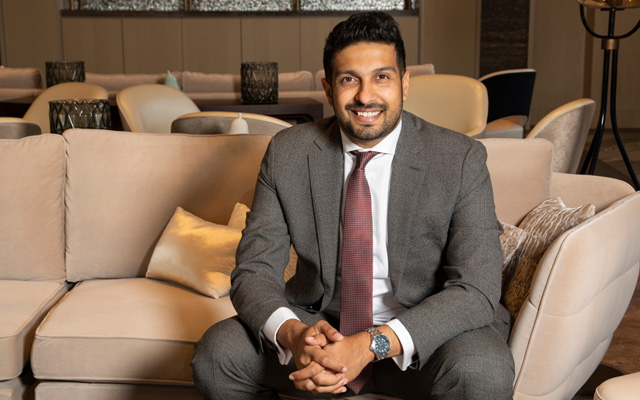
Jacky Collett-Stevens has been appointed general manager of Shinta Mani Wild.

With more than 20 years of hospitality experience across luxury lodges and resorts in Africa, Collett-Stevens joins from The Pinnacle Kigali, where she served as acting general manager and helped lead the pre-opening of the luxury boutique hotel.

Andy Tan joins Worldwide Hotels as CCO

0

Andy Tan has been named chief commercial officer at Worldwide Hotels, effective August 17, 2026.

He brings more than 30 years of experience across the hospitality, travel, airline and bedbank sectors.

Most recently, Tan held senior leadership roles with TBO Group, following previous appointments at Marriott International, Millennium Hotels & Resorts, Onyx Hospitality, Hotelbeds Group and Pan Pacific Hotels Group.

IHG scales up in Japan

0

IHG is rapidly expanding in Japan. What openings are you most excited about and why?
We’re seeing growth across all segments and levels: from luxury to midscale, and in the regions, too. Our inbound guests want to stay in branded hotels while our Japanese guests want to experience some of our new brands coming into the market.

I think bringing Holiday Inn back to Tokyo and Kyoto in 2025 was a huge milestone for us. It’s one of the world’s largest and most recognised brands.

Also, our InterContinental brand, which is known to bring luxury to new destinations, certainly did that in Sapporo when it opened in October 2025. We were pioneers of luxury in Oita Prefecture, when we opened ANA InterContinental Beppu Resort & Spa in 2019, and now we’re pioneers in Hokkaido. This goes back to the 80-year legacy of the brand, which we celebrate this year.

IHG is growing across luxury, midscale and business brands. Why is this diversity important?
For IHG globally, Japan is categorised as a priority market; it’s the third largest hotel market in the world and capital remains the cheapest in the world. In a market the depth and size of Japan, the long-term success for any hotel company is winning cross-segment. We want to be represented across segments so consumers can avail of options at various price points.

When we launched our Garner brand in Osaka in 2024, in its debut outside of North America, it was proof-of-concept: the brand has guests that choose that segment and we are able to outprice some domestic competitors because guests are looking for access to a loyalty programme. Furthermore, hotels that have converted to our brand system, like Holiday Inn & Suites Sapporo Odori Park, have seen significant growth post-conversion.

In April, IHG announced a new loyalty programme with ANA. Why are such partnerships important?
We’re celebrating the 20th anniversary of our joint venture with ANA this year. After October, we’ll roll out our new comprehensive loyalty programme that will allow members to link their ANA Mileage Club and IHG One Rewards accounts to unlock crossover perks. Similarly, we partner with Rakuten, which has 95 million users across Japan, and we have a Line mini app so Japanese consumers can book where they are familiar.

These partnerships go back to our strategy to win the domestic consumer, alongside giving them access to co-branded hotels they know, such as ANA Holiday Inn Tosu, in Saga, and ANA Holiday Inn Kobe Sanda, which both opened in April.

As well as getting to a wider consumer base, we want to reward our 160 million IHG One Rewards members globally in the currency of their choice, such as ANA miles or Rakuten points, with tailored solutions, convenience and rewards on their terms.

Japan’s domestic tourism market has around 150 million travellers per quarter so domestic consumers are really important. To enable growth, we need our hyper-localised commercial engine.

As Japan continues to attract record numbers of visitors, what are your plans for the Japan market?
With our brands, we’ve built what is relevant for Japan. For example, we tailored the Garner brand to what is effective in this segment: we provide a 12m² to 15m² room with a pop of colour and a minimum F&B offering.

In Karuizawa, Nagano, we have renowned architect Kengo Kuma designing a wellness retreat, which will be our Regent brand’s first resort location in Japan when it opens in 2028. In another strong wellness angle, we’re also bringing Six Senses to Myoko Kogen, Niigata, combining a ski resort in Japan with the brand’s DNA.

We’ve spent the last 20 years in our joint venture with ANA, and more recently in the last five years since Japan became a priority market, building commercial engine localisation on new brands and co-brands in Japan. We’ll continue to do that at a multi-dimensional level to ensure our product is best suited for our B2B owner community and for our consumers.


Cruise industry calls for certainty to keep Australia competitive

0

Australia’s cruise industry is warning that the country needs to move faster to provide regulatory certainty or risk losing competitiveness for future cruise deployments, with industry leaders saying lengthy government decision-making is costing Australia billions in lost economic activity.

The warning comes despite demand for cruising reaching historic highs. A record 1.45 million Australians took an ocean cruise in 2025, up 9.5 per cent on the previous year and surpassing the pre-pandemic record of 1.35 million set in 2018.

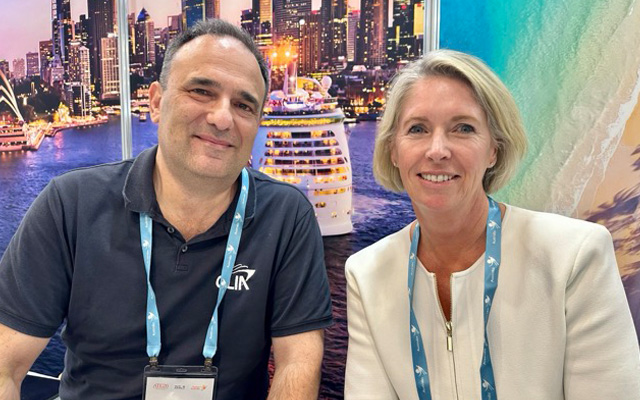
Joel Katz and Jill Abel promote Australia’s cruise industry at the Australian Tourism Exchange earlier this year; photo by Adelaine Ng

It meant Australia remained the world’s fourth-largest cruise source market in 2025 and one of the highest cruise participation markets on a per-capita basis.

Speaking to TTG Asia, Cruise Lines International Association (CLIA) Australasia managing director Joel Katz said Australia had already recorded an A$1.1 billion (US$764 million) decline in cruise-related economic impact between 2023/24 and 2024/25, highlighting the importance of remaining competitive amid growing competition from other destinations.

“We need to send a very clear message to the world that Australia is open for business,” Katz said.

“Cruise lines are now making decisions about deployments for 2029, 2030 and even 2031. If we don’t provide that certainty, other countries are doing it and perhaps doing it a little better than we are.”

Australia’s cruise sector contributes A$7.32 billion annually to the national economy and supports more than 22,000 jobs, while generating economic activity across ports, destinations and regional communities visited by cruise ships.

Australian Cruise Association chief executive Jill Abel said the industry’s planning cycle required governments to provide greater certainty well in advance.

“The cruise lines are doing their deployment two to three years ahead and we need to make sure we’ve got the confidence to say those itineraries can be delivered and operated in three years’ time,” she said.

While governments recognised the value of cruise tourism, Abel said legislative processes often took longer than the industry’s commercial planning timelines.

Australia’s challenge comes as the global cruise industry enters another growth phase, with more than 80 new ships worth over US$100 billion due to enter service over the next decade.

“Cruising is booming,” Katz said. “People increasingly see cruising as a safe, secure and good-value holiday. The repeat rate is significant, one of the highest in tourism, and it just goes from strength to strength.”

Abel said Australia remained an attractive destination but faced intense international competition.

“We’re an expensive destination and it’s a very competitive global market,” she said. “Cruise lines are looking to put their assets in the places where they can get the best return.”

Katz said the industry’s call for greater certainty was not aimed at any single policy or government agency. Instead, cruise operators were seeking a coordinated approach across federal, state and territory governments that would provide timely decisions and the long-term confidence needed for cruise lines planning deployments years in advance.

“By providing clear operating guidelines, making timely decisions and demonstrating Australia values cruise tourism, we can compete effectively for future deployments,” he noted.