The Tourism Authority of Thailand (TAT) has unveiled The Year of Transformation as its strategic tourism direction for 2027, targeting revenue growth of at least five per cent over 2026’s goal of three trillion baht (US$94.7 billion).
The roadmap aims to secure a 60:40 visitor distribution between established and emerging destinations while positioning Thailand among Asia’s top three destinations for traveller loyalty, working towards the goal of becoming “Asia’s No. 1 High-Value & Meaningful Destination”.
TAT’s Thapanee Kiatpaibool unveils new tourism mascots Nong Rak Yim and Nong Sukjai at the TAT Strategic Direction 2027 event on August 24, 2026; photo by TAT
At Bangkok’s Rajadamnern Stadium, TAT governor Thapanee Kiatphaibool unveiled the direction under the banner The Ultimate Fight: Transform for the Win!, using Thailand’s historic Muay Thai arena to signal the sector’s need to adapt and compete in a shifting global market.
“The Year of Transformation is a clear commitment to reshape Thai tourism around quality, value and long-term competitiveness,” Thapanee said, adding that “we’ve moved beyond volume alone”.
The strategy rests on four strategic moves.
Rebalance Market Portfolio will steer the market split to 58 per cent international against 42 per cent domestic, and rebalance longhaul and shorthaul demand to 44 and 56 per cent, respectively, reducing reliance on any single source. TAT will refine its segmentation portfolio around Mainstream at 35.3 per cent, Premium at 28.1 per cent, High Value at 18.5 per cent and Experience at 18 per cent, while pursuing new longhaul potential in Eastern Europe and Latin America. Under “The Link Plus”, it will match segments to 19 priority areas, targeting a 10 per cent arrivals rise and a 60:40 flow between major and emerging destinations.
Shape Experience Platform shifts brand messaging from a value-for-money position to a meaningful one under Healing is the New Luxury. TAT has introduced mascots Nong Sukjai and Nong Rak Yim, will extend the UNESCO Thailand Network across 29 areas and more than 55 community tourism destinations, and roll out Signature Destination Branding in Chiang Rai, Ubon Ratchathani, Songkhla, Trat and Samut Songkhram.
Build New Growth Engine will convert Thailand’s strengths into value through four Life Economy engines, connecting tourism to health, wellness, culture, food, sport, creativity, festivals and sustainability. These span the early-2027 “Unseen Luxperience 2027” for premium travellers, Well-being Tourism positioning Thailand as a global health and healing destination, a “365 Days of Celebration” festival economy featuring S2O, Wonderfruit and Tomorrowland, and sustainable-destination prototypes in Nan and Wellness Valley areas.
Transform Together recasts TAT from tourism promoter to ecosystem orchestrator, using Tourism Value Intelligence across 45 domestic offices, two coordination centres and 29 overseas offices, with support for start-ups, technology and AI.
“Through these four strategic moves, TAT is sharpening the country’s tourism ecosystem to innovate, compete and deliver a stronger future,” Thapanee concluded.
In an increasingly digital world, the younger generation is seeking to switch off when travelling, with industry experts noting a strong uptick in demand for nature-based experiences, spiritual tourism, and soft adventure.
Prasoon P Sankar, corporate general manager of Kerala-based Intergrande Hotels, which curates experiences for guests, said younger travellers want to trade technology for nature while engaging in travel that boosts their well-being.
Nayek noted that young travellers are increasingly driving the surge in demand for spiritual tourism across India
“The new generation are looking for back-to-basics travel. They want to switch from the blue screen to the green screen of nature, so it’s important to provide them with opportunities to connect with nature and people,” he said.
Activities proving popular with younger travellers include exploring tea plantations, backwater boat adventures, accompanying flower farmers, one-day rural bicycle experiences, and meeting traditional beekeepers.
“Often young urban travellers today don’t know where they come from and they’re looking to get back to nature and to have meaningful experiences. We’re seeing an increase in demand for natural heritage, soft adventure and responsible tourism. The younger generation have more of a desire to be responsible for the future generations,” Sankar said.
Rozillah Matsahini, revenue manager at Borneo Nature Tours, noted an uptick in young honeymooners seeking to immerse themselves in nature and soft adventure, especially from the European Union, the UK, and the US, where there is no access to ancient rainforests that date back 130 million years.
“Young honeymooners are more active today. They really want to experience something different with nature and wildlife,” she said, noting that the average minimum stay is three days and two nights in jungle accommodation, with the canopy walkway, river rafting, and night safaris all popular activities.
Dagelje Sherpa, expedition director at Expedition Himalaya, said the Covid-19 pandemic coupled with climate anxiety is driving demand for health- and wellness-oriented trips among youth.
“Young people are more conscious about their health, so we’re seeing more demand for soft treks combined with meditation, culture and wildlife,” he said, adding that younger travellers are mainly opting for a three- or four-day trek in the Himalayas combined with a nature safari and soft adventure experiences.
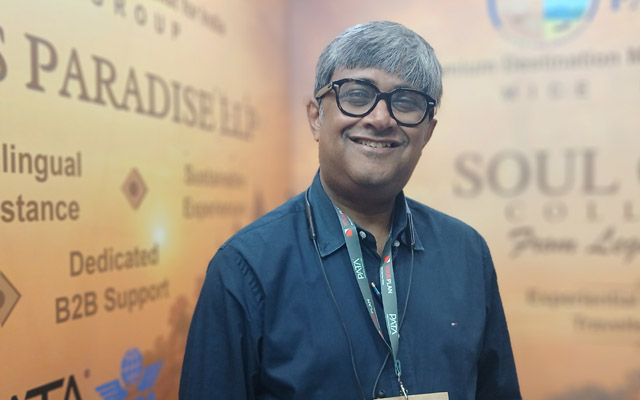
In India, Arnab Nayek, co-founder of Travellers Paradise, has curated a series of spiritual and wellness tourism packages in response to growing demand, especially from the younger generation. These range from yoga and meditation retreats to local therapies such as panchakarma and shirodhara.
“We’re seeing a rise in demand for spiritual tourism among young travellers, so we’re trying to develop that market to promote India as a spiritual tourism destination.”
Qamar Zafeer, managing director of India-based Earthen Experiences, is also curating more products geared towards the younger generation.
“They are increasingly looking for experiences related to spiritual tourism and wellness, as well as in-depth cultural experiences. They spend so much time online that when they travel, they want to be able to switch off and experience real life.”
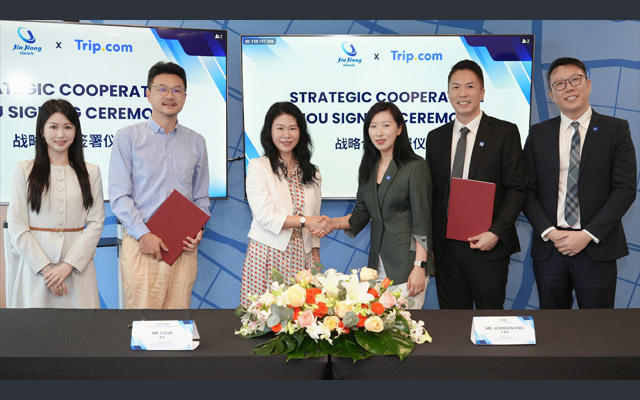
A subsidiary of Jin Jiang Hotels has signed a three-year memorandum of understanding (MoU) with Trip.com Travel Singapore to expand its hospitality ecosystem across South-east Asia.
The agreement covers Singapore, Thailand, Malaysia, Indonesia, Vietnam, the Philippines, Cambodia, Myanmar, Laos, and Brunei. A key component of the alliance is the implementation of a unified fixed commission structure for participating franchisee properties, replacing traditional floating models to improve commercial transparency and cost predictability.
The strategic partnership will introduce a unified fixed commission model for participating hotels across ten South-east Asian nations
The collaboration connects Jin Jiang’s regional property portfolio with Trip.com’s online traffic, aiming to streamline customer acquisition and drive occupancy rates. The partnership will focus on co-marketing, resource integration, and developing an end-to-end booking and stay network.
In tandem with the partnership, the Jin Jiang Hotels subsidiary has established local development and operations teams in Malaysia, Indonesia, and Vietnam to support upcoming openings and regional supply chain integration via its Global Purchasing Platform.
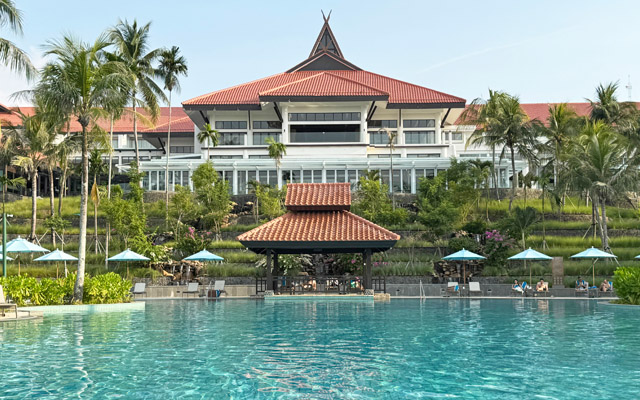
Mövenpick Resort & Spa Bintan Lagoon; photo by Melissa A Tan
Location: Convenientbeachfront access
Just an hour by ferry from Tanah Merah Ferry Terminal in Singapore, Mövenpick Resort & Spa Bintan Lagoon is set on the island’s northern coast with direct beachfront access. The location makes it an easy getaway, combining convenience with a relaxed island setting.
Accommodation: Spacious rooms with soothing interiors
The resort features 408 rooms and suites, each with a private balcony or terrace overlooking the gardens or the sea. Options range from Deluxe Rooms and Premium Terrace Rooms to Junior, Executive, Ambassador and Presidential Suites. Families can also choose to have adjoining rooms.
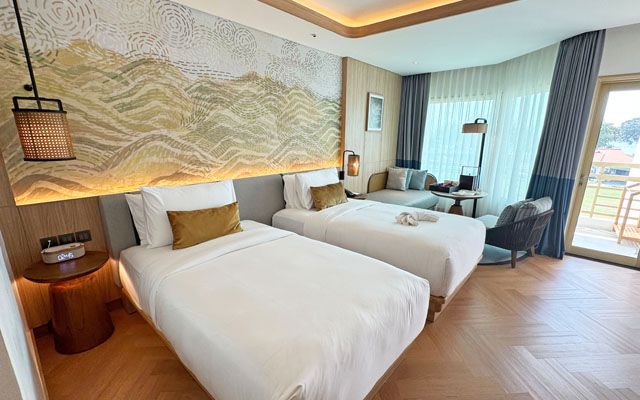
I stayed in a Deluxe Twin Ocean View room with a balcony facing the sea. The room felt comfortable and welcoming, with a neutral wood palette that gave it a calm, homely feel. Amenities were thoughtfully provided – a hairdryer, kettle, coffee capsule machine, plush bathrobes and slippers. There was even an umbrella in the room, and more placed around the resort near lifts and in the lobby.
The pillow menu was a nice touch, offering different options including a bolster, which definitely improved my sleep. The bathroom featured an eco-washer and Yuni Aromatherapy toiletries. Each room also had a smart clock that doubled as a wireless phone charger, while the bedside outlets were universal and included USB-A ports on both sides.
F&B: Wide variety of dining venues
Food and drink really shape the Mövenpick stay, with plenty of options spread across the resort.
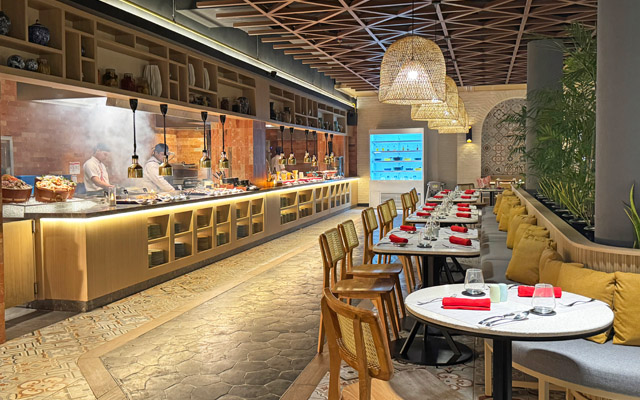
Port 19 is the main spot for breakfast, with Indonesian, Asian and international dishes prepared at live cooking stations. I enjoyed the variety here — different types of milk (soy, almond, chocolate, low-fat, full cream), plus yoghurt, salads, charcuterie and cheese, and even ice cream in local flavours. The jamu counter was especially popular, as was the live noodle station. There’s even a section set aside just for children.
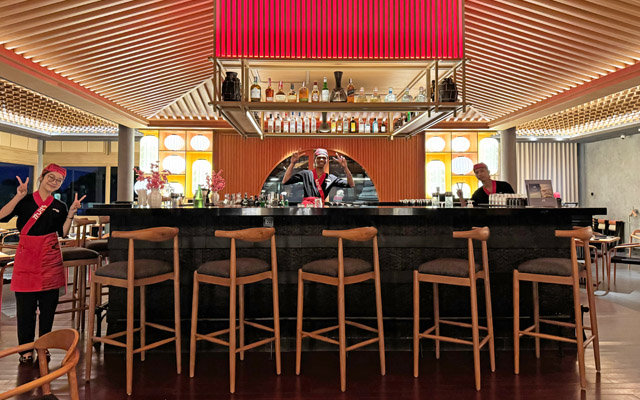
My first dinner was at Yokatta Izakaya & Bar, serving Japanese fare. The Wagyu beef steak stood out, and the chicken karaage was light and crispy without being oily. The maki roll of the day mixed mango, black tobiko and avocado, which was refreshing. Set meals come with miso soup and dessert, and the sake ice cream was a real highlight.
Klon-Tong Deli has a nostalgic feel, inspired by Bintan in the 1980s. It’s where you’ll find pastries, ice cream, local favourites and coffee. It’s also the venue for Mövenpick’s Chocolate Hour – a daily ritual with chocolate fondue, waffles, cakes and more.
The Recreation Village Sports Lounge is casual, with burgers, finger food and fresh coconut drinks, while the Ocean Pool Bar serves refreshments from its swim-up counter.
For my second dinner, I went to Soñada Beach Club. It’s right on the beachfront, spread over two levels, with Pan-Asian and Italian dishes, cocktails and a wine selection from the cellar. I’d recommend the Soñada pizza with beef chorizo and burrata, and the croquetas. Eating here with the sea view and weekend DJ music made for a lively atmosphere.
Mövenpick Resort & Spa Bintan Lagoon
1 of 11
Deluxe Twin Ocean View; photo by Melissa A Tan
Port 19; photo by Melissa A Tan
Dining at Soñada Beach Club; photo by Melissa A Tan
Yokatta Izakaya & Bar; photo by Melissa A Tan
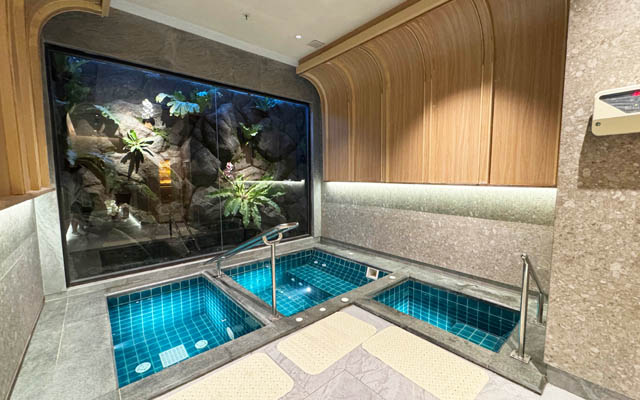
Jacuzzi, hot and cold plunge pools at Shantara Spa; photo by Melissa A Tan
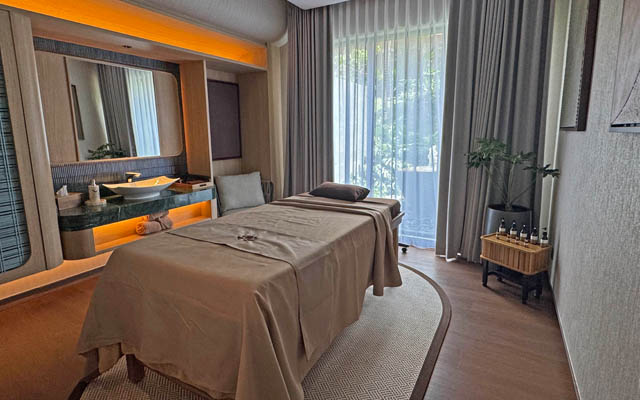
Spa treatment room; photo by Melissa A Tan
Soñada Beach Club pool; photo by Melissa A Tan
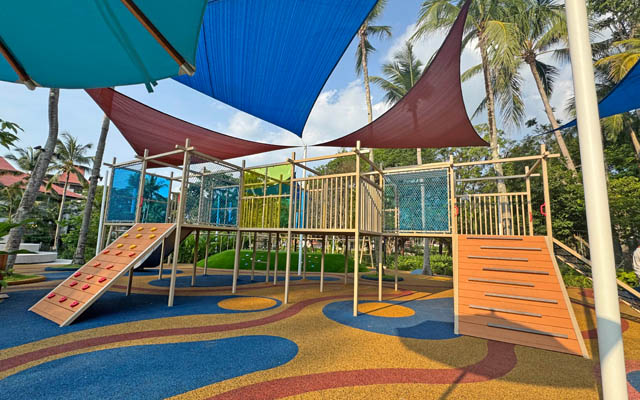
Recreation Village playground; photo by Melissa A Tan
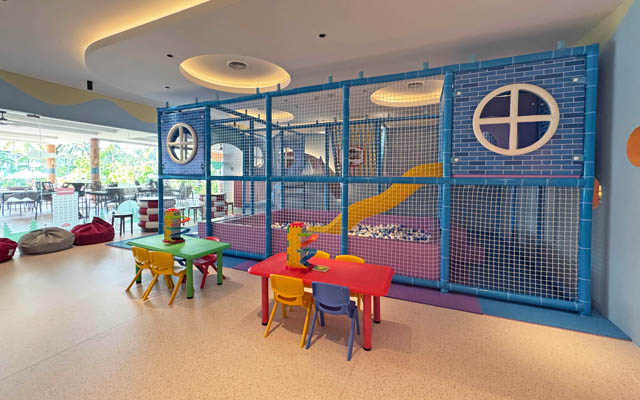
Little Birds Kids Club; photo by Melissa A Tan
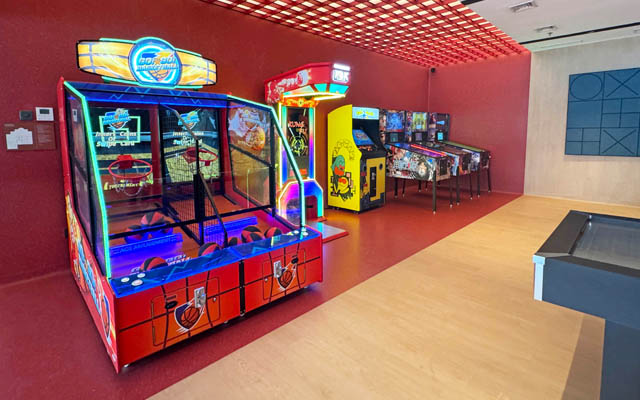
Arcade; photo by Melissa A Tan
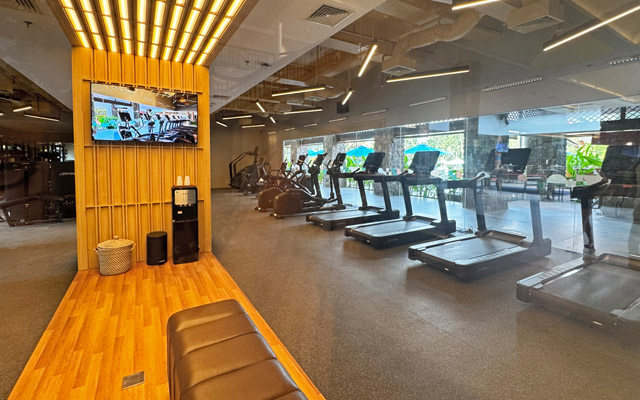
24-hour gym; photo by Melissa A Tan
Facilities: Activities for all in the family
Just a short walk, or a buggy ride, away is the Recreation Village which brings together fitness, sports and family activities, with yoga and Pilates sessions, a 24-hour gym, and spaces for guests to join organised programmes or simply relax. I took part in a batik painting workshop and had fun learning how to create my own art piece to bring home.
For younger guests, the Little Birds Club offers indoor and outdoor play areas, arts and crafts and interactive activities. Around the resort, there are swimming pools along with options for paddleboarding, bodyboarding and kayaking. A highlight is the transparent canoe, where you can paddle across clear waters while looking down to spot marine life.
Shantara Spa & Wellness is a calm retreat, with private and couples’ treatment rooms, reflexology and facials, plus a sauna and steam room. Hot and cold plunge pools and a jacuzzi add to the experience, while a dedicated room with accessibility features makes the spa inclusive for all guests.
The resort also has more than 2,000m² of meetings and events space, centred on a 900m² Grand Ballroom and supported by flexible function rooms. Outdoor areas across the beachfront add further options for team activities and celebrations.
For those who enjoy time on the green, golfers have access to Bintan Lagoon International Golf, home to two 18-hole courses designed by Jack Nicklaus and Ian Baker-Finch.
Service: Warm and friendly
It was all smiles throughout the stay, with staff eager to please and make sure guests had a great experience. I particularly appreciated the buggy ride service which brings guests easily around the resort while enjoying the breeze and sprawling grounds.
Verdict: Is Mövenpick Resort & Spa Bintan Lagoon worth a stay?
Overall, it was a pleasant weekend escape – a beach paradise only a short ferry ride from Singapore. The resort has something for everyone: romance for couples, family fun with children, and easy-going time with friends. My two nights there flew by far too quickly, so next time I’ll be back for a longer stay to soak it all in.
How do I get to Mövenpick Resort & Spa Bintan Lagoon from Singapore?
Hop on a 60-min ferry ride from Tanah Merah Ferry Terminal in Singapore to Bandar Bentan Telani Ferry Terminal in Bintan, and a 15-min complimentary resort land transfer will take you to the hotel.
Does Mövenpick Resort & Spa Bintan Lagoon have family rooms?
Families can choose to have adjoining rooms at Mövenpick Resort & Spa Bintan Lagoon.
Does Mövenpick Resort & Spa Bintan Lagoon offer free activities for children?
The kids’ club offers free activities to keep children occupied, including arts and crafts, Zumba, dance and games. Paid options such as cupcake decorating and pizza making are also available.
Is the breakfast at Mövenpick Resort & Spa Bintan Lagoon halal-certified?
While the hotel serves halal-friendly food, the resort’s F&B venues are not halal-certified.
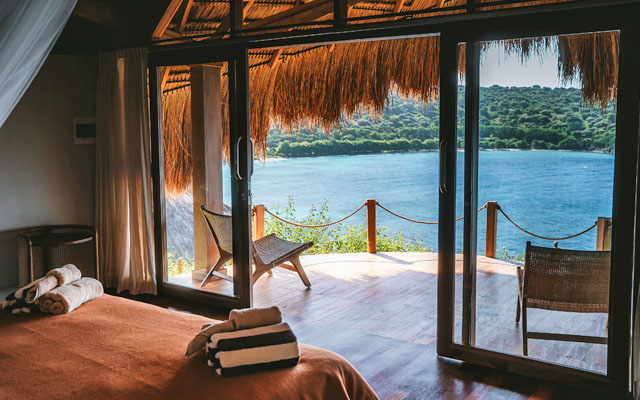
Ocean Mantra Village, Indonesia
Ocean Mantra Village is a retreat comprising 24 sea-facing units split evenly between glamping tents and air-conditioned bungalows.
The grounds house a cliffside yoga shala, an all-day dining space focused on plant-forward meals and local catch, direct shore access, and a nautilus-contoured infinity pool fitted with submerged sound and light installations. Scheduled programming encompasses yoga, breathwork, and underwater meditation, backed by gear for coastal activities.
Starlink Wi-Fi is available in the restaurant, while guestrooms remain offline.
Occupying 3.5 hectares in East Sumbawa, arrival requires a one-hour flight from Bali to Bima Airport, followed by a two-hour drive to the grounds.
Meliá Aurea Nha Trang
Meliá Aurea Nha Trang, Vietnam
Meliá Aurea Nha Trang has opened between Turtle Island and Fairy Mountain, and boasts 207 rooms and suites with private balconies, open-plan interiors and ocean views. The Level service tier offers exclusive lounge access and concierge service.
Facilities include three dining venues featuring Italian and local Vietnamese cuisine, a lobby lounge and a pool club. Grounded in local Champa rituals, YHI Spa provides treatments alongside a fitness centre, direct beach access and coastal walking paths. Families have access to the Kidsdom Club, which comprises a dedicated children’s pool and outdoor spaces.
The oceanfront resort is 15 minutes from Nha Trang city centre and 48 kilometres from Cam Ranh International Airport. Nearby attractions include the Hon Mun Marine Protected Area, Po Nagar Tower and Hòn Chồng beach.
Mercure Ambassador Seoul Dongdaemun
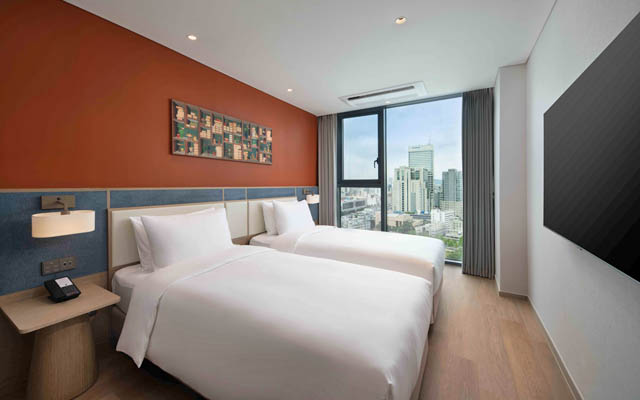
Mercure Ambassador Seoul Dongdaemun, South Korea
Mercure Ambassador Seoul Dongdaemun is located in Seoul’s Dongdaemun district, close to Dongdaemun Design Plaza and Cheonggyecheon Stream, offering direct access to local fashion and cultural spots.
The 336-key hotel has two dining options: Lamer, an interactive all-day dining restaurant with live cooking stations serving Korean and international dishes, and Café M for light refreshments. Guests also have access to a fitness centre, three meeting rooms, and a dedicated business corner.
Travelodge Osaka Shinsaibashi
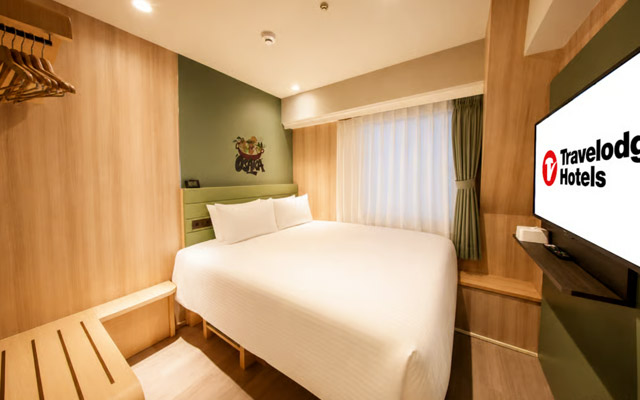
Travelodge Osaka Shinsaibashi, Japan
Travelodge Osaka Shinsaibashi features 302 guestrooms, including double, twin and family configurations. Room amenities include air conditioning, private bathrooms, smart TVs, work desks, refrigerators and free high-speed Wi-Fi.
The property includes an on-site restaurant serving breakfast, a tea room, a bar, laundry facilities, luggage storage and a 24-hour front desk.
Located in central Osaka, the hotel is a short walk from Nagahoribashi Station and Shinsaibashi Station. Nearby attractions include the Shinsaibashi-Suji Shopping Street and the Dotonbori district.
Minor Hotels’ luxury brand Anantara Hotels & Resorts has introduced a collection of anniversary experiences across its portfolio of more than 50 properties to mark 25 years of operations.
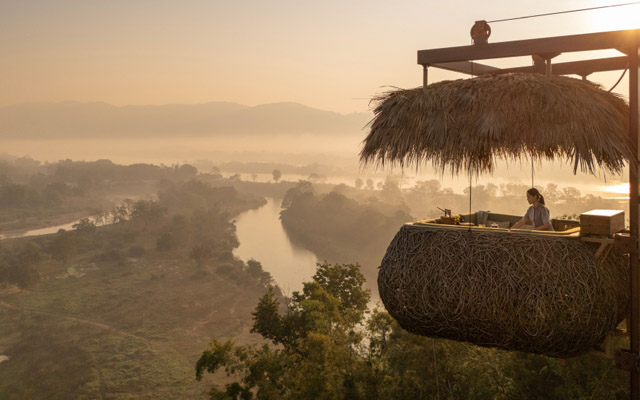
In Thailand, Anantara Golden Triangle Elephant Camp & Resort in Chiang Rai offers a treetop dining experience 52 metres above the grasslands, overlooking 20 rescued elephants cared for in partnership with the Golden Triangle Asian Elephant Foundation. Additional activities include guided forest walks and conservation programmes with mahouts.
Guests at Anantara Golden Triangle Elephant Camp & Resort can dine in a treetop cocoon while rescued elephants roam the forest below
On Koh Samui, Anantara Lawana Koh Samui Resort has partnered with the Laem Son Community Fishermen’s Group to launch a sunrise kayak tour of Ko Mat Lang’s reef and mangrove ecosystems, with a portion of booking proceeds funding coastal conservation. Meanwhile, Anantara Koh Yao Yai Resort & Villas provides private early-morning longtail boat trips to Hong Island in Phang Nga Bay.
In Zambia, the newly opened Anantara Tented Camp Kafue River offers sunset and night safaris with a senior head ranger, featuring bush dining and stargazing. In Oman, Anantara Al Jabal Al Akhdar Resort presents a guided mountain ascent led by an Omani storyteller, concluding with a traditional summit picnic.
The anniversary activities are available across participating properties throughout 2026.
Novotel will launch its inaugural Novotel Longevity Week from September 7 to 13, 2026, establishing an annual campaign focused on practical daily health habits.
Timed for the 37th week of the year, the initiative is based on the concept that a one per cent daily improvement aggregates over time.
From left: Members of the Novotel 37 Collective include ocean photographer Kaushiik Subramaniam, sleep expert Olivia Arezzolo, and food creator Alfie Steiner
A Novotel survey of 13,000 consumers in 12 countries shows 71 per cent are more focused on long-term well-being than five years ago. Although most identify diet (64 per cent), sleep (62 per cent), and exercise (60 per cent) as key to longevity, 76 per cent struggle to maintain healthy habits. Furthermore, 67 per cent report that social media makes finding reliable health advice difficult.
To deliver science-backed content, the brand formed the Novotel 37 Collective, featuring Olympic surfer Kauli Vaast, food creator Alfie Steiner, sleep expert Olivia Arezzolo, former footballer Javier Pastore, and marine biologist Kaushiik Subramaniam. Throughout the week, the group will host free masterclasses and live streaming sessions covering four pillars: Eat, Sleep, Move, and Meet.
The programming will extend across Novotel’s portfolio of more than 630 hotels through in-stay activities and QR-accessible content. Participating hotel restaurants will also feature the Oh My Greens! plant-forward dining menu, offering loyalty points to ALL Accor members who select plant-based options.
Taiwan is encouraging visitors to look beyond its familiar cities and combine different destinations and experiences, seeking to give travellers more reasons to return and discover more of the island.
Tung Chen-Yuan, representative of the Taipei Representative Office in Singapore, said the aim is for visitors to experience the destination through diverse landscapes and activities, ranging from mountain hikes and biking to cultural exploration in museums.
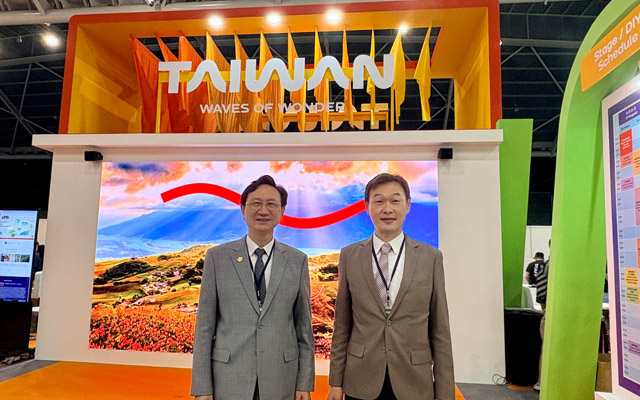
From left: Taipei Representative Office’s Tung Chen-Yuan and Taiwan Tourism Administration’s Paul Shih
He highlighted southern destinations for travellers to explore, including Nantou, Hsinchu, Chiayi, Tainan, Pingtung and Kaohsiung, alongside Taiwan’s offshore islands.
Beyond exploring new regions, Tung outlined how travellers can experience a full day in Taiwan, starting with a traditional local breakfast before moving on to nature or cultural activities, followed by shopping, night markets and evening dining.
For mature source markets such as Singapore, the strategy focuses on providing different reasons for travellers to return.
Paul Shih, director of the Taiwan Tourism Administration (TTA) Singapore Office, said the administration is promoting varying combinations of experiences, from forest walks to hot springs, and night markets.
Eastern Taiwan and the Rift Valley, for instance, offer travellers a slower pace and a different side of the destination. Railway tourism is another avenue for discovery, with specialised trains designed around specific themes, including a dessert-focused sightseeing service.
Wellness is also central to the proposition. Taiwan features 128 hot spring spots, while its accessible forest trails provide opportunities to experience nature in a cooler climate.
Taiwan’s transport infrastructure supports this deeper discovery. Tung noted that the high-speed rail connects Taipei and Kaohsiung in 96 minutes, while highways, charter buses and rental cars provide access to other regions.
Shih added that an upgraded transport pass connects high-speed rail and regular railway services with local buses and shuttles, simplifying travel between cities and regional destinations.
Sustainability is also being incorporated into tourism development. Shih said Taiwan is measuring carbon emissions associated with travel, while hotels have begun reducing single-use items such as toothbrushes and plastic bottled water, and attractions have installed waste separation bins.
To further incentivise arrivals, the TTA recently announced a campaign offering NT$5,000 (US$157) in travel credits for selected repeat foreign visitors. Launching on October 1, 2026, the lottery-based campaign applies to travellers entering Taiwan between October 10, 2026, and March 31, 2027.
Ocean Park Hong Kong has scaled its established education programmes beyond home grounds, tapping educational organisations from other locations in Asia.
Currently, it offers more than 10 study tour programmes for primary and secondary students from China and overseas. The latest addition, named Endangered Species Conservation Pioneer, was launched during financial year 2024-2025, introducing students to the concept of the IUCN Red List of Threatened Species and representative animals through guided tours of the Sloth and Friends Studio, Amazing Asian Animals, and the Hong Kong Jockey Club Sichuan Treasures at the park.
Students participate in interactive learning activities designed to promote environmental stewardship and wildlife protection
Rosalind Siu, executive director, sales, marketing and entertainment of Ocean Park Corporation, said: “By integrating artificial intelligence (AI) technology, the programme presents the survival dilemmas faced by animals from multiple perspectives, raising students’ awareness of the importance of protecting animals and their habitats.
“Indeed, the park inspires students’ enthusiasm for learning while strengthening their awareness of ecological conservation and environmental stewardship. Through activities that combine nature play with experiential learning, we offer age-appropriate educational programmes for students of all ages. These activities help cultivate a love of nature, deepen understanding of the importance of environmental conservation, encourage environmental protection, and spark curiosity in scientific inquiry.”
Since 2024, the park has welcomed over 20,000 students from China, Japan, South Korea and South-east Asia. China remains its largest source market owing to proximity, strong transport connectivity, and growing interest in experiential learning among schools and parents, according to Siu.
Meanwhile, Taiwan and other nearby Asian markets benefit from short travel times and straightforward logistical arrangements. South-east Asia is another promising market as outbound learning programmes gain popularity in the region.
Siu added: “For inbound study tours, Ocean Park Hong Kong will continue to broaden exposure among school groups from China, South-east Asia, Taiwan, and selected international school networks. In addition to coastal cities in the GBA, the park has developed a more diversified range of source markets for our educational offerings in financial year 2024-2025. These include inland cities such as Urumqi, Changsha and Guiyang, alongside Beijing, Hangzhou, Taiwan, and overseas countries like Australia. This broader geographic coverage helped in building a stronger region-wide demand.”
Apart from participating in study tour forums and conferences for network building in China, the park has arranged familiarisation tours and trade briefings for study tour organisers, travel agencies, and educational institutions in source markets including the Philippines, South Korea, Singapore, and Japan. A tailor-made session for the Singapore National Institute of Education was conducted in March 2026.
To align with the Hong Kong Tourism Board’s targets for the youth and study tour segment outlined in its 2026-2027 Work Plan, the park offers a portfolio of curriculum-linked learning programmes integrating experiential learning, conservation education, STEM exploration and sustainability, designed to support key United Nations Sustainable Development Goals.
Archipelago Hotels has added five properties across Java and Sumatra through a combination of two new openings and three rebrandings. The expansion comes as foreign tourist arrivals to Indonesia reached 7.45 million in the first half of 2026, marking a 5.71 per cent increase year-on-year.
The five properties comprise Aston Cimone Hotel & Convention Center, Aston Malang Hotel & Conference Center, Nawana by Alana, fave+ hotel Lampung, and fave+ hotel Pamanukan.
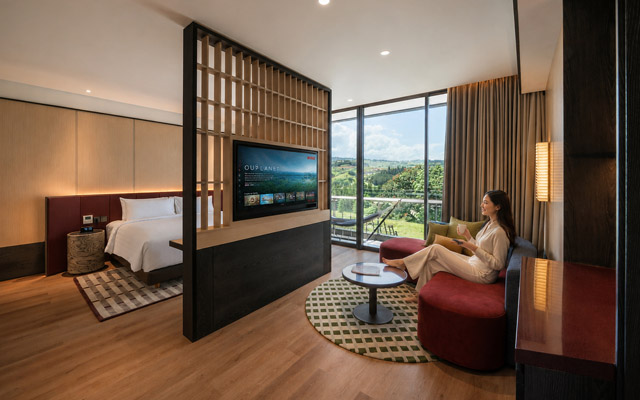
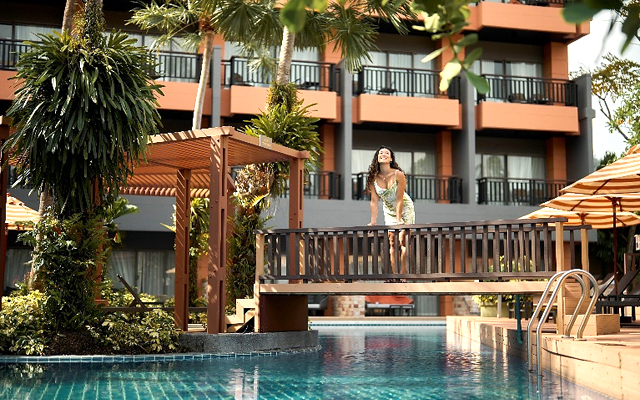
Nawana by Alana, pictured, is one of five new and rebranded properties introduced across Java and Sumatra
Each property features facilities tailored to its local market, including meeting spaces, dining options, family amenities, and access to regional business centres, tourist sites, and transport routes.
“The growth of tourism and the accommodation sector is creating greater demand for hotels that offer quality while remaining relevant to the character of each destination. Importantly, the Indonesian traveller is no longer choosing a hotel on price alone. Low price may attract attention, but genuine value comes from the combination of quality, comfort and an experience that feels interesting and distinctive,” said John Flood, CEO of Archipelago Hotels.
“This shift represents both an opportunity and a responsibility: to develop hotels that meet the market’s practical needs while giving guests something memorable enough to choose, enjoy and recommend.”