Conrad Hotels and Resorts is expanding its portfolio in China with the signing of three new properties in the country’s major cities – Xi’an, Chengdu and Nanjing.
This follows the opening of Asia’s largest Conrad hotel in Shanghai last year, and the upcoming openings of Conrad Shenzhen and Conrad Chongqing this year.
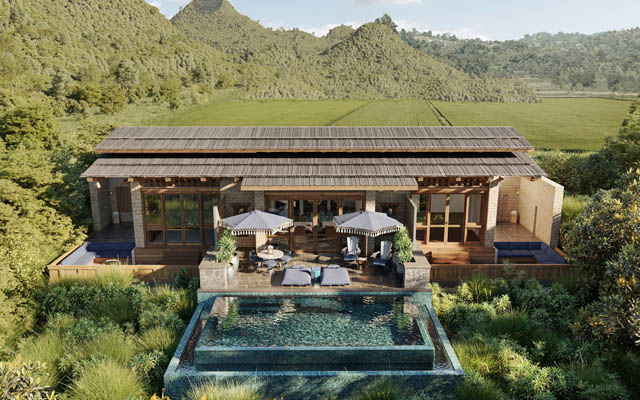
Conrad Xi’an is scheduled to open in 2025 (Photo: Hilton)
Slated to open in 2025, Conrad Xi’an will be located in a 230m-tall skyscraper in the city’s dynamic high-tech zone, steps away from underground rail stations and other transportation facilities. It will include a fitness centre and F&B offerings.
Conrad Chengdu will be located in the heart of the commercial district, overlooking the Jinjiang river. When open in 2025, the hotel will feature an all-day dining restaurant, lobby lounge, rooftop bar and more.
Scheduled to open in 2027, Conrad Nanjing will be housed on the upper floors of a 300m-tall tower in the central business district along the Yangtze river. It will boast expansive suites with private sky terraces, a spa and fitness centre, and a glass-bottomed pool.
“By bringing the brand to the major metropolises of Xi’an, Chengdu and Nanjing, we are focused on our strategy to align our expansion with regional developments in China, to contribute to these destinations, and deliver benefits to our owners and guests alike,” said Clarence Tan, senior vice president, development, Asia-Pacific, Hilton.
Nils-Arne Schroeder, vice president, Luxury, Asia-Pacific, Hilton, added that the signing of the three Conrad hotels signals the brand’s optimism for “the future of luxury hospitality in China”.
Luxury travel company &Beyond will launch its first lodge in Asia, with &Beyond Punakha River Lodge scheduled to open in the Himalayan kingdom of Bhutan in September this year.
Situated on the banks of the Mo Chu River in the Punakha Valley, the lodge will feature six tented suites, a two-bedroom villa with a private pool, and a one-bedroom villa with a plunge pool/hot tub, depending on the season.
&Beyond Punakha River Lodge will open in September 2023
Like all &Beyond’s properties, the lodge draws inspiration from its natural surroundings and combines traditional Bhutanese style with a unique twist, and boasts uninterrupted views of the Himalayas.
Its location offers easy access to the Khamsum Yuelley Namgyal Chorten, a site that is popular with visitors to Punakha. Other attractions in the area include the Punakha Dzong, and the Sangchhen Dorji Lhuendrup Nunnery.
Punakha River Lodge will also feature an extensive organic vegetable garden and guests will have the opportunity to visit a community farming project nearby as well.
Mark Wheeler, &Beyond managing director Asia, South America & Business Development, said: “Our intention is to build onto our almost two decades of touring expertise in Asia to create a lodge footprint that will help us to continue to grow our conservation-led business model on three continents.
“We plan to look outwards for inspiration, integrating the unique nature of the destination into our service ethos, thus creating a platform for guests to immerse themselves in this exceptional location and allowing the destination to shine.”
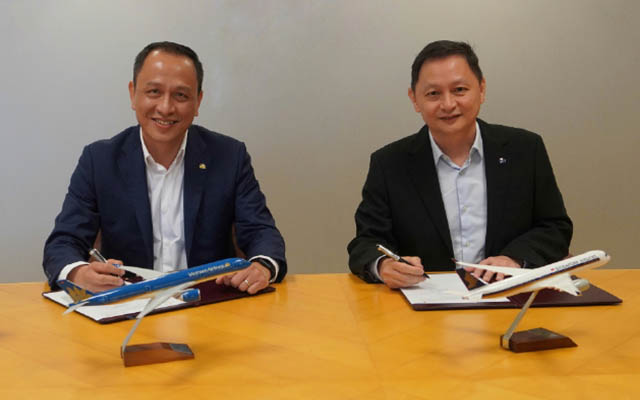
Singapore Airlines (SIA) and Vietnam Airlines signed a Memorandum of Understanding – during the Vietnam-Singapore Business Forum on February 9 to strengthen the commercial collaboration between the two airlines.
With a long-standing partnership for over 20 years, both carriers will initially explore opportunities for codeshare arrangements to facilitate better connectivity between Vietnam and Singapore, which could potentially be expanded to other destinations that SIA serves.
From left: Vietnam Airlines’ Le Hong Ha and Singapore Airlines’ Goh Choon Phong at the MoU signing in Singapore (Photo: Singapore Airlines)
They will also explore other areas of commercial cooperation that could offer more value and options to customers.
Goh Choon Phong, CEO, Singapore Airlines, commented that both airlines have “well-established networks” that can “strengthen the connectivity between the two countries and to key markets around the world”.
The arrangement will help “support economic growth, and bolster initiatives that facilitate tourism activities”, he added.
Vietnam Airlines’ CEO Le Hong Ha said: “Over many years, Singapore remains one of the most important markets for Vietnam Airlines. We hope to leverage our joint capabilities throughout many commercial fields of our business and therefore provide seamless experience to our valued customers.”
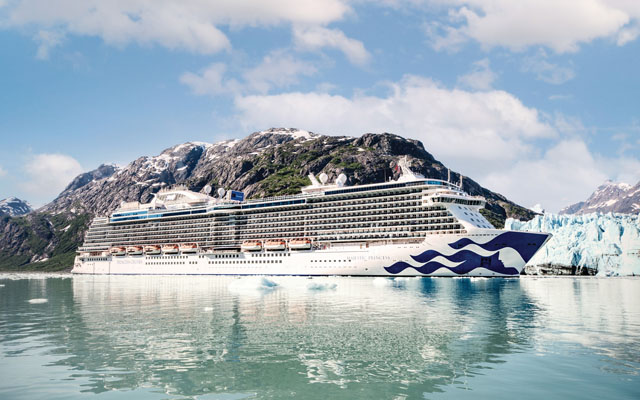
Get ready to set sights on untamed wilderness, majestic glaciers, close-up wildlife and Denali, the tallest mountain in North America, Glacier Bay National Park, and more as Princess Cruises heads to Alaska for the summer of 2024.
The 2024 season marks the 55th anniversary for Princess Cruises sailing in Alaska and seven ships are scheduled to depart from four home ports – San Francisco and Seattle in the US, Vancouver in Canada, and Anchorage (Whittier) in Alaska.
Princess Cruises will head to Alaska for the summer of 2024
With 158 departures on 14 itineraries with 17 destinations, including five glacier viewing experiences on seven ships, the season features 86 visits to Glacier Bay National Park. Land tour options are also available, which includes stays at exclusive Princess Wilderness Lodges.
Royal Princess, Sapphire Princess and Grand Princess will sail the Voyage of the Glaciers itinerary comprising two glacier-viewing experiences on each cruise, while Discovery Princess and Majestic Princess feature seven-day Inside Passage cruises and include More Ashore late-night stays in Juneau.
Crown Princess departs from San Francisco on an 11-day Inside Passage cruise and Ruby Princess sails from Vancouver on seven-day Inside Passage cruises.
Accor has announced changes to its senior operations leadership team to bring increased expertise and focus to Accor’s operations across Australia, New Zealand, French Polynesia and Fiji.
Scott Boyes has been appointed senior vice president hotel operations, Pacific North. Having worked in Accor operations for 28 years, he will be responsible for hotels under management agreements in the newly designated Pacific North region, which will include New South Wales, Australian Capital Territory, Queensland and Northern Territory.
From left: Scott Boyes, Adrian Williams, Danesh Bamji, and Marcus Hanna
Adrian Williams has been named senior vice president hotel operations, Pacific South, and will be responsible for Accor’s Premium, Midscale and Economy hotels in the newly designated Pacific South region. He has over 30 years of hotel operations and senior leadership experience.
Danesh Bamji is the new vice president franchise, Pacific. He will leverage Accor’s brand, marketing, sales, customer engagement, digital and loyalty strategies as well as the delivery of Accor’s systems, tools and resources.
Marcus Hanna has been appointed vice president operations Pacific, Sofitel, MGallery and Emblem. He has over 18 years of experience with Accor, and his most recent role was as managing director for Fairmont Singapore and Swissôtel The Stamford.
The Tourism Congress of the Philippines (TCP), the private sector consultative body assisting the government in developing and implementation of tourism policies, has elected Bob Zozobrado as its president.
He was previously chairman of PATA Philippines Chapter.
From left: Marilou Ampuan, James Montenegro, Bob Zozobrado, Margie Munsayac, and Rolando Canizal
Other elected officers for the two-year TCP term 2023-2024 include executive vice president James Montenegro; vice president for Luzon, Rolando Canizal; vice president for Visayas, Peter Tay; vice president for Mindanao, Marilou Ampuan; treasurer Margie Munsayac; among others.
Aside from WorldHotels which it acquired in 2019, BWH Hotel Group is focusing on growing @Home, its new midscale extended stay brand, and Aiden, its upscale chic boutique brand that was first introduced in 2018.
Both brands will be fast growing because they fit into the needs of today’s developers and guests, said BWH president & CEO Larry Cuculic in an interview with TTG Asia.
Cuculic: we didn’t design @Home – extended-stay owners did
The @Home prototype, in fact, was shaped through a collaboration between BWH and active extended-stay hotel owners. The result is an “effective and cost-efficient” extended-stay model, he said, and one that gives developers the flexibility in design elements, operations and breakfast areas.
“It allows the hotelier to decide the size of his lobby, or whether he wants a front or side entrance,” said Cuculic. “If you think about it, why do most hotels require porte cochère? It’s so that guests can exit their taxis when they come and go on a daily basis.
“But with extended stay, they are emptying their cars once a week, or once a month because they are staying longer. So, you don’t need a porte cochère. This is the kind of common sense that makes a hotel economical to build and have a smart footprint.”
“We didn’t design @Home – extended-stay owners did,” added Cuculic on the collaboration between BWH and around 12 owners.
Aiden, meanwhile, has received a massive boost from Scandinavian company CIC Hospitality, which intends to open 30 Aiden hotels in Scandinavia with new bells and whistles such as a digital hologram concierge for check-in/check-out and guest services at each hotel.
CIC, which believes the future of hotels is “sustainability and tech-inspired”, will include features such as solar roofing and modular design to drive environmental efficiencies at these properties.
Cuculic is confident both brands will also be well-received in Asia where, increasingly, a younger generation of owners has emerged and wants to build “an experiential hotel that matches their personality”.
A BWH press release says Aiden is set to grow by over 200 per cent in the years ahead. Aside from Scandinavia, BWH is capitalising on demand for the brand in India, Thailand and Australia. Currently, there are 19 Aiden hotels in countries including Australia, France, Italy, South Korea and the US.
As for @Home, launched at the group’s annual convention in November last year, a signing for the first @Home in Australia is imminent and it will be a conversion. Both @Home and Aiden are for conversions and new builds.
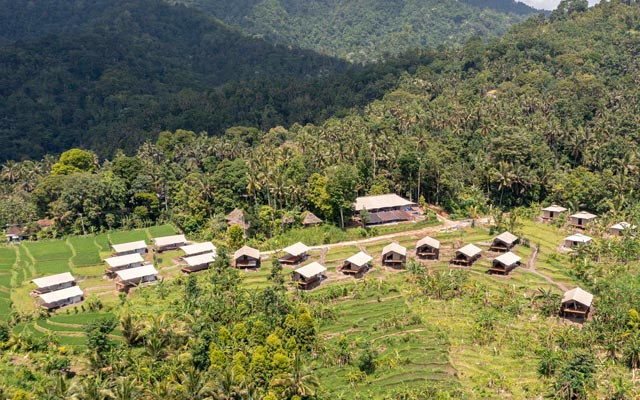
Cross Hotels & Resorts, in collaboration with Discova, has launched its sixth brand Kaura, and introduced Kaura Bali, the first-of-its-kind immersive village experience in Bali, in direct partnership with the villagers of Manggis.
Located in the hills of Karangasem, East Bali, Kaura Bali has been hand-crafted with the environment and sustainability first. It started as a community project to repair a damaged irrigation pipe that threatened the survival of the entire community who were heavily dependent on rice farming.
Kaura Bali welcomes everyone to experience the real Bali culture
Aside from the resort’s offerings – infinity pool, yoga sessions, Balinese spa treatments – guests will also get to connect with nature and a new culture with the specially curated and guided experiences by the villagers of Manggis.
Harry Thaliwal, CEO of Cross Hotels & Resorts, said: “Our goal of self-sustaining retreats, created in partnership with local communities, is at the core of Cross’s vision for an evolving industry. Through education, and sustainable development with the villagers, Kaura will deliver life-changing experiences for travellers.”
Working with Discova, the villagers will offer a range of experiences, from touring and working in the newly-converted organic farms and rice paddies, to guided treks and cycling through the emerald Balinese steeps, or traditional cooking classes and holistic wellness workshops with the villagers.
Suyin Lee, managing director, Discova, said: “The villagers wanted to adopt organic farming, to improve farming practices and to bring prosperity back to their village. Now they are welcoming everyone to experience the real Bali and in doing so, creating an alternate source of livelihood.”
With 2023 possibly the year that travel goes “back to normal”, social travel brand Contiki shares the top 11 global travel trends to expect from the year ahead.
Bucket list travel
With airlines returning to normal service and countries relaxing their travel restrictions, travellers may finally be able to embark on the trips they have spent the last three years dreaming about.
People want to spend their time in social and community-driven spaces
“The prevailing sense is that travel has been, and could again be, taken away from us,” said Natasha Lawrence, Contiki’s commercial and product development director. “2023 is the opportunity to make it count.”
Sustainable travel
Travellers everywhere are becoming increasingly aware of the need to travel responsibly. Young people are loyal to brands that share their values and are committed to reducing their carbon footprint.
Also linked to sustainability is the rise in plant-based living. Rebecca Gade Sawicki, creator of Veggies Abroad, noted: “At least 15% of greenhouse gases are attributed to animal agriculture. Consumers are concerned about what’s on their plate and its impact on the planet.”
Young people are travelling more than others
During the past year, 18- to 34-year-olds averaged 2.2 more international trips and 1.3 more domestic trips than those aged 65 and above.
Long trips are in
Pre-pandemic, long trips were declining in popularity. In 2023, they are soaring. This is due to the global cost-of-living crisis and the increase in flight prices.
Before Covid-19 hit, the average length of trips was around 10 days; for 2023, this has risen to two weeks.
Travellers planning longhaul trips would want to spend more time in the destination given the rising flight prices.
Multi-country trips are making a comeback
Multi-country trips, where travellers often visit eight to nine countries in two weeks, have also increased in popularity.
“During the pandemic, people were more cautious about crossing borders,” shared Adam Armstrong, CEO, Contiki. “Now that it’s easy to cross borders, multi-country trips are rock-and-rolling again.”
Social travel is becoming more popular
It’s safe to say that two to three years of missing out on birthday parties, festivals and other social gatherings has affected young people more than others. A 10% increase in multiple bookings (as opposed to solo bookings) highlights an elevated hunger for human connection among young people.
Another example of this is a surge in bookings for six-bed hostel dorms, with people wanting to spend their time in social and community-driven spaces.
Travel inspired by music and TV
According to Expedia, 66% of global travellers have considered visiting a destination inspired by a movie or television show they’ve watched. Grassroots music scenes have also become a huge draw for young travellers, offering up the chance to discover new artists before they break.
The musical pilgrimage trend has had positive consequences for destinations such as Israel which, according to TikTok superstar Brooke Alexx, has one of the “most underrated music scenes in the world”.
Local experiences
Culturally immersive local experiences have also continued to rise in popularity.
In a survey conducted by Hilton, 49% of respondents said they were looking to undertake such experiences while travelling in 2023.
Lawrence commented: “Maybe it’s just my social feed, but I am seeing a lot of positive things regarding inclusivity and connection with other cultures. This could be the fuel for some magical travel experiences.”
Planning ahead
As with other luxuries, travel has become more expensive recently. The good news is that more people tend to view travel as being crucial for their welfare, so they will continue to explore the world, however, they will be more careful with their spending and will want to make sure they get the best deal.
More travellers will plan their trips in advance, and subsequently, there will be a reduction in spontaneous bookings.
Budget accommodations are also set to become more popular.
Travel affected by remote working
The remote working trend looks set to continue into 2023 and beyond. The added flexibility is great for travellers but also for the tourism industry.
Rax Seun, founder of NomadsUnveiled, said: “The combination of travel and remote work will continue to proliferate in the travel space. There will be more businesses (or modifications in businesses) catering towards this group, such as co-living spaces, hostels/hotels with better coworking facilities, and experience retreats that combine business and travel experiences.”
Virtual travel
With the metaverse whetting an already growing appetite for immersive virtual experiences, virtual travel is tipped to play a much bigger role in tourism in 2023 and beyond.
In a survey conducted by Booking.com, 46% of global respondents revealed that they would be more likely to travel to a new place if they experienced it virtually beforehand.
Air New Zealand has joined Embraer’s Energia Advisory Group – a group of airlines, lessors, manufacturers and other aviation experts advising Embraer’s Energia project developing sustainable aircraft for the future.
Embraer also becomes a long-term partner in Air New Zealand’s Mission Next Gen Aircraft initiative, working alongside the airline to accelerate the development and introduction of zero emissions aircraft technology for regional fleet in New Zealand.
Air New Zealand will work with Embraer on the design requirements for next-generation sustainable aircraft
The companies will also work together on the design requirements for next-generation sustainable aircraft.
Air New Zealand chief sustainability officer Kiri Hannifin commented that the airline’s bold sustainability goals would not fit the “business as usual” approach. Instead, it aims to accelerate the technology and infrastructure needed to decarbonise its domestic flights, by working together with leading aircraft developers, innovators, and infrastructure providers around the world.
“We want to be a leader in the roll-out of zero emissions aircraft in New Zealand. Having Embraer as one of our long-term partners will grow our collective understanding of zero emissions aircraft technology as it develops, and will give them the confidence (that) they are developing a viable product for us,” said Hannifin.
Arjan Meijer, president and CEO, Embraer Commercial Aviation, added: “Smaller, regional aircraft are going to be the first platforms on which new fuel and propulsion systems can be introduced effectively. Embraer looks forward to contributing to Air New Zealand’s initiative and also adding their expertise and requirements to Embraer’s Energia project.”