TTG Asia
Asia/Singapore Tuesday, 16th December 2025
Page 557

The Hari Hong Kong names new GM

0

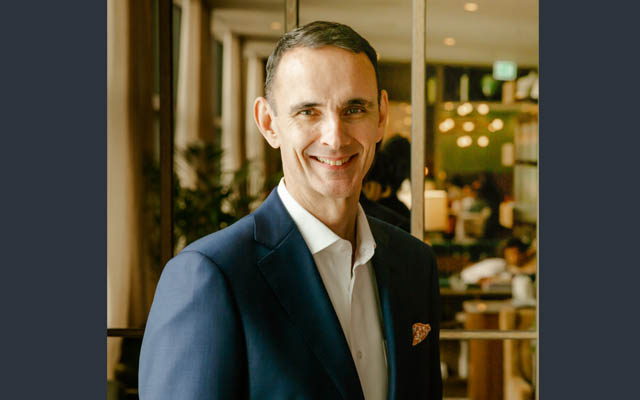
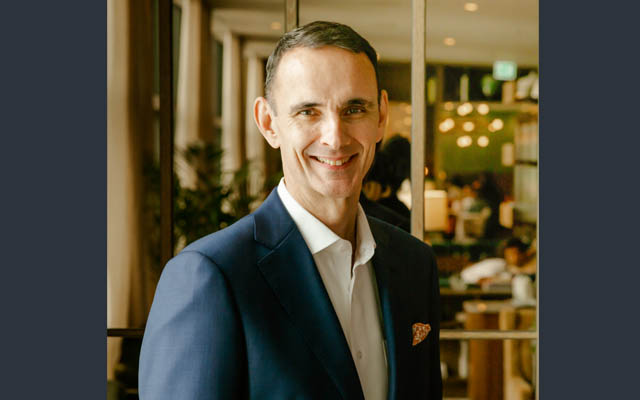
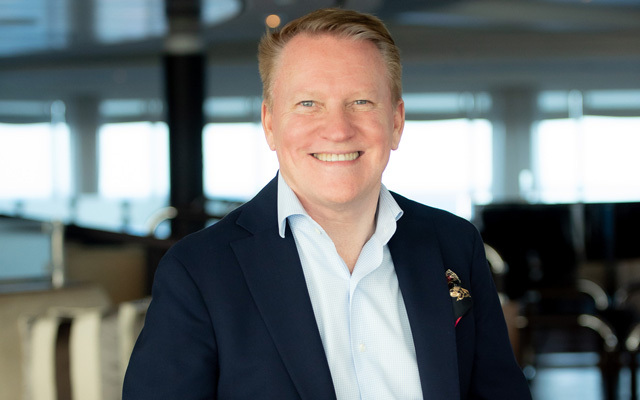
Harilela Hotels has appointed Edward E. Snoeks as general manager of The Hari Hong Kong.

The seasoned hotelier possesses three decades of experience in luxury hospitality across Europe and Asia including Hong Kong and Thailand.

Prior to joining The Hari Hong Kong, Snoeks was general manager of Meliá Chiang Mai. Other positions he has held include pre-opening general manager of Sindhorn Kempinski Hotel Bangkok & The Residences, as well as Thailand’s regional general manager and general manager of The Okura Prestige Bangkok.

Skipping ahead of competition

0

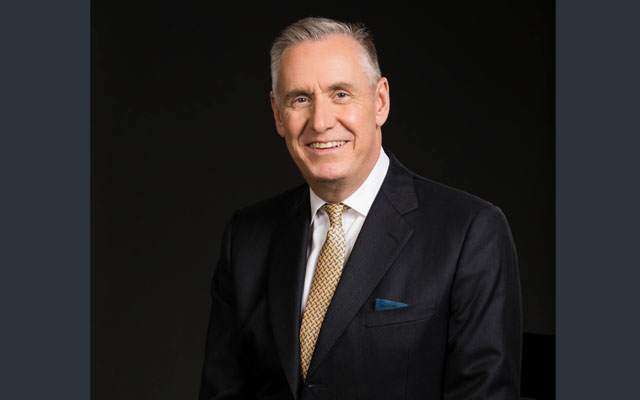
There is so much talk about pent-up travel demand being unleashed this year. What does this pent-up demand mean for Regent Seven Seas Cruises?
In different degrees, people have been locked up for nearly three years. Some people have continued to spend their money on things like second homes, new kitchens and Birkin bags. But there are also a lot of people who are inherently travellers that didn’t go anywhere and are now just bursting to do so.

The interesting thing for us is that people are now planning further ahead, going for longer trips, and spending more.

Locking travel in far ahead is a general trend now around the world but it is particularly interesting to see in Asia because it is a complete shift in travel patterns; Asians tend to plan for travel in the short-term. It is almost like people have a fear of missing out, that if they booked too late, they might not get it.

South-east Asia has come around very fast, with surprising growth in Indonesia, Thailand and Singapore. These markets opened up earlier than other parts of Asia. China is about six to eight months behind South-east Asia.

We are getting more new-to-brand customers – about 55 per cent in Asia and 57 per cent in Australia. That is quite fantastic. New-to-brand customers tend to prefer something shorter (in duration), so we need to provide something that is between eight and 10 days for them.

We think people are coming from the big ships, wanting something more intimate. Some new-to-brand customers are also new to cruises, drawn by the fact that cruises are a very safe place today. We have robust health and safety protocol, as well as medical care on site.

Regent Seven Seas Cruises had hardly any Covid incidents since we resumed our first sailing in August last year and our last ship in our fleet in March. We never had to stop our ships (because of Covid incidents).

How are your Asian customers booking?
Besides far more planning, they are also taking longer cruises – our average duration in Asia is moving to 14 days, up from between seven and 10 days. Most of the bookings are for Concierge Level and up.

We are also seeing a lot more family and friends travel – people are making up for lost time and planning trips together. We are getting a lot of multi-generational travel groups from Singapore, Indonesia and the Philippines.

There is definitely a shift in behaviour in Asia, perhaps more radically than other markets.

Is there a change in preferred voyages among your Asian customers?
Given that people are looking at longer cruises, some different favourites are emerging. For example, West Africa. I think that is because you cannot really go there by land and it is such a unique destination.

The Mediterranean and Northern Europe will continue to be the core. We’ve got a new Holy Land cruise in October 2023 that offers Cairo and Jerusalem, and that has been quite appealing to people.

There is also a lot of demand for Iceland out of our North Asian markets. Our eight-day round-trip cruise in August is very hot.

Not forgetting our own backyard, our Tokyo cruises are always in high demand. Asians absolutely love Japan. As soon as Japan reopened, people flocked back! So, we have put in more of Japan in our itineraries going forward.

People want unusual things and bucket list experiences that they have never done before.

Seven Seas Explorer will make its maiden voyage to Asia and arrive in Singapore on December 12. At present this season is already on waitlist. Where did all that demand come from?
It is a complete mix from US, Europe, Australia and Asia. We were pretty clever with what we did earlier on. We didn’t stop marketing throughout Covid, we kept spending money, and we focused on close-to-home voyages that we managed to fill quite early on.

So, we don’t have any space on that ship that is arriving into Singapore, and we are almost full on the voyage leaving Singapore for Sydney.

On the way back, we had a little bit of drop out when travellers were due to pay their final balance, which is about now. We had some Europeans and Americans dropping out, leaving a little bit of space for Bali to Bangkok, and Bangkok to Tokyo. I think we are in a really comfortable place though.

How well do you think this intense pent-up travel demand will hold up next year against our VUCA environment?
All our future cruise credits have been used up by 31 December, so 2023 will be a cash year. We are moving into the new year in a very strong position and with very good demand.

We are close to 70 per cent full for our 2023 inventory. We still got some gaps but our marketing and promotion has gone ahead to 2024/25.

The big deciding factor and headwind (for 2024 travel performance) is air capacity because that is still recovering. Airfares at the moment are still ridiculously high. As more flight capacity comes into the market, prices will balance out.

For our customers, issues with interest rates and inflation do not really matter. They can weather that. They are not saving to take a trip. Luxury travellers are quite resilient. So, I don’t think the environment will affect them much. Furthermore, uncertainty has always been there.

You spoke of some customers dropping out from Seven Seas Explorer as final payment approached. They have money, so what happened there?
It was the lack of flight capacity, as well as hesitancy among some people. Some older generation travellers are still worried about travelling too far too soon or being too far from home should they fall sick. They want to travel, but they prefer somewhere closer.

I suspect air availability and cost is the biggest factor, though. We were due to go to Miami about a month ago. Round-trip Sydney to Miami was normally US$10,000 pre-Covid, now US$23,000. People have a threshold for the right price for something, even if they are wealthy. They see that they are paying more for the air ticket than for their cruise.

Many tourism businesses took the years of disruption to reassess their operations, products and guest experience, to come up with something better, more efficient and different. Did Regent Seven Seas Cruises do the same?
We had time to reassess ourselves, and we did a lot of things ship-wise as well as marketing- and product-wise.

We did a lot of refurbishment, a lot of work with the air filtration systems on board, and essential maintenance.

We also did a lot of work on destinations, trying to create different experiences. For example, we revisited quite a lot of our tour programmes and introduced many more eco-friendly shore excursions.

Because (we didn’t stop marketing throughout Covid), we did not have to worry about filling up spaces at the last minute. And so, we were able to perfect our launches for maximum results. We had record launches during the pandemic, which is extraordinary considering how people could not travel then and could only dream of it. We had eight record launches!

Those were strange but very busy years for us. We reduced our staff by just a little bit and didn’t stop spending money. I think that helped our brand to emerge from the pandemic much faster than our peers. Our relationship with our travel agents is also stronger because we didn’t stop supporting them, we honoured commissions, and we paid out refunds very quickly.

How does Regent Seven Seas Cruises regard the travel agent channel, and are there new programmes to engage them for even more business contribution?
Travel agents are a one-stop-shop solution for a lot of issues that travellers face today – visas, medical requirements, travel insurance, flight changes, etc. Travel agents have definitely become more important to travellers since the pandemic. There are more business opportunities for them now. Unfortunately, there are fewer of them.

A big challenge for us right now is to get more travel agents back to work. There are lots of new people coming into the industry from non-travel related industries, and they have to undergo an education process. We are very strong on training and offer a travel agent resource centre that gives them all the tools to sell. However, we have to get more basic than that to train new people, to explain what the brand stands for, how it is different from others, and where the customer fits. This is particularly important for us, as we are a luxury brand and one of the most expensive in the cruise market. We need our travel agents to be able to explain to the customer the value and position of our brand.

Right. They need to be able to sell the Regent Seven Seas Cruises story.
Yes, and that is the hardest thing to teach. If you think about the cruise market in Singapore, you will find that the most noise comes from Royal Caribbean International and Resorts World Cruises because they are here every week and are always in your face. Because there is a lot of volume for them to move, a lot of money is being pushed into promotions.

But they represent only one sector of the cruise market. Regent Seven Seas Cruises is boutique and we have got to cut through all that noise to make sure people understand what our proposition is.

The post-lockdown traveller is said to crave meaningful and responsible travel experiences. Are you seeing that demand surfacing among your cruise customers?
The younger generation, especially, takes ESG (environmental, social, and governance) issues very seriously. They expect travel and tourism options to be responsible.

Eco-Connect Tours is our effort in this aspect. It is a series of more than 150 sustainable tours that provide our guests with enriching opportunities to interact with local culture, communities and nature. Eco-Connect Tours are highlighted in our free shore excursion listing. There are some great experiences – some are culinary focused, some are environmental focused.

More and more, we have noticed that our customers pay attention to the hotels that they are staying before their cruises. They want to know what those hotels are doing about recycling and conserving resources, for example. So, we all have to work in tandem to achieve ESG goals in travel and tourism.

We now tell our travel agent partners to make sure they understand what ESG goals are all about because their customers are conscious of them. Our travel agents must be able to tell their customers what Regent Seven Seas Cruises is doing to achieve ESG goals. Travel agents are welcome to adapt their ESG policy to ours.

How else are your voyages and shore programmes evolving with current traveller expectations?
Through customer research, we know that the destination often emerges as a top three critical consideration. So, we have been looking at how we can evolve the destination message.

One of the things we are trialing today is the Gift of Travel, a series of free included pre- or post-cruise land programmes on select voyages to Europe. We’ve chosen seven bucket list destinations that are not necessarily at the port of embarkation, but close to, like Madrid in Spain, Ljubljana in Slovenia, and London and Cotswolds in the UK.

We are running this for two months, and have earned very good reactions to this initiative because Europe is always a popular destination and the Gift of Travel offers our guests a chance to extend their cruises for three or four nights without having to pay extra.

This is how we evolve. When you include everything like we do, you have to look at new ways to offer value adds.

Let’s whet the appetite of Asian travel advisors looking to sell a luxury cruise experience soon. What can you do for them?
We work with our travel agent partners to craft our products to Asian groups. For small groups, for instance, we can offer small buses. We can tailor to the needs of individual groups or customers.


South-east Asia rises as “the powerhouse’ for Switzerland Tourism

0
  • South-east Asia reaching pre-pandemic performance for Switzerland
  • Investment in South-east Asia will continue even as China and India return in full force
  • Overall inbound numbers to inch closer to 2019 levels by next year
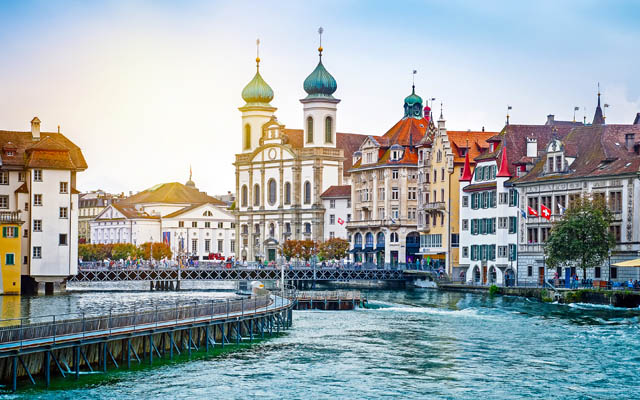
South-east Asia is the only Asian market reaching pre-pandemic performance; Lucerne, Switzerland pictured

South-east Asia has come out of Covid-19 smelling like roses for Switzerland Tourism (ST), which is staring wide-eyed at its recovery and is adding more resources to harness its full potential.

It is the only Asian market that is reaching pre-pandemic performance, whereas the other key Asian markets for Switzerland are still a shadow of their former selves.

In the first nine months, South-east Asia accounted for more than 330,000 overnight stays in Switzerland, just 20 per cent short of 2019’s level. In contrast, the other key Asian markets are down anywhere between 57 per cent (Australia) and 92 per cent (China). India, Switzerland’s second largest Asian market after China, is down by 60 per cent, South Korea 71 per cent, and Japan 83 per cent.

So delighted is ST’s CEO Martin Nydegger with the region that he called it “the powerhouse of this planet”.

“We are now more focused and detailed about South-east Asia. We have the best manager, Batiste (Pilet), and his great team here in Singapore. Last week, we opened an antenna (representative office) in Manila, while in Bangkok we have hired a full-time person (from a Swiss embassy staff allocating 30 per cent of time to tourism promotion previously),” said Nydegger in an interview with TTG Asia during his Singapore visit.

“We are also stepping up our collaboration with the media and tour operators in the region, and launching new offers, such as destination weddings, to attract new segments.”

Focus on South-east Asia to stay
There is, however, skepticism on whether the current enthusiasm over South-east Asia will quietly retreat once Switzerland’s top two Asian outbound giants, China and India, return in full force.

China and India formed nearly 70 per cent of overnight stays by Asians in 2019, which totalled 3.2 million. South-east Asia, the third largest market after the two, accounted for just 13 per cent.

The importance of the two top markets can be seen from staffing levels. There are 13 staff for Greater China, and six for India. South-east Asia, a diversified region with a population of more than 680 million people, has eight staff after recent additions.

Already, Nydegger expects India to come back at a faster pace now that issues that caused Switzerland to miss the Indian high season last May/June are improving. Those problems included a lack of air capacity and shortage of visa staff to process suitcases full of applications. Many visa staff were retrenched during the pandemic but that expertise has returned faster than expected, he said.

On China, Nydegger said it is a question of how it will reopen – at once or gradually with some restrictions – and that “it’s hard to prepare for a China reopening as we don’t know when and how” it will happen.

But ST will continue to invest in South-east Asia, he said. “We don’t have a culture of in and out, in and out. If we are now profiting from South-east Asia, we will not drop it like a hot potato once the Chinese are back. This is not how it works with us; we are loyal to a stupid extent.”

He believes Covid-19 has really opened the eyes of the industry, not just ST, to give other “interesting” markets the same attention they shower on dominant markets, such as China.

“People have a different radar now. They look at markets that are doing well economically. And the economic power of South-east Asia is impressive,” said Nydegger.

South-east Asia accounted for more than 330,000 overnight stays in Switzerland

Morale booster
What is clear is ST appreciates how South-east Asia has raced ahead of the other Asian markets in recovery in the first nine months. Psychologically, it is a bright spark, reaffirming the potential of Asia-Pacific on the whole. Practically, it is needed as overall ‘Overseas’ business is still down 42 per cent from the eight million recorded in 2019. Apart from Asia, ‘Overseas’ comprises other non-Europe markets such the US, South America, the Middle East and Russia.

Despite this, Switzerland reached nearly 30 million overnight stays in the first nine months, a decline of six per cent from the same period in 2019. It has Swiss tourists to thank for this; they stayed 17 million overnights in the first nine months, an increase of 18 per cent over the same period in 2019.

Neighbouring Europeans, termed as ‘Other Europe’, also helped, now at just 12 per cent below 2019’s level of 10 million overnight stays.

But Nydegger is under no illusion that the domestic market’s strength is “an artificial hike”. He also predicts that ‘Other Europe’ will not grow much next year.

“The Swiss will want to travel overseas again, and that’s alright. Likewise, other Europeans. Many of them, especially those from surrounding countries such as Italy, France and Germany, drove to Switzerland. They didn’t want to fly, perhaps due to fear of catching Covid in airplanes and of being caught in airport hassles and airline cancellations. Next year, they’ll step on airplanes again.

“So, for 2023, I expect we’ll be at 90 to 95 per cent back to 2019 levels overall. The Swiss market will return to the normal level, ‘Other Europe’ will grow just a bit, and ‘Overseas’ will grow a lot.”

Lanson Place to expand presence in Asia-Pacific

0

Lanson Place Hospitality Management is exploring both investment and management opportunities to further grow the brand in major gateway cities in Asia-Pacific, CEO Michael Hobson said.

Poised to open its eighth property in Manila in 2Q2023 and its ninth in Melbourne in 2024, the management company had an “interesting discussion” to develop a “talent serviced apartment” in Shenzhen’s Greater Bay Area, which is being primed to welcome various industries and attract young talents, Hobson shared.

Hobson: exploring both investment and management opportunities to further grow the brand in Asia-Pacific

Lanson Place is also looking to own and manage properties for a more permanent presence in Shanghai and Beijing where its parent company, Hong Kong-listed Wing Tai Properties, has a presence.

The group has two high-end serviced apartments in Shanghai – Lanson Place Aroma Garden and Lanson Place Parkside.

Hobson said Lanson Place was keen on establishing a footprint in Tokyo three years ago, but plans were marred by the onset of Covid-19. Another target is London where Wing Tai already has properties in Mayfair.

Lanson Place has a compendium of seven managed properties – three in Hong Kong, two in China, and one each in Singapore and Kuala Lumpur – with a total of 1,000 rooms and residences.

Lanson Place Parliament Gardens in Melbourne will have 137 serviced units when it opens in 2024.

Lanson Place Mall of Asia in Manila will be its biggest property, with 247 hotel keys and 143 residential suites. It is the first hybrid hotel-branded residence for SMX Hotels and Conventions, which has nine mid-scale to luxury hotels and eight exhibition and convention venues throughout the Philippines.

Laurent Boisdron, vice president and general manager of Lanson Place Mall of Asia, said the property will have a full-service operation when it opens in April next year, including a spa, five F&B outlets, a grand ballroom and seven meeting rooms.

Boisdron added that targeted clientele comprises the strong domestic leisure market; corporates, with the numerous companies around the Manila Bay area; and business events, due to its proximity to SMX Convention Center Manila.

Not only have studies shown greater demand across the world for the hybrid hotel and serviced residences model as travellers now tend to stay longer in a destination, the hybrid model also presents lower risks to investors.

Minor Hotels unveils three NH Collection properties in the Middle East

0

Minor Hotels will launch three NH Collection properties in the Middle East next year, with two properties in Dubai and one in Doha.

The 299-key NH Collection Oasis Doha Hotel in Qatar is in the final stages of development and will open in early 2023. Facilities will include a cascade pool and bar, fitness centre, kids’ club, spa, tennis courts, rooftop lounge, beach club, restaurant, and a ballroom that can accommodate up to 1200 guests.

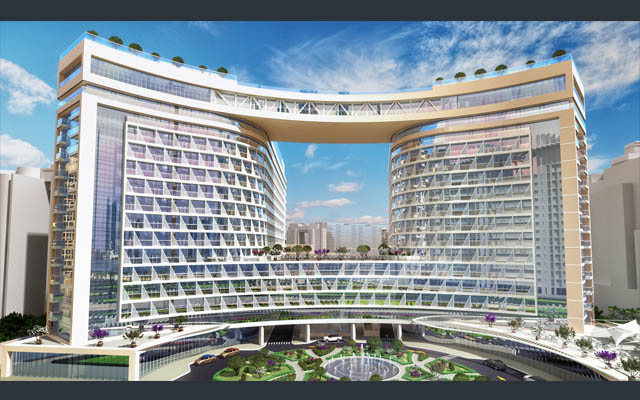
NH Collection Dubai The Palm will launch in February 2023

Located along Doha’s eastern coast, the property is midway between the city centre and Hamad International Airport, with easy access to attractions such as Souq Waqif, Westbay and Doha Corniche.

In the UAE, NH Collection Dubai The Palm will launch in February. The 14-storey hotel will feature 227 rooms and 306 suites, five dining outlets, rooftop pool, spa, gym, meeting rooms, kids’ club, and beach club. Situated on Palm Jumeirah next to Nakheel Mall, nearby attractions include Burj Khalifa, Ain Dubai, Dubai Marina, the Dubai Mall and the recently opened Museum of the Future.

The 265-room NH Collection La Suite Hotel Dubai will offer accommodation options such as guestrooms, suites and one-, two- and three-bedroom apartments. Facilities comprise an all-day dining outlet, lobby lounge, kids’ club, meeting spaces, gym and recreational spaces. The property will be operated by Minor Hotels from 1Q2023 before undergoing an extensive renovation to launch later in the year with the NH Collection flag.

Rezio integrates with Google

0

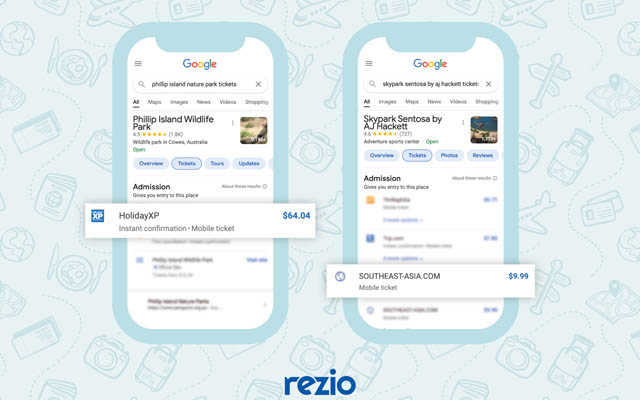
Online booking system rezio has launched a new integration with Google, allowing its operators to show ticket booking links directly on Google Search.

This new function makes it easy for users to click through and book tickets and tours directly on suppliers’ websites. Free ticket booking links allow suppliers to show their offers to potential customers without needing to take part in paid advertising campaigns.

rezio’s integration with Google allows its partners to show ticket booking links directly on Google Search

rezio has been empowering attractions, tours and activities operators to digitalise their business during the pandemic, and will now also enable tour operators to claim, create and power their “official site” booking button by driving customers directly from Google Search results.

Through rezio’s all-in-one system, operators will now be able to expand their channels as well as take control and manage their product, prices, distribution and marketing.

rezio offers more than 30 global payment methods, and allows merchants to create their products in seven different languages.

Eased entry for Chinese visitors brings inbound hopes to Macau

0
The revamped Macau Grand Prix Museum features the new Formula 3 simulator offering interactive and close-to-reality racing experiences

Macau tourism players are anticipating a more vibrant year-end holiday season as access for visitors from Shanghai and the provinces of Guangdong, Zhejiang, Jiangsu and Fujian improves on the back of a new e-visa process.

The e-visa system was activated by China’s immigration bureau on November 1.

Macau Grand Prix Museum has several new attractions for travellers returning to Macau

Travellers entering Macau from China are not required to serve on-arrival quarantines, but must have a negative result to show from their nucleic acid test taken 24 or 48 hours prior to arrival via Zhuhai-Macau checkpoints.

“This is obviously a very positive signal for a gradual recovery in visitation, especially from these key provinces and municipality,” said Sands China’s senior vice president of hotel operations, Kris Kaminsky.

Kaminsky added that the eased entry may even drive the return of business events to Macau.

“We hope to see a more well-rounded mix of visitation building up toward the end of the year,” he said.

China Travel Service (Macao), travel department sales and marketing manager, Pun Cheng-man, said the e-visa system came into effect at a good time. His Chinese agent partners have been tipping him off on readiness among their customers for group and FIT travel to Macau.

“Despite the recent spike in Covid-19 cases in Guangdong province, we remain optimistic because events, like the Macau Grand Prix, were quickly resumed. The event was held in just two short days for the local audience last year. This year, however, it is back to normal and will welcome international racers and audience with open arms this Thursday (the race will be held from November 17 to 20),” said Pun.

Returning Chinese visitors will discover plenty of fresh draws in Macau. Attractions that were recently launched include an AR experience at the Old Taipa Village and Coloane; a new Formula 3 simulator and two new AR interactive games at the Grand Prix Museum; and Studio City’s four-storey Super Fun Zone.

Kaminsky pointed out that November and December are the “best time of the year in Macau”, with activities offered through events like the Macau Grand Prix, Macau Food Festival and Christmas celebrations.

Sands China itself will launch the Londoner Light and Sound Spectacular at The Londoner Macao in early December, part of the programming for Macao Government Tourism Office’s Light Up Macao 2022.

“All these attractive offerings, from accommodation packages and retail promotions to entertainment, superb dining and Christmas decorations, will craft a dreamy winter escape for mainland China visitors,” said Kaminsky.

According to Macao Government Tourism Office, the destination registered about 4.36 million visitors between January and September 2022, with China contributing 3.9 million visitors.

InterContinental hotel in Chiang Mai to welcome travellers in 2023

0

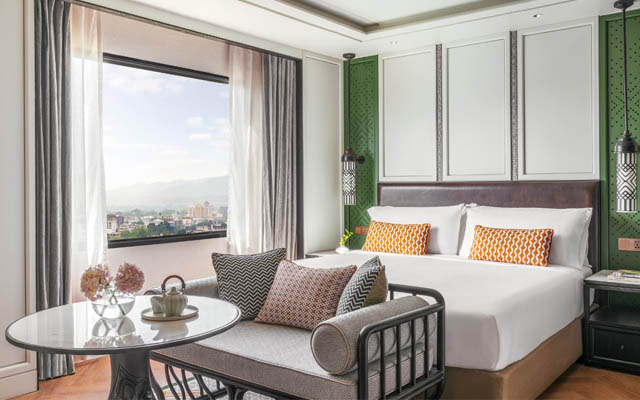
InterContinental Chiang Mai Mae Ping will open its doors mid-2023 – the hotel is part of the strategic partnership between IHG Hotels & Resorts and Thailand’s real-estate group, Asset World Corporation (AWC).

Previously the Imperial Mae Ping Hotel, InterContinental Chiang Mai Mae Ping is centrally located and surrounded by Chiang Mai’s iconic landscapes, offering guests connectivity to nature and the city’s walking streets, night bazaar and the historic Tha-Pae Gate.

InterContinental Chiang Mai Mae Ping will open its doors mid-2023

When the first phase of renovations is completed, the property will feature 240 rooms and suites, all with zen bathrooms that include a plunge bathtub and separate shower.

Guests will learn more about the indigenous Lanna culture through curated culture-centric activities, such as traditional toy and umbrella-making classes and pottery workshops. There will also be a variety of children’s activities available through the brand’s signature Planet Trekkers programme.

F&B options comprise five restaurants and bars, including a rooftop bar, all-day-dining restaurant, lobby lounge and more. There are also event venues such as a ballroom and central lawn.

Air India joins AAPA

0

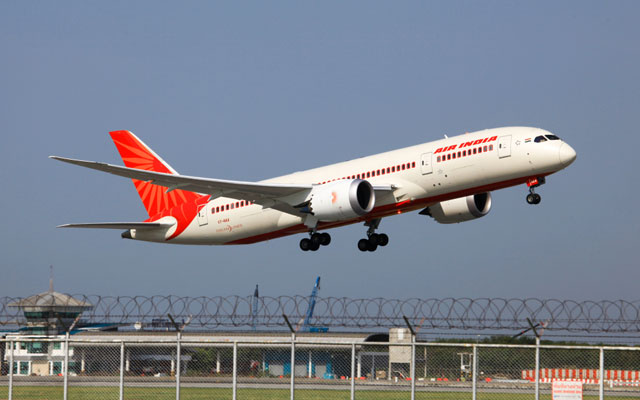
Air India, the national airline of India, has joined the Association of Asia Pacific Airlines (AAPA) as a member with immediate effect.

Air India is the first Indian airline to join the association, having operated its first flight in 1932 in India – one of the largest civil aviation markets in the world.

Air India is the first Indian airline to join the Association of Asia Pacific Airlines

AAPA’s director general Subhas Menon said: “The airline will add considerable weight to the international aviation discourse undertaken by AAPA on behalf of Asia-Pacific airlines.”

Vibe appoints new business development manager

0

UK-headquartered booking technology solutions company Vibe has appointed Graham Whyte as business development manager, APAC.

In this new role, Whyte has been tasked with leading the company’s expansion in Australia, New Zealand and Asia-Pacific.

Whyte has over 30 years of senior travel industry experience, including at Travelport and Virtuoso in Australia, New Zealand and the US. He was previously the regional commercial manager at Sabre.