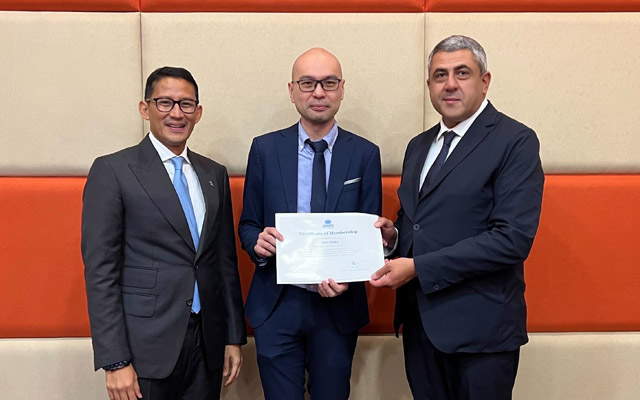
Traveloka has joined the United Nations World Tourism Organization (UNWTO) as an affiliate member, demonstrating its commitment to develop the region’s tourism industry by fostering responsible and sustainable travel.
The announcement was made during the UNWTO Conference held in Phnom Penh, Cambodia from June 15-17, 2023.
From left: Indonesia’s Sandiaga Uno, Traveloka’s Albert, and UNWTO’s Zurab Pololikashvili at the UNWTO Conference in Phnom Penh
As the only travel platform in South-east Asia to become an affiliate member of UNWTO, Traveloka is assessing challenges and highlighting opportunities as travel recovers, as well as emphasising strategic collaborations within the ecosystem, such as partnerships with local and regional governments.
By joining UNWTO, Traveloka will have the opportunity to engage directly with other affiliate members, advocate alongside tourism leaders and representatives from other member countries on the world stage, participate in high-level regional and international dialogues, and gain access to UNWTO’s insights on global tourism trends.
Welcoming Traveloka’s affiliation, UNWTO secretary-general Zurab Pololikashvili said: “Having the private sector’s support is crucial in promoting sustainable tourism and achieving Agenda 2030 for sustainable development. We firmly believe collaborating with Traveloka will significantly contribute to developing a more sustainable global tourism sector.”
With a presence in six South-east Asian countries, Traveloka aims to accelerate the sustainable revitalisation of the region’s tourism industry.
Albert, co-founder of Traveloka, shared: “We are a platform that consistently prioritises innovation and strategic partnerships, and we believe we can drive sustainable tourism growth through technological breakthroughs and global collaborations. We hope that this initiative will also inspire tourism stakeholders in South-east Asia to contribute to the sustainable growth of international tourism.”
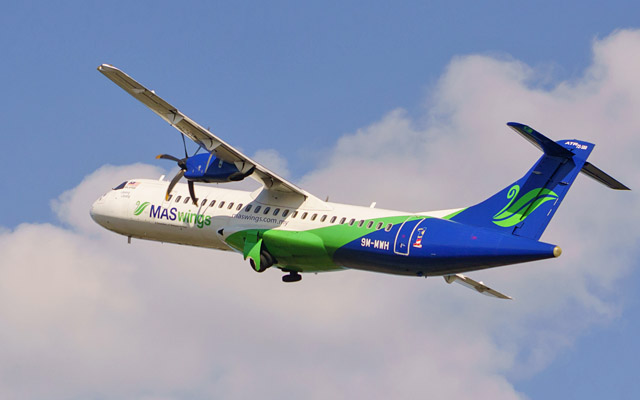
Sarawak has agreed in principle to take over MASwings, a subsidiary of Malaysia Airlines, as a means of setting up its own boutique airline and improving air connectivity with Sarawak.
The takeover was proposed by the federal government, stated Sarawak premier Abang Johari Openg, who added that negotiations are currently ongoing.
Sarawak aims to take over MASwings in order to set up its own boutique airline and improve air connectivity
Sarawak plans to use local state-owned charter operator Hornbill Skyways (Kuching) to operate the new airline’s fleet of turboprop aircraft to connect Sarawak with Kuala Lumpur, Singapore, Hong Kong, Bangkok and several airports in Indonesia.
Earlier in April, Malaysia’s prime minister Anwar Ibrahim had agreed to the Sarawak state government’s request to form a boutique airline to fly to destinations beyond Borneo.
However, deputy transport minister Hasbi Habibollah revealed in Parliament on June 12 that Sarawak’s application in early April was incomplete and that the Ministry of Transport, through the Malaysian Aviation Commission ,will examine and consider the proposal after a completed application is submitted to the federal government for consideration.
Marketing In Asia reported that a decision on the possible rebranding of MASwings after the takeover remains uncertain – more details will be provided once the takeover procedure concludes.
This summer, millennial and Gen Z travellers across Asia-Pacific are embracing their inner culture vultures and seeking inspiration from their travels, revealed Klook. In fact, one in four of these travellers actively search for inspiration in their journeys.
Unveiling insights into the vibrant travel motivations of these demographics for this season, Klook’s vice president of global marketing, Marcus Yong, shared: “More than half (53%) of millennials and Gen Zs are ready to travel abroad this summer, and they are looking to make their summer holidays more colourful and memorable through inspiring experiences.”
Millennials and Gen Z travellers search for inspiration in their journeys
When planning a holiday, many travellers focus on practical details such as accommodation, transportation, and a well-planned itinerary. However, one aspect that is often overlooked is the power of using colours and the feelings they can evoke.
This summer, the colour purple takes centre stage as the symbol of inspiration, with millennials and Gen Zs eagerly embracing cultural experiences to find inspiration during their travels.
“Traveling is a gateway to self-discovery and personal growth, with a growing trend among millennials and Gen Zs seeking inspiration through immersive experiences. They crave connections with diverse cultures, artistic expressions, and the inspiration that the world offers,” said Yong.
Travellers find inspiration by being out in nature and through exploring a city. Millennials (49%) prefer being out in nature compared to Gen Zs (39%), who lean towards city-based activities. One-third of these travellers are interested in immersive experiences such as museum visits and art jamming workshops, with Klook seeing over 30% increase in bookings for these cultural activities in 2023 compared to end 2022.
When it comes to regional differences, travellers from Hong Kong (44%) are most likely to find inspiration by hitting the concrete to get to know a city better while travellers from the Philippines (55%) are more drawn to the outdoors and nature. Some of the top outdoor experiences across Asia-Pacific include island hopping and boat tours, strolls through botanical gardens and canopy walks.
When it comes to making this summer holiday one to remember, colour can play a big role in shaping travellers’ experiences.
According to principal psychologist Geraldine Tan from The Therapy Room, colour can influence travellers in subtle but significant ways, affecting their mood, behaviour, and overall enjoyment of their trip.
“The colours and environments we come across during travel can strongly affect our emotional state and influence our actions, making us more inclined towards certain activities. On a beach vacation, the cool colours of the ocean and sky might help travellers feel more free and calm, and be more inclined towards relaxing activities – or, when they visit a bustling city, the bright colours might make them feel energised and excited, and more inclined to take part in hands-on experiences,” she explained.
By understanding and utilising colour psychology principles, travellers can chase that perfect summer vibe and create unforgettable memories.
Here are some ways in which travellers can use colour psychology to hack that holiday feeling they are after.
Seek blue for freedom Blue evokes a sense of freedom and limitlessness. 52% of travellers across Asia-Pacific associate the colour blue with the feeling of freedom during their summer journeys, with top holiday activities being beach days and road trips. In 2023, road trips are one of the most sought-after activities, with car rental bookings growing more than a third since the start of the year.
Embrace purple for inspiration Purple symbolises inspiration and creativity. It sparks the imagination and encourages exploration of new experiences. The top destinations with travellers searching for inspiration through cultural activities this summer are Vietnam (33%), Singapore (28%) and Thailand (28%).
Find peace in green for relaxation The colour green is often linked to nature, which is known to bring about healing and renewal, and can evoke a sense of peacefulness. Travellers from Singapore (60%) and the Philippines (57%) seek relaxation through wellness-based activities such as a spa session, while travellers from Taiwan (32%) and Thailand (30%) find it through nature-based physical activities like hiking instead.
Discover joy in orange Bright colours like orange evoke feelings of joy, happiness, and optimism. While joy is a significant holiday feeling for 47% of travellers across Asia-Pacific, the experiences that bring them joy vary. Gen Zs prefer seeking joy through the adrenaline of theme parks (46%) compared to millennials (32%), who find more delight in being outdoors in nature.
Air Canada will expand its international network with the addition of non-stop flights between Vancouver International Airport and Singapore’s Changi International Airport.
The new route will operate four times weekly beginning April 3, 2024 onboard Air Canada’s flagship Dreamliner fleet, which features three cabins of service including Signature Class with lie-flat seats, Premium Economy and Economy Class.
Air Canada will fly four times weekly between Vancouver and Singapore from April next year
The airline will fly from Vancouver to Singapore every Monday, Wednesday, Friday and Saturday, while the Singapore-Vancouver service will operate every Tuesday, Thursday, Saturday and Sunday.
Customers of Aeroplan, Canada’s leading loyalty programme, can collect and redeem points when travelling with Air Canada. Eligible customers will also have access to priority check-in, Maple Leaf Lounges, priority boarding and other benefits including Air Canada’s Signature Suite at Vancouver International Airport.
Palace Hotel Tokyo has launched a new stay package, Sustainable Tokyo, highlighting local, environmentally considerate elements and excursions alongside omotenashi (Japanese hospitality).
The two-night stay package features recreational activities on land and water and an introduction to kintsugi, the art of beautifying imperfections in pottery in the spirit of mottainai – a Japanese philosophy rooted in reducing waste by not discarding objects until they have been utilised in every imaginable way.
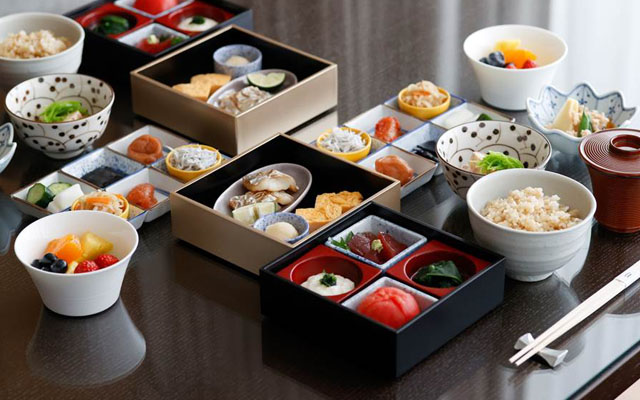
Guests can enjoy a bento-style Japanese breakfast made from sustainably-sourced ingredients served right to their room
Guests have the option of a prix-fixe dinner at the hotel’s Japanese restaurant, or a 75-minute spa treatment.
Additional package elements available include a stocked in-room minibar, full-sized amenity set, in-room breakfast service, and a souvenir wooden guestroom key card.
Guests can also request activities at additional charge, such as a two-hour introduction to the history of kintsugi followed by a hands-on experience; a two-hour jogging tour or three-hour cycling tour around the Marunouchi district and surrounding Imperial Palace gardens; or a 90-minute kayaking excursion along the Sumida River.
Sustainable Tokyo can be booked for stays between June 15, 2023 and May 31, 2024.
Prices start from 371,000 yen (US$2,624) for two pax, with five per cent of net proceeds from the package going to The Nature Conservation Society of Japan.
Hilton Melbourne Little Queen Street is celebrating the winter season by partnering French Champagne house Pommery to transform its King Deluxe room into a winter wonderland with the addition of candles, fairy lights, and white fur-lined walls.
Champagne lovers seeking a luxurious and cosy winter escape can enjoy an overnight stay in a King Deluxe Room, with breakfast for two at the hotel’s restaurant, two limited-edition Pommery infused cocktail creations at the bar, Pommery embroidered sustainable slippers, a bottle of Pommery Apanage Blanc de Blancs NV, and access to the Queen Adelaide Lounge.
The Winter Wonderland package is available from now to August 31
Book the Hilton Melbourne Little Queen Street Pommery Winter Wonderland package from now to August 31. Prices start from A$444 (US$302), with dining upgrade options available.
Anantara Bophut Koh Samui Resort has appointed Thomas Boehringer as its general manager.
Boehringer brings with him extensive luxury hospitality knowledge and experience, and will manage the overall operations of the property in his new role.
He was previously resort manager of Anantara Kihavah Maldives Villas.
To reduce its environmental footprint, raise green standards industry-wide, commit to achieve net-zero emissions and eventually become a circular business, TUI Hotels & Resorts has published recommendations for the first time for its hotels and hospitality partners.
The Green Building Guidelines provide guidance on construction and refurbishment projects for its stakeholders to shape a more sustainable future for tourism collectively.
In line with TUI’s goal to reduce emissions from its hotel business to zero by 2030, the focus on sustainable construction is crucial as it is an important tool for saving energy and reducing carbon dioxide emissions from hotels.
Reviewed by external experts, the guidelines contain the most important aspects for reducing environmental impact and achieving savings in water and energy consumption. They also cover topics such as monitoring systems, sustainability certification and stakeholder communications.
“We are pleased to see our guidelines promoting sustainable construction decisions around the world. They bring together proven measures and the expertise of our sustainability and construction experts for all our hotel brands. Our hotel partners, architects, engineers and contractors can benefit from this knowledge and commit to using the guidelines as they develop hotels for a more sustainable future,” said Jessica Kuthe, director portfolio management, TUI Hotels & Resorts.
To date, TUI hotels have already started implementing measures from the Green Building Guidelines, particularly in the area of energy savings.
For instance, TUI’s long-standing joint venture partners RIU, Atlantica and Grupotel have increased the number of their photovoltaic systems in Spain, Cape Verde and Greece.
In Italy, the Robinson hotel brand operates one of the largest photovoltaic plants of any hotel in Europe and was awarded the coveted DGNB Platinum certificate for a sustainable building project on Fuerteventura.
The Green Building Guidelines also support TUI Group’s Sustainability Agenda which aims to massively reduce the company’s environmental footprint.
By 2030, given its current eco-friendly trajectory, TUI Hotels & Resorts’ emissions are already set to be reduced by almost half (46.2 per cent) compared to 2019 – the targets have been confirmed by the independent Science Based Targets initiative (SBTi).
TUI is determined to raise the bar and work towards reduction of its hotels’ carbon dioxide emissions to zero by the same year.
Important levers to achieving the target are renewable energy and resource-saving processes, with sustainable buildings making an important contribution to these environmental protection efforts.
Headquartered in Germany, TUI Group is a leading global tourism group with over 400 hotels and resorts under its premium brands such as RIU, TUI Blue and Robinson, as well as 16 cruise ships. The Group also includes leading tour operator brands and online marketing platforms across Europe, five airlines with more than 130 modern medium and long-haul aircraft and around 1,200 travel agencies.
Keen to find out how you can green your hospitality business? Download the Green Building Guidelines here.
Find out more information on TUI Group’s Sustainability Agenda here.
The first Wyndham Hotel in Singapore is slated for a soft opening in early July 2023 and marks Wyndham’s commitment to expand its presence in the city-state (rendering)
The first Wyndham Hotel in Singapore is slated for a soft opening in early July 2023 and marks Wyndham’s commitment to expand its presence in the city-state (rendering)
Wyndham Hotels & Resorts will launch its flagship Wyndham brand in Singapore with Peninsula Excelsior Singapore. The 591-key Wyndham Hotel is slated for a soft opening in early July 2023, and marks Wyndham’s expanding presence in the city-state.
Following the completion of a multi-million-dollar refurbishment, the hotel will officially debut as the Wyndham Singapore at its grand opening next year.
Wyndham Singapore
1 of 2
The hotel features spacious twin bedrooms (rendering)
The twin bedrooms are equipped with bathtubs (rendering)
In line with Wyndham’s brand promise, the flagship property features an impressive range of facilities such as a fitness centre, sauna, two swimming pools, executive lounge for club floor guests and four multi-functional rooms to meet the needs of both leisure and corporate travellers.
Overlooking the city-state’s renowned skyline, the hotel also boasts sweeping views of the Marina Bay and Singapore River, as well as the tranquil greenery of Fort Canning Hill.
When guests step out of the hotel, they will find themselves in Singapore’s Civic District – the birthplace of the city-state’s historical, architectural, and cultural heritage – with the nation’s most iconic buildings including Victoria Theatre and Concert Hall, Old Parliament House, The Arts House, and the Padang all within walking distance.
The hotel is also well-connected with transportation options, and within close proximity to the City Hall MRT station where guests can travel to various tourist spots such as Marina Bay, Chinatown, and Little India with ease by rail.
Strategically located within a five-minute walk to the famed Marina Bay Street Circuit, guests will be able to enjoy the sights and sounds of the Singapore Grand Prix, happening every September, and immerse themselves in the racing fervour and action.
Wyndham Singapore is also just a stone’s throw away from major shopping malls such as Funan Mall, Raffles City, Suntec City, and is well-positioned to be an ideal accommodation of choice for tourists in town for the annual Great Singapore Sale.
The hotel will also benefit from Wyndham’s wider distribution systems and connection to approximately 100 million Wyndham Rewards members globally. Additionally, the property will gain access to Wyndham’s commercial and operational expertise and unlock potential in revenue growth through Wyndham’s extensive network of preferred partnerships, affiliations, and distribution channels across Asia-Pacific.
On the significance of the Singapore market, Matt Holmes, vice president of business development South-east Asia & the Pacific Rim, Wyndham Hotels & Resorts, said: “Being a major hub and gateway city to the rest of South-east Asia and the world, Singapore plays a significant part in Wyndham’s regional growth strategy and its intention to fulfil its commitment of providing guests with best-in-class accommodation options across the region. This opening further illustrates our growth momentum in the region and builds upon our strong pipeline of recent signings and openings. We will continue to pursue suitable conversion opportunities in strategic markets across Asia-Pacific.”
Find out why Peninsula Excelsior Singapore, a Wyndham Hotel, is ideal for both leisure and business traveller here.
Bali regional government has recently released a new set of regulations for international travellers in response to the increasing cases of delinquent behaviours exhibited by tourists on the resort island.
In the circular issued on May 31, Bali governor Wayan Koster has listed a number of obligations and prohibitions for tourists while on the island. Strict actions including sanctions and legal actions will be taken against those who violate the regulations.
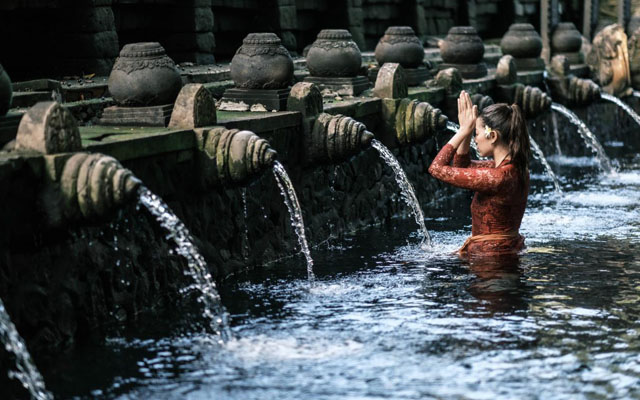
The new guidelines include rules that tourists dress appropriately and behave respectfully at temples and all public areas; a girl performing a spiritual cleansing ceremony known as melukat, pictured
Top of the list is that tourists should respect the sacredness of temples, religious effigies and other holy religious symbols, and be dressed appropriately when visiting these areas. Visitors should be dressed properly at tourist attractions and public areas – respectful behaviour should also be observed at all public areas.
Tourists are barred from entering the main part of a temple, and are not allowed to climb sacred trees or perform actions that desecrate sanctified places and religious symbols.
Gde Pitana, a former deputy minister at the Ministry of Tourism and Creative Economy and a Balinese Hindu priest, was involved in drafting the new regulations. He explained that they are aligned with the roadmap for responsible travel, which aims to develop Bali as a sustainable cultural destination based on Balinese Hindu principles while also benefitting the environment.
He added that the “dos and don’ts list follows the culture tourism code of ethics issued by UNWTO”.
Pitana clarified that the regulations do not entirely ban tourists from participating in cultural and religious events, such as the melukat (spiritual cleansing ceremony) or the ogoh-ogoh parade (before Day of Silence).
He shared that tourists can still join in as long as “they follow the rules and regulations that apply, such as dressing appropriately and respecting the customs, traditions, and local wisdom of the Balinese people during ongoing ceremonial processions and rituals”.
In response to the government move, Indonesian travel trade players TTG Asia spoke to agreed with the do’s and don’ts but felt that it will require firmness from the government to implement it.
Paul Talo, chairman of The Indonesian Inbound Operators Association, said: “(Such delinquent behaviours) happening right now is the result of the lack of law enforcement from the authorities. The new guidelines are only a reminder of the existing rules – the content is indeed stricter but if law enforcement remains minimal, violations will (continue) to occur.”
Paul urged the police and authorities to take strict and uncompromising action against lawbreakers, regardless of their nationalities.
Rahman Mukhlis, chief operating officer of Main Outdoor, encouraged the government to promote the detailed guidelines in social settings so as to avoid a misunderstanding that the new regulations constitute a travel ban – instead, they should emphasise that the guidelines are a way to protect tourists while preserving nature in Bali.
In addition, Rahman hopes that the government will involve more travel operators, including guides who are at the forefront, to remind tourists about the new regulations.






 He was previously resort manager of Anantara Kihavah Maldives Villas.