TTG Asia
Asia/Singapore Wednesday, 14th January 2026
Page 549

Temper expectations for return of China

0

China announced this week that it would scrap quarantine for foreign arrivals from Jan 8, 2023. It is big news, as China has maintained a strict zero-Covid regime for almost three years, cutting traffic past its borders down to only absolutely necessary cases.

Many in the travel and tourism industry expect China’s reopening to begin some time in 2023, with different opinion leaders projecting different points in the year.

The giant returning to the travel and tourism party is certainly progress, but the impact on business will take time to show. Flights have to return and airfares stabilised enough to not make an average man weep. A quick search on Google for a Singapore-Beijing roundtrip on January 9, a day after quarantine barriers are removed, shows up economy fares of S$3,005 and up.

Manpower must be brought back to handle the wave of travel enquiries, passport renewals, visa applications, passenger traffic and all necessary procedures to make travel possible for the Chinese.

And with China battling fresh waves of Covid infections now, destinations may not see the throng of Chinese travellers they have dreamt of for three years come Jan 2023. Dampening initial recovery are also moves by governments elsewhere to restrict Chinese entry out of infection fears – Japan, Taiwan, Malaysia and Italy are stepping up surveillance. India too, but not just for arriving Chinese travellers. News reports state the US and the Philippines are considering the same as well.

But hey, the world has waited three long years for big market China to return to travel. We can afford to wait a little more for it to find its footing.

On the way up

0

How would you describe the global appetite for travel throughout 2022, and how do you expect that to continue into 2023?
This has been an interesting year. 2021 started off terribly depressed but started recovering toward the second half of the year. We started 2022 at about 50 per cent recovered and it has been pretty linear all year. I expect we will exit this year on a strong pace, at about 70 per cent or so compared to 2019.

Demand is outstripping supply right now. The demand and supply curve is inverted for the first time in a very long time. Our current shopping data shows we are well over 100 per cent of 2019’s.

Airlines did such a good job streamlining their fleet and workforce during the pandemic that now there are staffing issues. That has pushed prices up. We will go into 2023 with airlines continuing to bring on staff and aircraft, and grow air supply.

Of course, staffing issues exist across the industry and are not limited to airlines.

Will this strong pent-up travel demand hold up against a recession?
Even if we were to see some recessionary type of activity in 2023, we doubt it would have a big impact on travel recovery.

Signs of recession will show in the prices, be it hotel rates or airfares. You will know when you see prices drop. (Despite warnings of inflation and recession,) every sector has been able to hold prices the past year or so because consumers are willing to pay more to get back to travel.

It is a hot topic now – China is rationalising its Covid strategy but it is anyone’s guess how much more changes will come and how quickly. How do you expect the return of Chinese travellers to impact global travel and tourism supply, and are suppliers ready for them?
First of all, we are very excited about the idea that China will begin to ease restrictions. China’s restrictions on travel have significantly impacted all of Asia’s travel recovery, which is behind the rest of the world. A lot of that is due to the absence of Chinese travellers, who make up a significant portion of the Asian population.

Well, I don’t know if travel and tourism suppliers are ready if China goes from zero to hundred miles per hour, meaning if China lifts all restrictions at once for inbound and outbound.

Singapore feels pretty busy right now despite the fact that there are no Chinese travellers. Normally, China makes up a significant portion of inbound visitorship to Singapore. Imagine all that China demand returning on top of the current traffic. I don’t think a lot of places in Singapore are ready for that.

However, when China resumes travel and starts to allow visa and passport applications, it will experience some of the same struggles we had in other regions in terms of supply and demand.

China is now battling waves of fresh infections and healthcare challenges as it exits from its zero-Covid policy. That would impact travel demand. Can the world afford to deal with another few months or a year of no Chinese travellers?
The worldwide travel economy is able to absorb the fact that this (the return of the Chinese) may take a while. We are seeing significant load factors across all regions and hotel occupancy rates are climbing. It is still sustainable without the Chinese, but we would like to see the whole world being able to travel without restrictions.

Could you identify top two or three global trends that would benefit Asia-Pacific travel and tourism in 2023?
We have seen very strong domestic travel in India, and that has boosted the travel economy.

We are also seeing an ongoing push for luxury travel. Destinations like the Maldives and Bali have rebounded fairly quickly as a result. I think continued marketing to the luxury travel segment will help this region rebuild tourism.

However, not all of the luxury travel demand is coming from the wealthy population. Many people have acquired savings throughout the pandemic from not being able to go out and spend on nice things. So, the initial rebound is led not just by high-end travellers but also general leisure travellers who have both pent-up travel desires and cash, and are eager to reunite with family and friends through a holiday together.

Another trend to watch is sustainability, which has gone from being a topic that was discussed but little was happening, to being discussed and a lot of things are happening. One of the big things we can do as an industry is to focus on setting standards. A big issue for sustainable travel today is the existence of multiple ways to measure. The exact same aircraft flying the same route could result in different emission calculations.

The industry must push for one transparent method to calculate carbon footprint, and communicate that to travellers so that they understand how their impact is measured. Doing so will encourage more travellers and suppliers to make better decisions about sustainability.

What must travel suppliers and retailers do to make the most of recovery opportunities in 2023?
They will need to focus on the travel experience. We talk a lot about modern retailing, where the traveller feels well-served across the process. Do they feel like they have the ability to make good buying decisions? Do they feel that their needs are catered to in a fashion that they prefer, be it online or via a person they can talk to?

Automation and technology have continuously been sounded as the solution for our industry’s painful staff shortage. Where do you see automation and technology serving the most use in our industry, and what more can travel retailers do in this area to be more efficient – and even more importantly, make more money with the smaller staff strength?
Pre-pandemic, a lot of money is spent by consumers on travel changes. Airlines have removed all those fees now. What used to be a financially painful process is now a lot easier, but we are still not at that place where it is a super simple process.

Travelport is therefore very focused on creating a simple and automated refund and exchange process that will allow travel agents to easily refund and/or exchange tickets for their travellers.

We are also focused on AI (artificial intelligence) and machine-learning-driven search capabilities. The airlines have done a good job differentiating their products to improve the retailing experience. As airlines differentiate their products more and more, we can no longer just identify the lowest fare. We will have to return a search criteria that is more honed to what the traveller is looking for.

Therefore, I think more intelligent searches as well as faster and more effective refunds and exchanges will help the industry.

Technology is helping with the current manpower shortage. That being said, it is not helping enough. Our industry is the world’s largest and one that makes up 10 per cent of the world’s GDP. We have got to find ways to get people back and interest them to be part of the travel ecosystem.


Promising outlook for China outbound market

0

China is reopening from January 8, 2023 and the co-authors of e-handbook 88 Practical Ways to Prepare for the New Wave of Chinese Visitors say “trusted destinations will be prioritised by many Chinese travellers in the first months”.

Check-in Asia CEO Gary Bowerman noted “patterns of choice could be similar to the late-2010s”.

Travellers from China have been researching and planning their trips for three years

Bowerman continued: “Popular vacation destinations will likely include Japan, South Korea, Australia, Singapore, Thailand, Bali, Maldives, maybe Sri Lanka, plus neighbouring countries like Laos and Vietnam.”

The first wave will also comprise VFR (visiting friends and relatives) travel to North America and Europe, he added.

Seasonality will be an important factor in choosing a first vacation destination, as will flight availability, cost and ease of access related to the visa situation.

Bowerman warned that countries that make it difficult for Chinese to enter would likely get overlooked.

China Outbound Tourism Research Institute (COTRI) founder and director Wolfgang Georg Arlt observed that Chinese tourists were better informed than ever.

Arlt said: “The Chinese have had three years to dream about travel, participate in virtual tours and have researched carefully the destinations that interest them. They will know exactly what they want and – very importantly – what they don’t want from their first overseas trip in three years.”

He added: “Chinese tourists will be determined to visit new locations, smaller cities and will be more interested in immersion in local culture and meaningful tourism.

“Everything will be about the ‘backstory’ – how Chinese tourists can go beyond the obvious to penetrate the deeper cultural narratives that will bring alive their travel experiences and, of course, photos and videos.”

The COTRI chief noted that expectations of technology-enabled convenience will surprise unprepared destinations, and understanding how advanced Chinese consumer tech had become over the past three years would be a big challenge.

Destinations, Arlt advised, should also be prepared for some Chinese travellers spending a little more frugally than in pre-pandemic years.

With the rollercoaster development of China in recent few weeks, China outbound forecasts will be subject to frequent revisions.

At press time, COTRI forecasts 58 million outbound trips (excluding Hong Kong and Macau) in 2023.

The first quarter of 2023 will almost exclusively comprise non-leisure trips, while 2Q2023 will see the start of leisure tourism despite problems with passports, visas and air ticket prices and an increase in 3Q2023 with partial solutions.

COTRI also predicts that 4Q2023 will see a “normal seasonal decrease evened out with more business events, including fairs, the disappearance of passport and visa problems, lower air ticket prices and the first special discount offers”.

Travellers planning more trips with family and friends: Agoda

0

Four out of five travellers will take a vacation with immediate family in the next 12 months, revealed Agoda’s Family Travel Trend survey 2022, conducted in partnership with YouGov.

The survey polled 10,000 travellers aged 18 and above from across Australia, Singapore, Malaysia, Indonesia, Thailand, Indonesia, the Philippines, Japan, Vietnam, Taiwan, South Korea, and the US.

Planning trips with friends is a popular choice among travellers from the Philippines, Vietnam and India

While travelling with friends proves more popular than travelling with extended family, 52% are keen to catch up with relatives for their vacation.

Travellers from Singapore (61%), Taiwan (61%) and Vietnam (59%) are most likely to take at least one trip with immediate family, while the Philippines (47%), Indonesia (40%) and Malaysia (35%) are most likely to plan two or more family jaunts in the coming year.

As for trips with friends, travellers from Australia only ranked ninth, knocked off the top spot by those from the Philippines, followed by Vietnamese and Indian travellers.

Value hunters
When it comes to travelling with families or in a group, travellers worldwide are seeking more value for their trips with Budget Hotels, Agoda Homes vacation rentals and Inclusive Resorts cited as the top three group travel preferences.

Family travellers often have more complex requirements when choosing their holiday accommodation – more space, cooking facilities, or child-related services such as babysitting, extra beds or interconnecting rooms.

Travellers from the Philippines (59%), India (44%) and South Korea (38%) showed a high preference for budget friendly hotels, while those from Indonesia (42%), Malaysia (39%), and Taiwan (38%) preferred vacation rentals which tend to offer additional facilities such as kitchens or separate living and sleeping areas.

This is in contrast to almost half of Japanese travellers (43%) who favoured chain hotels as their accommodation of choice and 34% of Thai travellers who leaned towards the convenience of all-inclusive resorts.

Border closures continue to concern travellers
Despite travel optimism and growth outpacing pre-Covid levels, 77% of travellers globally indicate some concern about international borders closing again while they are overseas. Travellers from most recently opened markets including South Korea and Japan are most concerned, in comparison to those from markets that quickly removed border restrictions including the US, Australia and India.

Japan tightens border controls for Chinese arrivals

0

Spikes in local Covid-19 infections across Chinese cities have led Japan to tighten its border controls for travellers arriving from China from December 30.

All travellers from China, including Japanese citizens and residents, as well as those who have been to China within the previous seven days will be tested for Covid-19 upon their arrival in Japan. Positive cases will be directed to a seven-day quarantine at designated facilities. Asymptomatic cases may be allowed to serve a shorter five-day quarantine should they test negative on the fifth day.

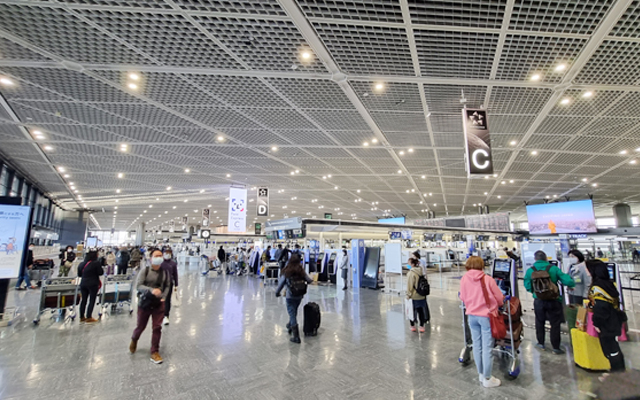
Travellers from China, Hong Kong and Macau are only permitted to enter from four Japanese airports, including Narita International Airport (pictured; photo by Karen Yue)

The announcement from Japanese prime minister Fumio Kishida on December 27 followed news of China’s decision to scrap quarantine for inbound travellers from January 8, 2023 – a move that will trigger travel for both foreigners and Chinese residents.

Flights from China will also be restricted, while arrivals from China, Hong Kong and Macau will only be permitted through Narita, Haneda, Kansai and Chubu international airports.

According to news reports, Kishida said the measure would only be temporary to prevent infections in Japan, and that the authorities would continue to monitor Covid-19 developments in China.

Asia in focus

0

Which international markets are your best performing markets, and how are you growing your market share in markets that don’t really use Trip.com?
Pre-Covid, we were aggressively expanding in two areas – Asia and Europe. For Asia, the countries are Japan, South Korea, Singapore, Hong Kong, Thailand and Malaysia, while in Europe they were UK, France, Italy, Spain and Germany. Our fastest-growing market right now is Thailand, and we have seen a great growth in South Korea as well.

Trip.com has a very different philosophy for branding and marketing, and we believe in a very focused, targeted approach. We look at a couple of factors when it comes to branding. First, we consider whether our product market fit is ready for each market. We assess that by looking at the organic growth through a certain percentage of market share, which differs from market to market. Once you attain that market share, it is an indication that your product is being adopted by the market on a natural level, and that is when we start amplifying our branding efforts.

What region is Trip.com’s focus moving forward?
Asia will be what we’re focusing on. It is the most important region for Trip.com, and we need to increase our market penetration, and understand how we can dominate in the OTA space. We have the right people, the right team structure, and with Asia’s current rate of recovery, we also have the right timing. We want to be the number one player in this space in a couple of years.

How has your sales performance been during recent online sale seasons like 11.11 and 12.12? Were sales on those days particularly high?
The 3.3 sale in Singapore this year was the very first one that we ran. It was well received, and we were pleasantly surprised with the response. With that, we started getting into a rhythm and having more frequent sale campaigns, and also increased the frequency from once in two months to monthly. Singapore was the first trial in March this year as it was a market that was ready for such campaigns, with the loosening of the travel policies. We also looked at the policy progression in other markets, and tailored the sale campaigns to each market accordingly.

Sale campaigns are further localised for each market. For instance, we ran a Pay Day campaign in Thailand, which focused on attractive 9 Baht travel deals. This is a combination of the local cultural understanding of 9 Baht being a good discount, as well as pay day, which worked really well for Thailand.

With the recent lifting of restrictions in China, does Trip.com anticipate more domestic travel and movement?
We are cautiously optimistic about the Chinese market, and we are looking at the upcoming Lunar New Year as the first indication on how ready people in China are to travel. If there are signs of recovery, then we will be more hopeful about the situation for the upcoming spring travels.

What trends do you see in the travel OTA space?
For one, we think there will be a lot of regionalisation in travel. People have been cooped up for two years, and domestic travel can only go so far. But with current geo-political conflicts, there will be an increased desire for rational, financially-sound travels, which will most likely be to nearby countries.

For example, in Asia, we think that travellers will go on more regional, medium-haul trips, or weekend trips. Because in Asia, a majority of destinations are within a four-hour flight.

The second trend will be the anticipation of the China outbound, and we hope that it will happen sometime in summer 2023. And when that happens, travel patterns will then be tailored to this crowd and their behaviours. We are seeing user behaviours changing in China, especially with their e-commerce purchasing patterns. We think that travellers will be more value-driven due to the current economic conditions and their income.

What are some new initiatives to support travel suppliers that rely on Trip.com’s network?
We have been engaging with our partners a lot more and increasing our touchpoints with them, as we have a lot more data to support the recovery. We believe that product solutions will change, especially with the soon-to-happen China outbound travel, and are working with our partners on the right product offerings and pricing.

The second thing we have been doing is working closely with tourism boards and stakeholders to work on key messaging and branding for destinations to attract a traveller’s attention. Economic conditions in the future may not be ideal, so we also have to be smarter in targeting customers.

China to scrap Covid-19 quarantine for foreign arrivals from January 8

0

In a further move to loosen its strict zero-Covid regime, China will remove quarantine measures for foreign arrivals from January 8, 2023, requiring only a show of negative PCR test result obtained 48 hours ahead of entry to China.

The announcement was made by the National Health Commission online today.

Overseas travellers to China will no longer need to serve quarantine from January 8, 2023

Singapore to host GSTC Global Conference 2024

0

The Lion City will, for the first time, play host to the Global Sustainable Tourism Council (GSTC) Global Conference come November 13 to 15, 2024.

While this will be the first GSTC Global Conference for Singapore, the country is no stranger to sustainability-focused events. It hosted six significant gatherings in 2022 alone – CleanEnviro Summit Singapore; Ecosperity Week; World Cities Summit; International Solid Waste Association World Congress 2022; Institute of Electrical and Electronics Engineers (IEEE) ISGT – 11th International Conference on Innovative Smart Grid Technologies Asia 2022; and Greentech Festival Singapore.

Singapore was announced host of GSTC Global Conference 2024 last week in Spain

Edward Koh, executive director, conventions, meetings & incentive travel, Singapore Tourism Board: “Global Sustainable Tourism Council’s decision to hold their 2024 Global Conference in Singapore reflects our growing appeal as a global-Asia node for quality events with sustainability as a focus. Sustainability is a national priority for Singapore and our tourism sector.

“We are excited to see influential tourism stakeholders globally and in Singapore forge new partnerships and address critical issues in sustainable tourism at the event.”

GSTC Global Conferences typically draw the participation of international and regional tourism stakeholders involved in the development and promotion of sustainable tourism, from both the private and public sectors. The carbon footprint of the event and the travel of all attendees are also calculated and offset.

The last GSTC Global Conference was held in Seville, Andalusia, Spain, from December 12 to 15, 2022. It brought together 350 delegates from 61 countries, along with hundreds of online viewers.

Cape Fahn Hotel, Koh Samui welcomes new GM

0

Cape & Kantary Hotels has appointed Urs Aebi as general manager of Cape Fahn Hotel, Koh Samui.

He joins Cape Fahn Hotel, Koh Samui from Selina Serenity Rawai Phuket where he was also general manager.

Armed with his skills in accounting and cash-flow management, Aebi looks forward to working with the local team and suppliers to offer unrivalled service and facilities, as well as maintain the high standards of the hotel.

New resources on China’s impending reopening available next year

0

The China Outbound Tourism Research Institute (COTRI) and Check-in Asia (CA) will be running a webinar on Chinese Outbound Tourism in the Year of the Water Rabbit in 2023 on January 17, 2023 at 09.00 GMT.

This webinar will run in conjunction with the launch of an e-handbook that addresses the reopening of China and the next wave of Chinese outbound travellers. Titled 88 Practical Ways to Prepare for the New Wave of Chinese Visitors, the e-handbook was written by COTRI’s founder and director Wolfgang Georg Arlt and CA’s CEO Gary Bowerman, with the assistance of research expert Rong Zheng.

Arlt: new opportunities will emerge for travel providers offering customised services for carefully targeted market segments

Anita Chan, CEO of Compass Edge, a hospitality and online solution provider, will participate in the discussion on their latest insights and practical advice for adapting to the shifting demands and expectations of post-pandemic Chinese visitors.

Other discussion topics will include continuous research of travel and consumer trends across China over the past three years to help tourism stakeholders and governments, F&B, retail, journalists, public relations and marketing agencies, prepare for the new wave of Chinese visitors.

According to Bowerman, Chinese society – including the behaviour and demands of consumers and travellers – has changed dramatically in the past three years.

“These changes, both large and less pronounced, will influence the mindset and behaviour of Chinese travellers,” he said.

Arlt noted: “Many millions of Chinese are eagerly waiting for the moment when they can travel overseas once again for business, education, health, family reunions and leisure. Many new opportunities will emerge for travel providers offering customised services for carefully targeted market segments.”

He continued: “That said, tough challenges await travel operators planning to revive previously successful engagements with the Chinese outbound market. We are about to enter a radically new era of tourism, and this will require innovative new strategies.”

The authors said travel players “should prepare thoroughly for each individual segment because the scale of China’s outbound travel recovery could be faster and more diversified than anticipated”.

This is because many travellers are motivated to travel abroad as soon as possible for business trips, business events, education, health, VFR and “a long-coveted overseas vacation”, despite high air ticket prices and possible visa complications.