Sander Looijen has been appointed the new general manager at The Westin Resort Nusa Dua, Bali.
He brings a wealth of experience to the resort and will lead the to reach new heights of excellence in service, guest experience, and overall operational efficiency. He will also oversee event management at the resort’s adjacent, Bali International Convention Centre.
He was most recently cluster general manager at Sheraton Hong Kong Tung Chung Hotel and Four Points by Sheraton Hong Kong Tung Chung.
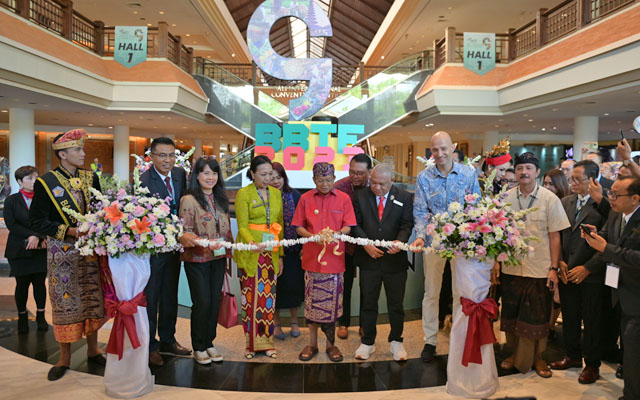
Bali is well on its way to economic recovery, according to governor Wayan Koster who spoke at the opening of Bali and Beyond Travel Fair 2023 last weekend – and tourism has been credited as a major contributor.
Bali’s economy had hit its lowest point in 2020 due to the Covid-19 pandemic, with a negative growth of 9.3 per cent. Things turned around in 1Q2023, with the regional economy recording a positive growth of 6.04 per cent, performing better than the national growth rate of 5.03 per cent.
Bali governor Wayan Koster (centre) at the opening of Bali and Beyond Travel Fair 2023
“More than 54 per cent of Bali’s economy depends on tourism; therefore, the recovery of tourism directly impacts Bali’s economy,” he said.
He added that international arrivals have improved, reaching more than two million by the end of the year as compared to just 500 in January 2022. With this, Bali has gained the “momentum to accelerate the growth of tourism”, he remarked, and urged continued tourism development in the destination that abides with government regulations while maintaining Bali’s culture-based, high-quality, and dignified tourism.
Koster said: “This requires the commitment of all stakeholders. I am also working towards tightening regulations regarding tourists’ inappropriate behaviour in Bali.
“I am also intensively developing tourism infrastructure because the infrastructure in Bali is still far behind (that of) Singapore, Thailand, and Malaysia.”
Meanwhile, Vincent Jemadu, deputy of product development and MICE, Ministry of Tourism and Creative Economy (MoTCE), has identified connectivity as one of the remaining challenges for tourism growth in Bali and Indonesia.
He said: “Domestic flights have only recovered 60 to 70 per cent of that in 2019, while international flight frequency is still below 50 per cent (of pre-pandemic levels). MoTCE is striving to restore flight frequencies because it is the key to (tourism) recovery.”
He revealed that some flights have earned the approval of the Ministry of Transportation for operation, and his team’s goal is to have at least 21 frequencies per week back from China, Japan, and South Korea.
Jemadu also shared that MoTCE plans on attracting more cruises to make port calls in Indonesia, as the country “should not only rely on airlines alone but also utilise other means of transportation”.
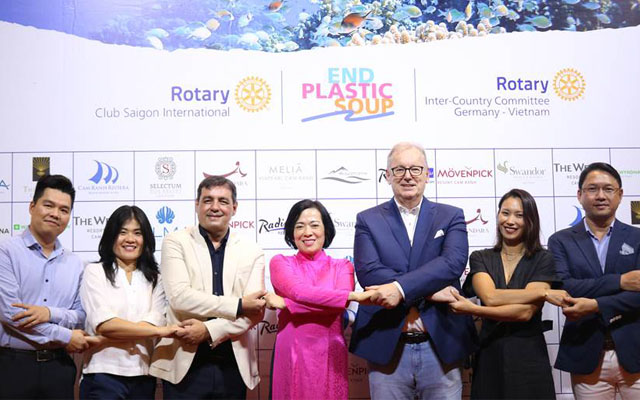
The hotel industry in Vietnam’s Cam Ranh have joined forces to tackle plastic waste by establishing a local plant that upcycles all types of plastic waste.
The End Plastic Soup in Cam Ranh campaign, which kicked off with an extensive two-day clean-up of Long Beach on June 17 and 18, is spearheaded by Alma Resort, The Anam Cam Ranh and Mövenpick Resort Cam Ranh, and supported by 10 other resorts on the Cam Ranh peninsula.
Community leaders unite for the End Plastic Soup in Cam Ranh campaign
The campaign is part of the global environmental End Plastic Soup project, supported by thousands of Rotarians worldwide, with a goal seeking “no more plastic soup” in the oceans and seas and “no more plastic waste in our lakes, rivers, forests, parks and streets” by 2050.
The weekend beach clean attracted around 300 volunteers from participating hotels, Vietnam’s Rotary Clubs and local schools, with a welcome dinner for volunteers and the community held at Alma on June 17.
Alma’s managing director Herbert Laubichler-Pichler shared that Cam Ranh’s hospitality industry would work together with Rotary Club Saigon International to support Rotary-initiative End Plastic Soup to establish a plant in Cam Ranh to upcycle all types of plastics.
He said: “Alma and the local hospitality industry know it is crucial to do our bit to raise awareness about the damage plastic is doing to our stunning oceans, direct harmful plastics to upcycling efforts, and fundraise to help contribute to establish a plant here in Cam Ranh that will help the environment and the local community.”
Other hotels participating in the campaign include Aquamarine Resort, Cam Ranh Riviera Beach Resort & Spa, Selectum Noa Resort, Ana Mandara Resort Cam Ranh, Melia Vinpearl Cam Ranh Beach Resort, Radisson Blu Resort Cam Ranh, Swandor Cam Ranh, The Westin Resort & Spa Cam Ranh, Wyndham Garden Cam Ranh Resort and The Arena Cam Ranh Resort.
GlobalData reveals that during the first five of months of 2023, the travel and tourism industry witnessed a massive 41 per cent year-on-year (YoY) decline in deal activity from 475 deals between January and May 2022 to 282, including mergers and acquisitions (M&A), private equity, and venture financing deals.
Commenting on the decline, GlobalData’s lead analyst Aurojyoti Bose said that it indicates “dampened sentiments and cautious approach of investors” and that the “ongoing uncertainties and impact of the geopolitical tensions, inflation and recession fears have forced deal makers to adopt a more conservative approach”.
The first five of months of 2023 saw a decline in deal activity in the travel and tourism industry
All the deal types under coverage registered decline in volume. For instance, M&A deals volume decreased by 43 per cent while the number of venture financing deals and private equity deals YoY declined by 34 per cent and 44 per cent, respectively, between January and May 2023.
“The industry also witnessed a substantial YoY decline in deal activity across most of the regions worldwide during the period,” added Bose.
North America experienced a decline of 48 per cent in deals volume between January and May 2023 compared to the same period during the previous year, while Europe, Asia-Pacific, as well as South and Central America regions registered decline of 49 per cent, 27 per cent and 36 per cent, respectively.
Meanwhile, deals volume for the Middle East and Africa region remained unchanged.
The US, the UK, India, France, Australia and Japan witnessed significant YoY decline of 48 per cent, 48 per cent, 33 per cent, seven per cent, 29 per cent and 54 per cent, respectively, in deals volume from January to May 2023.
Bose concluded: “On the other hand, easing of travel restrictions seems to be encouraging Chinese travellers. As a result, China stood out as a notable exception and registered a 19 per cent YoY growth in the number of deals announced during the period.”
International amusement park and attractions show IAAPA Expo Asia, last held in Singapore in 2017, was “sold out” with 287 exhibitors, including 64 first-timers, taking up 7,000m² of space at Marina Bay Sands.
The show took place from June 13-16, 2023, and hosted 47 exhibitors from North America, 83 from Europe and 150 from Asia; comprising sellers from China, Hong Kong, India, Japan, South Korea, Macau, the Philippines, Singapore, Taiwan and Thailand, according to IAAPA. China and Hong Kong made up the biggest block with 118 exhibitors, and 107 were from the mainland.
This year’s IAAPA Expo Asia saw the participation of 287 exhibitors (Photo: Caroline Boey)
June Ko, executive director and vice president, IAAPA Asia Pacific, told TTG Asia that some brands which had merged since 2019 returned this year, and the association managed to bring in new buyers from new regions like Europe.
The four-day event recorded 5,330 registered attendees from 75 different countries and regions, including 3,764 qualified buyers from 2,145 companies.
Exhibitor highlights this year included entertainment design company Legacy Entertainment showcasing its “destination dining initiative” in North Jakarta which combines retail and entertainment in a sustainable way.
Described as a floating metropolis, the Batavia Pantai Indah Kapuk mega-development is billed as the world’s first overwater retail destination featuring more than 40 restaurants, retail outlets, attractions and live entertainment.
Opened in early June just ahead of the expo, a spokesperson said the project, which is the size of San Francisco, will be completed by end-2023.
On the technology front, DOF Robotics specialising in AR and VR immersive attractions gave attendees the chance to test its enhanced Hurricane VR 360 attraction and the debut of its new VR movie Homeland: Rise of Nomads.
The expo agenda included 11 EduTours, some across the causeway to Genting SkyWorlds and Gamuda Cove in Selangor, 30 EduSessions, and a Young Professionals Forum and Reception special event.
IAAPA Expo Asia 2024 is scheduled to take place in Bangkok from May 27-30.
Thai Vietjet and Centara Hotels & Resorts have teamed up once again to offer air travel and accommodation benefits to Thai Vietjet’s passengers and Centara’s customers throughout the year.
This is the second collaboration between both companies, with last year’s marketing campaign receiving positive feedback from the market.
Customers of Thai Vietjet and Centara will enjoy air travel and accommodation benefits throughout the year
In line with the new partnership, Thai Vietjet passengers can benefit 19 per cent discount on Flexible and The Place To Be room rates when logging in as CentaraThe1 member and booking through Centara’s website for stays at Centara hotels & resorts in Thailand, the UAE, Sri Lanka, Qatar, Oman, the Maldives, Japan and Vietnam.
Meanwhile, CentaraThe1 members enjoy a special discount code of 20 per cent off when booking domestic and international tickets with Thai Vietjet.
In addition, Thai Vietjet’s passengers will receive a complimentary hotel upgrade and a 10 per cent discount for spa treatments during their stays at Centara Mirage Resort Mui Ne in Vietnam.
Pinyot Pibulsonggram, director of commercial at Thai Vietjet, said: “We believe that this co-promotion between Thai Vietjet and Centara will not only provide special perks to our customers, but will also play a great role in stimulating the travel industry in the post-pandemic era.”
“As we see the international travel sector continue to grow, with further collaboration between the two companies, we look forward to welcoming more and more guests to our hotels & resorts, and ensuring Centara’s signature of Thai hospitality and family value service are at the heart of every stay,” said Pinida Pettanagul, corporate director of marketing & creative services, Centara Hotels & Resorts.
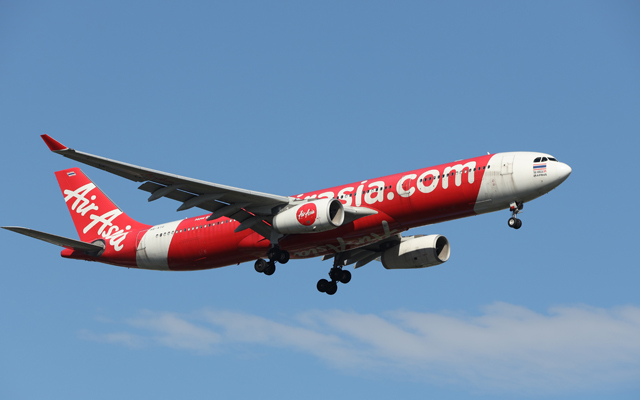
AirAsia X has renewed direct services from Malaysia’s Kuala Lumpur to Amritsar in Northern India from September 3.
The airline will operate four times weekly services to Amritsar.
AirAsia X will fly four times weekly to Amritsar from September
This will be the airline’s second destination to India after New Delhi, which will deliver an additional annual capacity of 157,263 seats between Kuala Lumpur and Amritsar.
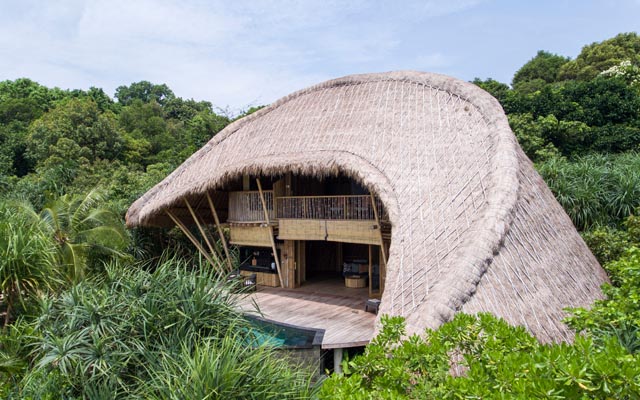
Located just two and a half hours from Singapore, Cempedak Private Island presents three new stay packages – the Romantic Escape couples’ package, the Relax & Rejuvenate wellness package, and The Last Minute Long Weekend package.
The Romantic Escape package is applicable for both four-day or five-day stays, and includes a bottle of sparkling wine upon arrival, couples’ massage, sunset cocktails, and a candlelit dinner under the stars. A four-day, three-night stay is priced S$2,100 (US$1,571) while a five-day, four-night stay is S$2,800.
Cempedak Private Island now offers three new stay packages for a short break from the bustle of the city
Guests seeking a holistic getaway can opt for the Relax & Rejuvenate package, offered in both four-day or five-day stay options. Guests can detox with the herbal teas and healthy menu available throughout their stay, join yoga classes, and enjoy spa treatments. A four-day, three-night stay starts at S$1,750 for one adult and S$2,560 for two. A five-day, four-night stay for one adult starts at S$2,470 and S$3,500 for two.
The Last Minute Long Weekend package is a four-day getaway for one or two adults. It comprises sparkling wine on arrival, spa treatments, sunset cocktails and dinner under the stars. The packaged is priced at S$2,200 for one pax, and S$2,800 for two.
Each package is inclusive of transfers to and from Bintan ferry terminal, three meals per day, and selected activities around the island.
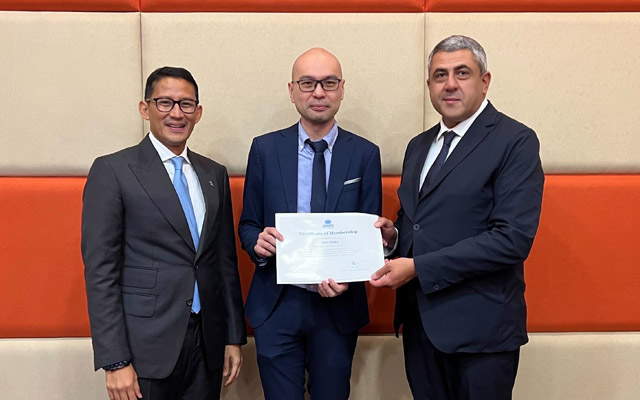
Traveloka has joined the United Nations World Tourism Organization (UNWTO) as an affiliate member, demonstrating its commitment to develop the region’s tourism industry by fostering responsible and sustainable travel.
The announcement was made during the UNWTO Conference held in Phnom Penh, Cambodia from June 15-17, 2023.
From left: Indonesia’s Sandiaga Uno, Traveloka’s Albert, and UNWTO’s Zurab Pololikashvili at the UNWTO Conference in Phnom Penh
As the only travel platform in South-east Asia to become an affiliate member of UNWTO, Traveloka is assessing challenges and highlighting opportunities as travel recovers, as well as emphasising strategic collaborations within the ecosystem, such as partnerships with local and regional governments.
By joining UNWTO, Traveloka will have the opportunity to engage directly with other affiliate members, advocate alongside tourism leaders and representatives from other member countries on the world stage, participate in high-level regional and international dialogues, and gain access to UNWTO’s insights on global tourism trends.
Welcoming Traveloka’s affiliation, UNWTO secretary-general Zurab Pololikashvili said: “Having the private sector’s support is crucial in promoting sustainable tourism and achieving Agenda 2030 for sustainable development. We firmly believe collaborating with Traveloka will significantly contribute to developing a more sustainable global tourism sector.”
With a presence in six South-east Asian countries, Traveloka aims to accelerate the sustainable revitalisation of the region’s tourism industry.
Albert, co-founder of Traveloka, shared: “We are a platform that consistently prioritises innovation and strategic partnerships, and we believe we can drive sustainable tourism growth through technological breakthroughs and global collaborations. We hope that this initiative will also inspire tourism stakeholders in South-east Asia to contribute to the sustainable growth of international tourism.”



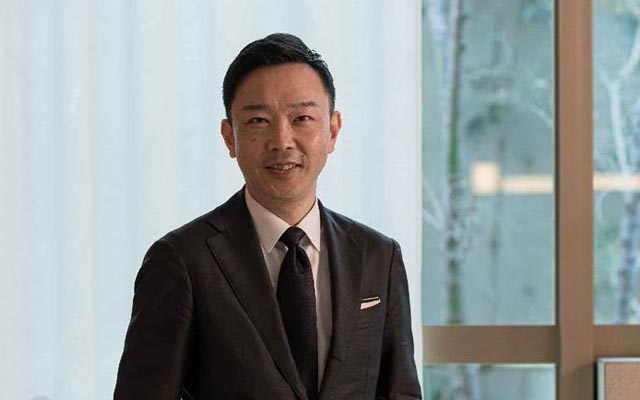 He was most recently director of operations at Palace Hotel Tokyo, having joined the hotel since 2013.
 He was most recently cluster general manager at Sheraton Hong Kong Tung Chung Hotel and Four Points by Sheraton Hong Kong Tung Chung.