Sabre Corporation has partnered with digital vouchering platform iCoupon to enhance passenger and crew experience during flight disruption by turning passenger and staff boarding passes into vouchers that can be immediately redeemed at airport restaurants and retailers.
Complementing Sabre’s existing technology and expertise, iCoupon’s solution will eliminate the need for a physical voucher, thus providing an environmentally friendly solution. Its technology enables airlines and ground handlers to remotely and instantly issue digital vouchers directly to a passenger’s boarding pass in the event of significant delays or disruption.
Passengers can redeem digital vouchers using their boarding pass if there are flight delays or disruption
Passengers can then redeem their voucher instantly at any iCoupon-integrated restaurant or retailer with their mobile or printed boarding pass. The solution can also be used for staff and crew meal entitlements.
Richard Bye, CEO of iCoupon, said: “This alliance will support our global expansion plans by enabling us to offer our innovative solution to more airlines across the world, while allowing airlines to improve efficiencies, reduce costs, and improve passenger satisfaction during times of disruption.”
Corrie DeCamp, senior vice president, product management, Sabre Travel Solutions, commented that when a flight disruption occurs, “passengers expect and demand instant solutions”.
The solution of providing “immediate compensation through unique barcodes on boarding passes that passengers already have streamlines processes for airlines while minimising what can be a stressful situation for both passengers and airline staff”, she added.
Traveloka has joined forces with global climate company, South Pole, to launch a pilot climate action checkout for flight bookings for users in Singapore.
From June 16, Singapore-based consumers will be able to check the amount of greenhouse gases (GHG) emitted on their flights and make donations towards a climate action project that is reducing emissions from the atmosphere. The revenue generated will be allocated to the Khon Buri wastewater treatment plant, a GHG mitigation project in Thailand.
The collaboration allows passengers to calculate the amount of greenhouse gases emitted on their flights and make donations towards a climate action project
This climate action project is a closed loop system that captures the methane emissions from a starch factory in Khon Buri, and uses the otherwise harmful gas to generate heat and electricity for the facility – the endeavour will reduce both GHG emissions into the atmosphere and fossil fuel consumption.
Traveloka’s new offering follows the launch of another recent platform feature, which allows users to easily identify and book hotels in Indonesia with a credible sustainability certification accredited by the Global Sustainable Tourism Council.
Traveloka’s president, Caesar Indra, commented: “South-east Asia must (work on making) travel more sustainable, and ultimately embrace sustainability in everything we do. Our new climate action checkout for Singapore travellers is an excellent starting point for us to provide more comprehensive climate offerings.”
“Research tells us that it’s not just companies who are looking for an opportunity to take responsibility for their impact – customers are too. South Pole’s solutions provide that opportunity (by) making meaningful climate action possible for every one of us, right now,” said Marwan Mounzer, global associate director, digital solutions, South Pole.
Norwegian Cruise Line (NCL) has unveiled six new immersive shore excursion categories to help guests uncover more of each destination they visit, including Europe, Asia, South America, Australia, Africa and the Middle East.
The new categories include Beyond Blueprints, Gourmet Tours, Go Local, Let’s Take a Selfie, Small Group Tours, and Design Your Day.
Let’s Take a Selfie excursions lets travellers take destination shots in locations such as Santorini, pictured
Beyond Blueprints is a bespoke selection of 15 tours that uncover the design secrets and stories of some of Europe’s most iconic architectural landmarks, including those in Barcelona, Lisbon, Belfast, Amsterdam, Copenhagen, Oslo and Helsinki.
Designed for the foodie-driven traveller, Gourmet Tours takes guests behind the scenes to uncover the secrets behind the local cuisine of some of Europe’s most iconic culinary destinations.
Go Local lets guests uncover life’s everyday rhythms and customs in destinations as diverse as Europe, South America and South Africa with tours designed to offer authentic cultural experiences that connect guests to locals in a meaningful and memorable way.
Let’s Take a Selfie excursions deliver the ultimate destination photos in worldwide locations, with a knowledgeable guide sharing the perfect angles and most picturesque spots to capture unforgettable moments in Santorini, Virgin Islands, and Cartagena De Indias, Colombia.
Small Group Tours takes in no more than 16 guests per group, providing an intimate experience in destinations like Italy, Greece and Spain.
Those who prefer a personalised touch can choose bespoke experiences with Design Your Day, from private wine tastings to a five-course dining experience at a Michelin-starred restaurant. Contact NCL to plan the ideal shore excursion team.
Marriott International is anticipating leisure domestic travel to remain popular over the next six to 12 months as domestic travellers continue seeking new experiences.
The company’s president for Greater China, Yibing Mao, told TTG Asia that its RevPAR in Greater China has recovered 95 per cent of pre‐pandemic levels, with mainland China fully recovered in 1Q2023.
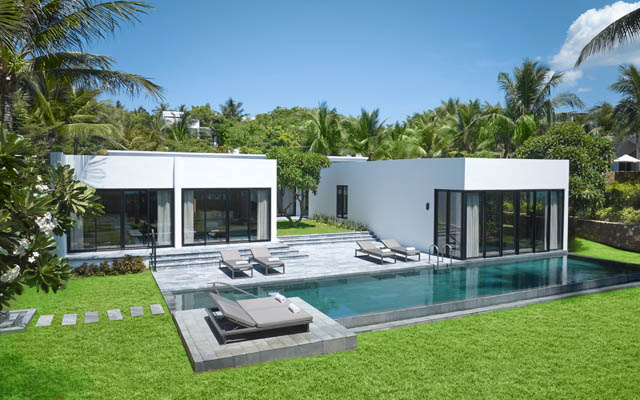
Ritz-Carlton Reserve will debut in China with Rissai Valley, a Ritz-Carlton Reserve in Jiuzhaigou, pictured
She said: “China’s travel trends have shifted from being destination-focused to being more experience-oriented and interest-driven. Guests are seeking out more personalised experiences and wanting to connect with the community while travelling.”
She noted that there is growing interest in purposeful travel among the new generation of travellers that “appreciate brands that support cultural understanding and sustainability”, as well as a strong growth in demand for outdoor activities, such as camping, hiking, and water sports.
To meet these demands, the Good Travel with Marriott Bonvoy programme (available at 38 hotels in Greater China) helps keep these purpose-driven travellers engaged with curated experiences.
She added: “We are also seeing a boom in cultural tourism, where travellers look for experiences beyond typical sightseeing and landmark tours. Our 24 brands in Greater China provide personalised experiences that bring together local tourism resources, food and culture.”
These include learning the art of making ancient Chinese incense at Wutai Mountain Marriott Hotel, immersing in the history of Chinese art at The Westin Xi’an’s onsite Xi’an Qujiang Museum of Fine Arts, among others.
Mao shared that their Brand + Destination development strategy taps into evolving travel trends across different brand segments. Building off this strategy, Marriott works with owners and franchisees to drive demand and provide more diversity in its travel offerings and experiences.
With rising demand for cultural tourism in historic cities, Marriott expects to strengthen its presence in leisure destinations with first-time entries and brand debuts in new markets across its labels in the next few years.
The company has planned openings of luxury properties in the UNESCO World Heritage Site of Jiuzhaigou, Macau, and the Xi’an Economic and Technological Development Zone.
Its multi-branded complex strategy also meets demand for more flexible accommodation such as the recent openings of Guangzhou Marriott Hotel Baiyun, Four Points by Sheraton Guangzhou, Baiyun, and Element Guangzhou Baiyun.
Marriott is also tapping into unique hotel stay experiences for millennial and Gen Z travellers like the new Moxy and AC Hotels in Ningbo, Qiandao Lake, Hangzhou and Wuhan.
In 2023, Westin Hotels and Resorts is expected to debut in Yantai, the core city of the Bohai Economic Rim. Also opening this year are Foshan Marriott Hotel, Guangzhou Marriott Hotel Baiyun and Zhuhai Marriott Hotel Jinwan – complementing the company’s existing presence in The Greater Bay Area.
Other key openings include W Macau – Studio City, which will offer its signature onsite recording studio, and the debut of Ritz-Carlton Reserve in China with Rissai Valley, a Ritz-Carlton Reserve in Jiuzhaigou.
Asia-Pacific is IAAPA’s fastest growing region and the international association for amusement parks and attractions says the adoption of technology is reaping results for its members.
According to Jakob Wahl, president and CEO, technology is “making a huge change”, where more visitors are pre-booking, members are capping capacity numbers, yet the “new pricing strategy” is resulting in people spending more money.
IAAPA’s Joey Zhang, June Ko, and Jakob Wahl (Photo: Caroline Boey)
The region, which has more than 700 members, is also adopting artificial intelligence (AI) to enhance visitor experience and Universal Studios Japan is the first theme park to offer an augmented reality (AR) ride.
Joey Zhang, senior director, China office, added that new park and attraction designs were incorporating elements which address climate change and unusual weather conditions to improve the visitor experience.
Meanwhile, June Ko, executive director and vice president, IAAPA Asia-Pacific, shared that the association was looking at investment opportunities “with government support”.
Ko noted Singapore was “ahead of the game” for its easy-to-invest and “secure” investment environment and Wahl was scheduled to meet Sentosa Development Corporation and the Singapore Tourism Board.
Wahl said the “right infrastructure” and “airline capacity” were key considerations for investments and IAAPA’s expansion was important because members contribute to the economy of a country.
Zhang commented that members in China were tapping more business events, citing the example of multinational professional services company Deloitte hosting a meeting for 5,000 employees at Disney Shanghai.
Similarly, Universal Studios Beijing was eyeing more corporate events, and Ko noted business events were also picking up in India.
She reported the rate of growth of Asian members this year exceeded the target by 100 per cent.
Wahl observed: “Our Singapore show will serve as a marker in our industry as we continue regional recovery efforts and is our new baseline for how we grow in the future.”
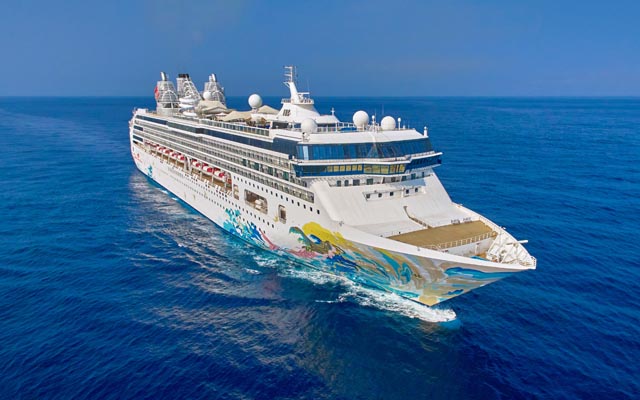
Resorts World Cruises has announced its new winter season deployment for Resorts World One, cruising from Hong Kong to Sanya, Hainan.
Starting September 24, passengers can choose a series of cruise itineraries from Hong Kong, which include a three-night Sanya Cruise departing on Sundays, two-night Sanya Cruise departing on Wednesdays, and two-night Weekend Getaway Cruise departing on Fridays.
Resorts World One will offer cruises to Sanya in Hainan from September
In addition, other cruise packages available include five-night Hainan Cruise and Land-Stay from Sundays to Fridays with a three-night Sanya hotel stay, a one-week Hainan Cruise and Land-Stay departing and returning on Wednesdays with a four-night Sanya hotel stay, and a one-way Sanya Cruise to and from Sanya.
Sanya is a popular winter destination in China for Chinese and overseas tourists, with attractions such as sunny weather, beaches, sceneries, culture, food and duty-free shopping. In addition, Hainan is the only Chinese province which can be visited by citizens from 59 countries without the need to apply for a Chinese visa, with the only condition that visitors register with a local Hainan travel agency – this will be handled by Resorts World Cruises.
Resorts World Cruises’ president, Michael Goh, said: “On behalf of Resorts World Cruises, we would like to thank the Hainan, Sanya and Hong Kong authorities for their support that has led us to this deployment.”
Airports Council International (ACI) World’s latest quarterly airport traffic outlook shows strong air travel demand will continue to improve into the northern hemisphere summer season.
Highlights from ACI World’s 13th Advisory Bulletin on the impact of Covid-19 on the airport business, and the path to recovery, include:
Strong air travel demand will continue to improve into the northern hemisphere summer season
The easing of inflation and rising consumer confidence in most OECD (Organisation for Economic Co-operation and Development) countries combined with declining jet fuel prices, suggests sustained strong air travel demand that will continue to improve into the summer season.
Airports are forecasted to welcome 2.7 billion passengers in 2Q2023 and 2.9 billion in 3Q2023.
Global passenger volume is projected to reach 8.4 billion in 2023, representing 92% of 2019 levels.
The reopening of China’s economy further contributes to global activity and international air travel. Its economy exceeded expectations in 1Q2023, with GDP growth accelerating to 4.5% from 2.9% in 4Q2022.
The Asia-Pacific region is expected to rebound in 2023, reaching 2.9 billion, or 85.3% of 2019 levels.
The share of international passengers is expected to make up 38% of total passengers in 2023, close to the 42% of traffic share it achieved in 2019.
ACI World director general Luis Felipe de Oliveira said: “GDP growth forecasts have moderated – energy and food prices, although decreased from their peak levels, remain higher than pre-pandemic levels. Inflation will also be an issue in the near term, straining the financial viability of airports as they face increased operational costs.
“Amid this background, regulators must support airports by allowing them to operate as businesses in their own right. In many jurisdictions, airports cannot adjust charges without regulatory approval – conversely, airlines can freely adapt their tariffs based on demand and supply factors. Flexible policies on charges can help airports recover and grow sustainably, optimise the use of infrastructure and the customer experience, invest in current and future infrastructure, meet decarbonisation targets, and maximise airports’ social and economic benefits among many other benefits.”
Minor Hotels will introduce its Tivoli Hotels & Resorts brand in Italy, with the addition of a property in Portopiccolo, near Trieste, in northern Italy, later this month.
Tivoli Portopiccolo Sistiana Resort, a former member of the Marriott Luxury Collection, is part of the Portopiccolo complex owned by the Porto Piccolo Fund, managed by independent Italian asset management company, Investire SGR.
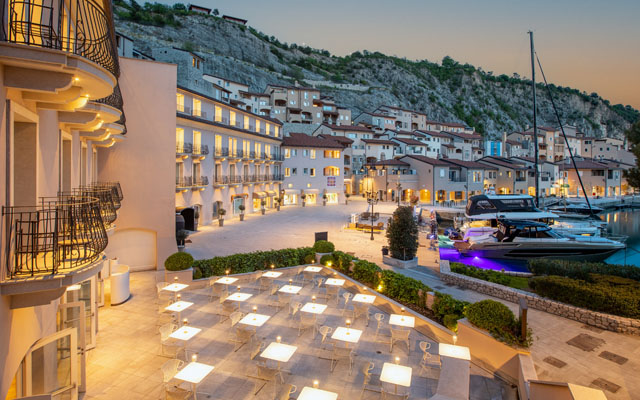
Tivoli Portopiccolo Sistiana Resort will open later in June; Ocyan Restaurant Terrace, pictured
Located in the Duino Cliffs Nature Reserve on the Gulf of Trieste, the five-star property is within 20 minutes’ drive of Trieste Airport and features 58 guestrooms and 73 branded apartments overlooking the Adriatic Sea.
Facilities comprise four restaurants and two bars, six swimming pools, a beach club, spa, wellness and fitness centre, and 1,200m² of meeting space.
Tivoli Hotels & Resorts continues its expansion in Europe with the recent additions of a property in Amsterdam in the Netherlands, an all-inclusive resort in Alvor in the Algarve, south of Portugal, and soon-to-launch property in Tenerife, Spain.
In addition, the brand made its Asia debut in 2022 with the launch of Tivoli Chengdu at Cultural Heritage Park in China and is expanding its footprint in the Middle East, where Minor Hotels currently operates three Tivoli properties in Qatar, with two further new-build properties under development in Bahrain to launch in 2025 and in Muscat, Oman, slated to open in 2026.
For a free relaxing and fun event, join in the activities at the Harbour Chill Carnival starting July 8.
Held over 10 days on five weekends, the Harbour Chill Carnival will be staged at the Water Sports and Recreation Precinct, HarbourChill, Wan Chai and Wan Chai Temporary Promenade with a series of exciting programmes for the public to enjoy such as street performances, music shows and X-game performances.
The Harbour Chill Carnival will feature street performances like the lion dance, pictured
Each week along the Wan Chai Waterfront Promenade, street performances will showcase a special theme, from European-inspired acrobatics and juggling, Samba drumming, to kung fu and diabolo performances, as well as interactive performances such as Australian artistic gymnastics, the local lion dance, and more.
There will be an outdoor X-Games performance area where local, Mainland and Japanese BMX and skateboarders will showcase their deft tricks; the carnival will also feature local breakdancers and street dancers, including Olympic breakdancing Hong Kong team member BBOY Think, local breakdancing troupe Good Job Brother and Hong Kong’s first children’s street dance troupe Funky Heroes.
Featuring a new generation of musicians of more than 40 groups of musicians from Hong Kong, Mainland, Taiwan and overseas, there will be 20 music shows held on a water stage, each with a different theme: Asia Power, Fresh Finds, Indie Rocks, Cantopop Hits, and DJ Nights. Tickets to the music shows will be distributed free of charge on Hong Kong Tourism Board’s e-platform on June 27 and July 17 on a first-come, first-served basis.
Guests can also marvel at the A Symphony of Lights waterfront pyrotechnic night show during the ten days of the carnival.
In addition, a refreshment area with summer drinks and snacks will be available for participants to enjoy.
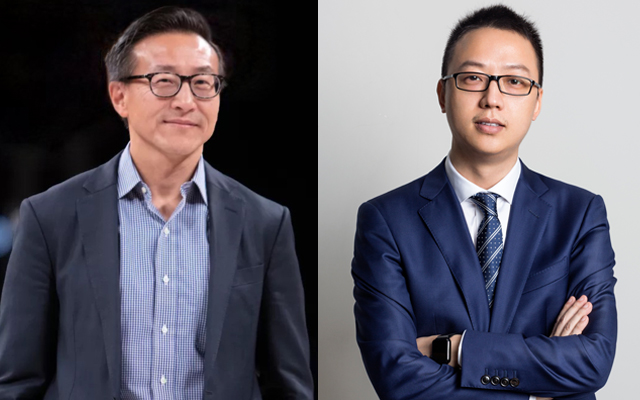
Alibaba Group Holding has announced that Joseph C. Tsai, currently executive vice chairman, will succeed Daniel Zhang as chairman, while chairman of Taobao and Tmall Group, Eddie Yongming Wu, will succeed Zhang as chief executive officer and take over his place on the company’s board of directors.
Both appointments will take effect on September 10.
From left: Joseph C. Tsai and Eddie Yongming Wu
Tsai joined in 1999 as a member of the Alibaba founding team and has served on the board of directors since the company’s inception.
As one of the company’s co-founders, Wu started out as technology director of Alibaba at the company’s inception in 1999. He has been in his current role since May this year.