TTG Asia
Asia/Singapore Friday, 2nd January 2026
Page 538

Raffles Grand Hotel d’Angkor appoints new GM

0

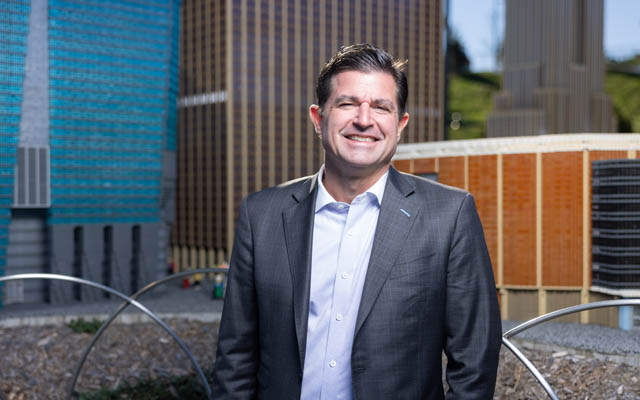
Raffles Grand Hotel d’Angkor has appointed Joseph Colina as its new general manager.

Bringing nearly two decades of experience with Accor to his new posting in Siem Reap, Colina most recently served as general manager of MGallery Sapa in northern Vietnam.

He will take charge of the hotel, including the launch of the Khmer fine-dining restaurant 1932 and the addition of the Raffles Marquee.

South-east Asian travel firms exercise patience for returning Chinese travellers

0
  • Chinese holidaymakers will likely return from April, at the earliest
  • Visa issues, limited flight capacity and operational challenges faced by Chinese outbound agents will impact recovery
  • Manpower challenges in South-east Asia are mixed
Indonesia now rely on connections from Singapore and Kuala Lumpur to attract the Chinese tourists; Nusa Lembongan, Bali pictured

South-east Asian travel companies are not expecting an immediate rush of inbound Chinese holidaymakers following China’s milestone reopening to international travel on January 8, citing obstacles like visa applications, operational challenges, and slow return of direct flights.

Malaysia’s main gateways, Kuala Lumpur International Airport and klia2, have helpdesks manned by Mandarin-speaking staff, ready to welcome Chinese tourists. However, Malaysian inbound agents said the number of Chinese travellers is still low, with pick up expected only in 2H2023.

Mint Leong, managing director, Sunflower Holidays, blamed inadequate flights between Malaysia and China, high airfares, and lack of instructions regarding outbound group travel.

Furthermore, Chinese outbound agents need time to rebuild operations. “Many have had to let their staff go and are now facing staffing challenges. I think many agencies in China will get their house in order only after Chinese New Year,” Leong added.

Uzaidi Udanis, president, Malaysian Inbound Tourism Association (MITA), said the initial recovery was being driven in part by Chinese businessmen looking for investment opportunities in Malaysia. Numbers would scale up during China’s Golden Week holidays, which occur thrice every year – during the Chinese New Year, Labour Day break in May and National Day celebrations in October. For this to happen, China’s Covid-19 situation and air connectivity between Malaysia and China must improve.

Resumption of flights necessary
Two Indonesian travel agents are also reserved about their expectations, saying that air access from China needs to improve.

Bambang Sugiono, director of RD Tours, Bali, said news of airlines resuming flights between China and Bali are still absent, while his outbound partners in China have told him that the Chinese are “more eager” to visit Thailand now that travel restrictions are lifted.

“There are available flights to Thailand, and Thailand has been actively promoting itself during the pandemic. Indonesia, unfortunately, slowed down (on destination promotions),” Bambang added.

It would take time before Bali would see big influx of inbound Chinese, he opined.

Christine Kowandi, tour manager of Horas Tours, Medan, said the destination could, for now, rely on connections from the air hubs of Singapore and Kuala Lumpur to attract the Chinese.

Oriol Montal, general manager, The Westin Resort Nusa Dua, Bali, is more optimistic, as Bali remains one of China’s top five outbound destinations. He expects Chinese vacationers to stream in by May, when China celebrates its five-day Labour Day holiday. Volume is expected to grow as direct flights to Bali resume.

Manpower is no issue, according to Montal. In order to handle the 2022 G20 Bali summit last November, the hotel has boosted its manpower, including new headcounts in F&B operations.

Over in the Philippines, travel operators are only expecting to see more Chinese holidaymakers in April or May, when there are short holidays for them.

This is because the Philippines “still requires a visa, unlike Thailand, Vietnam or Bali, Indonesia where they only require visa upon arrival”, said Mary Ann Ong, general manager – inbound, Bridges Travel and Tours.

Even then, the current manpower cannot cope with the return of the Chinese. Ong said she is running with a lean team that is already busy with local corporate accounts.

The sales director of a hotel in Bohol, which saw an uptrend in Chinese arrivals pre-pandemic, said Chinese FITs are streaming back. However, the hotel will stick to its strategy of having a mixed market, especially as Europeans and Americans are also coming in.

She pointed out that Chinese FIT online bookings are brisk and cannot be controlled due to “many booking channels”, so the hotel limits the number of rooms they sell to China.

Slowly but steadily
In Singapore, where flights to and from China have ramped up in the months leading to the market’s reopening, reaching almost 10 per cent of pre-pandemic levels, bookings have improved. At press time, there are 38 weekly flights between the two countries.

Kwee Wei-Lin, president of the Singapore Hotel Association, said: “For three consecutive years before the pandemic, China topped the list for Singapore’s international visitor arrivals by country with Chinese travellers attributing to almost 20 per cent of total arrivals in 2019. Since China eased its travel restrictions, our member hotels have seen a gradual increase of Chinese bookings already. We are cautiously optimistic that this demand will continue to grow in the weeks ahead – if international borders remain open and flight capacity can support the Chinese demand.

“Based on our learnings from other market reopenings, we can expect the (business events) and corporate travel segments to pick up before we see the return of Chinese leisure travellers.”

Singapore’s transport minister has said that the resumption of air links will be done cautiously so as not to overwhelm operations at Changi Airport.

Thiam Wei Toh, founder and chief storyteller of Indie Singapore Tours, agrees that the return of Chinese travellers will have to be a “gradual process, especially at the start of the reopening”.

“People are being generally cautious,” he explained. “Also, travel patterns and behaviours may have changed during the pandemic.”

Business for Indie Singapore Tours has been “steadily improving”, with an increase in tourist bookings as well as traffic from local organisations, schools and groups wanting learning journeys.

“Like almost everyone in the travel industry, we face the occasional crunch in trained manpower, but so far, our team has been able to effectively manage the current volume of enquiries and bookings without compromising the quality of our tours,” he said, adding that he would continue to monitor the situation and adapt operations accordingly.

Kwee believes Singapore hotels have teams ready to welcome even more guests. Hotels have invested in capability building throughout their downtime, worked with government agencies and industry partners on upskilling and job redesigning to “improve productivity and become future ready”.

“Many hotel members took the opportunity to adopt digital solutions and upgraded their facilities in preparation for the return of international guests. When Singapore’s border reopened last year, our hotels and workforce were well prepared to deliver the hospitality excellence that we are renowned for. As evidenced by the record-breaking F1 weekend, as well as many significant business events, we are confident that hotels are prepared to operate at high occupancy when more Chinese guests return,” she detailed.

She urged Singapore hotels to continue with training programmes and investment in service innovation so that the industry can remain nimble in catering to the evolving expectations of a new generation of international travellers. – Additional reporting by Rosa Ocampo, S Puvaneswary and Mimi Hudoyo

Flight bookings to Asia-Pacific up 250% ahead of Chinese New Year: Sojern

0

With indication of Asia-Pacific’s travel industry possibly the only one in the world to recover by 2023, this year’s Chinese New Year could be cause for additional celebration. Sojern shares the latest travel trends for Chinese New Year.

Looking at flight bookings, the top origin countries and regions travelling to or within South-east Asia for Chinese New Year are Singapore (16%), the US (12%), followed by Thailand (9%), Taiwan (8%) and Japan (7%). India falls out of this year’s top ten, replaced by South Korea in seventh place.

Thailand is the top destination country for global travellers; Wat Phra Kaew temple in Bangkok pictured

For hotel bookings, South Korean travellers take the top spot with 16% of all South-east Asia bookings, then the US (11%) moving up from sixth place, followed by Japan (10%), Hong Kong (8%) and Australia (8%).

South-east Asia hotspot Thailand comes out as the top destination country based on flight searches for global travellers moving from second to first place in 2023 and comprising 27% of all travel to the region this holiday. Japan (19%), Singapore (18%), dropping from first to third place, the Philippines (10%) and Malaysia (8%) make up the remainder of the top five. Singapore is the top destination country based on hotel searches for 2023 comprising 21% of all searches, followed by China (15%) and the Philippines (15%).

“While the impact of inflation in the region hit last year, our data shows travellers aren’t willing to sacrifice travel this holiday season,” said Lina Ang, managing director APAC, Sojern. “Destination Marketing Organisations (DMOs) and hoteliers should take note of those destinations showing the most interest from inbound international and regional travellers, and use intent data to reach these potential travellers with messaging from your particular destination or property.”

Mask on: WHO urges travellers to cover up as new Omicron variant spreads

0

World Health Organization (WHO) officials has urged countries to bring back the mask mandate for air passengers on longhaul flights, given the rapid spread of the latest Omicron XBB.1.5 subvariant in the US.

XBB.1.5, found to be the most transmissible Omicron subvariant detected so far, accounted for 27.6 per cent of Covid-19 cases in the US for the week ended January 7, health officials have said.

Passengers on longhaul flights are recommended to wear masks onboard, urge WHO

In Europe, the subvariant has been detected in small but growing numbers.

WHO’s senior emergency officer for Europe, Catherine Smallwood, said mask-wearing “should be a recommendation issued to passengers arriving from anywhere where there is widespread Covid-19 transmission”.

She added that “countries need to look at the evidence base for pre-departure testing” and that travel measures, if any, “should be implemented in a non-discriminatory manner”.

At a press conference on January 10, Smallwood said WHO is not yet recommending Covid-19 tests for passengers from the US.

At press time, mask mandates vary across airlines around the world.

In Asia-Pacific, Air New Zealand, Qantas and Singapore Airlines do not require passengers onboard to wear masks, unless required by the destination they are flying to and from.

Masks are not compulsory on ANA flights.

Tripseed joins the Global Collective for Travel

0

Thailand’s Tripseed has become the newest member of the Global Collective for Travel, which is a collaborative initiative between locally-owned and operated DMCs around the world that aims to drive deep, transformational change within the travel industry.

With the addition of Tripseed, the Global Collective for Travel is now present in 10 destinations around the world, including Thailand, Vietnam, Cambodia, Turkey, Cyprus, India and the Himalayas, Morocco, Costa Rica, Spain and Portugal.

Wongmahawan: we all share very similar philosophies and values for our businesses

The goal of the initiative is to promote a more ethical model for tourism and provide access for industry partners around the world to a less extractive and more sustainable supply chain that ensures more revenue reaches the destinations that travellers are visiting.

Its members work directly with the travel trade in their respective destinations, delivering innovative and unique tours and experiences to keep market offerings fresh and exhilarating, forging authentic local connections inside of their destinations, while promoting equality and empowerment for local employees, casual workers such as tour guides and drivers, and other local suppliers.

“Since our earliest discussions, it became clear that we all share very similar philosophies and values for our businesses, and we all align strongly on the high levels of service excellence that we believe our partners and their travellers should receive at all times,” said Narissara Wongmahawan, co-founder of Tripseed.

Tuan Pham, one of the founding members of the collective, shared: “Meeting with the Tripseed founders, learning about their work and what they aspire to become is a great affirmation for the Collective. It tells us there are many people like us who want similar things – responsible travel, equity for the local community, amazing holidays, genuine connection with the places you’re visiting.

“Most importantly, the things they do everyday matters and those whose lives they impact, matter.”

Accor partners Source Global for sustainable bottled drinking water

0
Source offers an answer to sustainably-minded companies and its conscious consumers

Accor has teamed up with Source Global to bring the world’s first sustainable bottled drinking water brand to prominent hotels in Singapore.

Single-use plastic bottled water at key hotels in Singapore will be replaced with drinking water packaged in reusable glass bottles and made by Source Hydropanels – a solar-powered technology that harvests the pure, renewable water vapour in the air and transforms it into drinking water.

Source offers an answer to sustainably-minded companies and its conscious consumers

Each Hydropanel can offset more than 50,000 plastic bottles in its lifetime. Source will deliver its water in reusable glass bottles, which will be collected, cleaned, and refilled near the Source Water Farm.

This project is part of Accor’s global commitment to increase circularity in its operation and eliminate single-use plastics in the guest experience, consistent with the UN Global Tourism Plastics Initiative and the Resource Sustainability Bill passed by the Singaporean Government in 2019.

Silversea departs Sydney for 139-day World Cruise

0

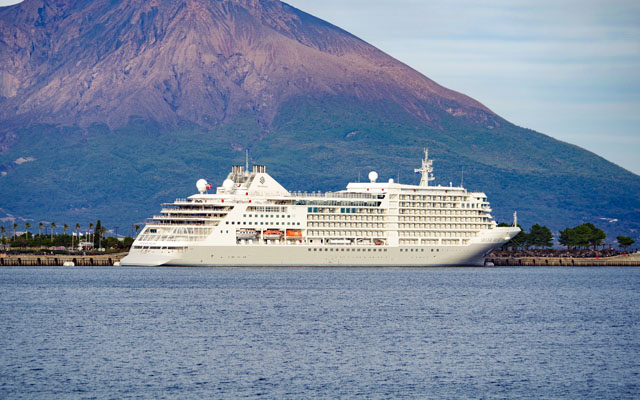
Silver Shadow sailed from Sydney yesterday, marking the first time a Silversea World Cruise has originated in the Southern Hemisphere.

The ultra-luxury ship will host guests for the 139-day arts-inspired voyage, sailing from the South Seas to the Amazon Rainforest and beyond, calling in 66 destinations in 34 countries across five continents.

Silversea’s World Cruise guests travelled to Sydney in business-class comfort with a dedicated cabin 

Guests travelling aboard the World Cruise 2023 departed Sydney on January 10 and will arrive in Fort Lauderdale on May 28. The itinerary comprises a mix of destinations – from Papua New Guinea, Mauritius, Réunion Island, and Cape Verde, to Tasmania, New Zealand, Myanmar, and South Africa. The ship will also sail down the Amazon River, the first time ever for a Silversea World Cruise.

In another first in the history of Silversea, guests experienced a seamless World Cruise journey with private executive transfers to their local airport (and from, upon their return). They received private assistance and access to designated airline lounges, and enjoyed a superior flight experience from select gateways in the US and the UK to Sydney, Australia.

Travelling in business class where they had a dedicated cabin, dined on the freshest seasonal ingredients and experienced fine Australian hospitality in-flight, upon arrival in Sydney, they were greeted with VIP arrival assistance, private executive transfers, priority embarkation, and unpacking assistance by Silver Shadow‘s butlers.

Martin Zarybnicky helms as GM of Anantara Bangkok Siam Hotel

0

Minor Hotels has named Martin Zarybnicky as general manager of Anantara Siam Bangkok Hotel.

With a hospitality career spanning 29 years, he was previously complex general manager of two hotels under his remit, InterContinental Bangkok and Holiday Inn Bangkok.

He is also fluent in Czech, English and Russian.

The Ascott Limited names new chief growth officer

0

The Ascott Limited has appointed Serena Lim as its chief growth officer.

The hospitality industry veteran will lead Ascott’s global business development team and be responsible for steering and managing the company’s growth in management and franchise contracts globally, excluding China, where development will continue to be led by the in-market team.

With over two decades of industry experience, Lim joins Ascott from InterContinental Hotels Group, where she was vice president, development, South-east Asia and Korea.

Singapore adopts cautious approach to restoring China connectivity

0

Recognising the need for Changi Airport to have the needed capacity to handle increasing flight and passenger flows as China reopens, Singapore will continue to take a “cautious approach” to rebuilding scheduled flights to and from China.

Singapore transport minister S Iswaran shared in Parliament on January 9 that Singapore and Chinese airlines have applied to operate more flights between the two countries, and the Civil Aviation Authority of Singapore (CAAS) is evaluating these applications.

There are currently 38 weekly flights between Singapore and China, with more to come

Weekly services between China and Singapore have increased from 25 at the end of October 2022 to 36 around mid-December. At press time, there are 38 weekly flights between the two countries.

Iswaran noted that the current service level is barely 10 per cent of the number of Singapore-China flights pre-pandemic, and about 1.5 per cent of the total flights handled by the airport.

Daily arrivals from China stand between 700 and 1,000 – about one to 1.5 per cent of the airport’s total daily arrivals and less than 10 per cent of pre-pandemic numbers.

A majority – at least 60 per cent – of these arrivals are Singapore citizens, permanent residents and long-term pass holders.

The paced restoration of flights will ensure that Changi Airport has the capacity to “manage the ramp-up in flights, provide clarity and certainty to airlines, and ensure that passengers have a safe and smooth experience” he said, adding that aviation authorities will respond swiftly to “material change in the health ministry’s risk assessment, such as the emergence of a new variant of concern”.

During discussions about the projected restoration of Singapore-China flights to pre-pandemic levels, Iswaran said a surge was unlikely in the near term. Factors impacting speed of return to service include the public health situation as well as Changi Airport’s ability to manage increases in the number of passengers.