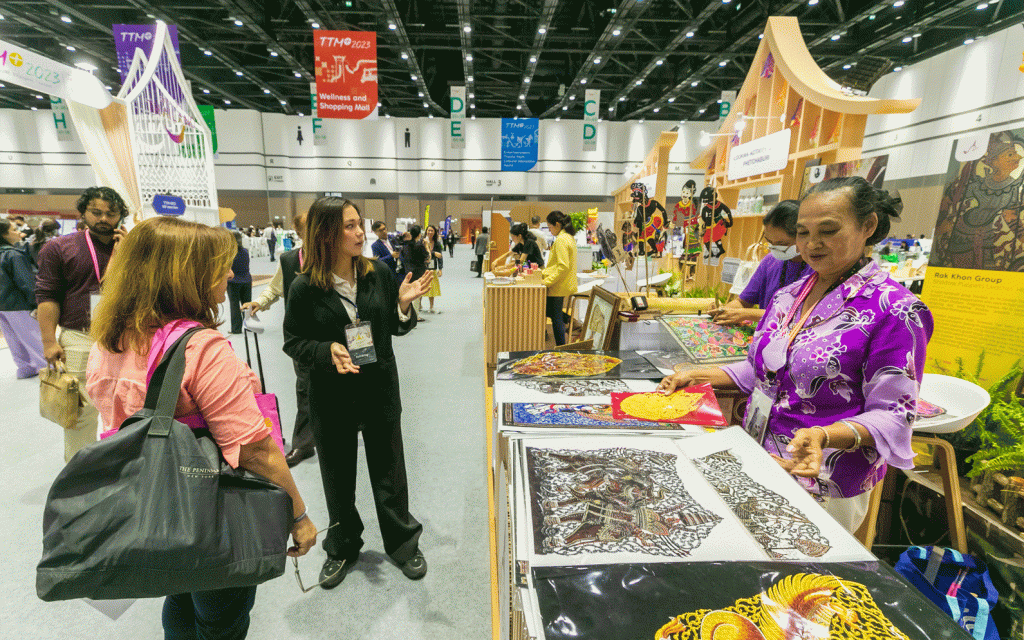
The recently concluded Thailand Travel Mart Plus (TTM+), organised by the Tourism Authority of Thailand (TAT) to promote Thailand to the world, had generated 12,670 business appointments between buyers and sellers and resulted in transactions worth an estimated 3.4 billion baht (US$96.1 million) for the country’s tourism industry.
However, TAT governor Yuthasak Supasorn told TTG Asia that the value of event participation for Thai travel and tourism sellers goes beyond the monetary transactions.
TTM+ 2023 played up meaningful destination experiences across Thailand
“Sellers will make and keep a good connection with overseas buyers in the future. It was a good opportunity for sellers to learn more about customising their packages, products, and services to fit with their target customers or to find new source markets,” said Yuthasak.
He added: “Moreover, held in in Thailand, TTM+ 2023 would have made it easier for Thai tourism businesses to close deals since buyers were able to experience first hand the products and services along with new developments in Bangkok and other destinations after their discussions.”
As part of TTM+2023, buyers and media in attendance were invited to pre- and post-show tours that showed off Thailand’s “many new chapters”. Half-day pre-show tours featured three routes that highlighted Bangkok’s responsible and sustainable tourism. An example was the New Chapter of Bangkok Food Tour, which took participants on a food walk in the Bang Rak area and onwards on a Michelin Bus food tour.
The post-show tours explored beyond the capital city, touring Chiang Mai in the north; Nakhon Ratchasima and Prachinburi in the northeast and east; Phetchaburi, Prachuap Khiri Khan, and Nakhon Si Thammarat in the south; Samut Songkhram and Kanchanaburi in the central region; and Chon Buri and Rayong in the east to give buyers and media representatives a taste of meaningful travel experiences.
Yuthasak was pleased with the decision to bring the show back to Bangkok, as it facilitated the focus on the newly revamped Queen Sirikit National Convention Centre as well as many other “potential, well-equipped facilities and venues” that would appeal to inbound international business events.
TAT is in the midst of gathering attendee feedback on the event to better understand interest and demand. Intelligence will be used to shape Thailand’s tourism supply as well as marketing strategy and activities down the road, shared the governor.
Editor’s note: Content has been updated to reflect latest figures released by TAT on business appointments and estimated transaction value.
Speaking at the opening of PATA Destination Experience Forum and Mart 2023 in Kuching, Sarawak on June 22, PATA chair Peter Semone expressed the urgent need for action as the tourism and hospitality sector embarks on the road to recovery.
He said: “Coming out of Covid, there are only two options (for the tourism industry), which are to ignore the environmental and social consequences of mass tourism in a business-as-usual manner; or seize the opportunity to recalibrate how we measure tourism success and account for its invisible burden.”
PATA chair Peter Semone (centre) at the opening of PATA Destination Experience Forum and Mart 2023
“As we look towards the future, we need to take concrete actions and avoid the mistakes of the past.”
He explained: “Option one, we can bury our heads in the sand, (and try to) return to the boom times that culminated in record arrivals across the globe in 2019 before Covid. We can ignore the environmental and social consequences of mass tourism and bolster our balance sheets in a business-as-usual manner. Unfortunately, (learning from travelling around) many of us have chosen (this option).”
The other option was to seize this opportunity that came out through the pandemic by recalibrating how the industry measures success.
Semone emphasised the need to account for the invisible burden of tourism and urged stakeholders to consider the costs associated with growth in arrivals and revenues. He further stressed that it is time to reassess how tourism’s impact is evaluated and to redefine success beyond outdated metrics such as tourist arrivals, expenditure, and length of stay.
“We also must think about how we tax tourism for the use of the destination’s commons. How do we expect actors across the supply and demand value chains to engage in tourism activities responsibly and sustainably?
“We always worry about the supply side. What about the behaviour of the tourists? Do we not have to make sure that the tourists are behaving in a way that’s appropriate for our destinations? How do we ensure that that’s true going forward in the future and that tourism continues to be an asset rather than to be a burden on local communities and the way that local people live? It is also important to remember that without peace, tourism cannot exist” he opined.
Sharzede Datu Salleh Askor, CEO of Sarawak Tourism Board (STB) shared her thoughts on implementing sustainability that works, adding that it was the responsibility of all parties.
“There must be consistency – the government of today and the future must be consistent. The second thing is that there must be clarity of what it is that we want to do so that we can crystallise things.”
She shared that by maintaining consistency, providing clarity, and achieving crystallisation in all aspects, these factors will enable those who pass on this information to have a precise understanding and the appropriate mindset for advancing together as a unified force to achieve goals.
On the issue on over tourism, Sharzede said: “We are very fortunate that Sarawak has never looked into mass tourism. We have always looked into niche marketing and therefore sustainability (is something) we have been practicing (and is now becoming) more prominent.”
Sarawak started with green tourism in 2011 and embarked on digital economic transformation in 2018.
“Now with everything more focused towards sustainability, it helps us to accelerate and to (further) intensify our activities and initiative towards that area,” she concluded.
Asians are cruising for longer periods to destinations further afield, booking farther out, and are more willing to splurge on F&B, discover luxury cruise lines.
Silversea Cruises’ managing director Asia-Pacific, Adam Radwanski, told TTG Asia in an interview during ILTM Asia Pacific: “Expedition cruises to remote locations, like those to Antarctica, Arctic and Galapagos, are setting sales records. Guests from Asia are also booking longer cruises than ever before – around 25 per cent longer than pre-Covid – and those cruises tend to be to faraway destinations to escape Asia. Singaporeans, in particular, like fly-cruise products.”
Silversea has crafted the S.A.L.T. Bar and Kitchen experience to showcase the culinary cultures of destinations the ship calls at
In response to Asia’s strong business potential, the company has scheduled its newest ship, Silver Nova, to sail to Singapore come October 2024.
In an earlier interview with TTG Asia, Radwanski underlined Asia’s importance to Silversea’s deployment. For the 2024/25 season, the cruise line will have its biggest deployment ever in the region – 21 turnarounds in Singapore, with four of them on Silver Nova, four of them on Silver Dawn, and the rest on various ships including Silver Moon and Silver Muse.
Previously in 2022, Silversea also signed a three-year partnership with the Singapore Tourism Board to grow the luxury cruise industry both in Singapore and regionally, and strengthen the region’s attractiveness as a cruising destination and source market.
Jason Worth, vice president sales & general manager, Asia Pacific of Oceania Cruises, concurred that the Asian cruising market has rebounded strongly, with Singapore leading the way and followed by Hong Kong, Indonesia, and Thailand.
“We’ve seen really strong growth out of all our Asian markets, including Japan, even though they had a bit of a slower start,” Worth said.
He added that these travellers are booking farther out, with far-flung destinations like the Mediterranean doing well – and because the destinations are faraway, it would naturally result in much longer holidays as well.
Worth said: “Just last week, I received a booking from Asia for our Around the World Cruise 2025 (Oceania’s annual world cruise). This is unusual for Asia because most Asian guests don’t sail for that long. It’s great to see that there is opportunity there!”
The 1,200-guest Oceania Vista, the brand’s latest and newest ship, also has “a number of guests from Asia sailing on it this season”.
Aboard the Oceania Vista are a number of new restaurant concepts, which Worth believes will appeal to customers. These include New York bistro-style Ember serving up dishes such as braised short rib on polenta, and the Aquamar Kitchen for healthier smoothies and avocado toasts. A bakery onboard also churns out fresh pastries, quiches, and croissants daily.
F&B is a very important aspect for Silversea too, which has crafted the S.A.L.T. Bar and Kitchen experience to showcase the culinary cultures of destinations the ship calls at. This will tie in with shore excursions, where guests can spend the day with one of Norway’s most famous chefs and learn their techniques, or work on an organic farm in Paros, Greece.
Radwanski told TTG Asia that business looks increasingly promising, especially as Asia-Pacific travel agents that did not traditionally sell cruises are now approaching Silversea for sales training.
“As societies across Asia continue to age and become more and more wealthy and affluent, cruising, especially luxury cruising, is becoming a very attractive way to travel,” opined Radwanski.
National carrier SriLankan Airlines is planning a 22 per cent increase in weekly flights to meet demand during the next winter season.
CEO Richard Nuttall said in a statement that the increases will be seen across its wide network of destinations in India, West Asia, Far East and Europe.
SriLankan Airlines plans to increase flight frequencies across its network of destinations to meet demand during the next winter season
“Our current 122 weekly flights to 15 destinations across the Indian Subcontinent is targeted for a 16 per cent increase; the 41 weekly flights to seven West Asian destinations by seven per cent; the 52 weekly flights to the Far East by over 50 per cent; and the 13 weekly flights to Europe is expected to go up by 15 per cent,” he added.
Prior to the pandemic, the airline had a fleet of 27 aircraft of which 23 are currently in operation. There are plans to lease more aircraft.
In line with increasing passenger capacity, the airline hopes the increased frequencies will help to bring in more tourists.
Arrivals between January and May 2023 rose sharply to 524,486 compared to 378,521 in the same 2023 period, as Sri Lanka continues to recover after a devastating economic crisis last year compounded by the pandemic.
India was the top source market followed by Russia, Germany, the UK and Australia.
Meanwhile, the Travel Agents Association of India is holding its 2023 Convention in Colombo from July 6 to 9, on the invitation of the Sri Lanka Tourism Promotion Bureau. The event is expected to attract 500 delegates from India.
Non-operational staff at the headquarters of Hong Kong-based Metrojet can now adopt a four-day office/one-day remote work arrangement under the company’s new Flexible Work Arrangement policy, put in place to prioritise employees’ well-being and productivity.
The new initiative reflects the voices shared in the company’s latest employee survey.
Metrojet’s new Flexible Work Arrangement policy prioritises employees’ well-being and productivity
Aside from the remote work measures, the new policy also encourages employees to work any eight hours on a business day between 07.00 and 19.00, providing staff with increased flexibility and reduced commuting stress during peak office travel hours.
The policy will be extended to the other Metrojet operational sites in the future.
Metrojet’s director, human resources, Mabel Yiu, said: “Our employees are our most valuable asset. We strongly believe that investment in our employees’ well-being leads to better work productivity, professional staff growth and job satisfaction. We are happy with the successful outcome over the past half year trial period and will continue to cultivate a healthy work environment.”
Saudi Arabia’s Almosafer and Klook have joined forces to launch the Almosafer Activities platform to offer holistic tours and activities for the Kingdom’s market.
Almosafer Activities is a one-stop digital platform with end-to-end content and inventory management solutions that support tourism and leisure activity merchants in Saudi Arabia, as well as distributors across the globe, to provide products for travellers to, from, and within the Kingdom.
From left: Klook’s CS Soong and Almosafer’s Muzzammil Ahussain
The platform, which will go live for distributors in 3Q2023, will leverage Klook’s position as a leading global distributor of experiences and services, and enable domestic and international tourists to book activities seamlessly.
The launch of Almosafer Activities supports the tourism agenda of Saudi Vision 2030 by boosting inbound and domestic tourism – the platform will also support small and medium-sized merchants by providing them with a platform and exposure to more distribution channels.
Merchants can take advantage of enhanced exposure to the wide customer base of Almosafer’s consumer segment, as well as through leading DMC Discover Saudi.
Muzzammil Ahussain, CEO of Almosafer, said: “Almosafer Activities will empower the travel and tourism ecosystem as a whole while further supporting the Kingdom’s strategy to continuously enhance the domestic tourism offering and increase its inbound tourism footprint.”
“We are confident that this strategic collaboration will inspire and attract a larger influx of international visitors to the Kingdom, amplified by our extensive global network,” added C S Soong, vice president, corporate development, Klook.
Sunway Healthcare has created Sunway Sanctuary, a serviced residence that caters to guests aged 55 years and above and stands out with easy access to quality healthcare services, and wellness and lifestyle facilities.
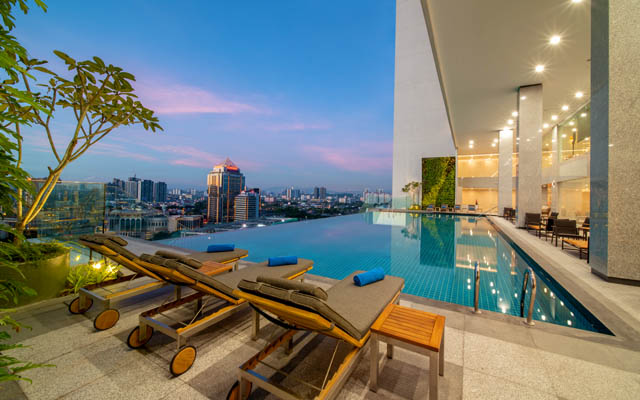
The serviced residence is annexed to Sunway Medical Centre in Sunway City. Facilities include 235 studios, as well as one- and two-bedroom serviced suites; and over 9,290m² of wellness and lifestyle facilities such as a heated, saltwater infinity swimming pool, gym, outdoor terrace for yoga and meditation, library with co-working spaces, game rooms, movie theatre, karaoke lounges, an all-day dining restaurant, and function rooms.
Sunway Sanctuary offers wellness and lifestyle facilities such as a heated, saltwater infinity swimming pool, pictured
Health-conscious guests can rely on the property’s wellness centre, where qualified personnel will provide standard health checks, blood tests, regular vitals monitoring, and nutrition and dietary advice.
Leonard Theng Boon Liang, general manager, Sunway Sanctuary, shared that guests can access trained professionals who will provide fitness workout sessions and assistance with daily needs and errands, as well as event planning services for residents’ special occasions.
Besides targeting active retirees and semi-retirees, Sunway Sanctuary is also eyeing the senior expatriate community in Malaysia as well as medical tourists from abroad.
Three-day, monthly and annual packages are offered, along with customisable retirement staycation packages to allow interested applicants the opportunity to experience the Sunway Sanctuary lifestyle before making a long-term commitment. These packages comprise room upgrade, daily meals, housekeeping services, access to wellness facilities, and recreational and leisure activities.
For the first time in decades, Japan’s nine-home village of Suganuma in Gokayama is opening its doors to overnight guests, giving visitors the opportunity to experience this World Heritage Site on the shores of Sho River.
The village’s Gassho-zukuri-style farmhouses are particular to the region, with their pitched, thatched roof structures. For two nights only, the Nakashima family – fifth generation locals – are hosting guests under the 170-year-old thatched roof of their family home for an authentic stay immersed in the rich traditions of the area.
Visitors now have the opportunity to experience the World Heritage Site of Suganuma in Gokayamaon
During their stay, guests will enjoy a traditional welcome tea and local dishes including Gokayama tofu, mountain vegetables and freshly-caught river fish. They will learn about local traditions such as the making of washi, a paper made of local fibre, and the creation of sasara, a traditional instrument featured in one of the region’s oldest folk songs. At night, guests will be treated to a magical evening light show and folk song experience.
Other activities include a hands-on workshop crafting thatched roofs using local Gassho-zukuri building techniques, and exploring the village’s surroundings with a guided bike ride.
In addition, guests will receive a Disconnect to Connect kit that includes a stationery set made of traditional washi paper, an instant camera and local aromatherapy kit.
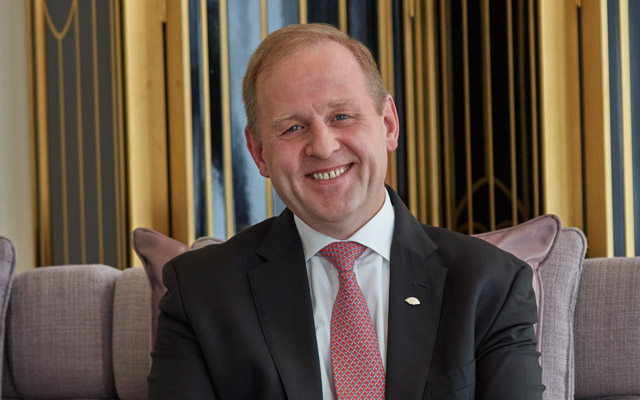
Martin Schnider has been named the new general manager of Mandarin Oriental, Kuala Lumpur.
With over 25 years of experience with Mandarin Oriental Hotel Group encompassing six Mandarin Oriental Hotels, Schnider brings a wealth of knowledge and expertise to his new role.
Prior to his appointment at Mandarin Oriental, Kuala Lumpur, Schnider served as the general manager of Mandarin Oriental, Doha.


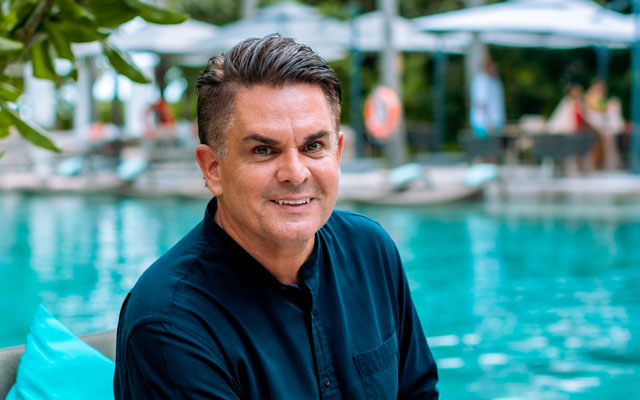
 He most recently served as director of operations (task force re-brand) for Accor Resorts and Hotels in Phuket, Thailand.






 Prior to his appointment at Mandarin Oriental, Kuala Lumpur, Schnider served as the general manager of Mandarin Oriental, Doha.