SC Capital Partners (SCCP) has teamed up with Abu Dhabi Investment Authority (ADIA) and Goldman Sachs Asset Management (GSAM) to acquire a portfolio of 27 resort hotels in Japan from Daiwa House Industry.
The hotels are in major tourist destinations across Japan, capturing both domestic and inbound demand. The investment strategy will focus on increasing top-line revenue, rebranding initiatives, improving distribution channels, and refurbishment works.
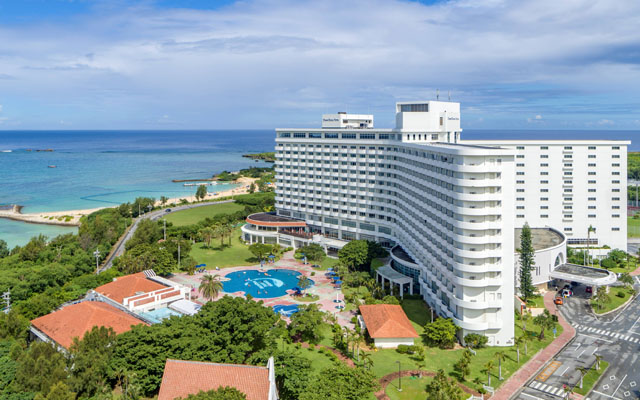
The acquisition comprises 27 resort hotels in Japan from Daiwa House Industry; Royal Hotel Okinawa Zanpamisaki, pictured
The portfolio was acquired for approximately US$900 million and includes a total of 7,124 keys. Japan Hotel REIT Advisors Co. (JHRA) will play an integral role in capturing the recovery and maximising the further growth of the portfolio.
Suchad Chiaranussati, chairman and founder of SCCP Group, said: “This is a rare opportunity to acquire one of the largest and most prominent hotel portfolios in Japan. The extensive platform and network we have built in Japan over the last 13 years, particularly in the hospitality space, puts us in a unique position to capitalise on the long-term relative value of this highly sought-after sector.”
“Japan’s real estate sector continues to deliver superior returns, and the country’s hotel market is well positioned for growth from the rebound of travel,” added Mohamed Al Qubaisi, executive director, real estate department, ADIA.
Meanwhile, Takashi Murata, global co-head of GSAM is confident that these assets in Japan are “well-situated to benefit from the rebound” and through the implementation of their strategy, will be “positioned to attract further demand and generate differentiated returns”.
South Korea’s ONDA has signed a Memorandum of Understanding with CMH Solutions to expand and digital transform the Turkish hotel industry.
Under the agreement, ONDA will offer its cloud-based hotel management solution to hotels in the Turkish market, initially providing its SaaS-based hotel management solutions to hotels that CMH Solutions newly opens this year. ONDA also plans to expand its offering to a broader range of CMH-operated hotels in the future.
ONDA will offer its cloud-based hotel management solution to hotels in the Turkish market; Istanbul in Turkey, pictured
Since last year, ONDA has provided its property management system to luxury chain hotels and resorts, including Ananti at Gangnam. It has also built strong partnerships with global technology companies through the online room distribution system ONDA Hub.
Operating over 25 large hotels and resorts, CMH Solutions will be spearheading the distribution of ONDA’s cloud-based hotel management solutions in Turkey.
This collaboration will further develop the existing relations between the two countries, with the introduction of ONDA’s branded hotels in Turkey, including SoTA (State of The Art) Collection.
CMH Solutions will undertake the development, construction, and operation of ONDA-branded hotels in the country, while ONDA will provide the SaaS hotel management solutions.
Gardens by the Bay in Singapore presents its latest floral display in the Flower Dome – Orchid Extravaganza: Orchids of the East Tropics.
The new exhibit explores the botanical connection of the orchid, a flower that has been widely hybridised into a multitude of diverse and beautiful forms, where many popular hybrids in the region have origins that can be traced back to native orchids of Brunei Darussalam, Indonesia, Malaysia, Singapore and Thailand.
Visit Gardens by the Bay’s latest floral display to discover the origins of orchids in the region
From now to September 17, Orchid Extravaganza: Orchids of the East Tropics will showcase elements that unite the five countries – from orchids to architecture to culture. It will display more than 7,000 orchids, including the native species from each country.
There will also be recreations of traditional houses from each of the five countries, such as the ancestral house of the Torajan people in South Sulawesi, Indonesia, with its boat-shaped roof; and other cultural elements showcased such as traditional games, artefacts, music instruments, and more.
In addition, Love, Kebaya, a travelling exhibition curated by Singapore’s National Heritage Board will return to Gardens by the Bay. The exhibition takes visitors on a journey to discover the iconic kebaya, and its significance to the region’s shared cultural identity and living heritage.
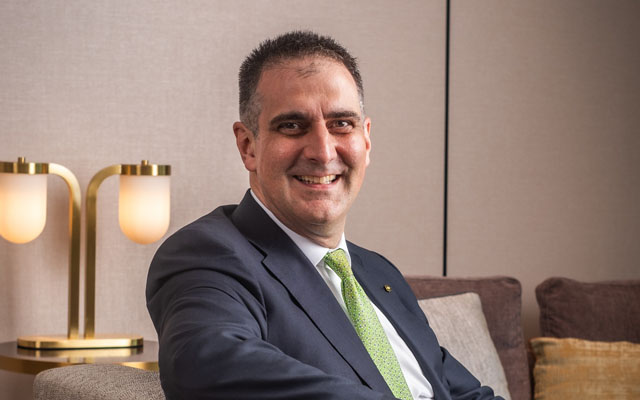
Shangri-La Singapore has welcomed Xavier Pougnard back as its hotel manager.
With a career spanning 23 years, Pougnard brings with him a wealth of experience in operating international five-star luxury hotels in key cities across Asia, Egypt, and the US since 1996.
Previously at Shangri-La Singapore from 2014 to 2019, he returns to the hotel from his most recent role as store leader at Apple Singapore, and will be responsible for overseeing the daily operations of the hotel.
Regenerative tourism is the direction which New Zealand has taken coming out of the pandemic, where the country’s goal is to go beyond sustainable travel, and help visitors leave it in a much better place than when they first arrived.
Before the pandemic, New Zealand was at risk from overtourism, where in 2019, the country of five million was hosting 11 million visitors a year from 2016 to 2019, shared Cameron Hayes, marketing manager sustainability, Tourism New Zealand. While this meant that the tourism sector was thriving and there were many economic and social benefits, this enormous number was putting a strain on the environment and its people.
Springfield is a small town in the Selwyn District of Canterbury, in the South Island of New Zealand. (Photo: Matt Crawford)
This led to the creation of Tiaki – Care for New Zealand, as New Zealand sought to build back better after the pandemic. Tiaki, a Mãori word that loosely translates to care, conserve, and protect, is made up of five behavioural pillars (Protect Nature, Keep NZ Clean, Be Prepared, Drive Carefully, and Show Respect) that inspire visitors to travel safely and conscientiously.
Acknowledging the Tiaki promise is one thing; visitors are also encouraged to walk the talk, such as by giving wildlife space, not using a drone, keeping camping areas clean, not drinking and driving, paying attention to speed limits, not littering, and respecting Mãori sites.
Local tourism operators are making it easy for travellers to do the right thing.
Dale Burrows, director, Franz Josef Wilderness Tours, told TTG Asia: “One of our efforts includes a push for predator-free New Zealand, to give the kiwis (birds) a chance. We have partnered with Zero Invasive Predators and Predator Free South Westland initiative by assisting with transport to areas along the Lake Mapourika and Kiwi Sanctuary shoreline.
“We also assist with responses they have had through their network of AI Camera and monitoring systems in the surrounding rainforest.”
Foraging for Māori ingredients (Photo: Miles Holden)
One of the company’s achievements was working with the Department of Conservation on the Operation Nest Egg programme to bring back the rare Rowi Kiwi back from the brink of extinction into a stable pocket of 500 birds; and in the last year or so, Franz Josef Wilderness Tours has also achieved carbon zero.
Guests on their tours within the Westland Tai Poutini National Park will also be able to check traps, and learn about conservation efforts firsthand.
Burrows added: “Education is a very important part of Tiaki. We teach guests about the flora and fauna of New Zealand, and sustainable practices like leaving only footprints.”
Similarly, Darren Gamble, tourism manager of Mount White Station in Arthur’s Pass, is offering longer, immersive stays that show tourists how close the locals’ relationship with the land is.
Gamble elaborated: “Visitors get to learn about beekeeping through the three-hour pollen-to-plate experience. They go out with the beekeepers to harvest the honey, then to the extraction, before trying some honey paired with wines. We also can take guests to see the sheep, shepherds, and 15 dogs they work with. There’s also a deer paddock on-site.”
By revelling in these experiences, Gamble pointed out travellers will be able to learn about what farmers struggle with, and show them how much effort goes into shearing a sheep to produce enough wool to make a sweater, as well as reconnect with nature to boost mental health.
Further up on the North Island, Sam Sutton, director, Rotorua Rafting and Rotorua Ziplines, is on a mission to plant 100,000 native trees, which will in turn rid 90 per cent of gorse (a yellow-flowering shrub that is a major invasive plant species in New Zealand).
He told TTG Asia: “We have a whole pest control network set up, and it’s easy for clients to participate in. These include planting a tree, or supporting a programme that deals with predators. New Zealand has the fastest rate of extinction of our indigenous species more so than any other country (due to invasive flora and fauna introduced by early settlers).”
During the company’s rafting tours, guides take time to point out the different flora and fauna and explain their purposes. They also explain why rats and possums are killed – because these introduced animals are destroying New Zealand’s ecosystem. Possums consume 20,000 tonnes of foliage each night, while 68,000 native birds are eaten by introduced predators every night.
Sutton opined: “Honestly, I don’t think there’s another industry that’s got more focus and buy-in from the operators in all aspects. In New Zealand, regenerative tourism is at the core essence of what everybody does.”
Experience culture at Te Pā Tū (Photo: Miles Holden)
Rene de Monchy, chief executive, Tourism New Zealand, stated: “Our vision by 2030 is that we want all visitors to New Zealand to be of high quality, which will lead to a more productive and regenerative New Zealand.”
He noted that “high-quality visitors” go beyond “high net worth visitors”, and includes travellers who are engaged with New Zealand’s culture and nature, and undertake a range of experiences at different times of the year.
“Visitors to New Zealand who’ve been influenced by our work either on a consumer or trade level will spend more, visit more regions, and come in the off-peak seasons, and have higher efficacy for New Zealand after they leave.
“These visitors will enrich the wellbeing of New Zealand, help to create jobs, restore nature, and enhance our heritage building. That is very important to us,” said de Monchy.
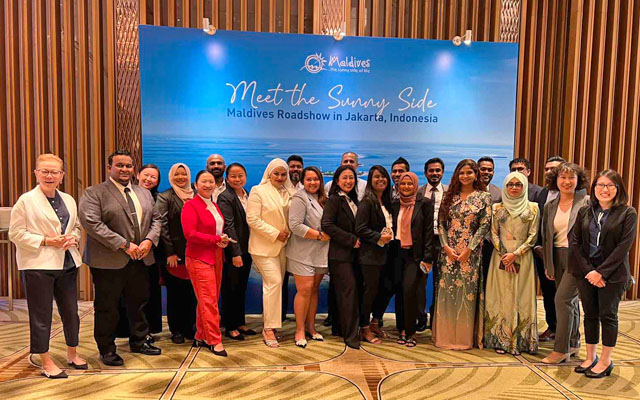
Maldives Marketing and Public Relations Corporation (MMPRC) hosted a successful roadshow in Jakarta, Indonesia today, the first of a series of three roadshows in South-east Asia.
The second roadshow will be held at Kuala Lumpur, Malaysia on August 2, followed by a third roadshow on August 4 in Bangkok, Thailand.
MMPRC held its first roadshow in Jakarta, Indonesia on July 31
The roadshows not only promote Maldivian products and experiences, but also focuses on networking with the tour operators and travel agents from the region, strengthening trade relationships, and maintaining South-east Asia as one of the top source markets for the Maldives. Participants will also have the opportunity to win stay packages during the event.
A total of 17 companies from the Maldivian tourism industry are taking part in the roadshows, including Adaaran Resorts & Heritance Aarah Maldives, Furaveri Island Resort & Spa, Holiday Inn Resort Kandooma Maldives, Inner Maldives Holidays, Island Life Travel, Lily Beach Resort & Spa, Maldives Getaways, Oaga Art Resort, Plumeria Hotels and Resorts, Pullman Maldives Maamutaa, Resort Life Maldives, Roam Maldives, Splendid Asia, Sun Siyam Travels, The Residence Maldives, Travel Connection Maldives and UI Maldives.
As of May 2023, the Maldives has welcomed a total of 24,573 arrivals from South-east Asia. MMPRC has also promoted the destination at major travel fairs in the region, such as MATTA 2023 in Malaysia and ADEX Ocean Mission 2023 in Singapore, and will participate in upcoming major trade shows such as NATAS Holidays 2023 and ITB Asia 2023.
The electronic visa system to be rolled out by the Philippines for Chinese nationals beginning August 24 is a shot in the arm for this erstwhile robust inbound market which remains frail so far, contrary to expectations.
Calling the e-visa “a welcome change”, Mary Ann Ong, general manager inbound, Bridges Travel, added that the winter season is approaching, which is when China’s outbound travellers tend to look for warmer climes. This puts Philippines in a good position to attract them.
Philippines will commence e-visas for inbound Chinese travellers from August 24
Currently, holidaymakers from China are trickling into the Philippines, and instead, there are more business travellers, Ong said on the sidelines of the Philippine Tour Operators Association’s launch of the 34th Philippine Travel Mart (September 1-3, 2023).
Tourism secretary Christina Garcia Frasco said: “The e-visa will be a game changer for the Chinese outbound market, which currently prefers other South-east Asian destinations such as Thailand, Indonesia, Vietnam, Malaysia, and Cambodia which provide (them with) landing visas.”
As of July 26, Department of Tourism numbers show there were only 137,822 visitors from China, a far cry from 2019 when over 1.7 million Chinese visited, making them the country’s second and fastest-growing inbound market after South Korea.
An industry source requesting anonymity said China arrivals are still weak due to the stringent visa approvals that serve to prevent the onslaught of illegal Chinese workers of Philippine offshore gaming operators, a recent contentious issue between the two countries.
Once the e-visa system for Chinese nationals take off, Indian nationals will be the next in line to be able to apply for entry visas online.
Applicants have to register and create an account on the official website or the app, fill out the application form, upload the required documents, and make payment. The processing time for single entry visas is about three to eight days, whereupon the approved e-visa is emailed to the applicant.
As Chinese outbound travel restarts and major international travel industry events return to the country, Dragon Trail Research conducted a survey between June 7 and July 3, 2023 with mainland Chinese outbound travel agencies to uncover the best way to work with the trade in 2023, and the products most in demand with overseas destinations and travel suppliers.
The Chinese Outbound Travel Trade Survey 2023 provided an overview of the overall Chinese outbound travel market, with practical applications for product development. The most popular travel product sold by travel agents this year was FIT, with group tours limited in size to 20 or fewer travellers. Millennials were also the core customer group for Chinese travel agents selling outbound trips.
The survey showed that clients value quality and comfort, interesting destinations, and unique experiences over low prices
As for whether there were changes in what clients value the most when choosing a travel product, quality and comfort, interesting destinations, and unique experiences rank much higher than low prices. Plus, popular holiday themes proved to be beach and island, and family trips.
The full recovery of the outbound Chinese travel market still faces significant obstacles, among which visa applications and high prices are the most onerous, according to the travel trade. Still, survey respondents were eager to meet international partners once more, with offline events chosen as the most helpful way to receive information from overseas destinations and businesses.
Meanwhile, online platforms, such as WeChat, should not be overlooked, as more than half of respondents said online training courses and live webinars were the most useful resources for them when dealing with overseas destinations.
Based on the survey’s findings, Dragon Trail Research has the following eight recommendations for B2B engagement.
Time to meet in person
During the pandemic, some questioned whether in-person events and meetings would ever return. The answer from the Chinese travel trade is a resounding “yes.” 61% said that meeting at an offline event would be their preferred way to work with overseas travel destinations and businesses, while 70% said they are currently making sales to consumers at in-person events – the leading sales channel.
Invest in online training
Digital channels are also vital to both training and sales. 56% of travel agents said that online training courses and live webinars would help them to work with overseas suppliers. Digital channels – particularly WeChat – are also popular for travel agents making sales to their clients.
Millennial market dominates travel trade sales
Post-90s travellers are driving travel agent business in 2023, followed by the generation born in the 1980s. Whether engaged in B2B or B2C travel marketing and sales, it is important to consider the behaviour and demands of Chinese millennials.
Focus on independent and small group travel
With the number of countries where Chinese travel agents can sell group travel products still restricted to less than half of pre-pandemic levels, bookings for independent travellers are considered the most popular product type by 42%, ahead of group tours (34%) and customised travel for private groups (24%). Small group sizes of 20 people or fewer are also popular.
Natural settings, family travel, and special experiences are selling best
Travellers value experiences, relaxation, nature, and family time in 2023. According to travel agents, beach and island (37%) is the leading travel theme, followed by family travel (33%). Nature, arts and culture, as well as adventure/sports, are also popular themes for travel products booked through an agency.
Quality and experiences valued over low prices
When asked about what their customers value most when booking travel, travel agents overwhelmingly chose the quality of products and experiences offered in destination over low prices.
Leading obstacles to recovery
China reopened more than six months ago, but there are still obstacles impeding the travel trade’s recovery. The top barriers to selling outbound travel are difficulties in getting visas, and the high prices, especially airfares.
Prioritising Chinese-language communications
When it comes to materials and communications from overseas destinations and tourism suppliers, Chinese travel agents strongly prefer to use Mandarin. More than half are happy communicating in English, but are not as comfortable doing business in other foreign languages.
Bhutan has been accepted into Virtuoso’s portfolio of luxury travel partners, which comprises over 20,000 advisors and partners from more than 2,300 of the world’s best travel companies.
This collaboration aligns perfectly with Virtuoso’s vision of fostering sustainable tourism and reflects Bhutan’s unwavering dedication to preserving its natural and cultural heritage.
Bhutan is now part of Virtuoso’s portfolio of luxury travel partners
It will also help drive more bookings to Bhutan, where visitors can explore Bhutan’s natural landscape and partake in an array of activities from guided treks through forests and valleys, to spa retreats that embrace ancient Bhutanese wellness traditions.
“Collaborating with Virtuoso, we aspire to illuminate the incredible rewards of regenerative travel and extend our authentic hospitality to global wanderers seeking transformative experiences,” said Dorji Dhradhul, director general of Bhutan’s Department of Tourism.
“Bhutan’s commitment to preserving its abundance of natural beauty and profound cultural heritage, while welcoming travellers to experience its wonders, aligns with Virtuoso’s belief that travel can serve as a force for good,” said Cory Hagopian, senior vice president sales & partnerships, Virtuoso. “With travellers increasingly seeking out destinations with deeper meaning, Bhutan offers a spiritual sanctuary for those fortunate enough to visit.”
The new Siem Reap Angkor International Airport will officially begin operations on October 16, with non-commercial and non-profitable test flights set to be conducted from October 5 to 15.
All commercial passenger and cargo flights currently operated at the existing Siem Reap International Airport will be transferred entirely and one time only to the new facility on October 16.
Siem Reap Angkor International Airport will start operations on October 16 (Photo: Khmer Times)
The US$1.1 billion-worth airport is located in Kriel Pong village and Provall village of Por Pel commune and Ta Yek commune, and around 40km east of Siem Reap town.
Construction began in March 2020 by Angkor International Airport Investment (Cambodia).
SSCA spokesman Sinn Chanserey Vutha said: “The new Siem Reap Angkor International Airport will be an important gateway for flights from around the world given its contemporary facilities and larger size than the existing airport.”
He added that the new airport will have 38 gates and will be able to handle large passenger planes like the Airbus A-340-300 and A350-900 as well as the Boeing B777-200/300ER and B747-300/400.




 Previously at Shangri-La Singapore from 2014 to 2019, he returns to the hotel from his most recent role as store leader at Apple Singapore, and will be responsible for overseeing the daily operations of the hotel.