Tourism leaders discussed collaborative efforts in building a resilient tourism industry on a panel held on the sidelines of the Arabian Travel Market 2026
In the wake of the geopolitical crisis triggered by the US-Iran conflict and its repercussions for the tourism sector, the Gulf Cooperation Council (GCC) countries have decided to strengthen collaboration and joint efforts to enhance tourism resilience.
At a meeting of GCC tourism ministers held in Manama, Kingdom of Bahrain, last week, member states approved a joint tourism recovery plan aimed at supporting the sector’s recovery.
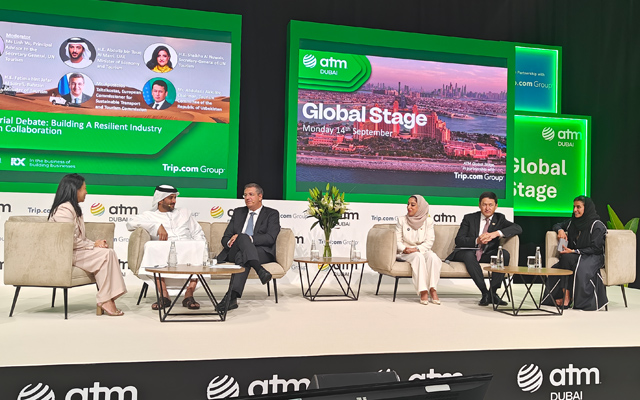
Tourism leaders discussed collaborative efforts in building a resilient tourism industry on a panel held during Arabian Travel Market 2026
“The global average contribution of tourism to GDP is around 10 per cent, while in the Gulf countries, it exceeded 11 per cent in 2025. When regional disruptions occur, travellers do not view our countries in isolation; they see the GCC as a collective destination,” said Fatima bint Jafar Al Sairafi, tourism minister for the Kingdom of Bahrain, at the Ministerial Debate: Building a Resilient Industry Through Collaboration session that was part of the Arabian Travel Market (ATM) this week in Dubai.
“This recovery plan will be spearheaded by tourism ministers and tourism boards across the Gulf region. Through this initiative, we aim not only to develop global multi-destination experiences but also to launch international campaigns that strengthen the GCC’s positioning as a top-tier tourism destination,” Fatima added.
She highlighted that the Kingdom remained committed to its infrastructure development projects even during the crisis, ensuring that work continued without interruption. “We also made sure to continue hosting regional and international events. In November, Bahrain will host the 93rd UFI Global Congress for the first time,” she added.
UAE’s minister of economy and tourism Abdulla bin Touq Al Marri said the country is entering a new phase of growth.
“The descent is over, and we are now preparing for the ascent. We are ready for take-off. Our resilience is built on the strong foundation laid over the past 50 years,” he said.
The European Union has also expressed its support for the GCC’s efforts to strengthen tourism recovery and resilience. The second EU-GCC Summit is scheduled to take place on October 24 in Saudi Arabia.
“We will also convene the first EU-GCC Forum for Tourism in 2027,” said Apostolos Tzitzikostas, European Commissioner for Sustainable Transport and Tourism Commission.
The PATA Foundation has launched the Nepal Tourism Recovery Fund to support tourism workers and small businesses whose livelihoods have been affected by the devastating floods that struck Nepal on August 26.
The floods caused significant loss of life and widespread damage, particularly along affected river corridors and downstream communities. Tourism communities in the affected areas, including guides, drivers, porters and operators of homestays, lodges, teahouses and small hotels, have lost homes, business premises, equipment and income.
The devastating flash floods of August 26 caused significant loss of life and widespread damage along specific river corridors in Nepal’s Bhote Koshi (pictured) and Trishuli areas, particularly in Rasuwa district and downstream communities
The Nepal Tourism Recovery Fund will focus on helping these tourism-dependent families and businesses rebuild their capacity to earn a living.
Donations to the Fund will support practical recovery needs, including equipment for guides, porters, drivers and tourism workers; the refitting of lodges, homestays and teahouses so they can receive guests again; tools, stock and equipment for tourism-related businesses; and shared facilities used by affected communities.
Every grant will be approved by the PATA Foundation’s Board of Trustees, with the Foundation committed to publishing information on funds raised and how they are used.
The Fund is open to contributions from individuals, tourism organisations, businesses and other supporters of Nepal’s tourism community.
Aichi is gearing up to host the 20th Asian Games in its prefectural capital, Nagoya, from September 19, marking the third time Asia’s largest sporting event will be held in Japan.
Featuring 43 sports held across 54 venues, the competition will bring 11,000 athletes, 6,000 officials. and thousands more spectators from 45 countries to the region over 16 days.
Restaurants across Aichi Prefecture will present limited-time menus featuring fermented foods and ingredients as part of the destination’s new Umami Aichi Fair: A Journey Through Fermented Gastronomy
Local officials say hosting the event presents opportunities to introduce visitors to Aichi Prefecture’s rich and diverse fermentation culture through food and drink experiences.
During the Games, 21 restaurants across the prefecture will offer limited-time menus featuring Aichi’s fermented foods and ingredients as part of the prefecture’s new Umami Aichi Fair: A Journey Through Fermented Gastronomy.
The fair builds on fermentation tourism initiatives developing throughout Aichi, including Umami Gate Nagoya, launched in April, which aims to develop the entire city of Nagoya as an umami food theme park through collaborations with local eateries.
“Aichi Prefecture is one of Japan’s leading regions for fermented foods and seasonings including miso, soy sauce, mirin, vinegar, sake and pickles. Each product has its own unique history and production methods, and many breweries and producers here continue to preserve and pass down traditional techniques,” Hayato Morita, director of Aichi’s International Tourism and Convention Bureau, told TTG Asia.
The local government is also promoting longer stays and broader travel throughout the region by providing tours in English for athletes and officials, said Morita. Sights include the pottery footpath at Tokoname, one of Japan’s six ancient kilns, and Ghibli Park, a theme park dedicated to the animated world of Studio Ghibli.
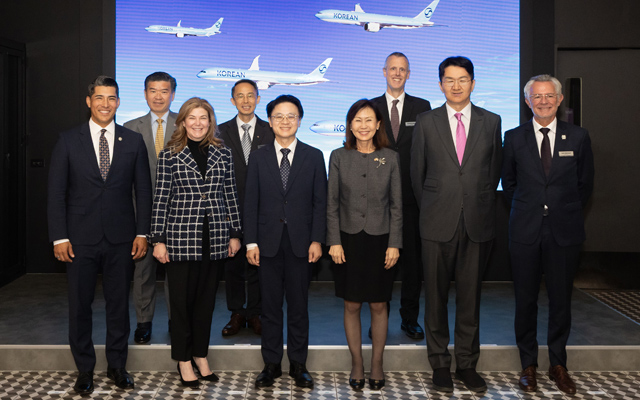
Leadership from Korean Air, Boeing, CFM International and GE Aerospace were joined by key government and financial representatives at the signing ceremony on September 15
Korean Air has finalised a US$44.8 billion agreement to acquire 103 Boeing aircraft and 21 spare engines from GE Aerospace and CFM International along with a 15-year engine maintenance contract.
The signing ceremony between Korean Air and Boeing was held on September 15, with Korean Air and Hanjin Group’s chairman and CEO Walter Cho, Boeing Commercial Airplanes’ president and CEO Stephanie Pope, CFM International’s president and CEO Gaël Méheust, and GE Aerospace, Korea’s president Youngje Kim in attendance.
Leadership from Korean Air, Boeing, CFM International and GE Aerospace were joined by key government and financial representatives at the signing ceremony on September 15
The aircraft order comprises 20 Boeing 777-9s, 25 Boeing 787-10s, 50 Boeing 737-10s, and eight Boeing 777-8F freighters.
This investment secures a predictable long-term fleet introduction schedule to support capacity growth following the Asiana Airlines integration. The transition to next-generation models will also improve overall fleet fuel efficiency and support the airline’s carbon reduction goals.
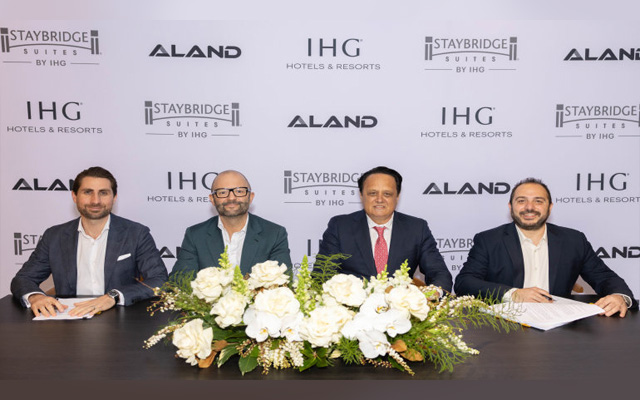
The signing of IHG and Aland’s landmark Master Development Agreement will launch Staybridge Suites in Australia and build a portfolio of at least 15 hotels with a minimum of 2,000 rooms
IHG Hotels & Resorts (IHG) has signed a landmark Master Development Agreement with Australian property developer Aland to launch Staybridge Suites, IHG’s globally established upscale extended-stay brand, in Australia and build a significant national portfolio.
Under the agreement, Aland will have exclusive development rights for Staybridge Suites in Australia, with a portfolio of at least 15 hotels comprising a minimum of 2,000 rooms to be developed across the country.
The agreement represents a substantial expansion of the partnership between both organisations, and establishes a long-term development pathway for the brand in Australia.
Alongside the Master Development Agreement, IHG and Aland have signed the first two franchise agreements for Staybridge Suites in Australia: the 130-room Staybridge Suites Sydney Parramatta and 112-room Staybridge Suites Sydney Leppington, both located in Greater Western Sydney. To be managed by Signature Hotel Management Group, the two hotels will form the first phase of the national portfolio.
The extended-stay segment continues to offer significant growth potential in Australia, supported by demand from corporate travellers, project-based work, relocations and guests seeking greater flexibility for longer stays.
Matt Tripolone, managing director, Australasia & Pacific, IHG Hotels & Resorts, said: “This is a significant long-term development agreement for IHG in Australia. Establishing a portfolio of at least 15 hotels and 2,000 rooms with one development partner gives us a clear pathway to build a meaningful position in the extended-stay segment, where we see considerable long-term opportunity.
“Importantly, this is not simply an agreement about future growth. We are announcing the first two Staybridge Suites hotels in Parramatta and Leppington from the outset, giving the portfolio immediate momentum in two important Western Sydney growth markets.
“Aland has substantial development capability and ambition, and we share a clear vision for the opportunity ahead. Bringing that alignment together with IHG’s brands, distribution and enterprise gives us a strong foundation to grow the partnership over the long term.”
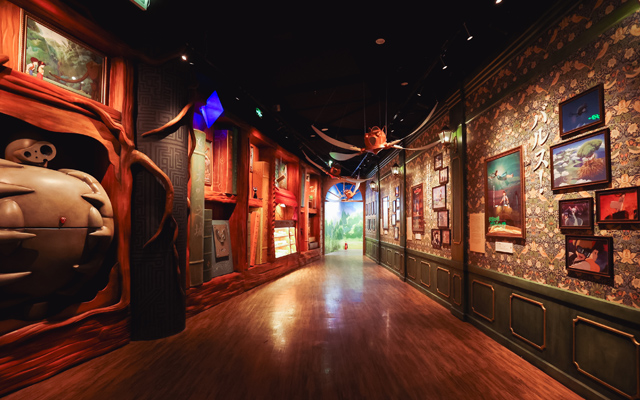
An immersive exhibition that captures 12 life-sized worlds inspired by iconic Studio Ghibli films will debut in Singapore on December 18, 2026, offering both longtime fans and a new generation of audiences an opportunity to explore famous stories in a new way.
The Singapore edition, produced by Tsukuru, Inc and M Experience with the supported of the Singapore Tourism Board, will span nearly 3,500m2, making the event the largest presentation of The Story of Studio Ghibli to date.
The Singapore edition of The Story of Studio Ghibli will explore themes such as creativity, resilience, and environmental stewardship
Featured films include Nausicaä of the Valley of the Wind, My Neighbor Totoro, Kiki’s Delivery Service, Princess Mononoke, Spirited Away, and Howl’s Moving Castle.
Interactive multimedia installations throughout the exhibition will place visitors at the centre of each story, transforming familiar scenes into experiences best encountered in person.
Designed for all ages, the exhibition will also explore themes such as creativity, resilience, and environmental stewardship. Educational initiatives and learning opportunities are currently being developed to encourage deeper engagement with these themes, with further details to be announced closer to the exhibition opening.
The event will be held at Gardens by the Bay from 10.00 to 19.00 daily.
Tickets are now available here on Klook, the official ticketing partner for The Story of Studio Ghibli in Singapore.
An early-bird promotion is on from September 12 to December 17, where each adult ticket purchased will come with a limited-edition gift, while stocks last.
For more information, contact margaret.zhang@mexperience.global
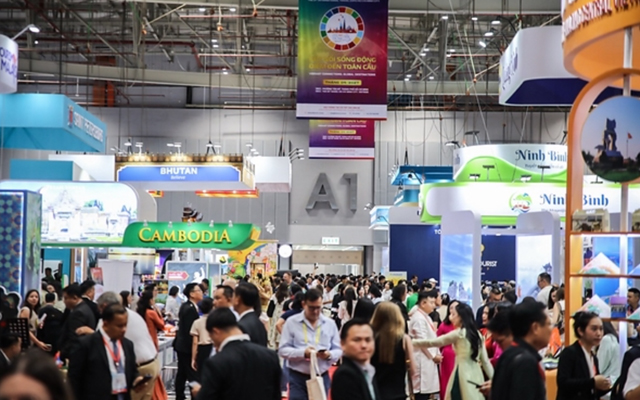
The 20th Ho Chi Minh City International Travel Expo (ITE HCMC 2026), held from August 27 to 29, 2026 at the Saigon Exhibition and Convention Center (SECC), has concluded as the largest edition in the event’s history.
Ho Chi Minh City International Travel Expo 2026 saw 47,960 visitors and participants across on-site and online activities
It welcomed 309 international buyers, media representatives, content creators and media partners from 32 countries and territories; more than 520 exhibitors and tourism brands across 410 booths representing Vietnam and international destinations; and 47,960 visitors and participants across on-site and online activities.
The Expo also generated more than 21,000 B2B meetings between international buyers and exhibitors, supporting partnerships, market access and tourism sales.
Its programme spanned 15 forums, conferences and seminars; three Mekong subregion tourism ministerial meetings; 15 fam and press trips that were attended by more than 400 ministers, mayors, international buyers, media representatives and content creators who experienced cultural, heritage, culinary and urban draws in Ho Chi Minh City, as well as resort, golf, green and ecological tourism products in nearby destinations.
There was also a public programme that combined tourism products, travel offers, regional cuisine, local products and cultural performances. It stimulated travel demand while giving tourism businesses a direct channel to connect with consumers.
With the success conclusion of ITE HCMC 2026, dates for the 2027 edition have been set for September 9 to 11, 2027.
A certain branch of tourism has been described by the UN Tourism as a “fundamental axis” that possesses the ability to “promote social, economic and environmental action” and “leave a long-lasting positive legacy” on communities.
This type of tourism activity triggers an adrenaline rush in both participants and observants alike, and inspires a trip even when activity is not the primary purpose.
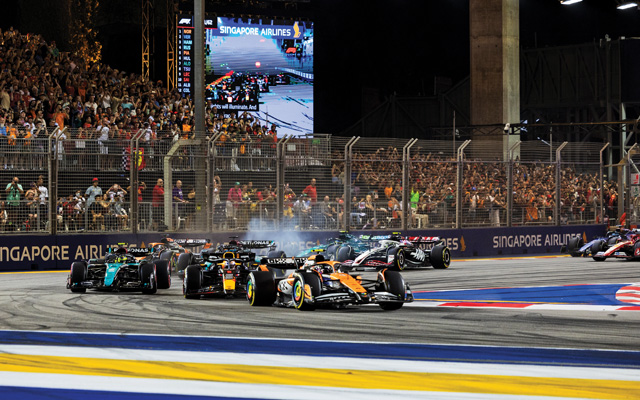
The Singapore Grand Prix is a prominent sporting event in Singapore, where attendance grew by 11.7 per cent in 2025 over 2024
This is sports tourism – a segment that is generating around 10 per cent of the world’s expenditure on tourism, with an estimated growth rate of 17.5 per cent between 2023 and 2030, according to UN Tourism’s Sports Tourism Market Size, Share & Trends Analysis Report.
The power of sports tourism is also observed by Visa, the global digital payments network. Visa’s 2026 Global Travel Intentions (GTI) study, which surveyed over 17,000 travellers across the Asia-Pacific region, found that 54 per cent of respondents intend to travel for sports events specifically.
“This intent is especially strong among affluent respondents at 67 per cent and Gen Z travellers at 62 per cent,” noted Danielle Jin, chief marketing officer, Visa Asia Pacific.
She added: “Importantly, major global sports events are massive magnets for tourism. According to the GTI study, around 65 per cent of the most-searched 2026 travel dates and destinations align with massive global sports competitions such as the FIFA World Cup.
“As the official payment technology partner for the FIFA World Cup since 2007 and a proud supporter of the world’s most prominent sports events like Formula 1 and the Olympics, we see these events as more than just competitions – they give fans an opportunity to be part of a global moment, connect with others in the fan communities, and in doing so, experience a destination through something they are passionate about.”
Great Britain played against Japan at the HSBC SVNS Singapore in March 2026
The tourism connection
Jin noted that sporting events have mass global appeal and attract a broad base of international travellers, with spending driven notably by travellers from highly connected, mobile and digital-first markets.
Citing VisaNet data from the Formula 1 Singapore Grand Prix in 2025, Jin said travellers from Australia, China, Indonesia and the US accounted for more than 40 per cent of all traveller spending during the week of the race.
“Going deeper into the data, we also found two emerging segments driving travel spending,” stated Jin.
The first are affluent travellers. Visa’s GTI study found that 67 per cent of affluent travellers intend to travel for sports and racing-related events, showing how premium segments see sporting events as a way to chase their passions and explore destinations in a new light.
“Their spending reflects this: during the F1 Singapore night race in 2025, Visa data found that affluent travellers were a major driver of traveller spending – accounting for around 30 per cent of visitors into the city but generating 40 per cent of total spending,” detailed Jin.
Second are business travellers. During the Singapore Grand Prix week in 2025, VisaNet data showed that business cardholder arrivals rose by around 80 per cent, while spending increased by approximately 170 per cent.
“This reflects a rising trend of business-leisure, or bleisure travel, where corporate travellers visiting a city for work or meetings also plan in advance to experience sporting events that match their interests,” she added.
Interestingly, it is more than just the action on the track or pitch that lures sports tourists. Festivalisation of the sporting event – the carnivals and concerts that come with the actual sport – is just as influential.
Jin told TTG Asia: “At the end of the day, sports fans who venture overseas are also travellers. Another emerging pattern in Asia-Pacific is the surge in travel for music and entertainment experiences – according to Visa research, 65.7 per cent of Asia-Pacific consumers intend to travel for global concert tours.
“This means that sporting events with festival elements represent a convergence of passions in Asia-Pacific that delivers a win-win for both the destination and the sport itself. Fans travelling to a sporting event can enjoy fresh and unique experiences on top of the competitions, while festival elements can provide a gateway to introduce new fans to the sport.
“The net result is an increase in tourism to the destination cities and this creates positive spillover for local businesses.”
VisaNet data showed that travel into Singapore during the Singapore Grand Prix week in 2025 grew by around 25 per cent compared to a typical week, and spending surged by about 45 per cent. Night-time spending in particular grew by over 90 per cent, showing how travellers who visited the city for the race also delivered a boost to businesses like restaurants and entertainment outlets.
Jin said: “From a tourism perspective, festivalisation can significantly broaden the appeal of sporting events beyond appealing purely to sports fans. By offering a wider mix of entertainment and lifestyle experiences, destinations can attract a more diverse traveller base, encourage longer stays, and create deeper connections with travellers.”
Sports tourism also encourages longer stays, as sporting events act as a “gateway” for fans to “explore more unique local experiences in the cities they visit”.
According to Visa intelligence, 49 per cent of travellers enjoy learning about host-country cultures via major tournaments – showing how sports events are a springboard for more travel and tourism. Around 53 per cent of respondents expressed interest in beach or resort holidays, 40 per cent indicated an interest in outdoor activities, 33 per cent wanted to explore museums and galleries, and nearly half were interested in exploring local culture.
She added: “We also see this reflected in actual spending through VisaNet data. During the Formula 1 races in Australia and Japan in 2024, we saw travellers who visited the race cities continue their travel even after the races. In Australia, one in four overseas travellers explored cities near Melbourne while in Japan, travellers were much more adventurous, visiting cities as far as Okinawa – 1,200km away from the race city of Suzuka – to explore more of the country.
“These point to a simple fact that travel is woven into the fabric of Asia-Pacific. Sports is an emerging area of interest, or what we at Visa call a ‘passion pillar’, sparking a new wave of travel patterns and preferences.”
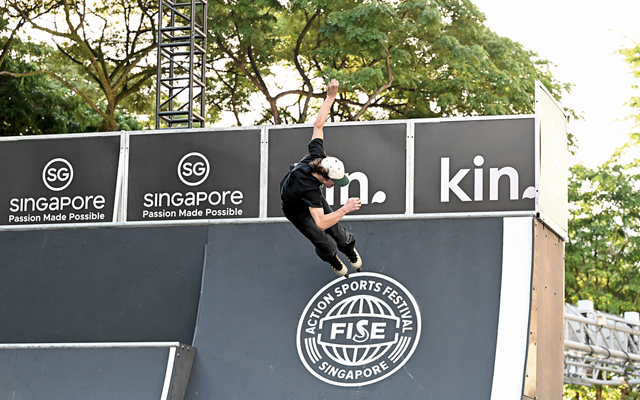
FISE – or Festival International des Sports Extrêmes – debuted in Singapore in 2025
Business opportunities
Hospitality companies recognise the complementary relationship sports and tourism share, and are clever to weave sports into their guests’ experiences.
A mix of exclusive invites to sporting events as a reward for top-tier loyalty guests and accommodation deals bundled with event tickets have proven to be a hit with Ascott’s customers.
In fact, according to Tan Bee Leng, chief commercial officer at Ascott, access to special deals and loyalty perks that bring guests closer to sports celebrities and high-demand events plays a crucial role in driving new member subscriptions to the Ascott Star Rewards (ASR) programme, which is on track to reach 10 million members by the end of this year.
The lodging specialist has run successful activations with Chelsea Football Club (CFC), Wimbledon Championships and Roland-Garros.
Tan pointed to studies that show more people are choosing to travel for experiences, and sports and entertainment are top motivations.
Hence, combining sports and entertainment with accommodation “makes a lot of sense”, remarked Tan, adding that packages and loyalty perks that feature sports exclusives helped customers to see Ascott as more than just a lodging provider.
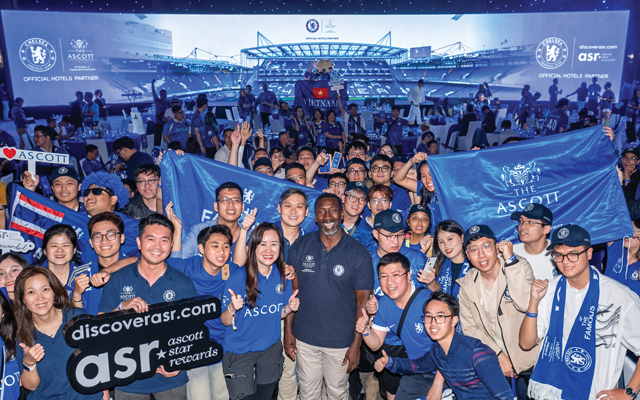
With CFC, Ascott is able to craft special guest experiences tied to celebrity engagements and lively watch parties. In April this year, Ascott brought football legend Jimmy Floyd Hasselbaink to Hanoi for a two-day exclusive international fan engagement event in Hanoi, Vietnam. The programme was held across Ascott Tay Ho Hanoi, Oakwood Residence Hanoi, and Somerset West Point Hanoi.
First inked in 2024, Ascott and CFC’s partnership allows both parties to collaborate on curating money-can’t-buy experiences for ASR members around the world, including exclusive access to matches at Stamford Bridge stadium, home of Chelsea FC, as well as VIP visits to The Blues Cobham Training Ground.
Tan said the CFC partnership appealed even to non-CFC fans and people who were new to the sport. “Our events facilitated the whole idea of coming together to enjoy the sport,” she remarked.
Meanwhile, Ascott’s Wimbledon Championships and Roland-Garros activations were motivated by affluent guests who had difficulties securing passes that were in high demand.
“So, we found access for them. We offered stay packages that included match tickets and quality hospitality – something that our affluent guests valued,” said Tan.
Ascott’s ability to feature sports celebrities, such as Hasselbaink and Chinese professional tennis player Zheng Qinwen at its guest engagement events reinforces its reputation for creating exclusive moments for its guests – something that existing and potential real estate owners also appreciate.
Ascott will continue to expand its sports exclusives. It will prioritise high-profile sports that many people will travel for; sports with a large, global fan base; and sports that guests show interest in.
Hyatt is also showing up for sports tourism. It is now the Official Regional Hotel Partner for Hyrox, a fitness race that combines a running race with workout stations and is all the rage now worldwide. Hyatt supports Hyrox athletes with stay-and-race packages that deliver comfort and exclusive hotel rates near race venues across Asia-Pacific.
These Hyrox race-cation packages include a special hotel room rate; in-hotel dining discounts so guests can eat well and comfortably before the race; quality breakfast options on race day; wellness and recovery touches afterwards; spa discounts; and ice buckets available on request. As a thoughtful perk, free laundry service is also offered while destination guides are distributed to encourage guests to explore beyond the competition.
Tammy Ng, vice president of brand & marketing, Hyatt Asia Pacific, told TTG Asia that Hyatt and Hyrox’s partnership was a perfect match, backed by shared values around community, personal achievement, and the idea of showing up for an activity of value.
Ng said: “We are seeing more people travelling specifically for fitness events, often training for months and then building a whole trip around race day. For many, wellness is no longer only about slowing down, going to a spa or taking a retreat. It is also about movement, performance, self-improvement and being part of a community.
“Hyrox also has a format that is accessible to everyday athletes, not just elite competitors. That made it a natural fit for World of Hyatt. For us, the opportunity is to support the full race journey, not just the overnight stay. Our hotels can become part of how guests prepare for the race, perform on the day, recover afterwards and celebrate with the people they travelled with.”
Hyatt’s race-cation packages have been a hit, particularly with those who travel to multiple races around the region, noted Ng, adding that Hyrox participants often “build a vacation around the event”.
“Beyond the competition itself, guests are looking for meaningful experiences that support both physical and emotional well-being. The race-cation offers a reliable and convenient experience across race cities that our members can rely on,” she said.
As a prominent sponsor for many sporting events around the world, Visa is well versed with leveraging exclusive sporting experiences for stronger customer connections.
Jin said: “We believe that when Visa can champion people’s passions and create the right platforms for them to be who they want to be, we can elevate experiences, deepen brand connections, and drive real growth.”
Visa aims to be “an enabler” of the positive outcomes of sports tourism. “Using our brand and trusted network, we strive to make the fan journey – ticketing, transport, dining, merchandise, and everyday spending – feel effortless,” she detailed.
During the FIFA World Cup 2026, Visa’s Tap In global campaign offered fans a chance to win limited-edition merchandise, signed memorabilia, and a trip to the final games. In Asia-Pacific, Visa hosted live watch parties for Visa guests and cardholders, and offered hospitality privileges for Visa Infinite cardholders in Tokyo.
Ascott brought football legend Jimmy Floyd Hasselbaink to Hanoi, Vietnam for a two-day exclusive international fan engagement event in April 2026
Singapore: For the love of all sports
The tiny island state of Singapore packs a punch in the competition for sports tourism. It took home the Asia’s Leading Sport Tourism Destination award at the World Travel Awards in 2010, 2023 and 2025.
Lilian Chee, director, sports, Singapore Tourism Board (STB), believes that this repeated recognition “reflects a combination of strengths”.
She elaborated: “At its foundation is world-class infrastructure and seamless operational excellence, from our venues and transport connectivity to the end-to-end experience of hosting major events. This creates a reliable, high-quality environment that event organisers, athletes and spectators trust, and that keeps them coming back.
“Beyond the events, Singapore offers travelling fans something truly distinctive. As a compact, safe, and vibrant city, visitors can enjoy a world-class sporting event alongside everything else the destination has to offer: exceptional dining, rich culture, and world-class entertainment. This makes Singapore a compelling sports tourism package, not just a ticket to a game.
“Singapore has also built a strong track record as a test bed for innovation in sports and events management. Through initiatives such as the Kickstart Fund, which supports local businesses in test-bedding innovative concepts, products and events with untested tourism potential and scalability, Singapore has been able to nurture fresh ideas and bring them to life. Past events supported under the Fund include the largest urban sports festival FISE Singapore 2025, a testament to our openness to piloting new formats and fan engagement concepts that make us an attractive partner for rights holders looking to push boundaries in Asia.”
Although Singapore’s iconic Formula 1 night races come immediately to mind in a conversation about sports tourism, the city-state boasts a diverse line-up of sporting events, from golf and triathlon to pickleball and floorball.
Chee said it is Singapore’s ambition to become Asia’s premier events capital, and STB is focused on attracting a wide array of internationally renowned and compelling sports events that strengthen Singapore’s destination appeal, generate global branding value, and contribute to a rich and varied events calendar that keeps Singapore relevant and exciting to diverse groups of visitors year-round.
In 2026 alone, Singapore will host at least nine top sporting events. New to Singapore’s sports tourism gains are the Singapore Tennis Open, NBA Rising Stars Invitational (basketball), and PGL Singapore Major 2026 (esports). Singapore will host the only Tennis Open event in South-east Asia this year while NBA Rising Stars Invitational is the league’s first regional high school tournament and a first-in-Asia product. PGL Singapore Major will bring the first Counter-Strike 2 Major to South-east Asia.
When asked to define Singapore’s strategy in building an attractive sports tourism environment, Chee said STB does not target specific sports. Instead, it regularly assesses the sporting landscape to identify which genres, event formats, and concepts deliver the best tourism outcomes for Singapore.
“Key considerations include the international fan following a sport commands, the travel propensity of its audience, and the broader economic and reputational value it brings to Singapore as a destination. This keeps us responsive to evolving global trends, and ensures STB is always pursuing opportunities that best align with Singapore’s tourism goals,” said Chee.
Bangkok: Hyrox hot spot
The largest Hyrox race in Asia was recently held in Bangkok, Thailand, with more than 22,000 participants from Thailand and overseas taking to Queen Sirikit National Convention Center to complete gruelling fitness circuits.
This August competition is also significant because it is the second Hyrox edition in the same city in the same year. Furthermore, it was expanded from three days to four, reflecting strong and growing demand from both participants and the local fitness community.
Gary Wan, managing director of Hyrox Asia Pacific, explained that “Bangkok’s dynamic lifestyle, vibrant energy, and global tourism appeal make it a compelling destination for international participants and are key factors behind Hyrox’s decision to stage the event in the city for the second time this year, following BYD Hyrox Bangkok in March, which welcomed nearly 17,500 participants”.
The next big thing
Ascott and Visa are keeping an eye on the growth trajectory of participative sports.
Visa’s Jin told TTG Asia that “participative sports are an exciting development, reflecting yet another way for people not just to pursue their fitness journey alone, but with a community of like-minded others”.
“Athletes who train for these events often see these as personal milestones they train passionately for and build travel plans around,” she added.
Ascott has yet to feature any participative sports in its guest experiences, but its teams are studying the potential business influence of such events. Opportunities may lie in marathons; Ascott is considering the curation of unique experiences in the cities where famous marathons are scheduled.
At Hyatt, the partnership with Hyrox is expanding – just as the sport itself is. More than 110 Hyatt hotels are now participating in the experience, including recent expansion into China and India. Supporting races in key cities such as Singapore, Bangkok, Hong Kong and Shanghai, the partnership has enabled the international hotel group to connect with a growing population of active, community-minded travellers while introducing more guests to Hyatt in a meaningful manner.
Asia-Pacific is well known for its incredibly rich cultural calendar, but there is still significant potential to turn lesser-known local moments into international tourism drivers. The region does not need more events; it needs to better leverage its existing cultural assets.
Major festivals, sporting events and cultural moments have shown how live experiences can influence travel decisions, extend stays, and create wider opportunities across hospitality, F&B, retail and entertainment.
Singapore’s Formula 1 Grand Prix is one of the clearest examples in the region. Since its inception in 2008, the race has brought in more than 720,000 international visitors and generated more than S$2.2 billion (US$1.7 billion) in incremental tourism receipts across hospitality, F&B, attractions and retail.
In a similar vein, major cultural moments such as Chinese New Year, Sydney’s Mardi Gras, Japan’s cherry blossom season and Thailand’s Songkran are already internationally recognised and strong drivers of tourism. The Tourism Authority of Thailand expects Songkran festivities in 2026 to drive more than 30 billion baht (US$901 million) in tourism revenue.
With a full calendar of events across the region, Asia-Pacific does not need to wait for a once-every-four-years international sporting event to capture this value. The real opportunity for untapped growth lies in under-leveraged cultural moments, such as Hong Kong’s Art March, Bali’s Nyepi, regional music festivals, and emerging lifestyle events.
These moments have the potential to become stronger international draws if destinations learn from their better-known counterparts and invest strategically in tourism expansion, storytelling and visitor experience. Hong Kong’s Art March, for example, brought together more than 100 arts and cultural events in March 2026, showing how a city can cluster culture, hospitality, retail, and visitor experience around a defined period.
For brands, this is not just a sponsorship opportunity. It is a chance to help make these moments more visible and valuable. That could mean supporting infrastructure, creating better visitor journeys, improving content capture, building hospitality experiences or helping international audiences understand and participate in local culture more meaningfully.
The role of brands should not be to dominate the moment. The best activations improve the experience while respecting the cultural context they are entering.
Strong confidence in Tropical North Queensland’s tourism sector has ignited more than A$295 million (US$210 million) in new infrastructure projects, backed by a record A$1.3 billion in international visitor spend for the year ending March 2026 – a 27.6 per cent increase over the previous year.
The figures, released in Tourism Tropical North Queensland’s (TTNQ) 2025-26 Annual Report, mark the region’s largest capital investment wave since the construction of the Crystalbrook hotel portfolio.
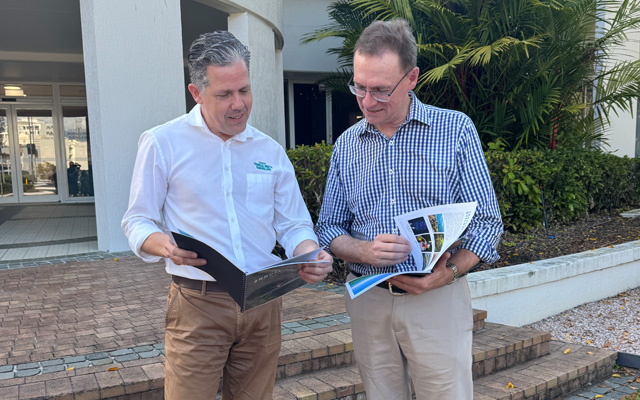
From left: Tourism Tropical North Queensland’s Mark Olsen and John O’Sullivan reflect on strong tourism performance and tourism infrastructure boom
TTNQ chair John O’Sullivan attributed the international recovery to targeted government funding secured since the pandemic, noting that campaign activity delivered a high-yield return of A$34 in visitor expenditure for every dollar invested across industry and government channels.
According to TTNQ’s CEO Mark Olsen, the influx of visitor dollars is driving significant developer interest in the region.
“Work is underway on the A$60 million Skyhaven accommodation at Cairns Airport and the A$85 million Skyrail Rainforest Cableway upgrade. The Morris Group’s A$40 million redevelopment of Double Island is also among the surge in interest by developers who are sensitive with scale to the landscape, which is ideal for the only place on earth where two natural World Heritage areas are side by side,” Olsen elaborated.
Additional key developments advancing across the region include the Queensland Government’s A$59 million Wangetti Trail, a A$15.5 million expansion of the Smithfield Mountain Bike Park, and the flagship Hilton Palm Cove Cairns Resort & Spa, which is entering its final preparation stages ahead of opening.
Alongside the annual performance figures, the TTNQ Board formally adopted the TNQ 2045 Destination Management Plan. The long-term blueprint establishes a target to scale regional visitor spend to A$10 billion by 2045, prioritising sustainable ecotourism, expanded regional transport links, and First Nations cultural partnerships.