Amadeus’ Demand360 data shows growing travel demand across Asia-Pacific for the second half of the year.
In 1Q2023, the region saw a hotel occupancy growth trajectory of 61.7%, surpassing 2019 levels by 3%, thanks to the recent reopening of Greater China’s border.
Asia-Pacific saw a hotel occupancy growth trajectory of 61.7% from January to March this year
Greater China is leading Asia-Pacific’s recovery growth, with 1Q2023 hotel occupancy in the region outpacing pre-pandemic levels by 5%, as compared to 1Q2019. Meanwhile, Australia and New Zealand have the highest hotel occupancy level in Asia-Pacific, trending up from 64.5% in January to 76.5% in March.
Hotel occupancy levels in major Asia-Pacific markets improved throughout 1Q2023. Tokyo showed strong performance as hotel occupancy rates reached more than 80% and exceeded records from mid-March to April during the cherry blossom season.
Sydney hotels averaged 85% occupancy from February to March, while Singapore hotels outperformed previous record highs in 2019 by 2-3% in February and March this year. In Seoul, hotel occupancy from January to March was 7% higher than the same period in 2019.
The major markets experiencing the highest regional hotel occupancies in 1Q2023 are Tokyo, Hong Kong, Seoul, Shanghai and Beijing, with rates higher than 70% during the Easter week from April 7 to 10.
“This is a hopeful sign that Asia-Pacific-based hoteliers may expect a substantial rebound in the long run as travel has picked up its pace, both domestically and internationally,” noted Maria Taylor, head of commercial, Asia Pacific, hospitality, Amadeus.
As China reopens for international outbound travel, online sharing of unique, first-hand experiences is fuelling a shift in Chinese travel preferences.
China has always been a country where consumer trends move extremely fast, and travel has not been immune in the three years since borders closed at the start of the pandemic, noted Auckland Airport’s chief customer officer Scott Tasker.
New Zealand hopes to tap into the ongoing trend of travellers sharing details of their trips to attract visitors from China; Auckland, pictured
“Although (the) Chinese have only really begun international travel in any great numbers in the past few months, there has been a definite acceleration in the move beyond group travel into taking a more independent approach travel,” he said, adding that this is a typical pattern with inbound tourism markets maturing, and was a trend before Covid.
“What’s different is the speed at which this is happening,” remarked Tasker.
While New Zealand was one of the first 20 countries accredited for group travel from China, it had seen a steady decline in group travel prior to the pandemic – from 66 per cent of Chinese tourists in 2012 to 37 per cent in 2019.
He said: “Group travel is still important for newer, less experienced travellers and can help fill in the demand gaps during our quieter seasons but we’re expecting this shift to independent travel to continue, fuelled by the internet reviews and social media content. These increasingly confident travellers tend to stay longer and spend more.”
Speaking at the New Zealand Tourism Forum at TRENZ 2023 in Ōtautahi Christchurch, Tasker commented that the return of regular, direct air connections into China’s largest metropolitan areas unlocks a major market of high-value travellers for New Zealand.
Tasker shared that air connectivity is gaining traction, with Air New Zealand and China Eastern operating daily into Shanghai, China Southern flying daily into Guangzhou, Air China restarting its link with Beijing four times a week, and Hainan Airlines starting its twice weekly service from June.
“We’ll have (a total of) 27 direct flights between Auckland and four major Chinese cities. The ease and simplicity of those direct flights helps get New Zealand on the radar of Chinese tourists,” he said.
Seat capacity between China and New Zealand is currently at 78 per cent of 2019 levels, and forecast to reach 93 per cent of pre-pandemic levels by September.
“While we haven’t seen Chinese travellers in any numbers since pre-pandemic – and that’s still really the case given the need for passport renewals and visa processing – what we do know is they are researching online, watching social media recommendations from fellow Chinese travellers, and taking a really considered approach to travel choices,” noted Tasker.
With more Chinese travellers increasingly going online to plan their next overseas trip, offline channels such as travel agents are rapidly making way for China’s social media platforms such as Wechat, Xiaohongshu and Douyin, coupled with online travel services platforms Fliggy, Ctrip and Qunar, as well as airline direct channels.
Influencers are sharing destinations and experiences in real time, which creates a demand for travel experiences and special interest travel – this shows just how vital video content is.
He opined: “Tourism operators can tap into this, not only by ensuring they have an online presence that inspires Chinese consumers as they scroll (through) travel sites, but by providing experiences for customers with a bit of ‘wow’ factor that they then share directly with their followers.”
This could have the potential to reach millions, he added.
Despite South-east Asia destinations dominating the China market, New Zealand has plenty to offer to the smaller, niché travel market.
“After several years of restrictions, Chinese travellers are now wanting to go somewhere they can escape and relax. Plus, there is a growing trend away from major tourist attractions towards destinations offering nature-based tourism and activities such as hiking, camping and water sports, like surfing,” shared Tasker.
Roomie, a hospitality digital guest engagement platform, is intensifying efforts to grow its Malaysian hotel client base, as well as expand its services into Asia-Pacific.
The company’s expansion plans will start in Thailand in early 2024 with the setting up of a representative office in Bangkok, followed by Singapore.
Roomie is a hotel mobile engagement platform which features chat technology and service requests
June Yap, senior vice-president of Roomie, shared: “Roomie’s solutions addresses budget constraints that many independent hotels and small chains face in investing and maintaining a mobile platform to engage with today’s mobile-centric guests… this is where we come in.
“Roomie delivers all the benefits of a hotel mobile engagement platform and addresses increasing labour costs and shortages at an affordable price with zero capital investment.”
Roomie starts serving a hotel guest during reservation enquiries with its consolidated chat technology that is able to bring together chat messages from multiple chat platforms including Whatsapp, Facebook, or WeChat.
This service continues in-house, such as ordering room service, requesting for a service, obtaining information about a hotel, as well as live chat and movies on demand. Roomie’s technology automates the back-end service processes to ensure efficiency.
Yap said that the platform is currently the only service provider offering outsourced shared services that reduces hotel’s operating costs, increases guests’ satisfaction and improves the hotel’s revenue.
By adopting Roomie, hotels gain access to its 24/7 outsource human chat service agents to handle all reservation chat enquiries and in-house guests’ chat communication. The platform’s Data & AI services help hotels to measure and benchmark their service performance and increase upselling revenue, while its Dynamic Remarketing database allows hotels to improve their direct bookings by tapping into Roomie’s marketing database with more than 1.8 million travellers.
Roomie currently has around 60 hotel clients in nine states across Malaysia, said Yap. Having gone live in 2019, its marketing efforts were temporarily hampered by the Covid-19 pandemic.
With the resumption of travel and tourism, Roomie is on track to reach 150 hotels in Malaysia by end 2023, and is laying the groundwork for overseas expansion.
Travelport and Adventureman, aka Jamie McDonald, have achieved a new world record (endorsed by Guinness World Records) by travelling to the Seven Modern Wonders of the World in just under seven days using only public transport.
Visiting the Great Wall of China, the Taj Mahal, Petra, the Colosseum, Christ the Redeemer, Machu Pichu and Chichén Itzá, the British adventurer travelled across four continents, landed in nine countries, flew on 13 flights, and rode in 16 taxis, nine buses, four trains and one toboggan to cover about 36,783km in six days, 16 hours and 14 minutes.
Adventureman took photos showing himself at each location and the date visited
The challenge was set to Adventureman by Travelport in order to put the company’s retail platform, Travelport+, to the test, proving the company’s technology helps its travel agency partners to plan, book and manage even the world’s most complex trip.
“This was certainly my most complex, complicated trip yet,” said McDonald. “With travel, there are just so many variables – weather, restrictions, delays, customs, traffic, cancellations, you name it. When you’re attempting to set a world record, speed and agility are absolutely key.”
Protecting the environment was also key, with carbon emissions from Adventureman’s trip were calculated by Travelport using the Travel Impact Model.
In addition, the trip was a great way for Adventureman to raise funds for his charity, the Superhero Foundation, where Travelport matched a dollar for every mile that he travelled for this challenge.
Sentosa Development Corporation (SDC) has launched the Sentosa Playbook for Reducing Disposables in its commitment to reduce the use of plastic disposables across the island.
In collaboration with the World Wide Fund for Nature Singapore (WWF-Singapore), the Playbook is the first precinct-level disposables guidebook in Singapore that provides guidance to businesses on Sentosa to help them understand best practices, monitor progress and push boundaries through new sustainable technologies.
Sentosa Development Corporation is committed to reducing the use of plastic disposables across the island
To reduce the use of plastic disposables, members of the Sentosa Carbon Neutral Network (SCNN) – which include hotels, attractions and F&B operators – have committed to remove single-use plastic bottled water from guestrooms, dine-in, takeaway, and events by end-2023. This island-wide policy is estimated to reduce total island bottled water usage by at least two million bottles per year.
The Playbook also outlines 16 measures to reduce disposables, grouped into six categories from takeaway bags, food containers to amenity kits, across hotels, attractions, and F&B operators.
Some key measures undertaken by SCNN members include Capella Singapore eliminating single-use plastic bottled water since 2019 and removing plastic packaging from in-room amenities such as dental kits and laundry bags; Baristart Coffee’s app-enabled container programme that allows patrons to loan containers for free, and returning them for cleaning and sanitisation within 30 days; and Sentosa Golf Club removing all single-use plastic bottled water since 2018.
Thien Kwee Eng, CEO, SDC, said: “We hope that through challenging everyone on the island to make the necessary changes together, we can inspire our guests that change in their consumption behaviour is possible. This Playbook will serve to guide island businesses to align their practices with a Sentosa-wide approach towards tackling waste and working towards a Sustainable Sentosa.”
“We believe that successful implementation in Sentosa will inspire more players in the tourism industry to rethink single-use plastic products and explore innovative sustainability solutions,” commented R. Raghunathan, CEO, WWF-Singapore.
Together with Resorts World Sentosa, Sentosa is the first island destination in Asia to be conferred the Global Sustainable Tourism Council – For Destinations (GSTC-D) certificate in 2022. SDC continues to explore more innovative ways of reducing carbon emissions through the launch of sustainability-focused experiences.
Banyan Tree Group’s new Stay For Good programme aims to provide travellers with authentic and immersive experiences that encourage a deeper connection with each destination.
The programme also honours the heritage and traditions while contributing to the local communities.
Talat Noi features an eclectic mix of coffee shops and art galleries interspersed with heritage houses and traditional mechanic workshops
Travellers can journey to some of the most unique and lesser-known destinations around the world and enjoy a myriad of highlighted experiences – from the thousand-year-old traditions and crafts of Kyoto, Japan, to the colonial architecture and cultural traditions of Puebla, Mexico.
Offering a wide range of curated activities and experiences, guests can explore the bamboo forests of Anji in China, discover the Nyonya heritage of Penang, learn about the minority Muslim community of Krabi in Thailand, or visit one of Bangkok’s oldest neighbourhoods, Talat Noi.
At Buahan, a Banyan Tree Escape, guests will visit the nearby Singaperang Village and follow a local farmer on a tour of his land and indulge in traditional local delicacies handmade by the farmer’s wife; while for Garrya Nijo Castle Kyoto, guests will tour a traditional home with a thatched roof (kayabuki), and try their hand at making one of these roofs under an expert’s guidance.
Adhiyanto Goen, head of communications, Banyan Tree Group, said: “We believe that travel should be about more than just a vacation. It should be an opportunity to explore new perspectives, gain fresh inspiration, and immerse oneself in the culture and heritage of the places we visit. Our Stay For Good programme offers just that – an opportunity to connect with local communities and contribute to the sustenance of their precious heritage.”
The Stay For Good programme will be progressively rolled out to all Banyan Tree Group properties worldwide, including Banyan Tree, Angsana, Cassia, Dhawa, and Garrya.
Skyscanner’s new report reveals the increased search volumes by travellers and the growing popularity of Asia-Pacific destinations
Travellers from EMEA and the America regions are favouring destinations in Asia-Pacific
Tourism boards in Asia-Pacific will need to intensify marketing efforts to ensure their destinations stay top of mind among travellers
More travellers are looking to visit destinations in Asia-Pacific
Skyscanner’s new report, Skyscanner Horizons: Destination & Booking Insights Q1 2023, which explores the latest trends in global travel, has identified a spike in the number of travellers searching for travel inspiration as well as growing popularity of Asia-Pacific destinations among different geographical markets.
The study states that despite a backdrop of higher airfares and a challenging economic climate for some, travelling internationally remains a top priority for many people across the world.
Skyscanner platforms now see more than 100 million unique monthly visitors, which Mike Ferguson, director of destination marketing at Skyscanner, said was “indicative of both the sector’s continued recovery and the exceptional travel demand across all regions”.
Ferguson added: “Destinations, particularly in Asia-Pacific, are benefitting from increased search volumes compared to last year and, at the same time, longhaul booking windows are lengthening. Longhaul international travel has been slower to recover than other segments, but 2023 looks set to change that.”
EMEA market – all ready for summer
Travellers in Europe, the Middle East, and Africa regions (EMEA) are working out their summer vacations, with flights being booked two to three months in advance.
Bookings for shorthaul summer sojourns are mostly made at least 90 days ahead (31 per cent of travellers), but this is a 15 percentage point decline over 1Q2019, as some travellers prefer to book closer to their departure dates. The 60-89-day booking window showed the greatest increment (25 per cent) compared against 1Q2019.
For longhaul trips, bookings made more than 90 days ahead have increased by 11 per cent over 1Q2019 to reach a 40 per cent share in 1Q2023. This reflects greater traveller confidence in booking trips to places farther away.
In terms of trending destinations for the next six months from March till September 2023, most of the top 10 countries are in Asia-Pacific.
The report states that travellers in EMEA are taking advantage of recent border reopenings and the relaxation of restrictions across Asia. Taiwan takes first spot, with a 791 per cent spike in searches in 1Q2023 compared to the same period in 2022. Japan (+433 per cent), Laos (+367 per cent), China (+359 per cent), Saudi Arabia (+264 per cent), Malaysia (+259 per cent), Albania (+254 per cent), Singapore (+245 per cent), South Korea (+215 per cent) and Vietnam (+201 per cent) make up the rest of the top 10 ranking, in descending order.
AMER markets – longhaul returns to pre-pandemic norms
Almost 40 per cent of longhaul flights booked by travellers in North, Central, and South America regions (AMER) are made over 90 days before departure.
The highest growth was seen in the 60-89 day booking window, with number of bookings up by nearly a fifth (19 per cent) in 1Q2023 compared to 1Q2019.
These outcomes reflect continued preference and confidence in booking bigger, usually more expensive trips at least three months ahead, likely to places that have recently opened up in Asia-Pacific.
Similar to EMEA markets, travellers in AMER are favouring Asia-Pacific. Seven out of the top 10 trending destinations from March to September 2023 are in Asia-Pacific.
China takes first spot, with a 317 per cent spike in searches in 1Q2023 compared to the same period in 2022. Japan (+266 per cent), Taiwan (+215 per cent), Singapore (+172 per cent), Malaysia (+169 per cent), New Zealand (+136 per cent), Norway (+127 per cent), Morocco (+125 per cent), Saudi Arabia (+125 per cent) and Fiji (+118 per cent) make up the rest of the top 10 ranking, in descending order.
APAC markets – regional travel leads the way
Booking lead times remain short – less than one week and between seven and 29 days – for Asia-Pacific travellers looking to fly domestically. For shorthaul trips, bookings are secured seven to 29 days and 30 to 59 days – these two booking windows comprise nearly two-thirds of the total for shorthaul searches at the end of Q1.
For longhaul trips, more are booking far ahead. Windows of at least 90 days see a 22 per cent increment, while 60 to 89 days is up by 10 per cent in 1Q2023 versus the same period in 2019.
Seven out of the top 10 trending destinations for these travellers are within Asia-Pacific, due to improved air connections following the easing of restrictions.
Destinations not within the region include ‘Everywhere’, Skyscanner’s popular search feature that gives travellers inspiration on when and where to travel, as well as Austria and Hungary – most likely due to recent increases in non-stop flights to Europe.
Taiwan takes first spot, with a 1,426 per cent spike in searches in 1Q2023 compared to the same period in 2022. Laos (+895 per cent), Japan (+800 per cent), Everywhere (+701 per cent), Mongolia (+679 per cent), China (+618 per cent), Thailand (+580 per cent), Vietnam (+545 per cent), Austria (+469 per cent) and Hungary (+462 per cent) make up the rest of the top 10 ranking, in descending order.
Destination marketing intensifies
With traveller interest in Asia-Pacific on the rise across geographical markets, Ferguson told TTG Asia that tourism boards in this region “will have to intensify their (marketing) efforts to ensure their destinations are top of mind” among travellers.
He said: “The trending interest in Asia-Pacific destinations across various markets has created a highly competitive landscape, as more countries and cities vie for attention. To stand out, tourism boards will need to develop compelling marketing campaigns, highlight unique aspects of their destinations, and showcase the diverse range of experiences they offer.
“Collaborations with airlines, travel agencies, and online platforms will play a crucial role in promoting Asia-Pacific destinations and capturing the attention of potential travellers worldwide.”
The destination marketing rush has led to a “significant increase in destination promotions partnerships” with Skyscanner this year.
When asked what types of destination marketing messaging stand out in particular now, Ferguson pointed to an “emphasis on emotional and experiential messaging”.
“Destinations understand the power of evoking feelings and memories associated with travel, and they are leveraging this to remind people of the joy and transformative experiences that it brings. These messages aim to highlight the unique attributes of each destination, whether it is showcasing breathtaking landscapes, authentic local experiences, or extraordinary cultural encounters,” he detailed.
“Immersive videos and visually captivating imagery are also being used as part of this storytelling to transport would-be travellers to far corners of the world and create a strong desire to explore and embark on memorable journeys once again,” he added.
One ongoing example of such destination messaging, according to Ferguson, is the Tourism Western Australia campaign. Titled Western Australia – Walking on a dream / Perth: where amazing adventures begin, the campaign with Skyscanner plays up the destination’s unique landscapes, wildlife and road trips that will appeal to holidaymakers as well as work/leisure blended travellers.
TBO.com – the global distribution platform for travel agents – is celebrating the peak season with its Book n Win Bonanza from now until June 30.
The promotion will give travel bookers across the region a chance to win guaranteed prizes upon completing bookings across all their products.
TBO’s Book n Win Bonanza allows travel bookers across Asia-Pacific the chance to win prizes upon completing bookings across all their products
To participate, agents will need to make a minimum threshold booking of US$2,000, which will automatically allow them to spin a wheel and win prizes such as iPhones, cruises, hotel and shopping vouchers, electronic products, and TBO+ Reward points. There is also a raffle draw for the grand prize – a Honda BR-V car.
The campaign will run throughout the duration of the promotion and across multiple digital platforms, including TTG Asia.
The promotion has received positive response, shared Vijayeta James, TBO’s commercial director APAC, with over 500 agents from Indonesia and the Philippines having already won prizes.
Christchurch Airport is working tirelessly to restore air links, update hardware and advance on sustainability goals – all to ensure the country has a healthy second airport.
Scott Callaway, general manager, trade development, Christchurch Airport, said a reliable second airport is crucial in the event of weather incidents.
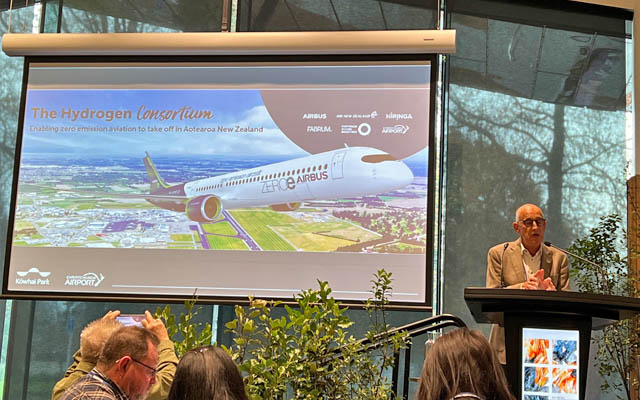
Christchurch Airport’s Hydrogen Consortium aims to pioneer the commercial deployment of green hydrogen-powered aircraft
Callaway said: “We need to work hard to build our international arrivals up, as they are of high value to New Zealand and the South Island.”
Christchurch Airport is the gateway to South Island, which is working to achieve 40 per cent of international arrivals to New Zealand.
In 2019, Christchurch Airport welcomed seven million passengers a year.
“We did some research previously, and for every dollar we bring into the economy, NZ$50 (US$31.70) is spent downstream, and that is a big multiplier that goes beyond Christchurch and spread throughout the South Island,” added Callaway.
When asked about air links with China, he said the airport currently has an “undertaking from China Southern Airlines”.
He said: “China is really important to the South Island and Christchurch Airport. We’ve done a lot of work in marketing (to the Chinese market), such as partnering with Alibaba. Our expectation is that it will come back strong. (For now), it is still quite early in its recovery.”
There are also discussions with Singapore Airlines and Emirates, two carriers that are crucial in bringing in international visitors. Unfortunately, ticket prices on both carriers are sky high, driven up by pent-up demand from both business and leisure travellers.
“At some point in the next six to 12 months, we should see a softening in pricing. The demand will still be high, but I think that (the current pricing) is temporary,” he opined.
In addition to sustainability initiatives in place since 2016 – such as hand-sorting rubbish and introducing electric vehicles – Christchurch Airport is also exploring the feasibility of electric planes. In fact, New Zealand’s first two-seater electric plane was assembled in Christchurch.
“The future of aviation is on everybody’s mind. Although we don’t believe that electric planes have a huge place in the future, their technology is something worth exploring,” Callaway remarked.
More crucial in the airport’s sustainability efforts is the Hydrogen Consortium announced in February 2023, where the vision is to support the country in pioneering the commercial deployment of green hydrogen-powered aircraft. Consortium partners include Christchurch Airport, Airbus, Air New Zealand, global green energy company Fortescue Future Industries, next generation energy company Hiringa Energy, and liquid hydrogen solution pioneers Fabrum.
“The cost of producing hydrogen and delivering it to the aviation industry is a consideration. (We are looking into) producing our own hydrogen, which will lower the cost as it is a complex material to transport. If we can start producing it, we get an economic advantage,” he pointed out.
The first phase will focus on research, which will be completed by the end of 2023. The second phase will focus on whether hydrogen aircraft test flights can be held in New Zealand.









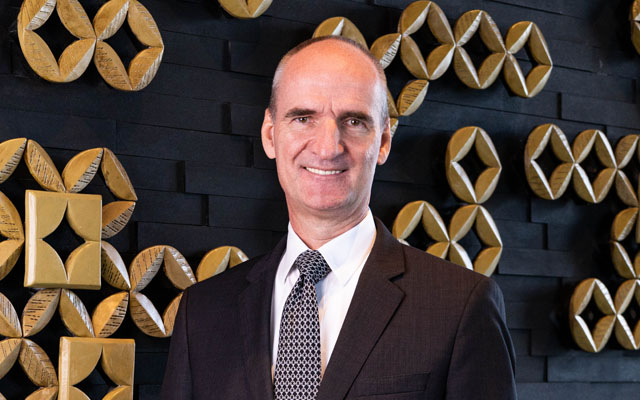
 He brings a wealth of experience to the role, and was previously the general manager of Hyatt Regency Hua Hin & The Barai in Thailand.









Travelport and Adventureman, aka Jamie McDonald, have achieved a new world record (endorsed by Guinness World Records) by travelling to the Seven Modern Wonders of the World in just under seven days using only public transport.
Visiting the Great Wall of China, the Taj Mahal, Petra, the Colosseum, Christ the Redeemer, Machu Pichu and Chichén Itzá, the British adventurer travelled across four continents, landed in nine countries, flew on 13 flights, and rode in 16 taxis, nine buses, four trains and one toboggan to cover about 36,783km in six days, 16 hours and 14 minutes.
The challenge was set to Adventureman by Travelport in order to put the company’s retail platform, Travelport+, to the test, proving the company’s technology helps its travel agency partners to plan, book and manage even the world’s most complex trip.
“This was certainly my most complex, complicated trip yet,” said McDonald. “With travel, there are just so many variables – weather, restrictions, delays, customs, traffic, cancellations, you name it. When you’re attempting to set a world record, speed and agility are absolutely key.”
Protecting the environment was also key, with carbon emissions from Adventureman’s trip were calculated by Travelport using the Travel Impact Model.
In addition, the trip was a great way for Adventureman to raise funds for his charity, the Superhero Foundation, where Travelport matched a dollar for every mile that he travelled for this challenge.