TTG Asia
Asia/Singapore Saturday, 11th April 2026
Page 435

Qatar Airways Group names new group chief executive

0

Qatar Airways Group has announced that Badr Mohammed Al-Meer will take over as group chief executive from November 5.

He succeeds Akbar Al Baker, who has stepped down from the position after 27 years of service.

Twin Lakes Hotel welcomes new GM

0

Rowena Relucio had been promoted to general manager of Twin Lakes Hotel, the upmarket property of Megaworld Hotels and Resorts in Batangas near Tagaytay.

She previously held the role of director of sales and marketing at the hotel.

Relucio has almost three decades of experience in the hospitality industry, including stints as assistant director of events and management in Edsa Shangri-La, sales and marketing positions at Manila Mandarin Hotel, Hotel Intercontinental Manila, Robinsons Hotels and Resorts, and B Hotel in Quezon City.

First Hyatt Centric branded hotel in South-east Asia grows from strength to strength

0
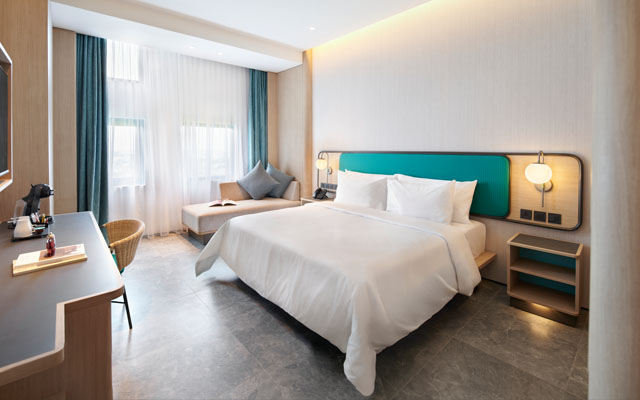
The award-winning Hyatt Centric Kota Kinabalu is popular among travellers from China and South Korea

Brought to you by Hyatt Centric Kota Kinabalu

Bearing strong testimony to its robust growth, Hyatt Centric Kota Kinabalu commemorated its first anniversary amid positive guest sentiments and industry accolades, complete with key milestones.

Hyatt Hotels Corporation’s opening of the hotel late last year marked the debut of Hyatt’s rapidly growing lifestyle brand in Malaysia and South-east Asia.

Within one year of operation, the first Hyatt Centric branded hotel in South-east Asia clinched the MyMalaysia Tourism Awards 2023: Outstanding New Lifestyle Hotel; Pertubuhan Arkitek Malaysia (PAM) Award – Hospitality: Silver Award; as well as a Silver Certification by GreenRE.

The 222-key hotel also managed to up the popularity stakes, in particular gaining favour with travellers from China and South Korea. Guest sentiments have been exceptional during the first year too.

Hotel guests are generally impressed with its warm hospitality, thoughtful amenities and facilities, outstanding architecture and strategic location in the heart of the city’s lively dining and entertainment district.

Building connections with the local community
In its first year, Hyatt Centric Kota Kinabalu has successfully reached out to the local community through meaningful activities that supported design, arts, sustainability and local culture, in line with its brand values.

Last December, the lifestyle hotel hosted the inaugural Ewan Lane Festival, in a bid to promote Kota Kinabalu’s urban culture and to foster connections with the local community.

The two-day festival spotlighted street art, extreme sports and music that featured street artists, painters, skateboarders, B-Boys and musicians, as well as 14 influential and diverse Sabahan artists who performed alongside the emerging young talents.

Esteemed chefs city-wide also whipped up a storm for the hotel’s specially curated its Best Bah-Ger (Burger) in Kota Kinabalu competition, a friendly cook-off at its ON22 restaurant.

To encourage hotel guests to explore the hidden gems of the neighbourhood, Hyatt Centric Kota Kinabalu even came up with guided street art tours.

Curated by a resident and local artist of Kota Kinabalu, participants could listen to the real stories and inspiration behind a collection of iconic works of street art through the 60-minute walking tour.

In addition, the boundary-pushing establishment took a bold step by partnering with well-known local designer, Melinda Looi, to come up with a striking and fun design for the hotel staff uniforms, paired with vibrant accessories from Happy Plastics Borneo made of upcycled plastic materials to promote sustainable fashion.

The sustainability front also saw the hotel advancing eco-friendly activations through its operations to garner the Silver certification by GreenRE for green building excellence.

Trailblazer in the F&B scene
Meanwhile, Hyatt Centric Kota Kinabalu’s novel culinary concepts is shaking up the F&B scene in the city.

The hotel introduced the immersion of the vibrant local Sabahan palate paired with true Sabahan hospitality, curated especially for food adventurers.

Now on the locals’ must-visit list, its all-day dining outlet ON22 with Chef Jun Yip Ho at the helm, is giving contemporary Asian cuisine a delightful twist by using fresh, sustainable, and mainly locally sourced ingredients, and centring it on the popular sharing concept.

Chef Jun’s signature Lambshank Rendang is one of the most-ordered dishes thanks to its succulent, fall-off-the-bone meat and flavourful sauce – a culinary delight that is worth a visit to ON22 just to try it out.

The hotel’s trendy ON23 Sky Bar is also making waves with its locally-crafted cocktails made with local ingredients, as well as its stunning panoramic views capturing the magical sunsets in Kota Kinabalu.

Talent at the heart
Hyatt Centric Kota Kinabalu remains committed to working closely with local talents to grow their careers, as well as learn from them to improve the hotel offerings and services to take it to the next level.

Manpower development continues to focus on regular staff engagement for job training and skills building for its workforce.

Fresh graduates are also given the opportunity to join the team and accumulate experience on-site for further career growth.

Ruben Schrijver, general manager, said: “I’m extremely proud of each team member; Working with such enthusiastic and friendly individuals in this hotel has been an absolute joy. After a year of noteworthy accomplishments, we’re eagerly looking forward to creating more memorable experiences with our guests and visitors.”

For more information or to book a stay,
Visit: www.hyattcentrickotakinabalu.com
Email: hyattcentrickotakinabalu@hyatt.com
Call/whatsapp: +60154 874 1234

To connect,
Facebook: Hyatt Centric Kota Kinabalu  
Instagram: hyattcentrickotakinabalu

Fusion appoints new general managers at Vietnam properties

0

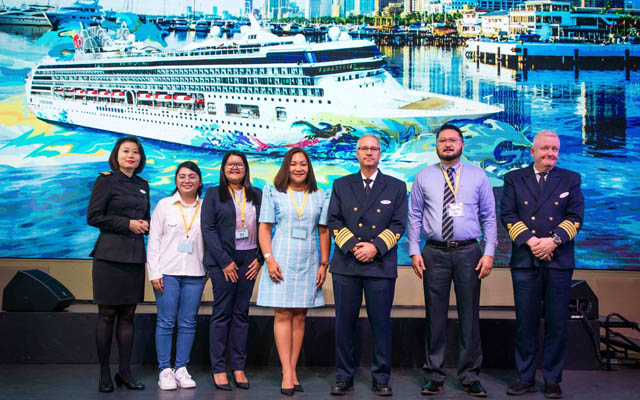
Fusion Hotel Group welcomes three new general managers to its hotels in Vietnam.

Marcus Wirsching takes the helm as general manager of Maia Resort Quy Nhon. He has over 30 years of experience in the luxury hospitality industry, with experiences in destinations throughout Europe, the Middle East and Asia.

From left:Marcus Wirsching, Eugene Hendricks, and Ronald Espiridion

As general manager of Alba Wellness Valley by Fusion, Eugene Hendricks is a seasoned professional with several years’ experience at leading hotels in Vietnam, as well as in the Maldives, Australia, Thailand, and his home base of Malaysia.

Ronald Espiridion returns to Fusion as general manager at Fusion Suites Sai Gon. Originally from the Philippines, his experience in hospitality stretches as far as Cairo and Qatar to Brunei, Zanzibar, and the Turks & Caicos Islands in the Caribbean.

La Vie Hotels & Resorts announces new group director of commercial

0

La Vie Hotels & Resorts has appointed Lachlan Harris to the role of group director of commercial.

Boasting three decades of hospitality experience across all sectors of the industry, Harris will be based at La Vie’s Sydney head office and will be responsible for delivering top line revenue for all of La Vie’s properties, including managing everything from revenue and distribution to client and customer engagement, multi-segment contracting and negotiation, product analysis, partnerships and marketing.

His previous roles have included local and international brands such as Naumi Hotels and Resorts, Sofitel Sydney Darling Harbour, The Langham Sydney and Shangri-La Sydney.

Staff exodus weakens Sri Lanka’s hotel industry recovery potential

0

A combination of poor local economic performance in Sri Lanka and the lure of better paying jobs elsewhere has forced skilled hospitality staff to abandon the country.

Many have chosen to move to West Asia, Europe and North America in search of greener pastures, while businesses in Ireland, Japan, Australia, the UK and Canada are courting Sri Lankan hospitality talents.

Hospitality in Sri Lanka is facing a shortage of staff due to the pandemic and other crises in the country

Industry leaders say this is “crippling” Sri Lanka’s hotels.

M Shanthikumar, president of the Hotels Association of Sri Lanka, said the hotel industry is losing 20 to 25 per cent of its staff annually.

Rodney Armstrong, president of the Hotels Association of Kandy, said his hotel lost 15 chefs who went to Qatar to work during the FIFA World Cup last year.

“We have lost other skilled workers. Losing skilled workers is the biggest problem for hotels in Sri Lanka,” he remarked.

A chairman of a five-star hotel in Colombo city, who has asked not to be named, said the number of workers leaving the industry has increased during the pandemic and last year’s economic crisis.

The lack of skilled manpower to support operations and business recovery is especially worrying when hotel operators are also burdened by rising electricity rates and loan repayment pressures.

The anonymous hotelier told TTG Asia that electricity is the single highest cost for hotels in Sri Lanka, representing 30 to 35 per cent of total operational costs.

“We need space to recover. We need to rebuild the industry from the ongoing crisis since 2019, but costs are a deterrent,” he said.

Sri Lanka’s travel and tourism industry was given two moratoriums on loan repayments, but it is still challenged by a slow return in international tourists. The country welcomed 2.5 million visitors in 2018. In 2023, only 1.2 million are expected to have visited.

Japan leverages on AI to ease communication hurdles

0

Japan’s travel industry is looking to language processing tools and other artificial intelligence (AI)-based technologies to support communication with international travellers in the face of rapid inbound tourism recovery and a shortage of English-speaking staff.

In Tokyo’s Seibu Shinjuku Station, a new AI-powered machine is being deployed at ticket counters. Developed by Toppan Printing Company, the device called VoiceBiz interprets speech in 12 languages, and displays the conversation in real time on a transparent screen so staff and customers can see each other and the translation.

Interpretation devices and AI-based technologies can support international visitors with communication in Japan

According to developer National Institute of Information and Communications Technology (NICT), the service is designed to maintain the human touch during interactions. The technology was tested at Kansai International Airport earlier this year.

The team is also developing a simultaneous interpretation system to be used at World Expo 2025, which will be held in Osaka.

Eiichiro Sumita, project leader at NICT, said progress in AI is driving the creation of the latest interpretation devices, which could advance Japan’s tourism industry by attracting visitors who were previously daunted by the language barrier.

Kotozna Inc., meanwhile, has been trialling its new ChatGPT-based service ConcierGPT this summer at Southern Beach Hotel & Resort Okinawa. The technology acts as a mediator between visitors and front desk staff, and is “capable of providing accurate, plain and multilingual answers for each accommodation’s specific information”, said Genri Goto, CEO of Kotozna.

ConcierGPT builds on the company’s information dissemination and communication tool In-Room, whereby guests scan a QR code that directs them to details on the accommodation’s offerings and to a chat service, both of which are available in multiple languages.

In-Room has been expanded to more than 300 hotels and ryokan inns nationwide so far this year, according to Kotozna, which claims it improves communication with visitors, addresses labour shortages, and promotes consumption of the facility’s F&B and souvenirs.

Louvre Hotels to expand across Indonesia

0

Louvre Hotels Group (LHG) is set to grow its presence across Indonesia with a target to have double the number of hotel properties in the next five years.

The company has planned to open three new hotels across the country in 2024, which now includes its portfolio of 10 hotels in Indonesia. Beyond their established brands like Golden Tulip, Royal Tulip, and Kyriad, LHG will also introduce Campanile and Tulip Hotels & Residences to meet the diverse needs of travellers in Indonesia.

Tscherning: we are confident to have more than 20 hotels or double portfolios in the five years

In 2024, LHG is expected to debut the first Campanile Hotel in Indonesia. Nestled within the same complex as the Golden Tulip Balikpapan, Campanile Balikpapan is a three-star hotel with open living spaces and tailor-made meetings and event facilities.

LHG is also tapping into younger travellers with the debut of Tulip Hotel & Residences brand. Slated to open 2Q2024, Tulip Hotel & Residences Depok, West Java, will feature 200 rooms and modern amenities.

Other openings include the 136-key Golden Hill by Golden Tulip, Batu, East Java, providing meeting facilities and a ballroom for leisure and business travellers. LHG is also expanding its existing Royal Tulip Gunung Geulis with a new extension wing comprised of 52 rooms set to open in mid-2024.

Speaking at media luncheon in Jakarta last week, Andreas Tscherning, COO International of LHG, said that Indonesia was one of the top three markets in South-east Asia, and the company has set the country as a top priority in global development strategies.

“With three secure contracts for next year, we are confident to have more than 20 hotels or double portfolios in the five years,” he added.

Discussing the future strategy, Tscherning told TTG Asia that LHG would focus on major cities like Jakarta, Surabaya, Bandung, and Medan as the demand for business hotels kept growing. The group also targets five priority destinations such as Toba, North Sumatera and Labuan Bajo, East Nusa Tenggara for resort developments.

“We have good experiences in resorts and (are) very optimistic to reinforce our position in the upscale segment in the next five years,” he said.

The group also wants to develop more hotels with bigger meeting spaces under the Golden Tulip brand. Tscherning shared the “meetings business is very good so far”. At a few of its hotels, LHG sees a 95 per cent capacity for meetings on weekdays and fully-booked weekends for family getaways.

In addition, there are talks about several project developments planned in 2025, including in Jakarta, Kendari, South East Sulawesi, and Bandung, West Java.

Philippine’s Hotel 101 goes global

0

Philippine hotel owner and management company, Hotel 101 Group, gains a global foothold with investments in new hotels to be built in Japan, Spain and the US.

The 482-key Hotel 101 Niseko has started construction on a 1.7-hectare site in the ski destination of Hokkaido in Japan. Another purchase, a 6,593m² site in Spain, will stand the 736-key Hotel 101 Madrid.

Hotel 101 features only one type of room unit, its signature Happy Rooms, across its properties

The brand will soon be in California, one of the 10 sites being eyed in the US as part of the long-term vision to have 500,000 across the globe by 2040, Hotel 101 Group general manager, Gel Gomez, said in an interview during the Philippine Tour Operators Association’s Philippine Travel Mart 2023.

Double Dragon Corp, the parent company of Hotel 101 Group, has purchased an office space of PLUS Building at Cecil Street in Singapore, which is Hotel 101 Global’s international corporate office and global sales hub.

In the Philippines, Gomez said Hotel 101 Group is already expanding briskly with several hotels in metro Manila, and soon in Davao, along with pipeline projects in Palawan, Bohol, Baguio, Libis and Cebu.

The Hotel 101’s hybrid ‘condotel’ business model has only one type of room unit for a uniform worldwide inventory through direct development, joint venture and licensing.

Its signature 21m² Happy Room – with an AI-generated banig or traditional handwoven mat design symbolising home, joy and technical advances – has a simple layout with work desk, mini kitchen, and other amenities for the mid-end business and leisure market.

The rooms are pre-sold, with owners assured of a percentage gross revenue while Hotel 101 Group handles all aspects of managing the hotel, including renovation, dynamic pricing and marketing.

The group, which also plans to expand in Asia, has announced that its pioneering ‘condotel’ concept has already been filed and the Hotel 101 trademark and country specific domains have been secured in various countries.

International arrivals show growth across Asia-Pacific in 2022 and early 2023: PATA

0

PATA’s Annual Tourism Monitor 2023 report showed that international visitor arrival (IVA) numbers in 2022 were the strongest since 2019, heralding the much-awaited resurgence of the international travel and tourism sector for the Asia-Pacific region.

The report revealed that 2022 saw 44 destinations across the region end with a collective annual gain of almost 124.2 million foreign arrivals, to return a collective inbound count of nearly 265.5 million.

Recovery rates of international visitor arrivals into/across Asia-Pacific year-to-date 2021-2023, by source region

There were wide differences at the three Asia-Pacific destination region levels. The Pacific had the strongest growth rate in 2022 year-over-year, whereas Asia received both the largest number of arrivals and the greatest annual increase in absolute numbers from 2021.

Even so, the number of IVAs into and across Asia in 2022 reached only 27% of 2019 levels. The Americas had the strongest recovery in that regard, with 69%, followed by the Pacific, with over 57%.

These are generally very positive results, but even more heartening are those for the early periods of 2019 to 2023, where the strengthening of IVA numbers, which began in the first periods of 2022, continued in early 2023.

Every year-to-date figure is consistent for each of the 38 destinations with early period arrivals data and their respective months covered between 2019 and 2023. This data therefore gives a solid indication of how arrival numbers into and across Asia-Pacific are trending over time.

The IVA growth that began in early 2022 has gained momentum in early 2023, with the addition of more than 93.3 million foreign arrivals, a volume increase of more than double compared to the previous period. This has boosted the recovery rate for early 2023 to more than 68% of the early 2019 IVA levels.

Although Asia may have been slower in returning to growth up until 2022, the early 2023 figures show a very powerful return to dominance in the Asia-Pacific mix of arrivals. Asia had the strongest performance of the three destination regions against the metrics of IVAs year-to-date, period-to-period growth rate, and period-to-period increase in absolute numbers of IVAs. Even the recovery rate for Asia, while still the lowest at 62.4%, is a 35-percentage point improvement over 2022 and is only six percentage points below the Asia-Pacific average.

Of particular interest is the mix of source markets fuelling these recovery rates. Most source regions have achieved recovery rates above 80% in early 2023. The exception is Asia, which has improved its arrival numbers for the Asia-Pacific to just a little over 52%.

That raises a critical issue because in 2019, Asia was the dominant supplier of IVAs to the Asia-Pacific, accounting for nearly 63% of total arrivals in the region. Therefore, any decline in those source markets poses an obvious challenge for the region as a whole.

Although Asia’s recovery rate as a source region in early 2023 is relatively low, at just over 54%, it marks a dramatic improvement of almost 43 percentage points compared to early 2022, which demonstrates significant growth momentum.

Among all the source markets in Asia-Pacific, mainland China is the most significant in terms of volume – in 2019, the country accounted for almost 30% of the IVAs from Asia and 19% of the total aggregate visitor numbers to Asia-Pacific destinations.

In early 2023, visitor numbers from mainland China saw a dramatic increase, surpassing 23 million. This marks the strongest early-period performance since early 2019. However, it still represents only 34% of the early 2019 level of arrivals. With the recent relaxation of restrictions and the reintroduction of group travel, a significant improvement can be expected by the end of 2023.

Peter Semone, chairman of PATA, noted that “the overall growth in IVAs within the Asia-Pacific is primarily fuelled by Asia, serving as both a source and destination region, with mainland China playing a dominant role in visitor flows”.

He added: “Experience shows us that when change occurs in China, it is both rapid and impactful. The question, however, is whether the destinations in Asia-Pacific are prepared, as change involves not only an increase in visitor numbers but also evolving expectations and demands from these visitors.

He pointed out that PATA predicts international visitor numbers by the end of 2023 to exceed 516 million, approaching 76% of the pre-pandemic levels of 2019, which is expected to further increase to 107% in 2024 and 116% in 2025.

“The wave is coming, and we must prepare ourselves to ensure that we have a better, stronger and more resilient tourism and travel industry,” he concluded.